Results by title
460 books match the query 'Law and legislation' and 14 start with g
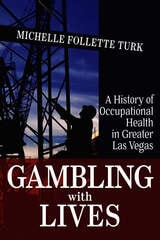
Gambling With Lives
A History of Occupational Health in Greater Las VegasMichelle Follette Turk
University of Nevada Press, 2020
A History of Occupational Health and Safety examines the work, hazards, and health and safety programs from the early building of the railroad through the construction of the Hoover Dam, chemical manufacturing during World War II, nuclear testing, and dense megaresort construction on the Las Vegas Strip. In doing so, this comprehensive chronicle reveals the long and unfortunate history of exposing workers, residents, tourists, and the environment to dangerous work—all while exposing the present and future to crises in the region. Complex interactions and beliefs among the actors involved are emphasized, as well as how the medical community interpreted and responded to the risks posed.
Few places in the United States contain this mixture of industrial and postindustrial sites, the Las Vegas area offers unique opportunities to evaluate American occupational health during the twentieth century, and reminds us all about the relevancy of protecting our workers.

Game Faces
Sport Celebrity and the Laws of ReputationSarah K. Fields
University of Illinois Press, 2016
Gay Priori
A Queer Critical Legal Studies Approach to Law ReformLibby Adler
Duke University Press, 2018
Gender Justice
David Kirp, Mark Yudof, and Marlene Franks Strong
University of Chicago Press, 1985
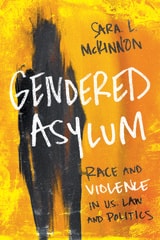
Gendered Asylum
Race and Violence in U.S. Law and PoliticsSara L. McKinnon
University of Illinois Press, 2016
Sara L. McKinnon exposes racialized rhetorics of violence in politics and charts the development of gender as a category in American asylum law. Starting with the late 1980s, when gender-based requests first emerged in case law, McKinnon analyzes gender- and sexuality-related cases against the backdrop of national and transnational politics. Her focus falls on cases as diverse as Guatemalan and Salvadoran women sexually abused during the Dirty Wars and transgender asylum seekers from around the world fleeing brutally violent situations. She reviews the claims, evidence, testimony, and message strategies that unfolded in these legal arguments and decisions, and illuminates how legal decisions turned gender into a political construct vulnerable to American national and global interests. She also explores myriad related aspects of the process, including how subjects are racialized and the effects of that racialization, and the consequences of policies that position gender as a signifier for women via normative assumptions about sex and heterosexuality.
Wide-ranging and rich with human detail, Gendered Asylum uses feminist, immigration, and legal studies to engage one of the hotly debated issues of our time.
Getting Screwed
Sex Workers and the LawAlison Bass
University Press of New England, 2015
Gibbons v. Ogden, Law, and Society in the Early Republic
Thomas H. Cox
Ohio University Press, 2009
Gibbons v. Ogden, Law, and Society in the Early Republic examines a landmark decision in American jurisprudence, the first Supreme Court case to deal with the thorny legal issue of interstate commerce.
Decided in 1824, Gibbons v. Ogden arose out of litigation between owners of rival steamboat lines over passenger and freight routes between the neighboring states of New York and New Jersey. But what began as a local dispute over the right to ferry the paying public from the New Jersey shore to New York City soon found its way into John Marshall’s court and constitutional history. The case is consistently ranked as one of the twenty most significant Supreme Court decisions and is still taught in constitutional law courses, cited in state and federal cases, and quoted in articles on constitutional, business, and technological history.
Gibbons v. Ogden initially attracted enormous public attention because it involved the development of a new and sensational form of technology. To early Americans, steamboats were floating symbols of progress—cheaper and quicker transportation that could bring goods to market and refinement to the backcountry. A product of the rough-and-tumble world of nascent capitalism and legal innovation, the case became a landmark decision that established the supremacy of federal regulation of interstate trade, curtailed states’ rights, and promoted a national market economy. The case has been invoked by prohibitionists, New Dealers, civil rights activists, and social conservatives alike in debates over federal regulation of issues ranging from labor standards to gun control. This lively study fills in the social and political context in which the case was decided—the colorful and fascinating personalities, the entrepreneurial spirit of the early republic, and the technological breakthroughs that brought modernity to the masses.
Global Homophobia
States, Movements, and the Politics of OppressionEdited by Meredith L. Weiss and Michael J. Bosia
University of Illinois Press, 2013
Combining rich empirical analysis with theoretical synthesis, these studies examine how homophobia travels across complex and ambiguous transnational networks, how it achieves and exerts decisive power, and how it shapes the collective identities and strategies of those groups it targets. The first comparative volume to focus specifically on the global diffusion of homophobia and its implications for an emerging worldwide LGBT movement, Global Homophobia opens new avenues of debate and dialogue for scholars, students, and activists.
Contributors are Mark Blasius, Michael J. Bosia, David K. Johnson, Kapya J. Kaoma, Christine (Cricket) Keating, Katarzyna Korycki, Amy Lind, Abouzar Nasirzadeh, Conor O'Dwyer, Meredith L. Weiss, and Sami Zeidan.
Governing the End
The Making of Climate Change Loss and DamageLisa Vanhala
University of Chicago Press, 2025
A searing account of how the international community is trying—and failing—to address the worst effects of climate change and the differential burdens borne by rich and poor countries.
Climate change is increasingly accepted as a global emergency creating irrevocable losses for the planet. Yet, each country experiences these losses differently, and reaching even inadequate political agreements is fraught with contestation. Governing the End untangles the complex relationship between deteriorating environmental conditions, high politics, and everyday diplomatic practices, focusing on the United Nations’ agreement to address “loss and damage” and subsequent battles over implementation.
Lisa Vanhala looks at the differing assumptions and strategic framings that poor and rich countries bring to bear and asks why some norms emerge and diffuse while others fail to do so. Governing the End is based on ethnographic observation of eight years of UN meetings and negotiations and more than one hundred and fifty interviews with diplomats, policymakers, UN secretariat staff, experts, and activists. It explores explicit political contestation, as well as the more clandestine politics that have stymied implementation and substantially reduced the scope of compensation to poor countries. In doing so, Governing the End elucidates the successes and failures of international climate governance, revealing the importance of how ideas are constructed and then institutionally embodied.
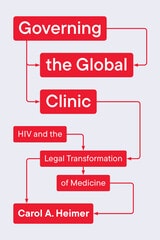
Governing the Global Clinic
HIV and the Legal Transformation of MedicineCarol A. Heimer
University of Chicago Press, 2025
A deep examination of how new, legalistic norms affected the trajectory of global HIV care and altered the practice of medicine.
HIV emerged in the world at a time when medicine and healthcare were undergoing two major transformations: globalization and a turn toward legally inflected, rule-based ways of doing things. It accelerated both trends. While pestilence and disease are generally considered the domain of biological sciences and medicine, social arrangements—and law in particular—are also crucial.
Drawing on years of research in HIV clinics in the United States, Thailand, South Africa, and Uganda, Governing the Global Clinic examines how growing norms of legalized accountability have altered the work of healthcare systems and how the effects of legalization vary across different national contexts. A key feature of legalism is universalistic language, but, in practice, rules are usually imported from richer countries (especially the United States) to poorer ones that have less adequate infrastructure and fewer resources with which to implement them. Challenging readers to reconsider the impulse to use law to organize and govern social life, Governing the Global Clinic poses difficult questions: When do rules solve problems, and when do they create new problems? When do rules become decoupled from ethics, and when do they lead to deeper moral commitments? When do rules reduce inequality? And when do they reflect, reproduce, and even amplify inequality?

Gross Misbehavior and Wickedness
A Notorious Divorce in Early Twentieth-Century AmericaJean Elson
Temple University Press, 2017
Gross Misbehavior and Wickedness—the charges Nina levied at James for his adultery (with the family governess) and extreme cruelty—recounts the protracted legal proceedings in juicy detail.
Jean Elson uses court documents, correspondence, journals, and interviews with descendants to recount the salacious case. In the process, she underscores how divorce—in an era when women needed husbands for economic support—was associated with women’s aspirations for independence and rights. The Walkers’ dispute, replete with plot twists and memorable characters, sheds light on a critical period in the evolution of American culture.
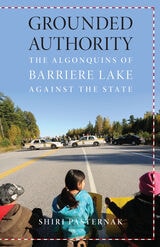
Grounded Authority
The Algonquins of Barriere Lake against the StateShiri Pasternak
University of Minnesota Press, 2017
Western Political Science Association's Clay Morgan Award for Best Book in Environmental Political Theory
Canadian Studies Network Prize for the Best Book in Canadian Studies
Nominated for Best First Book Award at NAISA
Honorable Mention: Association for Political and Legal Anthropology Book Prize
Since Justin Trudeau’s election in 2015, Canada has been hailed internationally as embarking on a truly progressive, post-postcolonial era—including an improved relationship between the state and its Indigenous peoples. Shiri Pasternak corrects this misconception, showing that colonialism is very much alive in Canada. From the perspective of Indigenous law and jurisdiction, she tells the story of the Algonquins of Barriere Lake, in western Quebec, and their tireless resistance to federal land claims policy.
Grounded Authority chronicles the band’s ongoing attempts to restore full governance over its lands and natural resources through an agreement signed by settler governments almost three decades ago—an agreement the state refuses to fully implement. Pasternak argues that the state’s aversion to recognizing Algonquin jurisdiction stems from its goal of perfecting its sovereignty by replacing the inherent jurisdiction of Indigenous peoples with its own, delegated authority. From police brutality and fabricated sexual abuse cases to an intervention into and overthrow of a customary government, Pasternak provides a compelling, richly detailed account of rarely documented coercive mechanisms employed to force Indigenous communities into compliance with federal policy.
A rigorous account of the incredible struggle fought by the Algonquins to maintain responsibility over their territory, Grounded Authority provides a powerful alternative model to one nation’s land claims policy and a vital contribution to current debates in the study of colonialism and Indigenous peoples in North America and globally.
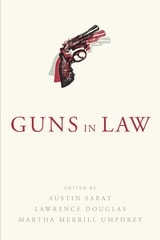
Guns in Law
Austin Sarat
University of Massachusetts Press, 2019
Weapons have been a source of political and legal debate for centuries. Aristotle considered the possession of arms a fundamental source of political power and wrote that tyrants “mistrust the people and deprive them of their arms.” Today ownership of weapons—whether handguns or military-grade assault weapons—poses more acute legal problems than ever before. In this volume, the editors' introduction traces the history of gun control in the United States, arguing that until the 1980s courts upheld reasonable gun control measures. The contributors confront urgent questions, among them the usefulness of history as a guide in ongoing struggles over gun regulation, the changing meaning of the Second Amendment, the perspective of law enforcement on guns and gun control law, and individual and relational perspectives on gun rights.
The contributors include the editors and Carl T. Bogus, Jennifer Carlson, Saul Cornell, Darrell A.H. Miller, Laura Beth Nielsen, and Katherine Shaw.

Guns, Democracy, and the Insurrectionist Idea
Joshua Horwitz and Casey Anderson
University of Michigan Press, 2009
---Saul Cornell, Ohio State University