Results by title
2817 books match the query 'Nature' and 87 start with g
Gambling on Ore
The Nature of Metal Mining in the United States, 1860–1910Kent Curtis
University Press of Colorado, 2013
In Montana, legal issues and politics—such as unexpected consequences of federal mining law and the electrification of the United States—further complicated the mining industry’s already complex relationship to geology, while government policy, legal frameworks, dominant understandings of nature, and the exigencies of profit and production drove the industry in momentous and surprising directions. Despite its many uncertainties, mining became an important part of American culture and daily life.
Gambling on Ore unpacks the tangled relationships between mining and the natural world that gave material possibility to the age of electricity. Metal mining has had a profound influence on the human ecology and the social relationships of North America through the twentieth century and throughout the world after World War II. Understanding how we forged these relationships is central to understanding the environmental history of the United States after 1850.
Game Management
Aldo Leopold
University of Wisconsin Press, 1986
With this book, published more than a half-century ago, Aldo Leopold created the discipline of wildlife management. Although A Sand Country Almanac is doubtless Leopold’s most popular book, Game Management may well be his most important. In this book he revolutionized the field of conservation.
Game
Animals, Video Games, and HumanityTom Tyler
University of Minnesota Press, 2022
A playful reflection on animals and video games, and what each can teach us about the other
Video games conjure new worlds for those who play them, human or otherwise: they’ve been played by cats, orangutans, pigs, and penguins, and they let gamers experience life from the perspective of a pet dog, a predator or a prey animal, or even a pathogen. In Game, author Tom Tyler provides the first sustained consideration of video games and animals and demonstrates how thinking about animals and games together can prompt fresh thinking about both.
Game comprises thirteen short essays, each of which examines a particular video game, franchise, aspect of gameplay, or production in which animals are featured, allowing us to reflect on conventional understandings of humans, animals, and the relationships between them. Tyler contemplates the significance of animals who insert themselves into video games, as protagonists, opponents, and brute resources, but also as ciphers, subjects, and subversive guides to new ways of thinking. These animals encourage us to reconsider how we understand games, contesting established ideas about winning and losing, difficulty settings, accessibility, playing badly, virtuality, vitality and vulnerability, and much more.
Written in a playful style, Game draws from a dizzying array of sources, from children’s television, sitcoms, and regional newspapers to medieval fables, Shakespearean tragedy, and Edwardian comedy; from primatology, entomology, and hunting and fishing manuals to theological tracts and philosophical treatises. By examining video games through the lens of animals and animality, Tyler leads us to a greater humility regarding the nature and status of the human creature, and a greater sensitivity in dealings with other animals.
Garbage
The Saga of a Boss Scavenger in San FranciscoLeonard Dominic Stefanelli
University of Nevada Press, 2017
Stefanelli was trained to be a scavenger by his uncles in the 1940s and 50s at a time when rampant discrimination prevented Italian immigrants and their families from pursuing any other career. From there, he became a ‘boss scavenger’, married a garbage man’s daughter, and climbed the ranks of the Sunset Scavenger Company where he eventually took part in a corporate shakeup that made him the company’s president at only 31 years old. As one of the men at the helm of this booming industry, he became the chief advocate for increasingly innovative recycling and waste management practices in the Bay Area, and a foremost leader of environmentally-conscious business in the world.
Stefanelli’s lively memoir will enlighten readers to the waste management business, an industry that was once considered the lowest rung on the social ladder, but will also show his unparalleled capacity for transformation and vision.
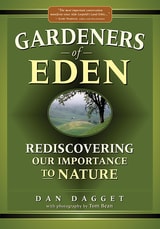
Gardeners of Eden
Rediscovering Our Importance to NatureDan Dagget
University of Nevada Press, 2005
Dagget recommends a new kind of environmentalism based on management, science, evolution, and holism, and served by humans who enrich the environment even as they benefit from it. His new environmentalism offers hopeful solutions to the current ecological crisis and a new purpose for our human energies and ideals. This book is essential reading for anyone concerned with the earth and anyone seeking a viable way for our burgeoning human population to continue to live upon it.
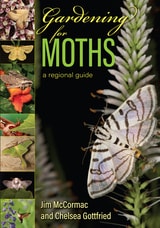
Gardening for Moths
A Regional GuideJim McCormac
Ohio University Press, 2023
This guide to moths, native plants, and their environmental roles is an indispensable resource for gardeners, conservationists, and nature enthusiasts across the midwestern United States.
Gardening for Moths is the first book to show midwestern gardeners and naturalists why they should attract specific moth species to their properties and how to do it. The book’s stunning color photographs and intriguing facts reveal the fascinating world of these insects, inspiring readers to incorporate moth-loving native plants into their landscapes. The authors emphasize the importance of moths and their caterpillars to ecological food webs, widening the book’s appeal to birders and bat lovers as well.
The book consists of three main sections, beginning with a thorough overview of moths, including their
- population decline and conservation,
- importance in ecosystems,
- relationship with native plants, and
- predators and defenses
In the next section the authors profile about 140 plant species, providing brief background, natural history, habitat, and growing notes for each along with lists of potential moths the plants may attract.
The third section highlights approximately 150 moth species, ordered taxonomically. These accounts include interesting facts about the life history of both the caterpillar and adult moth of each species. Each account also features a list of the species’ common host plants.
Throughout the volume, inset text boxes provide additional fascinating moth facts. Beautiful photographs (most by the authors) illustrate every included plant and moth species. Select references, online resources, and quick reference tables round out this valuable resource.
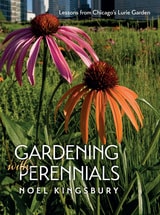
Gardening with Perennials
Lessons from Chicago's Lurie GardenNoel Kingsbury
University of Chicago Press, 2014
With Gardening with Perennials horticulturalist and garden writer Noel Kingsbury brings a global perspective to the Lurie oasis through a wonderful introduction to the world of perennial gardening. He shows how perennials have much to offer home gardeners, from sustainability—perennials require less water than their annual counterparts—to continuity, as perennials’ longevity makes them a dependable staple.
Kingsbury also explains why Lurie is a perfect case study for gardeners of all locales. The plants represented in this urban oasis were chosen specifically for reliability and longevity. The majority will thrive on a wide range of soils and across a wide climatic range. These plants also can thrive with minimal irrigation, and without fertilizers or chemical control of pests and diseases. Including a special emphasis on plants that flourish in sun, and featuring many species native to the Midwest region, Gardening with Perennials will inspire gardeners around the world to try Chicago-style sustainable gardening.
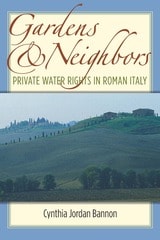
Gardens and Neighbors
Private Water Rights in Roman ItalyCynthia Jordan Bannon
University of Michigan Press, 2010
"Gardens and Neighbors will provide an important building block in the growing body of literature on the ways that Roman law, Roman society, and the economic concerns of the Romans jointly functioned in the real world."
---Michael Peachin, New York University
As is increasingly true today, fresh water in ancient Italy was a limited resource, made all the more precious by the Roman world's reliance on agriculture as its primary source of wealth. From estate to estate, the availability of water varied, in many cases forcing farmers in need of access to resort to the law. In Gardens and Neighbors: Private Water Rights in Roman Italy, Cynthia Bannon explores the uses of the law in controlling local water supplies. She investigates numerous issues critical to rural communities and the Roman economy. Her examination of the relationship between farmers and the land helps draw out an understanding of Roman attitudes toward the exploitation and conservation of natural resources and builds an understanding of law in daily Roman life.
An editor of the series Law and Society in the Ancient World, Cynthia Jordan Bannon is also Associate Professor of Classical Studies at Indiana University, Bloomington. Her previous book was The Brothers of Romulus: Fraternal Pietas in Roman Law, Literature, and Society (1997). Visit the author's website: http://www.iub.edu/~classics/faculty/bannon.shtml.
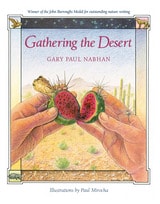
Gathering the Desert
Gary Paul Nabhan; Illustrations by Paul Mirocha
University of Arizona Press, 1985
To the untrained eye, a desert is a wasteland that defies civilization; yet the desert has been home to native cultures for centuries and offers sustenance in its surprisingly wide range of plant life. Gary Paul Nabhan has combed the desert in search of plants forgotten by all but a handful of American Indians and Mexican Americans. In Gathering the Desert readers will discover that the bounty of the desert is much more than meets the eye—whether found in the luscious fruit of the stately organpipe cactus or in the lowly tepary bean.
Nabhan has chosen a dozen of the more than 425 edible wild species found in the Sonoran Desert to demonstrate just how bountiful the land can be. From the red-hot chiltepines of Mexico to the palms of Palm Springs, each plant exemplifies a symbolic or ecological relationship which people of this region have had with plants through history. Each chapter focuses on a particular plant and is accompanied by an original drawing by artist Paul Mirocha. Word and picture together create a total impression of plants and people as the book traces the turn of seasons in the desert.
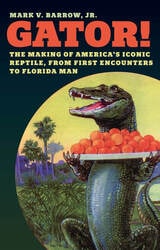
Gator!
The Making of America’s Iconic Reptile, from First Encounters to Florida ManMark V. Barrow, Jr.
University of Chicago Press, 2026
What this intriguing—and unsettling—apex predator reveals about Americans’ attempts to control and connect with the natural world.
Both a flesh-and-blood critter and the stuff of legend, the alligator inspires as much awe as it does fear. While this apex predator survives mainly on fish, birds, snakes, turtles, and small mammals, it will consume almost anything, including pets, livestock, and—in rare cases—humans. Though dreaded as a man-eater, the alligator has also been cast as a lucrative commodity, a popular roadside attraction, a prized hunting trophy, and even an unlikely household pet.
Gator! tells the riveting story of this iconic predator. Historian Mark V. Barrow, Jr.—a native of Florida, a state famous for its alligators—traces the reptile’s ancient lineage from the age of the dinosaurs to its current status as a cherished mascot and regional icon. He explores its role as a surrogate species, offering vital clues about the health of ecosystems, as well as its profound cultural weight as a totem for Indigenous communities, a mythical sewer-dweller in New York lore, and a disturbing tool of racial oppression used to dehumanize African Americans. Once over-hunted, the alligator has long been celebrated as a triumph of the federal Endangered Species Act. Barrow delves into the nuances of this comeback, one that offers both a cautionary tale of market-driven exploitation and a conservation success story.
An entertaining history of one of North America’s most charismatic animals, Gator! explores how this reptile became a Florida emblem and a national enigma, transforming humans and alligators in the process.
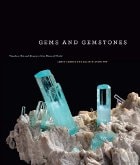
Gems and Gemstones
Timeless Natural Beauty of the Mineral WorldLance Grande and Allison Augustyn
University of Chicago Press, 2009
Gems are objects of wealth, icons of beauty, and emblems of the very best of everything. They are kept as signs of prestige or power. Given as tokens of love and affection, they also come in a kaleidoscopic array of hues and can be either mineral or organic. Gems can command a person’s gaze in the way they play with light and express rich color. And they can evoke feelings of passion, greed, mystery, and warmth.
For millennia, gems have played an important role in human culture: they have significant value, both financially and within folklore and mythology. But just what are gems, exactly? This lavishly illustrated volume—the most ambitious publication of its kind—provides a general introduction to gems and natural gemstones, conveying their timeless beauty and exploring similarities among different species and varieties. Gems and Gemstones features nearly 300 color images of the cut gems, precious and semiprecious stones, gem-quality mineral specimens, and fine jewelry to be unveiled in a new Grainger Hall of Gems at The Field Museum in Chicago this October. The book and exhibition’s overarching theme will be the relationship between finished gems and their natural origin: while beautiful as faceted and polished pieces of jewelry, gems are often just as lovely—or even more so—as gemstones in their natural state. For example, an aquamarine or emerald as originally found in a mine with its natural crystal faces can be as stunning as any cut and polished gem prepared for a ring, bracelet, or charm.
Thoughtful of both ancient and modern times, Gems and Gemstones also includes fun-filled facts and anecdotes that broaden the historical portrait of each specimen. When Harry Winston, for instance, donated the Hope Diamond to the Smithsonian in 1958, he sent it through the U.S. mail wrapped in plain brown paper. And for anyone who has ever marveled at the innovations of top jewelry designers, Gems and Gemstones features a dazzling array of polished stones, gold objects, and creations from around the world. Diamonds, sapphires, rubies, amethysts, pearls, topaz, amber—every major gem gets its due in what will be an invaluable source on the subject for years to come.
Gems and Gemstones is the basis for the iPad app, available in the Apple iTunes App Store, Gems and Jewels.
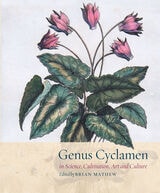
Genus Cyclamen
In Science, Cultivation, Art and CultureEdited by Brian Mathew
Royal Botanic Gardens, Kew, 2013
Genus Cyclamen is a celebration of this remarkable plant. Its science-based emphasis on botany and cultivation is complemented by sections on art and history, including twenty-five newly commissioned paintings and over seven hundred photographs. It provides a wealth of information, including taxonomic descriptions, flowering periods, distribution, and habitat, all based on the deep knowledge and practical experiences of the Cyclamen Society and other cyclamen experts. This book will find a wide audience of growers, gardeners, botanists, and enthusiasts, thanks to its all-encompassing coverage of the cyclamen and its informative, but accessible style.
Geography, Resources and Environment, Volume 1
Selected Writings of Gilbert F. WhiteEdited by Robert W. Kates and Ian Burton
University of Chicago Press, 1986
Geology of Michigan
John A. Dorr, Jr. and Donald F. Eschman
University of Michigan Press, 1970
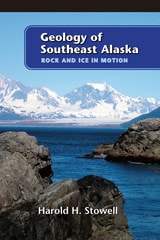
Geology of Southeast Alaska
Rock and Ice in MotionHarold Stowell
University of Alaska Press, 2006
Written by a geologist with over twenty-five years of experience in the north, Geology of Southeast Alaska will entertain and inform with abundant photographs and detailed drawings. Whether you want to understand the forces that shaped the state of Alaska, or you want to learn the basics of glacial movement, this compact, authoritative book is for you.
Geology of the Great Basin
Bill Fiero
University of Nevada Press, 2009
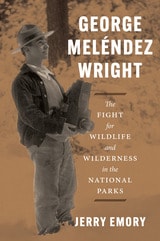
George Meléndez Wright
The Fight for Wildlife and Wilderness in the National ParksJerry Emory
University of Chicago Press, 2023
When twenty-three-year-old George Meléndez Wright arrived in Yosemite National Park in 1927 to work as a ranger naturalist—the first Hispanic person to occupy any professional position in the National Park Service (NPS)—he had already visited every national park in the western United States, including McKinley (now Denali) in Alaska. Two years later, he would organize the first science-based wildlife survey of the western parks, forever changing how the NPS would manage wildlife and natural resources. At a time when national parks routinely fed bears garbage as part of “shows” and killed “bad” predators like wolves, mountain lions, and coyotes, Wright’s new ideas for conservation set the stage for the modern scientific management of parks and other public lands.
Tragically, Wright died in a 1936 car accident while working to establish parks and wildlife refuges on the US-Mexico border. To this day, he remains a celebrated figure among conservationists, wildlife experts, and park managers. In this book, Jerry Emory, a conservationist and writer connected to Wright’s family, draws on hundreds of letters, field notes, archival research, interviews, and more to offer both a biography of Wright and a historical account of a crucial period in the evolution of US parks and the wilderness movement. With a foreword by former NPS director Jonathan B. Jarvis, George Meléndez Wright is a celebration of Wright’s unique upbringing, dynamism, and enduring vision that places him at last in the pantheon of the great American conservationists.
George W. Bush's Healthy Forests
Reframing the Environmental DebateJacqueline Vaughn
University Press of Colorado, 2005
The authors show how the administration used news events such as wildfires to propel legislation through Congress. Focusing blame for wildfires on legal obstacles and environmentalists' use of appeals to challenge fuel-reduction projects, the administration restricted opportunities for environmental analysis, administrative appeals, and litigation. The authors argue that these tools have a history of use by diverse interests and have long protected Americans' right to question government decisions.
This readable study identifies the players, events, and strategies that expedited the policy shift and contextualizes it in the president's career and in legislative and administrative history. Revealing a policy change with major implications for the future of public lands and public process, George W. Bush's Healthy Forests will become required reading in environmental studies and political science.
George Washington Written Upon the Land
Nature, Memory, Myth, and LandscapePhilip Levy
West Virginia University Press, 2015
George Washington’s childhood is famously the most elusive part of his life story. For centuries biographers have struggled with a lack of period documentation and an absence of late-in-life reflection in trying to imagine Washington’s formative years.
In George Washington Written upon the Land, Philip Levy explores this most famous of American childhoods through its relationship to the Virginia farm where much of it took place. Using approaches from biography, archaeology, folklore, and studies of landscape and material culture, Levy focuses on how different ideas about Washington’s childhood functioned—what sorts of lessons they sought to teach and how different epochs and writers understood the man and the past itself.
In a suggestive and far-reaching final chapter, Levy argues that Washington was present at the onset of the Anthropocene—the geologic era when human activity began to have a significant impact on world ecosystems. Interpreting Washington’s childhood farm through the lens of “big” history, he encourages scholars to break down boundaries between science and social science and between human and nonhuman.
Get Plum Island!
Place and Politics in Massachusetts's Ten-Year Fight Over the Parker River National Wildlife RefugeKarin A. Martin
University of Massachusetts Press, 2026
An environmental history of resistance, negotiation, and conservation on the Massachusetts coast
An hour north of Boston, Parker River National Wildlife Refuge occupies the southern three-quarters of Plum Island, a barrier island off the Massachusetts coast. Parker River is a nationally renowned birding destination and the second most-visited wildlife refuge in the Northeast, drawing over 300,000 visitors annually. Today, environmentally minded Massachusetts barely remembers the decade-long fight that reduced the refuge to half its original size. Get Plum Island! tells the forgotten story of how six small towns in Essex County (Newbury, West Newbury, Rowley, Ipswich, Groveland, and Georgetown) fought the establishment of the refuge in the 1940s. Through political organizing across local, state, and federal levels, the opposition nearly abolished the refuge and ultimately succeeded in making it smaller.
The conflict was deeply shaped by class, geography, and competing visions of land use. On one side were elite conservationists—sportsmen, ornithologists, and preservation advocates from Boston, Cambridge, and Newton—who envisioned a federally protected habitat. On the other side of the conflict, a group of mostly middle- and working-class men, farmers, and local hunters organized a resistance to the establishment of a refuge. Through protests, public hearings, and even aggression toward visiting federal officials, local opposition made the case that their communities had clammed, farmed, and hunted the disputed lands before there even was a United States government. They recounted a version of their history as founders of the nation that made them, in their view, entitled to the land that was given to them by the English Crown. In telling this story, Get Plum Island! reveals how ordinary citizens can challenge—and reshape—federal authority, and offers a timely case study in the politics of land, class, and conservation.
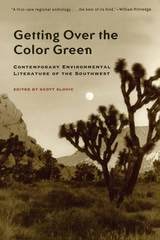
Getting Over the Color Green
Contemporary Environmental Literature of the SouthwestScott Slovic
University of Arizona Press, 2001
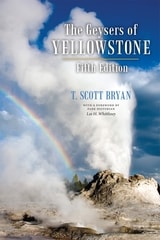
Geysers of Yellowstone, Fifth Edition
T. Scott Bryan
University Press of Colorado, 2018
Both a reference work and a fine introduction to the nature of geyser activity, this popular field guide includes a glossary of key terms, a comprehensive appendix that discusses other geyser areas of the world, detailed maps of each geyser basin, and tables for easy reference. The Geysers of Yellowstone will continue to serve geyser gazers as well as newcomers to geothermal phenomena for years to come.
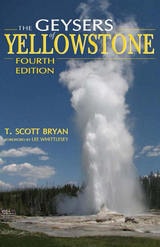
Geysers of Yellowstone, Fourth Edition
T. Scott Bryan
University Press of Colorado, 2008
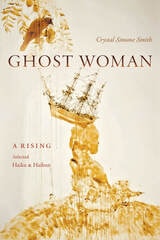
Ghost Woman
A RisingCrystal Simone Smith
Duke University Press, 2026
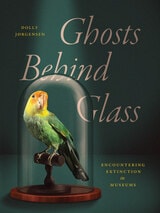
Ghosts Behind Glass
Encountering Extinction in MuseumsDolly Jørgensen
University of Chicago Press, 2025
While it’s no longer possible to encounter a dodo in the wild, we can still come face-to-face with them in museums. The remains of extinct species—whether taxidermied, skeletal, drawn, or sculpted—stare back at us from display cases.
In this moving meditation on what’s lost and what endures, environmental historian Dolly Jørgensen visits natural history collections worldwide—from Shanghai to Philadelphia, from Edinburgh to Hobart, Australia—to understand the many ways that museums tell stories about extinction. She encounters extinct animals that are framed as cultural artifacts and as rare valuables, that are memorialized with lists, and that are brought to life through augmented reality. She draws our attention to creatures with prominent afterlives—passenger pigeons, giant moas, thylacines—as well as those that are less likely to be discussed or displayed. Throughout, Jørgensen examines the relationship between museums and the natural world, so readers can look more closely at exhibits about extinction, studying the displays for what is there, as well as what is missing. During a period of rapid species loss driven by humanity’s environmental impact, Ghosts Behind Glass asks what we can learn about our world from the presence of the extinct.
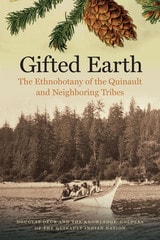
Gifted Earth
The Ethnobotany of the Quinault and Neighboring TribesDouglas Deur
Oregon State University Press, 2022
Gifted Earth features traditional Native American plant knowledge, detailing the use of plants for food, medicines, and materials. It presents a rich and living tradition of plant use within the Quinault Indian Nation in a volume collaboratively developed and endorsed by that tribe.
The Quinault Reservation on the Olympic Peninsula of Washington state is a diverse tribal community, embodying the traditional knowledge of tribes along the entire Pacific Northwest coast. Its membership consists of descendants of many tribes—from the northwestern Olympic Peninsula to the northern Oregon coast—including the Quinault, but also many others who were relocated to the reservation in the nineteenth and early twentieth centuries. Individuals descended from these tribal communities, including Chinook, Chehalis, Hoh, Quileute, Queets, Cowlitz, Tillamook, Clatsop, and others, have contributed to Gifted Earth, giving it remarkable breadth and representation.
A celebration of enduring Native American knowledge, this book will help non-specialists as they discover the potential of the region’s wild plants, learning how to identify, gather, and use many of the plants that they encounter in the Northwestern landscape. Part ethnobotanical guide and part “how-to” manual, Gifted Earth also prepares plant users for the minor hazards and pitfalls that accompany their quest—from how to avoid accidentally eating a bug hidden within a salal berry to how to prevent blisters when peeling the tender stalks of cow parsnip.
As beautiful as it is informative, Gifted Earth sets the standard for a new generation of ethnobotanical guides informed by the values, vision, and voice of Native American communities eager to promote a sustainable, balanced relationship between plant users and the rich plant communities of traditional tribal lands.
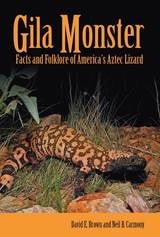
Gila Monster
Facts & Folklore Of Americas Aztec LizardDavid E. Brown
University of Utah Press, 1999
In this volume, authors David Brown and Neil Carmony dig out the tall tales, dispel the myths, and reveal the lizard’s true character. Through a collection of biological and historical facts mixed with entertaining stories, they have created an illuminating account of America’s largest and only poisonous lizard. Written in an engaging style, The Gila Monster is a fun and educational read for all who are intrigued by the Southwest and its most mysterious denizen.
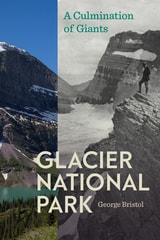
Glacier National Park
A Culmination of GiantsGeorge Bristol
University of Nevada Press, 2017
First there were tribes of Native Americans whose deep regard for nature left the landscape intact. They were followed by Euro-American explorers and settlers who may have been awed by the new lands, but began to move wildlife to near extinction. Fortunately for the area that would become Glacier, some began to recognize that laying siege to nature and its bounties would lead to wastelands.
Bristol recounts how a renewed conservation ethic fostered by such leaders as Emerson, Thoreau, Olmstead, Muir, and Teddy Roosevelt took hold. Their disciples were Grinnell, Hill, Mather, Albright, and Franklin Roosevelt, and they would not only take up the call but rally for the cause. These giants would create and preserve a park landscape to accommodate visitors and wilderness alike.
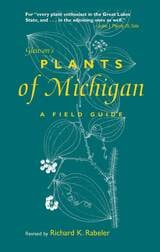
Gleason's Plants of Michigan
A Field GuideRevised by Richard K. Rabeler
University of Michigan Press, 1998
“For every plant enthusiast in the Great Lakes State, and . . . in the adjoining ones as well.”
—John J. Pipoly III, SIDA
“A very handy field guide . . . this book will be of use to anyone in northeastern North America.”
—C. Barre Hellquist, Rhodora
“It can be used to identify most of the plants . . . in Michigan and adjacent areas.”
—James E. Eckenwalder, Wildflower
Gleason’s Plants of Michigan is a major revision and expansion of The Plants of Michigan by Henry A. Gleason—the 1918 classic field guide to the flowering plants and trees found in Michigan, neighboring Great Lakes States, and southern Ontario. Richard K. Rabeler has completely updated the family descriptions and added easy-to-use keys. Information on habitats and geographical distribution is now included as well as a comprehensive index of plant names, an illustrated section on terminology, a glossary, and an introduction to botany in Michigan.
Gleason’s Plants of Michigan will be useful to naturalists, environmental specialists, botanists, and everyone who loves the wildflowers and native flora of Michigan and the surrounding areas.
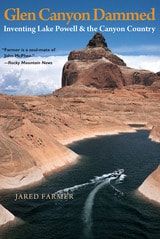
Glen Canyon Dammed
Inventing Lake Powell and the Canyon CountryJared Farmer
University of Arizona Press, 1999
Focusing on the saddening, maddening example of Glen Canyon, Jared Farmer traces the history of exploration and development in the Four Corners region, discusses the role of tourism in changing the face of the West, and shows how the "invention" of Lake Powell has served multiple needs. He also seeks to identify the point at which change becomes loss: How do people deal with losing places they love? How are we to remember or restore lost places? By presenting Glen Canyon as a historical case study in exploitation, Farmer offers a cautionary tale for the future of this spectacular region. In assessing the necessity and impact of tourism, he questions whether merely visiting such places is really good for people's relationships with each other and with the land, suggesting a new ethic whereby westerners learn to value what remains of their environment. Glen Canyon Dammed was written so that the canyon country's perennial visitors might better understand the history of the region, its legacy of change, and their complicity in both. A sobering book that recalls lost beauty, it also speaks eloquently for the beauty that may still be saved.
Global Environmental History
I. G. Simmons
University of Chicago Press, 2008
A far-reaching approach that considers the truly global picture and recognizes the contributions of many disciplines—including the natural sciences, the social sciences, and increasingly, the humanities—Global Environmental History focuses not only on the material world but also on humans’ ideas about the planet and their place on it. Taking as his starting point the major phases of human technological evolution of the last 12,000 years, Simmons considers how these changes have affected the natural world and goes on to assess the response to conditions such as climate change. By putting today’s environmental preoccupations into a long-term perspective, Simmons reveals the history of some current anxieties.
A timely examination of the interrelation of history and nature, Simmons’s book will be welcomed by any concerned reader interested in the origins of the modern environmental crisis.
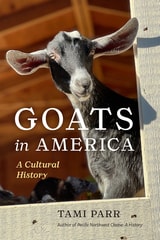
Goats in America
A Cultural HistoryTami Parr
Oregon State University Press, 2025
Since arriving in North America with cattle and other domesticated livestock in the sixteenth century, goats have provided people sustenance and valuable products, including milk, meat, and mohair. But humans did not appreciate the animals, and as a result, throughout much of American history goats were persecuted as public nuisances and symbols of degenerate behavior. Nevertheless, over the centuries the tenacious goat has overcome many of these stereotypes and secured a spot in the hearts and minds of modern Americans, who love goat cheese and embrace goats as social media stars.
Examining key moments and notable developments in goat history and culture, Goats in America outlines the history and evolving role of goats in communities across the country, from San Francisco and New York City to rural Wisconsin and the Navajo Nation. Parr shows that the evolving reputation of goats in American society ultimately reveals more about humans than it does about goats themselves. So, the next time you are enjoying your favorite goat cheese, take a moment to consider the history and role of goats within American culture.
God's Country or Devil's Playground
The Best Nature Writing from the Big Bend of TexasEdited by Barney Nelson
University of Texas Press, 2002
The dramatic desert landscapes of the Big Bend country along the Texas-Mexico border reminded historian Walter Prescott Webb of "an earth-wreck in which a great section of country was shaken down, turned over, blown up, and set on fire." By contrast, naturalist Aldo Leopold considered the region a mountainous paradise in which even the wild Mexican parrots had no greater concern than "whether this new day which creeps slowly over the canyons is bluer or golder than its predecessors, or less so." Whether it impresses people as God's country or as the devil's playground, the Big Bend typically evokes strong responses from almost everyone who lives or visits there.
In this anthology of nature writing, Barney Nelson gathers nearly sixty literary perspectives on the landscape and life of the Big Bend region, broadly defined as Trans-Pecos Texas and northern Chihuahua, Mexico. In addition to Leopold and Webb, the collection includes such well-known writers as Edward Abbey, Mary Austin, Roy Bedichek, and Frederick Olmsted, as well as a wide range of voices that includes explorers, trappers, cowboys, ranch wives, curanderos, college presidents, scientists, locals, tourists, historians, avisadores, and waitresses. Following a personal introduction by Barney Nelson, the pieces are grouped thematically to highlight the distinctive ways in which writers have responded to the Big Bend.
God's Providence and Randomness in Nature
Scientific and Theological PerspectivesRobert John Russell
Templeton Press, 2019
In October 2014, a group of mathematicians, physicists, ecologists, philosophers, and theologians gathered at a special conference in Berkeley, California, to present the results of a two-year research program dubbed “Project SATURN.” This program explored many rich avenues of thought at the intersection of modern science and Christian theology. Chief among them is the possibility that specific processes might be so complex that they do not have sufficient physical causes. Known as “ontological indeterminism,” this idea has profound implications for theology. Specifically, it allows God to be thought of as acting providentially within nature without violating the laws and processes of nature.
Such a momentous insight could influence how we understand free will, natural evil, suffering in nature, and the relation between divine providence and human evolution. The essays collected here discussed these topics and were initially presented at the 2014 conference. Part I establishes the scientific basis for conceptualizing specific processes in the universe as inherently random and possibly indeterministic. Part II discusses the philosophical and theological issues that spring from this understanding. Together they represent the cutting edge of thought in the increasingly productive dialogue between science and theology.
Short for the “Scientific and Theological Understandings of Randomness in Nature,” Project SATURN was created by the Center for Theology and the Natural Sciences, a Program of the Graduate Theological Union, Berkeley. It was funded with a grant administered by Calvin College and provided by the John Templeton Foundation.
Gods and Goddesses in the Garden
Greco-Roman Mythology and the Scientific Names of PlantsBernhardt, Peter
Rutgers University Press, 2008
Going Away to Think
Engagement, Retreat, and Ecocritical ResponsibilityScott Slovic
University of Nevada Press, 2008
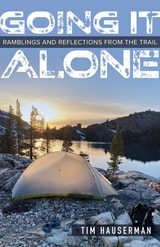
Going It Alone
Ramblings and Reflections from the TrailTim Hauserman
University of Nevada Press, 2022
Hauserman hikes the John Muir Trail through rainstorms and challenging climbs, explores the Tahoe Rim Trail on a fourteen-day excursion, and travels to Minnesota to conquer the Superior Hiking Trail, where he is inundated with bugs, faces drought, and is eerily alone on the trail with not a single other hiker in sight for days. Going It Alone combines his self-deprecating humor, what he identifies as “Stupid Tim Tricks,” and delightful descriptions of the natural surroundings.
Some might describe the wilderness as the middle of nowhere or as nothingness, but for Hauserman, it is everything. While his love for nature remains undaunted through these experiences, he also discovers that he has overly high expectations for his capabilities and that he cannot just wish his loneliness away. He eventually discovers that his long walks in the woods are less about hiking and more about learning how he wants to live his life.
Going It Alone
Ramblings and Reflections from the TrailTim Hauserman
University of Nevada Press, 2022
Hauserman hikes the John Muir Trail through rainstorms and challenging climbs, explores the Tahoe Rim Trail on a fourteen-day excursion, and travels to Minnesota to conquer the Superior Hiking Trail, where he is inundated with bugs, faces drought, and is eerily alone on the trail with not a single other hiker in sight for days. Going It Alone combines his self-deprecating humor, what he identifies as “Stupid Tim Tricks,” and delightful descriptions of the natural surroundings.
Some might describe the wilderness as the middle of nowhere or as nothingness, but for Hauserman, it is everything. While his love for nature remains undaunted through these experiences, he also discovers that he has overly high expectations for his capabilities and that he cannot just wish his loneliness away. He eventually discovers that his long walks in the woods are less about hiking and more about learning how he wants to live his life.
Going Wild
Hunting, Animal Rights, and the Contested Meaning of NatureJan E. Dizard
University of Massachusetts Press, 1999
A probing study of the way diverse conceptions of nature shape our responses to specific environmental issues, this book examines the recent clash over a proposed deer hunt on the largest public watershed in Massachusetts, the Quabbin reservoir. In analyzing this public dispute, Jan E. Dizard draws on a wide range of sources, including interviews with resource managers, animal rights advocates, hunters, and environmentalists. He shows how each faction, while sharing some common ground with the others, projects different meanings onto nature.
Going to the Moon
Sally Ashton
Duke University Press, 2026
In 2022, poet Sally Ashton learned that one of her poems would be included in a time capsule to be sent to the Moon via Astrobotic’s 2024 Griffin/VIPER as part of the Lunar Codex project. For her, this event seemed like the high point in a life spent chasing the Moon, from a childhood inspired by the space race of the 1960s to an adulthood spent in contemplation and conversation with the sky. In Going to the Moon, Ashton marvels at the Moon’s powerful influence since the dawn of humanity—how we have, in our own ways, gone to the Moon, and what we have found. Contemplating lunar settlement in the light of history, culture, the rise of the space industry, and geopolitical conflict, Ashton shares her sense of wonder at the simple beauty of our unchanged Moon and reveals what is at stake in our contemporary attempts to colonize it.
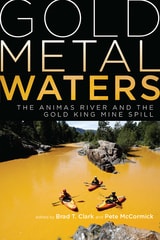
Gold Metal Waters
The Animas River and the Gold King Mine SpillBrad T. Clark
University Press of Colorado, 2022
This singular event is surveyed and interpreted from multiple diverse perspectives—college professors, students, and scientists and activists from a range of academic and epistemological backgrounds—with each chapter reflecting unique professional and personal experiences. Contributors examine both the context for this event and responses to it, embedding this discussion within the broader context of the tens of thousands of mines leaking pollutants into waterways and soils throughout Colorado and the failure to adequately mitigate the larger ongoing crisis.
The Gold King Mine spill was the catalyst that finally brought Superfund listing to the Silverton area; it was a truly sensational event in many respects. Gold Metal Waters will be of interest to students and scholars in all disciplines, but especially in environmental history, western history, mining history, politics, and communication, as well as general readers concerned with human relationships with the environment.
Contributors: Alane Brown, Brian L. Burke, Karletta Chief, Steven Chischilly, Becky Clausen, Michael A. Dichio, Betty Carter Dorr, Cynthia Dott, Gary Gianniny, David Gonzales, Andrew Gulliford, Lisa Marie Jacobs, Ashley Merchant, Teresa Montoya, Scott W. Roberts, Lorraine L. Taylor, Jack Turner, Keith D. Winchester, Megan C. Wrona, Janene Yazzie
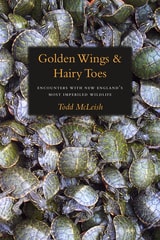
Golden Wings & Hairy Toes
Encounters with New England’s Most Imperiled WildlifeTodd McLeish
University Press of New England, 2009
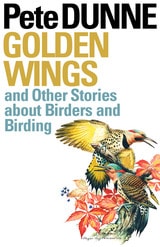
Golden Wings and Other Stories about Birders and Birding
By Pete Dunne
University of Texas Press, 2003
Dubbed the "Bard of America's Bird-Watchers" by the Wall Street Journal, Pete Dunne knows birders and birding—instinctively and completely. He understands the compulsion that drives other birders to go out at first light, whatever the weather, for a chance to maybe, just maybe, glimpse that rare migrant that someone might have spotted in a patch of woods the day before yesterday. And yet, he also knows how . . . well . . . strange the birding obsession becomes when viewed through the eyes of a nonbirder. His dual perspective—totally engrossed in birding, yet still aware of the "odd birdness" of some birders—makes reading his essays a pure pleasure whether you pursue "the feather quest" or not.
This book collects forty-one of Dunne's recent essays, drawn from his columns in Living Bird, Wild Bird News, the New Jersey Sunday section of the New York Times, Birder's World, and other publications. Written with his signature wit and insight, they cover everything from a moment of awed communion with a Wandering Albatross ("the most beautiful thing I'd ever seen") to Dunne's imagined "perfect bird" ("The Perfect Bird is the size of a turkey, has the wingspan of an eagle, the legs of a crane, the feet of a moorhen, and the talons of a great horned owl. It eats kudzu, surplus zucchini, feral cats, and has been known to predate upon homeowners who fire up their lawn mowers before 7:00 A.M. on the weekend."). The title essay pays whimsical, yet heartfelt tribute to Dunne's mentor, the late birding legend Roger Tory Peterson.
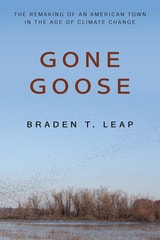
Gone Goose
The Remaking of an American Town in the Age of Climate ChangeBraden T. Leap
Temple University Press, 2019
Sumner, MO, pop. 102, near the Swan Lake National Wildlife Refuge, proclaims itself “The Wild Goose Capital of the World.” It even displays Maxie, the World’s largest goose: a 40-foot tall fiberglass statue with a wingspan stretching more than 60 feet. But while the 200,000 Canada geese that spent their falls and winters at Swan Lake helped generate millions of dollars for the local economy—with hunting and the annual Goose Festival—climate change, as well as environmental and land use issues, have caused the birds to disappear. The economic loss of the geese and the activities they inspired served as key building blocks in the rural identities residents had developed and treasured.
In his timely and topical book, Gone Goose, Braden Leap observes how members of this rural town adapted, reorganized, and reinvented themselves in the wake of climate change—and how they continued to cultivate respect and belonging in their community. Leap conducted interviews with residents and participated in various community events to explore how they reimagine their relationships with each other as well as their community’s relationship with the environment, even as they wish the geese would return.
Gone to the Swamp
Raw Materials for the Good Life in the Mobile-Tensaw DeltaRobert Leslie Smith
University of Alabama Press, 2008
Normal0falsefalsefalseMicrosoftInternetExplorer4Normal0falsefalsefalseMicrosoftInternetExplorer4
To make a living here, one had to be capable, confident, clever and inventive, know a lot about survival, be able to fashion and repair tools, navigate a boat, fell a tree, treat a snakebite, make a meal from whatever was handy without asking too many questions about it, and get along with folks.
This fascinating and instructive book is the careful and unpretentious account of a man who was artful in all the skills needed to survive and raise a family in an area where most people would be lost or helpless. Smith’s story is an important record of a way of life beginning to disappear, a loss not fully yet realized. We are lucky to have a work that is both instructive and warm-hearted and that preserves so much hard-won knowledge.
Good Water
Kevin Holdsworth
University Press of Colorado, 2016
In essays that combine memoir with biography of place, Kevin Holdsworth creates a public history of the land he calls home: Good Water, Utah. The high desert of south-central Utah is at the heart of the stories he tells here—about the people, the “survivors and casualties” of the small, remote town—and is at the heart of his own story.
Holdsworth also explores history at a personal level: how Native American history is preserved by local park officials; how Mormon settlers adapted to remote, rugged places; how small communities attract and retain those less likely to thrive closer to population centers; and how he became involved in local politics. He confronts the issues of land use and misuse in the West, from the lack of water to greed and corruption over natural resources, but also considers life’s simple pleasures like the value of scenery and the importance of occasionally tossing a horseshoe.
Good Water’s depiction of modern-day Utah and exploration of friendships and bonding on the Western landscape will fascinate and entice readers in the West and beyond.
Gordon MacQuarrie
The Story of an Old Duck HunterKeith Crowley
Wisconsin Historical Society Press, 2003
Gorillas among Us
A Primate Ethnographer’s Book of DaysDawn Prince-Hughes; Foreword by Jane Goodall
University of Arizona Press, 2001
Dawn Prince-Hughes is an extraordinary researcher. She does not experiment or measure but instead sits on a wooden bench for hours each day, watching captive gorillas through the enclosure where other visitors average five-second stops. Her patience is rewarded with astounding observations—she watches gorillas make and use tools, bury a dead crow, give birth, and comfort and care for each other.
In Gorillas among Us, Prince-Hughes has compressed years of gorilla observation into a composite diary chronicling the days of one gorilla family. She creates a blended portrait of both peoples—gorilla and human. The entries capture significant observations, which often prompt brief discussions of gorillas’ captivity, diet, communication, aesthetic preferences, social behavior, and play. Several chapters end with thought-provoking meditations on human values. The final section, “More about Gorillas,” provides a concise, accessible introduction to gorilla natural history.
This book will delight and move anyone with an interest in animals, and it also makes a significant contribution to the scarce literature on captive gorillas. Prince-Hughes's observations of tool use by gorillas will interest scientists, and even a casual reader will come away with a new sense of the power of observation. The author hopes to change the way we look at animals in the wild and in captivity, and laments that zoo visitors pause so briefly in front of the gorilla enclosure, rushing on with their assumptions unchanged, without really seeing the gorillas.
By turns opinionated and descriptive, quirky and authoritative, Prince-Hughes draws us into the family life of captive gorillas and into a consideration of our own culture. Readers will learn something new about gorillas and themselves on every page of this poignant story. The book testifies to the potential for interspecies compassion and the love that one person can find in a family of gorillas.
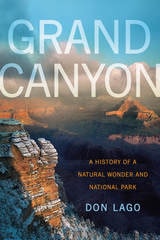
Grand Canyon
A History of a Natural Wonder and National ParkDon Lago
University of Nevada Press, 2015
The Grand Canyon became a microcosm of the history and evolving values of the
National Park Service, long conflicted between encouraging tourism and protecting nature. Many vivid characters shaped the canyon’s past. Its largest story is one of cultural history and changing American visions of the land.
Grand Canyon: A History of a Natural Wonder and National Park is a mixture of great storytelling, unlikely characters, and important ideas. The book will appeal to both general readers and scholars interested in seeking a broader understanding of the canyon.
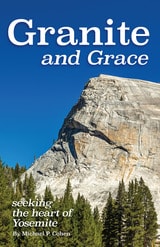
Granite and Grace
Seeking the Heart of YosemiteMichael P. Cohen
University of Nevada Press, 2019
Drawing together the humanistic and scientific significance of the wild landscapes he traverses, Michael uncovers relationships between people and places and meaning and substance, rendering this text part memoir—but also considerably more. On-the-rock encounters by hand and foot open up a dialogue between the heart of a philosopher and the mind of a geologist. Michael adds a literary softness to this hard landscape, blending excursions with exposition and literature with science. It is through his graceful representations that the geological becomes metaphorical, while the science turns mythological.
This high country, where in 1889 John Muir and Robert Underwood Johnson planned what would become Yosemite National Park, is significant for cultural as well as natural reasons. Discoursing on everything from Camus’s “Myths of Sisyphus” to the poems of Gary Snyder, Michael adds depth to an already splendorous landscape. Premier early geologists, such as François Matthes, shaped the language of Yosemite’s landscape. Even though Yosemite has changed over half a century, the rock has not. As Michael explores the beauty and grace of his familiar towering vistas, he demonstrates why, of the many aspects of the world to which one might get attached, the most secure is granite.