Results by title
2916 books match the query 'Politics and government' and 61 start with g

Gangsters to Governors
The New Bosses of Gambling in AmericaClary, David
Rutgers University Press, 2017
Winner of the 2018 Bronze Current Events Book Award from the Independent Publisher Book Awards
Generations ago, gambling in America was an illicit activity, dominated by gangsters like Benny Binion and Bugsy Siegel. Today, forty-eight out of fifty states permit some form of legal gambling, and America’s governors sit at the head of the gaming table. But have states become addicted to the revenue gambling can bring? And does the potential of increased revenue lead them to place risky bets on new casinos, lotteries, and online games?
In Gangsters to Governors, journalist David Clary investigates the pros and cons of the shift toward state-run gambling. Unearthing the sordid history of America’s gaming underground, he demonstrates the problems with prohibiting gambling while revealing how today’s governors, all competing for a piece of the action, promise their citizens payouts that are rarely delivered.
Clary introduces us to a rogue’s gallery of colorful characters, from John “Old Smoke” Morrissey, the Irish-born gangster who built Saratoga into a gambling haven in the nineteenth century, to Sheldon Adelson, the billionaire casino magnate who has furiously lobbied against online betting. By exploring the controversial histories of legal and illegal gambling in America, he offers a fresh perspective on current controversies, including bans on sports and online betting. Entertaining and thought-provoking, Gangsters to Governors considers the past, present, and future of our gambling nation.
Author's website (http://www.davidclaryauthor.com)
Gender Differences in Public Opinion
Values and Political ConsequencesMary-Kate Lizotte
Temple University Press, 2020
In this era in which more women are running for public office—and when there is increased activism among women—understanding gender differences on political issues has become critical. In her cogent study, Mary-Kate Lizotte argues that assessing the gender gap in public support for policies through a values lens provides insight into American politics today. There is ample evidence that men and women differ in their value endorsements—even when taking into account factors such as education, class, race, income, and party identification.
In Gender Differences in Public Opinion, Lizotte utilizes nationally representative data, mainly from the American National Election Study, to study these gender gaps, the explanatory power of values, and the political consequences of these differences. She examines the gender differences in several policy areas such as equal rights, gun control, the death penalty, and the environment, as well as social welfare issues. The result is an insightful and revealing study of how men and women vary in their policy positions and political attitudes.
Gender and Modernity in Andean Bolivia
By Marcia Stephenson
University of Texas Press, 1999
In Andean Bolivia, racial and cultural differences are most visibly marked on women, who often still wear native dress and speak an indigenous language rather than Spanish. In this study of modernity in Bolivia, Marcia Stephenson explores how the state's desire for a racially and culturally homogenous society has been deployed through images of womanhood that promote the notion of an idealized, acculturated female body.
Stephenson engages a variety of texts—critical essays, novels, indigenous testimonials, education manuals, self-help pamphlets, and position papers of diverse women's organizations—to analyze how the interlocking tropes of fashion, motherhood, domestication, hygiene, and hunger are used as tools for the production of dominant, racialized ideologies of womanhood. At the same time, she also uncovers long-standing patterns of resistance to the modernizing impulse, especially in the large-scale mobilization of indigenous peoples who have made it clear that they will negotiate the terms of modernity, but always "as Indians."
Gender in Campaigns for the U.S. House of Representatives
Barbara Burrell
University of Michigan Press, 2014
Gender, Indian, Nation
The Contradictions of Making Ecuador, 1830–1925Erin O'Connor
University of Arizona Press, 2007
O’Connor begins her investigations by examining the multilayered links between gender and Indian-state relations in nineteenth-century Ecuador. Disentangling issues of class and culture from issues of gender, she uncovers overlapping, conflicting, and ever-evolving patriarchies within both indigenous communities and the nation’s governing bodies. She finds that gender influenced sociopolitical behavior in a variety of ways, mediating interethnic struggles and negotiations that ultimately created the modern nation. Her deep research into primary sources—including congressional debates, ministerial reports, court cases, and hacienda records—allows a richer, more complex, and better informed national history to emerge.
Examining gender during Ecuadorian state building from “above” and “below,” O’Connor uncovers significant processes of interaction and agency during a critical period in the nation’s history. On a larger scale, her work suggests the importance of gender as a shaping force in the formation of nation-states in general while it questions recountings of historical events that fail to demonstrate an awareness of the centrality of gender in the unfolding of those events.
Gender, Intersections, and Institutions
Intersectional Groups Building Alliances and Gaining Voice in GermanyEdited by Louise K. Davidson-Schmich
University of Michigan Press, 2017
Gender, Law, and Resistance in India
Erin P. Moore
University of Arizona Press, 1988
Gender, Separatist Politics, and Embodied Nationalism in Cameroon
Jacqueline-Bethel Tchouta Mougoué
University of Michigan Press, 2019
Gender, Separatist Politics, and Embodied Nationalism in Cameroon illuminates how issues of ideal womanhood shaped the Anglophone Cameroonian nationalist movement in the first decade of independence in Cameroon, a west-central African country. Drawing upon history, political science, gender studies, and feminist epistemologies, the book examines how formally educated women sought to protect the cultural values and the self-determination of the Anglophone Cameroonian state as Francophone Cameroon prepared to dismantle the federal republic. The book defines and uses the concept of embodied nationalism to illustrate the political importance of women’s everyday behavior—the clothes they wore, the foods they cooked, whether they gossiped, and their deference to their husbands. The result, in this fascinating approach, reveals that West Cameroon, which included English-speaking areas, was a progressive and autonomous nation. The author’s sources include oral interviews and archival records such as women’s newspaper advice columns, Cameroon’s first cooking book, and the first novel published by an Anglophone Cameroonian woman.
Generational Politics in the United States
From the Silents to Gen Z and BeyondSally Friedman and David Schultz, Editors
University of Michigan Press, 2024
Generational Politics in the United States is the first comprehensive book that examines the concept of generations from a political science perspective. It defines what a generation is and how to sort out the differences between life cycle, cohort, and aging effect. The book then brings together chapters from an array of political science scholars that examine the role of generations in American politics and how it relates to other variables such as age, race, gender, and socioeconomic status. It discusses how politics in the United States are impacted by changes in generations, including how the passing of the Baby Boom generation and rise of the Millennials and Gen Z will change American politics. By examining the differences in political attitudes, engagement, and impact of recent generations, Generational Politics in the United States suggests how generational change will impact American politics in the future.
Geology and Politics in Frontier Texas, 1845–1909
By Walter Keene Ferguson
University of Texas Press, 1969
Conservation and development of natural resources are issues of critical importance throughout the world. These issues have been matters of public concern in Texas since legislators first adopted the state-sponsored geological survey as a means of extending government funds to private citizens who would help develop and advertise the mineral and agricultural wealth of Texas.
Walter Keene Ferguson examines the relation of politics to geological exploration during a critical period in Texas history—the first half-century of statehood. Although Texas shared its frontier experience with many other areas, it could not rely on federal aid in the form of land grants because the state government controlled the destiny of the public domain at all times. Acrimonious debate between farmers and urbanites of East Texas and pioneer ranchers of arid West Texas rendered the disposition of public lands even more difficult.
As tools for developing and advertising resources, the geological and agricultural surveys of 1858 and 1867 fulfilled the demands of expectant capitalism made by politicians, speculators, and railroad entrepreneurs. Reconnaissance geologists publicized the wealth of Texas.
Drought in 1886 and popular agitation against squandering of state land caused the emergence of a new concept of the geological survey as an instrument of land reform and public assistance. Lobbying by reformers and scientific organizations led to the formation of the Dumble Survey in 1888 and the University of Texas Mineral Survey in 1901. Stratigraphic analysis of the “individualities” of Texas geology helped the state realize its full economic potential and led to legislation to protect public mineral land from exploitation.
The youthful oil industry finally removed geological exploration from the political arena. As part of the University, a permanent Bureau of Economic Geology was established in 1909 to extend the benefits of scientific research to private citizens and state organizations on a nonpartisan basis.
Ferguson’s analysis of geological surveys in Texas contributes to an understanding not only of the geology and history of the state but of the urgent problem of evaluating the natural resources of underdeveloped regions.
George W. Bush
A Biography for Beginning HistoriansLouann Atkins Temple
University of Texas Press, 2025
A brief biography of George W. Bush for young readers.
Louann Temple is a lifelong Texan with a personal passion for arts and education who believes that biography, with its emphasis on personalities, is ideal for introducing young people to history, with its focus on events. Temple is uniquely situated to write this biography for young readers, as she has been personally acquainted with many important people in presidential history, President George W. Bush included, and she has mentored countless middle and high school students, preparing them for college admission.
George W. Bush highlights the key events in the life of the forty-third president; explores the life lessons afforded by his legacy; and reflects on the broad historical issues during his time in the White House as president from 2001 to 2009. George W. Bush’s legacy as president is significant as he guided America through the events of 9/11. Enhanced with a carefully curated selection of black and white photographs from three presidential libraries, this biography for beginning historians is poised to bring the best of biography and history to a new generation of readers.
George Washington
A Man of ActionJohn P. Kaminski
Wisconsin Historical Society Press, 2017
George Wingfield
Owner And Operator Of NevadaC. Elizabeth Raymond
University of Nevada Press, 2013
Banker, hotel owner, and political powerhouse George Wingfield was a significant figure in Nevada history. He was influential in developing Reno's gambling-and-divorce-related tourism. Raymond's biography depicts the man and his times, from his birth in Arkansas in 1876 until his death in Reno in 1959. Wilbur S. Shepperson Series in History and Humanities.

Georgia
Pawn in the New Great GamePer Gahrton
Pluto Press, 2010
The 2008 Ossetia War underlined the fact that Georgia is caught in a political struggle between East and West. Per Gahrton analyses American and Russian policy towards the country and provides a firsthand account of the Rose Revolution of 2003, its origin and aftermath.
The book traces the increasing US involvement in Georgia and the Russian reaction of anger, sanctions and, eventually, invasion. Gahrton's analysis is based on interviews with key politicians and his experience as the rapporteur of the European Parliament on South Caucasus. At centre stage is the growing opposition against authoritarian aspects of President Mikheil Saakashvili’s regime and the mysterious death of Prime Minister Zhvania in 2005. The book also asks if the Rose Revolution was a conspiracy or a genuine popular uprising.
This truly authoritative account of Georgia is a must for students studying international relations in the aftermath of The Cold War.
Gerald R. Ford
An Honorable LifeJames Cannon
University of Michigan Press, 2013
“Not since Harry Truman succeeded Franklin D. Roosevelt twenty-nine years earlier had the American people known so little about a man who had stepped forward from obscurity to take the oath of office as President of the United States.”
—from Chapter 4
This is a comprehensive narrative account of the life of Gerald Ford written by one of his closest advisers, James Cannon. Written with unique insight and benefiting from personal interviews with President Ford in his last years, Gerald R. Ford: An Honorable Lifeis James Cannon’s final look at the simple and honest man from the Midwest.
German Americans on the Middle Border
From Antislavery to Reconciliation, 1830–1877Zachary Stuart Garrison
Southern Illinois University Press, 2020
Liberal German immigrants, having escaped the European aristocracy who undermined their revolution and the formation of a free nation, viewed slaveholders as a specter of European feudalism. During the antebellum years, many liberal German Americans feared slavery would inhibit westward progress, and so they embraced the Free Soil and Free Labor movements and the new Republican Party. Most joined the Union ranks during the Civil War.
After the war, in a region largely opposed to black citizenship and Radical Republican rule, German Americans were seen as dangerous outsiders. Facing a conservative resurgence, liberal German Republicans employed the same line of reasoning they had once used to justify emancipation: A united nation required the end of both federal occupation in the South and special protections for African Americans. Having played a role in securing the Union, Germans largely abandoned the freedmen and freedwomen. They adopted reconciliation in order to secure their place in the reunified nation. Garrison’s unique transnational perspective to the sectional crisis, the Civil War, and the postwar era complicates our understanding of German Americans on the middle border.

German Liberalism in the Nineteenth Century
James J. Sheehan
University of Chicago Press, 1978
Germans and Jews
The Right, the Left, and the Search for a "Third Force" in Pre-Nazi GermanyGeorge L. Mosse
University of Wisconsin Press, 2023
This innovative perspective has implications for understanding not only the rise of fascism and Nazism in Germany but also the rise and fall of the New Left in the United States and Europe, which was occurring at the time of Mosse’s writing. A new critical introduction by Sarah Wobick-Segev, research associate at the University of Hamburg, places Mosse’s work in its historical and intellectual contexts and draws lessons for students and scholars today.

Gerry Studds
America's First Openly Gay CongressmanMark Robert Schneider
University of Massachusetts Press, 2017
The defining moment of his career, however, came in 1983, when he was censured by the House for having had an affair with a page ten years previously. On the floor of Congress, Studds confessed to having behaved inappropriately and then courageously declared that he was a gay man—becoming the country's first openly gay member of Congress. Defying all expectations, Studds won reelection in a bruising campaign. For the rest of his career, he remained loyal to his constituents' concerns while also championing AIDS research and care, leading the effort in Congress to allow gays and lesbians to serve in the military, and opposing the Defense of Marriage Act. Once a deeply conflicted man, he ultimately found a balance between his public service and his private life, which included a happy, legally recognized marriage.
Getting Out of the Mud
The Alabama Good Roads Movement and Highway Administration, 1898–1928Martin T. Olliff, Foreword by David O. Whitten
University of Alabama Press, 2017
Recounts the history of the Good Roads Movement that arose in progressive-era Alabama, how it used the power of the state to achieve its objectives of improving market roads for farmers and highways for automobiles
Getting Out of the Mud: The Alabama Good Roads Movement and Highway Administration, 1898–1928 explores the history of the Good Roads Movement and investigates the nature of early twentieth-century progressivism in the state. Martin T. Olliff reveals how middle-class reformers secured political, economic, and social power not only by fighting against corporate domination and labor recalcitrance but also by proposing alternative projects like road improvement and identifying the interests of the rising middle class as being the most important to public interest.
With the development of national markets in the late nineteenth and early twentieth centuries, Americans began to regard the nation as a whole, rather than their state or region, as the most important political entity. Many Alabamians wished to travel beyond their local communities in all seasons without getting stuck in the mud of rudimentary rutted dirt roads. The onset of the automobile age bolstered the need for roadmaking, alerting both automobilists and good roads advocates to the possibility of a new transportation infrastructure. The Good Roads Movement began promoting farm-to-market roads, then highways that linked cities, then those that connected states. Federal matching funds for road construction after 1916 led state and federal governments to supplant the Good Roads Movement, building and administering the highway system that emerged by the late 1920s.
Olliff’s study of how Alabamians dealt with strained resources and overcame serious political obstacles in order to construct a road system that would accommodate economic growth in the twentieth century may offer clues to the resurrection of a similar strategy in our modern era. Many problems are unchanged over the hundred years between crises: Alabamians demand good roads and a government that has the capacity to build and maintain such an infrastructure while, at the same time, citizens are voting into office men and women who promise lower taxes and smaller government.

Ghost Riders of Baghdad
Soldiers, Civilians, and the Myth of the SurgeDaniel A. Sjursen
University Press of New England, 2015
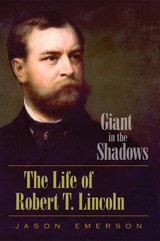
Giant in the Shadows
The Life of Robert T. LincolnJason Emerson
Southern Illinois University Press, 2012
University Press Books for Public and Secondary Schools, 2013 edition
Book of the Year by the Illinois State historical Society, 2013
Although he was Abraham and Mary Lincoln’s oldest and last surviving son, the details of Robert T. Lincoln’s life are misunderstood by some and unknown to many others. Nearly half a century after the last biography about Abraham Lincoln’s son was published, historian and author Jason Emerson illuminates the life of this remarkable man and his achievements in Giant in the Shadows: The Life of Robert T. Lincoln. Emerson, after nearly ten years of research, draws upon previously unavailable materials to offer the first truly definitive biography of the famous lawyer, businessman, and statesman who, much more than merely the son of America’s most famous president, made his own indelible mark on one of the most progressive and dynamic eras in United States history.
Born in a boardinghouse but passing his last days at ease on a lavish country estate, Robert Lincoln played many roles during his lifetime. As a president’s son, a Union soldier, an ambassador to Great Britain, and a U.S. secretary of war, Lincoln was indisputably a titan of his age. Much like his father, he became one of the nation’s most respected and influential men, building a successful law practice in the city of Chicago, serving shrewdly as president of the Pullman Car Company, and at one time even being considered as a candidate for the U.S. presidency.
Along the way he bore witness to some of the most dramatic moments in America’s history, including Robert E. Lee’s surrender at Appomattox Courthouse; the advent of the railroad, telephone, electrical, and automobile industries; the circumstances surrounding the assassinations of three presidents of the United States; and the momentous presidential election of 1912. Giant in the Shadows also reveals Robert T. Lincoln’s complex relationships with his famous parents and includes previously unpublished insights into their personalities. Emerson reveals new details about Robert’s role as his father’s confidant during the brutal years of the Civil War and his reaction to his father’s murder; his prosecution of the thieves who attempted to steal his father’s body in 1876 and the extraordinary measures he took to ensure it would never happen again; as well as details about the painful decision to have his mother committed to a mental facility. In addition Emerson explores the relationship between Robert and his children, and exposes the actual story of his stewardship of the Lincoln legacy—including what he and his wife really destroyed and what was preserved. Emerson also delves into the true reason Robert is not buried in the Lincoln tomb in Springfield but instead was interred at Arlington National Cemetery.
Meticulously researched, full of never-before-seen photographs and new insight into historical events, Giant in the Shadows is the missing chapter of the Lincoln family story. Emerson’s riveting work is more than simply a biography; it is a tale of American achievement in the Gilded Age and the endurance of the Lincoln legacy.

Girls of Liberty
The Struggle for Suffrage in Mandatory PalestineMargalit Shilo
Brandeis University Press, 2016
Global Homophobia
States, Movements, and the Politics of OppressionEdited by Meredith L. Weiss and Michael J. Bosia
University of Illinois Press, 2013
Combining rich empirical analysis with theoretical synthesis, these studies examine how homophobia travels across complex and ambiguous transnational networks, how it achieves and exerts decisive power, and how it shapes the collective identities and strategies of those groups it targets. The first comparative volume to focus specifically on the global diffusion of homophobia and its implications for an emerging worldwide LGBT movement, Global Homophobia opens new avenues of debate and dialogue for scholars, students, and activists.
Contributors are Mark Blasius, Michael J. Bosia, David K. Johnson, Kapya J. Kaoma, Christine (Cricket) Keating, Katarzyna Korycki, Amy Lind, Abouzar Nasirzadeh, Conor O'Dwyer, Meredith L. Weiss, and Sami Zeidan.

Global Shadows
Africa in the Neoliberal World OrderJames Ferguson
Duke University Press, 2006
In Global Shadows the renowned anthropologist James Ferguson moves beyond the traditional anthropological focus on local communities to explore more general questions about Africa and its place in the contemporary world. Ferguson develops his argument through a series of provocative essays which open—as he shows they must—into interrogations of globalization, modernity, worldwide inequality, and social justice. He maintains that Africans in a variety of social and geographical locations increasingly seek to make claims of membership within a global community, claims that contest the marginalization that has so far been the principal fruit of “globalization” for Africa. Ferguson contends that such claims demand new understandings of the global, centered less on transnational flows and images of unfettered connection than on the social relations that selectively constitute global society and on the rights and obligations that characterize it.
Ferguson points out that anthropologists and others who have refused the category of Africa as empirically problematic have, in their devotion to particularity, allowed themselves to remain bystanders in the broader conversations about Africa. In Global Shadows, he urges fellow scholars into the arena, encouraging them to find a way to speak beyond the academy about Africa’s position within an egregiously imbalanced world order.
Globalization and the Circumpolar North
Edited by Lassi Heininen and Chris Southcott
University of Alaska Press, 2010
Globalization, Nationalism, and Imperialism
A New History of Eastern EuropeJames W. Peterson
Central European University Press, 2023
The authors of this book retell the political and economic history of East-Central Europe, the post-communist Balkans, and the Baltic states and speculate about their future from the vantage point of three competing forces operating in the region: territorial imperialism, globalization, and nationalism.
Exposed to imperial aspirations, the geographic area from the Baltic Sea to the Black Sea has in the past 150 years been subject to alternating waves of globalization and nationalism. The nineteenth century Eastern European empires were open to forces of economic globalization, but all collapsed at the end of World War One. Emerging nation-states embraced the logic of Western-led globalization but were subjugated by Nazi and Soviet empires, which pursued policies of economic autarchy. The demise of the Soviet empire marked the revival of pre-1939 nation-states and the re-entry of forces of liberalism and globalization into the region, with multiple crises of economic transition, ethnic militancy, new forms of authoritarianism, and external security threats. By 2010 negative, nationalist-populist reactions against crises that globalization brought to Eastern Europe became the dominant political trend. The analysis involves the consideration about the very contemporary factors of Brexit and COVID, as well as Russia’s and China’s influences, and their effects on Eastern Europe.

Globetrotting
African American Athletes and Cold War PoliticsDamion L. Thomas
University of Illinois Press, 2012
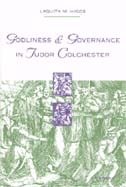
Godliness and Governance in Tudor Colchester
Laquita M. Higgs
University of Michigan Press, 1999
In Godliness and Governance in Tudor Colchester Laquita M. Higgs traces the governance and the religion of that town. Though traditional piety held sway early in the Tudor era, there was a strong undercurrent of hereticism, even among town leaders. Such sympathy helps explain Colchester's embrace of Henry VIII's religious reforms. Town governors also found it advantageous to cooperate with the local nobleman, the earl of Oxford, and with their own Thomas Audley, who helped the King shape the reformation. Queen Mary's attempts to root out Protestantism strengthened Colchester's commitment to reform. Under Elizabeth, reformers gradually took over governance of the borough.
Colchester provides one of the earliest illustrations of the workings and tensions of Puritan town governance. Higgs examines the connections between governance and religion with special emphasis on the Elizabethan period. The town's development toward religious radicalism is shown by a comparison of the aldermen of 1530, 1560, and 1590. Higgs explores the camaraderie of the reformers, the attempt of town leaders to correct immoral behavior, and the resultant tensions that produced deep divisions between moderate reformers and radical Puritans. An analysis of extant wills shows the extent to which Puritan governors achieved some degree of success.
Godliness and Governance in Tudor Colchester will be of interest to historians of the Tudor period, Catholicism, Lollardy, and the English Protestant Reformation.
Laquita M. Higgs is Adjunct Lecturer in History, University of Michigan, Dearborn.
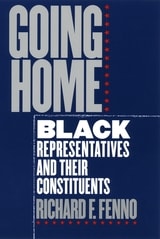
Going Home
Black Representatives and Their ConstituentsRichard F. Fenno
University of Chicago Press, 2003
Fenno follows the careers of four black representatives—Louis Stokes, Barbara Jordan, Chaka Fattah, and Stephanie Tubbs Jones—from their home districts to the halls of the Capitol. He finds that while these politicians had different visions of how they should represent their districts (in part based on their individual preferences, and in part based on the history of black politics in America), they shared crucial organizational and symbolic connections to their constituents. These connections, which draw on a sense of "linked fates," are ones that only black representatives can provide to black constituents.
His detailed portraits and incisive analyses will be important for anyone interested in the workings of Congress or in black politics.
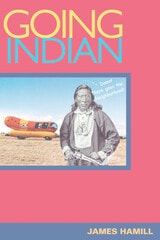
Going Indian
James Hamill
University of Illinois Press, 2006
Going Indian explores Indian (as opposed to tribal) ethnic identity among Native American people in Oklahoma through their telling, in their own words, of how they became Indian and what being Indian means to them today. Divided into four parts, the book features Oklahoma Indians' constructions of their histories and their view of today's native populations, their experiences with forced removals and Indian educational institutions, the meaning they place on blood quantum and ancestry in relation to Indian identity, and their practice of religion in Native churches.
James Hamill makes extensive use of the Indian Pioneer and Doris Duke material at the University of Oklahoma's Western History Library to assemble these narratives, using interviews collected between 1937-38 and 1967-70, as well as interviews he conducted from 2000 to 2001. While most books on Native American people in Oklahoma focus on tribes and their histories, Hamill instead explores the use of Indian symbolism across a wide field of experience to reveal what they thought and what they think about these various issues, and how these have influenced and affected their self-perceptions over time.
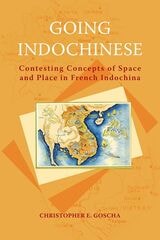
Going Indochinese
Christopher E. Goscha
National University of Singapore Press, 2012
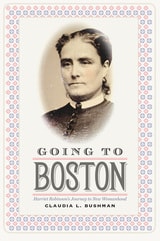
Going to Boston
Harriet Robinson's Journey to New WomanhoodClaudia L. Bushman
University Press of New England, 2017
Good Enough for Government Work
The Public Reputation Crisis in America (And What We Can Do to Fix It)Amy E. Lerman
University of Chicago Press, 2019
With Good Enough for Government Work, Lerman uses surveys, experiments, and public opinion data to argue persuasively that the reputation of government is itself an impediment to government’s ability to achieve the common good. In addition to improving its efficiency and effectiveness, government therefore has an equally critical task: countering the belief that the public sector is mired in incompetence. Lerman takes readers through the main challenges. Negative perceptions are highly resistant to change, she shows, because we tend to perceive the world in a way that confirms our negative stereotypes of government—even in the face of new information. Those who hold particularly negative perceptions also begin to “opt out” in favor of private alternatives, such as sending their children to private schools, living in gated communities, and refusing to participate in public health insurance programs. When sufficient numbers of people opt out of public services, the result can be a decline in the objective quality of public provision. In this way, citizens’ beliefs about government can quickly become a self-fulfilling prophecy, with consequences for all. Lerman concludes with practical solutions for how the government might improve its reputation and roll back current efforts to eliminate or privatize even some of the most critical public services.
Good Reasons to Run
Women and Political CandidacyEdited by Shauna L. Shames, Rachel I. Bernhard, Mirya R. Holman, and Dawn Langan Teele
Temple University Press, 2020
After the 2016 U.S. Presidential election, a large cohort of women emerged to run for office. Their efforts changed the landscape of candidates and representation. However, women are still far less likely than men to seek elective office, and face biases and obstacles in campaigns. (Women running for Congress make twice as many phone calls as men to raise the same contributions.)
The editors and contributors to Good Reasons to Run, a mix of scholars and practitioners, examine the reasons why women run—and do not run—for political office. They focus on the opportunities, policies, and structures that promote women’s candidacies. How do nonprofits help recruit and finance women as candidates? And what role does money play in women’s campaigns?
The essays in Good Reasons to Run ask not just who wants to run, but how to activate and encourage such ambition among a larger population of potential female candidates while also increasing the diversity of women running for office.

Good-Bye Samizdat
Twenty Years of Czechoslovak Underground WritingMarketa Goetz-Stankiewicz
Northwestern University Press, 1992

Govan Mbeki
Colin Bundy
Ohio University Press, 2012
Govan Mbeki (1910–2001) was a core leader of the African National Congress, the Communist Party, and the armed wing of the ANC during the struggle against apartheid. Known as a hard-liner, Mbeki was a prolific writer and combined in a rare way the attributes of intellectual and activist, political theorist and practitioner. Sentenced to life in prison in 1964 along with Nelson Mandela and others, he was sent to the notorious Robben Island prison, where he continued to write even as tension grew between himself, Mandela, and other leaders over the future of the national liberation movement. As one of the greatest leaders of the antiapartheid movement, and the father of Thabo Mbeki, president of South Africa from 1999 to 2008, the elder Mbeki holds a unique position in South African politics and history.
This biography by noted historian Colin Bundy goes beyond the narrative details of his long life: it analyzes his thinking, expressed in his writings over fifty years. Bundy helps establish what is distinctive about Mbeki: as African nationalist and as committed Marxist—and more than any other leader of the liberation movement—he sought to link theory and practice, ideas and action.
Drawing on exclusive interviews Bundy did with Mbeki, careful analysis of his writings, and the range of scholarship about his life, this biography is personal, reflective, thoroughly researched, and eminently readable.
Governance and Foreign Investment in China, India, and Taiwan
Credibility, Flexibility, and International BusinessYu Zheng
University of Michigan Press, 2014
Yu Zheng challenges the idea that democracy is the prerequisite for developing countries to attract foreign direct investment (FDI) and promote economic growth. He examines the relationship between political institutions and FDI through the use of cross-national analysis and case studies of three rapidly growing Asian economies with a focus on the role of microinstitutional “special economic zones” (SEZ).
China’s authoritarian system allows for bold, radical economic reform, but China has attracted FDI largely because of its increasingly credible investment environment as well as its central and local governments’ efforts to overcome constraints on investment. India’s democratic institutions provide more political assurance to foreign investors, but its market became conducive to FDI only when the government adopted more flexible investment policies. Taiwan’s democratic transition shifted its balance of policy credibility and flexibility, which was essential for the nation’s economic takeoff and sustained growth.
Zheng concludes that a more accurate understanding of the relationship between political institutions and FDI comes from careful analysis of institutional arrangements that entail a trade-off between credibility and flexibility of governance.
Governing Divided Societies
Habsburg Austria’s Democratic Legacy and the Czechoslovak First RepublicPhilip Howe
Central European University Press, 2026
Consociationalism has proven its worth as a model for describing contemporary democracies and diagnosing their ills. By exploring the institutions and practices of the Habsburg Monarchy before 1918 and the Czechoslovak First Republic, Howe, Lorman, and Miller prove the value of the consociational theory in analyzing the past. They hold that a multitude of parties, frequent cabinet changes, and reliance on cabinets of experts do not necessarily signal flawed democracies. In fact, they are features of consociationalism. This volume challenges historians and social scientists to view the Austrian half of the Habsburg Monarchy before 1918 as evolving toward consociational democracy and the Czechoslovak First Republic as a fully consociational state.
Governing Gaza
Bureaucracy, Authority, and the Work of Rule, 1917–1967Ilana Feldman
Duke University Press, 2008
Drawing on archival research in Gaza, Cairo, Jerusalem, and London, as well as two years of ethnographic research with retired civil servants in Gaza, Feldman identifies two distinct, and in some ways contradictory, governing practices. She illuminates mechanisms of “reiterative authority” derived from the minutiae of daily bureaucratic practice, such as the repetitions of filing procedures, the accumulation of documents, and the habits of civil servants. Looking at the provision of services, she highlights the practice of “tactical government,” a deliberately restricted mode of rule that makes limited claims about governmental capacity, shifting in response to crisis and operating without long-term planning. This practice made it possible for government to proceed without claiming legitimacy: by holding the question of legitimacy in abeyance. Feldman shows that Gaza’s governments were able to manage under, though not to control, the difficult conditions in Gaza by deploying both the regularity of everyday bureaucracy and the exceptionality of tactical practice.
Governing Indigenous Territories
Enacting Sovereignty in the Ecuadorian AmazonJuliet S. Erazo
Duke University Press, 2013
Governing Oregon
Continuity and ChangeRichard Clucas
Oregon State University Press, 2018
As the twenty-first century began, this political dynamic began to shift. Partisan conflict in the capitol grew less rancorous, legislative gridlock eased, and ballot initiatives lost their central role in defining Oregon politics. Less visible changes reshaped issues from agricultural policy to tribal government. This shifting dynamic coincided with significant transformations in Oregon’s economy and cultural life.
The state’s economy sustained severe blows twice in the early 2000s, but by 2014, Oregon boasted one of the fastest-growing economies in the nation. Along with economic expansion, Oregon’s population grew in both size and diversity. Despite these powerful forces of change, other aspects of Oregon political life remained entrenched, including the deep urban-rural divide and the state’s problematic fiscal system.
With contributions from 27 leading experts and political insiders, Governing Oregon: Continuity and Change offers insight into the people, political practices, governing institutions, and public policies of Oregon. It will be of tremendous value to political scientists, public servants, and engaged citizens alike.
Contributors:
Warda Ajaz is a PhD candidate in the School of Public Policy at Oregon State University.
Jeannine Beatrice is Chief of Staff with the Oregon Department of Human Services (DHS).
David Bernell is an Associate Professor of Political Science in the School of Public Policy at Oregon State University.
Joe Bowersox is the Dempsey Endowed Chair of Environmental Policy and Politics in the Department of Environmental and Earth Science at Willamette University.
Alexandra Buylova is a PhD candidate in the School of Public Policy at Oregon State University.
Paul De Muniz retired as Chief Justice of the Oregon Supreme Court in 2012 after serving for twelve years on the court. De Muniz currently teaches at Willamette University College of Law as a Distinguished Jurist in Residence.
Mark Edwards is Professor of Sociology in the School of Public Policy at Oregon State University.
Leanne Giordono is a PhD candidate in the School of Public Policy at Oregon State University and a National Science Foundation Graduate Research Fellow.
Daniel Gray is a Master of Public Policy (MPP) student in the School of Public Policy at Oregon State University.
Sajjad Haider is a PhD candidate at the School of Management, Lanzhou University (China), and a visiting research scholar at the Mark O. Hatfield School of Government, Portland State University.
Jordan Hensley earned a Master of Public Policy (MPP) degree from the School of Public Policy at Oregon State University.
Allison L. Hurst is an Associate Professor of Sociology in the School of Public Policy at Oregon State University.
Abdullah Husain is a PhD candidate in Environmental Sciences at Oregon State University.
Phil Keisling is Director of the Center for Public Service at Portland State University’s Mark O. Hatfield School of Government. He was Oregon Secretary of State from 1991–1999 and a Member of the Oregon House of Representatives from 1989–1991.
Chris Koski is Associate Professor of Environmental Studies and Chair of the Political Science Department at Reed College.
Justin Martin owns and operates, Perseverance Strategies, Inc., a government relations and public affairs firm.
Melissa Buis Michaux is Associate Professor of Politics at Willamette University.
Douglas Morgan is Professor Emeritus of Public Administration and Director of the Executive MPA Program in the Hatfield School of Government at Portland State University.
Sanne A. M. Rijkhoff is a former adjunct assistant professor of political science at Portland State University. She is currently an Eyes High Postdoctoral Associate at the University of Calgary.
Ethan Seltzer is an Emeritus Professor in the Toulan School of Urban Studies and Planning at Portland State University.
Brent S. Steel is Professor and the Director of the Graduate Program in the School of Public Policy at Oregon State University.
Casey L. Taylor is a Postdoctoral Research Associate in the Department of Political Science at Idaho State University.
Rebecca Warner is Professor of Sociology in the School of Public Policy at Oregon State University.
Governing and Ruling
The Political Logic of Taxation in ChinaChangdong Zhang
University of Michigan Press, 2021
Rapid social economic changes, the transition from a planned economy to a market economy, or even economic liberalization can lead to political instability and the collapse of authoritarian regimes. Despite experiencing all of these unprecedented changes in the past forty years, China under the Chinese Communist Party’s leadership has so far successfully transformed and improved both its governance capacity and its ruling capacity. Governing and Ruling: The Political Logic of Taxation in China addresses this regime resilience puzzle by examining the political logic of its taxation system, especially the ways in which taxation helps China handle three governance problems: maneuvering social control, improving agent discipline, and eliciting cooperation. Changdong Zhang argues that a taxation system plays an important role in sustaining authoritarian rule, in China and elsewhere, by combining co-optation and repression functions. The book collects valuable firsthand and secondhand data; studies China’s taxation system, intergovernmental fiscal relationships, composition of fiscal revenue sources, and tax administration; and discusses how each dimension influences the three governance problems.
Governing the Excluded
Rural Livelihoods Beyond Coca in Colombia's Peace LaboratoryAlex Diamond
University of Chicago Press, 2026
The Colombian village of Briceño might, at first glimpse, look like many communities in the rural Global South. Many of the people living there rely on small-scale farming, even as a newly constructed hydroelectric dam threatens traditional livelihoods. Yet after decades where Briceño suffered from a bloody conflict, the village has more recently become central to the nation’s hopes for peace. In Governing the Excluded, sociologist Alex Diamond shares a closer look at Briceño and offers unique insight not only into the contemporary Colombian state but to how people across the Global South are struggling to maintain rural livelihoods amid economic dispossession.
Governing the Excluded describes a landmark peace process between the Colombian government and the radical FARC guerrillas from the perspective of Colombian farmers, drawing links between economic transformation, drug economies, and armed conflict. Exclusion from global markets for traditional crops like coffee first pushed farmers to grow coca, the raw material for cocaine. This ushered in an era of violent conflict for control of the illicit economy, while farmers continued to be priced out of legal markets. In exchange for peace and state protection, farmers ultimately agreed to sacrifice profitable coca. But with its disappearance, they now find themselves dependent on the state: for machinery to maintain the roads they need to get legal harvests to market, municipal jobs that are the only decent work available, and for public resources to subsidize food crops with razor-thin profit margins. Ongoing economic struggles in the legal sector make the state’s newfound authority tenuous, as some villagers replant coca, abandon the village for uncertain urban futures, or join a rearmed guerrilla group.
Informed by deep ethnographic research and firsthand stories from Briceño residents, Governing the Excluded shows that when it comes to the forces driving dispossession—be they international corporate megaprojects, global food prices, or national initiatives to replace coca cultivation—state authority goes only so far as its ability to sustain local livelihoods.

Governing the New Europe
Jack Hayward and Edward C. Page, eds.
Duke University Press, 1995
Beginning with a discussion of the political, economic, and cultural development of Europe from a historical perspective, the focus of the book shifts to an examination of the changing forms of European democracy and the move from public ownership and planning to privatization and deregulated competition. Further essays analyze the challenge to national party systems and electoral performance from emerging social movements and organized interest groups. Political and bureaucratic structures are also examined as is the new European constitutionalism reflected in the increasingly significant role of the judiciary. Lastly, attention is turned to several major themes in European politics: the changing foundations of foreign and security policy, the function of industrial champion firms, and the retreat from the welfare state. Primarily comparative in its scope, Governing the New Europe does devote particular attention to specific major states as well as to the importance of the European Union to the political life of member and non-member countries.
Neither exaggerating the common features of the patterns that have emerged in contemporary Europe nor capitulating to the complexity of enduring differences and instabilities between states, Governing the New Europe will become one of the standard texts in its field.
Contributors. Jack Hayward, Jolyon Howorth, Herbert Kitschelt, Marie Lavigne, Tom Mackie, Michael Mezey, Edward C. Page, Richard Parry, Richard Rose, Anthony Smith, Alec Stone
Governing the Twin Cities Region
The Metropolitan Council in Comparative PerspectiveJohn Harrigan
University of Minnesota Press, 1978

Government and Politics in Hungary
András Körösényi
Central European University Press, 1999
Government and Society in Afghanistan
The Reign of Amir ‘Abd al-Rahman KhanBy Hasan Kawun Kakar
University of Texas Press, 1979
This is an authoritative study of the administrative, social, and economic structure of Afghanistan during a decisive stage in its history. The period covered—the reign of the "Iron" Amir Rahman Khan—was in many ways the beginning of modern Afghanistan as a cohesive nation. Although Afghanistan had emerged as an entity in 1747, it was actually under the Amir that its borders were established, its internal unification completed, and the modern concept of nationhood implanted.
Kakar approaches this complex process by taking into consideration both the internal and the external forces that influenced its development. Thus, modernization, centralization, and nationalization are seen as both defensive reactions to European imperialism and necessary preconditions to capital formation and, consequently, industrialization.
The first part of the book covers the government of the Amir, from the personality of the ruler down to the operation of his new bureaucrats at the local level. Here Kakar presents a comprehensive treatment of the Afghan system of taxation and local government. The second part views these economic and social institutions from the perspective of the major segments of the populace—nomads, townsmen, tribes, women, slaves, landowners, mullahs, merchants, and so forth.
Governor Henry Horner, Chicago Politics, and the Great Depression
Charles J. Masters
Southern Illinois University Press, 2007
Governor Lady
The Life and Times of Nellie Tayloe RossTeva J. Scheer
University of Missouri Press, 2005