Results by title
1668 books match the query 'Popular culture' and 49 start with g
Gambling, Space, and Time
Shifting Boundaries and CulturesPauliina Raento
University of Nevada Press, 2011
The eight essays in Gambling, Space, and Time use a global and interdisciplinary approach to examine two significant areas of gambling studies that have not been widely explored--the ever-changing boundaries that divide and organize gambling spaces, and the cultures, perceptions, and emotions related to gambling. The contributors represent a variety of disciplines: history, geography, sociology, anthropology, political science, and law.
The essays consider such topics as the impact of technological advances on gambling activities, the role of the nation-state in the gambling industry, and the ways that cultural and moral values influence the availability of gambling and the behavior of gamblers. The case studies offer rich new insights into a gambling industry that is both a global phenomenon and a powerful engine of local change.
Game Work
Language, Power, and Computer Game CultureKen S. McAllister
University of Alabama Press, 2006
Video and computer games in their cultural contexts.
As the popularity of computer games has exploded over the past decade, both scholars and game industry professionals have recognized the necessity of treating games less as frivolous entertainment and more as artifacts of culture worthy of political, social, economic, rhetorical, and aesthetic analysis. Ken McAllister notes in his introduction to Game Work that, even though games are essentially impractical, they are nevertheless important mediating agents for the broad exercise of socio-political power.
In considering how the languages, images, gestures, and sounds of video games influence those who play them, McAllister highlights the ways in which ideology is coded into games. Computer games, he argues, have transformative effects on the consciousness of players, like poetry, fiction, journalism, and film, but the implications of these transformations are not always clear. Games can work to maintain the status quo or celebrate liberation or tolerate enslavement, and they can conjure feelings of hope or despair, assent or dissent, clarity or confusion. Overall, by making and managing meanings, computer games—and the work they involve and the industry they spring from—are also negotiating power.
This book sets out a method for "recollecting" some of the diverse and copious influences on computer games and the industry they have spawned. Specifically written for use in computer game theory classes, advanced media studies, and communications courses, Game Work will also be welcome by computer gamers and designers.
Ken S. McAllister is Assistant Professor of Rhetoric, Composition, and the Teaching of English at the University of Arizona and Co-Director of the Learning Games Initiative, a research collective that studies, teaches with, and builds computer games.

Gameplay Mode
War, Simulation, and TechnoculturePatrick Crogan
University of Minnesota Press, 2011
From flight simulators and first-person shooters to MMPOG and innovative strategy games like 2008’s Spore, computer games owe their development to computer simulation and imaging produced by and for the military during the Cold War. To understand their place in contemporary culture, Patrick Crogan argues, we must first understand the military logics that created and continue to inform them. Gameplay Mode situates computer games and gaming within the contemporary technocultural moment, connecting them to developments in the conceptualization of pure war since the Second World War and the evolution of simulation as both a technological achievement and a sociopolitical tool.
Crogan begins by locating the origins of computer games in the development of cybernetic weapons systems in the 1940s, the U.S. Air Force’s attempt to use computer simulation to protect the country against nuclear attack, and the U.S. military’s development of the SIMNET simulated battlefield network in the late 1980s. He then examines specific game modes and genres in detail, from the creation of virtual space in fight simulation games and the co-option of narrative forms in gameplay to the continuities between online gaming sociality and real-world communities and the potential of experimental or artgame projects like September 12th: A Toy World and Painstation, to critique conventional computer games.
Drawing on critical theoretical perspectives on computer-based technoculture, Crogan reveals the profound extent to which today’s computer games—and the wider culture they increasingly influence—are informed by the technoscientific program they inherited from the military-industrial complex. But, Crogan concludes, games can play with, as well as play out, their underlying logic, offering the potential for computer gaming to anticipate a different, more peaceful and hopeful future.
Games In The Global Village
A 50 Nation Study Of Entertainment TelevisionAnne Cooper-Chen
University of Wisconsin Press, 1994
Game shows can run the gamut of many subject areas or focus on one, such as rock music (MTV’s Remote Control) or football (ESPN's NFL Trivia Game). They can spotlight dazzlingly high IQs (the BBC’s erudite Mastermind) or nude assistants and contestants (Germany’s Tutti Frutti). They can limp along in mid-morning time slots or smash the competition in prime time (France’s La Roue de la Fortune).
This is the first comprehensive comparison of TV entertainment content, and it gives new meaning to McLuhan’s concept of the “Global Village.”
Gaming Masculinity
Trolls, Fake Geeks, and the Gendered Battle for Online CultureMegan Condis
University of Iowa Press, 2018
In 2016, a female videogame programmer and a female journalist were harassed viciously by anonymous male online users in what became known as GamerGate. Male gamers threatened to rape and kill both women, and the news soon made international headlines, exposing the level of abuse that many women and minorities face when participating in the predominantly male online culture.
Gaming Masculinity explains how the term “gamer” has been constructed in the popular imagination by a core group of male online users in an attempt to shore up an embattled form of geeky masculinity. This latest form of toxicity comes at a moment of upheaval in gaming culture, as women, people of color, and LGBTQ individuals demand broader access and representation online. Paying close attention to the online practices of trolling and making memes, author Megan Condis demonstrates that, despite the supposedly disembodied nature of life online, performances of masculinity are still afforded privileged status in gamer culture. Even worse, she finds that these competing discourses are not just relegated to the gaming world but are creating rifts within the culture at large, as witnessed by the direct links between the GamerGate movement and the recent rise of the alt-right during the last presidential election.
Condis asks what this moment can teach us about the performative, collaborative, and sometimes combative ways that American culture enacts race, gender, and sexuality. She concludes by encouraging designers and those who work in the tech industry to think about how their work might have, purposefully or not, been developed in ways that are marked by gender.

Gas Mask Nation
Visualizing Civil Air Defense in Wartime JapanGennifer Weisenfeld
University of Chicago Press, 2023
Airplanes, gas masks, and bombs were common images in wartime Japan. Yet amid these emblems of anxiety, tasty caramels were offered to children with paper gas masks as promotional giveaways, and magazines featured everything from attractive models in the latest civil defense fashion to futuristic weapons.
Gas Mask Nation explores the multilayered construction of an anxious yet perversely pleasurable visual culture of Japanese civil air defense—or bōkū—through a diverse range of artworks, photographs, films and newsreels, magazine illustrations, postcards, cartoons, advertising, fashion, everyday goods, government posters, and state propaganda. Gennifer Weisenfeld reveals the immersive aspects of this culture, in which Japan’s imperial subjects were mobilized to regularly perform highly orchestrated civil air defense drills throughout the country.
The war years in Japan are often portrayed as a landscape of privation and suppression under the censorship of the war machine. But alongside the horrors, pleasure, desire, wonder, creativity, and humor were all still abundantly present in a period before air raids went from being a fearful specter to a deadly reality.

Gates of Freedom
Voltairine de Cleyre and the Revolution of the MindEugenia C. DeLamotte
University of Michigan Press, 2004
---Cary Nelson, University of Illinois
"The question of souls is old; we demand our bodies, now." These words are not from a feminist manifesto of the late twentieth century, but from a fiery speech given a hundred years earlier by Voltairine de Cleyre, a leading anarchist and radical thinker. A contemporary of Emma Goldman---who called her "the most gifted and brilliant anarchist woman America ever produced"---de Cleyre was a significant force in a major social movement that sought to transform American society and culture at its root. But she belongs to a group of late-nineteenth-century freethinkers, anarchists, and sex-radicals whose writing continues to be excluded from the U.S. literary and historical canon.
Gates of Freedom considers de Cleyre's speeches, letters, and essays, including her most well known essay, "Sex Slavery." Part I brings current critical concerns to bear on de Cleyre's writings, exploring her contributions to the anarchist movement, her analyses of justice and violence, and her views on women, sexuality, and the body. Eugenia DeLamotte demonstrates both de Cleyre's literary significance and the importance of her work to feminist theory, women's studies, literary and cultural studies, U.S. history, and contemporary social and cultural analysis. Part II presents a thematically organized selection of de Cleyre's stirring writings, making Gates of Freedom appealing to scholars, students, and anyone interested in Voltairine de Cleyre's fascinating life and rousing work.
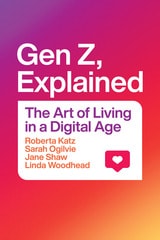
Gen Z, Explained
The Art of Living in a Digital AgeRoberta Katz, Sarah Ogilvie, Jane Shaw, and Linda Woodhead
University of Chicago Press, 2021
Born since the mid-1990s, members of Generation Z comprise the first generation never to know the world without the internet, and the most diverse generation yet. As Gen Z starts to emerge into adulthood and enter the workforce, what do we really know about them? And what can we learn from them? Gen Z, Explained is the authoritative portrait of this significant generation. It draws on extensive interviews that display this generation’s candor, surveys that explore their views and attitudes, and a vast database of their astonishingly inventive lexicon to build a comprehensive picture of their values, daily lives, and outlook. Gen Z emerges here as an extraordinarily thoughtful, promising, and perceptive generation that is sounding a warning to their elders about the world around them—a warning of a complexity and depth the “OK Boomer” phenomenon can only suggest.
Much of the existing literature about Gen Z has been highly judgmental. In contrast, this book provides a deep and nuanced understanding of a generation facing a future of enormous challenges, from climate change to civil unrest. What’s more, they are facing this future head-on, relying on themselves and their peers to work collaboratively to solve these problems. As Gen Z, Explained shows, this group of young people is as compassionate and imaginative as any that has come before, and understanding the way they tackle problems may enable us to envision new kinds of solutions. This portrait of Gen Z is ultimately an optimistic one, suggesting they have something to teach all of us about how to live and thrive in this digital world.

GenXegesis
Essays on Alternative Youth (Sub)CultureJohn M. Ulrich
University of Wisconsin Press, 2003
Resituating the term in its neglected (sub)cultural context, the contributors offer a critical assessment of the "Generation X" phenomenon and its relation to the fashioning of differing identities within and against the mainstream. The essays explore a variety of topics, including punk subculture, alternative music, reality television, postmodernism, and the Internet. Together, the contributors share a refreshingly self-conscious approach to Generation X’s precarious, often paradoxical position as an alternative to the mainstream. This collection will be enjoyed by scholars, graduate and undergraduate students, and anyone interested in popular culture, including Gen-Xers themselves.

Gender Matters
Rereading Michelle Z. RosaldoAlejandro Lugo and Bill Maurer, Editors
University of Michigan Press, 2000
With the publication of Woman, Culture, and Society in 1974, Michelle Rosaldo initiated nothing less than a reconstruction of anthropology that placed feminist analysis at the center of the discipline. Through a rereading of Rosaldo's ideas and arguments, this collection provides in-depth analysis of Rosaldo's many contributions to anthropology and feminism. Each of the essays derives theoretically and politically useful insights from Rosaldo's work and sets them in motion for new intellectual and political practices. The authors do not always share Rosaldo's perspectives, nor do they necessarily agree with each other. But, together, they point to exciting syntheses of old and new feminist theory and practice.
Alejandro Lugo is Assistant Professor of Anthropology and Latina/o Studies, University of Illinois at Urbana-Champaign. Bill Maurer is Assistant Professor of Anthropology, University of California at Irvine.
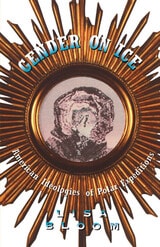
Gender On Ice
American Ideologies of Polar ExpeditionsLisa Bloom
University of Minnesota Press, 1993
Bloom focuses on the conquest of the North Pole as she reveals how popular print and visual media defined and shaped American national ideologies from the early twentieth century to the present.

Gender Studies
New Directions in Feminist CriticismJudith A. Spector
University of Wisconsin Press, 1986

Gender and Scientific Authority
Edited by Barbara Laslett, Sally Gregory Kohlstedt, Helen Longino, and Evelynn Hammonds
University of Chicago Press, 1996
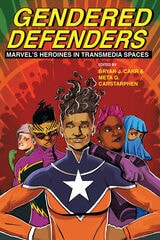
Gendered Defenders
Marvel's Heroines in Transmedia SpacesEdited by Bryan J. Carr and Meta G. Carstarphen
The Ohio State University Press, 2022
Gendered Defenders: Marvel’s Heroines in Transmedia Spaces delivers dynamic and original analyses of how women perform in super heroic spaces. Contributors from a range of disciplinary perspectives—communications, international relations, cultural and media studies, English, history, and public policy—take on Marvel’s representations of women and gender to examine how relations of power are (re)produced, understood, and challenged. Through vivid retellings of character-based scenarios, these essays examine Carol Danvers, Jessica Jones, Ms. Marvel, Shuri, Pepper Potts, Black Widow, and Squirrel Girl across media forms to characterize and critique contemporary understandings of identity, feminism, power, and gender. Collectively, Gendered Defenders challenges notions about female identity while illuminating the multidimensional portrayals that are enabled by the form of speculative fiction. Making explicit the connections between women’s lived experiences and the imagined exploits of superheroines, contributors explore how these pop culture narratives can help us understand real-world gender dynamics and prepare pedagogical, political, and social strategies for dealing with them. Contributors: Bryan J. Carr, Meta G. Carstarphen, Julie A. Davis, Rachel Grant, Annika Hagley, Amanda K. Kerhberg, Gregory P. Perreault, Mildred F. Perreault, CarrieLynn D. Reinhard, Maryanne A. Rhett, Stephanie L. Sanders, J. Richard Stevens, Anna C. Turner, Kathleen M. Turner-Ledgerwood, Robert Westerfelhaus

Gendered Transformations
Theory and Practices on Gender and MediaEdited by Tonny Krijnen, Claudia Alvares, and Sofie Van Bauwel
Intellect Books, 2011
Comprising the most current scholarship from leading experts in the fields of gender and media studies, Gendered Transformations offers readers a new foundation from which to reexamine traditional perspectives on gender. Organized into sections concerning representational politics, embodied performance, and social constructions of reality, these essays explore a wide variety of concerns from a similarly wide variety of perspectives, from essentialist to anti-essentialist. A thought-provoking contribution to a number of disparate fields, Gendered Transformations offers a rare interdisciplinary approach to gender that reflects the most recent developments in media theory and methodology.

Generation X Rocks
Contemporary Peninsular Fiction, Film, and Rock CultureChristine Henseler
Vanderbilt University Press, 2007
Genre Fission
A New Discourse Practice for Culture StudiesMarleen S. Barr
University of Iowa Press, 2000
Barr expands postmodern assumptions about cultural studies by suggesting that "genre fission" is occurring among discrete literary and cultural "types" of events--mainstream novels, science fiction, historical narratives, film, paintings, and museum displays. For her literary insights, Barr turns her attention to such mainstream authors as Saul Bellow, John Updike, Marge Piercy, and John Barth as well as science fiction writers Ursula Le Guin and Octavia Butler and Hispanic American writers Julia Alvarez, Ana Castillo, and Cristina García, among others.
Barr moves from literary to culture studies by addressing such phenomena from contemporary mass culture as the urban landscapes of New York and Los Angeles, Jackie Kennedy, the Star Trek industry, Lynn Redgrave, Amsterdam's red light district, Lorena Bobbitt, and the Apollo astronauts--to provide only a few of the relevant examples. Thus Genre Fission attains what Barr herself designates (in describing the art of Judy Chicago and Lee Bontecou) as "utopian interweavings of difference," crossing numerous boundaries in order to frame a larger territory for exploration.
Genre Worlds
Popular Fiction and Twenty-First-Century Book CultureKim Wilkins, Beth Driscoll, and Lisa Fletcher
University of Massachusetts Press, 2022
Works of genre fiction are a source of enjoyment, read during cherished leisure time and in incidental moments of relaxation. This original book takes readers inside popular genres of fiction, including crime, fantasy, and romance, to reveal how personal tastes, social connections, and industry knowledge shape genre worlds. Attuned to both the pleasure and the profession of producing genre fiction, the authors investigate contemporary developments in the field—the rise of Amazon, self-publishing platforms, transmedia storytelling, and growing global publishing conglomerates—and show how these interact with older practices, from fan conventions to writers’ groups.
Sitting at the intersection of literary studies, genre studies, fan studies, and studies of the book and publishing cultures, Genre Worlds considers how contemporary genre fiction is produced and circulated on a global scale. Its authors propose an innovative theoretical framework that unfolds genre fiction’s most compelling characteristics: its connected social, industrial, and textual practices. As they demonstrate, genre fiction books are not merely texts; they are also nodes of social and industrial activity involving the production, dissemination, and reception of the texts.

George's Run
A Writer's Journey through the Twilight ZoneHenry Chamberlain
Rutgers University Press, 2023
Later in life, Johnson befriended comics journalist and artist Henry Chamberlain, and the two had long chats about his amazing life and career. Now Chamberlain pays tribute to his late friend in the graphic novel George’s Run, which brings Johnson’s creative milieu to life in vividly illustrated color panels. The result feels less like reading a conventional biography and more like sitting in on an intimate conversation between friends as they recollect key moments in pop culture history, as well as the colorful band of writers known as the “Rat Pack of Science Fiction.”

German Film after Germany
Toward a Transnational AestheticRandall Halle
University of Illinois Press, 2007

German Pop Culture
How "American" Is It?Agnes C Mueller, Editor
University of Michigan Press, 2004
Surrounding this indisputable phenomena, questions of the role and place of a "popular" German culture continue to trigger heated debate. Embraced by some as a welcome means to break out of the German monocultural mind-set, American-shaped "pop" culture is rejected by others as "polluting" established values, leveling necessary differentiation, and ultimately being driven by a capitalist consumer society rather than by moral or aesthetic standards.
This collaborative volume addresses a number of intriguing questions: What do Germans envisage when they speak of the "Americanization" of their literature and music? How do artists respond to today's media culture? What does this mean for the current political dimension of German-American relations? Can one speak meaningfully of an "Americanized" German culture? In addressing these and other questions, this work fills a gap in existing scholarship by investigating German popular culture from a multidisciplinary, international perspective.
Contributors to this volume:
Winfried Fluck, Gerd Gemünden, Lutz Koepnick, Barbara Kosta, Sara Lennox, Thomas Meinecke, Uta Poiger, Matthias Politycki, Thomas Saunders, Eckhard Schumacher, Marc Silberman, Frank Trommler, Sabine von Dirke

Get Real
Crafting Race in the Reality Television IndustryEva Hageman
Duke University Press, 2027

Getting Loose
Lifestyle Consumption in the 1970sSam Binkley
Duke University Press, 2007
Through a sociological analysis of the countercultural print culture of the 1970s, Sam Binkley investigates the dissemination of these self-loosening narratives and their widespread appeal to America’s middle class. He describes the rise of a genre of lifestyle publishing that emerged from a network of small offbeat presses, mostly located on the West Coast. Amateurish and rough in production quality, these popular books and magazines blended Eastern mysticism, Freudian psychology, environmental ecology, and romantic American pastoralism as they offered “expert” advice—about how to be more in touch with the natural world, how to release oneself into trusting relationships with others, and how to delve deeper into the body’s rhythms and natural sensuality. Binkley examines dozens of these publications, including the Whole Earth Catalog, Rainbook, the Catalog of Sexual Consciousness, Celery Wine, Domebook, and Getting Clear.
Drawing on the thought of Pierre Bourdieu, Zygmunt Bauman, and others, Binkley explains how self-loosening narratives helped the middle class confront the modernity of the 1970s. As rapid social change and political upheaval eroded middle-class cultural authority, the looser life provided opportunities for self-reinvention through everyday lifestyle choice. He traces this ethos of self-realization through the “yuppie” 1980s to the 1990s and today, demonstrating that what originated as an emancipatory call to loosen up soon evolved into a culture of highly commercialized consumption and lifestyle branding.

Gift Giving
A Research AnthologyCele Otnes
University of Wisconsin Press, 1996
Gift Giving brings together 21 scholars from a variety of disciplines—including consumer behavior, communications, and sociology—who are dedicated to the understanding of what motivates gift selection, presentation, and incorporation of a gift into a person's life.

Girls Who Went Wrong
Prostitutes in American Fiction, 1885–1917Laura Hapke
University of Wisconsin Press, 1989
The period 1885 to 1917 saw thousands of American crusaders working hard to “save the fallen women,” but little on the part of American social protest writers. In this first work on the subject, Laura Hapke examines how writers attempted to turn an outcast into a heroine in a literature otherwise known for its puritanical attitude toward the fallen woman. She focuses on how these authors (all male) expressed late-Victorian conflicts about female sexuality. If, as they all maintained, women have an innate preference for chastity, how could they account for the prostitute? Was she a sinner, suggesting the potential waywardness of all women? Or, if she was a victim, what of her “depravity”?
Global Icons
Apertures to the PopularBishnupriya Ghosh
Duke University Press, 2011

Global Perspectives on the United States
Pro-Americanism, Anti-Americanism, and the Discourses BetweenEdited by Virginia R. Dominguez and Jane C. Desmond
University of Illinois Press, 2017

Global Sex
Dennis Altman
University of Chicago Press, 2001
Global Village
Dead Or Alive?Edited by Ray B. Browne and Marshall W. Fishwick
University of Wisconsin Press, 1999
The Global Village offers fifteen essays by leading scholars and thinkers who weigh the pros and cons and come up with individual conclusions as well as a consensus. Included are “Turning McLuhan on His Head” by James E. Grunig, “The Vanishing Global Village” by Ray B. Browne, and “Global Village—Writ Small” by Marshall Fishwick. This book speaks to concerns in journalism, media, popular culture, and communications.
Go! Fight! Win!
Cheerleading in American CultureMary Ellen Hanson
University of Wisconsin Press, 1995
Cheerleading has become a staple in American culture. The cheerleader straddles two contradictory symbolic poles. This individual is an instantly recognized figure representing youthful attractiveness, leadership, and popularity. Yet, for many, the cheerleader is seen as epitomizing mindless enthusiasm, shallow boosterism, and objectified sexuality. This contradictory view is explored in this extensively documented book.

God in the Machine
Video Games as Spiritual PursuitLiel Leibovitz
Templeton Press, 2014
Yet video games remain relatively unexplored by both scholars and pundits alike. Few have advanced beyond outmoded and futile attempts to tie gameplay to violent behavior. With this rumor now thoroughly and repeatedly disproven, it is time to delve deeper. Just as the Museum of Modern Art in Manhattan recently acquired fourteen games as part of its permanent collection, so too must we seek to add a serious consideration of virtual worlds to the pantheon of philosophical inquiry.
In God in the Machine, author Liel Leibovitz leads a fascinating tour of the emerging virtual landscape and its many dazzling vistas from which we are offered new vantage points on age-old theological and philosophical questions. Free will vs. determinism, the importance of ritual, transcendence through mastery, notions of the self, justice and sin, life, death, and resurrection all come into play in the video games that some critics so quickly write off as mind-numbing wastes of time. When one looks closely at how these games are designed, their inherent logic, and their cognitive effects on players, it becomes clear that playing these games creates a state of awareness vastly different from when we watch television or read a book. Indeed, the gameplay is a far more dynamic process that draws on various faculties of mind and body to evoke sensations that might more commonly be associated with religious experience. Getting swept away in an engaging game can be a profoundly spiritual activity. It is not to think, but rather to be, a logic that sustained our ancestors for millennia as they looked heavenward for answers.
As more and more of us look “screenward,” it is crucial to investigate these games for their vast potential as fine instruments of moral training. Anyone seeking a concise and well-reasoned introduction to the subject would do well to start with God in the Machine. By illuminating both where video game storytelling is now and where it currently butts up against certain inherent limitations, Liebovitz intriguingly implies how the field and, in turn, our experiences might continue to evolve and advance in the coming years.
Goddesses and Monsters
Women, Myth, Power, and Popular CultureJane Caputi
University of Wisconsin Press, 2004
The essays in Goddesses and Monsters recognize popular culture as a primary repository of ancient mythic energies, images, narratives, personalities, icons, and archetypes. Together, they take on the patriarchal myth, where serial killers are heroes, where goddesses—in the form of great white sharks, femmes fatales, and aliens—are ritually slaughtered, and where pornography is the core story underlying militarism, environmental devastation, and racism. They also point to an alternative imagination of female power that still can be found behind the cult devotion given to Princess Diana and animating all the goddesses disguised as popular monsters, queen bitches, mammies, vamps, cyborgs, and sex bombs.
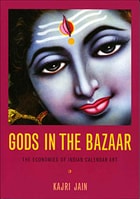
Gods in the Bazaar
The Economies of Indian Calendar ArtKajri Jain
Duke University Press, 2007
Jain draws on interviews with artists, printers, publishers, and consumers as well as analyses of the prints themselves to trace the economies—of art, commerce, religion, and desire—within which calendar images and ideas about them are formulated. For Jain, an analysis of the bazaar, or vernacular commercial arena, is crucial to understanding not only the calendar art that circulates within the bazaar but also India’s postcolonial modernity and the ways that its mass culture has developed in close connection with a religiously inflected nationalism. The bazaar is characterized by the coexistence of seemingly incompatible elements: bourgeois-liberal and neoliberal modernism on the one hand, and vernacular discourses and practices on the other. Jain argues that from the colonial era to the present, capitalist expansion has depended on the maintenance of these multiple coexisting realms: the sacred, the commercial, and the artistic; the official and the vernacular.

Goin' Viral
Uncontrollable Black PerformanceGabriel A. Peoples
University of Illinois Press, 2025
Peoples’s analysis ranges from abolitionist and proslavery visual culture to Do the Right Thing to “Bed Intruder Song” and the cellphone video of Derrion Albert’s murder. After identifying these moments, he considers how performances go viral in Black ways. He also thinks through the ways Black virality circulates ideas that materially affect Black life. As he shows, an interacting person’s vulnerability to racialized gender and racialized sexuality knowledge inspires how they spread a performance. Non-iconic elements of viral moments reveal hard-to-find nuances of Black life while the artists and others represented in viral moments promote both collective and individual liberation by harnessing their visibility and audibility.
Rigorous and expansive, Goin’ Viral uses Black virality as a new way to understand and frame Black performances.
Gold Diggers and Silver Miners
Prostitution and Social Life on the Comstock LodeMarion S. Goldman
University of Michigan Press, 1981

Gone Dollywood
Dolly Parton’s Mountain DreamGraham Hoppe
Ohio University Press, 2018
Dolly Parton isn’t just a country music superstar. She has built an empire. At the heart of that empire is Dollywood, a 150-acre fantasy land that hosts three million people a year. Parton’s prodigious talent and incredible celebrity have allowed her to turn her hometown into one of the most popular tourist destinations in America. The crux of Dollywood’s allure is its precisely calibrated Appalachian image, itself drawn from Parton’s very real hardscrabble childhood in the mountains of east Tennessee.
What does Dollywood have to offer besides entertainment? What do we find if we take this remarkable place seriously? How does it both confirm and subvert outsiders’ expectations of Appalachia? What does it tell us about the modern South, and in turn what does that tell us about America at large? How is regional identity molded in service of commerce, and what is the interplay of race, gender, and class when that happens?
In Gone Dollywood, Graham Hoppe blends tourism studies, celebrity studies, cultural analysis, folklore, and the acute observations and personal reflections of longform journalism into an unforgettable interrogation of Southern and American identity.

Gone Primitive
Savage Intellects, Modern LivesMarianna Torgovnick
University of Chicago Press, 1990
fears, and longings that have produced Western views of the
primitive. Crossing an extraordinary range of fields
(anthropology, psychology, literature, art, and popular
culture), Gone Primitive will engage not just
specialists but anyone who has ever worn Native American
jewelry, thrilled to Indiana Jones, or considered buying an
African mask.
"A superb book; and—in a way that goes beyond what
being good as a book usually implies—it is a kind of gift to
its own culture, a guide to the perplexed. It is lucid,
usually fair, laced with a certain feminist mockery and
animated by some surprising sympathies."—Arthur C. Danto,
New York Times Book Review
"An impassioned exploration of the deep waters beneath Western primitivism. . . . Torgovnick's readings are deliberately, rewardingly provocative."—Scott L. Malcomson, Voice Literary Supplement
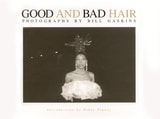
Good and Bad Hair
Gaskins, Bill
Rutgers University Press, 1997
In a time when image is indeed everything, our personal appearance has a tremendous effect on nearly every aspect of our lives on a daily basis. Our choice of hairstyle can mean the difference between acceptance and rejection by groups and individuals. The choices made by African Americans are particularly charged, often affecting the wearer and the viewer in unique and sometimes life-altering ways.
Good and Bad Hair emerges out of photographer Bill Gaskins's traveling photo exhibition of the same name. The book features 60 evocative photographs of African American men, women, and children, documenting contemporary black hairstyles and their role as a feature of African American culture.
On one level, the photographs present readers with a variety of popular and personal approaches to wearing one's hair. On another level, they isolate what amounts to a bold, assertive departure from the common definition of American beauty that excludes the physical features of many people of African descent. This narrow definition of beauty has created a race-based measurement for what is considered "good" and "bad" hair. Gaskins's pictures identify African Americans from different regions of the United States who expressively symbolize their sense of self and often their sense of an African or black identity through their hair.
Goth
Undead SubcultureLauren M. E. Goodlad and Michael Bibby, eds.
Duke University Press, 2007
The volume’s editors provide a rich history of goth, describing its play of resistance and consumerism; its impact on class, race, and gender; and its distinctive features as an “undead” subculture in light of post-subculture studies and other critical approaches. The essays include an interview with the distinguished fashion historian Valerie Steele; analyses of novels by Anne Rice, Poppy Z. Brite, and Nick Cave; discussions of goths on the Internet; and readings of iconic goth texts from Bram Stoker’s Dracula to James O’Barr’s graphic novel The Crow. Other essays focus on gothic music, including seminal precursors such as Joy Division and David Bowie, and goth-influenced performers such as the Cure, Nine Inch Nails, and Marilyn Manson. Gothic sexuality is explored in multiple ways, the subjects ranging from the San Francisco queercore scene of the 1980s to the increasing influence of fetishism and fetish play. Together these essays demonstrate that while its participants are often middle-class suburbanites, goth blurs normalizing boundaries even as it appears as an everlasting shadow of late capitalism.
Contributors: Heather Arnet, Michael Bibby, Jessica Burstein, Angel M. Butts, Michael du Plessis, Jason Friedman, Nancy Gagnier, Ken Gelder, Lauren M. E. Goodlad, Joshua Gunn, Trevor Holmes, Paul Hodkinson, David Lenson, Robert Markley, Mark Nowak, Anna Powell, Kristen Schilt, Rebecca Schraffenberger, David Shumway, Carol Siegel, Catherine Spooner, Lauren Stasiak, Jeffrey Andrew Weinstock
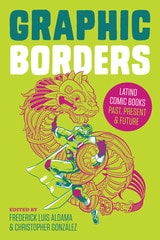
Graphic Borders
Latino Comic Books Past, Present, and FutureEdited by Frederick Luis Aldama and Christopher González
University of Texas Press, 2016
From the influential work of Los Bros Hernandez in Love & Rockets, to comic strips and political cartoons, to traditional superheroes made nontraditional by means of racial and sexual identity (e.g., Miles Morales/Spider-Man), comics have become a vibrant medium to express Latino identity and culture. Indeed, Latino fiction and nonfiction narratives are rapidly proliferating in graphic media as diverse and varied in form and content as is the whole of Latino culture today.
Graphic Borders presents the most thorough exploration of comics by and about Latinos currently available. Thirteen essays and one interview by eminent and rising scholars of comics bring to life this exciting graphic genre that conveys the distinctive and wide-ranging experiences of Latinos in the United States. The contributors’ exhilarating excavations delve into the following areas: comics created by Latinos that push the boundaries of generic conventions; Latino comic book author-artists who complicate issues of race and gender through their careful reconfigurations of the body; comic strips; Latino superheroes in mainstream comics; and the complex ways that Latino superheroes are created and consumed within larger popular cultural trends. Taken as a whole, the book unveils the resplendent riches of comics by and about Latinos and proves that there are no limits to the ways in which Latinos can be represented and imagined in the world of comics.
Graphic Opinions
Editorial Cartoonists and Their ArtJack Colldeweih
University of Wisconsin Press, 1998
calling.
The editors examine the current work and opinions of two dozen prominent cartoonists through profiles and essays about political and social issues. Four examples by each cartoonist illustrate this.
Graphic Subjects
Critical Essays on Autobiography and Graphic NovelsMichael A. Chaney
University of Wisconsin Press, 2011
Some of the most noteworthy graphic novels and comic books of recent years have been entirely autobiographical. In Graphic Subjects, Michael A. Chaney brings together a lively mix of scholars to examine the use of autobiography within graphic novels, including such critically acclaimed examples as Art Spiegelman’s Maus, David Beauchard’s Epileptic, Marjane Satrapi’s Persepolis, Alan Moore’s Watchmen, and Gene Yang’s American Born Chinese.

Gray Ghosts and Red Rangers
American Hilltop Fox ChasingBy Thad Sitton
University of Texas Press, 2010
Around a campfire in the woods through long hours of night, men used to gather to listen to the music of hounds' voices as they chased an elusive and seemingly preternatural fox. To the highly trained ears of these backwoods hunters, the hounds told the story of the pursuit like operatic voices chanting a great epic. Although the hunt almost always ended in the escape of the fox—as the hunters hoped it would—the thrill of the chase made the men feel "that they [were] close to something lost and never to be found, just as one can feel something in a great poem or a dream."
Gray Ghosts and Red Rangers offers a colorful account of this vanishing American folkway—back-country fox hunting known as "hilltopping," "moonlighting," "fox racing," or "one-gallus fox hunting." Practiced neither for blood sport nor to put food on the table, hilltopping was worlds removed from elite fox hunting where red- and black-coated horsemen thundered across green fields in daylight. Hilltopping was a nocturnal, even mystical pursuit, uniting men across social and racial lines as they gathered to listen to dogs chasing foxes over miles of ground until the sun rose. Engaged in by thousands of rural and small-town Americans from the 1860s to the 1980s, hilltopping encouraged a quasi-spiritual identification of man with animal that bound its devotees into a "brotherhood of blood and cause" and made them seem almost crazy to outsiders.

Gray Matters
Finding Meaning in the Stories of Later LifeEllyn Lem
Rutgers University Press, 2020
Finalist for the 2021 American Book Fest Best Book Awards
Aging is one of the most compelling issues today, with record numbers of seniors over sixty-five worldwide. Gray Matters: Finding Meaning in the Stories of Later Life examines a diverse array of cultural works including films, literature, and even art that represent this time of life, often made by people who are seniors themselves. These works, focusing on important topics such as housing, memory loss, and intimacy, are analyzed in dialogue with recent research to explore how “stories” illuminate the dynamics of growing old by blending fact with imagination. Gray Matters also incorporates the life experiences of seniors gathered from over two hundred in-depth surveys with a range of questions on growing old, not often included in other age studies works. Combining cultural texts, gerontology research, and observations from older adults will give all readers a fuller picture of the struggles and pleasures of aging and avoids over-simplified representations of the process as all negative or positive.

Great Basin Indians
An Encyclopedic HistoryMichael Hittman
University of Nevada Press, 2024
Great Basin Indians is an essential resource for any reader interested in the Native peoples of the American West and in western history in general.

Greenwich Village 1963
Avant-Garde Performance and the Effervescent BodySally Banes
Duke University Press, 1993
A leading writer on cultural history, Banes draws a vibrant portrait of the artists and performers who gave the 1963 Village its exhilarating force, the avant-garde whose interweaving of public and private life, work and play, art and ordinary experience, began a wholesale reworking of the social and cultural fabric of America. Among these young artists were many who went on to become acknowledged masters in their fields, including Andy Warhol, John Cage, Yoko Ono, Yvonne Rainer, Lanford Wilson, Sam Shepard, Brian de Palma, Harvey Keitel, Kate Millet, and Claes Oldenburg. In live performance--Off-Off Broadway theater, Happenings, Fluxus, and dance--as well as in Pop Art and underground film, we see this generation of artists laying the groundwork for the explosion of the counterculture in the late 1960s and the emergence of postmodernism in the 1970s. Exploring themes of community, freedom, equality, the body, and the absolute, Banes shows us how the Sixties artists, though shaped by a culture of hope and optimism, helped to galvanize a culture of criticism and change. As 1963 came to define the Sixties, so this vivid account of the year will redefine a crucial generation in recent American history.
Groove Tube
Sixties Television and the Youth RebellionAniko Bodroghkozy
Duke University Press, 2001
Bodroghkozy argues that, in order to woo an increasingly lucrative baby boomer audience, television had to appeal to the social and political values of a generation of young people who were enmeshed in the hippie counterculture, the antiwar movement, campus protests, urban guerilla action—in general, a culture of rebellion. She takes a close look at the compromises and negotiations that were involved in determining TV content, as well as the ideological difficulties producers and networks faced in attempting to appeal to a youthful cohort so disaffected from dominant institutions. While programs that featured narratives about hippies, draft resisters, or revolutionaries are examined under this lens, Groove Tube doesn’t stop there: it also examines how the nation’s rebellious youth responded to these representations. Bodroghkozy explains how, as members of the first “TV generation,” some made sense of their societal disaffection in part through their childhood experience with this powerful new medium.
Groove Tube will interest sociologists, American historians, students and scholars of television and media studies, and others who want to know more about the 1960s.
Growing Up With Television
Everyday Learning Among Young AdolescentsJoellen Fisherkeller
Temple University Press, 2002

Gunshots at the Fiesta
Literature and Politics in Latin AmericaMaarten van Delden
Vanderbilt University Press, 2009
Yet the authors of this book argue that the relationship between the two realms is much more complex and fraught with tension than is nowadays recognized. In examining these tensions, and in revealing the diverse ways in which literature and politics intersect in the Latin American cultural tradition, Gunshots at the Fiesta offers a lively challenge to the current tendency--especially strong in the U.S. academy--to read Latin American literature through a narrowly political prism.
The authors argue that one can only understand the nature of the dialogue between literature and politics if one begins by recognizing the different logics that operate in these different domains. Using this idea of the different logics of politics and literature as a guiding thread, Van Delden and Grenier offer bold new readings of major authors such as José Martí, Octavio Paz, Carlos Fuentes, Gabriel García Márquez, and Mario Vargas Llosa, as well as compelling interpretations of works by less-frequently-discussed figures such as Claribel Alegría, Marisol Martín del Campo and Víctor Hugo Rascón Banda.