Results by title
391 books match the query 'Public opinion' and 13 start with g
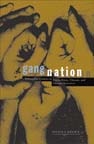
Gang Nation
Delinquent Citizens In Puerto Rican, Chicano, And Chicana NarrativesMonica Brown
University of Minnesota Press, 2002
Explores how Latino gang culture mirrors the most destructive aspects of the American Dream through a look at novels and memoirs
"There’s a place for us / Somewhere a place for us." With the emergence of a rich body of literature chronicling the experiences of Latino and Latina gang members, popular understanding of this outlaw culture has advanced far beyond West Side Story. However, the diverse works discussed in this important book—ranging from the breakthrough 1967 memoir Down These Mean Streets and the crime novel Carlito’s Way to the play Zoot Suit and the World War II-era historical novel Don’t Spit on My Corner, to more recent works such as Always Running/La Vida Loca: Gang Days in L.A. and Chicana gang narratives like Locas and Two Badges—all share with the award-winning musical a crucial discourse on nationality, citizenship, and belonging.
In Gang Nation, Monica Brown offers a sophisticated analysis of these narratives produced by former gang members and by "outside" observers writing within the Latino community. She examines the ubiquity of language and behavior within this literature that reveal the frustrated longings within gangs for greater participation in America’s national culture and the desire of members to craft an alternative environment in which they are welcome. Through literature and memoirs written from within the culture, Brown illustrates how these youth mimic the rhetoric and rituals of American nationalism’s most destructive aspects—intense territoriality, justification of violence, and cultural chauvinism—to assert their citizenship in an alternative nation. Before now, studies of gang culture have centered on either the choices of individual members or the social forces that inspire their unfocused rage. But through Latino and Chicano gang literature, Brown provides a more nuanced portrait of that culture, one that raises broader concerns about dominant nationalism, civil rights, the criminalization of urban youth of color, and the often unfulfilled sense of communal identity and acceptance among American youth.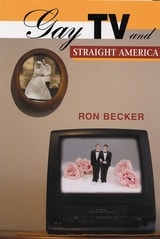
Gay TV and Straight America
Becker, Ron
Rutgers University Press, 2006
After decades of silence on the subject of homosexuality, television in the 1990s saw a striking increase in programming that incorporated and, in many cases, centered on gay material. In shows including Friends, Seinfeld, Party of Five, Homicide, Suddenly Susan, The Commish, Ellen, Will & Grace, and others, gay characters were introduced, references to homosexuality became commonplace, and issues of gay and lesbian relationships were explored, often in explicit detail.
In Gay TV and Straight America, Ron Becker draws on a wide range of political and cultural indicators to explain this sudden upsurge of gay material on prime-time network television. Bringing together analysis of relevant Supreme Court rulings, media coverage of gay rights battles, debates about multiculturalism, concerns over political correctness, and much more, Becker's assessment helps us understand how and why televised gayness was constructed by a specific culture of tastemakers during the decade.
On one hand the evidence points to network business strategies that embraced gay material as a valuable tool for targeting a quality audience of well-educated, upscale adults looking for something "edgy" to watch. But, Becker also argues that the increase of gay material in the public eye creates growing mainstream anxiety in reaction to the seemingly civil public conversation about equal rights.
In today's cultural climate where controversies rage over issues of gay marriage yet millions of viewers tune in weekly to programs like Queer Eye for the Straight Guy, this book offers valuable insight to the complex condition of America's sexual politics.
Gender Differences in Public Opinion
Values and Political ConsequencesMary-Kate Lizotte
Temple University Press, 2020
In this era in which more women are running for public office—and when there is increased activism among women—understanding gender differences on political issues has become critical. In her cogent study, Mary-Kate Lizotte argues that assessing the gender gap in public support for policies through a values lens provides insight into American politics today. There is ample evidence that men and women differ in their value endorsements—even when taking into account factors such as education, class, race, income, and party identification.
In Gender Differences in Public Opinion, Lizotte utilizes nationally representative data, mainly from the American National Election Study, to study these gender gaps, the explanatory power of values, and the political consequences of these differences. She examines the gender differences in several policy areas such as equal rights, gun control, the death penalty, and the environment, as well as social welfare issues. The result is an insightful and revealing study of how men and women vary in their policy positions and political attitudes.
Gendered Pluralism
Belinda Robnett and Katherine Tate
University of Michigan Press, 2023
Focused on structural and political intersectionalities, Gendered Pluralism takes a broader approach to understanding the constellation of factors that drive gender and racial differences on an array of public policy issues. Belinda Robnett and Katherine Tate examine a broader set of actors absent the contextual factors that may drive them to compromise their opinions. Their study examines the ways in which (1) men and women differ on public policy issues and the factors that drive these differences; (2) whites and racial-ethnic minorities differ on public policy issues and the factors that drive these differences; (3) women differ on public policy issues and the factors that drive these differences; (4) African-American men and women differ on public policy issues and the factors that drive these differences; and (5) African-American women differ on public policy issues and the factors that drive these differences.

Gendering the Fair
Histories of Women and Gender at World's FairsEdited by TJ Boisseau and Abigail M. Markwyn
University of Illinois Press, 2010
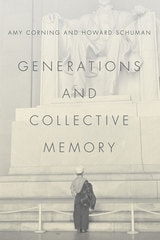
Generations and Collective Memory
Amy Corning and Howard Schuman
University of Chicago Press, 2015
Their key finding—built on historical research and interviews in the United States and seven other countries (including China, Japan, Germany, Lithuania, Russia, Israel, and Ukraine)—is that our most powerful generational memories are of shared experiences in adolescence and early adulthood, like the 1963 Kennedy assassination for those born in the 1950s or the fall of the Berlin Wall for young people in 1989. But there are exceptions to that rule, and they're significant: Corning and Schuman find that epochal events in a country, like revolutions, override the expected effects of age, affecting citizens of all ages with a similar power and lasting intensity.
The picture Corning and Schuman paint of collective memory and its formation is fascinating on its face, but it also offers intriguing new ways to think about the rise and fall of historical reputations and attitudes toward political issues.

Gentile New York
The Images of Non-Jews among Jewish ImmigrantsRibak, Gil
Rutgers University Press, 2012
The very question of “what do Jews think about the goyim” has fascinated Jews and Gentiles, anti-Semites and philo-Semites alike. Much has been written about immigrant Jews in nineteenth- and twentieth-century New York City, but Gil Ribak’s critical look at the origins of Jewish liberalism in America provides a more complicated and nuanced picture of the Americanization process.
Gentile New York examines these newcomers’ evolving feelings toward non-Jews through four critical decades in the American Jewish experience. Ribak considers how they perceived Gentiles in general as well as such different groups as “Yankees” (a common term for WASPs in many Yiddish sources), Germans, Irish, Italians, Poles, and African Americans. As they discovered the complexity of America’s racial relations, the immigrants found themselves at odds with “white” American values or behavior and were drawn instead into cooperative relationships with other minorities. Sparked with many previously unknown anecdotes, quotations, and events, Ribak’s research relies on an impressive number of memoirs, autobiographies, novels, newspapers, and journals culled from both sides of the Atlantic.
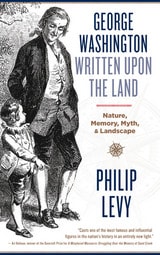
George Washington Written Upon the Land
Nature, Memory, Myth, and LandscapePhilip Levy
West Virginia University Press, 2015
George Washington’s childhood is famously the most elusive part of his life story. For centuries biographers have struggled with a lack of period documentation and an absence of late-in-life reflection in trying to imagine Washington’s formative years.
In George Washington Written upon the Land, Philip Levy explores this most famous of American childhoods through its relationship to the Virginia farm where much of it took place. Using approaches from biography, archaeology, folklore, and studies of landscape and material culture, Levy focuses on how different ideas about Washington’s childhood functioned—what sorts of lessons they sought to teach and how different epochs and writers understood the man and the past itself.
In a suggestive and far-reaching final chapter, Levy argues that Washington was present at the onset of the Anthropocene—the geologic era when human activity began to have a significant impact on world ecosystems. Interpreting Washington’s childhood farm through the lens of “big” history, he encourages scholars to break down boundaries between science and social science and between human and nonhuman.

Germany, Propaganda and Total War, 1914-1918
David Welch
Rutgers University Press, 2000
Adolf Hitler, writing in Mein Kampf, was scathing in his condemnation of German propaganda in the First World War, declaring that Germany had failed to recognize propaganda as a weapon of the first order. This despite the fact that propaganda had been regarded, arguably for the first time, as an intrinsic part of the war effort.
David Welch has written the first book to fully examine German society — politics, propaganda, public opinion, and total war — in the Great War. Drawing on a wide range of sources — from posters, newspapers, journals, film, parliamentary debates, police and military reports, and private papers — Welch argues that the moral collapse of Germany was due less to the failure to disseminate propaganda than to the inability of the military authorities and the Kaiser to reinforce this propaganda, and to acknowledge the importance of public opinion in forging an effective link between leadership and the people.
God Talk
Experimenting With the Religious Causes of Public OpinionPaul Djupe
Temple University Press, 2013
In the series The Social Logic of Politics, edited by Scott McClurg

Going to War in Iraq
When Citizens and the Press MatterStanley Feldman, Leonie Huddy, and George E. Marcus
University of Chicago Press, 2015
Drawing on the most comprehensive survey of public reactions to the war, Stanley Feldman, Leonie Huddy, and George E. Marcus revisit this critical period and come back with a very different story. Polling data from that critical period shows that the Bush administration’s carefully orchestrated campaign not only failed to raise Republican support for the war but, surprisingly, led Democrats and political independents to increasingly oppose the war at odds with most prominent Democratic leaders. More importantly, the research shows that what constitutes the news matters. People who read the newspaper were more likely to reject the claims coming out of Washington because they were exposed to the sort of high-quality investigative journalism still being written at traditional newspapers. That was not the case for those who got their news from television. Making a case for the crucial role of a press that lives up to the best norms and practices of print journalism, the book lays bare what is at stake for the functioning of democracy—especially in times of crisis—as newspapers increasingly become an endangered species.
Good Enough for Government Work
The Public Reputation Crisis in America (And What We Can Do to Fix It)Amy E. Lerman
University of Chicago Press, 2019
With Good Enough for Government Work, Lerman uses surveys, experiments, and public opinion data to argue persuasively that the reputation of government is itself an impediment to government’s ability to achieve the common good. In addition to improving its efficiency and effectiveness, government therefore has an equally critical task: countering the belief that the public sector is mired in incompetence. Lerman takes readers through the main challenges. Negative perceptions are highly resistant to change, she shows, because we tend to perceive the world in a way that confirms our negative stereotypes of government—even in the face of new information. Those who hold particularly negative perceptions also begin to “opt out” in favor of private alternatives, such as sending their children to private schools, living in gated communities, and refusing to participate in public health insurance programs. When sufficient numbers of people opt out of public services, the result can be a decline in the objective quality of public provision. In this way, citizens’ beliefs about government can quickly become a self-fulfilling prophecy, with consequences for all. Lerman concludes with practical solutions for how the government might improve its reputation and roll back current efforts to eliminate or privatize even some of the most critical public services.
Guerrillas, Unionists, and Violence on the Confederate Home Front
Daniel E. Sutherland
University of Arkansas Press, 1999