Results by title
828 books match the query 'Research' and 23 start with g

Galileo's Instruments of Credit
Telescopes, Images, SecrecyMario Biagioli
University of Chicago Press, 2006
Galileo's Instruments of Credit proposes radical new interpretations of several key episodes of Galileo's career, including his early telescopic discoveries of 1610, the dispute over sunspots, and the conflict with the Holy Office over the relationship between Copernicanism and Scripture. Galileo's tactics during this time shifted as rapidly as his circumstances, argues Mario Biagioli, and the pace of these changes forced him to respond swiftly to the opportunities and risks posed by unforeseen inventions, further discoveries, and the interventions of his opponents.
Focusing on the aspects of Galileo's scientific life that extend beyond the framework of court culture and patronage, Biagioli offers a revisionist account of the different systems of exchanges, communication, and credibility at work in various phases of Galileo's career. Galileo's Instruments of Credit will find grateful readers among scholars of science studies, historical epistemology, visual studies, Galilean science, and late Renaissance astronomy.
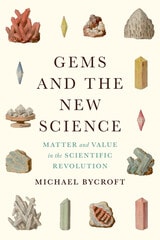
Gems and the New Science
Matter and Value in the Scientific RevolutionMichael Bycroft
University of Chicago Press, 2026
In Gems and the New Science, Michael Bycroft argues that gems were connected to major developments in the “new science” between the sixteenth and nineteenth centuries. As he explains, precious and semiprecious stones were at the center of dramatic shifts in natural knowledge in early modern Europe. They were used to investigate luminescence, electricity, combustion, chemical composition, and more. They were collected by naturalists; measured by mathematicians; and rubbed, burned, and dissolved by experimental philosophers. This led to the demise of the traditional way of classifying gems—which grouped them by transparency, color, and locality—and the turn to density, refraction, chemistry, and crystallography as more reliable guides for sorting these substances.
The science of gems shows that material evaluation was as important as material production in the history of science. It also shows the value of seeing science as the product of the interaction between different material worlds. The book begins by bringing these insights to bear on five themes of the Scientific Revolution. Each of the subsequent chapters deals with a major episode in early modern science, from the expansion of natural history in the sixteenth century to the emergence of applied science early in the nineteenth century. This important work is not only the first book-length history of the science of gems but also a fresh interpretation of the Scientific Revolution and an argument for using a new form of materialism to understand the evolution of science.

General Education in the Social Sciences
Centennial Reflections on the College of the University of ChicagoEdited by John J. MacAloon
University of Chicago Press, 1992
Social Science 2 holds the place of honor among these educational projects. For more than half a century, Soc 2 has been one of the most influential courses in American undergraduate education. This unique, year-long course, the oldest and most distinguished of its kind at any American university, has served as an ongoing experiment in how the social sciences can be taught and learned in the general education context.
In this collection John MacAloon has gathered essays by fourteen eminent social scientists—such as David Riesman, Michael Schudson, and F. Champion Ward—who as either teachers or students were profoundly shaped by Soc 2. Their multifarious and selective memories—full of dissonances and harmonies of recollection, judgment, and voice—create a compelling biography of a course and a college that have survived tumultous change through sustained and committed argument.
This book will be of great interest to anyone interested not only in the theory but the practice of higher education.
Genomics with Care
Minding the Double Binds of ScienceMike Fortun
Duke University Press, 2023
Genre and Graduate-Level Research Writing
An Cheng
University of Michigan Press, 2018
Genre and Graduate-Level Research Writing is grounded in genre-based theory and full of best practices examples. The book opens by presenting the case for the use of genre in graduate-level research writing and by examining rhetorical consciousness-raising and its ties to genre. Unique to the volume is a thorough analysis of the materials designed to teach genre and research writing—focused on the textbooks of Swales & Feak (e.g., Academic Writing for Graduate Students) and similar texts. Other chapters provide examples of discovery-based genre tasks, evaluative methods for assessing discipline-specific writing, and techniques for becoming a more confident instructor of graduate-level research writing.
Geographers Abroad
Essays on the Problems and Prospects of Research in Foreign AreasEdited by Marvin W. Mikesell
University of Chicago Press, 1973
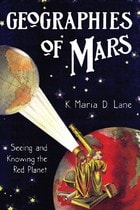
Geographies of Mars
Seeing and Knowing the Red PlanetK. Maria D. Lane
University of Chicago Press, 2011
A highly original exploration of geography’s spatial dimensions at the beginning of the twentieth century, offering a new view of the mapping of far-off worlds.
One of the first maps of Mars, published by an Italian astronomer in 1877, with its pattern of canals, fueled belief in intelligent life forms on the distant red planet—a hope that continued into the 1960s. Although the Martian canals have long since been dismissed as a famous error in the history of science, K. Maria D. Lane argues that there was nothing accidental about these early interpretations. Indeed, she argues, the construction of Mars as an incomprehensibly complex and engineered world both reflected and challenged dominant geopolitical themes during a time of major cultural, intellectual, political, and economic transition in the Western world.
Geographies of Mars telescopes in on a critical period in the development of the geographical imagination, when European imperialism was at its zenith and American expansionism had begun in earnest. Astronomers working in the new observatories of the American Southwest or in the remote heights of the South American Andes were inspired, Lane finds, by their own physical surroundings and used representations of the Earth’s arid landscapes to establish credibility for their observations of Mars. With this simple shift to the geographer’s point of view, Lane deftly explains some of the most perplexing stances on Mars taken by familiar protagonists such as Percival Lowell, Alfred Russel Wallace, and Lester Frank Ward.

Georgia Civil War Manuscript Collections
An Annotated BibliographyDavid H. Slay
University of Alabama Press, 2011
Getting In
The Essential Guide to Finding a STEMM Undergrad Research ExperienceParis H. Grey and David G. Oppenheimer
University of Chicago Press, 2023
Conducting research is an important foundation for many undergraduates on STEMM career paths. But landing an extremely competitive research spot that is also an enriching experience involves knowing how to present yourself effectively and an awareness of your goals and expectations. In this book, an expert lab manager and a longtime principal investigator share their secrets for obtaining these coveted positions.
Offering advice to students in a wide variety of STEMM fields at both research-intensive universities and primarily undergraduate institutions, Getting In helps students navigate the hidden curriculum of academia, unofficial rules that disproportionately affect first-generation college students and those from low-income backgrounds and communities historically underrepresented in science. The authors provide not only an overview of STEMM research and lab opportunities but also specific strategies for the entire application process—including how to write emails that get noticed by busy professors, how to ask for a research position during office hours, and interview questions to prepare for—so students can claim their place in research settings.
With its emphasis on the many interpersonal and professional benefits of research experiences, Getting In equips all STEMM undergrads with the tools they need both to secure these valued positions and to develop habits that will build productive relationships with their future research mentors.
As an undergrad, Getting In will help you:
- determine how much time you can spend on research by evaluating your current activity level and goals.
- find the time to do research without giving up your social life or risking your GPA.
- avoid common mistakes in the search, application, or interview that make it harder to find a research experience.
- write emails that get you noticed by busy professors by customizing the included templates.
- prepare for tough interview questions so you’ll impress the interviewer with your answers, and be able to determine if the position is right for you.
As a research mentor, Getting In will help your students:
- navigate the hidden curriculum of finding a research experience in science, technology, engineering, math, and medicine (STEMM).
- set realistic expectations for their research experience.
- understand why conducting research requires effort and will include some failure and other challenges.
- be active participants in their success in the lab.
Giving Back
Research and Reciprocity in Indigenous SettingsR. D. K. Herman
Oregon State University Press, 2018
Over the past several decades—and especially since the evolution of feminist methodologies, participatory research, and the post-colonial turn in the 1990s—there have been calls for research to be less exploitative, but also for researchers and for the research itself to give something back. Giving Back: Research and Reciprocity in Indigenous Settings addresses the need for reciprocity in the research process, especially (though not exclusively) in regard to Indigenous Communities.
The twelve case studies in this volume demonstrate that giving back can happen through the research itself – through the careful framing of questions, co-production of knowledge, and dissemination of results – but also through the day-to-day actions and attitudes of researchers that inevitably occur in the field. It can range from everyday give and take, to the sharing of research materials, to larger and longer-term engagements.
As practitioners of community-based research gain greater awareness of these issues, scholars and institutions need guidance and strategies for ensuring reciprocity in the research process. This volume presents a variety of situations from a wide range of research contexts, discussing what has and hasn’t worked, and exploring what issues remain.
Global Debates in the Digital Humanities
Domenico Fiormonte
University of Minnesota Press, 2022
A necessary volume of essays working to decolonize the digital humanities
Often conceived of as an all-inclusive “big tent,” digital humanities has in fact been troubled by a lack of perspectives beyond Westernized and Anglophone contexts and assumptions. This latest collection in the Debates in the Digital Humanities series seeks to address this deficit in the field. Focused on thought and work that has been underappreciated for linguistic, cultural, or geopolitical reasons, contributors showcase alternative histories and perspectives that detail the rise of the digital humanities in the Global South and other “invisible” contexts and explore the implications of a globally diverse digital humanities.
Advancing a vision of the digital humanities as a space where we can reimagine basic questions about our cultural and historical development, this volume challenges the field to undertake innovation and reform.
Contributors: Maria José Afanador-Llach, U de los Andes, Bogotá; Maira E. Álvarez, U of Houston; Purbasha Auddy, Jadavpur U; Diana Barreto Ávila, U of British Columbia; Deepti Bharthur, IT for Change; Sayan Bhattacharyya, Singapore U of Technology and Design; Anastasia Bonch-Osmolovskaya, National Research U Higher School of Economics; Jing Chen, Nanjing U; Carlton Clark, Kazimieras Simonavičius U, Vilnius; Carolina Dalla Chiesa, Erasmus U, Rotterdam; Gimena del Rio Riande, Institute of Bibliographic Research and Textual Criticism; Leonardo Foletto, U of São Paulo; Rahul K. Gairola, Murdoch U; Sofia Gavrilova, Leibniz Institute for Regional Geography; Andre Goodrich, North-West U; Anita Gurumurthy, IT for Change; Aliz Horvath, Eötvös Loránd U; Igor Kim, Russian Academy of Sciences; Inna Kizhner, Siberian Federal U; Cédric Leterme, Tricontinental Center; Andres Lombana-Bermudez, Pontificia, U Javeriana, Bogotá; Lev Manovich, City U of New York; Itay Marienberg-Milikowsky, Ben-Gurion U of the Negev; Maciej Maryl, Polish Academy of Sciences; Nirmala Menon, Indian Institute of Technology, Indore; Boris Orekhov, National Research U Higher School of Economics; Ernesto Priego, U of London; Sylvia Fernández Quintanilla, U of Kansas; Nuria Rodríguez-Ortega, U of Málaga; Steffen Roth, U of Turku; Dibyadyuti Roy, Indian Institute of Technology, Jodhpur; Maxim Rumyantsev, Siberian Federal U; Puthiya Purayil Sneha, Centre for Internet and Society, Bengaluru; Juan Steyn, South African Centre for Digital Language Resources; Melissa Terras, U of Edinburgh; Ernesto Miranda Trigueros, U of the Cloister of Sor Juana; Lik Hang Tsui, City U of Hong Kong; Tim Unwin, U of London; Lei Zhang, U of Wisconsin–La Crosse.
God Talk
Experimenting With the Religious Causes of Public OpinionPaul Djupe
Temple University Press, 2013
In the series The Social Logic of Politics, edited by Scott McClurg
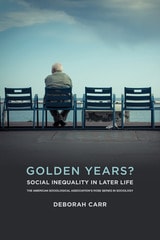
Golden Years?
Social Inequality in Later LifeDeborah Carr
Russell Sage Foundation, 2019
Carr connects research in sociology, psychology, epidemiology, gerontology, and other fields to explore the well-being of older adults. On many indicators of physical health, such as propensity for heart disease or cancer, black seniors fare worse than whites due to lifetimes of exposure to stressors such as economic hardships and racial discrimination and diminished access to health care. In terms of mental health, Carr finds that older women are at higher risk of depression and anxiety than men, yet older men are especially vulnerable to suicide, a result of complex factors including the rigid masculinity expectations placed on this generation of men. Carr finds that older adults’ physical and mental health are also closely associated with their social networks and the neighborhoods in which they live. Even though strong relationships with spouses, families, and friends can moderate some of the health declines associated with aging, women—and especially women of color—are more likely than men to live alone and often cannot afford home health care services, a combination that can be isolating and even fatal. Finally, social inequalities affect the process of dying itself, with white and affluent seniors in a better position to convey their end-of-life preferences and use hospice or palliative care than their disadvantaged peers.
Carr cautions that rising economic inequality, the lingering impact of the Great Recession, and escalating rates of obesity and opioid addiction, among other factors, may contribute to even greater disparities between the haves and the have-nots in future cohorts of older adults. She concludes that policies, such as income supplements for the poorest older adults, expanded paid family leave, and universal health care could ameliorate or even reverse some disparities.
A comprehensive analysis of the causes and consequences of later-life inequalities, Golden Years? demonstrates the importance of increased awareness, strong public initiatives, and creative community-based programs in ensuring that all Americans have an opportunity to age well.
Gravity's Ghost and Big Dog
Scientific Discovery and Social Analysis in the Twenty-First CenturyHarry Collins
University of Chicago Press, 2013
Gravity's Ghost
Scientific Discovery in the Twenty-first CenturyHarry Collins
University of Chicago Press, 2010
In theory, at least, gravitational waves do exist. We are constantly bathed in gravitational radiation, which is generated when stars explode or collide and a portion of their mass becomes energy that ripples out like a disturbance on the surface of a serene pond. But unfortunately no gravitational wave has ever been directly detected even though the search has lasted more than forty years.
As the leading chronicler of the search for gravitational waves, Harry Collins has been right there with the scientists since the start. The result of his unprecedented access to the front lines of physical science is Gravity’s Ghost, a thrilling chronicle of high-stakes research and cutting-edge discovery. Here, Collins reveals that scientific discovery and nondiscovery can turn on scientific traditions and rivalries, that ideal statistical analysis rests on impossible procedures and unattainable knowledge, and that fact in one place is baseless assumption in another. He also argues that sciences like gravitational wave detection, in exemplifying how the intractable is to be handled, can offer scientific leadership a moral beacon for the twenty-first century. In the end, Gravity’s Ghost shows that discoveries are the denouements of dramatic scientific mysteries.
Gravity's Shadow
The Search for Gravitational WavesHarry Collins
University of Chicago Press, 2004
Gravitational wave detection involves recording the collisions, explosions, and trembling of stars and black holes by evaluating the smallest changes ever measured. Because gravitational waves are so faint, their detection will come not in an exuberant moment of discovery but through a chain of inference; for forty years, scientists have debated whether there is anything to detect and whether it has yet been detected. Sociologist Harry Collins has been tracking the progress of this research since 1972, interviewing key scientists and delineating the social process of the science of gravitational waves.
Engagingly written and authoritatively comprehensive, Gravity's Shadow explores the people, institutions, and government organizations involved in the detection of gravitational waves. This sociological history will prove essential not only to sociologists and historians of science but to scientists themselves.
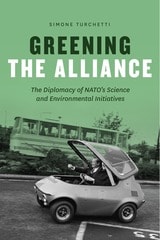
Greening the Alliance
The Diplomacy of NATO's Science and Environmental InitiativesSimone Turchetti
University of Chicago Press, 2018
Drawing on previously unseen documents from NATO’s own archives, Simone Turchetti reveals how its investments were rooted in the alliance’s defense and surveillance needs, needs that led it to establish a program prioritizing environmental studies. A long-overlooked and effective diplomacy exercise, NATO’s “greening” at one point constituted the organization’s chief conduit for negotiating problematic relations between allies. But while Greening the Alliance explores this surprising coevolution of environmental monitoring and surveillance, tales of science advisers issuing instructions to bomb oil spills with napalm or Dr. Strangelove–like experts eager to divert the path of hurricanes with atomic weapons make it clear: the coexistence of these forces has not always been harmonious. Reflecting on this rich, complicated legacy in light of contemporary global challenges like climate change, Turchetti offers both an eye-opening history of international politics and environmental studies and a thoughtful assessment of NATO’s future.
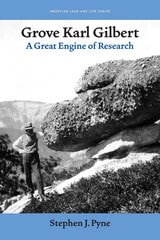
Grove Karl Gilbert
A Great Engine of ResearchStephen J. Pyne
University of Iowa Press, 1980
Gilbert knew most of geology's grand figures--including John Wesley Powell, Clarence Dutton, and Clarence King--and Pyne's chronicle of the imperturbable, quietly unconventional Gilbert is couterpointed with sketches of these prominent scientists. The man who wrote that "happiness is sitting under a tent with walls uplifted, just after a brief shower,", created answers to the larger questions of the earth in ways that have become classics of his science.

Growing American Rubber
Strategic Plants and the Politics of National SecurityFinlay, Mark R
Rutgers University Press, 2009
Although synthetic rubber emerged from World War II as one solution, the issue of ever-diminishing natural resources and the question of how to meet twenty-first-century consumer, military, and business demands lingers today.
Growing Community Forests
Practice, Research, and AdvocacyRyan Bullock
University of Manitoba Press, 2017
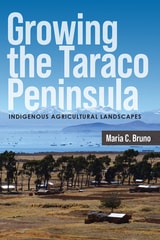
Growing the Taraco Peninsula
Indigenous Agricultural LandscapesMaria C. Bruno
University Press of Colorado, 2024
Beginning with the first small-scale communities of the Formative period (1500 BCE–500 CE) through the development of the Tiwanaku state (500–1100 CE), Bruno draws upon ethnographic insights from modern-day Indigenous farming practices on the peninsula as well as archaeological evidence from excavations at four sites to explore the landscapes and human-plant relationships that Taraco communities created through their agricultural practices. Through evaluation of environmental data on climate and land-use dynamics—rainfall, lake level, and soil character and distribution—she proposes a new hypothesis of how raised-field agriculture may have emerged in the region. With a detailed analysis of foodways at the Kala Uyuni site, her study reveals how Indigenous Taraco communities sustainably incorporated crops and wild plants into their daily and special-occasion meals, connecting the agricultural landscapes to local and regional social and political dynamics.
Bringing together several indicators of the region’s long-term history and demonstrating that shifts in agriculture do not neatly correspond to the changes traditionally highlighted by archaeological culture histories, Growing the Taraco Peninsula reveals Indigenous landscape creation through farming on the Taraco peninsula as a critical example of sustainability. This valuable contribution to Andean archaeology is also of interest to scholars, students, and the general reader concerned about the environment, sustainable farming, sustainability, Andean history, and the Indigenous peoples of the Americas.

Guaranteed Annual Wages
Jack Chernick and George Hellickson
University of Minnesota Press, 1945
Guaranteed Annual Wages was first published in 1945. Minnesota Archive Editions uses digital technology to make long-unavailable books once again accessible, and are published unaltered from the original University of Minnesota Press editions.
One of the last acts of President Roosevelt was to order a study of the guaranteed annual wage. The question that naturally arises in the mind of every thinking person is—what is the annual wage? What can it do for me? Is it economically feasible? Is it socially desirable? Will it work for the entire industrial structure as well as for individual firms within an industry?
Chernick and Hellickson in Guaranteed Annual Wages present an unbiased report showing to what extent the guaranteed annual wage contributes a solution to intermittent employment and indirectly to other forms of unemployment. Labor has followed the initiative of forward looking management in advocating guaranteed annual wages. Economists regard the guaranteed annual wage as a step toward full employment and the mass purchasing power so
essential to keep the wheels of industry turning.This book is the first substantial popular treatment of the annual wage in operation -- its effect upon the community, and how it relieves not only the wage earner but the homemaker from worry over the essentials of food, clothing, and shelter.
Chernick and Hellickson present the theory that the traditional wage system is obsolete and that, for the well-being of individuals and for society as a whole, it must be supplanted by a wage system that will make the operation of the economy more stable -- and that although the annual wage may not be a perfect system, it deserves a fair trial until something better is conceived.
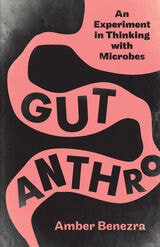
Gut Anthro
An Experiment in Thinking with MicrobesAmber Benezra
University of Minnesota Press, 2023
A fascinating ethnography of microbes that opens up new spaces for anthropological inquiry
The trillions of microbes in and on our bodies are determined by not only biology but also our social connections. Gut Anthro tells the fascinating story of how a sociocultural anthropologist developed a collaborative “anthropology of microbes” with a human microbial ecologist to address global health crises across disciplines. It asks: what would it mean for anthropology to act with science? Based partly at a preeminent U.S. lab studying the human microbiome, the Center for Genome Sciences at Washington University, and partly at a field site in Bangladesh studying infant malnutrition, it examines how microbes travel between human guts in the “field” and in microbiome laboratories, influencing definitions of health and disease, and how the microbiome can change our views on evolution, agency, and life.
As lab scientists studied the interrelationships between gut microbes and malnutrition in resource-poor countries, Amber Benezra explored ways to reconcile the scale and speed differences between the lab, the intimate biosocial practices of Bangladeshi mothers and their children, and the looming structural violence of poverty. In vital ways, Gut Anthro is about what it means to collaborate—with mothers, local field researchers in Bangladesh, massive philanthropic global health organizations, with the microbiome scientists, and, of course, with microbes. It follows microbes through various enactments in scientific research—microbes as kin, as data, and as race. Revealing how racial categories are used in microbiome research, Benezra argues that microbial differences need transdisciplinary collaboration to address racial health disparities without reifying race as a straightforward biological or social designation.
Gut Anthro is a tour de force of science studies and medical anthropology as well as an intensely personal and deeply theoretical accounting of what it means to do anthropology today.
Cover alt text:
Black background overlaid with a pink organic path suggestive of a human digestive system. Title appears within the guts as if being processed.