Results by title
1441 books match the query 'World' and 46 start with g

Gabriel García Moreno and Conservative State Formation in the Andes
By Peter V. N. Henderson
University of Texas Press, 2008
This book explores the life and times of Ecuador's most controversial politician within the broader context of the new political history, addressing five major themes of nineteenth-century Latin American history: the creation of political networks, the divisiveness of regionalism, the bitterness of the liberal-conservative ideological divide, the complicating problem of caudillismo, and the quest for progress and modernization.
Two myths traditionally associated with García Moreno's rule are debunked. The first is that he created a theocracy in Ecuador. Instead, the book argues that he negotiated a concordat with the Papacy giving the national government control over the church's secular responsibilities, and subordinated the clergy, many of whom were highly critical of García Moreno, to the conservative state. A second, frequently repeated generalization is that he created a conservative dictatorship out of touch with the liberal age in which he lived. Instead, the book argues that moderates held sway during the first nine years of García Moreno's period of influence, and only during his final term did he achieve the type of conservative state he thought necessary to advance his progressive nation-building agenda.
In sum, this book enriches our understanding of many of the notions of state formation by suggesting that conservatives like García Moreno envisioned a program of material progress and promoting national unity under a very different formula from that of nineteenth-century liberals.
Gender, Intersections, and Institutions
Intersectional Groups Building Alliances and Gaining Voice in GermanyEdited by Louise K. Davidson-Schmich
University of Michigan Press, 2017
Gender, Separatist Politics, and Embodied Nationalism in Cameroon
Jacqueline-Bethel Tchouta Mougoué
University of Michigan Press, 2019
Gender, Separatist Politics, and Embodied Nationalism in Cameroon illuminates how issues of ideal womanhood shaped the Anglophone Cameroonian nationalist movement in the first decade of independence in Cameroon, a west-central African country. Drawing upon history, political science, gender studies, and feminist epistemologies, the book examines how formally educated women sought to protect the cultural values and the self-determination of the Anglophone Cameroonian state as Francophone Cameroon prepared to dismantle the federal republic. The book defines and uses the concept of embodied nationalism to illustrate the political importance of women’s everyday behavior—the clothes they wore, the foods they cooked, whether they gossiped, and their deference to their husbands. The result, in this fascinating approach, reveals that West Cameroon, which included English-speaking areas, was a progressive and autonomous nation. The author’s sources include oral interviews and archival records such as women’s newspaper advice columns, Cameroon’s first cooking book, and the first novel published by an Anglophone Cameroonian woman.
Gendering Labor History
Alice Kessler-Harris
University of Illinois Press, 2006
This collection represents the thirty-year intellectual trajectory of one of today’s leading historians of gender and labor in the United States. The seventeen essays are divided into four sections, narrating the evolution and refinement of Alice Kessler-Harris's central project: showing gender’s fundamental importance in the shaping of United States history and working class culture.
The first section considers women and organized labor while the second pushes this analysis toward a gendered labor history as the essays consider the gendering of male as well as female workers and how gender operates with and within the social category of class. Subsequent sections broaden this framework to examine U.S. social policy as a whole, the question of economic citizenship, and wage labor from a global perspective. While each essay represents an important intervention in American historiography in itself, the collection taken as a whole shows Kessler-Harris continuing to push the field of American history to greater levels of inclusion and analysis.
Generation Denied
The Broken Promise of Education in IranReza Khanzadeh
University of Texas Press, 2026
An examination of the struggles of Iran’s youth when education promises success only through loyalty to the regime, and how that loyalty manifests through ideological capital within regime-imposed parameters.
Education is highly prized in Iranian society, touted as the key to success and influence. After all, the state’s top leaders are themselves scholars and experts in Islamic thought, history, and law, and graduates of elite institutions like Sharif University enjoy better job prospects than their peers. Yet the promise of a return on investment from education is a ruse: What unlocks opportunity is not academic development but loyalty to the regime. Generation Denied shows how the education system, from middle school through university, relies on standardized tests to funnel students into politically quiescent STEM fields, limiting their potential and quashing intellectual opposition to the regime. Students then graduate into a job market dominated by regime-affiliated entities, who hire applicants on the basis not of skills but of political agendas. Those who resist discover that the future they want in Iran does not exist, resulting in compelled migration. Closely following five young men who chose to be outsiders by pursuing education while rejecting political conformity, Reza Khanzadeh situates Iran within a broader global context, offering groundbreaking insight into the roles of education and employment in non-democratic governments.
Generation and Degeneration
Tropes of Reproduction in Literature and History from Antiquity through Early Modern EuropeValeria Finucci and Kevin Brownlee, eds.
Duke University Press, 2001
The discourses on reproduction, biology, degeneration, legacy, and lineage that this book broaches not only bring to the forefront concepts of sexual identity and gender politics but also show how they were culturally constructed and reconstructed through the centuries by medicine, philosophy, the visual arts, law, religion, and literature. The contributors reflect on a wide range of topics—from what makes men “manly” to the identity of Christ’s father, from what kinds of erotic practices went on among women in sixteenth-century seraglios to how men’s hemorrhoids can be variously labeled. Essays scrutinize stories of menstruating males and early writings on the presumed inferiority of female bodily functions. Others investigate a psychomorphology of the clitoris that challenges Freud’s account of lesbianism as an infantile stage of sexual development and such topics as the geographical origins of medicine and the materialization of genealogy in the presence of Renaissance theatrical ghosts.
This collection will engage those in English, comparative, Italian, Spanish, and French studies, as well as in history, history of medicine, and ancient and early modern religious studies.
Contributors. Kevin Brownlee, Marina Scordilis Brownlee, Elizabeth Clark, Valeria Finucci, Dale Martin, Gianna Pomata, Maureen Quilligan, Nancy Siraisi, Peter Stallybrass,Valerie Traub

Generational Accounting around the World
Edited by Alan J. Auerbach, Laurence J. Kotlikoff, and Willi Leibfritz
University of Chicago Press, 1999
Combining the latest and most extensive country-by-country generational analyses with a comprehensive review of generational accounting's innovative methodology, these papers are a consummate resource for economists, political scientists, and policy makers concerned with fiscal health and responsibility.
Geopolitical Economy
The South Korean FTA StrategyJonathan Krieckhaus
University of Michigan Press, 2018
Geopolitical Economy examines the significance and nature of free trade agreements (FTAs), the primary policy tool through which modern nations seek access to international markets and promote economic growth. The book focuses specifically on how South Korea, the world’s leader in the number and significance of FTAs as well as the world’s sixth largest export economy, uses FTAs.
Jonathan Krieckhaus argues that geopolitics—the struggle between powerful nations over specific geographic regions around the globe—influenced FTA strategy and economic policy in South Korea and beyond. This perspective illustrates the security approach to FTAs, but adds that the geographic specificity of security concerns deeply shape FTA policy.
Geopolitical Economy also looks at Korean FTAs through the lens of development strategy. South Korea is singularly successful in garnering FTAs with all three players in the global economy: the United States, the European Union, and China. This unprecedented success was built on a strong commitment from three consecutive Korean presidential administrations, each operating within a favorable state-society context that enjoyed the existence of a centralized and effective trade bureaucracy.

Gesta principum Polonorum
The Deeds of the Princes of the PolesJános M. Bak
Central European University Press, 2003

Get Involved!
Stories of Bahamian Civil SocietyKim Williams-Pulfer
Rutgers University Press, 2024
Junkanoo is the national cultural festival of The Bahamas. It fosters a sense of community pride, identity, companionship, spirituality and unity. Watch a video about Junknoo:
https://www.youtube.com/watch?v=tnMpMesNb1Q&t=14s
Ghetto at the Center of the World
Chungking Mansions, Hong KongGordon Mathews
University of Chicago Press, 2011
But as Ghetto at the Center of the World shows us, a trip to Chungking Mansions reveals a far less glamorous side of globalization. A world away from the gleaming headquarters of multinational corporations, Chungking Mansions is emblematic of the way globalization actually works for most of the world’s people. Gordon Mathews’s intimate portrayal of the building’s polyethnic residents lays bare their intricate connections to the international circulation of goods, money, and ideas. We come to understand the day-to-day realities of globalization through the stories of entrepreneurs from Africa carting cell phones in their luggage to sell back home and temporary workers from South Asia struggling to earn money to bring to their families. And we see that this so-called ghetto—which inspires fear in many of Hong Kong’s other residents, despite its low crime rate—is not a place of darkness and desperation but a beacon of hope.
Gordon Mathews’s compendium of riveting stories enthralls and instructs in equal measure, making Ghetto at the Center of the World not just a fascinating tour of a singular place but also a peek into the future of life on our shrinking planet.

Ghosts in the Neighborhood
Why Japan Is Haunted by Its Past and Germany Is NotWalter F. Hatch
University of Michigan Press, 2023
Germany, which brutalized its neighbors in Europe for centuries, has mostly escaped the ghosts of the past, while Japan remains haunted in Asia. The most common explanation for this difference is that Germany knows better how to apologize; Japan is viewed as “impenitent.” Walter F. Hatch rejects the conventional wisdom and argues that Germany has achieved reconciliation with neighbors by showing that it can be a trustworthy partner in regional institutions like the European Union and NATO; Japan has never been given that opportunity (by its dominant partner, the U.S.) to demonstrate such an ability to cooperate. This book rigorously defends the argument that political cooperation—not discourse or economic exchange—best explains Germany’s relative success and Japan’s relative failure in achieving reconciliation with neighbors brutalized by each regional power in the past. It uses paired case studies (Germany-France and Japan-South Korea; Germany-Poland and Japan-China) to gauge the effect of these competing variables on public opinion over time. With numerous charts, each of the four empirical chapters illustrates the powerful causal relationship between institution building and interstate reconciliation.
Girlhood
A Global HistoryHelgren, Jennifer
Rutgers University Press, 2010
Spanning a broad time frame from 1750 to the present, essays illuminate the various continuities and differences in girls' lives across culture and region--girls on all continents except Antarctica are represented. Case studies and essays are arranged thematically to encourage comparisons between girls' experiences in diverse locales, and to assess how girls were affected by historical developments such as colonialism, political repression, war, modernization, shifts in labor markets, migrations, and the rise of consumer culture.

Gladius
The World of the Roman SoldierGuy de la Bédoyère
University of Chicago Press, 2020
Empire.
The Roman army was the greatest fighting machine in the ancient world. More than that, it was the single largest organization in Western antiquity, taking in members from all classes, from senators to freed slaves. The Roman Empire depended on its army not just to win its wars, defend its frontiers, and control the seas, but to act as the very engine of the state.
In Gladius, Guy de la Bédoyère takes us straight to the heart of what it meant to be a part of the Roman army. Rather than a history of the army itself, or a guide to military organization and fighting methods, this book is a ground-level recreation of what it was like to be a soldier in the army that made the empire. Surveying numerous aspects of life in the Roman army between 264 BCE and 337 CE, Gladius—the Latin word for sword—draws not only on the words of famed Roman historians, but also those of the soldiers themselves, as recorded in their religious dedications, tombstones, and even private letters and graffiti. Gladius reveals the everyday life of these soldiers and their families, whether stationed in a bleak frontier garrison in Britain or North Africa, tasked with guarding the emperor in Rome, fighting on foreign battlefields, mutinying over pay, marching in triumph, throwing their weight around on city streets, or enjoying esteem in honorable retirement.
By illuminating the history of one organization that reflected all corners of the Roman world, Gladius gives us a portrait of an ancient society that is unprecedented in both its broad sweep and gritty intimacy.

Glidermen of Neptune
The American D-Day Glider AttackCharles J. Masters
Southern Illinois University Press, 1995
Although the word gliderman does not appear in the dictionary, a brave group of World War II soldiers known as glidermen flew into combat inside unarmed and unarmored canvas-covered gliders known as "flying coffins."
Charles J. Masters points out that because World War II was the first truly mechanized and armored global conflict, the role of the glidermen and their combat gliders was at best anachronistic. Fighter planes exceeded speeds of 400 miles per hour and were heavily armed with multiple machine guns. Dogfights had taken on new dimensions, eclipsing the tactics, speed, and firepower first evidenced by the fragile biplanes of World War I. Tanks achieved a lethal efficiency barely dreamed of even five years before the war. An array of weaponry never seen in any previous military engagement confronted the combat soldier during World War II.And yet there were gliders. And glidermen.
Masters tells of these men and of their fragile aircraft in a war of mechanized chaos. In copious detail, he describes the gliders and the Americans who boarded them during the American D-Day glider attack, a mission that was part of the overall cross-channel plan code-named "Operation Neptune." The son of a gliderman with the 82nd Airborne Division, Masters had unique access to the surviving glidermen and comrades of his father. During the course of his research, he located and interviewed 106 of the men who had flown the D-Day mission in gliders. As an insider—in a sense almost a member of the family and fraternity of glider-men—Masters was cordially received by the members of the American airborne divisions that participated in D-Day, many of whom told him stories they had seldom told their own friends and families. Often harrowing and always riveting, the stories these men told an eager listener and researcher are very much a part of this narrative.
Masters has also assembled the finest existing collection of photographs of the American D-Day glider attack. These photographs—many of which have never before been published—provide a spectacular photographic record of a little-known aspect of this war. In fact, because of the short military history of the American combat glider, most readers, including veterans of World War II, will not have seen one of these "flying coffins," even at a distance. These photographs afford the opportunity to actually examine the inside of the combat gliders used on D-Day, to observe the glidermen in action, and to witness the often tragic consequences of the glider attack.
Global Cities of the South, Volume 22
Ashley Dawson and Brent Hayes Edwards, eds.
Duke University Press, 0
This special issue challenges postcolonial theorists to engage with urban studies and challenges urban analysts to turn their focus to the postcolonial societies where these cities have developed. Gathering well-known scholars in postcolonial theory and urban studies, the collection opens an interdisciplinary exchange through a series of case studies focused on cities in Africa and Asia. One essay argues that the world’s urban spaces are key to the continuance of inequity under capitalist globalization (exemplified by rapidly expanding urban slums), as well as to any possible resistance to that inequity. Another article considers the history and politics of Harlem from the perspective of a well-known academic, activist, and postcolonial theorist whose work here is interwoven with the photographic art of Alice Attie. A third reflects on the politics of representation of Hindu and Muslim populations in Mumbai, evaluating popular media including film and the cosmopolitan fiction of Salman Rushdie.
Contributors. Alice Attie, Mike Davis, Ashley Dawson, Brent Hayes Edwards, Brian Larkin, Rossana Reguillo, Gayatri Chakravorty Spivak, Rashmi Varma, Victor Vich
Global Common Good
Intercultural Perspectives on a Just and Ecological TransformationEdited by Michael Reder, Verena Risse, Katharina Hirschbrunn, and Georg Stoll
Campus Verlag, 2015

Global Communication Electric
Business, News and Politics in the World of TelegraphyEdited by M. Michaela Hampf and Simone Müller-Pohl
Campus Verlag, 2013
This book examines the emergence of this global media system between 1860 and 1930 in four sections—"Inter|Nationalisms," "Agents|Actors," "Use|News," and "Space|Time"—that aim to broaden and challenge popular conceptions of telegraphy. In exploring the varied uses of telegraphy, real or imagined, Global Communication Electric expands the notion of the telegraph as a globalizing medium: of connection as well as friction; of political, social, and economic entanglement as well as disentanglement; and of crossing as well as creating distance in space and time.
Global Encyclopaedia of Informality, Volume 3
A Hitchhiker's Guide to Informal Problem-Solving in human lifeEdited by Alena Ledeneva
University College London, 2024
For a post-human hitchhiker, human life–with its anxiety, aging, illness, and constant need for problem-solving–may look unviable. Yet, for humans, the life struggle is softened by human touch, human emotion, and human cooperation.
The Global Encyclopaedia of Informality, Volume 3 continues the journey of the two previous volumes into the world’s open secrets, unwritten rules, and hidden practices. It focuses on issues of emotional ambivalence and pressures of the digital age. The informal practices presented in this volume demonstrate the urgency of alleviating tensions between continuity and all-too-rapid change and the need to tackle the central problem of modern societies—uncertainty.
The volume takes the reader on a biographical journey through elusive, taken-for-granted, or banal ways of getting things done from over seventy countries and world regions. It offers an innovative understanding of the significance of fringes and challenges the assumption that informality is associated exclusively with poverty, underdevelopment, the Global South, oppressive regimes, or the former socialist countries of Eastern Europe and Central Asia. It also maps the patterns of informality around the globe, identifies specific informal practices in a context-sensitive way, and documents their ambivalent impact on people engaged in problem-solving, on societies in which these problems arise, and on humanity overall.

Global Environmental History
I. G. Simmons
University of Chicago Press, 2008
A far-reaching approach that considers the truly global picture and recognizes the contributions of many disciplines—including the natural sciences, the social sciences, and increasingly, the humanities—Global Environmental History focuses not only on the material world but also on humans’ ideas about the planet and their place on it. Taking as his starting point the major phases of human technological evolution of the last 12,000 years, Simmons considers how these changes have affected the natural world and goes on to assess the response to conditions such as climate change. By putting today’s environmental preoccupations into a long-term perspective, Simmons reveals the history of some current anxieties.
A timely examination of the interrelation of history and nature, Simmons’s book will be welcomed by any concerned reader interested in the origins of the modern environmental crisis.
Global Labor Migration
New DirectionsEdited by Eileen Boris, Heidi Gottfried, Julie Greene, and Joo-Cheong Tham
University of Illinois Press, 2023
Global Labor Migration presents new multidisciplinary, transregional perspectives on issues surrounding global labor migration. The essays go beyond disciplinary boundaries, with sociologists, ethnographers, legal scholars, and historians contributing research that extends comparison among and within world regions. Looking at migrant workers from the late nineteenth century to the present day, the contributors illustrate the need for broader perspectives that study labor migration over longer timeframes and from wider geographic areas. The result is a unique, much-needed collection that delves into one of the world’s most pressing issues, generates scholarly dialogue, and proposes cutting-edge research agendas and methods.
Contributors: Bridget Anderson, Rutvica Andrijasevic, Katie Bales, Jenny Chan, Penelope Ciancanelli, Felipe Barradas Correia Castro Bastos, Eileen Boris, Charlie Fanning, Judy Fudge, Jorge L. Giovannetti-Torres, Heidi Gottfried, Julie Greene, Justin Jackson, Radhika Natarajan, Pun Ngai, Bastiaan Nugteren, Nicola Piper, Jessica R. Pliley, Devi Sacchetto, Helen Sampson, Yael Schacher, Joo-Cheong Tham, and Matt Withers
Global Lynching and Collective Violence
Volume 1: Asia, Africa, and the Middle EastEdited by Michael J. Pfeifer
University of Illinois Press, 2017

Global Lynching and Collective Violence
Volume 2: The Americas and EuropeMichael Pfeifer
University of Illinois Press, 2017
The volume's European-themed topics explore why three communities of medieval people turned to mob violence, and the ways exclusion from formal institutions fueled peasant rough justice in Russia. Essays on Latin America examine how lynching in the United States influenced Brazilian debates on race and informal justice, and how shifts in religious and political power drove lynching in twentieth-century Mexico. Finally, scholars delve into English Canadians' use of racist and mob violence to craft identity; the Communist Party's Depression-era campaign against lynching in the United States; and the transnational links that helped form--and later emanated from--Wisconsin's notoriously violent skinhead movement in the late twentieth century.
Contributors: Brent M. S. Campney, Amy Chazkel, Stephen P. Frank, Dean J. Kotlowski, Michael J. Pfeifer, Gema Santamaría, Ryan Shaffer, and Hannah Skoda.
Global Russian Cultures
Edited by Kevin M. F. Platt
University of Wisconsin Press, 2020
The volume's internationally renowned contributors treat the many different global Russian cultures not as "displaced" elements of Russian cultural life but rather as independent entities in their own right. They describe diverse forms of literature, music, film, and everyday life that transcend and defy political, geographic, and even linguistic borders. Arguing that Russian cultures today are many, this volume contends that no state or society can lay claim to be the single or authentic representative of Russianness. In so doing, it contests the conceptions of culture and identity at the root of nation-building projects in and around Russia.

Global Voices
Picture Books from Around the WorldSusan Stan
American Library Association, 2014

Globalization and Nationalism
The Cases of Georgia and the Basque CountryNatalie Sabanadze
Central European University Press, 2010
This book argues for an original, unorthodox conception about the relationship between globalization and contemporary nationalism. While the prevailing view holds that nationalism and globalization are forces of clashing opposition, Sabanadze establishes that these tend to become allied forces. It acknowledges that nationalism does react against the rising globalization and represents a form of resistance against globalizing influences, but the Basque and Georgian cases prove that globalization and nationalism can be complementary rather than contradictory tendencies.
Nationalists have often served as promoters of globalization, seeking out globalizing influences and engaging with global actors out of their very nationalist interests. In the case of both Georgia and the Basque Country, there is little evidence suggesting the existence of strong, politically organized nationalist opposition to globalization.
Globalization and Nationalism discusses why, on a broader scale, different forms of nationalism develop differing attitudes towards globalization and engage in different relationships.

Globalization, Nationalism, and Imperialism
A New History of Eastern EuropeJames W. Peterson
Central European University Press, 2023
The authors of this book retell the political and economic history of East-Central Europe, the post-communist Balkans, and the Baltic states and speculate about their future from the vantage point of three competing forces operating in the region: territorial imperialism, globalization, and nationalism.
Exposed to imperial aspirations, the geographic area from the Baltic Sea to the Black Sea has in the past 150 years been subject to alternating waves of globalization and nationalism. The nineteenth century Eastern European empires were open to forces of economic globalization, but all collapsed at the end of World War One. Emerging nation-states embraced the logic of Western-led globalization but were subjugated by Nazi and Soviet empires, which pursued policies of economic autarchy. The demise of the Soviet empire marked the revival of pre-1939 nation-states and the re-entry of forces of liberalism and globalization into the region, with multiple crises of economic transition, ethnic militancy, new forms of authoritarianism, and external security threats. By 2010 negative, nationalist-populist reactions against crises that globalization brought to Eastern Europe became the dominant political trend. The analysis involves the consideration about the very contemporary factors of Brexit and COVID, as well as Russia’s and China’s influences, and their effects on Eastern Europe.
Globalized Authoritarianism
Megaprojects, Slums, and Class Relations in Urban MoroccoKoenraad Bogaert
University of Minnesota Press, 2018
A rich investigation into Morocco’s urban politics
Over the past thirty years, Morocco’s cities have transformed dramatically. To take just one example, Casablanca’s medina is now obscured behind skyscrapers that are funded by global capital and encouraged by Morocco’s monarchy, which hopes to transform this city into a regional leader of finance and commerce. Such changes have occurred throughout Morocco. Megaprojects are redesigning the cityscapes of Rabat, Tangiers, and Casablanca, turning the nation’s urban centers into laboratories of capital accumulation, political dominance, and social control.
In Globalized Authoritarianism, Koenraad Bogaert links more abstract questions of government, globalization, and neoliberalism with concrete changes in the city. Bogaert goes deep beneath the surface of Morocco’s urban prosperity to reveal how neoliberal government and the increased connectivity engendered by global capitalism transformed Morocco’s leading urban spaces, opening up new sites for capital accumulation, creating enormous class divisions, and enabling new innovations in state authoritarianism. Analyzing these transformations, he argues that economic globalization does not necessarily lead to increased democratization but to authoritarianism with a different face, to a form of authoritarian government that becomes more and more a globalized affair.
Showing how Morocco’s experiences have helped produce new forms of globalization, Bogaert offers a bridge between in-depth issues of Middle Eastern studies and broader questions of power, class, and capital as they continue to evolve in the twenty-first century.
Globalizing the Caribbean
Political Economy, Social Change, and the Transnational Capitalist ClassJeb Sprague
Temple University Press, 2019
The beautiful Caribbean basin is fertile ground for a study of capitalism past and present. Transnational corporations move money and labor around the region, as national regulations are reworked to promote conditions benefiting private capital. Globalizing the Caribbean offers a probing account of the region’s experience of economic globalization while considering gendered and racialized social relations and the frequent exploitation of workers.
Jeb Sprague focuses on the social and material nature of this new era in the history of world capitalism. He combines an historical overview of capitalism in the region with theoretical analysis backed by case studies. Sprague elaborates upon the role of class formation and the restructuring of local states. He considers both U.S. hegemony, and how various upsurges from below and crises occur. He examines the globalization of the cruise ship and mining businesses, looks at the growth of migrant labor and reverse flow of remittances, and describes the evolving role of export processing and supranational associations. In doing so, Sprague shows how transnationally oriented elites have come to rule the Caribbean, and how capitalist globalization in the region occurs alongside shifting political, institutional, and organizational dynamics.

God's Knowledge of the World
Medieval Theories of Divine Ideas from Bonaventure to OckhamCarl A. Vater
Catholic University of America Press, 2022

God's Waiting Room
Racial Reckoning at Life's EndCasey Golomski
Rutgers University Press, 2025
Winner of the Elliott P. Skinner Award from the Association of Africanist Anthropology, part of the American Anthropological Association
Third Place in the Victor Turner Prize in Ethnographic Writing from the American Anthropological Association's Society for Humanistic Anthropology
Can older racists change their tune, or will they haunt us further once they're gone? Rich in mystery and life's lessons, God's Waiting Room considers what matters in the end for older white adults and the younger Black nurses who care for them. An innovation in creative nonfiction, Casey Golomski's story of his years of immersive research at a nursing home in South Africa, thirty years after the end of apartheid, is narrated as a one-day, room-by-room tour. The story is told in breathtakingly intimate and witty conversations with the home's residents and nurses, including the untold story of Nelson Mandela's Robben Island prison nurse, and readers learn how ageism, sexism, and racism intersect and impact health care both in South Africa and in the United States, as well as create conditions in which people primed to be enemies find grace despite the odds.
Course or Book Club Reading and Discussion Guide (https://dhjhkxawhe8q4.cloudfront.net/rup-wp-v2/wp-content/uploads/2025/02/04135941/gods-waiting-room_reading-questions.pdf)
For copyright reasons, this edition is not available in the South African Development Community and Kenya.

Going Viral
Zombies, Viruses, and the End of the WorldSchweitzer, Dahlia
Rutgers University Press, 2018
In Going Viral, Dahlia Schweitzer probes outbreak narratives in film, television, and a variety of other media, putting them in conversation with rhetoric from government authorities and news organizations that have capitalized on public fears about our changing world. She identifies three distinct types of outbreak narrative, each corresponding to a specific contemporary anxiety: globalization, terrorism, and the end of civilization. Schweitzer considers how these fears, stoked by both fictional outbreak narratives and official sources, have influenced the ways Americans relate to their neighbors, perceive foreigners, and regard social institutions.
Looking at everything from I Am Legend to The X Files to World War Z, this book examines how outbreak narratives both excite and horrify us, conjuring our nightmares while letting us indulge in fantasies about fighting infected Others. Going Viral thus raises provocative questions about the cost of public paranoia and the power brokers who profit from it.
Supplemental Study Materials for "Going Viral": https://www.rutgersuniversitypress.org/going-viral-dahlia-schweitzer
Dahlia Schweitzer- Going Viral: https://www.youtube.com/watch?v=5xF0V7WL9ow

Good-bye to the Mermaids
A Childhood Lost in Hitler's BerlinKarin Finell
University of Missouri Press, 2026

Goodbye iSlave
A Manifesto for Digital AbolitionJack Linchuan Qiu
University of Illinois Press, 2016
Focusing on the alliance between Apple and the notorious Taiwanese manufacturer Foxconn, Jack Linchuan Qiu examines how corporations and governments everywhere collude to build systems of domination, exploitation, and alienation. His interviews, news analysis, and first-hand observation show the circumstances faced by Foxconn workers--circumstances with vivid parallels in the Atlantic slave trade. Ironically, the fanatic consumption of digital media also creates compulsive free labor that constitutes a form of bondage for the user. Arguing as a digital abolitionist, Qiu draws inspiration from transborder activist groups and incidents of grassroots resistance to make a passionate plea aimed at uniting--and liberating--the forgotten workers who make our twenty-first-century lives possible.
Governance and Foreign Investment in China, India, and Taiwan
Credibility, Flexibility, and International BusinessYu Zheng
University of Michigan Press, 2014
Yu Zheng challenges the idea that democracy is the prerequisite for developing countries to attract foreign direct investment (FDI) and promote economic growth. He examines the relationship between political institutions and FDI through the use of cross-national analysis and case studies of three rapidly growing Asian economies with a focus on the role of microinstitutional “special economic zones” (SEZ).
China’s authoritarian system allows for bold, radical economic reform, but China has attracted FDI largely because of its increasingly credible investment environment as well as its central and local governments’ efforts to overcome constraints on investment. India’s democratic institutions provide more political assurance to foreign investors, but its market became conducive to FDI only when the government adopted more flexible investment policies. Taiwan’s democratic transition shifted its balance of policy credibility and flexibility, which was essential for the nation’s economic takeoff and sustained growth.
Zheng concludes that a more accurate understanding of the relationship between political institutions and FDI comes from careful analysis of institutional arrangements that entail a trade-off between credibility and flexibility of governance.

Governing Abroad
Coalition Politics and Foreign Policy in EuropeSibel Oktay
University of Michigan Press, 2022
From Austria to New Zealand, coalition governments often pave the road to foreign policy. In Western Europe, nearly 90 percent of postwar governments include two or more political parties. Israel, the Middle East’s only consolidated democracy according to many, has never experienced single-party rule in its history. Even the United Kingdom, known for its long streak of single-party rule, now navigates multiparty cabinets. Coalitions are everywhere, but we still have little understanding of how they act in foreign affairs. History shows that coalitions can sometime engage in powerful international commitments such as participating in military operations, but at other times, they postpone their decisions, water down their policy positions, or promise to do less than they otherwise would. What explains these differences in behavior?
Governing Abroad unpacks the little-known world of coalition governments to find out. Oktay argues that the specific constellation of parties in government explains why some coalitions can make more assertive foreign policy decisions than others. Building on the rich literature in political science on coalitions, legislatures, and voting behavior, the book weaves together sophisticated statistical analyses of foreign policy events across thirty European countries alongside in-depth case studies from Denmark, the Netherlands, and Finland. It brings political parties back into the study of foreign policy, demonstrating that the size of the coalition, the ideological proximity of the governing parties, and their relationship with the parliamentary opposition together influence the government’s ability to act in the international arena. This book challenges our existing perceptions about the constraints and weaknesses of coalition governments. It sheds new light on the conditions that allow them to act decisively abroad.
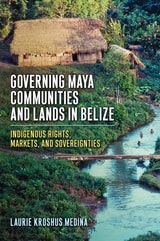
Governing Maya Communities and Lands in Belize
Indigenous Rights, Markets, and SovereigntiesLaurie Kroshus Medina
Rutgers University Press, 2024

Governing and Ruling
The Political Logic of Taxation in ChinaChangdong Zhang
University of Michigan Press, 2021
Rapid social economic changes, the transition from a planned economy to a market economy, or even economic liberalization can lead to political instability and the collapse of authoritarian regimes. Despite experiencing all of these unprecedented changes in the past forty years, China under the Chinese Communist Party’s leadership has so far successfully transformed and improved both its governance capacity and its ruling capacity. Governing and Ruling: The Political Logic of Taxation in China addresses this regime resilience puzzle by examining the political logic of its taxation system, especially the ways in which taxation helps China handle three governance problems: maneuvering social control, improving agent discipline, and eliciting cooperation. Changdong Zhang argues that a taxation system plays an important role in sustaining authoritarian rule, in China and elsewhere, by combining co-optation and repression functions. The book collects valuable firsthand and secondhand data; studies China’s taxation system, intergovernmental fiscal relationships, composition of fiscal revenue sources, and tax administration; and discusses how each dimension influences the three governance problems.
Gramsci in the World
Roberto M. Dainotto and Fredric Jameson, editors
Duke University Press, 2020
Contributors. Alberto Burgio, Cesare Casarino, Maria Elisa Cevasco, Kate Crehan, Roberto M. Dainotto, Michael Denning, Harry Harootunian, Fredric Jameson, R. A. Judy, Patrizia Manduchi, Andrea Scapolo, Peter D. Thomas, Catherine Walsh, Pu Wang, Cosimo Zene

Greater than Emperor
Cola di Rienzo (ca. 1313-54) and the World of Fourteenth-Century RomeAmanda Collins
University of Michigan Press, 2002
Greater than Emperor charts the remarkable process by which Rome tried to forge a new civic identity, similar in constitution to contemporary city-republics but conceptually much greater. At the forefront of the process stood the idiosyncratic and astonishing young notary Cola di Rienzo. On May 21, 1347, Cola staged a bloodless coup. Rome entered a new age that would witness both the resurrection of the ancient power of the Empire and Rome's apotheosis as God's chosen city. Yet within seven months, the theatricality and violence of Cola's regime led to exile. Cola's triumphal return some years later ended in his assassination.
Cola was eventually resurrected as a hero of nineteenth-century nationalism, leaving the realities of Trecento Rome far behind. Yet it is only in terms of the very real models and methods that Cola welded together that his revolution can be understood.
Greater than Emperor describes Cola's reliance on the past of rhetoric, pageantry, and Roman law. It then discusses the future, tracing the dynamic contemporary influences of apocalyptic fervor, prophetic literature, and radical Franciscan imagery of Cola's world. Amanda Collins assesses Cola's legal and political career within both the complex mechanics of municipal administration and the multiple hierarchies of Roman society.
Amanda Collins offers a new assessment of the dramatic events of 1347 and an analysis of Cola within his late medieval Roman context. Bringing depth and substance to Cola's backdrop, Trecento Rome and the economic and spiritual ambitions of its citizen body, Collins provides information crucial to understanding the longer-term economic and political drive to civic autonomy in Rome before 1400.
Historians and generalists alike will relish the story of a remarkable individual, set within the cultural climate of a famous and fascinating city, during an often-overlooked period. This book sheds new light on a crucial political figure that brought a dazzling civil independence to Rome.
Amanda Collins held the Junior Research Fellowship in Intellectual History at Wolfson College, Oxford from 1997-2000, and has more recently been employed at the University of Sussex.

Gringolandia
Lifestyle Migration under Late CapitalismMatthew Hayes
University of Minnesota Press, 2018
A telling look at today’s “reverse” migration of white, middle-class expats from north to south, through the lens of one South American city
Even as the “migration crisis” from the Global South to the Global North rages on, another, lower-key and yet important migration has been gathering pace in recent years—that of mostly white, middle-class people moving in the opposite direction. Gringolandia is that rare book to consider this phenomenon in all its complexity.
Matthew Hayes focuses on North Americans relocating to Cuenca, Ecuador, the country’s third-largest city and a UNESCO World Heritage Site. Many began relocating there after the 2008 economic crisis. Most are self-professed “economic refugees” who sought offshore retirement, affordable medical care, and/or a lower–cost location. Others, however, sought adventure marked by relocation to an unfamiliar cultural environment and to experience personal growth through travel, illustrative of contemporary cultures of aging. These life projects are often motivated by a desire to escape economic and political conditions in North America.
Regardless of their individual motivations, Hayes argues, such North–South migrants remain embedded in unequal and unfair global social relations. He explores the repercussions on the host country—from rising prices for land and rent to the reproduction of colonial patterns of domination and subordination. In Ecuador, heritage preservation and tourism development reflect the interests and culture of European-descendent landowning elites, who have most to benefit from the new North–South migration. In the process, they participate in transnational gentrification that marginalizes popular traditions and nonwhite mestizo and indigenous informal workers. The contrast between the migration experiences of North Americans in Ecuador and those of Ecuadorians or others from such regions of the Global South in North America and Europe demonstrates that, in fact, what we face is not so much a global “migration crisis” but a crisis of global social justice.
Growth, Equality, and the Mexican Experience
By Morris Singer
University of Texas Press, 1969
Central to the research that went into the preparation of this monograph is the relationship between economic development and equality. To determine and characterize that relationship Morris Singer focuses on the various components of equality at different stages of development. The author particularly explores the behavior of income distribution, together with its bearing on the components of aggregate demand.
Mexico provided an excellent case to examine in depth because of its impressive growth and the fact that it experienced Latin America’s first successful twentieth-century revolution.
Although the Revolution of 1910 hastened social equality and introduced other changes that stimulated Mexico’s economic growth, it could not prevent a serious increase in the inequality of income distribution. By the early 1960s the government found it necessary to rectify this increasing imbalance through a program of expenditures designed to counteract widespread poverty and weak aggregate demand. To ward off inflation, this program in turn could be implemented only by tax reform.
In discussing the relationship between development and equality in its various dimensions, noneconomic as well as economic, this monograph points out that, at the time of this study, government policies in Mexico were dictated by an elite concerned primarily with the country’s economic advancement. Singer concludes that if programs of government expenditure and tax reform succeed in remedying the inequalities of income distribution, this could gradually make possible the development of a more genuine political as well as economic democracy.
This book reflects Singer’s interest in the relationship between equality and development. It is the result of five months of intensive in-residence study in Mexico, financed in part by a grant from the Social Science Research Council.

Guarded by Two Jaguars
A Catholic Parish Divided by Language and FaithEric Hoenes del Pinal
University of Arizona Press, 2022
In Guarded by Two Jaguars, Eric Hoenes del Pinal tells the story of this dramatic split and in so doing addresses the role that language and gesture have played in the construction of religious identity. Drawing on a range of methods from linguistic and cultural anthropology, the author examines how the introduction of the Catholic Charismatic Renewal movement in the parish produced a series of debates between parishioners that illustrate the fundamentally polyvocal nature of Catholic Christianity. This work examines how intergroup differences are produced through dialogue, contestation, and critique. It shows how people’s religious affiliations are articulated not in isolation but through interaction with each other.
Although members of these two congregations are otherwise socially similar, their distinct interpretations of how to be a “good Catholic” led them to adopt significantly different norms of verbal and nonverbal communication. These differences became the idiom through which the two groups contested the meaning of being Catholic and Indigenous in contemporary Guatemala, addressing larger questions about social and religious change.
Guatemaltecas
The Women's Movement, 1986–2003By Susan A. Berger
University of Texas Press, 2006
After thirty years of military rule and state-sponsored violence, Guatemala reinstated civilian control and began rebuilding democratic institutions in 1986. Responding to these changes, Guatemalan women began organizing to gain an active role in the national body politic and restructure traditional relations of power and gender. This pioneering study examines the formation and evolution of the Guatemalan women's movement and assesses how it has been affected by, and has in turn affected, the forces of democratization and globalization that have transformed much of the developing world.
Susan Berger pursues three hypotheses in her study of the women's movement. She argues that neoliberal democratization has led to the institutionalization of the women's movement and has encouraged it to turn from protest politics to policy work and to helping the state impose its neoliberal agenda. She also asserts that, while the influences of dominant global discourses are apparent, local definitions of femininity, sexuality, and gender equity and rights have been critical to shaping the form, content, and objectives of the women's movement in Guatemala. And she identifies a counter-discourse to globalization that is slowly emerging within the movement. Berger's findings vigorously reveal the manifold complexities that have attended the development of the Guatemalan women's movement.
Guns, Drugs, and Development in Colombia
By Jennifer S. Holmes, Sheila Amin Gutiérrez de Piñeres, and Kevin M. Curtin
University of Texas Press, 2009
For decades, Colombia has contended with a variety of highly publicized conflicts, including the rise of paramilitary groups in response to rebel insurgencies of the 1960s, the expansion of an illegal drug industry that has permeated politics and society since the 1970s, and a faltering economy in the 1990s. An unprecedented analysis of these struggles, Guns, Drugs, and Development in Colombia brings together leading scholars from a variety of fields, blending previously unseen quantitative data with historical analysis for an impressively comprehensive assessment. Culminating in an inspiring plan for peace, based on Four Cornerstones of Pacification, this landmark work is sure to spur new calls for change in this corner of Latin America and beyond.

Gunshots at the Fiesta
Literature and Politics in Latin AmericaMaarten van Delden
Vanderbilt University Press, 2009
Yet the authors of this book argue that the relationship between the two realms is much more complex and fraught with tension than is nowadays recognized. In examining these tensions, and in revealing the diverse ways in which literature and politics intersect in the Latin American cultural tradition, Gunshots at the Fiesta offers a lively challenge to the current tendency--especially strong in the U.S. academy--to read Latin American literature through a narrowly political prism.
The authors argue that one can only understand the nature of the dialogue between literature and politics if one begins by recognizing the different logics that operate in these different domains. Using this idea of the different logics of politics and literature as a guiding thread, Van Delden and Grenier offer bold new readings of major authors such as José Martí, Octavio Paz, Carlos Fuentes, Gabriel García Márquez, and Mario Vargas Llosa, as well as compelling interpretations of works by less-frequently-discussed figures such as Claribel Alegría, Marisol Martín del Campo and Víctor Hugo Rascón Banda.