Results by title
28164 books match the query 'History' and 628 start with g

Gravity's Ghost
Scientific Discovery in the Twenty-first CenturyHarry Collins
University of Chicago Press, 2010
In theory, at least, gravitational waves do exist. We are constantly bathed in gravitational radiation, which is generated when stars explode or collide and a portion of their mass becomes energy that ripples out like a disturbance on the surface of a serene pond. But unfortunately no gravitational wave has ever been directly detected even though the search has lasted more than forty years.
As the leading chronicler of the search for gravitational waves, Harry Collins has been right there with the scientists since the start. The result of his unprecedented access to the front lines of physical science is Gravity’s Ghost, a thrilling chronicle of high-stakes research and cutting-edge discovery. Here, Collins reveals that scientific discovery and nondiscovery can turn on scientific traditions and rivalries, that ideal statistical analysis rests on impossible procedures and unattainable knowledge, and that fact in one place is baseless assumption in another. He also argues that sciences like gravitational wave detection, in exemplifying how the intractable is to be handled, can offer scientific leadership a moral beacon for the twenty-first century. In the end, Gravity’s Ghost shows that discoveries are the denouements of dramatic scientific mysteries.
Gravity's Shadow
The Search for Gravitational WavesHarry Collins
University of Chicago Press, 2004
Gravitational wave detection involves recording the collisions, explosions, and trembling of stars and black holes by evaluating the smallest changes ever measured. Because gravitational waves are so faint, their detection will come not in an exuberant moment of discovery but through a chain of inference; for forty years, scientists have debated whether there is anything to detect and whether it has yet been detected. Sociologist Harry Collins has been tracking the progress of this research since 1972, interviewing key scientists and delineating the social process of the science of gravitational waves.
Engagingly written and authoritatively comprehensive, Gravity's Shadow explores the people, institutions, and government organizations involved in the detection of gravitational waves. This sociological history will prove essential not only to sociologists and historians of science but to scientists themselves.
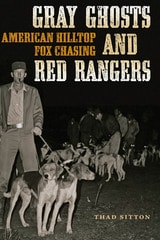
Gray Ghosts and Red Rangers
American Hilltop Fox ChasingBy Thad Sitton
University of Texas Press, 2010
Around a campfire in the woods through long hours of night, men used to gather to listen to the music of hounds' voices as they chased an elusive and seemingly preternatural fox. To the highly trained ears of these backwoods hunters, the hounds told the story of the pursuit like operatic voices chanting a great epic. Although the hunt almost always ended in the escape of the fox—as the hunters hoped it would—the thrill of the chase made the men feel "that they [were] close to something lost and never to be found, just as one can feel something in a great poem or a dream."
Gray Ghosts and Red Rangers offers a colorful account of this vanishing American folkway—back-country fox hunting known as "hilltopping," "moonlighting," "fox racing," or "one-gallus fox hunting." Practiced neither for blood sport nor to put food on the table, hilltopping was worlds removed from elite fox hunting where red- and black-coated horsemen thundered across green fields in daylight. Hilltopping was a nocturnal, even mystical pursuit, uniting men across social and racial lines as they gathered to listen to dogs chasing foxes over miles of ground until the sun rose. Engaged in by thousands of rural and small-town Americans from the 1860s to the 1980s, hilltopping encouraged a quasi-spiritual identification of man with animal that bound its devotees into a "brotherhood of blood and cause" and made them seem almost crazy to outsiders.

Great American Treasures
Women Preserving History Since 1891Carol Cadou
The Artist Book Foundation, 2025
Great American Treasures is a comprehensive survey of America's historic sites and buildings, their furnishings, and their gardens.
America’s historic sites, homes, and public buildings are a living record of the diverse ethnicities that, over four centuries, helped to build a growing nation. Since 1891, the National Society of the Colonial Dames of America (NSCDA) has actively promoted our national heritage through historic preservation, restoration, and the interpretation of historic sites across the United States. In conjunction with NSCDA, in 2025 The Artist Book Foundation (TABF) published Great American Treasures, a comprehensive survey of the architecture, furnishings, and gardens that epitomize the nation’s diverse material culture over more than 400 years.
The publication features the NSCDA’s collection of historic places, which span the sixteenth to the twentieth centuries, and highlights the residences of those who established themselves in America during this time. It features an array of buildings that speak to the diversity of traditions, people, and architecture in a growing nation—from English Georgian houses on the eastern seaboard to a French Colonial dwelling in Missouri and mission houses in Hawai’i. This survey illuminates the stories and material traditions of the wide range of individuals who contributed to the founding of the United States and to the development of America as a dynamic multicultural nation.
Many of the sites tell the stories of familiar historic figures like George and Martha Washington, John Adams, James and Dolley Madison, John Quincy Adams, Benjamin Franklin, and George Mason. Other sites offer the narratives of figures who contributed to America’s artistic heritage, such as John James Audubon and John Smibert, or those who helped to shape the country’s mercantile system, like Frederick Van Cortlandt and James Logan. Some places were designed by well-known architects such as Robert Mills or McKim, Mead & White, while most were the work of unknown or little-known architects, builders, joiners, and slave laborers. The classic architecture of these sites, their exquisite furnishings and lush gardens, and even the headstones in historic cemeteries all provide a window into the rich diversity of men, women, and children—free, indentured, and enslaved—who came together to build America.
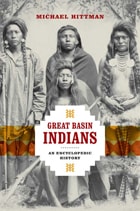
Great Basin Indians
An Encyclopedic HistoryMichael Hittman
University of Nevada Press, 2024
Great Basin Indians is an essential resource for any reader interested in the Native peoples of the American West and in western history in general.
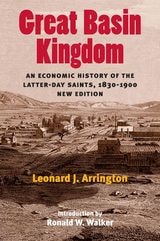
Great Basin Kingdom
An Economic History of the Latter-day Saints, 1830-1900, New EditionLeonard J. Arrington
University of Illinois Press, 2004
A classic in Mormon studies and western history, Great Basin Kingdom offers insights into the ‘underdeveloped' American economy, a comprehensive treatment of one of the few native American religious movements, and detailed, exciting stories from little-known phases of Mormon and American history.
This edition includes thirty new photographs and an introduction by Ronald W. Walker that provides a brief biography of Arrington, as well as the history of the work, its place in Mormon and western historiography, and its lasting impact.
Great Basin Rock Art
Archaeological PerspectivesAngus R. Quinlan
University of Nevada Press, 2007
Rock art is one of humankind’s most ancient forms of artistic expression, and one of its most enigmatic. For centuries, scholars and other observers have struggled to interpret the meaning of the mysterious figures incised or painted on natural rocks and to understand their role in the lives of their long-vanished creators. The Great Basin of the American West is especially rich in rock art, but until recently North American archaeologists have largely ignored these most visible monuments left by early Native Americans and have given little attention to the terrain surrounding them. In Great Basin Rock Art, twelve respected rock art researchers examine a number of significant sites from the dual perspectives of settlement archaeology and contemporary Native American interpretations of the role of rock art in their cultural past. The authors demonstrate how modern archaeological methodology and interpretations are providing a rich physical and cultural context for these ancient and hitherto puzzling artifacts. They offer exciting new insights into the lives of North America’s first inhabitants. This is essential reading for anyone interested in the petroglyphs of the American West and in the history of the Great Basin and its original peoples.

Great Expectations and Interwar Realities
Cultural Diplomacy in Horthy's HungaryZsolt Nagy
Central European University Press, 2017

Great Expectations
Marriage and Divorce in Post-Victorian AmericaElaine Tyler May
University of Chicago Press, 1983

Great Lake
An Unnatural History of Lake MichiganTheodore J. Karamanski
University of Michigan Press, 2026
Great Lake is a comprehensive survey of the manifold ways Americans, from the first Native American communities to the present age, have abused, nurtured, loved, and neglected this massive freshwater resource. Extending 307 miles from north to south, the lake cuts across climatic, environmental, and physiographic zones, from the prairies of Illinois to the boreal forests of the north. Bordered by large cities like Chicago and Milwaukee as well as smaller Wisconsin resorts and northern Michigan mines and mill towns, the lake touches people in urban centers and countryside. Thus, the history of Lake Michigan combines the history of frontier resource extraction, agricultural abundance, industrialization, and dense urbanization in the American heartland. Great Lake is the story of the ever-escalating and divergent demands Americans have placed on Lake Michigan, how the lake’s ecosystem responded to those changes, and how together they have shaped the modern American Midwest.

Great Lakes Chronicle
Essays on Coastal WisconsinWisconsin Coastal Management
Wisconsin Historical Society Press, 2018
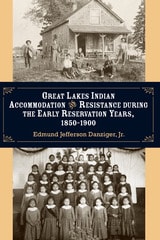
Great Lakes Indian Accommodation and Resistance during the Early Reservation Years, 1850-1900
Edmund Jefferson Danziger, Jr.
University of Michigan Press, 2009
During the four decades following the War of 1812, Great Lakes Indians were forced to surrender most of their ancestral homelands and begin refashioning their lives on reservations. The challenges Indians faced during this period could not have been greater. By century's end, settlers, frontier developers, and federal bureaucrats possessed not only economic and political power but also the bulk of the region's resources. It is little wonder that policymakers in Washington and Ottawa alike anticipated the disappearance of distinctive Indian communities within a single generation. However, these predictions have proved false as Great Lakes Indian communities, though assaulted on both sides of the international border to this day, have survived. Danziger's lively and insightful book documents the story of these Great Lakes Indians---a study not of victimization but of how Aboriginal communities and their leaders have determined their own destinies and preserved core values, lands, and identities against all odds and despite ongoing marginalization.
Utilizing eyewitness accounts from the 1800s and an innovative, cross-national approach, Danziger explores not only how Native Americans adapted to their new circumstances---including attempts at horse and plow agriculture, the impact of reservation allotment, and the response to Christian evangelists---but also the ways in which the astute and resourceful Great Lakes chiefs, councils, and clan mothers fought to protect their homeland and preserve the identity of their people. Through their efforts, dreams of economic self-sufficiency and self-determination as well as the historic right to unimpeded border crossings---from one end of the Great Lakes basin to the other---were kept alive.
Edmund Jefferson Danziger, Jr., is a Distinguished Teaching Professor in the Department of History at Bowling Green State University. Danziger is well known among historians and anthropologists for his interpretive histories of Great Lakes Native Americans.
Photo of girls at Lac du Flambeau School courtesy Wisconsin Historical Society, image 55938; photo of Ojibwa farm family at Garden River Reservation courtesy Archives of Ontario, image S 16361.

Great Lakes Lumber on the Great Plains
The Laird, Norton Lumber Company In South DakotaJohn N. Vogel
University of Iowa Press, 1992
Focusing on the Plains territory of east central South Dakota as well as the Great Lakes lumber-producing region of Wisconsin's Chippewa Valley, John Vogel carefully and thoroughly examines the pattern and process by which lumber reached South Dakota. The Great Dakota Boom of 1878 to 1887 and the Laird, Norton Lumber Company of Winona, Minnesota, provide the basis for his engrossing book.
The westward expansion of the railroad and the continuing settlement of the Great Plains in the late nineteenth century allowed the lumber companies of Minnesota and Wisconsin to send their boards and beams and fenceposts and millwork to a market characterized by great demand and small supply. Laird, Norton followed settlers across southern Dakota as they arrived on the trains. The eastern portions of Dakota were settled first, and thus early lumberyards were found there; as settlement moved west, so did the lumberyards. Beyond its all-important function of distribution, the railroad forced Laird, Norton to alter the very structure of its operation. Experimenting with nearly complete vertical integration, the company pioneered organizational models that would serve significant purposes as frontier America—a republic of wood—solidified itself economically and culturally.

Great Lakes Sea Lamprey
The 70 Year War on a Biological InvaderCory Brant
University of Michigan Press, 2019
Threatening the complete collapse of the fishery, the sea lamprey invasion triggered an environmental awakening in the region and prompted an international treaty that secured unprecedented cooperation across political boundaries to protect the Great Lakes. Fueled by a pioneering scientific spirit, the war on Great Lakes sea lampreys led to discoveries that are the backbone of the program that eventually brought the creature under control and still protects the largest freshwater ecosystem in the world to this day.
Great Lakes Sea Lamprey draws on extensive interviews with individuals who experienced the invasion firsthand as well as a trove of unexplored archival materials to tell the incredible story of sea lamprey in the Great Lakes—what started the invasion, how it was halted, and what this history can teach us about the response to biological invaders in the present and future. Richly illustrated with color and black & white photographs, the book will interest readers concerned with the health of the Great Lakes, the history of the conservation movement, and the ongoing threat of invasive species.
Great Maya Droughts in Cultural Context
Case Studies in Resilience and VulnerabilityGyles Iannone
University Press of Colorado, 2014
The Great Maya Droughts in Cultural Context offers new insights into the complicated series of events that impacted the decline of Maya civilization. This significant contribution to our increasingly comprehensive understanding of ancient Maya culture will be of interest to students and scholars of archaeology, anthropology, geography, and environmental studies.
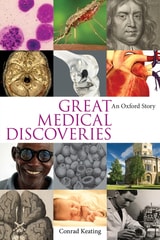
Great Medical Discoveries
An Oxford StoryConrad Keating
Bodleian Library Publishing, 2013
Great Medical Discoveries offers a short illustrated history of the city’s contribution to the medical sciences, from the medieval period to the present day, when it is home to some of the world’s leading large scientific institutions. In charting this remarkable history, the book showcases twenty discoveries across the centuries. In the mid-twentieth century, for instance, Oxford led the field of experimental medicine, and William Harvey, Thomas Willis, and Thomas Sydenham all gained eponymous status with their pioneering research into the workings of the human body. In the mid-seventeenth century, Dorothy Hodgkin’s development of x-ray crystallography earned her a Nobel Prize in Chemistry. Meanwhile, the work of epidemiologist Richard Doll saved millions of lives by making clear the long-term dangers of smoking and the benefits of quitting.
Great Medical Discoveries traces these and other examples of groundbreaking research—from the scientific application of anesthetics to new treatments for hemophilia and life-saving advances in neurosurgery—and shows how they form part of a wider tapestry of work that has helped shape the medical sciences and improve human health.

Great Negotiations
Agreements that Changed the Modern WorldFredrik Stanton
Westholme Publishing, 2010
Lessons in Diplomacy from Colonial America to the Cold War
"In a time when negotiations, both great and small, continue to shape our world, this book provides an excellent opportunity to learn from the past and understand the present.”—Kofi Annan, Nobel Peace Prize Winner and former Secretary General of the United Nations
“A thought-provoking, informative book, highly recommended for all readers interested in international affairs.”—Library Journal
“For anyone with an interest in diplomacy and political history, Stanton's book is both entertaining and informative.” —Foreign Policy Watch
“Every professional concerned with dispute resolution and every student of negotiation has much to learn from Fredrik Stanton's lively stories of eight history-shaping negotiations.”—Robert H. Mnookin, Chair Program on Negotiation, Harvard Law School
“An excellent introduction into some of the great triumphs and failures of modern diplomacy.”—Seattle Post-Intelligencer
“An interesting, informative study well worth reading and pondering.” —American Diplomacy
“Stanton deftly illustrates that the power of haggling can easily rival that of any army or warhead.”—Roll Call
“Exhaustive research and careful thought have enabled Stanton to employ an extraordinary writing talent to produce a contribution to history and a source of enjoyable reading.”—New York Law Journal
“Stanton brings back to life both famous and some long forgotten personalities in the history of major American, European, and Asian negotiations. He persuasively makes his case for the importance of negotiators and negotiations both when wars can be kept from beginning and when wars end. He weaves in deft descriptions of the personal strengths and foibles of negotiators and homes in on the ability of the best to improvise when maneuvering on unfamiliar terrain.” —Ambassador Richard W. Murphy, Council on Foreign Relations
Words as much as weapons have shaped the course of history. Whether to avert, resolve, assist, or secure the outcome of a conflict, diplomacy in the modern age has had great triumphs and bitter failures, from the Cuban Missile Crisis in 1962, which narrowly spared humanity from a nuclear Armageddon, to the Treaty of Versailles after World War I, which created problems that still confront us today. Drawing on primary sources, transcripts, and interviews, Great Negotiations: Agreements that Changed the Modern World tells the stories of eight key episodes in modern diplomacy. From Benjamin Franklin securing crucial French support for the American revolution to Reagan and Gorbachev laying the groundwork to eliminate an entire class of nuclear weapons, Fredrik Stanton explains what each party brought to the negotiating table, the stakes, the obstacles to success, and how they were overcome.
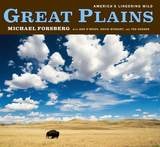
Great Plains
America's Lingering WildMichael Forsberg
University of Chicago Press, 2009
The Great Plains were once among the greatest grasslands on the planet. But as the United States and Canada grew westward, the Plains were plowed up, fenced in, overgrazed, and otherwise degraded. Today, this fragmented landscape is the most endangered and least protected ecosystem in North America. But all is not lost on the prairie. Through lyrical photographs, essays, historical images, and maps, this beautifully illustrated book gets beneath the surface of the Plains, revealing the lingering wild that still survives and whose diverse natural communities, native creatures, migratory traditions, and natural systems together create one vast and extraordinary whole.
Three broad geographic regions in Great Plains are covered in detail, evoked in the unforgettable and often haunting images taken by Michael Forsberg. Between the fall of 2005 and the winter of 2008, Forsberg traveled roughly 100,000 miles across 12 states and three provinces, from southern Canada to northern Mexico, to complete the photographic fieldwork for this project, underwritten by The Nature Conservancy. Complementing Forsberg’s images and firsthand accounts are essays by Great Plains scholar David Wishart and acclaimed writer Dan O’Brien. Each section of the book begins with a thorough overview by Wishart, while O’Brien—a wildlife biologist and rancher as well as a writer—uses his powerful literary voice to put the Great Plains into a human context, connecting their natural history with man’s uses and abuses.
The Great Plains are a dynamic but often forgotten landscape—overlooked, undervalued, misunderstood, and in desperate need of conservation. This book helps lead the way forward, informing and inspiring readers to recognize the wild spirit and splendor of this irreplaceable part of the planet.
Great Ships on the Great Lakes Teacher's Guide
A Maritime HistoryCathy Green
Wisconsin Historical Society Press, 2013
Great Ships on the Great Lakes explores the history of the region’s rivers, lakes, and inland seas—and the people and ships who navigated them. Read along as the first peoples paddle tributaries in birch bark canoes. Follow as European voyageurs pilot rivers and lakes to get beaver pelts back to the eastern market. Watch as settlers build towns and eventually cities on the shores of the Great Lakes. Listen to the stories of sailors, lighthouse keepers, and shipping agents whose livelihoods depended on the dangerous waters of Lake Michigan, Superior, Huron, Erie, and Ontario. Give an ear to their stories of unexpected tragedy and miraculous rescue, and heed their tales of risk and reward on the low seas.
Great Ships also tells the story of sea battles and gunships, of the first vessels to travel beyond the Niagara, and of the treacherous storms and cold weather that caused thousands of ships to sink in the Great Lakes. Watch as underwater archaeologists solve the mysteries of Great Lakes shipwrecks today. And learn how the shift from sail to steam forever changed the history of shipping, as schooners made way for steamships and bulk freighters, and sailing became a recreation, not a hazardous way of life.
Designed for the upper elementary classroom with emphasis on Michigan and Wisconsin, Great Ships on the Great Lakes includes a timeline of events, on-page vocabulary, and a list of resources and places to visit. Over 20 maps highlight the region’s maritime history. The accompanying Teacher’s Guide includes 18 classroom activities, arranged by chapter, including lessons on exploring shipwrecks and learning how glaciers moved across the landscape.
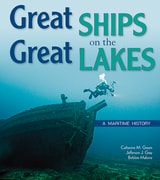
Great Ships on the Great Lakes
A Maritime HistoryBobbie Malone
Wisconsin Historical Society Press, 2013
In this highly accessible history of ships and shipping on the Great Lakes, upper elementary readers are taken on a rip-roaring journey through the waterways of the upper Midwest.
Great Ships on the Great Lakes explores the history of the region’s rivers, lakes, and inland seas—and the people and ships who navigated them. Read along as the first peoples paddle tributaries in birch bark canoes. Follow as European voyageurs pilot rivers and lakes to get beaver pelts back to the eastern market. Watch as settlers build towns and eventually cities on the shores of the Great Lakes. Listen to the stories of sailors, lighthouse keepers, and shipping agents whose livelihoods depended on the dangerous waters of Lake Michigan, Superior, Huron, Erie, and Ontario. Give an ear to their stories of unexpected tragedy and miraculous rescue, and heed their tales of risk and reward on the low seas.
Great Ships also tells the story of sea battles and gunships, of the first vessels to travel beyond the Niagara, and of the treacherous storms and cold weather that caused thousands of ships to sink in the Great Lakes. Watch as underwater archaeologists solve the mysteries of Great Lakes shipwrecks today. And learn how the shift from sail to steam forever changed the history of shipping, as schooners made way for steamships and bulk freighters, and sailing became a recreation, not a hazardous way of life.
Designed for the upper elementary classroom with emphasis on Michigan and Wisconsin, Great Ships on the Great Lakes includes a timeline of events, on-page vocabulary, and a list of resources and places to visit. Over 20 maps highlight the region’s maritime history. The accompanying Teacher’s Guide includes 18 classroom activities, arranged by chapter, including lessons on exploring shipwrecks and learning how glaciers moved across the landscape.

Great Unknown
Japanese American SketchesGreg Robinson
University Press of Colorado, 2016
What is more, The Great Unknown reshapes our understanding of the Asian American experience. By focusing attention on exceptional figures who deviated from social norms, Robinson subverts stereotypes of ethnic Japanese and other Asians as conformist or colorless. The collection also highlights a set of recurring themes absent from conventional histories—including the lives of Japanese Americans outside the West Coast, the role of women in shaping community life, encounters between Japanese American and African American communities during the struggle for civil rights, and the evolving status of queer community members.
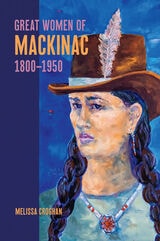
Great Women of Mackinac, 1800-1950
Melissa Croghan
Michigan State University Press, 2023
Greater Ethiopia
The Evolution of a Multiethnic SocietyDonald N. Levine
University of Chicago Press, 2000
Donald Levine's interdisciplinary study makes a substantial contribution both to Ethiopian interpretive history and to sociological analysis. In his new preface, Levine examines Ethiopia since the overthrow of the monarchy in the 1970s.
"Ethiopian scholarship is in Professor Levine's debt. . . . He has performed an important task with panache, urbanity, and learning."—Edward Ullendorff, Times Literary Supplement
"Upon rereading this book, it strikes the reader how broad in scope, how innovative in approach, and how stimulating in arguments this book was when it came out. . . . In the past twenty years it has inspired anthropological and historical research, stimulated theoretical debate about Ethiopia's cultural and historical development, and given the impetus to modern political thinking about the complexities and challenges of Ethiopia as a country. The text thus easily remains an absolute must for any Ethiopianist scholar to read and digest."-J. Abbink, Journal of Modern African Studies

Greater Than a Mother's Love
The Spirituality of Francis and Clare of AssisiFriar Gilberto Cavazos-González, OFM
University of Scranton Press, 2010
Although there are several studies dedicated to the lives of Francis and Clare of Assisi, Gilberto Cavazos-González’s Greater Than a Mother’s Love is the first to investigate their spirituality in the context of family relationships. He delves into the writings of Francis and Clare and illustrates how both used observations of their various human relationships to understand their experiences with God. Accompanying this study is an exhaustive bibliography and several appendices that enhance this unique treatment of these two beloved and admired religious figures.

Greater than Emperor
Cola di Rienzo (ca. 1313-54) and the World of Fourteenth-Century RomeAmanda Collins
University of Michigan Press, 2002
Greater than Emperor charts the remarkable process by which Rome tried to forge a new civic identity, similar in constitution to contemporary city-republics but conceptually much greater. At the forefront of the process stood the idiosyncratic and astonishing young notary Cola di Rienzo. On May 21, 1347, Cola staged a bloodless coup. Rome entered a new age that would witness both the resurrection of the ancient power of the Empire and Rome's apotheosis as God's chosen city. Yet within seven months, the theatricality and violence of Cola's regime led to exile. Cola's triumphal return some years later ended in his assassination.
Cola was eventually resurrected as a hero of nineteenth-century nationalism, leaving the realities of Trecento Rome far behind. Yet it is only in terms of the very real models and methods that Cola welded together that his revolution can be understood.
Greater than Emperor describes Cola's reliance on the past of rhetoric, pageantry, and Roman law. It then discusses the future, tracing the dynamic contemporary influences of apocalyptic fervor, prophetic literature, and radical Franciscan imagery of Cola's world. Amanda Collins assesses Cola's legal and political career within both the complex mechanics of municipal administration and the multiple hierarchies of Roman society.
Amanda Collins offers a new assessment of the dramatic events of 1347 and an analysis of Cola within his late medieval Roman context. Bringing depth and substance to Cola's backdrop, Trecento Rome and the economic and spiritual ambitions of its citizen body, Collins provides information crucial to understanding the longer-term economic and political drive to civic autonomy in Rome before 1400.
Historians and generalists alike will relish the story of a remarkable individual, set within the cultural climate of a famous and fascinating city, during an often-overlooked period. This book sheds new light on a crucial political figure that brought a dazzling civil independence to Rome.
Amanda Collins held the Junior Research Fellowship in Intellectual History at Wolfson College, Oxford from 1997-2000, and has more recently been employed at the University of Sussex.
Greece in the Bronze Age
Emily Townsend Vermeule
University of Chicago Press, 1964
Greece
Biography of a Modern NationRoderick Beaton
University of Chicago Press, 2019
Opening with the birth of the Greek nation-state, which emerged from encounters between Christian Europe and the Ottoman Empire, Roderick Beaton carries his story into the present moment and Greece’s contentious post-recession relationship with the rest of the European Union. Through close examination of how Greeks have understood their shared identity, Beaton reveals a centuries-old tension over the Greek sense of self. How does Greece illuminate the difference between a geographically bounded state and the shared history and culture that make up a nation?
A magisterial look at the development of a national identity through history, Greece: Biography of a Modern Nation is singular in its approach. By treating modern Greece as a biographical subject, a living entity in its own right, Beaton encourages us to take a fresh look at a people and culture long celebrated for their past, even as they strive to build a future as part of the modern West.

Greed, Rage, and Love Gone Wrong
Murder in MinnesotaBruce Rubenstein
University of Minnesota Press, 2006
Greek Gods in the East
Hellenistic Iconographic Schemes in Central AsiaLadislav Stanco
Karolinum Press, 2012

Greek Inscriptions
Ancient ScriptsPeter Liddel
J. Paul Getty Trust, The, 2025
Ancient Greek inscriptions are crucially important in understanding the cultures of Greece and the Mediterranean in antiquity. They provide glimpses of the behavior of the people of the time, including clues about their mindsets and aspirations. These public records combine word and image in a multitude of ways and are rich in the insights they offer.
The inscriptions examined in this volume come from a range of objects on metal or stone that include laws, decrees, accounts and inventories, honorific texts, dedications to deities, and funerary epitaphs. They give a broad view of interstate relations, historical narratives, and the political administration of various city-states while also providing new perspectives on concepts such as democracy, citizenship, gender, ethnicity, religion, and the supernatural. Peter Liddel emphasizes the physical form of the texts alongside their importance in understanding ancient Greek culture. Accessible and insightful, Greek Inscriptions both highlights the significance and history of these artifacts and examines their reception in the modern world.
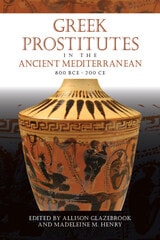
Greek Prostitutes in the Ancient Mediterranean, 800 BCE–200 CE
Allison Glazebrook
University of Wisconsin Press, 2011
Greek Prostitutes in the Ancient Mediterranean, 800 BCE–200 CE challenges the often-romanticized view of the prostitute as an urbane and liberated courtesan by examining the social and economic realities of the sex industry in Greco-Roman culture. Departing from the conventional focus on elite society, these essays consider the Greek prostitute as displaced foreigner, slave, and member of an urban underclass.
The contributors draw on a wide range of material and textual evidence to discuss portrayals of prostitutes on painted vases and in the literary tradition, their roles at symposia (Greek drinking parties), and their place in the everyday life of the polis. Reassessing many assumptions about the people who provided and purchased sexual services, this volume yields a new look at gender, sexuality, urbanism, and economy in the ancient Mediterranean world.

Greek Sport and Social Status
By Mark Golden
University of Texas Press, 2008
From the ancient Olympic games to the World Series and the World Cup, athletic achievement has always conferred social status. In this collection of essays, a noted authority on ancient sport discusses how Greek sport has been used to claim and enhance social status, both in antiquity and in modern times.
Mark Golden explores a variety of ways in which sport provided a route to social status. In the first essay, he explains how elite horsemen and athletes tried to ignore the important roles that jockeys, drivers, and trainers played in their victories, as well as how female owners tried to rank their equestrian achievements above those of men and other women. In the next essay, Golden looks at the varied contributions that slaves made to sport, despite its use as a marker of free, Greek status. In the third essay, he evaluates the claims made by gladiators in the Greek east that they be regarded as high-status athletes and asserts that gladiatorial spectacle is much more like Greek sport than scholars today usually admit. In the final essay, Golden critiques the accepted accounts of ancient and modern Olympic history, arguing that attempts to raise the status of the modern games by stressing their links to the ancient ones are misleading. He concludes that the contemporary movement to call a truce in world conflicts during the Olympics is likewise based on misunderstandings of ancient Greek traditions.
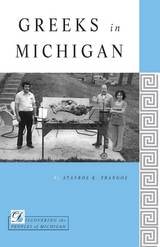
Greeks in Michigan
Stavros K. Frangos
Michigan State University Press, 2004
The influence of Greek culture on Michigan began long before the first Greeks arrived. The American settlers of the Old Northwest Territory had definite notions of Greeks and Greek culture. America and its developing society and culture were to be the "New Athens," a locale where the resurgence in the values and ideals of classical Greece were to be reborn. Stavros K. Frangos describes how such preconceptions and the competing desires to retain heritage and to assimilate have shaped the Greek experience in Michigan. From the padrone system to the church communities, Greek institutions have both exploited and served Greek immigrants, and from scattered communities across the state to enclaves in Detroit, Greek immigrants have retained and celebrated Greek culture.
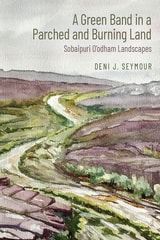
Green Band in a Parched and Burning Land
Sobaipuri O’odham Landscapesby Deni J. Seymour
University Press of Colorado, 2022
First and foremost irrigation farmers, the Sobaipuri O’odham permanently occupied verdant strips along all the major rivers in the region—including the headwaters of the San Pedro and various other areas thought to be beyond their domain. Seymour draws on career-spanning fieldwork, conversations with direct descendants (the O’odham residents of Wa:k), and recent breakthroughs in archaeological, ethnographic, and ethnohistorical research to shed light on their unique forms of landscape use, settlement patterns, and way of life. She details the building materials, linear site layout, and other elements of their singular archaeological signature; newly established dating for individual sites, complex building episodes, and occupational sequences; and evidence of cumulative village occupation as well as the habitation of river valleys and other locales long after supposed abandonment. The book also explains the key relationships between site distributions and landscape characteristics.
Addressing some of the longest-standing archaeological and historical questions about the Sobaipuri O’odham, A Green Band in a Parched and Burning Land reorients the discussion of their crucial place in the history of the region in constructive new directions.
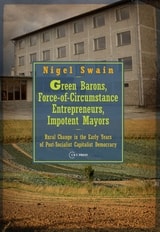
Green Barons, Force-of-Circumstance Entrepreneurs, Impotent Mayors
Rural Change in the Early Years of Post-Socialist Capitalist DemocracyNigel Swain
Central European University Press, 2013

Green Bay Packers
Trials, Triumphs, and TraditionWilliam Povletich
Wisconsin Historical Society Press, 2012
On the field, legends like Don Hutson, Ray Nitschke, and Brett Favre made the Green Bay Packers into a professional football powerhouse. But the history of the NFL’s only small-town franchise is as much a story of business creativity as gridiron supremacy. Behind every Packer who became a legend on the field, there was an Andrew Turnbull, Dominic Olejniczak, or Bob Harlan, leaders whose dedication and creativity in preserving the franchise were unwavering.
Green Bay Packers: Trials, Triumphs, and Traditions tells the improbable story of professional football’s most iconic team, and along the way gives a unique window into the rise of modern professional sports. As the NFL has evolved into a financial juggernaut, the Green Bay Packers, with more than 112,158 stockholders, stand alone as the only professional sports franchise owned by fans, thus providing the only public record of how a sports team is run.
Featuring more than 300 photographs, some never before seen, Green Bay Packers illustrates how the most creative team in sports is also one of the most successful, with names like Lambeau, Canadeo, Lombardi, Hornung, Holmgren, and White leading the way to a league-best thirteen NFL titles and twenty-one Hall of Fame inductees. This comprehensive, up-to-date history of the Packers includes the 2011 season.

Green Communication and China
On Crisis, Care, and Global FuturesJingfang Liu
Michigan State University Press, 2020

Green Corn Ceremonialism in the Eastern Woodlands
John Witthoft
University of Michigan Press, 1949
Green Gold
Alabama's Forests and Forest IndustriesJames E. Fickle
University of Alabama Press, 2014
Green Gold is a thorough and valuable compilation of information on Alabama’s timber and forest products industry, the largest manufacturing industry in the state.
Alabama has the third-largest commercial forest in the nation, after only Georgia and Oregon. Fully two-thirds of the state’s land supports the growth of over fifteen billion trees on twenty-two million acres, which explains why Alabama looks entirely green from space. Green Gold presents the story of human use of and impact on Alabama’s forests from pioneer days to the present, as James E. Fickle chronicles the history of the industry from unbridled greed and exploitation through virtual abandonment to revival, restoration, and enlightened stewardship.
As the state’s largest manufacturing industry, forest products have traditionally included naval stores such as tar, pitch, and turpentine, especially in the southern longleaf stands; sawmill lumber, both hardwood and pine; and pulp and paper milling. Green Gold documents all aspects of the industry, including the advent of “scientific forestry” and the development of reforestation practices with sustained yields. Also addressed are the historical impacts of Native Americans and of early settlers who used axes, saws, and water- and steam-powered sawmills to clear and utilize forests. Along with an account of railroad logging and the big mills of the lumber bonanza days of the late nineteenth and early twentieth centuries, the book also chronicles the arrival of professional foresters to the state, who began to deal with the devastating legacy of “cut out and get out” logging and to fight the perennial curse of woods arson. Finally, Green Gold examines the rise of the tree farm movement, the rebirth of large-scale lumbering, the advent of modern environmental concerns, and the movement toward the “Fourth Forest” in Alabama.
A Copublication with the Alabama Forestry Foundation
Green Lands for White Men
Desert Dystopias and the Environmental Origins of ApartheidMeredith McKittrick
University of Chicago Press, 2024
In 1918, South Africa’s climate seemed to be drying up. White farmers claimed that rainfall was dwindling, while nineteenth-century missionaries and explorers had found riverbeds, seashells, and other evidence of a verdant past deep in the Kalahari Desert. Government experts insisted, however, that the rains weren’t disappearing; the land, long susceptible to periodic drought, had been further degraded by settler farmers’ agricultural practices—an explanation that white South Africans rejected. So when the geologist Ernest Schwarz blamed the land itself, the farmers listened. Schwarz held that erosion and topography had created arid conditions, that rainfall was declining, and that agriculture was not to blame. As a solution, he proposed diverting two rivers to the Kalahari’s basins, creating a lush country where white South Africans could thrive. This plan, which became known as the Kalahari Thirstland Redemption Scheme, was rejected by most scientists. But it found support among white South Africans who worried that struggling farmers undermined an image of racial superiority.
Green Lands for White Men explores how white agriculturalists in southern Africa grappled with a parched and changing terrain as they sought to consolidate control over a Black population. Meredith McKittrick’s timely history of the Redemption Scheme reveals the environment to have been central to South African understandings of race. While Schwarz’s plan was never implemented, it enjoyed sufficient support to prompt government research into its feasibility, and years of debate. McKittrick shows how white farmers rallied around a plan that represented their interests over those of the South African state and delves into the reasons behind this schism between expert opinion and public perception. This backlash against the predominant scientific view, McKittrick argues, displayed the depth of popular mistrust in an expanding scientific elite.
A detailed look at the intersection of a settler society, climate change, white nationalism, and expert credibility, Green Lands for White Men examines the reverberations of a scheme that ultimately failed but influenced ideas about race and the environment in South Africa for decades to come.

Green Russell and Gold
By Elma Dill Russell Spencer
University of Texas Press, 1966
The family history of the Russells of Georgia is a saga of the Westward Movement during the middle fifty years of the nineteenth century. The "Russell boys," as prospectors and miners, moved with the frontier as it followed fresh discoveries of gold, from Georgia to California to Colorado. Then, after the interlude of the Civil War, they settled in the new territories, turning their abilities and ruggedness of character to the development of careers on other frontiers—ranching, farming, land development, medicine—in Montana, Colorado, and Texas.
Elma Dill Russell Spencer, a descendant of one of these unusual brothers, relates their story as she learned it from family tradition transmitted by Grandma Russell, from family letters, from public documents, and from historical accounts of the exciting era.
The reader of her narrative sees the evolution of Western society in the vast wasteland of mountain and prairie from the viewpoint of the people who were making history, people too engrossed in their own problems to realize the far-reaching significance of their achievement. The reader sees the struggle to wrest gold from the streams and hills with primitive tools and techniques; the development of tent villages into populous towns affording most of the comforts of the East; the evolution of a code of mining laws, of protection from violence and crime; the building of schools; the emergence of sectional problems and divided loyalties; the Civil War, mostly through noncombatants' eyes; the progressive changes in transportation, until the railroads tied the West to the East. The reader also encounters Indians, who ride in and out of these pages, and other fascinating types of characters associated with "the wild, varied, and always unpredictable" frontier.
The odyssey of the Russell brothers as they struggle home to Georgia from Union-sympathizing Denver is particularly full of action, with tense moments in the account of narrowly escaped death—at the hands of Indians, through the ravages of disease, and from the enmity of Yankee foes.
This book was originally published as Gold Country in 1958; the University of Texas Press edition was completely revised and first published in 1966.
Green Victorians
The Simple Life in John Ruskin's Lake DistrictVicky Albritton and Fredrik Albritton Jonsson
University of Chicago Press, 2016
At the center of their social experiment was the charismatic art critic and political economist John Ruskin. Albritton and Albritton Jonsson show how Ruskin’s followers turned his theory into practice in a series of ambitious local projects ranging from hand spinning and woodworking to gardening, archaeology, and pedagogy. This is a lively yet unsettling story, for there was a dark side to Ruskin’s community as well—racist thinking, paternalism, and technophobia. Richly illustrated, Green Victorians breaks new ground, connecting the ideas and practices of Ruskin’s utopian community with the problems of ethical consumption then and now.

Greenback Planet
How the Dollar Conquered the World and Threatened Civilization as We Know ItBy H. W. Brands
University of Texas Press, 2011
The world runs on the U.S. dollar. From Washington to Beijing, governments, businesses, and individuals rely on the dollar to conduct commerce and invest profitably and safely—even after the global financial meltdown in 2008 revealed the potentially catastrophic cost of the dollar's hegemony. But how did the greenback achieve this planetary dominance a mere century and a half after President Lincoln issued the first currency backed only by the credit—and credibility—of the federal government?
In Greenback Planet, acclaimed historian H. W. Brands charts the dollar's astonishing rise to become the world's principal currency. Telling the story with the verve of a novelist, he recounts key episodes in U.S. monetary history, from the Civil War debate over fiat money (greenbacks) to the recent worldwide financial crisis. Brands explores the dollar's changing relations to gold and silver and to other currencies and cogently explains how America's economic might made the dollar the fundamental standard of value in world finance. He vividly describes the 1869 Black Friday attempt to corner the gold market, banker J. P. Morgan's bailout of the U.S. treasury, the creation of the Federal Reserve, and President Franklin Roosevelt's handling of the bank panic of 1933. Brands shows how lessons learned (and not learned) in the Great Depression have influenced subsequent U.S. monetary policy, and how the dollar's dominance helped transform economies in countries ranging from Germany and Japan after World War II to Russia and China today. He concludes with a sobering dissection of the 2008 world financial debacle, which exposed the power—and the enormous risks—of the dollar's worldwide reign.

Greener Pastures
Politics, Markets, and Community among a Migrant Pastoral PeopleArun Agrawal
Duke University Press, 1999
Agrawal analyzes the institutions developed by the shepherds to solve livelihood problems. First, by focusing on the relations of the shepherds with their landholder neighbors, he explains why the shepherds migrate. He shows that struggles between these two groups led to a sociopolitical squeeze on the access of shepherds to the fodder resources they need to feed their sheep. Then, in an examination of why the shepherds migrate in groups, he demonstrates how their migratory lives depend on market exchanges and points to the social and political forces that influence prices and determine profits. Finally, he looks at decision-making processes such as division of labor and the delegation of power. Politics is ubiquitous in the interactions of the shepherds with their neighbors and with state officials, in their exchanges in markets and with farmers, and in their internal relations as a community.
Interspersing the words of the Raikas themselves with a sophisticated deployment of political theory, Agrawal has produced a volume that will interest scholars in a broad range of academic disciplines, including Asian studies, political science, human ecology, anthropology, comparative politics, rural sociology, and environmental studies and policy.

Greening Brazil
Environmental Activism in State and SocietyKathryn Hochstetler and Margaret E. Keck
Duke University Press, 2007
The authors present a multilevel analysis encompassing institutions and individuals within the government—at national, state, and local levels—as well as the activists, interest groups, and nongovernmental organizations that operate outside formal political channels. They emphasize the importance of networks linking committed actors in the government bureaucracy with activists in civil society. Portraying a gradual process marked by periods of rapid advance, Hochstetler and Keck show how political opportunities have arisen from major political transformations such as the transition to democracy and from critical events, including the well-publicized murders of environmental activists in 1988 and 2004. Rather than view foreign governments and organizations as the instigators of environmental policy change in Brazil, the authors point to their importance at key moments as sources of leverage and support.

Greening China
The Benefits of Trade and Foreign Direct InvestmentKa Zeng and Joshua Eastin
University of Michigan Press, 2011
“The authors make some very critical interventions in this debate and scholars engaged in the environmental ‘pollution haven’ and ‘race to the bottom’ debates will need to take the arguments made here seriously, re-evaluating their own preferred theories to respond to the insightful theorizing and empirically rigorous testing that Zeng and Eastin present in the book.”
—Ronald Mitchell, University of Oregon

Greening the Alliance
The Diplomacy of NATO's Science and Environmental InitiativesSimone Turchetti
University of Chicago Press, 2018
Drawing on previously unseen documents from NATO’s own archives, Simone Turchetti reveals how its investments were rooted in the alliance’s defense and surveillance needs, needs that led it to establish a program prioritizing environmental studies. A long-overlooked and effective diplomacy exercise, NATO’s “greening” at one point constituted the organization’s chief conduit for negotiating problematic relations between allies. But while Greening the Alliance explores this surprising coevolution of environmental monitoring and surveillance, tales of science advisers issuing instructions to bomb oil spills with napalm or Dr. Strangelove–like experts eager to divert the path of hurricanes with atomic weapons make it clear: the coexistence of these forces has not always been harmonious. Reflecting on this rich, complicated legacy in light of contemporary global challenges like climate change, Turchetti offers both an eye-opening history of international politics and environmental studies and a thoughtful assessment of NATO’s future.
Greenlanders, Whales, and Whaling
Sustainability and Self-Determination in the ArcticRichard A. Caulfield
Dartmouth College Press, 2000

Greetings from New Nashville
How a Sleepy Southern Town Became "It" CitySteve Haruch
Vanderbilt University Press, 2020
In that span of two decades, the boundaries of Nashville did not change. But something did. Or rather, many somethings changed, and kept changing, until many who lived in Nashville began to feel they no longer recognized their own city. And some began to feel it wasn't their own city at all anymore as they were pushed to its fringes by rising housing costs. Between 1998 and 2018, the population of Nashville grew by 150,000. On some level, Nashville has always packaged itself for consumption, but something clicked and suddenly everyone wanted a taste. But why Nashville? Why now? What made all this change possible?
This book is an attempt to understand those transformations, or, if not to understand them, exactly, then to at least grapple with the question: What happened?
Gregor Mendel's Experiments on Plant Hybrids
Corcos, Alain F
Rutgers University Press, 1993