Results by title
18284 books match the query 'United States' and 433 start with g
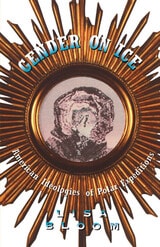
Gender On Ice
American Ideologies of Polar ExpeditionsLisa Bloom
University of Minnesota Press, 1993
Bloom focuses on the conquest of the North Pole as she reveals how popular print and visual media defined and shaped American national ideologies from the early twentieth century to the present.
Gender Play
Girls and Boys in SchoolThorne, Barrie
Rutgers University Press, 1993
Thorne observes children in schools in working-class communities, emphasizing the experiences of fourth and fifth graders. Most of the children she observed were white, but a sizable minority were Latino, Chicano, or African American. Thorne argues that the organization and meaning of gender are influenced by age, ethnicity, race, sexuality, and social class, and that they shift with social context. She sees gender identity not through the lens of individual socialization or difference, but rather as a social process involving groups of children. Thorne takes us on a fascinating journey of discovery, provides new insights about children, and offers teachers practical suggestions for increasing cooperative mixed-gender interaction.
Gender Play
Girls and Boys in SchoolBarrie Thorne
Rutgers University Press, 2024
A detailed and perceptive ethnography told with compassion and humor, Gender Play immerses readers in the everyday lives of a group of working-class children to examine the social interactions that shape their gender identities. This new Rutgers Classic edition of Gender Play contains an introduction from leading sociologists of gender Michael A. Messner and Raewyn Connell that places Thorne’s innovative research in historical context. It also includes a new afterword by one of Thorne’s own students, acclaimed sociologist C.J. Pascoe, reflecting on both the lasting influence of Thorne’s work and the ways that American children’s understandings of gender have shifted in the past thirty years.
Gender Power, Leadership, and Governance
Georgia Duerst-Lahti and Rita Mae Kelly, Editors
University of Michigan Press, 1995
Gender Roles and Faculty Lives in Rhetoric and Composition
Theresa Enos
Southern Illinois University Press, 1997
Combining anecdotal evidence (the personal stories of rhetoric and composition teachers) with hard data, Theresa Enos offers documentation for what many have long suspected to be true: lower-division writing courses in colleges and universities are staffed primarily by women who receive minimal pay, little prestige, and lessened job security in comparison to their male counterparts. Male writing faculty, however, also are affected by factors such as low salaries because of the undervaluation of a field considered feminized. As Enos notes in her preface: "The rhetoric of our institutional lives is connected especially to the negotiations of gender roles in rhetoric and composition."
Enos describes and classifies narratives gathered from surveys, interviews, and campus visits and interweaves these narratives with statistical data gathered from national surveys that show gendered experiences in the profession. Enos discusses the ways in which these experiences affect the working conditions of writing teachers and administrators in various programs at different types of institutions.
Enos points out that fields in which women excel—and are acknowledged—receive less prestige than other fields. On the university level, those genres in which women have demonstrated competence are not taken as seriously as those dominated by men. In practical terms, academia affords more glory for teaching literature than for teaching rhetoric and composition.
Within the field of rhetoric and composition, however, Enos finds it difficult to determine why the accomplishments of women receive less credit than those of men. She speculates as to whether it is part of the larger pattern in society—and in academia—to value men more than women or something in the field itself that keeps women from real power, even though women make up the majority of composition and rhetoric teachers.
Enos provides fascinating personal histories of composition and rhetoric teachers whose work has been largely disregarded. She also provides information about writing programs, teaching, administrative responsibilities, ranks among teachers, ages, salary, tenure status, distribution of research, service responsibilities, records of publication, and promotion and tenure guidelines.
Gender and American Jews
Patterns in Work, Education, and Family in Contemporary LifeHarriet Hartman and Moshe Hartman
Brandeis University Press, 2009
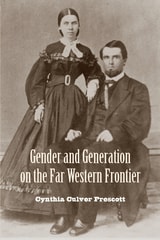
Gender and Generation on the Far Western Frontier
Cynthia Culver Prescott
University of Arizona Press, 2007
In Gender and Generation on the Far Western Frontier, Cynthia Culver Prescott expertly explores the shifting gender roles and ideologies that countless Anglo-American settlers struggled with in Oregon’s Willamette Valley between 1845 and 1900. Drawing on traditional social history sources as well as divorce records, married women’s property records, period photographs, and material culture, Prescott reveals that Oregon settlers pursued a moving target of middle-class identity in the second half of the nineteenth century.
Prescott traces long-term ideological changes, arguing that favorable farming conditions enabled Oregon families to progress from accepting flexible frontier roles to participating in a national consumer culture in only one generation. As settlers’ children came of age, participation in this new culture of consumption and refined leisure became the marker of the middle class. Middle-class culture shifted from the first generation’s emphasis on genteel behavior to a newer genteel consumption.
This absorbing volume reveals the shifting boundaries of traditional women’s spheres, the complicated relationships between fathers and sons, and the second generation’s struggle to balance their parents’ ideology with a changing national sense of class consciousness.
Gender and Planning
A ReaderServon, Lisa J
Rutgers University Press, 2005
Increasingly, experts recognize that gender has affected urban planning and the design of the spaces where we live and work. Too often, urban and suburban spaces support stereotypically male activities and planning methodologies reflect a male-dominated society.
To document and analyze the connection between gender and planning, the editors of this volume have assembled an interdisciplinary collection of influential essays by leading scholars. Contributors point to the ubiquitous single-family home, which prevents women from sharing tasks or pooling services. Similarly, they argue that public transportation routes are usually designed for the (male) worker's commute from home to the central city, and do not help the suburban dweller running errands. In addition to these practical considerations, many contributors offer theoretical perspectives on issues such as planning discourse and the construction of concepts of rationality.
While the essays call for an awareness of gender in matters of planning, they do not over-simplify the issue by moving toward a single feminist solution. Contributors realize that not all women gravitate toward communal opportunities, that many women now share the supposedly male commute, and that considerations of race and class need to influence planning as well. Among various recommendations, contributors urge urban planners to provide opportunities that facilitate women's needs, such as childcare on the way to work and jobs that are decentralized so that women can be close to their children.
Bringing together the most important writings of the last twenty-five years, this book is essential reading for students and scholars of planning theory as well as anyone concerned with gender and diversity.

Gender and Rhetorical Space in American Life, 1866-1910
Nan Johnson
Southern Illinois University Press, 2002
Nan Johnson demonstrates that after the Civil War, nonacademic or “parlor” traditions of rhetorical performance helped to sustain the icon of the white middle class woman as queen of her domestic sphere by promoting a code of rhetorical behavior for women that required the performance of conventional femininity. Through a lucid examination of the boundaries of that gendered rhetorical space—and the debate about who should occupy that space—Johnson explores the codes governing and challenging the American woman’s proper rhetorical sphere in the postbellum years.
While men were learning to preach, practice law, and set political policies, women were reading elocution manuals, letter-writing handbooks, and other conduct literature. These texts reinforced the conservative message that women’s words mattered, but mattered mostly in the home. Postbellum pedagogical materials were designed to educate Americans in rhetorical skills, but they also persistently directed the American woman to the domestic sphere as her proper rhetorical space. Even though these materials appeared to urge the white middle class women to become effective speakers and writers, convention dictated that a woman’s place was at the hearthside where her rhetorical talents were to be used in counseling and instructing as a mother and wife.
Aided by twenty-one illustrations, Johnson has meticulously compiled materials from historical texts no longer readily available to the general public and, in so doing, has illuminated this intersection of rhetoric and feminism in the nineteenth century. The rhetorical pedagogies designed for a postbellum popular audience represent the cultural sites where a rethinking of women’s roles becomes open controversy about how to value their words. Johnson argues this era of uneasiness about shifting gender roles and the icon of the “quiet woman” must be considered as evidence of the need for a more complete revaluing of women’s space in historical discourse.
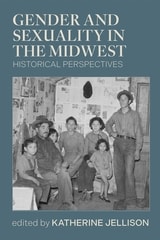
Gender and Sexuality in the Midwest
Historical PerspectivesKatherine Jellison
Ohio University Press, 2027
This book is a collection of eleven essays, an introduction, and a conclusion that discuss issues of gender and sexuality in the twelve states of the Midwest. The book covers 200 years of midwestern history—from the early nineteenth century to the early twenty-first century—and includes the experiences of midwesterners of diverse races, religions, and sexualities. The essays are arranged according to three topical categories. Essays in the first section of the book deal with some aspect of Memory and Methodology, those in the second section engage matters of Community and Belief, and the chapters in the final third of the manuscript address intersections of Biography and Politics. The authors of all eleven essays firmly ground their analyses within the categories of gender and/or sexuality. Essayists include discussion of men and masculinity as well as women and femininity. In addition, several of the essays address situations outside the realm of heterosexual monogamy: plural marriage, celibacy, LGBTQ+ relationships. In other words, the book engages with developments in subject matter and methodology that have changed the gender studies field over the past 15-30 years.
Authors have written their essays with an eye toward a broad audience. The book is appropriate reading for historians of women, gender, and sexuality; scholars of midwestern history and midwestern studies; undergraduate and graduate students in women’s and gender history courses; undergraduate and graduate students in women’s, gender, and sexuality studies courses; and non-academic readers with a particular interest in the Midwest or gender history.
Contributors
Kristin Mapel Bloomberg
Nikki Berg Burin
Stewart Davenport
Kara M. French
Barbara Handy-Marchello
Birgit Hans
Dean J. Kotlowski
David Mislin
Cynthia C. Prescott
Ashley Rattner
Jordan Zdinak
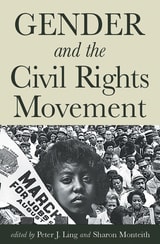
Gender and the Civil Rights Movement
Ling, Peter J
Rutgers University Press, 2004

Gender and the Gothic in the Fiction of Edith Wharton
Kathy A. Fedorko
University of Alabama Press, 1995
Revealing the Gothic foundations of Edith Wharton's vision of gender and identity.
Gender and the Gothic in the Fiction of Edith Wharton is an innovative study that provides fresh insights into Wharton’s male characters while at the same time showing how Wharton’s imagining of a fe/male self evolves throughout her career. Using feminist archetypal theory and theory of the female Gothic, Kathy A. Fedorko shows how Wharton, in sixteen short stories and six major novels written during four distinct periods of her life, adopts and adapts Gothic elements to explore the nature of feminine and masculine ways of knowing and being and to dramatize the tension between them.
Edith Wharton’s contradictory views of women and men—her attitudes toward the feminine and the masculine—reflect a complicated interweaving of family and social environment, historical time, and individual psychology. Studies of Wharton have exhibited this same kind of contradiction, with some seeing her as disparaging men and the masculine and others depicting her as disparaging women and the feminine. The use of Gothic elements in her fiction provided Wharton, who was often considered the consummate realist, with a way to dramatize the conflict between feminine and masculine selves as she experienced them and to evolve an alternative to the dualism.
Fedorko’s work is unique in its careful consideration of Wharton’s sixteen Gothic works, which are seldom discussed. Further, the revelation of how these Gothic stories are reflected in her major realistic novels. In the novels with Gothic texts, Wharton draws multiple parallels between male and female protagonists, indicating the commonalities between women and men and the potential for a female self. Eventually, in her last completed novel and her last short story, Wharton imagines human beings who are comfortable with both gender selves.
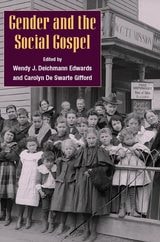
Gender and the Social Gospel
Edited by Wendy J. Deichmann Edwards and Carolyn De Swarte Gifford
University of Illinois Press, 2003
A practical theological response to the stark realities of poverty and injustice prevalent in turn-of-the-century America, the social gospel movement sought to apply the teachings of Jesus and the message of Christian salvation to society by striving to improve the lives of the impoverished and the disenfranchised. The contributors to this volume set out to broaden our understanding of this radical movement by examining the lives of some of its passionate and vibrant female participants and the ways in which their involvement expanded and enriched the scope of its activity.
In addition to examining the lives of individual women, the essays in Gender and the Social Gospel contain broader analyses of the gender and racial issues that have caused the histories of movements such as the social gospel to be viewed almost exclusively in terms of their male, European-American, intellectual participants at the expense of the women, African Americans, and Canadians whose contributions were just as worthy of attention.
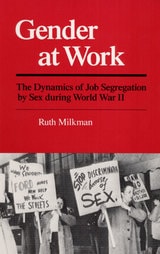
Gender at Work
The Dynamics of Job Segregation by Sex during World War IIRuth Milkman
University of Illinois Press, 1987
Women's entry into so-called men's work during World War II sparked conflicts at the time and when men returned at war's end. Ruth Milkman delves into the issues in play and the prewar origins of traditional patterns of gender segregation in the workplace. Ranging from the dynamics on the shop floor to hiring patterns, Milkman pays particular attention to automobile and electrical manufacturing. She analyzes a number of persistent questions, including management's decision to re-embrace gender segregation after the war; women's lack of protest; the failure of unions to protect women; and how related employer strategies helped control labor by maintaining women's place as workers paid less than men.
Gender in Campaigns for the U.S. House of Representatives
Barbara Burrell
University of Michigan Press, 2014
Gender on Campus
Issues for College WomenGmelch, Sharon B
Rutgers University Press, 1998
Gender on Campus is the first book to combine solid analyses of the broad range of gender issues for women in college with realistic approaches to heighten awareness and alleviate problems. Written for students, the book first clarifies the concept of feminism and then examines gender dynamics in a variety of settings and contexts-from the classroom to the sports field and from language to social life. Sharon Gmelch probes sexism, racism, and homophobia on campus and surveys the special issues facing diverse women students. The book also addresses issues relating to body image and sexuality. Its final chapters analyze the role gender continues to play after college-in the media, workplace, and politics.
After a thorough discussion of a topic, each chapter concludes with possibilities for action ("What You Can Do") as well as a selected bibliography of books, videos, and organizations that students can consult. Gender on Campus is an invaluable resource for students, parents, and administrators, as well as an excellent text for women's studies courses.
Gendered Asylum
Race and Violence in U.S. Law and PoliticsSara L. McKinnon
University of Illinois Press, 2016
Sara L. McKinnon exposes racialized rhetorics of violence in politics and charts the development of gender as a category in American asylum law. Starting with the late 1980s, when gender-based requests first emerged in case law, McKinnon analyzes gender- and sexuality-related cases against the backdrop of national and transnational politics. Her focus falls on cases as diverse as Guatemalan and Salvadoran women sexually abused during the Dirty Wars and transgender asylum seekers from around the world fleeing brutally violent situations. She reviews the claims, evidence, testimony, and message strategies that unfolded in these legal arguments and decisions, and illuminates how legal decisions turned gender into a political construct vulnerable to American national and global interests. She also explores myriad related aspects of the process, including how subjects are racialized and the effects of that racialization, and the consequences of policies that position gender as a signifier for women via normative assumptions about sex and heterosexuality.
Wide-ranging and rich with human detail, Gendered Asylum uses feminist, immigration, and legal studies to engage one of the hotly debated issues of our time.

Gendered Justice in the American West
Women Prisoners in Men's PenitentiariesAnne M. Butler
University of Illinois Press, 1997
Drawing on prison records and the words of the women themselves, Gendered Justice in the American West places the injustices women prisoners endured in the context of the structures of male authority and female powerlessness that pervaded all of American society. Butler's poignant cross-cultural account explores how nineteenth-century criminologists constructed the "criminal woman"; how the women's age, race, class, and gender influenced their court proceedings; and what kinds of violence women inmates encountered. She also examines the prisoners' diet, illnesses, and experiences with pregnancy and child-bearing, as well as their survival strategies.
Gendered Places
The Landscape of Local Gender Norms across the United StatesWilliam J. Scarborough
Temple University Press, 2023
Every place has its quirky attributes, cultural reputation, and distinctive flair. But when we travel across America, do we also experience distinct gender norms and expectations? In his groundbreaking Gendered Places, William Scarborough examines metropolitan commuting zones to see how each region’s local culture reflects gender roles and gender equity. He uses surveys and social media data to measure multiple dimensions of gender norms, including expectations toward women in leadership, attitudes toward working mothers, as well as the division of household labor.
Gendered Places reveals that different locations, even within the same region of the country, such as Milwaukee and Madison Wisconsin, have distinct gender norms and highly influential cultural environments. Scarboroughshows how these local norms shape the attitudes and behaviors of residents with implications on patterns of inequality such as the gender wage gap. His findings offer valuable insight for community leaders and organizers making efforts to promote equality in their region.
Scarboroughrecognizes local culture as not value-neutral, but highly crucial to the gender structure that perpetuates, or challenges, gender inequality. Gendered Places questions how these gender norms are sustained and their social consequences.
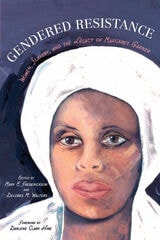
Gendered Resistance
Women, Slavery, and the Legacy of Margaret GarnerEdited by Mary E. Frederickson and Delores M. Walters
University of Illinois Press, 2013
Gendered Strife and Confusion
The Political Culture of ReconstructionLaura F. Edwards
University of Illinois Press, 1997

Gendered Vulnerability
How Women Work Harder to Stay in OfficeJeffrey Lazarus and Amy Steigerwalt
University of Michigan Press, 2018
Gendering Labor History
Alice Kessler-Harris
University of Illinois Press, 2006
This collection represents the thirty-year intellectual trajectory of one of today’s leading historians of gender and labor in the United States. The seventeen essays are divided into four sections, narrating the evolution and refinement of Alice Kessler-Harris's central project: showing gender’s fundamental importance in the shaping of United States history and working class culture.
The first section considers women and organized labor while the second pushes this analysis toward a gendered labor history as the essays consider the gendering of male as well as female workers and how gender operates with and within the social category of class. Subsequent sections broaden this framework to examine U.S. social policy as a whole, the question of economic citizenship, and wage labor from a global perspective. While each essay represents an important intervention in American historiography in itself, the collection taken as a whole shows Kessler-Harris continuing to push the field of American history to greater levels of inclusion and analysis.

Genentech
The Beginnings of BiotechSally Smith Hughes
University of Chicago Press, 2011

General Education in the Social Sciences
Centennial Reflections on the College of the University of ChicagoEdited by John J. MacAloon
University of Chicago Press, 1992
Social Science 2 holds the place of honor among these educational projects. For more than half a century, Soc 2 has been one of the most influential courses in American undergraduate education. This unique, year-long course, the oldest and most distinguished of its kind at any American university, has served as an ongoing experiment in how the social sciences can be taught and learned in the general education context.
In this collection John MacAloon has gathered essays by fourteen eminent social scientists—such as David Riesman, Michael Schudson, and F. Champion Ward—who as either teachers or students were profoundly shaped by Soc 2. Their multifarious and selective memories—full of dissonances and harmonies of recollection, judgment, and voice—create a compelling biography of a course and a college that have survived tumultous change through sustained and committed argument.
This book will be of great interest to anyone interested not only in the theory but the practice of higher education.

General John Pope
A LIFE FOR THE NATIONPeter Cozzens
University of Illinois Press, 2000
Renowned Civil War scholar Peter Cozzens has mined Pope's own memoirs and a wealth of other primary sources to provide a complete picture of this gifted strategist. Uncovering new information about Pope's pre- and postwar career and his path to power, Cozzens delineates the political environment that surrounded Pope and provided the context for his actions.
Cozzens examines Pope's early career first as commander of the Army of the Mississippi and then as leader of a hastily formed Army of Virginia against Robert E. Lee. After his famous defeat at the Second Battle of Bull Run, Pope was sent to the frontier. There he held important commands on the western plains over the next twenty-four years, all the while struggling to clear his reputation of the events at Second Bull Run. A principal architect of the Red River War, which broke the resistance of the Southern Plains Indians, Pope espoused humanitarian treatment of subjugated tribes and was recognized as one of the army's leading authorities on Indian affairs.
In place of the simplistic caricature that has satisfied most historians, Cozzens has crafted an accurate, humane, balanced portrait of a complex man involved with the most complex issues of his day. A monumental work on a long-neglected figure, General John Pope offers a fresh look at a key nineteenth-century military leader as well as the most detailed analysis available of Federal leadership during the Second Bull Run campaign.
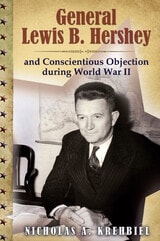
General Lewis B. Hershey and Conscientious Objection during World War II
Nicholas A. Krehbiel
University of Missouri Press, 2012
Seeking to correct these omissions in history, Nicholas A. Krehbiel provides the most comprehensive and well-rounded examination to date of General Hershey’s work as the developer and protector of alternative service programs for conscientious objectors. Hershey, whose Selective Service career spanned three major wars and six presidential administrations, came from a background with a tolerance for pacifism. He served in the National Guard and later served in both World War I and the interwar army. A lifelong military professional, he believed in the concept of the citizen soldier—the civilian who responded to the duty of service when called upon. Yet embedded in that idea was his intrinsic belief in the American right to religious freedom and his notion that religious minorities must be protected.
What to do with conscientious objectors has puzzled the United States throughout its history, and prior to World War II, there was no unified system for conscientious objectors. The Selective Service Act of 1917 only allowed conscientious objection from specific peace sects, and it had no provisions for public service. In action, this translated to poor treatment of conscientious objectors in military prisons and camps during World War I. In response to demands by the Historic Peace Churches (the Brethren, Mennonites, and the Society of Friends) and other pacifist groups, the government altered language in the Selective Service Act of 1940, stating that conscientious objectors should be assigned to noncombatant service in the military but, if opposed to that, would be assigned to “work of national importance under civilian direction.”
Under the direction of President Franklin D. Roosevelt and with the cooperation of the Historic Peace Churches, Hershey helped to develop Civilian Public Service in 1941, a program that placed conscientious objectors in soil conservation and forestry work camps, with the option of moving into detached services as farm laborers, scientific test subjects, and caregivers, janitors, and cooks at mental hospitals. Although the Civilian Public Service program only lasted until 1947, alternative service was required for all conscientious objectors until the end of the draft in 1973.
Krehbiel delves into the issues of minority rights versus mandatory military service and presents General Hershey’s pivotal role in the history of conscientious objection and conscription in American history. Archival research from both Historic Peace Churches and the Selective Service makes General Lewis B. Hershey and Conscientious Objection during World War II the definitive book on this subject.
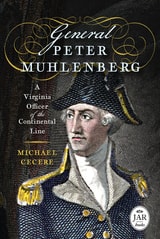
General Peter Muhlenberg
A Virginia Officer of the Continental LineMichael Cecere
Westholme Publishing, 2020
Standing at the pulpit in his church in the Shenandoah Valley, the preacher borrowed from Ecclesiastes, declaring in a firm voice that “To every thing there is a season . . . .” He then announced, “that there is a time to fight, and that time had now come,” and abruptly removed his clerical robe to reveal his colonel’s uniform. There is little doubt that this clergyman-turned-soldier uttered words to this effect, but whether he threw off his robe to reveal a gleaming uniform may be embellishment. In General Peter Muhlenberg: A Virginia Officer of the Continental Line, historian Michael Cecere cuts away the romanticism surrounding this fascinating character to present him as a highly capable and dedicated officer who served for seven long years in America’s War for Independence; a man of faith who held the high ideals of that office in his conduct with fellow officers and regular soldiers alike.
First appointed to lead the 8th Virginia Regiment of the Continental Army, Muhlenberg and his troops served under General Charles Lee in the defense of Charleston in 1776. Sent north and promoted to brigadier-general, Muhlenberg participated in the ensuing battles of Brandywine, Germantown, the winter at Valley Forge, and the major clash at Monmouth Courthouse. In 1780, he returned to Virginia and stood at the forefront of Virginia’s defense when the British invaded in 1781. At Yorktown, Muhlenberg commanded the continental light infantry troops that stormed Redoubt No. 10, sealing Cornwallis’s fate. Focusing on the military career of Muhlenberg, and relying on a judicious amount of primary source material, the author follows Muhlenberg and his troops as they battled some of the most storied adversaries of the war, including John Graves Simcoe’s Queen’s Rangers, Captain Johann Ewald’s German Jaegers, and Banastre Tarleton’s British Legion.
Admired by George Washington and his fellow officers and men, Muhlenberg was an American patriot who sacrificed much for his country’s cause, and truly “lived respected and died regretted by all good men.”
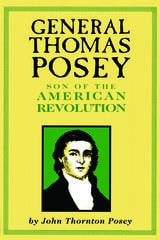
General Thomas Posey
Son of the American RevolutionJohn Thornton Posey
Michigan State University Press, 1992
Revolutionary War general Thomas Posey (1750-1818) lived his life against the backdrop of one of the most dramatic periods in American history. Posey, who played a minor role in the actual War for Independence, went on to participate in the development and foundation of several states in the transappalachian West. His experiences on the late 18th- and early 19th-century American frontier were varied and in a certain sense extraordinary; he served as Indian agent in Illinois Territory; as Lieutenant Governor of Kentucky, as U.S. Senator from Louisiana, and as Governor of Indiana during its transition from territorial status to statehood.
His biographer speculates on the contrasting influences of Thomas's ne'er-do-well father, Captain John Posey, and the family's close friend, General George Washington. Posey's progress is then followed as he raises his own family in the newly formed nation. Of particular interest is an appendix containing a detailed analysis of evidence available to support popular 29th-century speculation that Thomas Posey was, in fact, George Washington's illicit son.
Generating Jobs
How to Increase Demand for Less-Skilled WorkersRichard B. Freeman
Russell Sage Foundation, 1998

Generation Multiplex
The Image of Youth in American Cinema since 1980By Timothy Shary
University of Texas Press, 2014
Generation Multiplex (2002) was the first comprehensive study of the representation of teenagers in American cinema since David Considine’s Cinema of Adolescence in 1985. This updated and expanded edition reaffirms the idea that films about youth constitute a legitimate genre worthy of study on its own terms. Identifying four distinct subgenres—school, delinquency, horror, and romance—Timothy Shary explores hundreds of representative films while offering in-depth discussion of movies that constitute key moments in the genre, including Fast Times at Ridgemont High, A Nightmare on Elm Street, The Breakfast Club, Say Anything . . . , Boyz N the Hood, Scream, American Pie, Napoleon Dynamite, Superbad, The Twilight Saga, and The Hunger Games. Analyzing developments in teen films since 2002, Shary covers such topics as the increasing availability of movies on demand, which has given teens greater access to both popular and lesser-seen films; the recent dominance of supernatural and fantasy films as a category within the genre; and how the ongoing commodification of teen images in media affects real-life issues such as school bullying, athletic development, sexual identity, and teenage pregnancy.
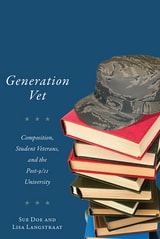
Generation Vet
Composition, Student Veterans, and the Post-9/11 UniversitySue Doe
Utah State University Press, 2014
Institutions of higher education are experiencing the largest influx of enrolled veterans since World War II, and these student veterans are transforming post-secondary classroom dynamics. While many campus divisions like admissions and student services are actively moving to accommodate the rise in this demographic, little research about this population and their educational needs is available, and academic departments have been slower to adjust. In Generation Vet, fifteen chapters offer well-researched, pedagogically savvy recommendations for curricular and programmatic responses to student veterans for English and writing studies departments.
In work with veterans in writing-intensive courses and community contexts, questions of citizenship, disability, activism, community-campus relationships, and retention come to the fore. Moreover, writing-intensive courses can be sites of significant cultural exchanges—even clashes—as veterans bring military values, rhetorical traditions, and communication styles that may challenge the values, beliefs, and assumptions of traditional college students and faculty.
This classroom-oriented text addresses a wide range of issues concerning veterans, pedagogy, rhetoric, and writing program administration. Written by diverse scholar-teachers and written in diverse genres, the essays in this collection promise to enhance our understanding of student veterans, composition pedagogy and administration, and the post-9/11 university.

Generation at the Crossroads
Apathy and Action on the American CampusLoeb, Paul R
Rutgers University Press, 1994
Challenging prevailing media stereotypes, Generation at the Crossroads explores the beliefs and choices of the students who came of age in the 1980s and 1990s. For seven years, at over a hundred campuses in thirty states, Paul Loeb asked students about the values they held. He examines their concepts of responsibility, the links they draw between present and future, and how they view themselves in relation to the larger human community in which they live. He brings us a range of voices, from "I'm not that kind of person," to "I had to take a stand." Loeb looks at how the rest of us can serve young people as better role models, and give them courage and vision to help build a better world.
This insightful book explores the culture of withdrawal that dominated American campuses through most of the eighties. He locates its roots in historical ignorance, relentless individualism, mistrust of social movements, and a general isolation from urgent realities. He examines why a steadily increasing minority has begun to take on critical public issues, whether environmental activism, apartheid, hunger and homelessness, affordable education, or racial and sexual equity. Loeb looks at individuals who have overcome precisely the barriers he has described, and how their journeys can become models. The generational choices he explores will shape our common future.
Generational Politics in the United States
From the Silents to Gen Z and BeyondSally Friedman and David Schultz, Editors
University of Michigan Press, 2024
Generational Politics in the United States is the first comprehensive book that examines the concept of generations from a political science perspective. It defines what a generation is and how to sort out the differences between life cycle, cohort, and aging effect. The book then brings together chapters from an array of political science scholars that examine the role of generations in American politics and how it relates to other variables such as age, race, gender, and socioeconomic status. It discusses how politics in the United States are impacted by changes in generations, including how the passing of the Baby Boom generation and rise of the Millennials and Gen Z will change American politics. By examining the differences in political attitudes, engagement, and impact of recent generations, Generational Politics in the United States suggests how generational change will impact American politics in the future.
Generations and Collective Memory
Amy Corning and Howard Schuman
University of Chicago Press, 2015
Their key finding—built on historical research and interviews in the United States and seven other countries (including China, Japan, Germany, Lithuania, Russia, Israel, and Ukraine)—is that our most powerful generational memories are of shared experiences in adolescence and early adulthood, like the 1963 Kennedy assassination for those born in the 1950s or the fall of the Berlin Wall for young people in 1989. But there are exceptions to that rule, and they're significant: Corning and Schuman find that epochal events in a country, like revolutions, override the expected effects of age, affecting citizens of all ages with a similar power and lasting intensity.
The picture Corning and Schuman paint of collective memory and its formation is fascinating on its face, but it also offers intriguing new ways to think about the rise and fall of historical reputations and attitudes toward political issues.
Generations of Exclusion
Mexican-Americans, Assimilation, and RaceEdward E. Telles
Russell Sage Foundation, 2008
Generations
Academic Feminists In DialogueDevoney Looser
University of Minnesota Press, 1997
Explores the conflicts and challenges facing older and younger feminist scholars.
In universities and colleges across the country, feminists are debating their histories and future legacies, often expressing these controversies in generational terms. Some older, second wave feminists accuse younger ones of being careerist, overly theoretical, insufficiently political, and not grateful enough to previous generations. Some third wave feminists consider their foremothers naive, universalizing, or elitist, resentful of deviations from their established plans and improperly wielding their power. Generations addresses these divisions and impasses through sophisticated analyses of the challenges of “passing the torch.”
Generations is composed of essays from academic women at various professional stages-from established scholars to junior professors to graduate students. Some are concerned with telling intergenerational feminist histories based on both research and experience. Others describe difficulties faced by feminists of all ages in the academy today. A final cluster considers issues in the highly charged convergence of feminist theory and postmodernism. The promise of feminisms yet to come can be found in these pages, alongside some of the most resonant and important feminist voices of the last two decades. Generations both complicates and enlivens the transmission and rebirth of feminist knowledges from one generation to another. Contributors: Diane Elam, U of Wales; Elizabeth Francis, Brown U; Linda Frost, U of Alabama; Jane Gallop, U of Wisconsin; Dana Heller, Old Dominion U; Jane Kalbfleisch; Jeanne Marecek, Swarthmore College; Nancy K. Miller, CUNY; Mona Narain, Otterbein College; Angela M. S. Nelson, Bowling Green State U; Judith Newton, U of California, Davis; Rebecca Dakin Quinn; Gita Rajan, Fairfield U; Judith Roof, Indiana U; Theresa Ann Sears, U of Missouri at St. Louis; Ruthe Thompson; Michele Wallace, CUNY; Barbara A. White, U of New Hampshire; Lynda Zwinger, U of Arizona.
Genetic Witness
Science, Law, and Controversy in the Making of DNA ProfilingJay D. Aronson
Rutgers University Press, 2007
Yet, this promise took ten turbulent years to be fulfilled. In Genetic Witness, Jay D. Aronson uncovers the dramatic early history of DNA profiling that has been obscured by the technique’s recent success. He demonstrates that robust quality control and quality assurance measures were initially nonexistent, interpretation of test results was based more on assumption than empirical evidence, and the technique was susceptible to error at every stage. Most of these issues came to light only through defense challenges to what prosecutors claimed to be an infallible technology. Although this process was fraught with controversy, inefficiency, and personal antagonism, the quality of DNA evidence improved dramatically as a result. Aronson argues, however, that the dream of a perfect identification technology remains unrealized.
Genital Cutting and Transnational Sisterhood
DISPUTING U.S. POLEMICSEdited by Stanlie M. James and Claire C. Robertson
University of Illinois Press, 2002
In five provocative essays, the contributors to this timely volume challenge representations of FGC through a range of perspectives: history, human rights, law, missionary feminism, cultural relativism, anthropology, and the intersex movement. Balancing feminist ideals with culturally conscious approaches, they dispel sensationalized and widely accepted concepts that influence Western media, law, and feminist thought on FGC, including the ignorance and oversimplification of African history, cultures, and religions, and an exaggeration of the extent and geographical distribution of the various procedures performed. The assumption that FGC does not occur presently in the United States is also considered. From Alice Walker and Pratibha Parmar's documentary film Warrior Marks to mainstream media and prime time television, Genital Cutting and Transnational Sisterhood critiques the sources that perpetuate the harmful myths that all African women have been mutilated and promote doing so to their children, that those who perform it are barbaric, and that families who allow it are abusive.
With sensitivity and clarity, the contributors to Genital Cutting and Transnational Sisterhood provide necessary and alternative suggestions for the eradication of the most harmful procedures--which they feel can only occur when the leadership of African women in the ongoing campaigns is acknowledged and supported, and when income generation for African women and education of the U.S. public, rather than criminalization, become primary strategies.
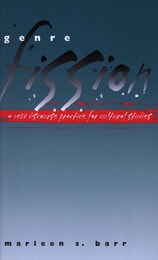
Genre Fission
A New Discourse Practice for Culture StudiesMarleen S. Barr
University of Iowa Press, 2000
Barr expands postmodern assumptions about cultural studies by suggesting that "genre fission" is occurring among discrete literary and cultural "types" of events--mainstream novels, science fiction, historical narratives, film, paintings, and museum displays. For her literary insights, Barr turns her attention to such mainstream authors as Saul Bellow, John Updike, Marge Piercy, and John Barth as well as science fiction writers Ursula Le Guin and Octavia Butler and Hispanic American writers Julia Alvarez, Ana Castillo, and Cristina García, among others.
Barr moves from literary to culture studies by addressing such phenomena from contemporary mass culture as the urban landscapes of New York and Los Angeles, Jackie Kennedy, the Star Trek industry, Lynn Redgrave, Amsterdam's red light district, Lorena Bobbitt, and the Apollo astronauts--to provide only a few of the relevant examples. Thus Genre Fission attains what Barr herself designates (in describing the art of Judy Chicago and Lee Bontecou) as "utopian interweavings of difference," crossing numerous boundaries in order to frame a larger territory for exploration.

Genre in Popular Music
Fabian Holt
University of Chicago Press, 2007
The popularity of the motion picture soundtrack O Brother, Where Art Thou? brought an extraordinary amount of attention to bluegrass, but it also drew its share of criticism from some aficionados who felt the album’s inclusion of more modern tracks misrepresented the genre. This soundtrack, these purists argued, wasn’t bluegrass, but “roots music,” a new and, indeed, more overarching category concocted by journalists and marketers. Why is it that popular music genres like these and others are so passionately contested? And how is it that these genres emerge, coalesce, change, and die out?
In Genre in Popular Music, Fabian Holt provides new understanding as to why we debate music categories, and why those terms are unstable and always shifting. To tackle the full complexity of genres in popular music, Holt embarks on a wide-ranging and ambitious collection of case studies. Here he examines not only the different reactions to O Brother, but also the impact of rock and roll’s explosion in the 1950s and 1960s on country music and jazz, and how the jazz and indie music scenes in Chicago have intermingled to expand the borders of their respective genres. Throughout, Holt finds that genres are an integral part of musical culture—fundamental both to musical practice and experience and to the social organization of musical life.
Genre, Race, and the Production of Subjectivity in German Romanticism
Stephanie Galasso
Northwestern University Press, 2024
Late Enlightenment philosophers and writers like Herder, Goethe, and Schiller broke with conventions of form and genre to prioritize an idealized, and racially coded, universality. Newly translated literatures from colonial contexts served as the basis for their evaluations of how to contribute to a distinctly “German” national literary tradition, one that valorized modernity and freedom and thus fortified crucial determinants of modern concepts of whiteness. Through close readings of both canonical and less-studied Romantic texts, Stephanie Galasso examines the intimately entwined histories of racialized subjectivity and aesthetic theory and shows how literary genre is both symptomatic and generative of the cultural violence that underpinned the colonial project.
Poetic expression and its generic conventions continue to exert pressure on the framing and reception of the stories that can be told about interpersonal and structural experiences of oppression. Genre, Race, and the Production of Subjectivity in German Romanticism explores how white subjectivity is guarded by symbolic and material forms of violence.
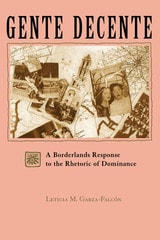
Gente Decente
A Borderlands Response to the Rhetoric of DominanceBy Leticia Magda Garza-Falcón
University of Texas Press, 1998
In his books The Great Plains, The Great Frontier, and The Texas Rangers, historian Walter Prescott Webb created an enduring image of fearless, white, Anglo male settlers and lawmen bringing civilization to an American Southwest plagued with "savage" Indians and Mexicans. So popular was Webb's vision that it influenced generations of historians and artists in all media and effectively silenced the counter-narratives that Mexican American writers and historians were concurrently producing to claim their standing as "gente decente," people of worth.
These counter-narratives form the subject of Leticia M. Garza-Falcón's study. She explores how prominent writers of Mexican descent-such as Jovita González, Américo Paredes, María Cristina Mena, Fermina Guerra, Beatriz de la Garza, and Helena María Viramontes -have used literature to respond to the dominative history of the United States, which offered retrospective justification for expansionist policies in the Southwest and South Texas. Garza-Falcón shows how these counter-narratives capture a body of knowledge and experience excluded from "official" histories, whose "facts" often emerged more from literary techniques than from objective analysis of historical data.
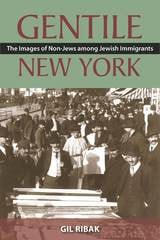
Gentile New York
The Images of Non-Jews among Jewish ImmigrantsRibak, Gil
Rutgers University Press, 2012
The very question of “what do Jews think about the goyim” has fascinated Jews and Gentiles, anti-Semites and philo-Semites alike. Much has been written about immigrant Jews in nineteenth- and twentieth-century New York City, but Gil Ribak’s critical look at the origins of Jewish liberalism in America provides a more complicated and nuanced picture of the Americanization process.
Gentile New York examines these newcomers’ evolving feelings toward non-Jews through four critical decades in the American Jewish experience. Ribak considers how they perceived Gentiles in general as well as such different groups as “Yankees” (a common term for WASPs in many Yiddish sources), Germans, Irish, Italians, Poles, and African Americans. As they discovered the complexity of America’s racial relations, the immigrants found themselves at odds with “white” American values or behavior and were drawn instead into cooperative relationships with other minorities. Sparked with many previously unknown anecdotes, quotations, and events, Ribak’s research relies on an impressive number of memoirs, autobiographies, novels, newspapers, and journals culled from both sides of the Atlantic.
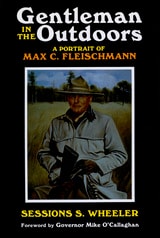
Gentleman in the Outdoors
Sessions S Wheeler
University of Nevada Press, 1985
The material which Wheeler collected for his book, Gentleman in the Outdoors : A Portrait of Max C. Fleischmann is particularly rich and complete; Mrs. Sarah H. Fleischmann gave Wheeler several boxes of her husband's files and photographs related to his outdoor activities such as fishing, hunting, sailing, and scientific expeditions. In addition, the Fleischmann materials included a thick binder, the contents of which Wheeler used extensively in his book. The binder included some material duplicated in the other Fleischmann files as well as correspondence between Wheeler and Fleischmann.
Gentleman in the Shadows
Benjamin C. Evans Jr. and the Central Intelligence AgencyDouglas A. Wissing
Indiana Historical Society Press, 2019
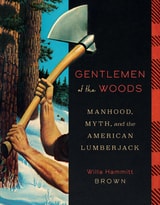
Gentlemen of the Woods
Manhood, Myth, and the American LumberjackWilla Hammitt Brown
University of Minnesota Press, 2025
Lumberjacks: the men, the myth, and the making of an American legend
The folk hero Paul Bunyan, burly, bearded, wielding his big ax, stands astride the story of the upper Midwest—a manly symbol of the labor that cleared the vast north woods for the march of industrialization while somehow also maintaining an aura of pristine nature. This idea, celebrated in popular culture with songs and folktales, receives a long overdue and thoroughly revealing correction in Gentlemen of the Woods, a cultural history of the life and lore of the real lumberjack and his true place in American history.
Now recalled as heroes of wilderness and masculinity, lumberjacks in their own time were despised as amoral transients. Willa Hammitt Brown shows that nineteenth-century jacks defined their communities of itinerant workers by metrics of manhood that were abhorrent to the residents of the nearby Northwoods boomtowns, valuing risk-taking and skill rather than restraint and control. Reviewing songs, stories, and firsthand accounts from loggers, Brown brings to life the activities and experiences of the lumberjacks as they moved from camp to camp. She contrasts this view with the popular image cultivated by retreating lumber companies that had to sell off utterly barren land. This mythologized image glorified the lumberjack and evoked a kindly, flannel-wearing, naturalist hero.
Along with its portrait of lumberjack life and its analysis of the creation of lumberjack myth, Gentlemen of the Woods offers new insight into the intersections of race and social class in the logging enterprise, considering the actual and perceived roles of outsider lumberjacks and Native inhabitants of the northern forests. Anchored in the dual forces of capitalism and colonization, this lively and compulsively readable account offers a new way to understand a myth and history that has long captured our collective imagination.
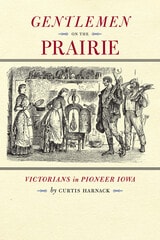
Gentlemen on the Prairie
Victorians in Pioneer IowaHarnack, Curtis
University of Iowa Press, 1985
@font-face { font-family: "Palatino";}@font-face { font-family: "?????? Pro W3";}p.MsoNormal, li.MsoNormal, div.MsoNormal { margin: 0in 0in 0.0001pt; font-size: 12pt; font-family: "Times New Roman"; }p.FreeForm, li.FreeForm, div.FreeForm { margin: 0in 0in 0.0001pt; font-size: 12pt; font-family: "Times New Roman"; color: black; }div.Section1 { page: Section1; }
In the 1880s, the well-connected young Englishman William B. Close and his three brothers, having bought thousands of acres of northwest Iowa prairie, conceived the idea of enticing sons of Britain’s upper classes to pursue the life of the landed gentry on these fertile acres. “Yesterday a wilderness, today an empire”: their bizarre experiment, which created a colony for people “of the better class” who were not in line to inherit land but whose fathers would set them up in farming, flourished in Le Mars, Iowa (and later in Pipestone, Minnesota), with over five hundred youths having a go at farming. In Gentlemen on the Prairie, Curtis Harnack tells the remarkable story of this quite unusual chapter in the settling of the Midwest.
Many of these immigrants had no interest in American citizenship but enjoyed or endured the challenging adventure of remaining part of the empire while stranded on the plains. They didn’t mix socially with other Le Mars area residents but enjoyed such sports as horse racing, fox hunts, polo, and an annual derby followed by a glittering grand ball. Their pubs were named the House of Lords, the House of Commons, and Windsor Castle; the Prairie Club was a replica of a London gentlemen’s club, an opera house attracted traveling shows, and their principal hotel was Albion House. In St. George’s Episcopal Church, prayers were offered for the well-being of Queen Victoria.
Problems soon surfaced, however, even for these well-heeled aristocrats. The chief problem was farm labor; there was no native population to exploit, and immigrant workers soon bought their own land. Although sisters might visit the colonists and sometimes marry one of them, appropriate female companionship was scarce. The climate was brutal in its extremes, and many colonists soon sold their acres at a profit and moved to countries affiliated with Britain. When the financial depression in the early 1890s lowered land values and made agriculture less profitable, the colony collapsed. Harnack skillfully draws upon the founder’s “Prairie Journal,” company ledgers, and other records to create an engaging, engrossing story of this quixotic pioneering experiment.
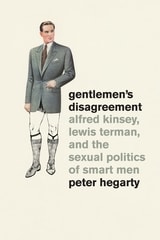
Gentlemen's Disagreement
Alfred Kinsey, Lewis Terman, and the Sexual Politics of Smart MenPeter Hegarty
University of Chicago Press, 2013
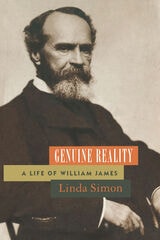
Genuine Reality
A Life of William JamesLinda Simon
University of Chicago Press, 1999
"William James . . . has never seemed so vulnerably human as in Linda Simon's biography. . . . [S]he vivifies James in such a way that his life and thought come freshly alive for the modern reader."—David S. Reynolds, New York Times Book Review
"Superb. . . . Genuine Reality is recommended reading for all soul-searchers."—George Gurley, Chicago Tribune
"Ms. Simon . . . has provided an ideal pathway for James's striding. . . . [Y]ou become engaged in his struggles as if they were your own."—Christopher Lehmann-Haupt, New York Times
"[A]n excellent narrative biography at once sensitively told and lucidly written."—John Patrick Diggins, Wall Street Journal