Results by title
5550 books match the query 'Biography & Autobiography' and 159 start with g
Going to the Tigers
Essays and ExhortationsRobert Cohen
University of Michigan Press, 2022
In this funny and perceptive collection, novelist and essayist Robert Cohen shares his thoughts on the writing process and then puts these prescriptions into practice—from how to rant effectively as an essayist and novelist (“The Piano Has Been Drinking”), how to achieve your own style, naming characters (and creating them), how one manages one’s own identity with being “a writer” in time and space, to the use of reference and allusion in one’s work. Cohen is a deft weaver of allusion himself. In lieu of telling the reader how to master the elements of writing fiction, he shows them through the work of the writers who most influenced his own development, including Roth, Ellison, Kafka, and Robinson. Rooted in his own experiences, this collection of essays shows readers how to use their influences and experiences to create bold, personal, and individual work. While the first part of the book teaches writing, the essays in the second part show how these elements come together.
Gone But Not Forgotten
My Favourite Flops and Other Projects that Came to NothingHans Magnus Enzensberger
Seagull Books, 2022
“My dear fellow artists, whether writers, actors, painters, film-makers, singers, sculptors, or composers, why are you so reluctant to talk about your minor or major failures?” With that question, Hans Magnus Enzensberger—the most senior among Germany’s great writers—begins his amusing ruminations on his favorite projects that never saw the light of day. There is enlightenment in every embarrassing episode, he argues, and while artists tend to forget their successes quickly, the memory of a project that came to nothing stays in the mind for years, if not decades. Triumphs hold no lessons for us, but fiascos can extend our understanding, giving insight into the conditions of production, conventions, and practices of the industries concerned, and helping novices to assess the snares and minefields in the industry of their choice. What’s more, Enzensberger argues, flops have a therapeutic effect: They can cure, or at least alleviate, the vocational illnesses of authors, be it the loss of control or megalomania. In Gone but Not Forgotten, Enzensberger looks back at his uncompleted experiments not just in the world of books but also in cinema, theater, opera, and journal publishing, and shares with us a “store of ideas” teeming with sketches of still-possible projects. He also reflects on the likely reasons for these big and small defeats. Interspersed among his ruminations are excerpts from those experiments, giving readers a taste of what we missed. Together, the pieces in this volume build a remarkable picture of a versatile genius’s range of work over more than half a century and make us reflect on the very nature of success and failure by which we measure our lives.
Gone to the Swamp
Raw Materials for the Good Life in the Mobile-Tensaw DeltaRobert Leslie Smith
University of Alabama Press, 2008
Normal0falsefalsefalseMicrosoftInternetExplorer4Normal0falsefalsefalseMicrosoftInternetExplorer4
To make a living here, one had to be capable, confident, clever and inventive, know a lot about survival, be able to fashion and repair tools, navigate a boat, fell a tree, treat a snakebite, make a meal from whatever was handy without asking too many questions about it, and get along with folks.
This fascinating and instructive book is the careful and unpretentious account of a man who was artful in all the skills needed to survive and raise a family in an area where most people would be lost or helpless. Smith’s story is an important record of a way of life beginning to disappear, a loss not fully yet realized. We are lucky to have a work that is both instructive and warm-hearted and that preserves so much hard-won knowledge.
Good Company
A Mining Family in Fairbanks, AlaskaSarah Isto
University of Alaska Press, 2006
With grace and perception, Good Company celebrates the joys and challenges of family life on the Alaska frontier.
Good Medicine, Hard Times
Memoir of a Combat Physician in IraqEdward P. Horvath, MD
The Ohio State University Press, 2022
Good Morning Blues
The Autobiography of Count BasieCount Basie
University of Minnesota Press, 2016
Count Basie was one of America’s pre-eminent and influential jazz pianists, bandleaders, and composers, known for such classics as “Jumpin’ at the Woodside,” “Goin’ to Chicago Blues,” “Sent for You Yesterday and Here You Come Today,” and “One O’Clock Jump.” In Good Morning Blues, Basie recounts his life story to Albert Murray, from his childhood years playing ragtime with his own pickup band at dances and pig roasts, to his years in New York City in search of opportunity, to rollicking anecdotes of Basie’s encounters with Fats Waller, Frank Sinatra, Fred Astaire, Sammy Davis Jr., Quincy Jones, Billie Holliday, and Tony Bennett. In this classic of jazz autobiography that was ten years in the making, Albert Murray brings the voice of Count Basie to the printed page in what is both testimony and tribute to an incredibly rich life.
Good Night, Beloved Comrade
The Letters of Denton Welch to Eric OliverEdited and with an introduction by Daniel J. Murtaugh
University of Wisconsin Press, 2017
Though German bombs were ravaging Britain, Welch wrote in his published work about the idyllic landscapes and local people he observed in Kent. There, in 1943, he met and fell in love with Eric Oliver, a handsome, intelligent, but rather insecure "landboy"—an agricultural worker with the wartime Land Army. Oliver would become a companion, comrade, lover, and caretaker during the last six years of Welch's life. All fifty-one letters that Welch wrote to Oliver are collected and annotated here for the first time. They offer a historical record of life amidst the hardship, deprivation, and fear of World War II, and also are a timeless testament of one young man's tender and intimate emotions, his immense courage in adversity, and his continual struggle for love and creative existence.
Good Roots
Writers Reflect on Growing Up in OhioLisa Watts
Ohio University Press, 2007
Winner of the Ohioana Library’s 2008 Ohio Legacy Citation
2014-2015 Choose to Read Ohio selection
“A good place to be from.” That’s how some people might characterize the Buckeye State. The writings in Good Roots: Writers Reflect on Growing Up in Ohio, are testimony to the truth of that statement. By prominent writers such as P. J. O’Rourke, Susan Orlean, and Alix Kates Shulman, these contributions are alternately nostalgic, irreverent, and sincere, and offer us a personal sense of place. Their childhoods are as varied as their work. Some were raised in urban Cleveland, Akron, and Cincinnati, others in the small Ohio towns that typify the Midwest, and still others in the countryside. Yet what they have to tell us about their roots resonates with a shared heritage, a sense of what is universal and enduring about growing up in the heartland.
Their collective résumé reads like a literary Who’s Who, including four Pulitzer Prizes, several National Book Awards, and many prestigious fellowships. Good Roots is also plain good reading from some of our country’s most accomplished contemporary writers.
Contributors include: Jill Bialosky, Dan Cryer, Michael Dirda, Elizabeth Dodd, Anthony Doerr, Rita Dove, Ian Frazier, Dale Keiger, Andrea Louie, Kathleen Dean Moore, Mary Oliver, Susan Orlean, P. J. O’Rourke, Julie Salamon, Scott Russell Sanders, Alix Kates Shulman, Jeffery Smith, James Toedtman, and Mark Winegardner.
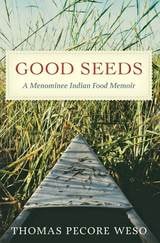
Good Seeds
A Menominee Indian Food MemoirThomas Pecore Weso
Wisconsin Historical Society Press, 2027
To the Menominee people, the "good seeds” of life are the manomin, or wild rice, that also gives the tribe its name. In this unique food memoir, Tribal member Thomas Pecore Weso takes readers on a cook’s journey through Wisconsin’s North Woods tribal lands, connecting Menominee food—beaver, trout, blackberry, wild rice, maple sugar, partridge—to the colorful individuals who taught him Indigenous values and traditions. Featuring more than forty recipes, Good Seeds keeps those traditions alive for future generations.
With a rare perspective as a Native American anthropologist and artist, Weso mixes a poignant personal story with the seeds of Menominee cooking traditions. He tells of the foods and the people who helped shape the person he became. His grandfather Moon was a medicine man, whose morning prayers formed the foundation for all the day’s meals. His grandmother Jennie “made fire” each morning in a wood-burning stove and oversaw huge breakfasts of wild game, fish, and fruit pies. His uncles taught him to hunt bear, deer, squirrels, raccoons, and skunks for the daily larder. Along with authentic family recipes, Weso recalls favorite foods served at the Menominee fair and at local diners.
In Good Seeds, adventurous cooks will gain insight and inspiration from Weso’s recipes, and readers of all stripes will appreciate the often-humorous stories about reservation life during the mid-twentieth century.
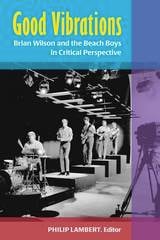
Good Vibrations
Brian Wilson and the Beach Boys in Critical PerspectivePhilip Lambert, Editor
University of Michigan Press, 2016
The book joins a growing body of literature on the popular music of the 1960s, in general, and on Brian Wilson and the Beach Boys in particular. But Good Vibrations extends the investigation further and deeper than it has gone before, not only offering new understanding and insights into individual songs and albums, but also providing close examination of compositional techniques and reflections on the group’s place in American popular culture.

Good Water
Kevin Holdsworth
University Press of Colorado, 2016
In essays that combine memoir with biography of place, Kevin Holdsworth creates a public history of the land he calls home: Good Water, Utah. The high desert of south-central Utah is at the heart of the stories he tells here—about the people, the “survivors and casualties” of the small, remote town—and is at the heart of his own story.
Holdsworth also explores history at a personal level: how Native American history is preserved by local park officials; how Mormon settlers adapted to remote, rugged places; how small communities attract and retain those less likely to thrive closer to population centers; and how he became involved in local politics. He confronts the issues of land use and misuse in the West, from the lack of water to greed and corruption over natural resources, but also considers life’s simple pleasures like the value of scenery and the importance of occasionally tossing a horseshoe.
Good Water’s depiction of modern-day Utah and exploration of friendships and bonding on the Western landscape will fascinate and entice readers in the West and beyond.

Good-Bye to Old Peking
The Wartime Letters Of U.S. Marine Captain John Seymour Letcher, 1937-1939John Seymour Letcher
Ohio University Press, 1998
Captain Letcher describes the flavor of life in pre-Communist China — the food, servants, cold Peking winters and torrid summers, hunting, and excursions to the major tourist sites.
But his letters also tell of the Japanese slaughter of Chinese troops in the opening days of the Sino-Japanese War. He wrote about life in a city under Japanese occupation and the stirring story of the Chinese guerrillas rebounding from devastating defeat.
These letters and accompanying introduction, preface, and notes, draw attention to the Western experience in a place and time largely overlooked by military historians and modern China specialists.

Good-bye to the Mermaids
A Childhood Lost in Hitler's BerlinKarin Finell
University of Missouri Press, 2026
Goodbye to Poplarhaven
Recollections of a Utah BoyhoodEdward A. Geary
University of Utah Press, 2017

Goodbye, My Tribe
An Evangelical ExodusVic Sizemore
University of Alabama Press, 2020
Sizemore began writing these essays with the aim of exploring and understanding what happened when the mythology of his “tribe” crumbled from beneath his feet. He draws heavily on his upbringing and his family history as a framework for how his “tribe” of white evangelicals have found ways to reconcile Christianity with what the author finds to be troubling stances on many social issues, among them race, gender, sexuality, materialism, anti-intellectualism, and white supremacy.
In a clear-eyed and eloquent voice, Sizemore grapples movingly with his own bewilderment and chagrin as he struggles to reconcile the essential philosophical and moral decay that he believes many evangelicals have come to embrace. His insights, arranged topically and thematically and told through graceful and accessible prose, toggle between memoir and literary journalism, along a spectrum that touches on history, philosophy, theology, and personal reflections.
.
Gordon MacQuarrie
The Story of an Old Duck HunterKeith Crowley
Wisconsin Historical Society Press, 2003
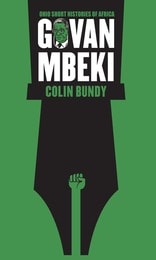
Govan Mbeki
Colin Bundy
Ohio University Press, 2012
Govan Mbeki (1910–2001) was a core leader of the African National Congress, the Communist Party, and the armed wing of the ANC during the struggle against apartheid. Known as a hard-liner, Mbeki was a prolific writer and combined in a rare way the attributes of intellectual and activist, political theorist and practitioner. Sentenced to life in prison in 1964 along with Nelson Mandela and others, he was sent to the notorious Robben Island prison, where he continued to write even as tension grew between himself, Mandela, and other leaders over the future of the national liberation movement. As one of the greatest leaders of the antiapartheid movement, and the father of Thabo Mbeki, president of South Africa from 1999 to 2008, the elder Mbeki holds a unique position in South African politics and history.
This biography by noted historian Colin Bundy goes beyond the narrative details of his long life: it analyzes his thinking, expressed in his writings over fifty years. Bundy helps establish what is distinctive about Mbeki: as African nationalist and as committed Marxist—and more than any other leader of the liberation movement—he sought to link theory and practice, ideas and action.
Drawing on exclusive interviews Bundy did with Mbeki, careful analysis of his writings, and the range of scholarship about his life, this biography is personal, reflective, thoroughly researched, and eminently readable.
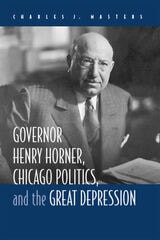
Governor Henry Horner, Chicago Politics, and the Great Depression
Charles J. Masters
Southern Illinois University Press, 2007
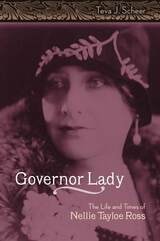
Governor Lady
The Life and Times of Nellie Tayloe RossTeva J. Scheer
University of Missouri Press, 2005
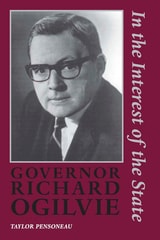
Governor Richard Ogilvie
In the Interest of the StateTaylor Pensoneau
Southern Illinois University Press, 2009
Although serious scandal erupted in Illinois Governor Richard Ogilvie’s administration— eight hundred thousand dollars mysteriously appearing in Secretary of State Paul Powell’s shoe boxes and other hiding places, the downfall of two Supreme Court justices for questionable stock dealings, corruption surrounding the Illinois State Fair— Ogilvie’s accomplishments, as Taylor Pensoneau demonstrates, rank him among the best governors in Illinois history.
Perhaps the most important of Ogilvie’s accomplishments during his single term in office (1969–1973) was the passage of the state’s first income tax in 1969. Supporting the income tax took political courage on the part of the new governor, but in doing so he saved the financially crippled state from economic disaster. He also looked far into the future; at a time when few politicians expressed concern with the environment, Ogilvie created an exemplary and hard-hitting antipollution program. He was in office during the Illinois Constitutional Convention in 1970 and was instrumental in the widespread restructuring of Illinois government.
Viewing Ogilvie as a pivotal figure in Illinois politics during a time of great social and political turmoil, Pensoneau provides a complete political biography. He sheds light on Ogilvie’s military heroics, his political career, and the Illinois elections of 1968, 1970, and 1972.
Governor Tom Kean
From the New Jersey Statehouse to the 911 CommissionFelzenberg, Alvin S
Rutgers University Press, 2006
In this first political biography of one of the nation's most popular and successful governors, Alvin S. Felzenberg tells the story of a remarkable career that culminated in an unexpected and crucial contribution to the country-chairmanship of the 9/11 Commission. Felzenberg describes how, early in his political career, Kean worked to transform New Jersey's legislature in the aftermath of court rulings that mandated redistricting in accordance with the "one man, one vote" principle. He discusses Kean's efforts to relieve the urban crisis that followed in the wake of the 1967 Newark riots. He relates how Kean was able to use the New Jersey governorship-purportedly the strongest in the country-to transform a so-called "rust belt" state into a leader in education, environmental responsibility, and economic growth.
Kean's successes in these and other areas caused leaders outside New Jersey to follow in his path. Together with his fellow governors, Kean forged a national consensus on domestic policy between Democratic congresses and Republican presidents, in the process winning for himself a leadership role in his own party. Kean's story serves as an uncommon case of how a Republican loyal to the historic roots and principles of his party can not only win election in a "blue state" but effectively govern it.
Starting from the example the governor set on the state level, Felzenberg's account traces Kean's career to positions of trusted authority on the national stage. After several years of advising presidents, Kean was appointed chairman of the 9/11 Commission. In this role, he made the bipartisan, Congressionally mandated commission one of the most successful in American history.
Drawing on interviews with Kean as well as with state and national leaders, including former presidents Gerald Ford and Bill Clinton and former New York City mayor Ed Koch, Felzenberg not only provides a marvelous biography, but also offers a unique look at American politics during the last four decades of the twentieth century.
Grace Notes
Heidi Hart
University of Utah Press, 2004
"Ever since I was 10 years old, I’d felt myself yearning to 'go astray.' For me, that didn’t mean drinking and cavorting with boys; it meant being myself without fear."—from the book
What happens when a trained singer who grew up in a "house of vowels" finds that her voice is not her own? What happens when a woman loses the Mormon faith of her childhood and abandons the rituals she’s always known? What does a woman, already married for thirteen years by her early thirties, do when she realizes she has been "lying for years?" How does one sing, with grace, from the heart?
In the spirit of Mary Catherine Bateson’s Composing a Life and Kathleen Norris’s Cloister Walk, Heidi Hart’s luminous memoir retraces her search for an opening to her heart’s path. She finds that the religious life of her Latter-day Saint family—which includes a revered General Authority—robs her of her voice and her spirit. When she discovers Catharine, a mute, Quaker ancestor, Hart begins a vital journey—a journey blessed by her devout and devoted husband; a journey that leads her as she studies Zuni mythology, Jewish tradition, Benedictine monastic ritual, Emily Dickinson, and Saint Hildegard of Bingen—a journey that leads her to a place that feels like home: the company of Friends, the Quaker community of Salt Lake City.
With grace and lyricism, Hart shares the private, personal wisdom she has earned in her community of friends, a community that embraces silences and dissonance, a place where she can't keep from singing.
Grace in the Cabin
Based on a True Ghost StoryAntoinette "Tiyi" Schippers
Parkhurst Brothers, Inc., 2025
Through her mediumship, the spirits reveal to the author the events that sparked the haunting, ultimately leading to resolution and freedom for both the living and the dead.
Graham R.
Rosamund Marriot Watson, Woman of LettersLinda K. Hughes
Ohio University Press, 2005
Rosamund Marriott Watson was a gifted poet, an erudite literary and art critic, and a daring beauty whose life illuminates fin-de-siècle London and the way in which literary reputations are made—and lost. A participant in aestheticism and decadence, she wrote six volumes of poems noted for their subtle cadence, diction, and uncanny effects. Linda K. Hughes unfolds a complex life in Graham R.: Rosamund Marriott Watson, Woman of Letters, tracing the poet’s development from accomplished ballads and sonnets, to avant-garde urban impressionism and New Woman poetry, to her anticipation of literary modernism.
Despite an early first divorce, she won fame writing under a pseudonym, Graham R. Tomson. The influential Andrew Lang announced the arrival of a new poet he assumed to be a man. She was soon hosting a salon attended by Lang, Oscar Wilde, and other 1890s notables. Publishing to widespread praise as Graham R., she exemplified the complex cultural politics of her era. A woman with a man’s name and a scandalous past, she was also a graceful beauty who captivated Thomas Hardy and left an impression on his work. At the height of her success she fell in love with writer H. B. Marriott Watson and dared a second divorce.
Graham R. combines the stories of a gifted poet, of London literary networks in the 1890s, and of a bold woman whose achievements and scandals turned on her unusual history of marriage and divorce. Her literary history and her uncommon experience reveal the limits and opportunities faced by an unconventional, ambitious, and talented woman at the turn of the century.
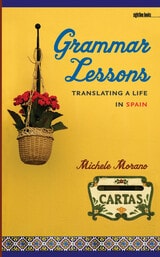
Grammar Lessons
Translating a Life in SpainMichele Morano
University of Iowa Press, 2007
Morano focuses first on her year of living in Oviedo, in the early 1990s, a time spent immersing herself in a new culture and language while working through the relationship she had left behind with an emotionally dependent and suicidal man. Next, after subsequent trips to Spain, she explores the ways that travel sparks us to reconsider our personal histories in the context of larger historical legacies. Finally, she turns to the aftereffects of travel, to the constant negotiations involved in retelling and understanding the stories of our lives. Throughout she details one woman’s journey through vocabulary and verb tense toward a greater sense of her place in the world.
Grammar Lessons illustrates the difficulty and delight, humor and humility of living in a new language and of carrying that pivotal experience forward. Michele Morano’s beautifully constructed essays reveal the many grammars and many voices that we collect, and learn from, as we travel.
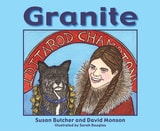
Granite
Susan Butcher and David Monson
University of Alaska Press, 2007
While they were training for the Iditarod, Granite became deathly ill. The veterinarians said he would never be strong enough to run the race. Granite refused to accept this, and slowly he started to recover. By the time of the race he was strong enough to start, but Susan wondered if he could finish the entire thousand-mile race. Confidently Granite guided the team into the lead of the race, when suddenly they were caught in a raging Arctic blizzard. Now Susan and the whole team depended on Granite to get them through the storm. He had to call on all his inner strength and courage to save them—if he could.
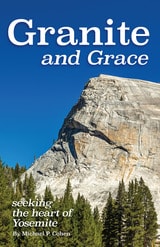
Granite and Grace
Seeking the Heart of YosemiteMichael P. Cohen
University of Nevada Press, 2019
Drawing together the humanistic and scientific significance of the wild landscapes he traverses, Michael uncovers relationships between people and places and meaning and substance, rendering this text part memoir—but also considerably more. On-the-rock encounters by hand and foot open up a dialogue between the heart of a philosopher and the mind of a geologist. Michael adds a literary softness to this hard landscape, blending excursions with exposition and literature with science. It is through his graceful representations that the geological becomes metaphorical, while the science turns mythological.
This high country, where in 1889 John Muir and Robert Underwood Johnson planned what would become Yosemite National Park, is significant for cultural as well as natural reasons. Discoursing on everything from Camus’s “Myths of Sisyphus” to the poems of Gary Snyder, Michael adds depth to an already splendorous landscape. Premier early geologists, such as François Matthes, shaped the language of Yosemite’s landscape. Even though Yosemite has changed over half a century, the rock has not. As Michael explores the beauty and grace of his familiar towering vistas, he demonstrates why, of the many aspects of the world to which one might get attached, the most secure is granite.
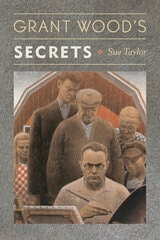
Grant Wood’s Secrets
Sue Taylor
University of Delaware Press, 2011
Published by University of Delaware Press. Distributed worldwide by Rutgers University Press.

Grant at Vicksburg
The General and the SiegeMichael B. Ballard
Southern Illinois University Press, 2013
After an overview of Grant’s early Civil War career from his first battle through the early stages of the attacks on Vicksburg, Ballard describes in detail how Grant conducted the siege, examining his military decisions, placement of troops, strategy and tactics, engineering objectives, and relationships with other officers. Grant’s worried obsession with a perceived danger of a rear attack by Joseph Johnston’s Confederate army, Ballard shows, affected his decision making, and shows how threats of Confederate action occupied more of Grant’s time than did the siege itself.
In addition, Ballard soundly dispels a false story about Grant’s alleged drinking binge early in the siege that has been taken as truthful by many historians, examines how racism in Grant’s army impacted the lives of freed black people and slaves in the Vicksburg area, and explores Grant’s strained relationship with John McClernand, a politically appointed general from Illinois. The book concludes with the surrender of Vicksburg on July 4, 1863, the expulsion of Johnston and his army from the region, and demonstrates the impact of the siege on the outcome on the short and long-terms of Grant’s military career.
By analyzing Grant’s personality during the siege and how he dealt with myriad issues as both a general and an administrator, Grant at Vicksburg offers a revealing rendering of the legendary general.
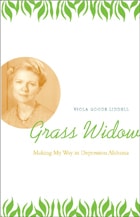
Grass Widow
Making My Way in Depression AlabamaViola Goode Liddell
University of Alabama Press, 2004
An engaging account of one woman’s overcoming the Depression and small town mores.
Viola Goode Liddell’s short memoir tells the story of her return to Alabama in search of a husband and a new life. Thirty years old and recently divorced, Liddell comes back to her home state—with her young son—determined to survive, during the depths of the Depression. Liddell narrates the obstacles she faces as a single mother in the 1930s Deep South with self-deprecating humor and a confessional tone that reveal both her intelligence and her unapologetic ambitions.
Unable to earn, borrow, or beg enough money to support herself and her child, Liddell uses her family connections to secure a teaching position in Camden, Alabama. Even though an older sister’s status within the community helps her land the job, Liddell is warned that she must be very careful as she navigates the tricky social terrain of small town life, particularly when it comes to men. A commentary on the plight of women of the time is woven into the narrative as Liddell recounts her experience of being refused a loan at the local bank by her own brother-in-law.
Despite all the restrictions on her behavior and the crushing reality that she has become "the biggest nuisance in the family" because of her past, Liddell cheerfully and successfully builds a new life of respectability and hope.
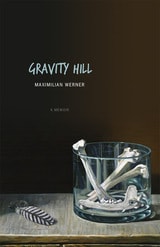
Gravity Hill
A MemoirMaximilian Werner
University of Utah Press, 2013
“The sound of parenthood is the sigh.” So begins Gravity Hill, written from the perspective of a new father seeking hope, beauty, and meaning in an uncertain world. Many memoirs recount the author’s experiences of growing up and struggling with demons; Werner’s shows how old demons sometimes return on the heels of something as beautiful as children. Werner’s memoir is about growing up, getting older, looking back, and wondering what lies ahead—a process that becomes all the more complicated and intense when parenting is involved. Moving backward and forward between past, present, and future, Gravity Hill does not delineate time so much as collapse it.
Werner narrates his struggle growing up in suburban Utah as anon-Mormon and what it took for him, his siblings, and his friends to feel like they belonged. Bonding in separation, they indulged in each other, in natural and urban landscapes, and sometimes in the destructive behaviors that are the native resort of outsidersincluding promiscuous and occasionally violent sexual behavior—and for some, paths to death and suicide. Gravity Hill is the story of the author’s descent into and eventual emergence from his dysfunction and into a newfound life. Infused with humor, honesty, and reflection, this literary memoir will resonate with readers young and old.
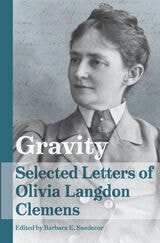
Gravity
Selected Letters of Olivia Langdon ClemensEdited by Barbara E. Snedecor
University of Missouri Press, 2023
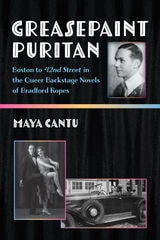
Greasepaint Puritan
Boston to 42nd Street in the Queer Backstage Novels of Bradford RopesMaya Cantu
University of Michigan Press, 2024
Greasepaint Puritan aims to find out and reclaim his story. Descended from Mayflower Pilgrims, Ropes rebelled against the “Proper Bostonian” life, in a career that touched upon the Jazz Age, American vaudeville, and theater censorship. We follow Ropes’s successful career as both a performer and the author of the trilogy of backstage novels: 42nd Street, Stage Mother, and Go Into Your Dance. Populated by scheming stage mothers, precocious stage children, grandiose bit players, and tart-tongued chorines, these novels centered on the lives and relationships of gay men on Broadway during the Jazz Age and Prohibition era. Rigorously researched, Greasepaint Puritan chronicles Ropes’s career as a successful screenwriter in 1930s and ’40s Hollywood, where he continued to be a part of a dynamic gay subculture within the movie industry before returning to obscurity in the 1950s. His legacy lives on in the Hollywood and Broadway incarnations of 42nd Street—but Greasepaint Puritan restores the “forgotten melody” of the man who first envisioned its colorful characters.
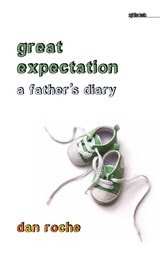
Great Expectation
A Father's DiaryDan Roche
University of Iowa Press, 2008
With five years of parenting his irrepressible daughter Maeve under his belt, Roche, already forty-five years old, and his wife, Maura, face the prospect of another arrival and the myriad of emotions that come with a second child. From revelling in the joys of pregnancy such as Maura's delight at "having cleavage" and being able to eat whatever she desires; to assuaging the parental anxieties of choosing the right obstetrician, correcting the mistakes one made with the first child, and sending children to college in the future; to navigating the unforeseen, experiencing the unexpected death of a parent, and feeling trepidation toward the thought of having a son, Roche records his emotions with unusual candidness and intimacy.
Reflecting on day-to-day events and their significance in his family’s life together, Roche wonders what he is getting himself into and how much deeper he can immerse himself into parenting. Together, he and his wife face the bittersweet intersections of death and new life, menace and hopefulness. With sincerity and a mature wit, Great Expectation stands as a wise recounting of nine months’ time, with all of its chaos and charms, and offers a fresh perspective for first-time and veteran parents alike.
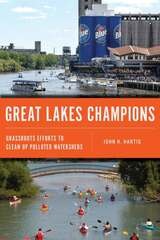
Great Lakes Champions
Grassroots Efforts to Clean Up Polluted WatershedsJohn H. Hartig
Michigan State University Press, 2022
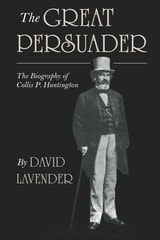
Great Persuader
The Biography of Collis P. HuntingtonDavid Lavender
University Press of Colorado, 1999
How did Huntington operate? What were his methods? Was he corrupt? These are questions that were previously unanswered but thanks to the cooperation of the Huntington family who supplied Mr. Lavender with material that had never before been made public, Lavender shows just how Collis P. Huntington operated-and it was defintely outside the law, although well inside the prevailing morality of his time. It shows his complicated dealings with Sanford Hopkins, how he bested such tycoons as Thomas A. Scott, John C. Durrant, Oliver Ames and Jay Gould, how Huntington accumulated the great fortune which was the legacy to his family, and how his great railroad network was to prove an unparalleled legacy to all Americans. The Great Persuader is a powerful story of a remarkable man whose singleness of purpose and ruthless manipulation of men and money propelled the great enterprise forward against all odds.
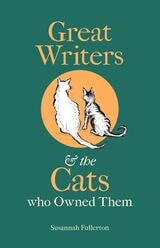
Great Writers and the Cats who Owned Them
Susannah Fullerton
Bodleian Library Publishing, 2025
A fun, charming romp through the history of seventeen great writers and the cats who captured their hearts.
Throughout history, cats and writers have banded together in a magical combination of comfort, companionship, and inspiration. Great Writers and the Cats who Owned Them features famous authors ranging from Samuel Johnson whose cat Hodge dined on oysters, to Edward Lear whose charismatic cat Foss was missing half his tail, to Dorothy L. Sayers who rescued her kitten Blitz from a bombsite. Each chapter delves into the relationship between authors and the felines who condescended to share their homes and desks, revealing intriguing aspects of the writers’ lives and celebrating how cats—pure-bred and mixed-breeds, large and small, graceful and eccentric—enriched the world of literature. Including fun additional features on cats in bookshops, libraries, and hotels, and illustrated with charming line drawings, this book is a perfect gift for cat lovers everywhere.
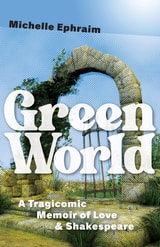
Green World
A Tragicomic Memoir of Love & ShakespeareMichelle Ephraim
University of Massachusetts Press, 2024
Shortlisted for the 2026William Saroyan International Prize for Writing • Shortlisted for the Story Circle Network Gilda Prize • Winner of the Wisconsin Library Association's Literary Award for Nonfiction • Shortlisted for the Rubery Book Award • A 2025 IPPY Awards Silver Medal Winner in Autobiography/Memoir • Winner of the 2025 Friends of American Writers Adult Literature Award • A 2024 Foreword INDIES Finalist • A 2025 Sophie Brody Medal Notable Book • A Jewish Women's Archive Summer Book Club Pick
At twenty-three, Michelle Ephraim was failing at everything. The only child of reclusive Holocaust-survivor parents who were dismayed by her literary studies, she found herself dumped by her boyfriend and bombing out of graduate school. Then, one night, she crashed a Shakespeare recitation party. Loopy from vodka and never having read a single line of Shakespeare, she was transfixed. Shakespeare, she decided, was the lifeline she needed.
Green World is the hilarious and heartbreaking story of Ephraim’s quest to become a Shakespeare scholar and to find community and home. As she studies Shakespeare, Ephraim’s world uncannily begins to mirror the story of the Jewish daughter in The Merchant of Venice, and she finds herself in a Green World, an idyllic place where Shakespeare’s heroines escape their family trauma. Green World reckons with global, historical, and personal tragedy and shows how literature—comic and tragic—can help us brave every kind of anguish.
Greg Egan
Karen Burnham
University of Illinois Press, 2014
Greg Egan (1961- ) publishes works that challenge readers with rigorous, deeply-informed scientific speculation. He unapologetically delves into mathematics, physics, and other disciplines in his prose, putting him in the vanguard of the hard science fiction renaissance of the 1990s.
A working physicist and engineer, Karen Burnham is uniquely positioned to provide an in-depth study of Egan's science-heavy oeuvre. Her survey of the author's career covers novels like Permutation City and Schild's Ladder and the Hugo Award-winning novella "Oceanic," analyzing how Egan used cutting-edge scientific theory to explore ethical questions and the nature of humanity. As Burnham shows, Egan's collected works constitute a bold artistic statement: that narratives of science are equal to those of poetry and drama, and that science holds a place in the human condition as exalted as religion or art.
The volume includes a rare interview with the famously press-shy Egan covering his works, themes, intellectual interests, and thought processes.
Gregory Benford
George Slusser
University of Illinois Press, 2014
Like many other current science fiction writers, Benford has tackled the major genres: space travel, time travel, technology running amok, prolonged longevity, searing apocalyptic cosmic events, and alien life, which he theorizes to be more likely viral than intelligent. An astrophysicist by training and profession, Benford has published more than twenty novels, over one hundred short stories, some fifty essays, and myriad articles that display both his scientific rigor as well as a recognition of literary traditions.
In this study, George Slusser explores the extraordinary, seemingly inexhaustible display of creative energy in Gregory Benford's life and work. Presenting Benford's ideas on science and the writing of science fiction, the volume addresses the writer's literary production and his place in contemporary science fiction. By identifying direct sources and making parallels with other works and writers, Slusser reveals the vast scope of Benford's knowledge, both of literature and of the major scientific and philosophical issues of our time. Slusser also discusses Benford's numerous scientific articles and nonfiction books and includes a new interview with Benford.
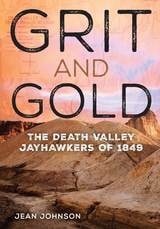
Grit and Gold
The Death Valley Jayhawkers of 1849Jean Johnson
University of Nevada Press, 2018
After leaving Salt Lake City to break a road south to the Pacific Coast that would eliminate crossing the snowy Sierra Nevada, the party veered off the Old Spanish Trail in southern Utah to follow a mountaineer’s map portraying a bogus trail that claimed to cut months and hundreds of miles off their route to the gold country. With winter coming, however, they found themselves hopelessly lost in the mountains and dry valleys of southern Nevada and California. Abandoning everything but the shirts on their backs and the few oxen that became their pitiful meals, they turned their dreams of gold to hopes of survival.
Utilizing William Lorton’s 1849 diary of the trek from Illinois to southern Utah, the reminiscences of the Jayhawkers themselves, the keen memory of famed pioneer William Lewis Manly, and the almost daily diary of Sheldon Young, Johnson paints a lively but accurate portrait of guts, grit, and determination.
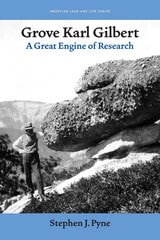
Grove Karl Gilbert
A Great Engine of ResearchStephen J. Pyne
University of Iowa Press, 1980
Gilbert knew most of geology's grand figures--including John Wesley Powell, Clarence Dutton, and Clarence King--and Pyne's chronicle of the imperturbable, quietly unconventional Gilbert is couterpointed with sketches of these prominent scientists. The man who wrote that "happiness is sitting under a tent with walls uplifted, just after a brief shower,", created answers to the larger questions of the earth in ways that have become classics of his science.
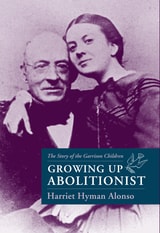
Growing Up Abolitionist
The Story of the Garrison ChildrenHarriet Hyman Alonso
University of Massachusetts Press, 2002
Much has been written about the life of abolitionist William Lloyd Garrison (1805–1879), but relatively little attention has been paid to his wife, Helen Benson Garrison, and their seven children. In Growing Up Abolitionist, Garrison's public image recedes into the background and the family's private world takes center stage.
The lives of the Garrison children were shaped within the context of the great nineteenth-century campaigns against slavery, racism, violence, war, imperialism, and the repression of women. As children, they became apprentices of these movements and grew up adoring their dissident parents. Collectively and individually, they carried on their parents' values in distinctive ways.
Their path was not always easy. When the Civil War erupted, the entire family had to come to grips with a basic contradiction in their lives. While each member passionately yearned for the end of slavery, all but the eldest son, George, who served as an officer with the 55th Massachusetts Colored Regiment, opposed military participation.
The Civil War years also brought four marriage partners into the Garrisons' lives-Ellen Wright, Lucy McKim, and Annie Anthony (all abolitionist daughters) and Henry Villard, a German-born journalist who later became a railroad magnate and publisher of the New York Evening Post and the Nation.
Raised by loving parents to be political activists, the Garrison children, as adults, assumed positions as leaders or participants in those radical causes of their day that most closely reflected their upbringing: racial justice, women's rights, anti-imperialism, and peace.
Growing Up Chicago
Edited by David Schaafsma, Roxanne Pilat, and Lauren DeJulio Bell, Foreword by Luis Alberto Urrea
Northwestern University Press, 2021
The stories evoke childhood trips to the Art Institute of Chicago, nighttime games of ringolevio, and the giant neon Magikist lips that once perched over the expressway, sharing perspectives that range from a young man who dreams of becoming an artist to a single mother revisiting her Mexican roots, from a woman’s experience with sexual assault to a child’s foray into white supremacy. This book memorably explores culture, social identity, and personal growth through the eyes of Chicagoans, affirming that we each hold the ability to shape the places in which we live and write and read as much as those places shape us.
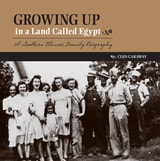
Growing Up in a Land Called Egypt
A Southern Illinois Family BiographyCleo Caraway
Southern Illinois University Press, 2010
In Growing Up in a Land Called Egypt: A Southern Illinois Family Biography,author Cleo Caraway fondly recalls how she and her siblings came of age on the family farm in the 1930s and 1940s. Like many others, the Caraways were affected by the economic hardships of the Great Depression, but Cleo’s parents strived to shelter her and her six siblings from the dire circumstances affecting the nation and their home and allowed them to bask in their idealistic existence. Her love for her family clearly shines from every page as she writes of a simpler time, before World War II divided the family.
Caraway revels in the life her family lived on a southern Illinois hilltop in Murphysboro township, marveling at the mix of commonplace and adventure she experienced in her childhood. She remembers her first day of school, walking three miles to the wondrous one-room building with her siblings; reminisces about strolling through the countryside with her mother, investigating the various plants and flowers, fruits and nuts; and recollects her fascination with the Indian relics she found buried near her home, a hobby she shared with her father. She also writes of seeing Gone with the Wind on the big screen at the Hippodrome in Murphysboro, of learning to sew dresses for her dolls, and of idyllic life on the farm—milking cows, hatching chicks, feeding pigs. Along with her personal memories Caraway includes interviews with neighbors and many fascinating photographs with detailed captions that make the images come alive.
A delightful follow-up to her father’s popular Foothold on a Hillside: Memories of a Southern Illinoisan,Caraway’s book is a pleasant change from the typical accounts of southern Illinois before, during, and after the Great Depression. Instead of hardscrabble grit, Growing Up in a Land Called Egypt offers a refreshingly different view of the period and is certain to be embraced by southern Illinois natives as well as anyone interested in the experiences of a rural family that thrived despite the difficult times. The author’s lighthearted prose, self-deprecating humor, and genuine affection for her family make reading this book a rich and memorable experience.
Growing Up in the Lone Star State
Notable Texans Remember Their ChildhoodsBy Gaylon Finklea Hecker and Marianne Odom
University of Texas Press, 2021
Gaylon Finklea Hecker and Marianne Odom began the interviews for this book in 1981 and devoted a professional lifetime to collecting the memories of accomplished Texans to determine what, if anything, about growing up in the Lone Star State prepared them for success.
The resulting forty-seven oral history interviews begin with tales from the early 1900s, when Texas was an agrarian state, and continue through the growth of major cities and the country’s race to the moon. Interviewees recalled life in former slave colonies; on gigantic ranches, tiny farms, and sharecropper fields; and in one-horse towns and big-city neighborhoods, with relatable stories as diverse as the state’s geography.
The oldest interviewees witnessed women earning the right to vote and weathered the Great Depression. Many remembered two world wars, while others recalled the Texas City explosion of 1947 and the tornado that devastated Waco in 1953. They witnessed the advent of television and the nightly news, which helped many come to terms with the assassination of a president that took place too close to home.
Their absorbing reflections are stories of good and bad, hope and despair, poverty and wealth, depression and inspiration, which would have been different if lived anywhere but Texas.
Growing Up with Southern Illinois, 1820 to 1861
From the Memoirs of Daniel Harmon BrushDaniel Harmon Brush, with a Foreword by Michael C. Batinski
Southern Illinois University Press, 2017
Growing up in Minnesota
Ten Writers Remember Their ChildhoodsChester Anderson
University of Minnesota Press, 1976
Gudrun’s Kitchen
Recipes from a Norwegian FamilyIrene O. Sandvold
Wisconsin Historical Society Press, 2011
The youngest of a large Norwegian immigrant family, Gudrun Thue Sandvold was known for her beaming blue eyes and a reserve that gave way to laughter whenever she got together with her sisters. She took immeasurable pride in her children and grandchildren, kept an exquisite home, and turned the most mundane occasion into a party. And to all who knew her, Gudrun’s cooking was the stuff of legend.
Part cookbook, part immigrant story, and part family memoir, Gudrun's Kitchen features hundreds of Gudrun Sandvold’s recipes for comfort food from a time when families and friends gathered at the table and connected with one another every single day. But this book is much more than a guide to Norwegian culinary traditions; it is an important contribution to immigrant history and a vital documentation of our nation’s multicultural heritage.
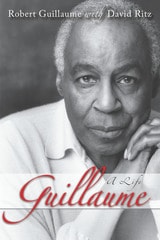
Guillaume
A LifeRobert Guillaume & David Ritz
University of Missouri Press, 2002
Guillaume: A Life is the autobiography of esteemed Broadway, Hollywood, and television star Robert Guillaume. Ten months after suffering a stroke, Guillaume—perhaps best known as television’s Benson—began this autobiography with award-winning author and collaborator David Ritz.
The book goes beyond the recounting of a long and successful career to examine the forces that shaped the man: family, religion, race, and class. Startlingly candid and disarmingly self-aware, Guillaume seeks to know and understand himself, his treatment of the women in his life, and the choices he made along the way. He pursues the truth, however painful it may be, says Ritz, guided by two questions, “Who the hell am I?” and “What made me do what I did?”
Born in St. Louis in 1927 to a young, abused, unstable mother, and reared by a strong, hardworking grandmother, Robert Guillaume managed to move from the poverty and adversity of his youth to a rich, full career as an actor and a singer. Fierce determination and sharp focus enabled this man born to hardship and racial discrimination to study, learn, cultivate his natural talents, and succeed at the performance career he pursued with a vengeance. Guillaume first performed in the strict Catholic schools and churches to which his grandmother, who understood that education would be the key to any success he might achieve, sent him. There his love of classical music was nurtured, and he was encouraged to perform.
From a child longing for his mother’s love to a man unsure of the meaning of love for many of the women in his life, from a young performer struggling to succeed on Broadway and in Hollywood to a grief-stricken father watching his son die of AIDS, Robert Guillaume tells what it was like to realize celebrity and what he sacrificed in the process. Readers will savor the success story of this artist who achieved great recognition and fame, but who never lost sight of his beginnings. Appealing to all audiences, Guillaume is a revealing and poignant autobiography of an extraordinary and distinguished American thespian.