Results by title
18284 books match the query 'United States' and 433 start with g
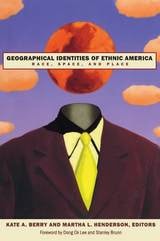
Geographical Identities Of Ethnic America
Race, Space, And PlaceKate A. Berry
University of Nevada Press, 2001
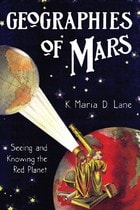
Geographies of Mars
Seeing and Knowing the Red PlanetK. Maria D. Lane
University of Chicago Press, 2011
A highly original exploration of geography’s spatial dimensions at the beginning of the twentieth century, offering a new view of the mapping of far-off worlds.
One of the first maps of Mars, published by an Italian astronomer in 1877, with its pattern of canals, fueled belief in intelligent life forms on the distant red planet—a hope that continued into the 1960s. Although the Martian canals have long since been dismissed as a famous error in the history of science, K. Maria D. Lane argues that there was nothing accidental about these early interpretations. Indeed, she argues, the construction of Mars as an incomprehensibly complex and engineered world both reflected and challenged dominant geopolitical themes during a time of major cultural, intellectual, political, and economic transition in the Western world.
Geographies of Mars telescopes in on a critical period in the development of the geographical imagination, when European imperialism was at its zenith and American expansionism had begun in earnest. Astronomers working in the new observatories of the American Southwest or in the remote heights of the South American Andes were inspired, Lane finds, by their own physical surroundings and used representations of the Earth’s arid landscapes to establish credibility for their observations of Mars. With this simple shift to the geographer’s point of view, Lane deftly explains some of the most perplexing stances on Mars taken by familiar protagonists such as Percival Lowell, Alfred Russel Wallace, and Lester Frank Ward.

Geographies of Relation
Diasporas and Borderlands in the AmericasTheresa Delgadillo
University of Michigan Press, 2024
Not only does Delgadillo offer a rare extended analysis of Black Latinidades in Chicanx literature and theory, but she also considers over a century’s worth of literary, cinematic, and performative texts to support her argument about the significance of these cultural sites and overlaps. Chapters illuminate the significance of Toña La Negra in the Golden Age of Mexican cinema, reconsider feminist theorist Gloria Anzaldúa’s work in revising exclusionary Latin American ideologies of mestizaje, delve into the racial and gender frameworks Sandra Cisneros attempts to rewrite, unpack encounters between African Americans and Black Puerto Ricans in texts by James Baldwin and Marta Moreno Vega, explore the African diaspora in colonial and contemporary Peru through Daniel Alarcón’s literature and the documentary Soy Andina, and revisit the centrality of Black power in ending colonialism in Cuban narratives. Geographies of Relation demonstrates the long histories of networks and exchanges across the Americas as well as the interrelationships among Indigenous, Black, African American, mestizx, Chicanx, and Latinx peoples. It offers a compelling argument that geographies of relation are as significant as national frameworks in structuring cultural formation and change in this hemisphere.
Geography's Inner Worlds
Pervasive Themes in Contemporary American GeographyAbler, Ronald F
Rutgers University Press, 1992
Twenty-six leading American geographers meditate on the themes that unify contemporary geography. They emphasize the concepts and methods that run through all geography's sub-disciplines and give it a distinctive place among both the natural and social sciences.
Prepared under the sponsorship of the American Association of Geographers for the International Geographical Congress 1992, these insightful essays on the character of the discipline and its future will be required reading for every student of the field.

Geography's Quantitative Revolutions
Edward A. Ackerman and the Cold War Origins of Big DataElvin Wyly
West Virginia University Press, 2019
Do you have a smartphone? Billions of people on the planet now navigate their daily lives with the kind of advanced Global Positioning System capabilities once reserved for the most secretive elements of America’s military-industrial complex. But when so many people have access to the most powerful technologies humanity has ever devised for the precise determination of geographical coordinates, do we still need a specialized field of knowledge called geography?
Just as big data and artificial intelligence promise to automate occupations ranging from customer service and truck driving to stock trading and financial analysis, our age of algorithmic efficiency seems to eliminate the need for humans who call themselves geographers—at the precise moment when engaging with information about the peoples, places, and environments of a diverse world is more popular than ever before. How did we get here? This book traces the recent history of geography, information, and technology through the biography of Edward A. Ackerman, an important but forgotten figure in geography’s “quantitative revolution.” It argues that Ackerman’s work helped encode the hidden logics of a distorted philosophical heritage—a dangerous, cybernetic form of thought known as militant neo-Kantianism—into the network architectures of today’s pervasive worlds of surveillance capitalism.
Geological Sciences in the Antebellum South
Edited by James X. Corgan
University of Alabama Press, 1982
Tracing the roots of earth science before the Civil War.
Geological Sciences in the Antebellum South by James Corgan offers a rich and revealing examination of the origins and development of geological inquiry in the American South during the decades (1796-1850s) leading up to the Civil War. At a time when scientific disciplines in the United States were still taking shape, Southern scholars, educators, and naturalists played a critical—if often overlooked—role in advancing geological knowledge. Corgan brings this history to life through a careful exploration of the people, institutions, and ideas that defined early earth science in the region.
From the study of mineral resources and soil composition to the broader effort to understand the region’s unique landscapes, geology intersected with agriculture, industry, and economic development in powerful ways. Corgan demonstrates how these scientific endeavors were shaped by—and in turn helped shape—the cultural and intellectual environment of the South. This book also highlights the contributions of key figures and institutions that fostered scientific inquiry, including early universities, state surveys, and learned societies. These networks connected Southern researchers to national and international scientific communities, positioning the region as an active participant in the broader expansion of 19th-century science. At the same time, the book addresses the challenges and limitations faced by Southern scientists, offering a nuanced perspective on how regional identity, resources, and social structures influenced the trajectory of scientific progress.
By situating geology within the broader context of antebellum history, Corgan provides readers with a deeper understanding of how scientific thought developed alongside—and in dialogue with—the political, economic, and cultural forces of the period. The result is a compelling interdisciplinary study that bridges the history of science and Southern history, shedding new light on a formative era in American intellectual life. Geological Sciences in the Antebellum South will appeal to historians, geologists, and scholars of American studies. It is an essential resource for anyone interested in the foundations of scientific inquiry in the United States and the enduring impact of geology on the development of the American South.
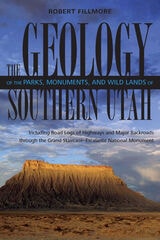
Geology Of Parks, Monuments, and Wildlands of Southern Utah
Robert Fillmore
University of Utah Press, 2000
This detailed interpretive guide explains the forces that created Utah's unforgettable scenery, while providing road logs of highways and major backroads through the Grand Staircase of the Colorado Plateau.
Where in Utah can you find a fossilized ant hill that is at least fifty million years old? Do you know the location of an ancient beach that disappeared along with the dinosaurs that strolled it? Find out in The Geology of the Parks, Monuments, and Wildlands of Southern Utah.
This fascinating and authoritative guide belongs on the dashboard or in the backpack of every visitor to southern Utah or student of its natural history. More than sixty illustrations and nearly three dozen photographs accompany clear explanations of the spectacular geologic features of this landscape, including Capitol Reef, Bryce Canyon, and Zion National Parks, as well as the Grand Staircase-Escalante Monument.
Section I of the volume surveys chronologically the origins of the formations and structural features and the geologic processes that have shaped the Colorado Plateau. Section II provides road logs with mile-by-mile geologic descriptions of key sections of highway traversing this area.
This detailed interpretive guide turns any windshield into a window of opportunity for understanding the forces that created Utah’s unforgettable scenery—whether it be a breathtaking panorama or a dazzling array of fins and fractures, pillars and pedestals, or cliffs and chasms.
Geology and Politics in Frontier Texas, 1845–1909
By Walter Keene Ferguson
University of Texas Press, 1969
Conservation and development of natural resources are issues of critical importance throughout the world. These issues have been matters of public concern in Texas since legislators first adopted the state-sponsored geological survey as a means of extending government funds to private citizens who would help develop and advertise the mineral and agricultural wealth of Texas.
Walter Keene Ferguson examines the relation of politics to geological exploration during a critical period in Texas history—the first half-century of statehood. Although Texas shared its frontier experience with many other areas, it could not rely on federal aid in the form of land grants because the state government controlled the destiny of the public domain at all times. Acrimonious debate between farmers and urbanites of East Texas and pioneer ranchers of arid West Texas rendered the disposition of public lands even more difficult.
As tools for developing and advertising resources, the geological and agricultural surveys of 1858 and 1867 fulfilled the demands of expectant capitalism made by politicians, speculators, and railroad entrepreneurs. Reconnaissance geologists publicized the wealth of Texas.
Drought in 1886 and popular agitation against squandering of state land caused the emergence of a new concept of the geological survey as an instrument of land reform and public assistance. Lobbying by reformers and scientific organizations led to the formation of the Dumble Survey in 1888 and the University of Texas Mineral Survey in 1901. Stratigraphic analysis of the “individualities” of Texas geology helped the state realize its full economic potential and led to legislation to protect public mineral land from exploitation.
The youthful oil industry finally removed geological exploration from the political arena. As part of the University, a permanent Bureau of Economic Geology was established in 1909 to extend the benefits of scientific research to private citizens and state organizations on a nonpartisan basis.
Ferguson’s analysis of geological surveys in Texas contributes to an understanding not only of the geology and history of the state but of the urgent problem of evaluating the natural resources of underdeveloped regions.
Geology of the Great Basin
Bill Fiero
University of Nevada Press, 2009
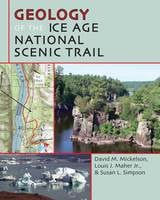
Geology of the Ice Age National Scenic Trail
David M. Mickelson
University of Wisconsin Press, 2011
The Ice Age National Scenic Trail meanders across the state of Wisconsin through scenic glacial terrain dotted with lakes, steep hills, and long, narrow ridges. David M. Mickelson, Louis J. Maher Jr., and Susan L. Simpson bring this landscape to life and help readers understand what Ice Age Wisconsin was like. An overview of Wisconsin’s geology and key geological concepts helps readers understand geological processes, materials, and landforms. The authors detail geological features along each segment of the Ice Age Trail and at each of the nine National Ice Age Scientific Reserve sites.
Readers can experience the Ice Age Trail through more than one hundred full-color photographs, scores of beautiful maps, and helpful diagrams. Science briefs explain glacial features such as eskers, drumlins, and moraines. Geology of the Ice Age National Scenic Trail also includes detailed trail descriptions that are cross referenced with the science briefs to make it easy to find the geological terms used in the trail descriptions. Whatever your level of experience with hiking or knowledge of glaciers, this book will provide lively, informative, and revealing descriptions for a new understanding of the shape of the land beneath our feet.
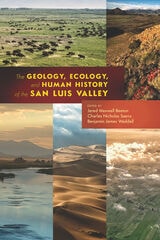
Geology, Ecology, and Human History of the San Luis Valley
Jared Maxwell Beeton
University Press of Colorado, 2020
The first section, “The Geology and Ecology of the San Luis Valley,” surveys the geomorphology, hydrology, animal and plant life, conservation, management, and mining of the valley’s varied terrain. The second section, “Human History of the San Luis Valley,” recounts the valley’s human visitation and settlement, from early indigenous life to Spanish exploration to Hispanic and Japanese settlements. This section introduces readers to the region’s wide range of religious identities—Catholic, Latter-day Saint, Buddhist, Jehovah’s Witness, Amish, and Mennonite—and diverse linguistic traditions, including Spanish, English, Dutch, Danish, Japanese, and Mayan. The final section, “Travel Itineraries,” addresses recreation, specifically fly-fishing and rock climbing.
The book provides a comprehensive overview of the endemic flora and fauna, human history of indigenous lifeways, and diverse settlement patterns that have shaped the region. The Geology, Ecology, and Human History of the San Luis Valley will appeal to students and scholars of geology, ecology, environmental history, and cultural history, as well as residents and tourists seeking to know more about this fascinating and integral part of Colorado and New Mexico.
Contributors:
Benjamin Armstrong, Timothy Armstrong, Deacon Aspinwall, Robert Benson, Lorrie Crawford, Kristy Duran, Jeff Elison, Eric Harmon, Devin Jenkins, Bradley G. Johnson, Robert M. Kirkham, Bessie Konishi, Angie Krall, Richard D. Loosbrock, Richard Madole, A. W. Magee, Victoria Martinez, James McCalpin, Mark Mitchell, R. Nathan Pipitone, Andrew Valdez, Rio de la Vista, Damián Vergara Wilson

Geopolitical Economy
After US Hegemony, Globalization and EmpireRadhika Desai
Pluto Press, 2013
Geopolitical Economy radically reinterprets the historical evolution of the world order, as a multi-polar world emerges from the dust of the financial and economic crisis.
Radhika Desai offers a radical critique of the theories of US hegemony, globalisation and empire which dominate academic international political economy and international relations, revealing their ideological origins in successive failed US attempts at world dominance through the dollar.
Desai revitalizes revolutionary intellectual traditions which combine class and national perspectives on ‘the relations of producing nations’. At a time of global upheavals and profound shifts in the distribution of world power, Geopolitical Economy forges a vivid and compelling account of the historical processes which are shaping the contemporary international order.
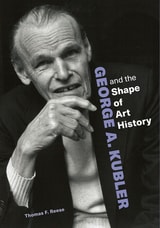
George A. Kubler and the Shape of Art History
Thomas F. Reese
J. Paul Getty Trust, The, 0
Art historian George A. Kubler (1912–1996) was a foundational scholar of ancient American art and archaeology as well as Spanish and Portuguese architecture. During over five decades at Yale University, he published seventeen books that included innovative monographs, major works of synthesis, and an influential theoretical treatise. In this biography, Thomas F. Reese analyzes the early formation, broad career, and writings of Kubler, casting nuanced light on the origins and development of his thinking.
Notable in Reese’s discussion and contextualization of Kubler’s writings is a revealing history and analysis of his Shape of Time—a book so influential to students, scholars, artists, and curious readers in multiple disciplines that it has been continuously in print since 1962. Reese reveals how pivotal its ideas were in Kubler’s own thinking: rather than focusing on problems of form as an ordering principle, he increasingly came to sequence works by how they communicate meaning. The author demonstrates how Kubler, who professed to have little interest in theory, devoted himself to the craft of art history, discovering and charting the rules that guided the propagation of structure and significance through time.

George Cukor
A Double LifePatrick McGilligan
University of Minnesota Press, 2013
One of the highest-paid studio contract directors of his time, George Cukor was nominated five times for an Academy Award as Best Director. In publicity and mystique he was dubbed the “women’s director” for guiding the most sensitive leading ladies to immortal performances, including Greta Garbo, Ingrid Bergman, Judy Garland, and—in ten films, among them The Philadelphia Story and Adam’s Rib—his lifelong friend and collaborator Katharine Hepburn. But behind the “women’s director” label lurked the open secret that set Cukor apart from a generally macho fraternity of directors: he was a homosexual, a rarity among the top echelon. Patrick McGilligan’s biography reveals how Cukor persevered within a system fraught with bigotry while becoming one of Hollywood’s consummate filmmakers.
George F. Kennan and the Origins of Containment, 1944-1946
The Kennan-Lukacs CorrespondenceGeorge F. Kennan & Jonh Lukacs
University of Missouri Press, 1997
In 1945 the United States saw the Soviet Union as its principal ally. By 1947, it saw the Soviet Union as its principal opponent. How did this happen? Historian John Lukacs has provided an answer to this question through an exchange of letters with George F. Kennan. Their correspondence deals with the antecedents of containment between 1944 and 1946, during most of which time Kennan was at the American embassy in Moscow.
Kennan had strong opinions about America's appropriate role during and after World War II and is perhaps best known as the architect of America's containment policy. Much has been written about Kennan and containment, but relatively little is known about the events that made him compose and send the Long Telegram in 1946 that ultimately became the draft for foreign policy dealing with the Soviets in the following forty years.
These letters show Kennan's fear of the extent to which the United States misunderstood the Soviet regime. Especially in 1944, at the time of the Russians' betrayal of the Warsaw Uprising, it became evident that the Soviets were interested in establishing their rigid domination of Eastern and Central Europe and dividing the continent.
Kennan's letters to Lukacs are thorough and detailed, suggesting that the Truman administration was not in the least premature in opposing the Soviet Union. Indeed, both correspondents suggest that these decisions should have been made earlier. This series of letters will add greatly to our understanding of what preceded containment and the Cold War in 1947.
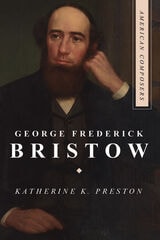
George Frederick Bristow
Katherine K. Preston
University of Illinois Press, 2020
Vivid and richly detailed, George Frederick Bristow enriches our perceptions of musical life in nineteenth-century America.
George Galphin's Intimate Empire
The Creek Indians, Family, and Colonialism in Early AmericaBryan C. Rindfleisch
University of Alabama Press, 2019
A native of Ireland, George Galphin arrived in South Carolina in 1737 and quickly emerged as one of the most proficient deerskin traders in the South. This was due in large part to his marriage to Metawney, a Creek Indian woman from the town of Coweta, who incorporated Galphin into her family and clan, allowing him to establish one of the most profitable merchant companies in North America. As part of his trade operations, Galphin cemented connections with Indigenous and European peoples across the South, while simultaneously securing links to merchants and traders in the British Empire, continental Europe, and beyond.
In George Galphin’s Intimate Empire: The Creek Indians, Family, and Colonialism in Early America, Bryan C. Rindfleisch presents a complex narrative about eighteenth-century cross-cultural relationships. Reconstructing the multilayered bonds forged by Galphin and challenging scholarly understandings of life in the Native South, the American South more broadly, and the Atlantic World, Rindfleisch looks simultaneously at familial, cultural, political, geographical, and commercial ties—examining how eighteenth-century people organized their world, both mentally and physically. He demonstrates how Galphin’s importance emerged through the people with whom he bonded. At their most intimate, Galphin’s multilayered relationships revolved around the Creek, Anglo-French, and African children who comprised his North American family, as well as family and friends on the other side of the Atlantic.
Through extensive research in primary sources, Rindfleisch reconstructs an expansive imperial world that stretches across the American South and reaches into London and includes Indians, Europeans, and Africans who were intimately interconnected and mutually dependent. As a whole, George Galphin’s Intimate Empire provides critical insights into the intensely personal dimensions and cross-cultural contours of the eighteenth-century South and how empire-building and colonialism were, by their very nature, intimate and familial affairs.
George Gershwin
An Intimate PortraitWalter Rimler
University of Illinois Press, 2009
He and his siblings received little love from their mother and no direction from their father. Older brother and lyricist Ira managed to create a home when he married Leonore Strunsky, a hard-edged woman who lived for wealth and status. The closest George came to domesticity was through his longtime relationship with Kay Swift. She was his lover, musical confidante, and fellow composer. But she remained married to another man while he went endlessly from woman to woman. Only in the final hours of his life, when they were separated by a continent, did he realize how much he needed her. Fatally ill, unprotected by (and perhaps estranged from) Ira, he was exiled by Leonore from the house she and the brothers shared, and he died horribly and alone at the age of thirty-eight.
Nor was Gershwin able to find a satisfying musical harbor. For years his songwriting genius could be expressed only in the ephemeral world of show business, as his brilliance as a composer of large-scale works went unrecognized by highbrow music critics. When he resolved this quandary with his opera Porgy and Bess, the critics were unable to understand or validate it. Decades would pass before this, his most ambitious composition, was universally regarded as one of music's lasting treasures and before his stature as a great composer became secure.
In George Gershwin: An Intimate Portrait, Walter Rimler makes use of fresh sources, including newly discovered letters by Kay Swift as well as correspondence between and interviews with intimates of Ira and Leonore Gershwin. It is written with spirited prose and contains more than two dozen photographs.
George Herbert Mead
THE MAKING OF A SOCIAL PRAGMATISTGary A. Cook
University of Illinois Press, 1993
George Hunt
Arizona's Crusading Seven-Term GovernorDavid R. Berman
University of Arizona Press, 2015
Hunt was proof that style and physical appearance neither guarantee nor preclude political success, for the three-hundred-pound man of odd dress and bumbling speech had a political career that spanned the state’s Populism of the 1890s to the 1930s New Deal. Driven by causes, he was very active in public office but took little pleasure in doing the job. Called names by opponents and embarrassed by his lack of formal education, Hunt sometimes showed rage, self-pity, and bitterness at what he saw as betrayals and conspiracies against him.
The author assesses Hunt’s successes and failings as a political leader and take-charge governor struggling to produce results in a political system hostile to executive authority. Berman offers a nuanced look at Arizona’s first governor, providing an important new understanding of Arizona’s complex political history.
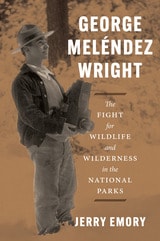
George Meléndez Wright
The Fight for Wildlife and Wilderness in the National ParksJerry Emory
University of Chicago Press, 2023
When twenty-three-year-old George Meléndez Wright arrived in Yosemite National Park in 1927 to work as a ranger naturalist—the first Hispanic person to occupy any professional position in the National Park Service (NPS)—he had already visited every national park in the western United States, including McKinley (now Denali) in Alaska. Two years later, he would organize the first science-based wildlife survey of the western parks, forever changing how the NPS would manage wildlife and natural resources. At a time when national parks routinely fed bears garbage as part of “shows” and killed “bad” predators like wolves, mountain lions, and coyotes, Wright’s new ideas for conservation set the stage for the modern scientific management of parks and other public lands.
Tragically, Wright died in a 1936 car accident while working to establish parks and wildlife refuges on the US-Mexico border. To this day, he remains a celebrated figure among conservationists, wildlife experts, and park managers. In this book, Jerry Emory, a conservationist and writer connected to Wright’s family, draws on hundreds of letters, field notes, archival research, interviews, and more to offer both a biography of Wright and a historical account of a crucial period in the evolution of US parks and the wilderness movement. With a foreword by former NPS director Jonathan B. Jarvis, George Meléndez Wright is a celebration of Wright’s unique upbringing, dynamism, and enduring vision that places him at last in the pantheon of the great American conservationists.
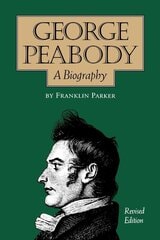
George Peabody, A Biography
Franklin Parker
Vanderbilt University Press, 1995

George Sanders, Zsa Zsa, and Me
David R. Slavitt
Northwestern University Press, 2009
Taking its inspiration from Sanders’s own autobiography Memoirs of a Professional Cad (1960), this book is part witty, bawdy, and irreverent memoir, part moving meditation on the price of fame; like most of David Slavitt’s work, it defies easy categorization.In George Sanders, Zsa Zsa, and Me, Slavittlooks back to his career as a film critic in the glamorous—at least superficially—world of 1950s Hollywood, when he traveled in circles that included the talented British actor George Sanders (1906–1972) and his then-wife, Zsa Zsa Gabor, who was talented at, well, being famous.
Sanders, who seemed to maintain an ironic detachment from roles that were often beneath him, nonetheless couldn’t bear the decline of his later years and committed suicide at the age of sixty-five. Darkly humorous to the end, his note read, "Dear World, I am leaving because I am bored. I feel I have lived long enough. I am leaving you with your worries in this sweet cesspool. Good luck." Zsa Zsa, on the other hand, remains in the headlines (with her dubiously named husband Frédéric Prinz von Anhalt) at age ninety-two. Although he punctuates his story with witty asides—the author’s encounter with Marilyn Monroe is particularly memorable—Slavitt turns a critic’s eye toward questions of talent and art, while also tackling the difficult and universal questions of aging, relationships, and mortality.

George Szell's Reign
Behind the Scenes with the Cleveland OrchestraMarcia Hansen Kraus
University of Illinois Press, 2019
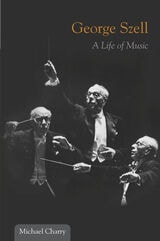
George Szell
A Life of MusicMichael Charry
University of Illinois Press, 2014

George W Bush's Healthy Fore
J Vaughn
University Press of Colorado, 2005
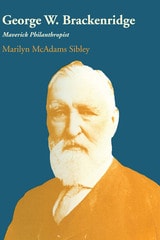
George W. Brackenridge
Maverick PhilanthropistBy Marilyn McAdams Sibley
University of Texas Press, 1973
George W. Brackenridge (1832–1920) was a paradox to his fellow Texans. A Republican in a solidly Democratic state, a financier in a cattleman's country, a Prohibitionist in the goodtime town of San Antonio, he devoted his energies to making a fortune only to give it to philanthropic causes.
Indiana born, Brackenridge came to Texas in 1853, but left the state during the Civil War to serve as U.S. Treasury agent and engage in the wartime cotton trade. Later he settled in San Antonio, where he founded a bank and invested in railroads, utilities, and other enterprises.
Some of Brackenridge's contemporaries never forgave him for his Civil War career, but others knew him as a public-spirited citizen, educator, and advocate of civil rights. He cared little for what others thought of him. Yet, he confided once in a rare interview that his fondest ambition was to leave the world a better place for his having lived in it. To this end, he gave generously of himself and his means.
His best-known benefaction is Brackenridge Park, which he gave to the city of San Antonio, but most of his contributions were in the field of education. As regent of the University of Texas for more than twenty-five years, he gave the institution its first dormitory, a large tract of land in Austin, and innumerable smaller gifts. He also offered to underwrite the expenses of the University when Governor James E. Ferguson vetoed the appropriation bill for 1917–1919.
Other educational institutions to benefit from his largess were the public schools of San Antonio, a Negro college in Seguin, and the University of Texas Medical Branch at Galveston. In addition, he assisted individual students, especially women, through scholarships and loans.
Believing that the betterment of humanity lay in education, Brackenridge arranged for the continuation of his philanthropies. By his will he created the George W. Brackenridge Foundation, the first of its kind in Texas and one of the first in the United States.
Marilyn McAdams Sibley's study of George W. Brackenridge is the first biography of an important and, for his time, unusual Texan. It presents new material concerning the Mexican cotton trade during the Civil War, on the beginnings of banking in Texas, and on higher education in Texas.

George W. Bush's Healthy Forests
Reframing the Environmental DebateJacqueline Vaughn
University Press of Colorado, 2005
The authors show how the administration used news events such as wildfires to propel legislation through Congress. Focusing blame for wildfires on legal obstacles and environmentalists' use of appeals to challenge fuel-reduction projects, the administration restricted opportunities for environmental analysis, administrative appeals, and litigation. The authors argue that these tools have a history of use by diverse interests and have long protected Americans' right to question government decisions.
This readable study identifies the players, events, and strategies that expedited the policy shift and contextualizes it in the president's career and in legislative and administrative history. Revealing a policy change with major implications for the future of public lands and public process, George W. Bush's Healthy Forests will become required reading in environmental studies and political science.
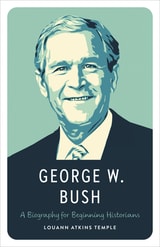
George W. Bush
A Biography for Beginning HistoriansLouann Atkins Temple
University of Texas Press, 2025
A brief biography of George W. Bush for young readers.
Louann Temple is a lifelong Texan with a personal passion for arts and education who believes that biography, with its emphasis on personalities, is ideal for introducing young people to history, with its focus on events. Temple is uniquely situated to write this biography for young readers, as she has been personally acquainted with many important people in presidential history, President George W. Bush included, and she has mentored countless middle and high school students, preparing them for college admission.
George W. Bush highlights the key events in the life of the forty-third president; explores the life lessons afforded by his legacy; and reflects on the broad historical issues during his time in the White House as president from 2001 to 2009. George W. Bush’s legacy as president is significant as he guided America through the events of 9/11. Enhanced with a carefully curated selection of black and white photographs from three presidential libraries, this biography for beginning historians is poised to bring the best of biography and history to a new generation of readers.
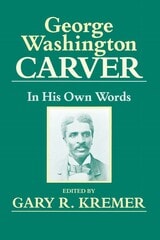
George Washington Carver
In His Own WordsEdited by Gary R. Kremer
University of Missouri Press, 1987
George Washington Carver (1864-1943), best known for his work as a scientist and a botanist, was an anomaly in his own time—a black man praised by white America.
This selection of his letters and other writings reveals both the human side of Carver and the forces that shaped his creative genius. They show us a Carver who was both manipulated and manipulative who had inner tensions and anxieties. But perhaps more than anything else, these letters allow us to see Carver's deep love for his fellow man, whether manifested in his efforts to treat polio victims in the 1930s or in his incredibly intense and emotionally charged friendships that lasted a lifetime.
The editor has furnished commentary between letters to set them in context.
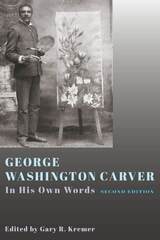
George Washington Carver
In His Own Words, Second EditionGary R. Kremer
University of Missouri Press, 2017
With a new chapter on the oral history interviews Dr. Kremer conducted (several years after publication of the first edition) with people who knew Carver personally, and the addition of newly uncovered documents and a bank of impressive photographs of Carver and some of his friends, this second edition of our classic title commemorates the 75th anniversary of Carver’s death on January 5, 2018.
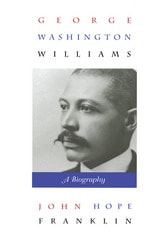
George Washington Williams
A BiographyJohn Hope Franklin
Duke University Press, 1998
Williams, who lived from 1849 to 1891, had a remarkable career as soldier, minister, journalist, lawyer, politician, freelance diplomat, and African traveler, as well as a historian. While Franklin reveals the accomplishments of this neglected figure and emphasizes the racism that curtailed Williams’s many talents, he also highlights the personal weaknesses that damaged Williams’s relationships and career. Williams led the way in presenting African American history accurately through the use of oral history and archival research, sought to legitimize it as a field of historical study, and spoke out in support of an American Negro Historical Society and as a critic of European imperialism in Africa. He also became erratic and faithless to his family and creditors and died at the age of forty-one, destitute and alienated from family and friends. George Washington Williams is nothing less than a classic biography of a brilliant though flawed individual whose History of the Negro Race in America remains a landmark in African American history and American intellectual history.
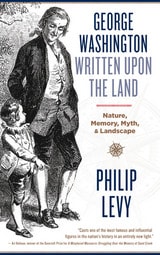
George Washington Written Upon the Land
Nature, Memory, Myth, and LandscapePhilip Levy
West Virginia University Press, 2015
George Washington’s childhood is famously the most elusive part of his life story. For centuries biographers have struggled with a lack of period documentation and an absence of late-in-life reflection in trying to imagine Washington’s formative years.
In George Washington Written upon the Land, Philip Levy explores this most famous of American childhoods through its relationship to the Virginia farm where much of it took place. Using approaches from biography, archaeology, folklore, and studies of landscape and material culture, Levy focuses on how different ideas about Washington’s childhood functioned—what sorts of lessons they sought to teach and how different epochs and writers understood the man and the past itself.
In a suggestive and far-reaching final chapter, Levy argues that Washington was present at the onset of the Anthropocene—the geologic era when human activity began to have a significant impact on world ecosystems. Interpreting Washington’s childhood farm through the lens of “big” history, he encourages scholars to break down boundaries between science and social science and between human and nonhuman.
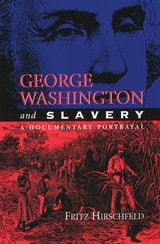
George Washington and Slavery
A Documentary PortrayalFritz Hirschfeld
University of Missouri Press, 1997
"I never mean (unless some particular circumstance should compel me to it) to possess another slave by purchase; it being among my first wishes to see some plan adopted, by which slavery in this country may be abolished by slow, sure and imperceptible degrees."—George Washington, September 9, 1786
No history of racism in America can be considered complete without taking into account the role that George Washington—the principal founding father—played in helping to mold the racist cast of the new nation. Because General Washington—the universally acknowledged hero of the Revolutionary War—in the postwar period uniquely combined the moral authority, personal prestige, and political power to influence significantly the course and the outcome of the slavery debate, his opinions on the subject of slaves and slavery are of crucial importance to understanding how racism succeeded in becoming an integral and official part of the national fabric during its formative stages.The successful end of the War for Independence in 1783 brought George Washington face-to-face with a fundamental dilemma: how to reconcile the proclaimed ideals of the revolution with the established institution of slavery. So long as black human beings in America could legally be considered the chattel property of whites, the rhetoric of equality and individual freedom was hollow. Progressive voices urged immediate emancipation as the only way to resolve the contradiction; the Southern slave owners, of course, stood firm for the status quo. Washington was caught squarely in the middle.
As a Virginia plantation proprietor and a lifelong slaveholder, Washington had a substantial private stake in the economic slave system of the South. However, in his role as the acknowledged political leader of the country, his overriding concern was the preservation of the Union. If Washington publicly supported emancipation, he would almost certainly have to set an example and take steps to dispose of his Mount Vernon slaves. If he spoke out on the side of slavery, how could he legitimately and conscientiously expect to uphold and defend the humanistic goals and moral imperatives of the new nation as expressed in the Declaration of Independence and embodied in the Constitution and the Bill of Rights? His was a balancing act that became more and more difficult to sustain with the passing years.
Relying primarily on Washington's own words—his correspondence, diaries, and other written records—supplemented by letters, comments, and eyewitness reports of family members, friends, employees, aides, correspondents, colleagues, and visitors to Mount Vernon, together with contemporary newspaper clippings and official documents pertaining to Washington's relationships with African Americans, Fritz Hirschfeld traces Washington's transition from a conventional slaveholder to a lukewarm abolitionist. George Washington and Slavery will be an essential addition to the historiography of eighteenth-century America and of Washington himself.
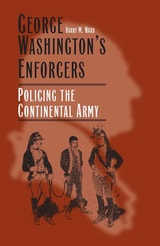
George Washington's Enforcers
Policing the Continental ArmyHarry M. Ward
Southern Illinois University Press, 2006
A well-disciplined army was vital to win American independence, but policing soldiers during the Revolution presented challenges. George Washington’s Enforcers: Policing the Continental Army examines how justice was left to the overlapping duties of special army personnel and how an improvised police force imposed rules and regulations on the common soldier. Historian Harry M. Ward describes these methods of police enforcement, emphasizing the brutality experienced by the enlisted men who were punished severely for even light transgressions. This volume explores the influences that shaped army practice and the quality of the soldiery, the enforcement of military justice, the use of guards as military police, and the application of punishment.
Washington’s army, which adopted the organization and justice code of the British army, labored under the direction of ill-trained and arrogant officers. Ward relates how the enlisted men, who had a propensity for troublemaking and desertion, not only were victims of the double standard that existed between officers and regular troops but also lacked legal protection in the army. The enforcement of military justice afforded the accused with little due process support.
Ward discusses the duties of the various personnel responsible for training and enforcing the standards of behavior, including duty officers, adjutants, brigade majors, inspectors, and sergeant majors. He includes the roles of life guards, camp guards, quarter guards, picket men, and safe guards, whose responsibilities ranged from escorting the commander in chief, intercepting spies and stragglers, and protecting farmers from marauding soldiers to searching for deserters, rounding up unauthorized personnel, and looking for delinquents in local towns and taverns.
George Washington’s Enforcers, which includes sixteen illustrations, also addresses the executions of the period, as both ritual and spectacle, and the deterrent value of capital punishment. Ward explains how Washington himself mixed clemency with severity and examines how army policies tested the mettle of this chief disciplinarian, who operated by the dictates of military necessity as perceived at the time.
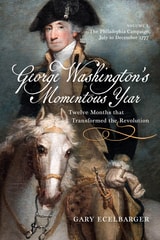
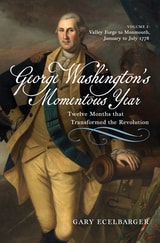
George Washington's Momentous Year
Twelve Months that Transformed the Revolution, Vol. I: The Philadelphia Campaign, July to December 1777Gary Ecelbarger
Westholme Publishing, 2027
WINNER OF THE 2025 FRAUNCES TAVERN MUSEUM BOOK AWARD
On July 4, 1777, George Washington was so consumed with where the British would strike that he ignored the nation’s first birthday. One year later, Washington created an independence celebration so spectacular that soldiers proudly recalled it in their old age. As historian Gary Ecelbarger explains in George Washington’s Momentous Year: Twelve Months that Transformed the Revolution, it was between these two antithetical anniversaries where the fight for independence under Washington’s leadership changed from a precarious regional struggle to a global conflict. In August 1777, the British landed at Head of Elk, Maryland, and defeated the Continentals at Brandywine, White Horse Tavern, and Paoli, before occupying Philadelphia. Over the next several months, the forces clashed at Germantown, Red Bank, and White Marsh, and in December, Washington and his troops fell back to Valley Forge. Despite the immediacy of the Philadelphia campaign, Washington remained in charge of the entire Continental effort, and welcomed the American victory at Saratoga that secured an alliance with France. In the new year, British forces were ordered back to New York, and as they set out across New Jersey, a newly invigorated American army engaged them at Monmouth Courthouse. This was Washington’s final time leading troops in battle and ended with his Continentals masters of the field.
George Washington's Momentous Year
Twelve Months that Transformed the Revolution—Vol. 2: Valley Forge to Monmouth, January to July 1778Gary Ecelbarger
Westholme Publishing, 2025
This engrossing history of the most significant twelve months of the American Revolution enables the reader to understand and appreciate the astounding accomplishment of George Washington and his military aides: the simultaneous emergence of a new, capable army and a strategy that would win the War for Independence.
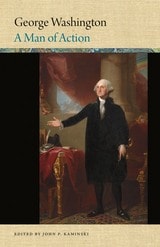
George Washington
A Man of ActionJohn P. Kaminski
Wisconsin Historical Society Press, 2017
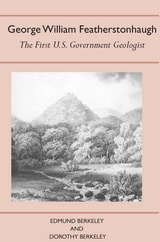
George William Featherstonhaugh
The First U.S. Government GeologistEdmund Berkeley and Dororthy Berkeley
University of Alabama Press, 1988
—Choice
"For anyone interested in the history of American geology, knowledge of G. W. Featherstonhaugh (1780-1866) is both essential and hard to obtain. He was the force behind the first railroad in America; a pioneer in scientific agriculture; an essayist, poet, and novelist; a lobbyist; a linguist; and a daring diplomat who saved the king and queen of France from certain death. [Yet] his strongest tie was with the geology. [This] biography is interesting, well researched and well written. It is a balanced study of a complex man who did so much work and generated such controversy."
—Earth Sciences History
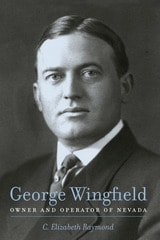
George Wingfield
Owner And Operator Of NevadaC. Elizabeth Raymond
University of Nevada Press, 2013
Banker, hotel owner, and political powerhouse George Wingfield was a significant figure in Nevada history. He was influential in developing Reno's gambling-and-divorce-related tourism. Raymond's biography depicts the man and his times, from his birth in Arkansas in 1876 until his death in Reno in 1959. Wilbur S. Shepperson Series in History and Humanities.
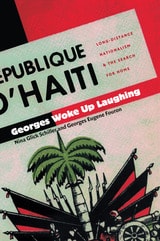
Georges Woke Up Laughing
Long-Distance Nationalism and the Search for HomeNina Glick Schiller and Georges Eugene Fouron
Duke University Press, 2001
According to a long-standing myth, once emigrants leave their homelands—particularly if they emigrate to the United States—they sever old nationalistic ties, assimilate, and happily live the American dream. In fact, many migrants remain intimately and integrally tied to their ancestral homeland, sometimes even after they become legal citizens of another country. In Georges Woke Up Laughing the authors reveal the realities and dilemmas that underlie the efforts of long-distance nationalists to redefine citizenship, race, nationality, and political loyalty. Through discussions of the history and economics that link the United States with countries around the world, Glick Schiller and Fouron highlight the forces that shape emigrants’ experiences of government and citizenship and create a transborder citizenry. Arguing that governments of many countries today have almost no power to implement policies that will assist their citizens, the authors provide insights into the ongoing sociological, anthropological, and political effects of globalization.
Georges Woke up Laughing will entertain and inform those who are concerned about the rights of people and the power of their governments within the globalizing economy.
“In my dream I was young and in Haiti with my friends, laughing, joking, and having a wonderful time. I was walking down the main street of my hometown of Aux Cayes. The sun was shining, the streets were clean, and the port was bustling with ships. At first I was laughing because of the feeling of happiness that stayed with me, even after I woke up. I tried to explain my wonderful dream to my wife, Rolande. Then I laughed again but this time not from joy. I had been dreaming of a Haiti that never was.”—from Georges Woke Up Laughing
Georgia Civil War Manuscript Collections
An Annotated BibliographyDavid H. Slay
University of Alabama Press, 2011

Georgia O'Keeffe
A LifeRoxana Robinson
Brandeis University Press, 2020
When Roxana Robinson’s definitive biography of O’Keeffe was first published in 1989, it received rave reviews and was named a New York Times Notable Book of the Year. This new edition features a new foreword by the author setting O’Keefe in an artistic context over the last thirty years since the book was first published, as well as previously unpublished letters of the young O’Keeffe to her lover, Arthur MacMahon. It also relates the story of Robinson’s own encounter with the artist. As interest in O’Keeffe continues to grow among museum-goers and scholars alike, this book remains indispensable for understanding her life and art.
Georgia
Pawn in the New Great GamePer Gahrton
Pluto Press, 2010
The 2008 Ossetia War underlined the fact that Georgia is caught in a political struggle between East and West. Per Gahrton analyses American and Russian policy towards the country and provides a firsthand account of the Rose Revolution of 2003, its origin and aftermath.
The book traces the increasing US involvement in Georgia and the Russian reaction of anger, sanctions and, eventually, invasion. Gahrton's analysis is based on interviews with key politicians and his experience as the rapporteur of the European Parliament on South Caucasus. At centre stage is the growing opposition against authoritarian aspects of President Mikheil Saakashvili’s regime and the mysterious death of Prime Minister Zhvania in 2005. The book also asks if the Rose Revolution was a conspiracy or a genuine popular uprising.
This truly authoritative account of Georgia is a must for students studying international relations in the aftermath of The Cold War.
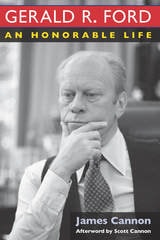
Gerald R. Ford
An Honorable LifeJames Cannon
University of Michigan Press, 2013
“Not since Harry Truman succeeded Franklin D. Roosevelt twenty-nine years earlier had the American people known so little about a man who had stepped forward from obscurity to take the oath of office as President of the United States.”
—from Chapter 4
This is a comprehensive narrative account of the life of Gerald Ford written by one of his closest advisers, James Cannon. Written with unique insight and benefiting from personal interviews with President Ford in his last years, Gerald R. Ford: An Honorable Lifeis James Cannon’s final look at the simple and honest man from the Midwest.
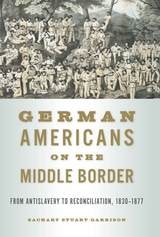
German Americans on the Middle Border
From Antislavery to Reconciliation, 1830–1877Zachary Stuart Garrison
Southern Illinois University Press, 2020
Liberal German immigrants, having escaped the European aristocracy who undermined their revolution and the formation of a free nation, viewed slaveholders as a specter of European feudalism. During the antebellum years, many liberal German Americans feared slavery would inhibit westward progress, and so they embraced the Free Soil and Free Labor movements and the new Republican Party. Most joined the Union ranks during the Civil War.
After the war, in a region largely opposed to black citizenship and Radical Republican rule, German Americans were seen as dangerous outsiders. Facing a conservative resurgence, liberal German Republicans employed the same line of reasoning they had once used to justify emancipation: A united nation required the end of both federal occupation in the South and special protections for African Americans. Having played a role in securing the Union, Germans largely abandoned the freedmen and freedwomen. They adopted reconciliation in order to secure their place in the reunified nation. Garrison’s unique transnational perspective to the sectional crisis, the Civil War, and the postwar era complicates our understanding of German Americans on the middle border.
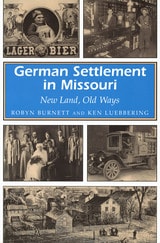
German Settlement in Missouri
New Land, Old WaysRobyn Burnett & Ken Luebbering
University of Missouri Press, 1996
German immigrants came to America for two main reasons: to seek opportunities in the New World, and to avoid political and economic problems in Europe. In German Settlement in Missouri, Robyn Burnett and Ken Luebbering demonstrate the crucial role that the German immigrants and their descendants played in the settlement and development of Missouri's architectural, political, religious, economic, and social landscape. Relying heavily on unpublished memoirs, letters, diaries, and official records, the authors provide important new narratives and firsthand commentary from the immigrants themselves.
Between 1800 and 1919, more than 7 million people came to the United States from German-speaking lands. The German immigrants established towns as they moved up the Missouri River into the frontier, resuming their traditional ways as they settled. As a result, the culture of the frontier changed dramatically. The Germans farmed differently from their American neighbors. They started vineyards and wineries, published German-language newspapers, and entered Missouri politics.
The decades following the Civil War brought the golden age of German culture in the state. The populations of many small towns were entirely German, and traditions from the homeland thrived. German-language schools, publications, and church services were common. As the German businesses in St. Louis and other towns flourished, the immigrants and their descendants prospered. The loyalty of the Missouri Germans was tested in World War I, and the anti-immigrant sentiment during the war and the period of prohibition after it dealt serious blows to their culture. However, German traditions had already found their way into mainstream American life.
Informative and clearly written, German Settlement in Missouri will be of interest to all readers, especially those interested in ethnic history.
German Writing, American Reading
Women and the Import of Fiction, 1866–1917Lynne Tatlock
The Ohio State University Press, 2012
Germans in Illinois
Miranda E. Wilkerson and Heather Richmond
Southern Illinois University Press, 2019
The promise of cheap land and fertile soil in rural areas and emerging industries in cities attracted three major waves of German-speaking immigrants to Illinois in search of freedom and economic opportunities. Before long the state was dotted with German churches, schools, cultural institutions, and place names. German churches served not only as meeting places but also as a means of keeping language and culture alive. Names of Illinois cities and towns of German origin include New Baden, Darmstadt, Bismarck, and Hamburg. In Chicago, many streets, parks, and buildings bear German names, including Altgeld Street, Germania Place, Humboldt Park, and Goethe Elementary School. Some of the most lively and ubiquitous organizations, such as Sängerbunde, or singer societies, and the Turnverein, or Turner Society, also preserved a bit of the Fatherland.
Exploring the complex and ever-evolving German American identity in the growing diversity of Illinois’s linguistic and ethnic landscape, this book contextualizes their experiences and corrects widely held assumptions about assimilation and cultural identity. Federal census data, photographs, lively biographical sketches, and newly created maps bring the complex story of German immigration to life. The generously illustrated volume also features detailed notes, suggestions for further reading, and an annotated list of books, journal articles, and other sources of information.
Germans in Michigan
Jeremy W. Kilar
Michigan State University Press, 2002
Germans are the largest ancestral group in Michigan, representing over 2.6 million descendants or 22% of the state’s population. Yet, unlike other immigrant groups, Germans have not retained their linguistic and cultural traditions as part of a distinct ethnic identity. The Bavarian villages of Frankenmuth and Gaylord stand as testaments to the once proud and vigorous German communities that dotted both rural and urban Michigan landscapes. Jeremy W. Kilar explores the social forces that transformed Germans from inward-looking immigrants to citizens in the cultural mainstream. Germans in Michigan is a story of assimilation and renewal and as such reveals the complexities of Americanization and immigration as social forces.