Results by title
8812 books match the query 'Political Science' and 228 start with g

Good Fences, Bad Neighbors
Border Fixity and International ConflictBoaz Atzili
University of Chicago Press, 2011
Border fixity—the proscription of foreign conquest and the annexation of homeland territory—has, since World War II, become a powerful norm in world politics. This development has been said to increase stability and peace in international relations. Yet, in a world in which it is unacceptable to challenge international borders by force, sociopolitically weak states remain a significant source of widespread conflict, war, and instability.
In this book, Boaz Atzili argues that the process of state building has long been influenced by external territorial pressures and competition, with the absence of border fixity contributing to the evolution of strong states—and its presence to the survival of weak ones. What results from this norm, he argues, are conditions that make internal conflict and the spillover of interstate war more likely. Using a comparison of historical and contemporary case studies, Atzili sheds light on the relationship between state weakness and conflict. His argument that under some circumstances an international norm that was established to preserve the peace may actually create conditions that are ripe for war is sure to generate debate and shed light on the dynamics of continuing conflict in the twenty-first century.
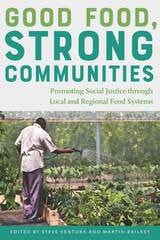
Good Food, Strong Communities
Promoting Social Justice through Local and Regional Food SystemsSteve Ventura and Martin Bailkey
University of Iowa Press, 2017
The approach begins by laying out the basic principles of food security and food justice in light of the diversity of food system practices and innovations in America’s cities. The contributing authors address land access for urban agriculture, debates over city farming, new possibilities in food processing, and the marketing of healthy food. They put these basic elements—land, production, processing, and marketing—in the context of municipal policy, education, and food justice and sovereignty, particularly for people of color. While the path of a food product from its producer to its consumer may seem straightforward on the surface, the apparent simplicity hides the complex logistical—and value-laden—factors that create and maintain a food system. This book helps readers understand how a food system functions and how individual and community initiatives can lessen the problems associated with an industrialized food system.
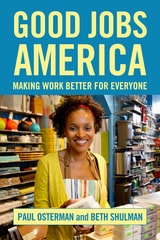
Good Jobs America
Paul Osterman
Russell Sage Foundation, 2012
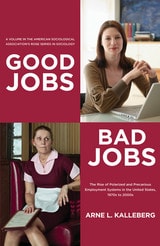
Good Jobs, Bad Jobs
The Rise of Polarized and Precarious Employment Systems in the United States, 1970s-2000sArne L. Kalleberg
Russell Sage Foundation, 2011
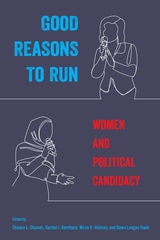
Good Reasons to Run
Women and Political CandidacyEdited by Shauna L. Shames, Rachel I. Bernhard, Mirya R. Holman, and Dawn Langan Teele
Temple University Press, 2020
After the 2016 U.S. Presidential election, a large cohort of women emerged to run for office. Their efforts changed the landscape of candidates and representation. However, women are still far less likely than men to seek elective office, and face biases and obstacles in campaigns. (Women running for Congress make twice as many phone calls as men to raise the same contributions.)
The editors and contributors to Good Reasons to Run, a mix of scholars and practitioners, examine the reasons why women run—and do not run—for political office. They focus on the opportunities, policies, and structures that promote women’s candidacies. How do nonprofits help recruit and finance women as candidates? And what role does money play in women’s campaigns?
The essays in Good Reasons to Run ask not just who wants to run, but how to activate and encourage such ambition among a larger population of potential female candidates while also increasing the diversity of women running for office.
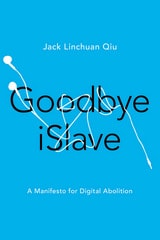
Goodbye iSlave
A Manifesto for Digital AbolitionJack Linchuan Qiu
University of Illinois Press, 2016
Focusing on the alliance between Apple and the notorious Taiwanese manufacturer Foxconn, Jack Linchuan Qiu examines how corporations and governments everywhere collude to build systems of domination, exploitation, and alienation. His interviews, news analysis, and first-hand observation show the circumstances faced by Foxconn workers--circumstances with vivid parallels in the Atlantic slave trade. Ironically, the fanatic consumption of digital media also creates compulsive free labor that constitutes a form of bondage for the user. Arguing as a digital abolitionist, Qiu draws inspiration from transborder activist groups and incidents of grassroots resistance to make a passionate plea aimed at uniting--and liberating--the forgotten workers who make our twenty-first-century lives possible.
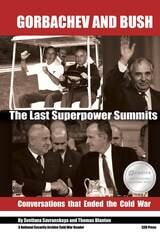
Gorbachev and Bush
The Last Superpower Summits. Conversations that Ended the Cold WarThe National Security Archive Savranskaya
Central European University Press, 2020
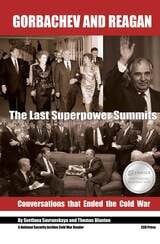
Gorbachev and Reagan
The Last Superpower Summits. Conversations that Ended the Cold WarThe National Security Archive Savranskaya
Central European University Press, 2020
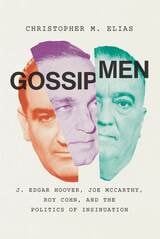
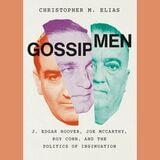
Gossip Men
J. Edgar Hoover, Joe McCarthy, Roy Cohn, and the Politics of InsinuationChristopher M. Elias
University of Chicago Press, 2021
By using gossip as a lens to examine profound issues of state security and institutional power, Elias thoroughly transforms our understanding of the development of modern American political culture.
Gossip Men
J. Edgar Hoover, Joe McCarthy, Roy Cohn, and the Politics of InsinuationChristopher M. Elias
University of Chicago Press, 2021
This is an auto-narrated audiobook edition of this book.
J. Edgar Hoover, Joseph McCarthy, and Roy Cohn were titanic figures in midcentury America, wielding national power in government and the legal system through intimidation and insinuation. Hoover’s FBI thrived on secrecy, threats, and illegal surveillance, while McCarthy and Cohn will forever be associated with the infamous anticommunist smear campaign of the early 1950s, which culminated in McCarthy’s public disgrace during televised Senate hearings. In Gossip Men, Christopher M. Elias takes a probing look at these tarnished figures to reveal a host of startling new connections among gender, sexuality, and national security in twentieth-century American politics. Elias illustrates how these three men solidified their power through the skillful use of deliberately misleading techniques like implication, hyperbole, and photographic manipulation. Just as provocatively, he shows that the American people of the 1950s were particularly primed to accept these coded threats because they were already familiar with such tactics from widely popular gossip magazines.
By using gossip as a lens to examine profound issues of state security and institutional power, Elias thoroughly transforms our understanding of the development of modern American political culture.
Governance Feminism
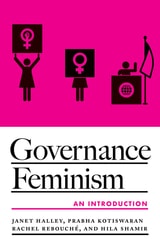
An IntroductionJanet Halley
University of Minnesota Press, 2018
Describing and assessing feminist inroads into the state
Feminists walk the halls of power. Governance Feminism: An Introduction shows how some feminists and feminist ideas—but by no means all—have entered into state and state-like power in recent years. Being a feminist can qualify you for a job in the United Nations, the World Bank, the International Criminal Court, the local prosecutor’s office, or the child welfare bureaucracy. Feminists have built institutions and participate in governance.
The authors argue that governance feminism is institutionally diverse and globally distributed. It emerges from grassroots activism as well as statutes and treaties, as crime control and as immanent bureaucracy. Conflicts among feminists—global North and South; left, center, and right—emerge as struggles over governance. This volume collects examples from the United States, Israel, India, and from transnational human rights law.
Governance feminism poses new challenges for feminists: How shall we assess our successes and failures? What responsibility do we shoulder for the outcomes of our work? For the compromises and strange bedfellows we took on along the way?
Can feminism foster a critique of its own successes? This volume offers a pathway to critical engagement with these pressing and significant questions.
Governance Feminism
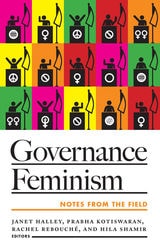
Notes from the FieldJanet Halley
University of Minnesota Press, 2019
An interdisciplinary, multifaceted look at feminist engagements with governance across the global North and global South
Governance Feminism: Notes from the Field brings together nineteen chapters from leading feminist scholars and activists to critically describe and assess contemporary feminist engagements with state and state-like power. Gathering examples from North America, South America, Europe, Asia, and the Middle East, it complements and expands on the companion volume Governance Feminism: An Introduction. Its chapters argue that governance feminism (GF) is institutionally diverse and globally distributed—emerging from traditional sites of state power as well as from various forms of governance and operating at the grassroots level, in the private sector, in civil society, and in international relations.
The book begins by confronting the key role that crime and punishment play in GFeminist projects. Here, contributors explore the ideological and political conditions under which this branch of GF became so robust and rethink the carceral turn. Other chapters speak to another face of GFeminism: feminists finding, in mundane and seemingly unspectacular bureaucratic tools, leverage to bring about change in policy and governance practices. Several contributions highlight the political, strategic, and ethical challenges that feminists and LGBT activists must negotiate to play on the governmental field. The book concludes with a focus on feminist interventions in postcolonial legal and political orders, looking at new policy spaces opened up by conflict, postconflict, and occupation.
Providing a clear, cross-cutting, critical lens through which to map developments in feminist governance around the world, Governance Feminism: Notes from the Field makes sense of the costs and benefits of current feminist realities to reimagine feminist futures.
Contributors: Libby Adler, Northeastern U; Aziza Ahmed, Northeastern U; Elizabeth Bernstein, Barnard College; Amy J. Cohen, Ohio State U; Karen Engle, U of Texas at Austin; Jacob Gersen, Harvard U; Leigh Goodmark, U of Maryland; Aeyal Gross, Tel Aviv U; Aya Gruber, U of Colorado, Boulder; Janet Halley, Harvard U; Rema Hammami, Birzeit U, Palestine; Vanja Hamzić, U of London; Isabel Cristina Jaramillo-Sierra; Prabha Kotiswaran, King’s College London; Maleiha Malik, King’s College London; Vasuki Nesiah, New York U; Dianne Otto, Melbourne Law School; Helen Reece; Darren Rosenblum, Pace U; Jeannie Suk Gersen, Harvard U; Mariana Valverde, U of Toronto.
Governance and Foreign Investment in China, India, and Taiwan
Credibility, Flexibility, and International BusinessYu Zheng
University of Michigan Press, 2014
Yu Zheng challenges the idea that democracy is the prerequisite for developing countries to attract foreign direct investment (FDI) and promote economic growth. He examines the relationship between political institutions and FDI through the use of cross-national analysis and case studies of three rapidly growing Asian economies with a focus on the role of microinstitutional “special economic zones” (SEZ).
China’s authoritarian system allows for bold, radical economic reform, but China has attracted FDI largely because of its increasingly credible investment environment as well as its central and local governments’ efforts to overcome constraints on investment. India’s democratic institutions provide more political assurance to foreign investors, but its market became conducive to FDI only when the government adopted more flexible investment policies. Taiwan’s democratic transition shifted its balance of policy credibility and flexibility, which was essential for the nation’s economic takeoff and sustained growth.
Zheng concludes that a more accurate understanding of the relationship between political institutions and FDI comes from careful analysis of institutional arrangements that entail a trade-off between credibility and flexibility of governance.
Governing Abroad
Coalition Politics and Foreign Policy in EuropeSibel Oktay
University of Michigan Press, 2022
From Austria to New Zealand, coalition governments often pave the road to foreign policy. In Western Europe, nearly 90 percent of postwar governments include two or more political parties. Israel, the Middle East’s only consolidated democracy according to many, has never experienced single-party rule in its history. Even the United Kingdom, known for its long streak of single-party rule, now navigates multiparty cabinets. Coalitions are everywhere, but we still have little understanding of how they act in foreign affairs. History shows that coalitions can sometime engage in powerful international commitments such as participating in military operations, but at other times, they postpone their decisions, water down their policy positions, or promise to do less than they otherwise would. What explains these differences in behavior?
Governing Abroad unpacks the little-known world of coalition governments to find out. Oktay argues that the specific constellation of parties in government explains why some coalitions can make more assertive foreign policy decisions than others. Building on the rich literature in political science on coalitions, legislatures, and voting behavior, the book weaves together sophisticated statistical analyses of foreign policy events across thirty European countries alongside in-depth case studies from Denmark, the Netherlands, and Finland. It brings political parties back into the study of foreign policy, demonstrating that the size of the coalition, the ideological proximity of the governing parties, and their relationship with the parliamentary opposition together influence the government’s ability to act in the international arena. This book challenges our existing perceptions about the constraints and weaknesses of coalition governments. It sheds new light on the conditions that allow them to act decisively abroad.
Governing American Cities
Inter-Ethnic Coalitions, Competition, and ConflictMichael Jones-Correa
Russell Sage Foundation, 2001
Governing Divided Societies
Habsburg Austria’s Democratic Legacy and the Czechoslovak First RepublicPhilip Howe
Central European University Press, 2026
Consociationalism has proven its worth as a model for describing contemporary democracies and diagnosing their ills. By exploring the institutions and practices of the Habsburg Monarchy before 1918 and the Czechoslovak First Republic, Howe, Lorman, and Miller prove the value of the consociational theory in analyzing the past. They hold that a multitude of parties, frequent cabinet changes, and reliance on cabinets of experts do not necessarily signal flawed democracies. In fact, they are features of consociationalism. This volume challenges historians and social scientists to view the Austrian half of the Habsburg Monarchy before 1918 as evolving toward consociational democracy and the Czechoslovak First Republic as a fully consociational state.

Governing Fortune
Casino Gambling in AmericaEdward A. Morse and Ernest P. Goss
University of Michigan Press, 2009
"Goss and Morse provide an outstandingly sound economic understanding of the function and place of casinos in American society, including essential heretofore unavailable grounding in the legal issues that the book accomplishes remarkably effectively. Moreover, this wealth of economic and legal information is transmitted in an engaging and readable manner. Scholarly, thoughtfully collected and authoritative, the book is of interest to any learner of the gambling industry, including students, civic activists, legislators, and scholars."
— Earl Grinols, Baylor University
"In this book, Morse and Goss make important contributions to our understanding of the negative outcomes of the expansion of gambling in America."
— Jon Bruning, Nebraska Attorney General
Edward A. Morse is Professor of Law and holder of the McGrath North Mullin & Kratz Endowed Chair in Business Law at Creighton University School of Law. Ernest P. Goss is Professor of Economics and MacAllister Chair at Creighton University and was a 2004 scholar-in-residence with the Congressional Budget Office.
Governing Maya Communities and Lands in Belize
Indigenous Rights, Markets, and SovereigntiesLaurie Kroshus Medina
Rutgers University Press, 2024
Governing Narratives
Symbolic Politics and Policy ChangeHugh T. Miller
University of Alabama Press, 2012
Governing New York City
Politics in the MetropolisWallace Sayre
Russell Sage Foundation, 1960
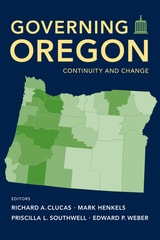
Governing Oregon
Continuity and ChangeRichard Clucas
Oregon State University Press, 2018
As the twenty-first century began, this political dynamic began to shift. Partisan conflict in the capitol grew less rancorous, legislative gridlock eased, and ballot initiatives lost their central role in defining Oregon politics. Less visible changes reshaped issues from agricultural policy to tribal government. This shifting dynamic coincided with significant transformations in Oregon’s economy and cultural life.
The state’s economy sustained severe blows twice in the early 2000s, but by 2014, Oregon boasted one of the fastest-growing economies in the nation. Along with economic expansion, Oregon’s population grew in both size and diversity. Despite these powerful forces of change, other aspects of Oregon political life remained entrenched, including the deep urban-rural divide and the state’s problematic fiscal system.
With contributions from 27 leading experts and political insiders, Governing Oregon: Continuity and Change offers insight into the people, political practices, governing institutions, and public policies of Oregon. It will be of tremendous value to political scientists, public servants, and engaged citizens alike.
Contributors:
Warda Ajaz is a PhD candidate in the School of Public Policy at Oregon State University.
Jeannine Beatrice is Chief of Staff with the Oregon Department of Human Services (DHS).
David Bernell is an Associate Professor of Political Science in the School of Public Policy at Oregon State University.
Joe Bowersox is the Dempsey Endowed Chair of Environmental Policy and Politics in the Department of Environmental and Earth Science at Willamette University.
Alexandra Buylova is a PhD candidate in the School of Public Policy at Oregon State University.
Paul De Muniz retired as Chief Justice of the Oregon Supreme Court in 2012 after serving for twelve years on the court. De Muniz currently teaches at Willamette University College of Law as a Distinguished Jurist in Residence.
Mark Edwards is Professor of Sociology in the School of Public Policy at Oregon State University.
Leanne Giordono is a PhD candidate in the School of Public Policy at Oregon State University and a National Science Foundation Graduate Research Fellow.
Daniel Gray is a Master of Public Policy (MPP) student in the School of Public Policy at Oregon State University.
Sajjad Haider is a PhD candidate at the School of Management, Lanzhou University (China), and a visiting research scholar at the Mark O. Hatfield School of Government, Portland State University.
Jordan Hensley earned a Master of Public Policy (MPP) degree from the School of Public Policy at Oregon State University.
Allison L. Hurst is an Associate Professor of Sociology in the School of Public Policy at Oregon State University.
Abdullah Husain is a PhD candidate in Environmental Sciences at Oregon State University.
Phil Keisling is Director of the Center for Public Service at Portland State University’s Mark O. Hatfield School of Government. He was Oregon Secretary of State from 1991–1999 and a Member of the Oregon House of Representatives from 1989–1991.
Chris Koski is Associate Professor of Environmental Studies and Chair of the Political Science Department at Reed College.
Justin Martin owns and operates, Perseverance Strategies, Inc., a government relations and public affairs firm.
Melissa Buis Michaux is Associate Professor of Politics at Willamette University.
Douglas Morgan is Professor Emeritus of Public Administration and Director of the Executive MPA Program in the Hatfield School of Government at Portland State University.
Sanne A. M. Rijkhoff is a former adjunct assistant professor of political science at Portland State University. She is currently an Eyes High Postdoctoral Associate at the University of Calgary.
Ethan Seltzer is an Emeritus Professor in the Toulan School of Urban Studies and Planning at Portland State University.
Brent S. Steel is Professor and the Director of the Graduate Program in the School of Public Policy at Oregon State University.
Casey L. Taylor is a Postdoctoral Research Associate in the Department of Political Science at Idaho State University.
Rebecca Warner is Professor of Sociology in the School of Public Policy at Oregon State University.
Governing With the News, Second Edition
The News Media as a Political InstitutionTimothy E. Cook
University of Chicago Press, 2005
"Provocative and often wise. . . . Cook, who has a complex understanding of the relationship between governing and the news, provides a fascinating account of the origins of this complicity."—James Bennet, Washington Monthly
"[Governing with the News] addresses central issues of media impact and power in fresh, illuminating ways. . . . Cook mines a wealth of historical and organizational literature to assert that the news media are a distinct political institution in our democratic system."—Robert Schmuhl, Commonweal
Governing and Ruling
The Political Logic of Taxation in ChinaChangdong Zhang
University of Michigan Press, 2021
Rapid social economic changes, the transition from a planned economy to a market economy, or even economic liberalization can lead to political instability and the collapse of authoritarian regimes. Despite experiencing all of these unprecedented changes in the past forty years, China under the Chinese Communist Party’s leadership has so far successfully transformed and improved both its governance capacity and its ruling capacity. Governing and Ruling: The Political Logic of Taxation in China addresses this regime resilience puzzle by examining the political logic of its taxation system, especially the ways in which taxation helps China handle three governance problems: maneuvering social control, improving agent discipline, and eliciting cooperation. Changdong Zhang argues that a taxation system plays an important role in sustaining authoritarian rule, in China and elsewhere, by combining co-optation and repression functions. The book collects valuable firsthand and secondhand data; studies China’s taxation system, intergovernmental fiscal relationships, composition of fiscal revenue sources, and tax administration; and discusses how each dimension influences the three governance problems.
Governing the End
The Making of Climate Change Loss and DamageLisa Vanhala
University of Chicago Press, 2025
A searing account of how the international community is trying—and failing—to address the worst effects of climate change and the differential burdens borne by rich and poor countries.
Climate change is increasingly accepted as a global emergency creating irrevocable losses for the planet. Yet, each country experiences these losses differently, and reaching even inadequate political agreements is fraught with contestation. Governing the End untangles the complex relationship between deteriorating environmental conditions, high politics, and everyday diplomatic practices, focusing on the United Nations’ agreement to address “loss and damage” and subsequent battles over implementation.
Lisa Vanhala looks at the differing assumptions and strategic framings that poor and rich countries bring to bear and asks why some norms emerge and diffuse while others fail to do so. Governing the End is based on ethnographic observation of eight years of UN meetings and negotiations and more than one hundred and fifty interviews with diplomats, policymakers, UN secretariat staff, experts, and activists. It explores explicit political contestation, as well as the more clandestine politics that have stymied implementation and substantially reduced the scope of compensation to poor countries. In doing so, Governing the End elucidates the successes and failures of international climate governance, revealing the importance of how ideas are constructed and then institutionally embodied.
Governing the Global Polity
Practice, Mentality, RationalityIver B. Neumann and Ole Jacob Sending
University of Michigan Press, 2010
"There have been many attempts to adapt Foucault's arguments to the study of international relations, but this powerful and provocative book is the most sustained, and arguably the most successful in showing how the governmentality approach can be adapted to the analysis of global politics."
---Barry Hindess, Research School of Social Sciences, The Australian National University
A highly welcome and original contribution to contemporary debates on the shape and future of the international system and on the possibility of reconfiguring IR theory as social theory."
---Mathias Albert, Bielefeld University, Germany
"Iver Neumann and Ole Jacob Sending have put meat on the bones of Michel Foucault's notion of governmentality, fulfilling the hopes of long-famished students and scholars of global governance. Through their focus on specific case studies, the authors have provided a much-needed contribution to the international relations literature, one that is sure to become a staple of courses and seminars throughout the world."
---Ronnie D. Lipschutz, University of California, Santa Cruz
What does globalization mean for the principle of state sovereignty and for the power and functioning of states? Whereas realists assert the continued importance of states, constructivists contend that various political entities as well as the logic of globalization itself undermine state sovereignty.
Drawing on the state formation literature and on social theory, particularly the works of Weber and Foucault, Iver B. Neumann and Ole Jacob Sending question the terms of the realist-constructionist debate. Through detailed case studies, they demonstrate that states use nongovernmental organizations and international organizations indirectly to enforce social order and, ultimately, to increase their own power. At the same time, global politics is dominated by a liberal political rationality that states ignore at their peril. While states remain as strong as ever, they operate within a global polity of new hierarchies among states and between states and other actors.
Iver B. Neumann is Director of Research at the Norwegian Institute of International Affairs and Professor of Russian Studies at the University of Oslo.
Ole Jacob Sending is Senior Researcher at the Norwegian Institute of International Affairs, where he heads the Research Programme on Global Governance and International Organizations.
Cover art credit: © iStockphoto.com/Will Evans
Also available as an e-book.

Governing the New Europe
Jack Hayward and Edward C. Page, eds.
Duke University Press, 1995
Beginning with a discussion of the political, economic, and cultural development of Europe from a historical perspective, the focus of the book shifts to an examination of the changing forms of European democracy and the move from public ownership and planning to privatization and deregulated competition. Further essays analyze the challenge to national party systems and electoral performance from emerging social movements and organized interest groups. Political and bureaucratic structures are also examined as is the new European constitutionalism reflected in the increasingly significant role of the judiciary. Lastly, attention is turned to several major themes in European politics: the changing foundations of foreign and security policy, the function of industrial champion firms, and the retreat from the welfare state. Primarily comparative in its scope, Governing the New Europe does devote particular attention to specific major states as well as to the importance of the European Union to the political life of member and non-member countries.
Neither exaggerating the common features of the patterns that have emerged in contemporary Europe nor capitulating to the complexity of enduring differences and instabilities between states, Governing the New Europe will become one of the standard texts in its field.
Contributors. Jack Hayward, Jolyon Howorth, Herbert Kitschelt, Marie Lavigne, Tom Mackie, Michael Mezey, Edward C. Page, Richard Parry, Richard Rose, Anthony Smith, Alec Stone
Governing the Wild
Ecotours of PowerStephanie Rutherford
University of Minnesota Press, 2011
Take four emblematic American scenes: the Hall of Biodiversity at the American Museum of Natural History in New York; Disney’s Animal Kingdom theme park in Orlando; an ecotour of Yellowstone and Grand Teton National Parks; the film An Inconvenient Truth. Other than expressing a common interest in the environment, they seem quite dissimilar.
And yet, as Governing the Wild makes clear, these sites are all manifestations of green governmentality, each seeking to define and regulate our understanding, experience, and treatment of nature. Stephanie Rutherford shows how the museum presents a scientized assessment of global nature under threat; the Animal Kingdom demonstrates that a corporation can successfully organize a biopolitical project; the ecotour, operating as a school for a natural aesthetic sensibility, provides a visual grammar of pristine national nature; and the film offers a toehold on a moral way of encountering nature. But one very powerful force unites the disparate “truths” of nature produced through these sites, and that, Rutherford tells us, is their debt to nature’s commodification.
Rutherford’s analysis reveals how each site integrates nature, power, and profit to make the buying and selling of nature critical to our understanding and rescuing of it. The combination, she argues, renders other ways of encountering nature—particularly more radically environmental ways—unthinkable.
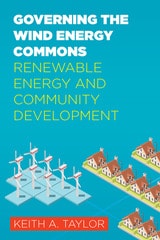
Governing the Wind Energy Commons
Renewable Energy and Community DevelopmentKeith A. Taylor
West Virginia University Press, 2019
Wind energy is often framed as a factor in rural economic development, an element of the emerging “green economy” destined to upset the dominant greenhouse- gas-emitting energy industry and deliver conscious capitalism to host communities. The bulk of wind energy firms, however, are subsidiaries of the same fossil fuel companies that wrought havoc in shale-gas and coal-mining towns from rural Appalachia to the Great Plains. On its own, wind energy development does not automatically translate into community development.
In Governing the Wind Energy Commons, Keith Taylor asks whether revenue generated by wind power can be put to community well-being rather than corporate profit. He looks to the promising example of rural electric cooperatives, owned and governed by the 42 million Americans they serve, which generate $40 billion in annual revenue. Through case studies of a North Dakota wind energy cooperative and an investor-owned wind farm in Illinois, Taylor examines how regulatory and social forces are shaping this emerging energy sector. He draws on interviews with local residents to assess strategies for tipping the balance of power away from absentee-owned utilities.

Governing with the News
The News Media as a Political InstitutionTimothy E. Cook
University of Chicago Press, 1998
The formation of the press as a political institution began in the early days of the republic when newspapers were sponsored by political parties; the relationship is now so central that press offices are found wherever one turns. Cook demonstrates not only how the media are structured as an institution that exercises collective power but also how the role of the media has become institutionalized within the political process, affecting policy and instigating, rather than merely reflecting, political actions. Cook's analysis is a powerful and fascinating guide to our age when newsmaking and governing are inseparable.
"This is a wonderful analysis of a highly important topic. Tim Cook is resoundingly right that we need to look at the media as political institutions and their operatives as political actors."—David R. Mayhew, author of Divided We Govern
"This meticulously researched and well reasoned work proposes to take seriously a thesis which flies in the face of both journalistic lore and political myth. Governing with the News is an innovative contribution to our understanding of media."—W. Lance Bennett, author of News: The Politics of Illusion
"This book should be read by journalists . . . by mass communication faculty teaching courses in media structure or effects and journalism faculty as a supplemental text to courses in media history and media management."—Benjamin J. Burns, Journalism & Mass Communication Quarterly

Government and Politics in Hungary
András Körösényi
Central European University Press, 1999
Government of Michigan
Robert W. Carr, Ph.D.
University of Michigan Press, 1990

Government of the Shadows
Parapolitics and Criminal SovereigntyEric Wilson
Pluto Press, 2009
Government of the Shadows analyses the concept of clandestine government. It explores how covert political activity and transnational organised crime are linked -- and how they ultimately work to the advantage of state and corporate power.
The book shows that legitimate government is now routinely accompanied by extra-governmental covert operations. Using a variety of case studies, from the mafia in Italy to programmes for food and reconstruction in Iraq, the contributors illustrate that para-political structures are not 'deviant', but central to the operation of global governments.
The creation of this truly parallel world-economy, the source of huge political and economic potential, entices states to undertake new forms of regulation, either through their own intelligence agencies, or through the more shadowy world of criminal cartels.
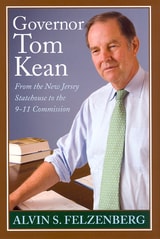
Governor Tom Kean
From the New Jersey Statehouse to the 911 CommissionFelzenberg, Alvin S
Rutgers University Press, 2006
In this first political biography of one of the nation's most popular and successful governors, Alvin S. Felzenberg tells the story of a remarkable career that culminated in an unexpected and crucial contribution to the country-chairmanship of the 9/11 Commission. Felzenberg describes how, early in his political career, Kean worked to transform New Jersey's legislature in the aftermath of court rulings that mandated redistricting in accordance with the "one man, one vote" principle. He discusses Kean's efforts to relieve the urban crisis that followed in the wake of the 1967 Newark riots. He relates how Kean was able to use the New Jersey governorship-purportedly the strongest in the country-to transform a so-called "rust belt" state into a leader in education, environmental responsibility, and economic growth.
Kean's successes in these and other areas caused leaders outside New Jersey to follow in his path. Together with his fellow governors, Kean forged a national consensus on domestic policy between Democratic congresses and Republican presidents, in the process winning for himself a leadership role in his own party. Kean's story serves as an uncommon case of how a Republican loyal to the historic roots and principles of his party can not only win election in a "blue state" but effectively govern it.
Starting from the example the governor set on the state level, Felzenberg's account traces Kean's career to positions of trusted authority on the national stage. After several years of advising presidents, Kean was appointed chairman of the 9/11 Commission. In this role, he made the bipartisan, Congressionally mandated commission one of the most successful in American history.
Drawing on interviews with Kean as well as with state and national leaders, including former presidents Gerald Ford and Bill Clinton and former New York City mayor Ed Koch, Felzenberg not only provides a marvelous biography, but also offers a unique look at American politics during the last four decades of the twentieth century.
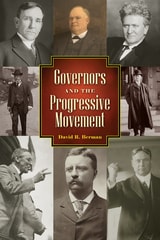
Governors and the Progressive Movement
David R. Berman
University Press of Colorado, 2019
Governors and the Progressive Movement is the first comprehensive overview of the Progressive movement’s unfolding at the state level, covering every state in existence at the time through the words and actions of state governors. It explores the personalities, ideas, and activities of this period’s governors, including lesser-known but important ones who deserve far more attention than they have previously been given.
During this time of greedy corporations, political bosses, corrupt legislators, and conflict along racial, class, labor/management, urban/rural, and state/local lines, debates raged over the role of government and issues involving corporate power, racism, voting rights, and gender equality—issues that still characterize American politics. Author David R. Berman describes the different roles each governor played in the unfolding of reform around these concerns in their states. He details their diverse leadership qualities, governing styles, and accomplishments, as well as the sharp regional differences in their outlooks and performance, and finds that while they were often disposed toward reform, governors held differing views on issues—and how to resolve them.
Governors and the Progressive Movement examines a time of major changes in US history using relatively rare and unexplored collections of letters, newspaper articles, and government records written by and for minority group members, labor activists, and those on both the far right and far left. By analyzing the governors of the era, Berman presents an interesting perspective on the birth and implementation of controversial reforms that have acted as cornerstones for many current political issues. This book will be of interest to students and scholars of US history, political science, public policy, and administration.
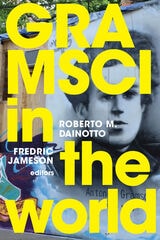
Gramsci in the World
Roberto M. Dainotto and Fredric Jameson, editors
Duke University Press, 2020
Contributors. Alberto Burgio, Cesare Casarino, Maria Elisa Cevasco, Kate Crehan, Roberto M. Dainotto, Michael Denning, Harry Harootunian, Fredric Jameson, R. A. Judy, Patrizia Manduchi, Andrea Scapolo, Peter D. Thomas, Catherine Walsh, Pu Wang, Cosimo Zene
Gramsci is Dead
Anarchist Currents in the Newest Social MovementsRichard J. F. Day
Pluto Press, 2005
Unlike previous revolutionary movements, Day argues, most contemporary radical social movements do not strive to take control of the state. Instead, they attempt to develop new forms of self-organisation that can run in parallel with---or as alternatives to---existing forms of social, political, and economic organization. This is to say that they follow a logic of affinity rather than one of hegemony.
This book draws together a variety of different strands in political theory to weave together an innovative new approach to politics today. Rigorous and wide-ranging, Day introduces and interrogates key concepts. From Hegel's concept of recognition, through theories of hegemony and affinity to Hardt and Negri's reflections on Empire, Day maps academia's theoretical and philosophical concerns onto today's politics of the street.
Ideal for all students of political theory, Day's fresh approach combines Marxist, Anarchist and Post-structuralist theory to shed new light on the politics and practice of contemporary social movements.
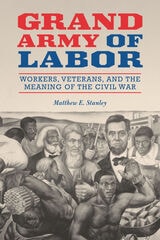
Grand Army of Labor
Workers, Veterans, and the Meaning of the Civil WarMatthew E. Stanley
University of Illinois Press, 2021
From the Gilded Age through the Progressive era, labor movements reinterpreted Abraham Lincoln as a liberator of working people while workers equated activism with their own service fighting for freedom during the war. Matthew E. Stanley explores the wide-ranging meanings and diverse imagery used by Civil War veterans within the sprawling radical politics of the time. As he shows, a rich world of rituals, songs, speeches, and newspapers emerged among the many strains of working class cultural politics within the labor movement. Yet tensions arose even among allies. Some people rooted Civil War commemoration in nationalism and reform, and in time, these conservative currents marginalized radical workers who tied their remembering to revolution, internationalism, and socialism.
An original consideration of meaning and memory, Grand Army of Labor reveals the complex ways workers drew on themes of emancipation and equality in the long battle for workers’ rights.
Grand Strategy from Truman to Trump
Benjamin Miller with Ziv Rubinovitz
University of Chicago Press, 2020
American foreign policy is the subject of extensive debate. Many look to domestic factors as the driving forces of bad policies. Benjamin Miller instead seeks to account for changes in US international strategy by developing a theory of grand strategy that captures the key security approaches available to US decision-makers in times of war and peace.
Grand Strategy from Truman to Trump makes a crucial contribution to our understanding of competing grand strategies that accounts for objectives and means of security policy. Miller puts forward a model that is widely applicable, based on empirical evidence from post-WWII to today, and shows that external factors—rather than internal concerns—are the most determinative.
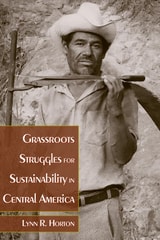
Grassroots Struggles for Sustainability in Central America
Lynn R. Horton
University Press of Colorado, 2007
With a comparative, empirical approach, Horton also analyzes dominant practices linked to sustainable development - neoliberal reforms, project interventions, and environmental protection. She reveals how these practices support or undermine economic, cultural, and political opportunities for the rural and indigenous poor and impact these communities' advancement of their own visions of sustainability. Finally, the author explores processes of empowerment that enable communities to articulate and put into practice local visions of sustainability, which contribute toward broader social and structural transformations.
Grassroots Struggles for Sustainability in Central America will interest sociologists, anthropologists, and others who study the theory and practice of sustainable development.
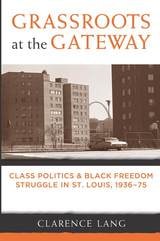
Grassroots at the Gateway
Class Politics and Black Freedom Struggle in St. Louis, 1936-75Clarence Lang
University of Michigan Press, 2010
"This is a theoretically sophisticated and thoroughly documented historical case study of the movements for African American liberation in St. Louis. Through detailed analysis of black working class mobilization from the depression years to the advent of Black Power, award-winning historian Clarence Lang describes how the advances made in earlier decades were undermined by a black middle class agenda that focused on the narrow aims of black capitalists and politicians. The book is a major contribution to our understanding of the black working class insurgency that underpinned the civil rights and Black Power campaigns of the twentieth century."
---V. P. Franklin, University of California, Riverside
"A major work of scholarship that will transform historical understanding of the pivotal role that class politics played in both civil rights and Black Power activism in the United States. Clarence Lang's insightful, engagingly written, and well-researched study will prove indispensable to scholars and students of postwar American history."
---Peniel Joseph, Brandeis University
Breaking new ground in the field of Black Freedom Studies, Grassroots at the Gateway reveals how urban black working-class communities, cultures, and institutions propelled the major African American social movements in the period between the Great Depression and the end of the Great Society. Using the city of St. Louis in the border state of Missouri as a case study, author Clarence Lang undermines the notion that a unified "black community" engaged in the push for equality, justice, and respect. Instead, black social movements of the working class were distinct from---and at times in conflict with---those of the middle class. This richly researched book delves into African American oral histories, records of activist individuals and organizations, archives of the black advocacy press, and even the records of the St. Louis' economic power brokers whom local black freedom fighters challenged. Grassroots at the Gateway charts the development of this race-class divide, offering an uncommon reading of not only the civil rights movement but also the emergence and consolidation of a black working class.
Clarence Lang is Assistant Professor in African American Studies and History at the University of Illinois at Urbana-Champaign.
Photo courtesy Western Historical Manuscript Collection, University of Missouri, St. Louis
Gray is Beautiful
Confronting the Retreat of Democracy from the Radical CenterJeffrey Goldfarb
Central European University Press, 2026
Great American City
Chicago and the Enduring Neighborhood EffectRobert J. Sampson
University of Chicago Press, 2012
Great American City
Chicago and the Enduring Neighborhood EffectRobert J. Sampson
University of Chicago Press, 2024
Based on one of the most ambitious studies in the history of social science, Robert J. Sampson’s Great American City presents the fruits of over a decade’s research to support an argument that we all feel and experience every day: life is decisively shaped by your neighborhood.
Engaging with the streets and neighborhoods of Chicago, Sampson, in this new edition, reflects on local and national changes that have transpired since his book’s initial publication, including a surge in gun violence and novel forms of segregation despite an increase in diversity. New research, much of it a continuation of the influential discoveries in Great American City, has followed, and here, Sampson reflects on its meaning and future directions. Sampson invites readers to see the status of the research initiative that serves as the foundation of the first edition—the Project on Human Development in Chicago Neighborhoods (PHDCN)—and outlines the various ways other scholars have continued his work. Both accessible and incisively thorough, Great American City is a must-read for anyone interested in cutting-edge urban sociology and the study of crime.

Great Expectations and Interwar Realities
Cultural Diplomacy in Horthy's HungaryZsolt Nagy
Central European University Press, 2017
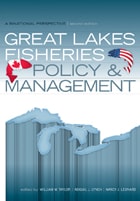
Great Lakes Fisheries Policy and Management
A Binational PerspectiveWilliam W. Taylor
Michigan State University Press, 2012
To maintain thriving, sustainable fisheries in the Laurentian Great Lakes, an understanding of the numerous and complex ecological, societal, economic, management, and policy issues surrounding them is critical. This incisive study provides a collaborative, interjurisdictional, and multi-use perspective that is shaped by the United states and Canada together as part of their shared governance of these waters. This book offers an informed look at the Great Lakes fisheries and their ecosystems, as the contributors examine both the threats they have faced and the valuable opportunities they provide for basin citizens and industries. Divided into four sections—the Great Lakes region, Great Lakes Fisheries, Fisheries case studies, and outlook for the Future—this is a valuable and up-to-date tool for students, researchers, policymakers, and managers alike.
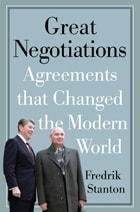
Great Negotiations
Agreements that Changed the Modern WorldFredrik Stanton
Westholme Publishing, 2010
Lessons in Diplomacy from Colonial America to the Cold War
"In a time when negotiations, both great and small, continue to shape our world, this book provides an excellent opportunity to learn from the past and understand the present.”—Kofi Annan, Nobel Peace Prize Winner and former Secretary General of the United Nations
“A thought-provoking, informative book, highly recommended for all readers interested in international affairs.”—Library Journal
“For anyone with an interest in diplomacy and political history, Stanton's book is both entertaining and informative.” —Foreign Policy Watch
“Every professional concerned with dispute resolution and every student of negotiation has much to learn from Fredrik Stanton's lively stories of eight history-shaping negotiations.”—Robert H. Mnookin, Chair Program on Negotiation, Harvard Law School
“An excellent introduction into some of the great triumphs and failures of modern diplomacy.”—Seattle Post-Intelligencer
“An interesting, informative study well worth reading and pondering.” —American Diplomacy
“Stanton deftly illustrates that the power of haggling can easily rival that of any army or warhead.”—Roll Call
“Exhaustive research and careful thought have enabled Stanton to employ an extraordinary writing talent to produce a contribution to history and a source of enjoyable reading.”—New York Law Journal
“Stanton brings back to life both famous and some long forgotten personalities in the history of major American, European, and Asian negotiations. He persuasively makes his case for the importance of negotiators and negotiations both when wars can be kept from beginning and when wars end. He weaves in deft descriptions of the personal strengths and foibles of negotiators and homes in on the ability of the best to improvise when maneuvering on unfamiliar terrain.” —Ambassador Richard W. Murphy, Council on Foreign Relations
Words as much as weapons have shaped the course of history. Whether to avert, resolve, assist, or secure the outcome of a conflict, diplomacy in the modern age has had great triumphs and bitter failures, from the Cuban Missile Crisis in 1962, which narrowly spared humanity from a nuclear Armageddon, to the Treaty of Versailles after World War I, which created problems that still confront us today. Drawing on primary sources, transcripts, and interviews, Great Negotiations: Agreements that Changed the Modern World tells the stories of eight key episodes in modern diplomacy. From Benjamin Franklin securing crucial French support for the American revolution to Reagan and Gorbachev laying the groundwork to eliminate an entire class of nuclear weapons, Fredrik Stanton explains what each party brought to the negotiating table, the stakes, the obstacles to success, and how they were overcome.
Greed
From Gordon Gekko to David HumeStewart Sutherland
Haus Publishing, 2014
In Greed, Stewart Sutherland examines these conflicting notions and discusses how we might approach the problem of greed today. He looks at the concept of incentives, which are essential for achieving results, and whether the desire for money is really as dangerous as it might seem. Powerful and timely, Greed is a much-needed look at an attitude that, for better or worse, is an unavoidable driving force in modern society.
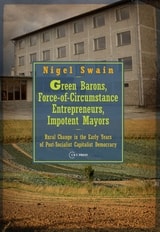
Green Barons, Force-of-Circumstance Entrepreneurs, Impotent Mayors
Rural Change in the Early Years of Post-Socialist Capitalist DemocracyNigel Swain
Central European University Press, 2013
Green Delusions
An Environmentalist Critique of Radical EnvironmentalismMartin W. Lewis
Duke University Press, 1994
Green Politics in China
Environmental Governance and State-Society RelationsJoy Y Zhang and Michael Barr
Pluto Press, 2013
Joy Y. Zhang and Michael Barr explain how environmental problems are transforming Chinese society through new developments such as the struggle for clean air, low-carbon conspiracy theories, new forms of public fund raising and the international tactics of grassroots NGOs. In doing so, they challenge static understandings of state-society relations in China.
Green Politics in China is an illuminating and detailed investigation which provides crucial insights into how China is both changing internally and emerging as a powerful player in global environmental politics.