Results by title
28164 books match the query 'History' and 628 start with g

German Film after Germany
Toward a Transnational AestheticRandall Halle
University of Illinois Press, 2007

German Greens
Margit Mayer
Temple University Press, 1998
This is a book about their paradoxical situation and about the dilemmas all advocates of change face when they become powerful enough to negotiate with the status quo. The critical essays by German social scientists and activists also provide a detailed picture of the dynamics of the German Greens -- where their support has come from, the nature of the competing factions, and the place of feminism. The editors provide a substantial introduction.
The flavor and texture of the Greens -- including their raucous public arguments and their innovative campaign tactics -- are suggested by the political posters included in the book and by a whole section of primary documents.
The documents and the essays (except for one originally written in English) have been translated from the German. The result is to make available to English-speaking readers a view of a complex movement whose very name and color have become synonymous with social action in favor of the environment and the empowerment of people.
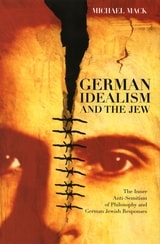
German Idealism and the Jew
The Inner Anti-Semitism of Philosophy and German Jewish ResponsesMichael Mack
University of Chicago Press, 2003
Offering the first analytical account of the connection between anti-Semitism and philosophy, Mack begins his exploration by showing how the fundamental thinkers in the German idealist tradition—Kant, Hegel, and, through them, Feuerbach and Wagner—argued that the human world should perform and enact the promises held out by a conception of an otherworldly heaven. But their respective philosophies all ran aground on the belief that the worldly proved incapable of transforming itself into this otherworldly ideal. To reconcile this incommensurability, Mack argues, philosophers created a construction of Jews as symbolic of the "worldliness" that hindered the development of a body politic and that served as a foil to Kantian autonomy and rationality.
In the second part, Mack examines how Moses Mendelssohn, Heinrich Heine, Franz Rosenzweig, and Freud, among others, grappled with being both German and Jewish. Each thinker accepted the philosophies of Kant and Hegel, in varying degrees, while simultaneously critiquing anti-Semitism in order to develop the modern Jewish notion of what it meant to be enlightened—a concept that differed substantially from that of Kant, Hegel, Feuerbach, and Wagner. By speaking the unspoken in German philosophy, this book profoundly reshapes our understanding of it.
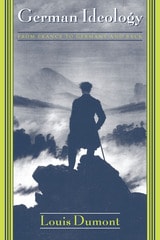
German Ideology
From France to Germany and BackLouis Dumont
University of Chicago Press, 1995
Anyone interested in the fate of national ideology and the concept of the individual will benefit from this radical reinterpretation of modern values and the place of modernity in history.
"What François Furet did for French history, Dumont did for anthropology, turning it away from engaged politics and towards the sober study of the modern age." —Mark Lilla, London Review of Books
"There are many fine things in Dumont's study. Beyond any doubt, his cultural anthropology of the modern spirit highlights some of the key energies of the of the last two centuries. . . . [An] impressive . . . detailed analysis." —Martin Swales, Times Higher Education Supplement
"[An] unsettling, rich, demanding, profound study." —Publishers Weekly

German Invasion Plans for the British Isles, 1940
Edited by the Bodleian Library
Bodleian Library Publishing, 2008
Operation Sealion was the codename for the Nazi invasion of Britain that Hitler ordered his generals to plan after France fell in June 1940. Although the plan ultimately never came to fruition, a few sets of the Germans’ detailed strategy documents are housed in the rare book rooms of libraries across Europe. But now the Bodleian Library has made documents from their set available for all to peruse in this unprecedented collection of the invasion planning materials.
The planned operation would have involved landing 160,000 German soldiers along a forty-mile stretch of coast in southeast England. Packets of reconnaissance materials were put together for the invading forces, and the most intriguing parts are now reproduced here. Each soldier was to be given maps and geographical descriptions of the British Isles that broke down the country by regions, aerial photographs pinpointing strategic targets, an extensive listing of British roads and rivers, strategic plans for launching attacks on each region, an English dictionary and phrase book, and even a brief description of Britain’s social composition.
Augmenting the fascinating documents is an informative introduction that sets the materials in their historical and political context. A must-have for every military history buff, German Invasion Plans for the British Isles, 1940 is a remarkable revelation of the inner workings of Hitler’s most famous unrealized military campaign.

German Jerusalem
The Remarkable Life of a German-Jewish Neighborhood in the Holy CityThomas Sparr
Haus Publishing, 2024
In the 1920s, before the establishment of Israel, a group of German Jews settled in a garden city on the outskirts of Jerusalem. During World War II, their quiet community, nicknamed Grunewald on the Orient, emerged as both an immigrant safe haven and a lively expatriate hotspot, welcoming many famous residents including poet-playwright Else Lasker-Schüler, historian Gershom Scholem, and philosopher Martin Buber. It was an idyllic setting, if fraught with unique tensions on the fringes of the long-divided holy city. After the war, despite the weight of the Shoah, the neighborhood miraculously repaired shattered bonds between German and Israeli residents. In German Jerusalem, Thomas Sparr opens up the history of this remarkable community and the forgotten borderland they called home.
German Jews Beyond Judaism
George L. Mosse, With a critical introduction by David J. Sorkin
University of Wisconsin Press, 2025
German Jews Beyond Judaism was, in Mosse’s own estimation, his “most personal book, almost a confession of faith.” David J. Sorkin’s new critical introduction illustrates how Mosse’s life and values both shaped and exemplified his historical analysis and offers potential meanings of his intellectual legacy for the present day.

German Literature on the Middle East
Discourses and Practices, 1000-1989Nina Berman
University of Michigan Press, 2013
German Literature on the Middle East explores the dynamic between German-speaking and Middle Eastern states and empires from the time of the Crusades to the end of the Cold War. This insightful study illuminates the complex relationships among literary and other writings on the one hand, and economic, social, and political processes and material dimensions on the other. Focusing on German-language literary and nonfiction writings about the Middle East (including historical documents, religious literature, travel writing, essays, and scholarship), Nina Berman evaluates the multiple layers of meaning contained in these works by emphasizing the importance of culture contact; a wide web of political, economic, and social practices; and material dimensions as indispensible factors for the interpretive process.
This analysis of literary and related writing reveals that German views about the Middle East evolved over the centuries and that various forms of action toward the Middle East differed substantially as well. Ideas about religion, culture, race, humanism, nation, and modernity, which emerged successively but remain operative to this day, have fashioned Germany's changed attitudes toward the Middle East. Exploring the interplay between textual discourses and social, political, and economic practices and materiality, German Literature on the Middle East offers insights that challenge accepted approaches to the study of literature, particularly approaches that insist on the centrality of the linguistic construction of the world. In addition, Berman presents evidence that the German encounter with the Middle East is at once distinct and yet at the same time characterized by patterns shared with other European countries. By addressing the individual nature of the German encounter in the larger European context, this study fills a considerable gap in current scholarship.
The interdisciplinary approach of German Literature on the Middle East will be of interest to the humanities in general, and specifically to scholars of German studies, comparative literature, Middle Eastern studies, and history.
Nina Berman is Professor of Comparative Studies at The Ohio State University.
Jacket image: Map of Europe by Giovanni Magini, from his “Geography.” Venice, [1598]. From the University of Michigan Map Library.
Political Map of the World, April 2008. From the University of Texas Perry-Castañeda Library, Map Collection.
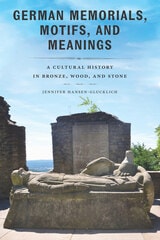
German Memorials, Motifs, and Meanings
A Cultural History in Bronze, Wood, and StoneJennifer Hansen-Glucklich
University of Massachusetts Press, 2025
German Memorials, Motifs, and Meanings offers a unique cultural history of German memorialization. The book focuses not on a single, isolated era, but rather on enduring memorial motifs—enchanted stones, magical trees, raised fists, stone circles, and similar evocative symbols derived from myth, folklore, Christianity, national iconography, and post-Holocaust imagery. It thus takes a long-duration perspective, sweeping across the centuries to explore abiding themes such as death, rebirth, and redemption; violence and reconciliation; and sacrifice, identity, and community. Along with a consideration of the historical and social circumstances of each memorial and its motifs, author Jennifer Hansen-Glucklich answers the questions of why and how these cultural markers survive the passage of time and how they endure amidst cultural, social, and political upheavals that include the rise and fall of empires, catastrophes of war and occupation, and genesis of new national identities. She uniquely focuses on lesser-known or unknown memorials found either in smaller German cities or tucked away in villages and hamlets.
These memorials tell colorful, often ambiguous and problematic stories in contrast to the vaunted monuments of Germany’s post-WWII era, such as Berlin’s Memorial to the Murdered Jews of Europe. Through vivid descriptions and deep analysis of the narratives and aesthetics of key monuments and motifs, Hansen-Glucklich details the remarkable story of German memorial culture from medieval times to the present day.
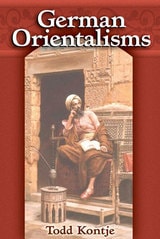
German Orientalisms
Todd Kontje
University of Michigan Press, 2004
-Russell Berman, Stanford University
"Intellectually rigorous and conceptually nuanced, Todd Kontje's German Orientalisms is a valuable contribution to the debate on identity politics in German cultural history. Through an erudite and insightful analysis of the German fictions of a broadly defined 'Orient' from the Middle Ages to the present, Kontje illustrates how German literature situated itself within a 'symbolic geography,' whose coordinates are defined by both its representations of the Orient and its affiliation with the Occident. German Orientalisms offers not only an admirable synthesis of the scholarship on German linguistic and cultural nationalism but also sophisticated interpretive strategies for a better understanding of our perceptions and misconceptions of alterity."
-Azade Seyhan, Bryn Mawr College
"This is a fascinating topic, and the book opens new scholarly vistas. In an age of increased specialization, Kontje takes a macro view, looking at German literature almost
from its beginnings to the present, from Wolfram to Özdamar. He also has the courage to link his well-researched work to topics like globalization, the culture wars, and canon formation. He doesn't merely proclaim literature's importance, he shows by example how the literary imagination-creative as it is, dodging dogmatism, and able to confound ideologies-can thrive in an era of cultural studies."
-Sara Friedrichsmeyer, University of Cincinnati
Todd Kontje's German Orientalisms offers a fresh examination of the role of the East in German literary imagination, ranging from the Middle Ages to the present. In its wide historical sweep, this book offers important new insights into many of the most famous writers in the German language, from Goethe to Thomas Mann to Günter Grass.
Building on Edward Said's Orientalism-which defined Orientalism as a form of Western knowledge directly linked to imperial power-Kontje offers a more nuanced version as seen through the lens of German literature of the last thousand years.
Said's focus was on British and French Orientalists-two nations with colonial interests in the East. Germany was different in that it had no stake in the Orient. Far from diminishing an Orientalist perspective, however, the absence of a German empire in the East produced a peculiarly German brand of Orientalism, one in which German writers alternated between identification with the rest of Europe and allying themselves with parts of the East against the West.
Above all, Kontje asks how German writers conceived of their place in "the land of the center" (das Land der Mitte) and how their literary works help to create the imagined community of the German nation.
German Pop Culture
How "American" Is It?Agnes C Mueller, Editor
University of Michigan Press, 2004
Surrounding this indisputable phenomena, questions of the role and place of a "popular" German culture continue to trigger heated debate. Embraced by some as a welcome means to break out of the German monocultural mind-set, American-shaped "pop" culture is rejected by others as "polluting" established values, leveling necessary differentiation, and ultimately being driven by a capitalist consumer society rather than by moral or aesthetic standards.
This collaborative volume addresses a number of intriguing questions: What do Germans envisage when they speak of the "Americanization" of their literature and music? How do artists respond to today's media culture? What does this mean for the current political dimension of German-American relations? Can one speak meaningfully of an "Americanized" German culture? In addressing these and other questions, this work fills a gap in existing scholarship by investigating German popular culture from a multidisciplinary, international perspective.
Contributors to this volume:
Winfried Fluck, Gerd Gemünden, Lutz Koepnick, Barbara Kosta, Sara Lennox, Thomas Meinecke, Uta Poiger, Matthias Politycki, Thomas Saunders, Eckhard Schumacher, Marc Silberman, Frank Trommler, Sabine von Dirke
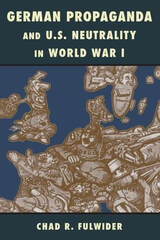
German Propaganda and U.S. Neutrality in World War I
Chad R. Fulwider
University of Missouri Press, 2016
In the fading evening light of August 4, 1914, Great Britain’s H.M.S. Telconia set off on a mission to sever the five transatlantic cables linking Germany and the United States. Thus Britain launched its first attack of World War I and simultaneously commenced what became the war’s most decisive battle: the battle for American public opinion.
In this revealing study, Chad Fulwider analyzes the efforts undertaken by German organizations, including the German Foreign Ministry, to keep the United States out of the war. Utilizing archival records, newspapers, and “official” propaganda, the book also assesses the cultural impact of Germany’s political mission within the United States and comments upon the perception of American life in Europe during the early twentieth century.
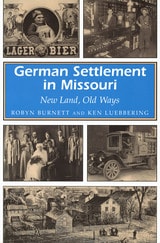
German Settlement in Missouri
New Land, Old WaysRobyn Burnett & Ken Luebbering
University of Missouri Press, 1996
German immigrants came to America for two main reasons: to seek opportunities in the New World, and to avoid political and economic problems in Europe. In German Settlement in Missouri, Robyn Burnett and Ken Luebbering demonstrate the crucial role that the German immigrants and their descendants played in the settlement and development of Missouri's architectural, political, religious, economic, and social landscape. Relying heavily on unpublished memoirs, letters, diaries, and official records, the authors provide important new narratives and firsthand commentary from the immigrants themselves.
Between 1800 and 1919, more than 7 million people came to the United States from German-speaking lands. The German immigrants established towns as they moved up the Missouri River into the frontier, resuming their traditional ways as they settled. As a result, the culture of the frontier changed dramatically. The Germans farmed differently from their American neighbors. They started vineyards and wineries, published German-language newspapers, and entered Missouri politics.
The decades following the Civil War brought the golden age of German culture in the state. The populations of many small towns were entirely German, and traditions from the homeland thrived. German-language schools, publications, and church services were common. As the German businesses in St. Louis and other towns flourished, the immigrants and their descendants prospered. The loyalty of the Missouri Germans was tested in World War I, and the anti-immigrant sentiment during the war and the period of prohibition after it dealt serious blows to their culture. However, German traditions had already found their way into mainstream American life.
Informative and clearly written, German Settlement in Missouri will be of interest to all readers, especially those interested in ethnic history.
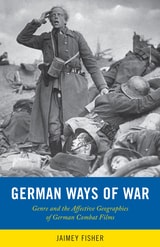
German Ways of War
The Affective Geographies and Generic Transformations of German War FilmsJaimey Fisher
Rutgers University Press, 2022

German Women for Empire, 1884-1945
Lora Wildenthal
Duke University Press, 2001
In confrontation and sometimes cooperation with men over their place in the colonial project, German women launched nationalist and colonialist campaigns for increased settlement and new state policies. Wildenthal analyzes recently accessible Colonial Office archives as well as mission society records, periodicals, women’s memoirs, and fiction to show how these women created niches for themselves in the colonies. They emphasized their unique importance for white racial “purity” and the inculcation of German culture in the family. While pressing for career opportunities for themselves, these women also campaigned against interracial marriage and circulated an image of African and Pacific women as sexually promiscuous and inferior. As Wildenthal discusses, the German colonial imaginary persisted even after the German colonial empire was no longer a reality. The women’s colonial movement continued into the Nazi era, combining with other movements to help turn the racialist thought of the late-nineteenth and early-twentieth centuries into the hierarchical evaluation of German citizens as well as colonial subjects.
Students and scholars of women’s history, modern German history, colonial politics and culture, postcolonial theory, race/ethnicity, and gender will welcome this groundbreaking study.
Germans and Jews
The Right, the Left, and the Search for a "Third Force" in Pre-Nazi GermanyGeorge L. Mosse
University of Wisconsin Press, 2023
This innovative perspective has implications for understanding not only the rise of fascism and Nazism in Germany but also the rise and fall of the New Left in the United States and Europe, which was occurring at the time of Mosse’s writing. A new critical introduction by Sarah Wobick-Segev, research associate at the University of Hamburg, places Mosse’s work in its historical and intellectual contexts and draws lessons for students and scholars today.
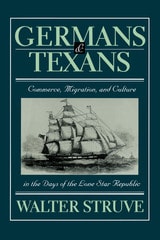
Germans and Texans
Commerce, Migration, and Culture in the Days of the Lone Star RepublicBy Walter Struve
University of Texas Press, 1996
During the brief history of the Republic of Texas (1836-1845), over 10,000 Germans emigrated to Texas. Perhaps best remembered today are the farmers who settled the Texas Hill Country, yet many of the German immigrants were merchants and businesspeople who helped make Galveston a thriving international port and Houston an early Texas business center. This book tells their story.
Drawing on extensive research on both sides of the Atlantic, Walter Struve explores the conditions that led nineteenth-century Europeans to establish themselves on the North American frontier. In particular, he traces the similarity in social, economic, and cultural conditions in Germany and the Republic of Texas and shows how these similarities encouraged German emigration and allowed some immigrants to prosper in their new home. Particularly interesting is the translation of a collection of letters from Charles Giesecke to his brother in Germany which provide insight into the business and familial concerns of a German merchant and farmer.
This wealth of information illuminates previously neglected aspects of intercontinental migration in the nineteenth century. The book will be important reading for a wide public and scholarly audience.
Germans in Illinois
Miranda E. Wilkerson and Heather Richmond
Southern Illinois University Press, 2019
The promise of cheap land and fertile soil in rural areas and emerging industries in cities attracted three major waves of German-speaking immigrants to Illinois in search of freedom and economic opportunities. Before long the state was dotted with German churches, schools, cultural institutions, and place names. German churches served not only as meeting places but also as a means of keeping language and culture alive. Names of Illinois cities and towns of German origin include New Baden, Darmstadt, Bismarck, and Hamburg. In Chicago, many streets, parks, and buildings bear German names, including Altgeld Street, Germania Place, Humboldt Park, and Goethe Elementary School. Some of the most lively and ubiquitous organizations, such as Sängerbunde, or singer societies, and the Turnverein, or Turner Society, also preserved a bit of the Fatherland.
Exploring the complex and ever-evolving German American identity in the growing diversity of Illinois’s linguistic and ethnic landscape, this book contextualizes their experiences and corrects widely held assumptions about assimilation and cultural identity. Federal census data, photographs, lively biographical sketches, and newly created maps bring the complex story of German immigration to life. The generously illustrated volume also features detailed notes, suggestions for further reading, and an annotated list of books, journal articles, and other sources of information.
Germans in Michigan
Jeremy W. Kilar
Michigan State University Press, 2002
Germans are the largest ancestral group in Michigan, representing over 2.6 million descendants or 22% of the state’s population. Yet, unlike other immigrant groups, Germans have not retained their linguistic and cultural traditions as part of a distinct ethnic identity. The Bavarian villages of Frankenmuth and Gaylord stand as testaments to the once proud and vigorous German communities that dotted both rural and urban Michigan landscapes. Jeremy W. Kilar explores the social forces that transformed Germans from inward-looking immigrants to citizens in the cultural mainstream. Germans in Michigan is a story of assimilation and renewal and as such reveals the complexities of Americanization and immigration as social forces.

Germans in Wisconsin
Richard H. Zeitlin
Wisconsin Historical Society Press, 2001
Between 1820 and 1910, nearly five and a half million German-speaking immigrants came to the United States in search of new homes, new opportunities, and freedom from European tyrannies. Most settled in the Midwest, and many came to Wisconsin, whose rich farmlands and rising cities attracted three major waves of immigrants. By 1900, German farmers, merchants, manufacturers, editors, and educators—to say nothing of German churches (both Catholic and Lutheran), cultural institutions, food, and folkways—had all set their mark upon Wisconsin. In the most recent census (1990), more than 53 percent of the state's residents considered themselves "German"—the highest of any state in the Union.
In this best-selling book, now with updated text and additional historical photographs, Richard H. Zeitlin describes the values and ideas the Germans brought with them from the Old Country; highlights their achievements on the farm, in the workplace, and in the academy over the course of 150 years; and explains why their impact has been so profound and pervasive.

Germany 1945-1990
A Parallel HistoryJürgen Weber
Central European University Press, 2004
This book offers lively description and convincing interpretation of the most significant events, cruxes and ongoing themes in German history from the end of the Second World War up to the present. The main features of the last fifty years are not only succinctly and vividly presented and interpreted, they are also placed in the context of international political developments.
The chronologies that accompany each chapter record the most important dates, facts and names occurring in the narrative. Jürgen Weber’s text supplies the reader with a combination of vivid descriptive history, easily absorbed chronology, and a reliable reference work for the parallel lives of the two Germanies, a product of the Cold War.
Germany and Its Gypsies
A Post-Auschwitz OrdealGilad Margalit
University of Wisconsin Press, 2002
Historian Gilad Margalit eloquently fills a tragic gap in the historical record with this sweeping examination of the plight of Gypsies in Germany before, during, and since the era of the Third Reich.
Germany and Its Gypsies reveals the painful record of the official treatment of the German Gypsies, a people whose future, in the shadow of Auschwitz, remains uncertain. Margalit follows the story from the heightened racism of the nineteenth century to the National Socialist genocidal policies that resulted in the murder of most German Gypsies, from the shifting attitudes in the two Germanys in 1945 through reunification and up to the present day.
Drawing upon a rich variety of sources, Margalit considers the pivotal historic events, legal arguments, debates, and changing attitudes toward the status of the German Gypsies and shines a vitally important light upon the issue of ethnic groups and their victimization in society. The result is a powerful and unforgettable testament.

Germany in Central America
Competitive Imperialism, 1821-1929Thomas Schoonover
University of Alabama Press, 1999
Analyzes the German role in Central American domestic and international relations
Using previously untapped resources including private collections, the records of cultural institutions, and federal and state government archives, Schoonover analyzes the German role in Central American domestic and international relations.Of the four countries most active in independent Central America-Britain, the United States, France, and Germany- historians know the least about the full extent of the involvement of the Germans.German colonial expansion was based on its position as an industrialized state seeking economic well-being and security in a growing world market. German leaders were quick to recognize that ties to the cheap labor of overseas countries could compensate for some of the costs and burdens of conceding material and social privileges to their domestic labor force. The Central American societies possessed limited resource bases; smaller and poorly educated populations; and less capital, communications, and technological development than Germany. They saw the borrowing of development as a key to their social, economic, and political progress. Wary Central American leaders also saw the influx of German industrialists as assurance against excessive U.S. presence in their political economies and cultures.
Although the simplistic bargain to trade economic development for cheap labor appeared to succeed in the short term, complex issues of German domestic unemployment and social disorder filtered to Central American countries and added to their own burdens. By 1929, Germany had recovered most of its pre-World War I economic position.
Germany's Ancient Pasts
Archaeology and Historical Interpretation since 1700Brent Maner
University of Chicago Press, 2018
In Germany’s Ancient Pasts, Brent Maner offers a vivid portrait of the development of antiquarianism and archaeology, the interaction between regional and national history, and scholarly debates about the use of ancient objects to answer questions of race, ethnicity, and national belonging. While excavations in central Europe throughout the eighteenth and nineteenth centuries fed curiosity about the local landscape and inspired musings about the connection between contemporary Germans and their “ancestors,” antiquarians and archaeologists were quite cautious about using archaeological evidence to make ethnic claims. Even during the period of German unification, many archaeologists emphasized the local and regional character of their finds and treated prehistory as a general science of humankind. As Maner shows, these alternative perspectives endured alongside nationalist and racist abuses of prehistory, surviving to offer positive traditions for the field in the aftermath of World War II. A fascinating investigation of the quest to turn pre- and early history into history, Germany’s Ancient Pasts sheds new light on the joint sway of science and politics over archaeological interpretation.
Germany's Nature
Cultural Landscapes and Environmental HistoryLekan, Thomas
Rutgers University Press, 2005
Now for the first time, a survey of the country's natural and cultural landscapes is available in one volume. Essays by leading scholars of history, geography, and the social sciences move beyond the Green movement to uncover the enduring yet ever-changing cultural patterns, social institutions, and geographic factors that have sustained Germany's relationship to its land.
Unlike the American environmental movement, which is still dominated by debates about wilderness conservation and the retention of untouched spaces, discussions of the German landscape have long recognized human impact as part of the "natural order." Drawing on a variety of sites as examples, including forests, waterways, the Autobahn, and natural history museums, the essays demonstrate how environmental debates in Germany have generally centered on the best ways to harmonize human priorities and organic order, rather than on attempts to reify wilderness as a place to escape from industrial society.
Germany's Nature is essential reading for students and professionals working in the fields of environmental studies, European history, and the history of science and technology.
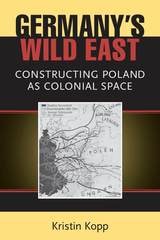
Germany's Wild East
Constructing Poland as Colonial SpaceKristin Kopp
University of Michigan Press, 2012
While conventional definitions locate colonial space overseas, Kristin Kopp argues that it was possible to understand both distant continents and adjacent Eastern Europe as parts of the same global periphery dependent upon Western European civilizing efforts. However, proximity to the source of aid translated to greater benefits for Eastern Europe than for more distant regions.

Germany, Propaganda and Total War, 1914-1918
David Welch
Rutgers University Press, 2000
Adolf Hitler, writing in Mein Kampf, was scathing in his condemnation of German propaganda in the First World War, declaring that Germany had failed to recognize propaganda as a weapon of the first order. This despite the fact that propaganda had been regarded, arguably for the first time, as an intrinsic part of the war effort.
David Welch has written the first book to fully examine German society — politics, propaganda, public opinion, and total war — in the Great War. Drawing on a wide range of sources — from posters, newspapers, journals, film, parliamentary debates, police and military reports, and private papers — Welch argues that the moral collapse of Germany was due less to the failure to disseminate propaganda than to the inability of the military authorities and the Kaiser to reinforce this propaganda, and to acknowledge the importance of public opinion in forging an effective link between leadership and the people.
Germany, Third Edition
A Short HistoryDonald S. Detwiler
Southern Illinois University Press, 1999
This new edition of a best-selling history of Germany, originally published in 1976, includes the great watershed of 1989–90 and its aftermath. With twelve maps, a chronology of events, and an updated bibliographical essay, Germany: A Short History provides a thorough introduction to German history from antiquity to the present.

Germany
A Modern HistoryMarshall Dill
University of Michigan Press, 1961
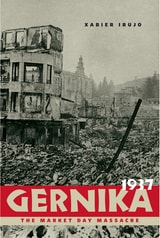
Gernika, 1937
The Market Day MassacreXabier Irujo
University of Nevada Press, 2015
To produce this detailed analysis of the political and military background of the attack and its subsequent international impact, Xabier Irujo examined archives and official government documents in several countries and conducted numerous interviews with Basques who survived. His account of the assault itself, based on eyewitness reports from both victims and attackers, vividly recalls the horror of that first example of the blitz bombing that served the Germans during the first years of World War II. He reveals the US and British governments’ reaction to the bombing and also discusses efforts to prosecute the perpetrators for war crimes. Irujo relates the ways in which the massacre has been remembered and commemorated in Gernika and throughout the worldwide Basque diaspora.
Gernika, 1937: The Market Day Massacre is an important contribution to the history of the Spanish Civil War and to our understanding of the military strategies and decisions that shaped this war and would later be employed by the Nazis during World War II.

Gerrard Winstanley
The Digger's Life and LegacyJohn Gurney
Pluto Press, 2012
John Gurney reveals the hidden history of Winstanley and his movement. As part of the radical ferment which swept England at the time of the civil war, Winstanley led the Diggers in taking over land and running it as 'a common treasury for all' – provoking violent opposition from landowners. Gurney also guides us through Winstanley's writings, which are among the most remarkable prose writings of his age.
Gerrard Winstanley: The Digger's Life and Legacy is a must read for students of English history and all those seeking to re-claim the commons today.
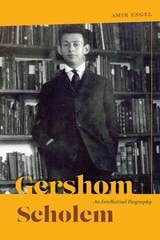
Gershom Scholem
An Intellectual BiographyAmir Engel
University of Chicago Press, 2017
As Engel shows, in his search for the truth of Jewish mysticism Scholem molded the vast literature of Jewish mystical lore into a rich assortment of stories that unveiled new truths about the modern condition. Positioning Scholem’s work and life within early twentieth-century Germany, Palestine, and later the state of Israel, Engel intertwines Scholem’s biography with his historiographical work, which stretches back to the Spanish expulsion of Jews in 1492, through the lives of Rabbi Isaac Luria and Sabbatai Zevi, and up to Hasidism and the dawn of the Zionist movement. Through parallel narratives, Engel touches on a wide array of important topics including immigration, exile, Zionism, World War One, and the creation of the state of Israel, ultimately telling the story of the realizations—and failures—of a dream for a modern Jewish existence.
Gertrude Stein's Surrealist Years
Ery Shin
University of Alabama Press, 2020
Gertrude Stein’s Surrealist Years brings to life Stein’s surrealist sensibilities and personal values borne from her WWII anxieties, not least of which originated in a dread of anti-Semitism. Stein’s earlier works such as Tender Buttons and Lucy Church Amiably tend to prioritize formal innovations over narrative-building and overt political motifs. However, Ery Shin argues that Stein’s later works engage more with storytelling and life-writing in startling ways—most emphatically and poignantly through the surrealist lens.
Beginning with The Autobiography of Alice B. Toklas and continuing in later works, Stein renders legible her war-torn era’s jarring dystopian energies through narratives filled with hallucinatory visions, teleportation, extreme coincidences, action reversals, doppelgangers, dream sequences spanning both sleeping and waking states, and great whiffs of the occult. Such surrealist gestures are predicated on Stein’s return to the independent clause and, by extension, to plot, characterization, and anecdotes. By summoning the marvelous in a historically situated world, Stein joins her surrealist contemporaries in their own ambivalent crusade on behalf of historiography.
Besides illuminating Stein’s art and life, the surrealist framework developed here brings readers deeper into those philosophical ideas invoked by war. Topics of discussion emphasize how varied Jewish experiences were in Hitler’s Europe, how outliers like Stein can be included in the surrealist project, surrealism’s theoretical bind in the face of WWII, and the age-old question of artistic legacy.
Gertrude Stein
The Language That Rises: 1923-1934Ulla E. Dydo
Northwestern University Press, 2008
The first extensive examination of Stein's notebooks, manuscripts and letters, prepared over a period of twenty years, Gertrude Stein: The Language That Rises asks new questions and explores new ways of reading Stein. This definitive study give us a finely detailed, deeply felt understanding of Stein, the great modernist, throughout one of her most productive periods. From "An Elucidation" in 1923 to Lectures In America in 1934, Ulla E. Dydo examines the process of the making and remaking of Stein's texts as they move from notepad to notebook to manuscript, from an idea to the ultimate refinement of the author's intentions. The result is an unprecedented view of the development of Stein's work, word by word, text by text, and over time.
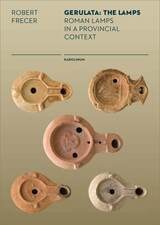
Gerulata
The Lamps: A Survey of Roman Lamps in PannoniaRobert Frecer
Karolinum Press, 2015
This catalog brings together for the first time the 210 ancient lamps excavated since 1949 in Bratislava-Rusovce, a suburb of the capital of Slovakia and the site of the ancient Roman settlement of Gerulata. What may appear at first glance as a standard panoply of Roman lamps is comprehensively examined to uncover signs of wear and use, unique personal inscriptions, and exceptional forms. This book reveals the stunning wealth of knowledge that can be gained from the study of lighting devices in this liminal settlement on the tough northern frontier of the Roman Empire.
Gesta Hungarorum
The Deeds of the HungariansSimon Kézai
Central European University Press, 1999
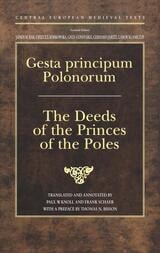
Gesta principum Polonorum
The Deeds of the Princes of the PolesJános M. Bak
Central European University Press, 2003
Gesta, volume 60 number 2 (Fall 2021)
The University of Chicago Press
University of Chicago Press Journals, 2021

Gesta, volume 61 number 1 (Spring 2022)
The University of Chicago Press
University of Chicago Press Journals, 2022
Gesta, volume 61 number 2 (Fall 2022)
The University of Chicago Press
University of Chicago Press Journals, 2022
Gesta, volume 62 number 1 (Spring 2023)
The University of Chicago Press
University of Chicago Press Journals, 2023
Gesta, volume 62 number 2 (Fall 2023)
The University of Chicago Press
University of Chicago Press Journals, 2023

Gesta, volume 63 number 1 (Spring 2024)
The University of Chicago Press
University of Chicago Press Journals, 2024
Gesta, volume 63 number 2 (Fall 2024)
The University of Chicago Press
University of Chicago Press Journals, 2024
Gesta, volume 64 number 1 (Spring 2025)
The University of Chicago Press
University of Chicago Press Journals, 2025
Gesta, volume 64 number 2 (Fall 2025)
The University of Chicago Press
University of Chicago Press Journals, 2025
Gesta, volume 65 number 1 (Spring 2026)
The University of Chicago Press
University of Chicago Press Journals, 2026
Gesture and Power
Religion, Nationalism, and Everyday Performance in CongoYolanda Covington-Ward
Duke University Press, 2016
Get Involved!
Stories of Bahamian Civil SocietyKim Williams-Pulfer
Rutgers University Press, 2024
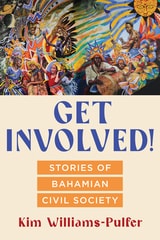
Junkanoo is the national cultural festival of The Bahamas. It fosters a sense of community pride, identity, companionship, spirituality and unity. Watch a video about Junknoo:
https://www.youtube.com/watch?v=tnMpMesNb1Q&t=14s

Get Out of My Room!
A History of Teen Bedrooms in AmericaJason Reid
University of Chicago Press, 2016
Even in our era of Snapchat and hoverboards, bedrooms remain a key part of teenage life, one of the only areas where a teen can exert control and find some privacy. And while these separate bedrooms only became commonplace after World War II, the idea of the teen bedroom has been around for a long time. With Get Out of My Room!, Jason Reid digs into the deep historical roots of the teen bedroom and its surprising cultural power. He starts in the first half of the nineteenth century, when urban-dwelling middle-class families began to consider offering teens their own spaces in the home, and he traces that concept through subsequent decades, as social, economic, cultural, and demographic changes caused it to become more widespread. Along the way, Reid shows us how the teen bedroom, with its stuffed animals, movie posters, AM radios, and other trappings of youthful identity, reflected the growing involvement of young people in American popular culture, and also how teens and parents, in the shadow of ongoing social changes, continually negotiated the boundaries of this intensely personal space.
Richly detailed and full of surprising stories and insights, Get Out of My Room! is sure to offer insight and entertainment to anyone with wistful memories of their teenage years. (But little brothers should definitely keep out.)