Results by title
18284 books match the query 'United States' and 433 start with g
Great Ships on the Great Lakes Teacher's Guide
A Maritime HistoryCathy Green
Wisconsin Historical Society Press, 2013
Great Ships on the Great Lakes explores the history of the region’s rivers, lakes, and inland seas—and the people and ships who navigated them. Read along as the first peoples paddle tributaries in birch bark canoes. Follow as European voyageurs pilot rivers and lakes to get beaver pelts back to the eastern market. Watch as settlers build towns and eventually cities on the shores of the Great Lakes. Listen to the stories of sailors, lighthouse keepers, and shipping agents whose livelihoods depended on the dangerous waters of Lake Michigan, Superior, Huron, Erie, and Ontario. Give an ear to their stories of unexpected tragedy and miraculous rescue, and heed their tales of risk and reward on the low seas.
Great Ships also tells the story of sea battles and gunships, of the first vessels to travel beyond the Niagara, and of the treacherous storms and cold weather that caused thousands of ships to sink in the Great Lakes. Watch as underwater archaeologists solve the mysteries of Great Lakes shipwrecks today. And learn how the shift from sail to steam forever changed the history of shipping, as schooners made way for steamships and bulk freighters, and sailing became a recreation, not a hazardous way of life.
Designed for the upper elementary classroom with emphasis on Michigan and Wisconsin, Great Ships on the Great Lakes includes a timeline of events, on-page vocabulary, and a list of resources and places to visit. Over 20 maps highlight the region’s maritime history. The accompanying Teacher’s Guide includes 18 classroom activities, arranged by chapter, including lessons on exploring shipwrecks and learning how glaciers moved across the landscape.
Great Ships on the Great Lakes
A Maritime HistoryBobbie Malone
Wisconsin Historical Society Press, 2013
In this highly accessible history of ships and shipping on the Great Lakes, upper elementary readers are taken on a rip-roaring journey through the waterways of the upper Midwest.
Great Ships on the Great Lakes explores the history of the region’s rivers, lakes, and inland seas—and the people and ships who navigated them. Read along as the first peoples paddle tributaries in birch bark canoes. Follow as European voyageurs pilot rivers and lakes to get beaver pelts back to the eastern market. Watch as settlers build towns and eventually cities on the shores of the Great Lakes. Listen to the stories of sailors, lighthouse keepers, and shipping agents whose livelihoods depended on the dangerous waters of Lake Michigan, Superior, Huron, Erie, and Ontario. Give an ear to their stories of unexpected tragedy and miraculous rescue, and heed their tales of risk and reward on the low seas.
Great Ships also tells the story of sea battles and gunships, of the first vessels to travel beyond the Niagara, and of the treacherous storms and cold weather that caused thousands of ships to sink in the Great Lakes. Watch as underwater archaeologists solve the mysteries of Great Lakes shipwrecks today. And learn how the shift from sail to steam forever changed the history of shipping, as schooners made way for steamships and bulk freighters, and sailing became a recreation, not a hazardous way of life.
Designed for the upper elementary classroom with emphasis on Michigan and Wisconsin, Great Ships on the Great Lakes includes a timeline of events, on-page vocabulary, and a list of resources and places to visit. Over 20 maps highlight the region’s maritime history. The accompanying Teacher’s Guide includes 18 classroom activities, arranged by chapter, including lessons on exploring shipwrecks and learning how glaciers moved across the landscape.

Great Unknown
Japanese American SketchesGreg Robinson
University Press of Colorado, 2016
What is more, The Great Unknown reshapes our understanding of the Asian American experience. By focusing attention on exceptional figures who deviated from social norms, Robinson subverts stereotypes of ethnic Japanese and other Asians as conformist or colorless. The collection also highlights a set of recurring themes absent from conventional histories—including the lives of Japanese Americans outside the West Coast, the role of women in shaping community life, encounters between Japanese American and African American communities during the struggle for civil rights, and the evolving status of queer community members.
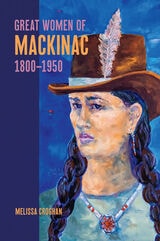
Great Women of Mackinac, 1800-1950
Melissa Croghan
Michigan State University Press, 2023

Greed, Rage, and Love Gone Wrong
Murder in MinnesotaBruce Rubenstein
University of Minnesota Press, 2006
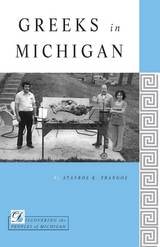
Greeks in Michigan
Stavros K. Frangos
Michigan State University Press, 2004
The influence of Greek culture on Michigan began long before the first Greeks arrived. The American settlers of the Old Northwest Territory had definite notions of Greeks and Greek culture. America and its developing society and culture were to be the "New Athens," a locale where the resurgence in the values and ideals of classical Greece were to be reborn. Stavros K. Frangos describes how such preconceptions and the competing desires to retain heritage and to assimilate have shaped the Greek experience in Michigan. From the padrone system to the church communities, Greek institutions have both exploited and served Greek immigrants, and from scattered communities across the state to enclaves in Detroit, Greek immigrants have retained and celebrated Greek culture.

Green Bay Packers
Trials, Triumphs, and TraditionWilliam Povletich
Wisconsin Historical Society Press, 2012
On the field, legends like Don Hutson, Ray Nitschke, and Brett Favre made the Green Bay Packers into a professional football powerhouse. But the history of the NFL’s only small-town franchise is as much a story of business creativity as gridiron supremacy. Behind every Packer who became a legend on the field, there was an Andrew Turnbull, Dominic Olejniczak, or Bob Harlan, leaders whose dedication and creativity in preserving the franchise were unwavering.
Green Bay Packers: Trials, Triumphs, and Traditions tells the improbable story of professional football’s most iconic team, and along the way gives a unique window into the rise of modern professional sports. As the NFL has evolved into a financial juggernaut, the Green Bay Packers, with more than 112,158 stockholders, stand alone as the only professional sports franchise owned by fans, thus providing the only public record of how a sports team is run.
Featuring more than 300 photographs, some never before seen, Green Bay Packers illustrates how the most creative team in sports is also one of the most successful, with names like Lambeau, Canadeo, Lombardi, Hornung, Holmgren, and White leading the way to a league-best thirteen NFL titles and twenty-one Hall of Fame inductees. This comprehensive, up-to-date history of the Packers includes the 2011 season.
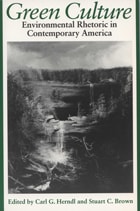
Green Culture
Environmental Rhetoric In Contemporary AmericaCarl Herndl
University of Wisconsin Press, 1996
Listen to politicians, social scientists, naturalists, and economists talk about the environment, and a problem becomes clear: dramatic differences on environmental issues are embedded in dramatically different discourses. This book explores these differences and shows how an understanding of rhetoric might lead to their resolution. The authors examine specific environmental debates—over the Great Lakes and Yellowstone, a toxic waste dump in North Carolina and an episode in Red Lodge, Montana. They look at how genres such as nature writing and specific works such as Rachel Carson’s Silent Spring have influenced environmental discourse. And they investigate the impact of cultural traditions, from the landscape painting of the Hudson River School to the rhetoric of the John Birch Society, on our discussions and positions on the environment.
Most of the scholars gathered here are also hikers, canoeists, climbers, or bird watchers, and their work reflects a deep, personal interest in the natural world in connection with the human community. Concerned throughout to make the methods of rhetorical analysis perfectly clear, they offer readers a rare chance to see what, precisely, we are talking about when we talk about the environment.
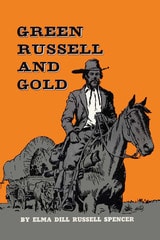
Green Russell and Gold
By Elma Dill Russell Spencer
University of Texas Press, 1966
The family history of the Russells of Georgia is a saga of the Westward Movement during the middle fifty years of the nineteenth century. The "Russell boys," as prospectors and miners, moved with the frontier as it followed fresh discoveries of gold, from Georgia to California to Colorado. Then, after the interlude of the Civil War, they settled in the new territories, turning their abilities and ruggedness of character to the development of careers on other frontiers—ranching, farming, land development, medicine—in Montana, Colorado, and Texas.
Elma Dill Russell Spencer, a descendant of one of these unusual brothers, relates their story as she learned it from family tradition transmitted by Grandma Russell, from family letters, from public documents, and from historical accounts of the exciting era.
The reader of her narrative sees the evolution of Western society in the vast wasteland of mountain and prairie from the viewpoint of the people who were making history, people too engrossed in their own problems to realize the far-reaching significance of their achievement. The reader sees the struggle to wrest gold from the streams and hills with primitive tools and techniques; the development of tent villages into populous towns affording most of the comforts of the East; the evolution of a code of mining laws, of protection from violence and crime; the building of schools; the emergence of sectional problems and divided loyalties; the Civil War, mostly through noncombatants' eyes; the progressive changes in transportation, until the railroads tied the West to the East. The reader also encounters Indians, who ride in and out of these pages, and other fascinating types of characters associated with "the wild, varied, and always unpredictable" frontier.
The odyssey of the Russell brothers as they struggle home to Georgia from Union-sympathizing Denver is particularly full of action, with tense moments in the account of narrowly escaped death—at the hands of Indians, through the ravages of disease, and from the enmity of Yankee foes.
This book was originally published as Gold Country in 1958; the University of Texas Press edition was completely revised and first published in 1966.

Green Travel Guide to Northern Wisconsin
Environmentally and Socially Responsible TravelPat Dillon
University of Wisconsin Press, 2011
Green Travel Guide to Northern Wisconsin showcases the best green restaurants, lodgings, shops, and activities in Wisconsin’s Northland. Learn about exploring the cliffs and caves of the Niagara Escarpment while biking the Door Peninsula. Carpool to the Midwest Renewable Energy Fair in Custer where you can stay at a nearby solar-powered inn. Take an all day eco-geo-history tour of the north woods near Hayward, explore the Chequamegon-Nicolet Forest, kayak the Mississippi River backwaters, and much more.
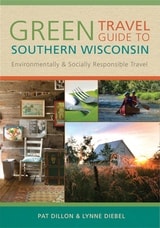
Green Travel Guide to Southern Wisconsin
Environmentally and Socially Responsible TravelPat Dillon
University of Wisconsin Press, 2010
Honorable Mention, Foreword Magazine’s Travel Guidebook of the Year

Green World
A Tragicomic Memoir of Love & ShakespeareMichelle Ephraim
University of Massachusetts Press, 2024
Shortlisted for the 2026William Saroyan International Prize for Writing • Shortlisted for the Story Circle Network Gilda Prize • Winner of the Wisconsin Library Association's Literary Award for Nonfiction • Shortlisted for the Rubery Book Award • A 2025 IPPY Awards Silver Medal Winner in Autobiography/Memoir • Winner of the 2025 Friends of American Writers Adult Literature Award • A 2024 Foreword INDIES Finalist • A 2025 Sophie Brody Medal Notable Book • A Jewish Women's Archive Summer Book Club Pick
At twenty-three, Michelle Ephraim was failing at everything. The only child of reclusive Holocaust-survivor parents who were dismayed by her literary studies, she found herself dumped by her boyfriend and bombing out of graduate school. Then, one night, she crashed a Shakespeare recitation party. Loopy from vodka and never having read a single line of Shakespeare, she was transfixed. Shakespeare, she decided, was the lifeline she needed.
Green World is the hilarious and heartbreaking story of Ephraim’s quest to become a Shakespeare scholar and to find community and home. As she studies Shakespeare, Ephraim’s world uncannily begins to mirror the story of the Jewish daughter in The Merchant of Venice, and she finds herself in a Green World, an idyllic place where Shakespeare’s heroines escape their family trauma. Green World reckons with global, historical, and personal tragedy and shows how literature—comic and tragic—can help us brave every kind of anguish.
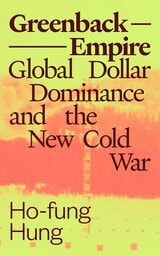
Greenback Empire
Global Dollar Dominance and the New Cold WarHo-fung Hung
University of Chicago Press, 2026
A critical history of the US dollar’s dominance in the world economy—and what has kept China’s currency from overtaking it.
The dollar is the primary currency of the world economy. With China now rivaling the United States on the world stage, a critical question hangs in the balance: will the Chinese renminbi challenge the status of the dollar and, in doing so, deprive America of its “exorbitant privilege”?
In GreenbackEmpire, Ho-fung Hung offers a powerful account of why, even as American shares of global production, ownership, and trade continue to decline, its currency has retained the support of governments and investors around the world. For six decades, Hung shows, the dominance of the dollar has rested on the security umbrella that the US offers to the world’s wealthiest countries—including oil producers. To these countries, support for the value of the dollar is tantamount to maintaining US protection. While China has become a serious geopolitical and economic rival to the US, the Chinese state’s airtight control of its financial system has delayed the free trading of the renminbi, limiting the currency’s internationalization. In short, the same strategy that engineered growth in China’s economy is restraining its currency's rise in opposition to the dollar. Hung’s Greenback Empire is an essential history of the dollar’s prowess, indispensable for understanding the future of the global monetary system.
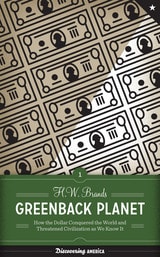
Greenback Planet
How the Dollar Conquered the World and Threatened Civilization as We Know ItBy H. W. Brands
University of Texas Press, 2011
The world runs on the U.S. dollar. From Washington to Beijing, governments, businesses, and individuals rely on the dollar to conduct commerce and invest profitably and safely—even after the global financial meltdown in 2008 revealed the potentially catastrophic cost of the dollar's hegemony. But how did the greenback achieve this planetary dominance a mere century and a half after President Lincoln issued the first currency backed only by the credit—and credibility—of the federal government?
In Greenback Planet, acclaimed historian H. W. Brands charts the dollar's astonishing rise to become the world's principal currency. Telling the story with the verve of a novelist, he recounts key episodes in U.S. monetary history, from the Civil War debate over fiat money (greenbacks) to the recent worldwide financial crisis. Brands explores the dollar's changing relations to gold and silver and to other currencies and cogently explains how America's economic might made the dollar the fundamental standard of value in world finance. He vividly describes the 1869 Black Friday attempt to corner the gold market, banker J. P. Morgan's bailout of the U.S. treasury, the creation of the Federal Reserve, and President Franklin Roosevelt's handling of the bank panic of 1933. Brands shows how lessons learned (and not learned) in the Great Depression have influenced subsequent U.S. monetary policy, and how the dollar's dominance helped transform economies in countries ranging from Germany and Japan after World War II to Russia and China today. He concludes with a sobering dissection of the 2008 world financial debacle, which exposed the power—and the enormous risks—of the dollar's worldwide reign.
Greetings from Cutler County
A Novella and StoriesTravis Mulhauser
University of Michigan Press, 2005
In one northern Michigan community the lives of desperate small-town dreamers are examined through an ensemble cast as earnest as they are outrageous, and as compelling as they are heartbreaking. The lovers, crooks, failures, and survivors of Cutler County are so flawed and genuine you can't help rooting for them-no matter how foolish or hopeless their pursuits may seem.
The stories take place in Cutler County, Michigan. Most of the characters are young men who think of themselves as losers and outsiders. Short on cash, popularity, and the ambition needed for success, they nevertheless are able to examine their failings with the self-knowing humor and resignation of the perpetually thwarted ne'er-do-well.
The stories are inseparable from the stark shoreline of their Lake Michigan settings-the cavernous woods and vast inland lakes that shape life in northern Michigan-and create a landscape as rugged and dramatic as youth itself. Greetings from Cutler County explores the common triumphs and tragedies of coming of age, while providing a rationale and humor that is uniquely and unforgettably its own.
Greetings from New Nashville
How a Sleepy Southern Town Became "It" CitySteve Haruch
Vanderbilt University Press, 2020
In that span of two decades, the boundaries of Nashville did not change. But something did. Or rather, many somethings changed, and kept changing, until many who lived in Nashville began to feel they no longer recognized their own city. And some began to feel it wasn't their own city at all anymore as they were pushed to its fringes by rising housing costs. Between 1998 and 2018, the population of Nashville grew by 150,000. On some level, Nashville has always packaged itself for consumption, but something clicked and suddenly everyone wanted a taste. But why Nashville? Why now? What made all this change possible?
This book is an attempt to understand those transformations, or, if not to understand them, exactly, then to at least grapple with the question: What happened?
Gregory Corso
Doubting ThomistKirby Olson
Southern Illinois University Press, 2002
Gregory Corso is the most intensely spiritual of the Beat generation poets and still by far the least explored. The virtue of Kirby Olson’s Gregory Corso: Doubting Thomist is that it is the first book to place all of Corso’s work in a philosophical perspective, concentrating on Corso as a poet torn between a static Catholic Thomist viewpoint and that of a progressive surrealist.
While Corso is a subject of great controversy—his work often being seen as nihilistic and wildly comic—Olson argues that Corso’s poetry, in fact, maintains an insistent theme of doubt and faith with regard to his early Catholicism. Although many critics have attempted to read his poetry, and some have done so brilliantly, Olson—in his approach and focus—is the first to attempt to give a holistic understanding of the oeuvre as essentially one not of entertainment or hilarity but of a deep spiritual and philosophical quest by an important and profound mind.
In nine chapters, Olson addresses Corso from a broad philosophical perspective and shows how Corso takes on particular philosophical issues and contributes to new understandings. Corso’s concerns, like his influence, extend beyond the Beat generation as he speaks about concerns that have troubled thinkers from the beginning of the Western tradition, and his answers offer provocative new openings for thought.
Corso may very well be the most important Catholic poet in the American literary canon, a visionary like Burroughs and Ginsberg, whose work illuminated a generation. Written in a lively and engaging style, Gregory Corso: Doubting Thomist seeks to keep Corso’s memory alive and at last delve fully into Corso’s poetry.
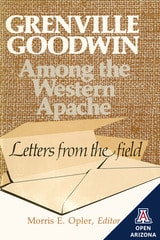
Grenville Goodwin Among the Western Apache
Letters from the FieldEdited by Morris E. Opler
University of Arizona Press, 1973
During this same period, Morris Opler was studying the Chiricahua and Mescalero Apache in New Mexico. In order to exchange information about their studies, Goodwin and Opler began corresponding. Both men were convinced that a long-overdue, systematic comparison of Apachean cultures would yield significant results.

Gridiron Gourmet
Gender and Food at the Football TailgateMaria J. Veri
University of Arkansas Press, 2019
Tailgating, which began in the early 1900s as a quaint picnic lunch outside of the stadium, has evolved into a massive public social event with complex menus, extravagant creative fare, and state-of-art grilling equipment. Unlike traditional notions of the home kitchen, the blacktop is a highly masculine culinary environment in which men and the food they cook are often the star attractions.
Gridiron Gourmet examines tailgating as shown in television, film, advertising, and cookbooks, and takes a close look at the experiences of those tailgaters who are as serious about their brisket as they are about cheering on their favorite team, demonstrating how and why the gendered performances on the football field are often matched by the intensity of the masculine displays in front of grills, smokers, and deep fryers.
Grievance
In FragmentsGrant Farred
Prickly Paradigm Press, 2024
Grievance is an American mode of being that can be traced back to the Declaration of Independence, that is at the root of the Civil War and accounts in large measure for the failure of Reconstruction, that runs through the Civil Rights moment, and that showed itself again in the events of January 6, 2021. Grievance, in America, always concatenates with racism and evinces itself most violently in those moments when white supremacy, fallaciously, presents itself as being under attack. This book explores this elemental yet destructive thread of the American character.

Grieving Pregnancy
Memorializing Loss in Japanese Buddhism and American CatholicismMaureen L. Walsh
Rutgers University Press, 2025

Grime, Glitter, and Glass
The Body and the Sonic in Contemporary Black ArtNikki A. Greene
Duke University Press, 2024

Gringos Get Rich
Anti-Americanism in Chilean MusicEunice Rojas
University of Alabama Press, 2024
Documents counterimperialism in Chilean music since the 1960s
Gringos Get Rich: Anti-Americanism in Chilean Music examines anti-Americanism in Latin America as manifested in Chilean music in recent history. From a folk-based movement in the 1960s and early 1970s to underground punk rock groups during the Pinochet regime, to socially conscious hip-hop artists of postdictatorship Chile, Chilean music has followed several left-leaning transnational musical trends to grapple with Chile’s fluctuating relationship with the United States. Eunice Rojas’s innovative analysis introduces US readers to a wide swath of Chilean musicians and their powerful protest songs and provides a representative and long view of the negative influences of the United States in Latin America.
Much of the criticism of the United States in Chile’s music centers on the perception of the United States as a heavy-handed source of capitalist imperialism that is exploitative of and threatening to Chile’s poor and working-class public and to Chilean cultural independence and integrity. Rojas incorporates Antonio Gramsci’s theories about the difficulties of struggles for cultural power within elitist capitalist systems to explore anti-Americanism and anti-capitalist music. Ultimately, Rojas shows how the music from various genres, time periods, and political systems attempts to act as a counterhegemonic alternative to Chile’s political, cultural, and economic status quo.
Rojas’s insight is timely with recent political trends toward the right in the Americas. There is also increased interest in and acceptance of popular song lyrics as literary texts. The book will appeal to Latin Americanists, ethnomusicologists, scholars of popular culture and international relations, students, and general readers.
.
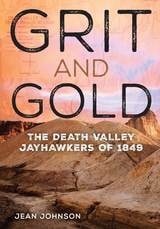
Grit and Gold
The Death Valley Jayhawkers of 1849Jean Johnson
University of Nevada Press, 2018
After leaving Salt Lake City to break a road south to the Pacific Coast that would eliminate crossing the snowy Sierra Nevada, the party veered off the Old Spanish Trail in southern Utah to follow a mountaineer’s map portraying a bogus trail that claimed to cut months and hundreds of miles off their route to the gold country. With winter coming, however, they found themselves hopelessly lost in the mountains and dry valleys of southern Nevada and California. Abandoning everything but the shirts on their backs and the few oxen that became their pitiful meals, they turned their dreams of gold to hopes of survival.
Utilizing William Lorton’s 1849 diary of the trek from Illinois to southern Utah, the reminiscences of the Jayhawkers themselves, the keen memory of famed pioneer William Lewis Manly, and the almost daily diary of Sheldon Young, Johnson paints a lively but accurate portrait of guts, grit, and determination.
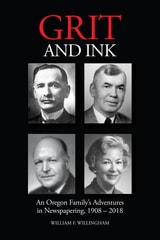
Grit and Ink
An Oregon Family’s Adventures in Newspapering, 1908–2018William F. Willingham
Oregon State University Press, 2018

Grocery Activism
The Radical History of Food Cooperatives in MinnesotaCraig B. Upright
University of Minnesota Press, 2020
A key period in the history of food cooperatives that continues to influence how we purchase organic food today
Our notions of food co-ops generally don’t include images of baseball bat–wielding activists in the aisles. But in May 1975, this was the scene as a Marxist group known as the Co-op Organization took over the People’s Warehouse, a distribution center for more than a dozen small cooperative grocery stores in the Minneapolis area. The activist group’s goal: to curtail the sale of organic food. The People’s Warehouse quickly became one of the principal fronts in the political and social battle that Craig Upright explores in Grocery Activism. The story of the fraught relationship of new-wave cooperative grocery stores to the organic food industry, this book is an instructive case study in the history of activists intervening in capitalist markets to promote social change.
Focusing on Minnesota, a state with both a long history of cooperative enterprise and the largest number of surviving independent cooperative stores, Grocery Activism looks back to the 1970s, when the mission of these organizations shifted from political activism to the promotion of natural and organic foods. Why, Upright asks, did two movements—promoting cooperative enterprise and sustainable agriculture—come together at this juncture? He analyzes the nexus of social movements and economic sociology, examining how new-wave cooperatives have pursued social change by imbuing products they sell with social values. Rather than trying to explain the success or failure of any individual cooperative, his work shows how members of this fraternity of organizations supported one another in their mutual quest to maintain fiscal solvency, promote better food-purchasing habits, support sustainable agricultural practices, and extol the virtues of cooperative organizing. A foundational chapter in the history of organic food, Grocery Activism clarifies the critical importance of this period in transforming the politics and economics of the grocery store in America.

Groove Tube
Sixties Television and the Youth RebellionAniko Bodroghkozy
Duke University Press, 2001
Bodroghkozy argues that, in order to woo an increasingly lucrative baby boomer audience, television had to appeal to the social and political values of a generation of young people who were enmeshed in the hippie counterculture, the antiwar movement, campus protests, urban guerilla action—in general, a culture of rebellion. She takes a close look at the compromises and negotiations that were involved in determining TV content, as well as the ideological difficulties producers and networks faced in attempting to appeal to a youthful cohort so disaffected from dominant institutions. While programs that featured narratives about hippies, draft resisters, or revolutionaries are examined under this lens, Groove Tube doesn’t stop there: it also examines how the nation’s rebellious youth responded to these representations. Bodroghkozy explains how, as members of the first “TV generation,” some made sense of their societal disaffection in part through their childhood experience with this powerful new medium.
Groove Tube will interest sociologists, American historians, students and scholars of television and media studies, and others who want to know more about the 1960s.

Groovy Science
Knowledge, Innovation, and American CountercultureEdited by David Kaiser and W. Patrick McCray
University of Chicago Press, 2016
Such a view is far too simple, ignoring the diverse ways in which the era’s countercultures expressed enthusiasm for and involved themselves in science—of a certain type. Rejecting hulking, militarized technical projects like Cold War missiles and mainframes, Boomers and hippies sought a science that was both small-scale and big-picture, as exemplified by the annual workshops on quantum physics at the Esalen Institute in Big Sur, or Timothy Leary’s championing of space exploration as the ultimate “high.” Groovy Science explores the experimentation and eclecticism that marked countercultural science and technology during one of the most colorful periods of American history.
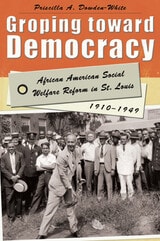
Groping toward Democracy
African American Social Welfare Reform in St. Louis, 1910-1949Priscilla A. Dowden-White
University of Missouri Press, 2011
In Groping toward Democracy: African American Social Welfare Reform in St. Louis, 1910–1949, historian Priscilla A. Dowden-White presents an on-the-ground view of local institution building and community organizing campaigns initiated by African American social welfare reformers. Through extensive research, the author places African American social welfare reform efforts within the vanguard of interwar community and neighborhood organization, reaching beyond the “racial uplift” and “behavior” models of the studies preceding hers. She explores one of the era’s chief organizing principles, the “community as a whole” idea, and deliberates on its relationship to segregation and the St. Louis black community’s methods of reform. Groping toward Democracy depicts the dilemmas organizers faced in this segregated time, explaining how they pursued the goal of full, uncontested black citizenship while still seeking to maximize the benefits available to African Americans in segregated institutions. The book’s nuanced mapping of the terrain of social welfare offers an unparalleled view of the progress brought forth by the early-twentieth-century crusade for democracy and equality.
By delving into interrelated developments in health care, education, labor, and city planning, Dowden-White deftly examines St. Louis’s African American interwar history. Her in-depth archival research fills a void in the scholarship of St. Louis’s social development, and her compelling arguments will be of great interest to scholars and teachers of American urban studies and social welfare history.

Gross Misbehavior and Wickedness
A Notorious Divorce in Early Twentieth-Century AmericaJean Elson
Temple University Press, 2017
Gross Misbehavior and Wickedness—the charges Nina levied at James for his adultery (with the family governess) and extreme cruelty—recounts the protracted legal proceedings in juicy detail.
Jean Elson uses court documents, correspondence, journals, and interviews with descendants to recount the salacious case. In the process, she underscores how divorce—in an era when women needed husbands for economic support—was associated with women’s aspirations for independence and rights. The Walkers’ dispute, replete with plot twists and memorable characters, sheds light on a critical period in the evolution of American culture.

Ground Pounder
A Marine’s Journey through South Vietnam, 1968-1969Gregory V. Short
University of North Texas Press, 2012
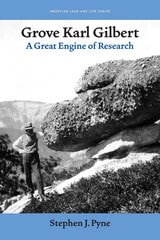
Grove Karl Gilbert
A Great Engine of ResearchStephen J. Pyne
University of Iowa Press, 1980
Gilbert knew most of geology's grand figures--including John Wesley Powell, Clarence Dutton, and Clarence King--and Pyne's chronicle of the imperturbable, quietly unconventional Gilbert is couterpointed with sketches of these prominent scientists. The man who wrote that "happiness is sitting under a tent with walls uplifted, just after a brief shower,", created answers to the larger questions of the earth in ways that have become classics of his science.

Growing American Rubber
Strategic Plants and the Politics of National SecurityFinlay, Mark R
Rutgers University Press, 2009
Although synthetic rubber emerged from World War II as one solution, the issue of ever-diminishing natural resources and the question of how to meet twenty-first-century consumer, military, and business demands lingers today.

Growing American Rubber
Strategic Plants and the Politics of National SecurityFinlay, Mark R
Rutgers University Press, 2009
Although synthetic rubber emerged from World War II as one solution, the issue of ever-diminishing natural resources and the question of how to meet twenty-first-century consumer, military, and business demands lingers today.
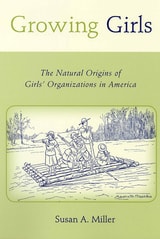
Growing Girls
The Natural Origins of Girls' Organizations in AmericaMiller, Susan A
Rutgers University Press, 2007
Surprisingly, the "girl problem"?a crisis caused by the transition from a sheltered, family-centered Victorian childhood to modern adolescence where self-control and a strong democratic spirit were required of reliable citizens?was also solved by way of traditionally masculine, adventurous, outdoor activities, as practiced by the Girl Scouts, the Camp Fire Girls, and many other similar organizations.
Susan A. Miller explores these girls' organizations that sprung up in the first half of the twentieth century from a socio-historical perspective, showing how the notions of uniform identity, civic duty, "primitive domesticity," and fitness shaped the formation of the modern girl.

Growing Up Abolitionist
The Story of the Garrison ChildrenHarriet Hyman Alonso
University of Massachusetts Press, 2002
Much has been written about the life of abolitionist William Lloyd Garrison (1805–1879), but relatively little attention has been paid to his wife, Helen Benson Garrison, and their seven children. In Growing Up Abolitionist, Garrison's public image recedes into the background and the family's private world takes center stage.
The lives of the Garrison children were shaped within the context of the great nineteenth-century campaigns against slavery, racism, violence, war, imperialism, and the repression of women. As children, they became apprentices of these movements and grew up adoring their dissident parents. Collectively and individually, they carried on their parents' values in distinctive ways.
Their path was not always easy. When the Civil War erupted, the entire family had to come to grips with a basic contradiction in their lives. While each member passionately yearned for the end of slavery, all but the eldest son, George, who served as an officer with the 55th Massachusetts Colored Regiment, opposed military participation.
The Civil War years also brought four marriage partners into the Garrisons' lives-Ellen Wright, Lucy McKim, and Annie Anthony (all abolitionist daughters) and Henry Villard, a German-born journalist who later became a railroad magnate and publisher of the New York Evening Post and the Nation.
Raised by loving parents to be political activists, the Garrison children, as adults, assumed positions as leaders or participants in those radical causes of their day that most closely reflected their upbringing: racial justice, women's rights, anti-imperialism, and peace.

Growing Up American
How Vietnamese Children Adapt to Life in the United StatesMin Zhou
Russell Sage Foundation, 1998
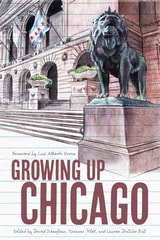
Growing Up Chicago
Edited by David Schaafsma, Roxanne Pilat, and Lauren DeJulio Bell, Foreword by Luis Alberto Urrea
Northwestern University Press, 2021
The stories evoke childhood trips to the Art Institute of Chicago, nighttime games of ringolevio, and the giant neon Magikist lips that once perched over the expressway, sharing perspectives that range from a young man who dreams of becoming an artist to a single mother revisiting her Mexican roots, from a woman’s experience with sexual assault to a child’s foray into white supremacy. This book memorably explores culture, social identity, and personal growth through the eyes of Chicagoans, affirming that we each hold the ability to shape the places in which we live and write and read as much as those places shape us.
Growing Up Ethnic
Nationalism and the Bildungsroman in African American and Jewish American FictionJaptok, Martin
University of Iowa Press, 2005
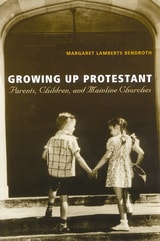
Growing Up Protestant
Parents, Children and Mainline ChurchesMargaret Lamberts Bendroth
Rutgers University Press, 2002
Home and family are key, yet relatively unexplored, dimensions of religion in the contemporary United States. American cultural lore is replete with images of saintly nineteenth-century American mothers and their children. During the twentieth century, however, the form and function of the American family have changed radically, and religious beliefs have evolved under the challenges of modernity. As these transformations took place, how did religion manage to “fit” into modern family life?
In this book, Margaret Lamberts Bendroth examines the lives and beliefs of white, middle-class mainline Protestants (principally northern Presbyterians, Baptists, Methodists, and Congregationalists) who are theologically moderate or liberal. Mainliners have pursued family issues for most of the twentieth century, churning out hundreds of works on Christian childrearing. Bendroth’s book explores the role of family within a religious tradition that sees itself as America’s cultural center. In this balanced analysis, the author traces the evolution of mainliners’ roles in middle-class American culture and sharpens our awareness of the ways in which the mainline Protestant experience has actually shaped and reflected the American sense of self.

Growing Up With Television
Everyday Learning Among Young AdolescentsJoellen Fisherkeller
Temple University Press, 2002
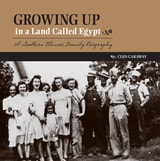
Growing Up in a Land Called Egypt
A Southern Illinois Family BiographyCleo Caraway
Southern Illinois University Press, 2010
In Growing Up in a Land Called Egypt: A Southern Illinois Family Biography,author Cleo Caraway fondly recalls how she and her siblings came of age on the family farm in the 1930s and 1940s. Like many others, the Caraways were affected by the economic hardships of the Great Depression, but Cleo’s parents strived to shelter her and her six siblings from the dire circumstances affecting the nation and their home and allowed them to bask in their idealistic existence. Her love for her family clearly shines from every page as she writes of a simpler time, before World War II divided the family.
Caraway revels in the life her family lived on a southern Illinois hilltop in Murphysboro township, marveling at the mix of commonplace and adventure she experienced in her childhood. She remembers her first day of school, walking three miles to the wondrous one-room building with her siblings; reminisces about strolling through the countryside with her mother, investigating the various plants and flowers, fruits and nuts; and recollects her fascination with the Indian relics she found buried near her home, a hobby she shared with her father. She also writes of seeing Gone with the Wind on the big screen at the Hippodrome in Murphysboro, of learning to sew dresses for her dolls, and of idyllic life on the farm—milking cows, hatching chicks, feeding pigs. Along with her personal memories Caraway includes interviews with neighbors and many fascinating photographs with detailed captions that make the images come alive.
A delightful follow-up to her father’s popular Foothold on a Hillside: Memories of a Southern Illinoisan,Caraway’s book is a pleasant change from the typical accounts of southern Illinois before, during, and after the Great Depression. Instead of hardscrabble grit, Growing Up in a Land Called Egypt offers a refreshingly different view of the period and is certain to be embraced by southern Illinois natives as well as anyone interested in the experiences of a rural family that thrived despite the difficult times. The author’s lighthearted prose, self-deprecating humor, and genuine affection for her family make reading this book a rich and memorable experience.
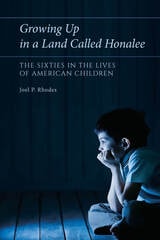
Growing Up in a Land Called Honalee
The Sixties in the Lives of American ChildrenJoel P. Rhodes
University of Missouri Press, 2017
Because the preadolescent years are, according to the child development researchers, the most formative, Joel P. Rhodes focuses on the cohort born between 1956 and 1970 who have never been quantitatively defined as a generation, but whose preadolescent world was nonetheless quite distinct from that of the “baby boomers.” Rhodes examines how this group understood the historical forces of the 1960s as children, and how they made meaning of these forces based on their developmental age. He is concerned not only with the immediate imprint of the 1960s on their young lives, but with how their perspective on the era influenced them as adults.
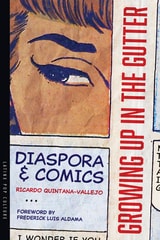
Growing Up in the Gutter
Diaspora and ComicsRicardo Quintana-Vallejo; Foreword by Frederick Luis Aldama
University of Arizona Press, 2024
While the most traditional iteration of the bildungsroman—the coming-of-age story—follows middle-class male heroes who forge their identities in a process of complex introspection, contemporary graphic coming-of-age narratives represent formative processes that fit into, resist, or even disregard narratives of socialization under capitalism, of citizenship, and of nationhood.
Quintana-Vallejo delves into several important themes: how the coming-of-age genre can be used to study adulthood, how displacement and international or global heritage are fundamental experiences, how multidiasporic approaches foreground lived experiences, and how queerness opens narratives of development to the study of adulthood as fundamentally diverse and nonconforming to social norms. Quintana-Vallejo shows how openness enables belonging among chosen families and, perhaps most importantly, freedom to disidentify. And, finally, how contemporary authors writing for the instruction of BIPOC children (and children otherwise affected by diaspora and displacement) use the didactic power of the coming-of-age genre, combined with the hybrid language of graphic narratives, to teach difficult topics in accessible ways.
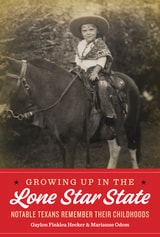
Growing Up in the Lone Star State
Notable Texans Remember Their ChildhoodsBy Gaylon Finklea Hecker and Marianne Odom
University of Texas Press, 2021
Gaylon Finklea Hecker and Marianne Odom began the interviews for this book in 1981 and devoted a professional lifetime to collecting the memories of accomplished Texans to determine what, if anything, about growing up in the Lone Star State prepared them for success.
The resulting forty-seven oral history interviews begin with tales from the early 1900s, when Texas was an agrarian state, and continue through the growth of major cities and the country’s race to the moon. Interviewees recalled life in former slave colonies; on gigantic ranches, tiny farms, and sharecropper fields; and in one-horse towns and big-city neighborhoods, with relatable stories as diverse as the state’s geography.
The oldest interviewees witnessed women earning the right to vote and weathered the Great Depression. Many remembered two world wars, while others recalled the Texas City explosion of 1947 and the tornado that devastated Waco in 1953. They witnessed the advent of television and the nightly news, which helped many come to terms with the assassination of a president that took place too close to home.
Their absorbing reflections are stories of good and bad, hope and despair, poverty and wealth, depression and inspiration, which would have been different if lived anywhere but Texas.
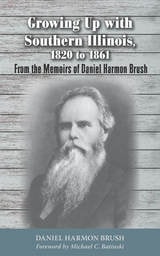
Growing Up with Southern Illinois, 1820 to 1861
From the Memoirs of Daniel Harmon BrushDaniel Harmon Brush, with a Foreword by Michael C. Batinski
Southern Illinois University Press, 2017
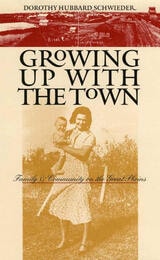
Growing Up with the Town
Family and Community on the Great PlainsDorothy Hubbard Schwieder
University of Iowa Press, 2002
Growth Machines
On the Hollow Joys of Consumption in the Desert of Economic LifeMark Joseph Stelzner
University of Chicago Press, 2026
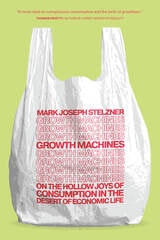
A provocative look at America’s compulsion to consume and our obsession’s surprising—and strange—origins.
In a capitalist society, people sell their labor to purchase staples like food, shelter, and anxiety medication. That’s the equation of everyday economic life that we’ve always been told is true. Except, is it really that simple anymore? No matter how unmaterialistic you may think you are, odds are that deep within is a drive to consume because it feels good: books you won’t read, clothes you won’t like and might wear even less, a replacement phone whose novelty runs out as quickly as its upgrade hits the market. But what drives this impulse?
In Growth Machines, Mark Joseph Stelzner shows how today’s consumers are now programmed by a US economy intent on infinite growth to work for goods they’ve been convinced they need and conditioned to want. Stelzner establishes the gaps between economic thinking and economic reality, arguing that consumption is no longer just a reflection of needs, but rather, it reflects a need for transaction—in many cases, a treat we seek out because it feels good. We work not only to be able to consume the essentials for living, but also to consume for consumption's sake. Yet such consumption doesn’t make us happier. Stelzner traces this strange nature of consumption to an environmental source: an economy that demands growth. To keep its economy pumping, the US must keep Americans consuming. This makes Stelzner’s book an uncomfortable reflection on how we internalize our economy. To be an American is to consume; to consume is what makes America.
Growth, Trade, and Systemic Leadership
Rafael Reuveny and William R. Thompson
University of Michigan Press, 2004
Guadalupe Mountains National Park
An Environmental History of the Southwest BorderlandsJeffrey P. Shepherd
University of Massachusetts Press, 2019
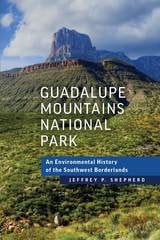
Drawing upon published sources, oral histories, and previously unused archival documents, Jeffrey P. Shepherd situates the Guadalupe Mountains and the national park in the context of epic tales of Spanish exploration, westward expansion, Native survival, immigrant settlement, the conservation movement, early tourism, and regional economic development. As Americans cope with climate change, polarized political rhetoric, and suburban sprawl, public spaces such as Guadalupe Mountains National Park remind us about our ties to nature and our historical relationships with the environment.