Results by title
935 books match the query 'Ancient' and 33 start with h
Hallowed Stewards
Solon and the Sacred Treasurers of Ancient AthensWilliam S. Bubelis
University of Michigan Press, 2016
Hallowed Stewards closely examines those magistracies that were central to Athenian religious efforts, and which are best described as “sacred treasurers.” Given the extensive but fragmentary evidence available to us, which consists mainly of inscriptions but includes such texts as the ps.-Aristotelian Constitution of the Athenians, no catalog-like approach to these offices could properly encompass their details, much less their wider significance. By situating the sacred treasurers within a broader religious and historical framework, Hallowed Stewards not only provides an incisive portrait of the treasurers themselves but also elucidates how sacred property and public finance alike developed in ancient Athens.
Harmful Eloquence
Ovid's Amores from Antiquity to ShakespeareM. L. Stapleton
University of Michigan Press, 1996
Hasmonean Realities behind Ezra, Nehemiah, and Chronicles
Archaeological and Historical PerspectivesIsrael Finkelstein
SBL Press, 2018
A thorough case for a later date for of Ezra, Nehemiah, and Chronicles
In this collection of essays, Israel Finkelstein deals with key topics in Ezra, Nehemiah, and 1 and 2 Chronicles, such as the list of returnees, the construction of the city wall of Jerusalem, the adversaries of Nehemiah, the tribal genealogies, and the territorial expansion of Judah in 2 Chronicles. Finkelstein argues that the geographical and historical realities cached behind at least parts of these books fit the Hasmonean period in the late second century BCE. Seven previously published essays are supplemented by maps, updates to the archaeological material, and references to recent publications on the topics.
Features:
- Analysis of geographical chapters of Ezra, Nehemiah, and Chronicles
- Study of the Hasmonean period in the late second century BCE
- Unique arguments regarding chronology and historical background
Health, Ritual, and Community in Ancient Greece
Calloway Scott
University of Wisconsin Press, 2027
At the heart of this book is a deceptively simple question: What does “health” mean? The answer, historian Calloway B. Scott shows, is culturally contingent, and in ancient Greece the concept went well beyond the proper functioning of an individual’s body. Rather, “health” (Greek hygieia) furnished a key discursive and ritual tool for civic cohesion, religious praxis, and even cultural identity. The all-important polis, central to ancient Greek social and political life, fundamentally depended on this conception of good health as a communal and religious phenomenon, and its ritualization informed relationships not just between individuals but also between communities of humans and between the human and divine realms.
Scott employs an impressive array of sources, from technical medical treatises to poetry to material remains and sanctuary sites, to explore the “body politic” of the ancient Greek world—and to query exactly what keeping that body healthy meant. Health, political identity, social relationships, and religious praxis were all deeply entwined; thus rites, rituals, and healing spaces were public, bringing people together in cohesive, coherent, and, ideally, healthy communities.
Heart of Creation
The Mesoamerican World and the Legacy of Linda ScheleEdited by Andrea Stone
University of Alabama Press, 2002
This accessible, state-of-the-art review of Mayan hieroglyphics and cosmology also serves as a tribute to one of the field's most noted pioneers.
The core of this book focuses on the current study of Mayan hieroglyphics as inspired by the recently deceased Mayanist Linda Schele. As author or coauthor of more than 200 books or articles on the Maya, Schele served as the chief disseminator of knowledge to the general public about this ancient Mesoamerican culture, similar to the way in which Margaret Mead introduced anthropology and the people of Borneo to the English-speaking world.
Twenty-five contributors offer scholarly writings on subjects ranging from the ritual function of public space at the Olmec site and the gardens of the Great Goddess at Teotihuacan to the understanding of Jupiter in Maya astronomy and the meaning of the water throne of Quirigua Zoomorph P. The workshops on Maya history and writing that Schele conducted in Guatemala and Mexico for the highland people, modern descendants of the Mayan civilization, are thoroughly addressed as is the phenomenon termed "Maya mania"—the explosive growth of interest in Maya epigraphy, iconography, astronomy, and cosmology that Schele stimulated. An appendix provides a bibliography of Schele's publications and a collection of Scheleana, written memories of "the Rabbit Woman" by some of her colleagues and students.
Of interest to professionals as well as generalists, this collection will stand as a marker of the state of Mayan studies at the turn of the 21st century and as a tribute to the remarkable personality who guided a large part of that archaeological research for more than two decades.
Hellenicity
Between Ethnicity and CultureJonathan M. Hall
University of Chicago Press, 2002
With Hellenicity, Jonathan M. Hall explores these questions in the context of ancient Greece, drawing on an exceptionally wide range of evidence to determine when, how, why, and to what extent the Greeks conceived themselves as a single people. Hall argues that a subjective sense of Hellenic identity emerged in Greece much later than is normally assumed. For instance, he shows that the four main ethnic subcategories of the ancient Greeks—Akhaians, Ionians, Aiolians, and Dorians—were not primordial survivals from a premigratory period, but emerged in precise historical circumstances during the eighth and seventh centuries B.C. Furthermore, Hall demonstrates that the terms of defining Hellenic identity shifted from ethnic to broader cultural criteria during the course of the fifth century B.C., chiefly due to the influence of Athens, whose citizens formulated a new Athenoconcentric conception of "Greekness."

Hellenism in Late Antiquity
G.W. Bowersock
University of Michigan Press, 1996
Hellenistic Aesthetic
Barbara Hughes Fowler
University of Wisconsin Press, 1989
“Fowler’s . . . own insights are apparent throughout, and they seem to distill the personal appreciation and understanding of a scholar who has devoted much of her career to both contemplating and enjoying Hellenistic poetry. . . . [This book] would make an excellent background text for courses in later Greek and Roman art, and it can be read with profit by anyone interested in exploring the character of Hellenistic culture.”—J. J. Pollitt, American Journal of Archaeology
“Outstanding is the range of examples discussed both in poetry and art. Theocritus, Callimachus, Appolonius, the epigrammatists, and others—that is, the major figures of the time—are considered at length and in several different contexts. Passages are quoted in the original Greek, translated, and analyzed. Fowler’s sensitivity to poetic forms, evident in her other published writings, is again evident here. In addition, however, the philosophical context is not overlooked. . . . Also highly commendable are the liberal references to works of art. Sculpture in the round and in relief, portraits, terracotta figurines, original paintings (grave stelai) and Campanian murals, mosaics, gold and silver vessels, and jewelry are introduced at various points. Every work of art discussed is illustrated in astonishingly clear photographs, which are interspersed in the body of the text.”—Christine Mitchell Havelock
“The Hellenistic Aesthetic provides classicists with their first thorough discussion of the aesthetic unity found in Hellenistic art and literature. . . . Fowler examines parallels both in subject matter and in artistic approach among a diverse group of literary genres and artistic forms. In twelve chapters, The Hellenistic Aesthetic surveys Alexandrian epigrams, pastorals, epics, sculptural groups, mosaics, paintings, and jewelry to supply a convincing, and frequently unexpected, picture of a unified aesthetic vision.”—Jeffrey Buller, Classical Outlook
Hellenistic Poetry
A SelectionDavid Sider, Editor
University of Michigan Press, 2017
The text of each poem is presented, together with basic help on obscure vocabulary, morphology, dialect, meter, syntax, and similar philological issues. The modern commentators also offer guidance on a poem’s literary significance and a brief introduction to the scholarship.
Among the 44 named and anonymous poets represented here are Apollonius of Rhodes, Archimedes, Aristotle, Callimachus, Cercidas, Corinna, Eratosthenes, Erinna, Ezekiel, Hermesianax, Herodas, Lycophron, and Phanocles.
Contributors to the volume in addition to David Sider include: Silvia Barbantani, James Clauss, Dee Clayman, Christophe Cusset, Claudio De Stefani, Marco Fantuzzi, Andrew Ford, Kathryn Gutzwiller, Johanna Hanink, Regina Hoeschele, Richard Hunter, David Konstan, Pauline LeVen, Kelly MacFarlane, Enrico Magnelli, Jackie Murray, Pura Nieto, Maria Noussia, Douglas Olson, Floris Overduin, Richard Rawles, Ralph Rosen, Chad Schroeder, Alexander Sens, Evina Sistakou, Michael Tueller, and Athanassios Vergados.
Although designed primarily as a textbook for graduate students and upper-level undergraduates, the book offers texts and subsidiary information not easily found (if at all) elsewhere. Since Latin poets made constant allusion to Hellenistic poetry, it will also be an important resource for Latinists.
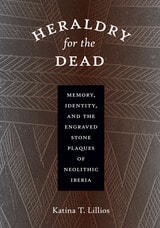
Heraldry for the Dead
Memory, Identity, and the Engraved Stone Plaques of Neolithic IberiaBy Katina T. Lillios
University of Texas Press, 2008
In the late 1800s, archaeologists began discovering engraved stone plaques in Neolithic (3500-2500 BC) graves in southern Portugal and Spain. About the size of one's palm, usually made of slate, and incised with geometric or, more rarely, zoomorphic and anthropomorphic designs, these plaques have mystified generations of researchers. What do their symbols signify? How were the plaques produced? Were they worn during an individual's lifetime, or only made at the time of their death? Why, indeed, were the plaques made at all?
Employing an eclectic range of theoretical and methodological lenses, Katina Lillios surveys all that is currently known about the Iberian engraved stone plaques and advances her own carefully considered hypotheses about their manufacture and meanings. After analyzing data on the plaques' workmanship and distribution, she builds a convincing case that the majority of the Iberian plaques were genealogical records of the dead that served as durable markers of regional and local group identities. Such records, she argues, would have contributed toward legitimating and perpetuating an ideology of inherited social difference in the Iberian Late Neolithic.
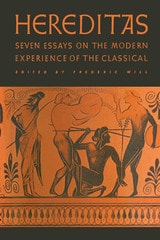
Hereditas
Seven Essays on the Modern Experience of the ClassicalEdited with an introduction by Frederic Will
University of Texas Press, 1964
Is Ancient Greece still meaningful to the twenty-first-century world? The vitality of the classical tradition, which has been a long-enduring and important element in our culture, is the concern of the seven scholars who in this book present their answers to this question.
In various ways their essays support editor Frederic Will's statement that the "complex and mature group of awarenesses" embodied in the classical tradition still help to maintain the continuity of human culture, thus sharing in the unbroken process of developing a Western civilization. These awarenesses are not self-perpetuating but must be sustained by the guardians of tradition—schools, literary creators and critics, libraries, and scholars. In this book, particular attention is devoted to the literary creators. In discussing the impact of Greek myth, Greek literature, and Greek philosophy on modern writers, the present essayists try to determine how alive Greek classical culture is today, how meaningful it is, and how it can be perpetuated. Through their presentations in these seven essays, the contributors prove that the tradition does not suffer from lack of able guardians.
These studies in the interpretation of literature and thought afford stimulating evidence that the classical tradition is still alive in our modern age.
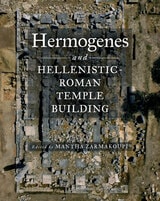
Hermogenes and Hellenistic-Roman Temple Building
Edited by Mantha Zarmakoupi
University of Wisconsin Press, 2026
Hermogenes remains one of the most influential and famous designers of the Hellenistic world, although he is known primarily via the first-century BCE Roman architect Vitruvius, who credited his Greek predecessor with major accomplishments. Despite his comparative fame, the paucity of sources has nevertheless obscured Hermogenes’ legacy. This volume updates the evidence, reevaluates this highly significant figure, and reintroduces crucial innovations in the ancient Greek world—innovations that continue to be influential today.
Herodotus and the Question Why
By Christopher Pelling
University of Texas Press, 2019
In the 5th century BCE, Herodotus wrote the first known Western history to build on the tradition of Homeric storytelling, basing his text on empirical observations and arranging them systematically. Herodotus and the Question Why offers a comprehensive examination of the methods behind the Histories and the challenge of documenting human experiences, from the Persian Wars to cultural traditions.
In lively, accessible prose, Christopher Pelling explores such elements as reconstructing the mentalities of storyteller and audience alike; distinctions between the human and the divine; and the evolving concepts of freedom, democracy, and individualism. Pelling traces the similarities between Herodotus's approach to physical phenomena (Why does the Nile flood?) and to landmark events (Why did Xerxes invade Greece? And why did the Greeks win?), delivering a fascinating look at the explanatory process itself. The cultural forces that shaped Herodotus's thinking left a lasting legacy for us, making Herodotus and the Question Why especially relevant as we try to record and narrate the stories of our time and to fully understand them.
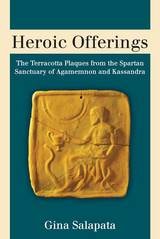
Heroic Offerings
The Terracotta Plaques from the Spartan Sanctuary of Agamemnon and KassandraGina Salapata
University of Michigan Press, 2015
This volume focuses on a large group of decorated terracotta plaques, from the sixth to fourth centuries BCE. These molded plaques were discovered with other offerings in a sanctuary deposit excavated near Sparta more than fifty years ago, but they have remained unpublished until now. They number over 1,500 complete and fragmentary pieces. In technique, style, and iconography they form a homogeneous group unlike any other from mainland Greece. The large number of plaques and variety of types reveal a stable and vigorous coroplastic tradition in Lakonia during the late Archaic and Classical period.
Heroic Offerings will be of interest to students and scholars of Greek history, art, and archaeology, to those interested in ancient religious practice in the Mediterranean, and to all inspired by Athens’ chief political rival, Sparta.
This volume received financial support from the Archaeological Institute of America.
Historiography
Ancient, Medieval, and ModernErnst Breisach
University of Chicago Press, 1995
Historiography
Ancient, Medieval, and Modern, Third EditionErnst Breisach
University of Chicago Press, 2007
In this pioneering work, Ernst Breisach presents an effective, well-organized, and concise account of the development of historiography in Western culture. Neither a handbook nor an encyclopedia, this up-to-date third edition narrates and interprets the development of historiography from its origins in Greek poetry to the present, with compelling sections on postmodernism, deconstructionism, African-American history, women’s history, microhistory, the Historikerstreit, cultural history, and more. The definitive look at the writing of history by a historian, Historiography provides key insights into some of the most important issues, debates and innovations in modern historiography.
History after Liberty
Tacitus on Tyrants, Sycophants, and RepublicansThomas E. Strunk
University of Michigan Press, 2017
History after Liberty explores Tacitus’ political thought through his understanding of liberty. Influenced by modern republican writers such as Quentin Skinner and Philip Pettit, this study defines Tacitean libertas as the freedom from the rule of a dominus and as freedom to participate in the traditional politics of Rome through military service, public service in the senate and magistracies, and public speech. All of these elements are balanced in Tacitus’ writings with examples of those resisting the corruption of politics in an effort to restore a sense of free civic engagement. The work concludes with an exploration of Tacitus’ own writings as an act of restoring liberty. In contrast to most studies on Tacitus, History after Liberty argues that Tacitus is a republican who writes both to demonstrate that Rome had become a tyranny and to show a way out of that tyranny.
History after Liberty addresses the political thought of Tacitus’ writings. As such it will be of most interest to those who study the history and historiography of the early Roman empire, namely classicists and ancient historians. The work will also be of use to those interested in the antecedents to modern political thought, particularly the history of republicanism and freedom; readers from this category will include political scientists, philosophers, and modern historians.

History and Silence
Purge and Rehabilitation of Memory in Late AntiquityBy Charles W. Hedrick Jr.
University of Texas Press, 2000
The ruling elite in ancient Rome sought to eradicate even the memory of their deceased opponents through a process now known as damnatio memoriae. These formal and traditional practices included removing the person's name and image from public monuments and inscriptions, making it illegal to speak of him, and forbidding funeral observances and mourning. Paradoxically, however, while these practices dishonored the person's memory, they did not destroy it. Indeed, a later turn of events could restore the offender not only to public favor but also to re-inclusion in the public record.
This book examines the process of purge and rehabilitation of memory in the person of Virius Nicomachus Flavianus(?-394). Charles Hedrick describes how Flavian was condemned for participating in the rebellion against the Christian emperor Theodosius the Great—and then restored to the public record a generation later as members of the newly Christianized senatorial class sought to reconcile their pagan past and Christian present. By selectively remembering and forgetting the actions of Flavian, Hedrick asserts, the Roman elite honored their ancestors while participating in profound social, cultural, and religious change.
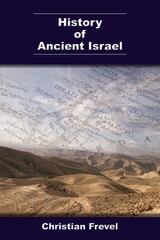
History of Ancient Israel
Christian Frevel
SBL Press, 2023
This English translation of the second edition of Christian Frevel’s essential textbook Geschichte Israels (Kohlhammer, 2018) covers the history of Israel from its beginnings until the Bar Kokhba revolt (132–135 CE). Frevel draws on archaeological evidence, inscriptions and monuments, as well as the Bible to sketch a picture of the history of ancient Israel within the context of the southern Levant that is sometimes familiar but often fresh and unexpected. Frevel has updated the second German edition with the most recent research of archaeologists and biblical scholars, including those based in Europe. Tables of rulers, a glossary, a timeline of the ancient Near East, and resources arranged by subject make this book an accessible, essential textbook for students and scholars alike.
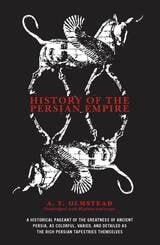
History of the Persian Empire
A. T. Olmstead
University of Chicago Press, 1948
"The fullest and most reliable presentation of the history of the Persian Empire in existence."—M. Rostovtzeff
Hittite Diplomatic Texts
Gary M. Beckman
SBL Press, 1999
Hittite Local Cults
Michele Cammarosano
SBL Press, 2018
An innovative translation and analysis of Hittite local festivals and of their economic and social dimensions for students and scholars
This English translation of the Hittite cult inventories provides a vivid portrait of the religion, economy, and administration of Bronze Age provincial towns and villages of the Hittite Empire. These texts report the state of local shrines and festivals and document the interplay between the central power and provincial communities on religious affairs. Brief introductions to each text make the volume accessible to students and scholars alike.
Features:
- Critical editions of Hittite cult inventories, some of which are edited for the first time, with substantial improvements in readings and interpretations
- The first systematic study of the linguistic aspects of Hittite administrative jargon
- An up-to-date study of Hittite cult images and iconography of the gods
Michele Cammarosano currently leads a Deutsche Forschungsgemeinschaft-funded project on Hittite cultic administration at Julius-Maximilians-Universität Würzburg. His research interests focus on cuneiform palaeography and Hittite religion.
Hittite Myths, Second Edition
Harry A. Hoffner
SBL Press, 1998

Homecoming
Holocaust Survivors and Greece, 1941–1946Katerina Králová
Brandeis University Press, 2025
Homecoming records the experiences of Greek Jews who returned to their native country after World War II, when many went into hiding, fought in combat, became refugees, or were deported, some to Nazi death camps. Though they wanted more than anything to survive and come home, those who returned to postwar Greece faced isolation, anguish, deprivation, and hostility in the midst of a civil war. Their stories, which rarely feature in discussions of the Holocaust, raise important questions about its aftermath across Europe. Based on exhaustive archival research and new interviews with Holocaust survivors across several continents, Kateřina Králová’s new book adds to our understanding of the genocide and its impact.
Homer
The Very IdeaJames I. Porter
University of Chicago Press, 2021
Homer, the great poet of the Iliad and the Odyssey, is revered as a cultural icon of antiquity and a figure of lasting influence. But his identity is shrouded in questions about who he was, when he lived, and whether he was an actual person, a myth, or merely a shared idea. Rather than attempting to solve the mystery of this character, James I. Porter explores the sources of Homer’s mystique and their impact since the first recorded mentions of Homer in ancient Greece.
Homer: The Very Idea considers Homer not as a man, but as a cultural invention nearly as distinctive and important as the poems attributed to him, following the cultural history of an idea and of the obsession that is reborn every time Homer is imagined. Offering novel readings of texts and objects, the book follows the very idea of Homer from his earliest mentions to his most recent imaginings in literature, criticism, philosophy, visual art, and classical archaeology.
Honor Among Thieves
Craftsmen, Merchants, and Associations in Roman and Late Roman EgyptPhilip F. Venticinque
University of Michigan Press, 2016
Honor Among Thieves examines associations of craftsmen in the framework of ancient economics and transaction costs. Scholars have long viewed such associations primarily as social or religious groups that provided mutual support, proper burial, and sociability, and spaces where nonelite individuals could seek status supposedly denied them in their contemporary society. However, the analysis presented here concentrates on how craftsmen, merchants, and associations interacted with each other and with elite and nonelite constituencies; managed economic, political, social, and legal activities; represented their concerns to the authorities; and acquired and used social capital—a new and important view of these economic engines.
Philip F. Venticinque offers a study of associations from a social, economic, and legal point of view, and in the process examines how they helped their members overcome high transaction costs—the “costs of doing business”—through the development of social capital. He explores associations from the “bottom up,” in order to see how their members create status and reputation outside of an elite framework. He thus explores how occupations regarded as thieves in elite ideology create their own systems of honor.
Honor Among Thieves will be of interest to scholars of the ancient economy, of social groups, and Roman Egypt in all periods.
Honor and Personhood in Early Modern Mexico
Osvaldo F. Pardo
University of Michigan Press, 2015
Honor and Profit
Athenian Trade Policy and the Economy and Society of Greece, 415-307 B.C.E.Darel Tai Engen
University of Michigan Press, 2010
Honor and Profit offers a welcome corrective to the outmoded Finleyite view of the ancient economy. This important volume collects and analyzes economic evidence including government decrees for all known occasions on which Athens granted honors and privileges for services relating to trade.
The analysis proceeds within the intellectual framework of substantive economic theory, in which formal market behavior and institutions are considered to be but a subset of a larger group of economic behaviors and institutions devoted to the production, distribution, and exchange of goods.
Honor and Profit merges theory with empirical historical evidence to illustrate the complexity and dynamism of the ancient Greek economy. The author's conclusions have broad implications for our understanding not only of Athens and environs but also of the social and political history of Greece and the ancient Mediterranean world.
Darel Tai Engen is Associate Professor of History at California State University, San Marcos.
Also of interest
An Introduction to Greek Epigraphy of the Hellenistic and Roman Periods from Alexander the Great down to the Reign of Constantine (323 B.C.---A.D. 337)
By B. H. McLean
The Athenian Empire Restored: Epigraphic and Historical Studies
By Harold B. Mattingly
The Athenian Experiment: Building an Imagined Political Community in Ancient Attica, 508---490 B.C.
By Greg Anderson
Horace between Freedom and Slavery
The First Book of <i>Epistles</i>Stephanie McCarter
University of Wisconsin Press, 2015
She argues that, although Horace commences the Epistles with an uncompromising insistence on freedom, he ultimately adopts a middle course. She shows how Horace explores in the poems the application of moderate freedom first to philosophy, then to friendship, poetry, and place. Rather than rejecting philosophical masters, Horace draws freely on them without swearing permanent allegiance to any—a model for compromise that allows him to enjoy poetic
renown and friendships with the city's elite while maintaining a private sphere of freedom. This moderation and adaptability, McCarter contends, become the chief ethical lessons that Horace learns for himself and teaches to others. She reads Horace's reconfiguration of freedom as a political response to the transformations of the new imperial age.
Horace's Odes and Epodes
Translated with an Introduction and CommentaryDavid Mulroy
University of Michigan Press, 1994
How Philosophers Saved Myths
Allegorical Interpretation and Classical MythologyLuc Brisson
University of Chicago Press, 2004
How Philosophers Saved Myths also describes how, during the first years of the modern era, allegory followed a more religious path, which was to assume a larger role in Neoplatonism. Ultimately, Brisson explains how this embrace of myth was carried forward by Byzantine thinkers and artists throughout the Middle Ages and Renaissance; after the triumph of Chistianity, Brisson argues, myths no longer had to agree with just history and philosophy but the dogmas of the Church as well.
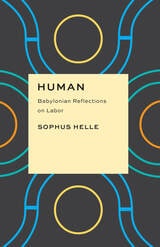
Human
Babylonian Reflections on LaborSophus Helle
University of Chicago Press, 2026
The Babylonian poem Atra-hasis is a forgotten masterpiece of political thought. Written in Akkadian in what is now southern Iraq during the early second millennium BCE, Atra-hasis gives us a glimpse of how ancient poets understood the society growing around them. This radical history of the world told from the perspective of the mother goddess conveys the complexity and contradictions that lie at the heart of the human experience. Atra-hasis tells how humanity was created as part of a bargain to resolve the world’s first labor strike, in which the lower gods rebelled against the excessive work imposed on them by the higher gods. It depicts humans as workers endowed with defiant intelligence. They multiply and become too loud, so the gods decide to quiet them with a cataclysmic flood.
Looking to Atra-hasis, Sophus Helle reveals an ancient story with reflections on power and history that invite comparison to topics of contemporary relevance, including labor, inequality, climate change, artificial intelligence, threats to democracy, disability, care work, sexual consent, and more. Helle considers Atra-hasis as a foundational document of “pasthumanism,” a term he uses to describe the study of how cultural conceptions of humanity have changed across centuries. He argues that ancient and non-Western texts remind us that cultural assumptions we now take for granted are neither natural nor necessary.
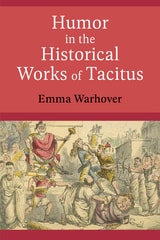
Humor in the Historical Works of Tacitus
Emma Warhover
University of Michigan Press, 2026
In serious texts like Tacitus’ historical works, humor can expose hypocrisy in the powerful, demonstrate the absurdity of imperial pronouncements, and simultaneously communicate why such offenses were allowed to stand. Warhover argues that major elements of Tacitus’ distinctive style, such as variatio, appendix sentences, and sententiae, create humor, and that Tacitus used humor deliberately to emphasize the incongruities that emerged from the principate. By employing humor, Tacitus followed Roman rhetorical traditions evident in Cicero and Quintilian, who agree that humor is an important tool for criticism. For Tacitus, humor is therefore not an amusement or decoration, but an integral part of his historiographic construction.