Results by title
664 books match the query 'Ancient & Classical' and 31 start with h
Hallaj
Poems of a Sufi MartyrTranslated from the Arabic by Carl W. Ernst
Northwestern University Press, 2018
Winner of the Global Humanities Translation Prize
Hallaj is the first authoritative translation of the Arabic poetry of Husayn ibn Mansur al-Hallaj, an early Sufi mystic. Despite his execution in Baghdad in 922 and the subsequent suppression of his work, Hallaj left an enduring literary and spiritual legacy that continues to inspire readers around the world. In Hallaj, Carl W. Ernst offers a definitive collection of 117 of Hallaj’s poems expertly translated for contemporary readers interested in Middle Eastern and Sufi poetry and spirituality.
Ernst’s fresh and direct translations reveal Hallaj’s wide range of themes and genres, from courtly love poems to metaphysical reflections on union with God. In a fascinating introduction, Ernst traces Hallaj’s dramatic story within classical Islamic civilization and early Arabic Sufi poetry. Setting himself apart by revealing Sufi secrets to the world, Hallaj was both celebrated and condemned for declaring: “I am the Truth.”
Expressing lyrics and ideas still heard in popular songs, the works of Hallaj remain vital and fresh even a thousand years after their composition. They reveal him as a master of spiritual poetry centuries before Rumi, who regarded Hallaj as a model. This unique collection makes it possible to appreciate the poems on their own, as part of the tragic legend of Hallaj, and as a formidable legacy of Middle Eastern culture.
The Global Humanities Translation Prize is awarded annually to a previously unpublished translation that strikes the delicate balance between scholarly rigor, aesthetic grace, and general readability, as judged by a rotating committee of Northwestern faculty, distinguished international scholars, writers, and public intellectuals. The Prize is organized by the Global Humanities Initiative, which is jointly supported by Northwestern University’s Buffett Institute for Global Studies and Kaplan Institute for the Humanities.
Hardship and Happiness
Lucius Annaeus Seneca
University of Chicago Press, 2014
Hardship and Happiness collects a range of essays intended to instruct, from consolations—works that offer comfort to someone who has suffered a personal loss—to pieces on how to achieve happiness or tranquility in the face of a difficult world. Expertly translated, the essays will be read and used by undergraduate philosophy students and experienced scholars alike.
Haunted Greece and Rome
Ghost Stories from Classical AntiquityBy D. Felton
University of Texas Press, 1998
Stories of ghostly spirits who return to this world to warn of danger, to prophesy, to take revenge, to request proper burial, or to comfort the living fascinated people in ancient times just as they do today. In this innovative, interdisciplinary study, the author combines a modern folkloric perspective with literary analysis of ghost stories from classical antiquity to shed new light on the stories' folk roots.
The author begins by examining ancient Greek and Roman beliefs about death and the departed and the various kinds of ghost stories which arose from these beliefs. She then focuses on the longer stories of Plautus, Pliny, and Lucian, which concern haunted houses. Her analysis illuminates the oral and literary transmission and adaptation of folkloric motifs and the development of the ghost story as a literary form. In her concluding chapter, the author also traces the influence of ancient ghost stories on modern ghost story writers, a topic that will interest all readers and scholars of tales of hauntings.
Heidegger and the Destruction of Aristotle
On How to Read the TraditionSean D. Kirkland
Northwestern University Press, 2023
A bold new conception of Heidegger’s project of Destruktion as a method of interpreting history
For Martin Heidegger, our inherited traditions provide the concepts through which we make our world intelligible. Concepts we can also oppose, disrupt, and even exceed. First, however, if Western philosophy is our inheritance, we must submit it to Destruktion—starting with Aristotle. Heidegger and the Destruction of Aristotle: On How to Read the Tradition presents a new conception of Heidegger’s “destruction” as a way of reading.
Situated between Nietzschean genealogy and Derridean deconstruction, this method uncovers in Aristotle the most vital originating articulations of the Western tradition and gives us the means to confront it. Sean D. Kirkland argues this is not a rejection of the past but a sophisticated and indeed timely hermeneutic tool—a complex, illuminating, and powerful method for interpreting historical texts at our present moment. Acknowledging the historical Heidegger as a politically compromised and still divisive figure, Kirkland demonstrates that Heideggerian destruction is a method of interpreting history that enables us to reorient and indeed transform its own most troubling legacies.
Heirs and Ancestors
John K. Ryan
Catholic University of America Press, 2018

Hellenistic Greek Texts
Allen P. Wikgren
University of Chicago Press, 1947
An introduction to koine Greek and Hellenistic culture and religion, a selected bibliography, brief prefaces to the selections, and a complete vocabulary are also included in this volume.
Hellenistic Poetry
An AnthologySelected and translated by Barbara Hughes Fowler
University of Wisconsin Press, 1990
An accomplished poet and classical scholar, Barbara Hughes Fowler brings Hellenistic poetry to life for the contemporary reader. Her selections engage us with the full range of Hellenistic poetic genres, styles, themes, and moods. The anthology includes Fowler’s new translation of the entire Argonautica of Apollonius of Rhodes, and eight of Theocritus’ Idylls, including the beautiful, sensuous description of late summer in Idyll VII and the shrewdly comical description of two young matrons venturing into the noisy streets of Alexandria in Idyll XV. There are translations of four hymns of Callimachus, as well as poems by Aratus, Bion, Herodas, Moschus, Pseudo-Moschus, and a substantial selection from the Greek Anthology.
An ideal companion to her recently published book, The Hellenistic Aesthetic, Barbara Fowler’s Hellenistic Poetry is both a major contribution to classical studies and an invitation to all interested readers to discover the beauty and richness of Hellenistic poetry.
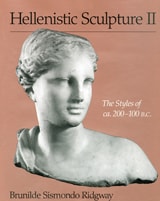
Hellenistic Sculpture II
The Styles of ca. 200–100 B.C.Brunilde Sismondo Ridgway
University of Wisconsin Press, 2008
Hereditas
Seven Essays on the Modern Experience of the ClassicalEdited with an introduction by Frederic Will
University of Texas Press, 1964
Is Ancient Greece still meaningful to the twenty-first-century world? The vitality of the classical tradition, which has been a long-enduring and important element in our culture, is the concern of the seven scholars who in this book present their answers to this question.
In various ways their essays support editor Frederic Will's statement that the "complex and mature group of awarenesses" embodied in the classical tradition still help to maintain the continuity of human culture, thus sharing in the unbroken process of developing a Western civilization. These awarenesses are not self-perpetuating but must be sustained by the guardians of tradition—schools, literary creators and critics, libraries, and scholars. In this book, particular attention is devoted to the literary creators. In discussing the impact of Greek myth, Greek literature, and Greek philosophy on modern writers, the present essayists try to determine how alive Greek classical culture is today, how meaningful it is, and how it can be perpetuated. Through their presentations in these seven essays, the contributors prove that the tradition does not suffer from lack of able guardians.
These studies in the interpretation of literature and thought afford stimulating evidence that the classical tradition is still alive in our modern age.
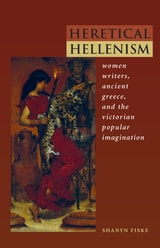
Heretical Hellenism
Women Writers, Ancient Greece, and the Victorian Popular ImaginationShanyn Fiske
Ohio University Press, 2008
The prevailing assumption regarding the Victorians’ relationship to ancient Greece is that Greek knowledge constituted an exclusive discourse within elite male domains. Heretical Hellenism: Women Writers, Ancient Greece, and the Victorian Popular Imagination challenges that theory and argues that while the information women received from popular sources was fragmentary and often fostered intellectual insecurities, it was precisely the ineffability of the Greek world refracted through popular sources and reconceived through new fields of study that appealed to women writers’ imaginations.
Examining underconsidered sources such as theater history and popular journals, Shanyn Fiske uncovers the many ways that women acquired knowledge of Greek literature, history, and philosophy without formal classical training. Through discussions of women writers such as Charlotte Brontë, George Eliot, and Jane Harrison, Heretical Hellenism demonstrates that women established the foundations of a heretical challenge to traditional humanist assumptions about the uniformity of classical knowledge and about women’s place in literary history.
Heretical Hellenism provides a historical rationale for a more expansive definition of classical knowledge and offers an interdisciplinary method for understanding the place of classics both in the nineteenth century and in our own time.
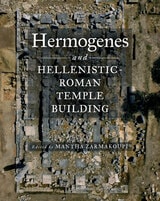
Hermogenes and Hellenistic-Roman Temple Building
Edited by Mantha Zarmakoupi
University of Wisconsin Press, 2026
Hermogenes remains one of the most influential and famous designers of the Hellenistic world, although he is known primarily via the first-century BCE Roman architect Vitruvius, who credited his Greek predecessor with major accomplishments. Despite his comparative fame, the paucity of sources has nevertheless obscured Hermogenes’ legacy. This volume updates the evidence, reevaluates this highly significant figure, and reintroduces crucial innovations in the ancient Greek world—innovations that continue to be influential today.
Herodotus in the Anthropocene
Joel Alden Schlosser
University of Chicago Press, 2020
Schlosser shows that the Histories, which chronicle the interactions among the Greek city-states and their neighbors that culminated in the Persian Wars, illuminate a telling paradox: at those times when humans appear capable of exerting more influence than ever before, they must also assert collective agency to avoid their own downfall. Here, success depends on nomoi, or the culture, customs, and laws that organize human communities and make them adaptable through cooperation. Nomoi arise through sustained contact between humans and their surroundings and function best when practiced willingly and with the support of strong commitments to the equality of all participants. Thus, nomoi are the very substance of political agency and, ultimately, the key to freedom and ecological survival because they guide communities to work together to respond to challenges. An ingenious contribution to political theory, political philosophy, and ecology, Herodotus in the Anthropocene reminds us that the best perspective on the present can often be gained through the lens of the past.
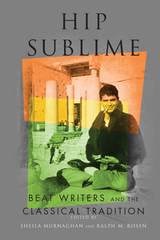
Hip Sublime
Beat Writers and the Classical TraditionEdited by Sheila Murnaghan and Ralph M. Rosen
The Ohio State University Press, 2018
In this volume, a diverse group of contributors explore for the first time the fascinating tensions and paradoxes that arose from interactions between these avant-garde writers and a literary tradition often seen as conservative and culturally hegemonic. With essays that cover the canonical Beat authors—such as Allen Ginsberg, Jack Kerouac, and William Burroughs—along with less well-known figures—including Kenneth Rexroth, Ed Sanders, and Diane di Prima—Hip Sublime: Beat Writers and the Classical Tradition brings long overdue attention to the Beat movement’s formative appropriation of the Greek and Latin classics.
History after Liberty
Tacitus on Tyrants, Sycophants, and RepublicansThomas E. Strunk
University of Michigan Press, 2017
History after Liberty explores Tacitus’ political thought through his understanding of liberty. Influenced by modern republican writers such as Quentin Skinner and Philip Pettit, this study defines Tacitean libertas as the freedom from the rule of a dominus and as freedom to participate in the traditional politics of Rome through military service, public service in the senate and magistracies, and public speech. All of these elements are balanced in Tacitus’ writings with examples of those resisting the corruption of politics in an effort to restore a sense of free civic engagement. The work concludes with an exploration of Tacitus’ own writings as an act of restoring liberty. In contrast to most studies on Tacitus, History after Liberty argues that Tacitus is a republican who writes both to demonstrate that Rome had become a tyranny and to show a way out of that tyranny.
History after Liberty addresses the political thought of Tacitus’ writings. As such it will be of most interest to those who study the history and historiography of the early Roman empire, namely classicists and ancient historians. The work will also be of use to those interested in the antecedents to modern political thought, particularly the history of republicanism and freedom; readers from this category will include political scientists, philosophers, and modern historians.
History, Tragedy, Theory
Dialogues on Athenian DramaEdited and with an introduction by Barbara Goff
University of Texas Press, 1995
Greek tragedy has held sway over the imagination of audiences for well over two millennia. This collection of essays on Athenian drama, the proceedings of a conference held at the University of Texas at Austin in 1992, demonstrates that Greek tragedy still retains its power to provoke debate and to engage the interest of specialists and non-classicists alike.
The book includes essays by seven of the foremost scholars of Greek drama—Helene Foley, Michelle Gellrich, Peter W. Rose, David Rosenbloom, Richard Seaford, Bernd Seidensticker, and Froma I. Zeitlin. These writers explore the work of all three great tragedians, Aeschylus, Sophocles, and Euripides, and approach them from a variety of perspectives on history and theory, including poststructuralism and Marxism. They investigate the possibilities for coordinating theoretically informed readings of tragedy with a renewed attention to the pressure of material history within those texts. The collection thus represents a response within classics to "New Historicism" and the debates it has generated within related literary disciplines.
Homer and the Dual Model of the Tragic
Yoav Rinon
University of Michigan Press, 2008
Homer in Performance
Rhapsodes, Narrators, and CharactersEdited by Jonathan L. Ready and Christos C. Tsagalis
University of Texas Press, 2018
Before they were written down, the poems attributed to Homer were performed orally, usually by rhapsodes (singers/reciters) who might have traveled from city to city or enjoyed a position in a wealthy household. Even after the Iliad and the Odyssey were committed to writing, rhapsodes performed the poems at festivals, often competing against each other. As they recited the epics, the rhapsodes spoke as both the narrator and the characters. These different acts—performing the poem and narrating and speaking in character within it—are seldom studied in tandem. Homer in Performance breaks new ground by bringing together all of the speakers involved in the performance of Homeric poetry: rhapsodes, narrators, and characters.
The first part of the book presents a detailed history of the rhapsodic performance of Homeric epic from the Archaic to the Roman Imperial periods and explores how performers might have shaped the poems. The second part investigates the Homeric narrators and characters as speakers and illuminates their interactions. The contributors include scholars versed in epigraphy, the history of art, linguistics, and performance studies, as well as those capable of working with sources from the ancient Near East and from modern Russia. This interdisciplinary approach makes the volume useful to a spectrum of readers, from undergraduates to veteran professors, in disciplines ranging from classical studies to folklore.
Homer's Text and Language
Gregory Nagy
University of Illinois Press, 2004
In Homeric studies, there has been an ongoing debate centering on different ways to establish the text of Homer and the different ways to appreciate the poetry created in the language of Homer. Gregory Nagy, a lifelong Homer scholar, takes a stand in the midst of this debate. He presents an overview of millennia of scholarly engagement with Homer's poetry, shows the different editorial principles that have been applied to the texts, and evaluates their impact.
Homer
The Very IdeaJames I. Porter
University of Chicago Press, 2021
Homer, the great poet of the Iliad and the Odyssey, is revered as a cultural icon of antiquity and a figure of lasting influence. But his identity is shrouded in questions about who he was, when he lived, and whether he was an actual person, a myth, or merely a shared idea. Rather than attempting to solve the mystery of this character, James I. Porter explores the sources of Homer’s mystique and their impact since the first recorded mentions of Homer in ancient Greece.
Homer: The Very Idea considers Homer not as a man, but as a cultural invention nearly as distinctive and important as the poems attributed to him, following the cultural history of an idea and of the obsession that is reborn every time Homer is imagined. Offering novel readings of texts and objects, the book follows the very idea of Homer from his earliest mentions to his most recent imaginings in literature, criticism, philosophy, visual art, and classical archaeology.
Homeric Questions
By Gregory Nagy
University of Texas Press, 1996
A Choice Outstanding Academic Book
The "Homeric Question" has vexed Classicists for generations. Was the author of the Iliad and the Odyssey a single individual who created the poems at a particular moment in history? Or does the name "Homer" hide the shaping influence of the epic tradition during a long period of oral composition and transmission?
In this innovative investigation, Gregory Nagy applies the insights of comparative linguistics and anthropology to offer a new historical model for understanding how, when, where, and why the Iliad and the Odyssey were ultimately preserved as written texts that could be handed down over two millennia. His model draws on the comparative evidence provided by living oral epic traditions, in which each performance of a song often involves a recomposition of the narrative.
This evidence suggests that the written texts emerged from an evolutionary process in which composition, performance, and diffusion interacted to create the epics we know as the Iliad and the Odyssey. Sure to challenge orthodox views and provoke lively debate, Nagy's book will be essential reading for all students of oral traditions.
Homeric Responses
By Gregory Nagy
University of Texas Press, 2003
The Homeric Iliad and Odyssey are among the world's foremost epics. Yet, millennia after their composition, basic questions remain about them. Who was Homer—a real or an ideal poet? When were the poems composed—at a single point in time, or over centuries of composition and performance? And how were the poems committed to writing? These uncertainties have been known as The Homeric Question, and many scholars, including Gregory Nagy, have sought to solve it.
In Homeric Responses, Nagy presents a series of essays that further elaborate his theories regarding the oral composition and evolution of the Homeric epics. Building on his previous work in Homeric Questions and Poetry as Performance: Homer and Beyond and responding to some of his critics, he examines such issues as the importance of performance and the interaction between audience and poet in shaping the poetry; the role of the rhapsode (the performer of the poems) in the composition and transmission of the poetry; the "irreversible mistakes" and cross-references in the Iliad and Odyssey as evidences of artistic creativity; and the Iliadic description of the shield of Achilles as a pointer to the world outside the poem, the polis of the audience.
Horace between Freedom and Slavery
The First Book of <i>Epistles</i>Stephanie McCarter
University of Wisconsin Press, 2015
She argues that, although Horace commences the Epistles with an uncompromising insistence on freedom, he ultimately adopts a middle course. She shows how Horace explores in the poems the application of moderate freedom first to philosophy, then to friendship, poetry, and place. Rather than rejecting philosophical masters, Horace draws freely on them without swearing permanent allegiance to any—a model for compromise that allows him to enjoy poetic
renown and friendships with the city's elite while maintaining a private sphere of freedom. This moderation and adaptability, McCarter contends, become the chief ethical lessons that Horace learns for himself and teaches to others. She reads Horace's reconfiguration of freedom as a political response to the transformations of the new imperial age.
How Philosophers Saved Myths
Allegorical Interpretation and Classical MythologyLuc Brisson
University of Chicago Press, 2004
How Philosophers Saved Myths also describes how, during the first years of the modern era, allegory followed a more religious path, which was to assume a larger role in Neoplatonism. Ultimately, Brisson explains how this embrace of myth was carried forward by Byzantine thinkers and artists throughout the Middle Ages and Renaissance; after the triumph of Chistianity, Brisson argues, myths no longer had to agree with just history and philosophy but the dogmas of the Church as well.
How Philosophy Became Socratic
A Study of Plato's "Protagoras," "Charmides," and "Republic"Laurence Lampert
University of Chicago Press, 2010
How Socrates Became Socrates
A Study of Plato’s “Phaedo,” “Parmenides,” and “Symposium”Laurence Lampert
University of Chicago Press, 2021
In addition to a careful and precise analysis of Plato’s Phaedo,Parmenides, and Symposium, Lampert shows that properly entwined, Plato’s three dialogues fuse to portray a young thinker entering philosophy’s true radical power. Lampert reveals why this radicality needed to be guarded and places this discussion within the greater scheme of the politics of philosophy.
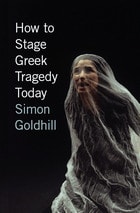
How to Stage Greek Tragedy Today
Simon Goldhill
University of Chicago Press, 2007
In crisp and spirited prose, Goldhill explains how Aeschylus, Euripides, and Sophocles conceived their works in performance and then summarizes everything we know about how their tragedies were actually staged. The heart of his book tackles the six major problems facing any company performing these works today: the staging space and concept of the play; the use of the chorus; the actor’s role in an unfamiliar style of performance; the place of politics in tragedy; the question of translation; and the treatment of gods, monsters, and other strange characters of the ancient world. Outlining exactly what makes each of these issues such a pressing difficulty for modern companies, Goldhill provides insightful solutions drawn from his nimble analyses of some of the best recent productions in the United States, Britain, and Continental Europe.
One of the few experts on both Greek tragedy and contemporary performance, Goldhill uses his unique background and prodigious literary skill to illuminate brilliantly what makes tragedy at once so exciting and so tricky to get right. The result will inspire and enlighten all directors and performers—not to mention the growing audiences—of ancient Greek theater.
Human
Babylonian Reflections on LaborSophus Helle
University of Chicago Press, 2026
The Babylonian poem Atra-hasis is a forgotten masterpiece of political thought. Written in Akkadian in what is now southern Iraq during the early second millennium BCE, Atra-hasis gives us a glimpse of how ancient poets understood the society growing around them. This radical history of the world told from the perspective of the mother goddess conveys the complexity and contradictions that lie at the heart of the human experience. Atra-hasis tells how humanity was created as part of a bargain to resolve the world’s first labor strike, in which the lower gods rebelled against the excessive work imposed on them by the higher gods. It depicts humans as workers endowed with defiant intelligence. They multiply and become too loud, so the gods decide to quiet them with a cataclysmic flood.
Looking to Atra-hasis, Sophus Helle reveals an ancient story with reflections on power and history that invite comparison to topics of contemporary relevance, including labor, inequality, climate change, artificial intelligence, threats to democracy, disability, care work, sexual consent, and more. Helle considers Atra-hasis as a foundational document of “pasthumanism,” a term he uses to describe the study of how cultural conceptions of humanity have changed across centuries. He argues that ancient and non-Western texts remind us that cultural assumptions we now take for granted are neither natural nor necessary.
Humanism and Classical Crisis
Anxiety, Intertexts, and the Miltonic MemoryJacob Blevins
The Ohio State University Press, 2014
Blevins grounds his approach in the theories of Jacques Lacan, whose work challenges the very notions of what identity is and, as a result, exposes the complexities of identity formation. Areas and authors covered include imitations and translations of classical works of the sixteenth and seventeenth centuries in England and France by Andrew Marvell, Edmund Spencer, Pierre Ronsard, Joachim Du Bellay, Ben Jonson, Sir Thomas Wyatt, and John Milton.
This book not only provides a new perspective on early modern poetic imitation, but also offers a foundational methodology for examining the classical presence within the modern self.
Humming the Blues
Cass Dalglish
Calyx, 2008
Humor in the Historical Works of Tacitus
Emma Warhover
University of Michigan Press, 2026
In serious texts like Tacitus’ historical works, humor can expose hypocrisy in the powerful, demonstrate the absurdity of imperial pronouncements, and simultaneously communicate why such offenses were allowed to stand. Warhover argues that major elements of Tacitus’ distinctive style, such as variatio, appendix sentences, and sententiae, create humor, and that Tacitus used humor deliberately to emphasize the incongruities that emerged from the principate. By employing humor, Tacitus followed Roman rhetorical traditions evident in Cicero and Quintilian, who agree that humor is an important tool for criticism. For Tacitus, humor is therefore not an amusement or decoration, but an integral part of his historiographic construction.
Hyecho's Journey
The World of BuddhismDonald S. Lopez Jr.
University of Chicago Press, 2017
With Hyecho’s Journey, eminent scholar of Buddhism Donald S. Lopez Jr. re-creates Hyecho’s trek. Using the surviving fragments of Hyecho’s travel memoir, along with numerous other textual and visual sources, Lopez imagines the thriving Buddhist world the monk explored. Along the way, Lopez introduces key elements of Buddhism, including its basic doctrines, monastic institutions, works of art, and the many stories that have inspired Buddhist pilgrimage. Through the eyes of one remarkable Korean monk, we discover a vibrant tradition flourishing across a vast stretch of Asia. Hyecho’s Journey is simultaneously a rediscovery of a forgotten pilgrim, an accessible primer on Buddhist history and doctrine, and a gripping, beautifully illustrated account of travel in a world long lost.