Results by title
5550 books match the query 'Biography & Autobiography' and 191 start with h
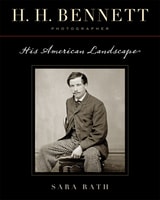
H. H. Bennett, Photographer
His American LandscapeSara Rath
University of Wisconsin Press, 2010
"My energies for near a lifetime have been used almost entirely to win such prominence as I could in outdoor photography."—H. H. Bennett
Henry Hamilton Bennett (1843–1908) became a celebrated photographer in the half-century following the American Civil War. Bennett is admired for his superb depictions of dramatic landscapes of the Dells of the Wisconsin River and also for his many technical innovations in photography, including a stop-action shutter and a revolving solar printing house that is now housed at the Smithsonian Institution. With his instantaneous shutter, he gained recognition for his striking images of moving subjects, such as lumber raftsmen shooting the river rapids and his son Ashley leaping in midair from a bluff to the craggy pillar of Stand Rock. Less well-known are Bennett’s splendid urban photographs of nineteenth-century Chicago, Milwaukee, and St. Paul.
This engaging biography of H. H. Bennett tells his life story, illustrated throughout with his remarkable photographs, some of them rarely viewed before. It draws on the photographer’s own letters and journals, along with other family documents, to portray the sweep of his career and personal life. An important figure in the history of photography, he also contributed to the growth of American tourism: his nationally distributed stereoscopic views of Dells rock formations and his portraits of local Ho-Chunk Indians played a significant role in creating the Wisconsin Dells as the popular tourist destination it is today. Despite personal challenges—a crippling Civil War injury, the death of his first wife, and continual financial worries—Bennett produced an extensive portfolio that captures the midwestern culture of his time. He accepted commissions in the 1890s to document Chicago’s modern skyscrapers, grand residences of Milwaukee’s entrepreneurs and sailing ships in its harbor, enormous scenic panoramas along the routes of Wisconsin railroads, and sparkling ice palaces lit by fireworks at the St. Paul Winter Carnival.
Finalist, Midwest Regional Interest, Midwest Book Awards

H.L. Mencken - American Writers 62
University of Minnesota Pamphlets on American WritersPhilip Wagner
University of Minnesota Press, 1966
H.L. Mencken - American Writers 62 was first published in 1966. Minnesota Archive Editions uses digital technology to make long-unavailable books once again accessible, and are published unaltered from the original University of Minnesota Press editions.
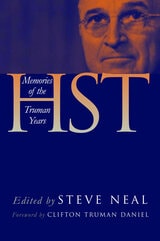
HST
Edited by Steve Neal. Foreword by Clifton Truman Daniel
Southern Illinois University Press, 2003
Believing that Americans should understand their leadership, Harry Truman was the first American president to authorize an oral history of his life and times. In that vein, almost forty years ago, the Truman Library in the president’s native Independence, Missouri, began the daunting task of compiling the words of Truman’s contemporaries, including his senior aides, foreign policy and military advisors, political strategists, and close friends. Longtime Chicago journalist Steve Neal has edited twenty of these remarkable interviews for HST: Memories of the Truman Years.
Candid and insightful, the recollections include those of statesmen Dean Acheson and Averell Harriman; soldiers Omar Bradley and Lucius Clay; Truman’s best friend Thomas Evans; associates Clark Clifford and Matt Connelly; 1948 Republican vice-presidential nominee Earl Warren; artist Thomas Hart Benton; West German leader Konrad Adnauer; former New Dealers Sam Rosenman and James Rowe; journalist Richard L. Strout; and many others.
An honest portrait of Truman emerges from the twenty firsthand accounts of those who knew him best. HST: Memories of the Truman Years spans Truman’s rise to the presidency and his responses to the challenges of World War II, the Soviet blockade of Berlin, the rebuilding of postwar Europe, the 1948 campaign, his controversial firing of General Douglas MacArthur, and his courageous leadership on civil rights.
“The goal of these histories,” explains Truman’s grandson, Clifton Truman Daniel, in the foreword, “in keeping with Grandpa’s stated desire that the [Truman Library] be about his presidency, not a monument to him, was to preserve forever the perspective of those who had shared his life and times and, in many cases, helped him shape the world.”
Habibi Means Beloved
A Queer Memoir on War, Stuttering, and BelongingMoudi Sbeity
University of Utah Press, 2026
A memoir of exile, love, and the search for home
Born into a Muslim family from a small Lebanese village, Moudi Sbeity came of age at the intersection of war, displacement, and difference. Queer, with a stutter, and often on the margins of belonging, Sbeity survived the conflicts that fractured their homeland and family before arriving in Utah as an eighteen-year-old evacuee.
From there, Sbeity transformed anonymity into advocacy as plaintiff in Kitchen v. Herbert, the landmark case that secured marriage equality across the 10th Circuit, and as founder of the celebrated Salt Lake City queer-friendly restaurant Laziz Kitchen. Yet behind these outward triumphs, Sbeity felt an inner call to return to their roots through writing and poetry. Habibi Means Beloved interweaves personal narrative, Sufi mysticism, and Lebanese heritage in a memoir of resilience, disconnection, and reconciliation. Both intimate and universal, it invites readers to reimagine belonging and recognize ourselves—and one another—as already beloved.

Hack
Stories from a Chicago CabDmitry Samarov
University of Chicago Press, 2011
An artist and painter trained at the School of the Art Institute of Chicago, Samarov began driving a cab in 1993 to make ends meet, and he’s been working as a taxi driver ever since. In Hack: Stories from a Chicago Cab, he recounts tales that will delight, surprise, and sometimes shock the most seasoned urbanite. We follow Samarov through the rhythms of a typical week, as he waits hours at the garage to pick up a shift, ferries comically drunken passengers between bars, delivers prostitutes to their johns, and inadvertently observes drug deals. There are long waits with other cabbies at O’Hare, vivid portraits of street corners and their regular denizens, amorous Cubs fans celebrating after a game at Wrigley Field, and customers who are pleasantly surprised that Samarov is white—and tell him so. Throughout, Samarov’s own drawings—of his fares, of the taxi garage, and of a variety of Chicago street scenes—accompany his stories. In the grand tradition of Nelson Algren, Saul Bellow, Mike Royko, and Studs Terkel, Dmitry Samarov has rendered an entertaining, poignant, and unforgettable vision of Chicago and its people.
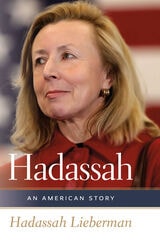
Hadassah
An American StoryHadassah Lieberman
Brandeis University Press, 2021
Born in Prague to Holocaust survivors, Hadassah Lieberman and her family immigrated in 1949 to the United States. She went on to earn a BA from Boston University in government and dramatics and an MA in international relations and American government from Northeastern University. She built a career devoted largely to public health that has included positions at Lehman Brothers, Pfizer, and the National Research Council. After her first marriage ended in divorce, she married Joe Lieberman, a US senator from Connecticut who was the Democratic nominee for vice president with Al Gore and would go on to run for president.
In Hadassah, Lieberman pens the compelling story of her extraordinary life: from her family's experience in Eastern Europe to their move to Gardner, Massachusetts; forging her career; experiencing divorce; and, following her remarriage, her life on the national political stage. By offering insight into her identity as an immigrant, an American Jew, a working woman, and a wife, mother, and grandmother, Lieberman’s moving memoir speaks to many of the major issues of our time, from immigration to gender politics. Featuring an introduction by Joe Lieberman and an afterword by Megan McCain, it is a true American story.
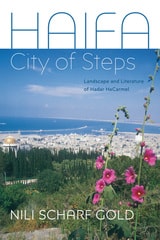
Haifa
City of StepsNili Scharf Gold
Brandeis University Press, 2017
Haim Nahum
A Sephardic Chief Rabbi in Politics, 1892-1923Esther Benbassa
University of Alabama Press, 1995
A collection of rare writings and correspondence by a rabbi and diplomat active at the end of the Ottoman Empire
Rabbi, diplomat, linguist, fixer of delicate problems, Haim Nahum moved through the last years of the Ottoman world and the birth of the modern Middle East with uncommon dexterity. He left behind a rich trove of letters and writing, the best of which are collected in this volume. For contemporary readers, his story feels surprisingly current. He inhabited an age crowded with competing identities, clashing nationalisms, and endless political improvisations. In other words, he would feel perfectly at home today.
The most intriguing feature of Nahum is not that he occupied important positions, but that he seemed constitutionally incapable of belonging to only one world. Equally at ease among statesmen, clerics, scholars, and bureaucrats, he functioned as a human connecting flight between cultures. In this fascinating biography first edited and published in French in 1990, Esther Benbassa captures this cosmopolitan figure without embalming him in reverence, allowing readers to encounter a subtle, resourceful, and occasionally elusive man whose métier was negotiation and whose natural habitat was complexity.
This book will delight readers of Ottoman history, Jewish history, Middle Eastern affairs, diplomatic history, biography, religious studies, and Mediterranean culture. It will also appeal to polyglots, antiquarians, devotees of vanished empires, and anyone attracted to those liminal figures who stand at the crossroads of civilizations, translating not merely languages but entire ways of seeing the world.
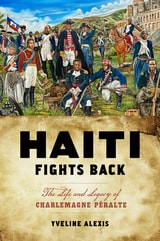
Haiti Fights Back
The Life and Legacy of Charlemagne PéralteYveline Alexis
Rutgers University Press, 2021
Haiti Fights Back: The Life and Legacy of Charlemagne Péralte is the first US scholarly examination of the politician and caco leader (guerrilla fighter) who fought against the US military occupation of Haiti. The occupation lasted close to two decades, from 1915-1934. Alexis argues for the importance of documenting resistance while exploring the occupation’s mechanics and its imperialism. She takes us to Haiti, exploring the sites of what she labels as resistance zones, including Péralte’s hometown of Hinche and the nation’s large port areas--Port-au-Prince and Cap-Haïtien. Alexis offers a new reading of U.S. military archival sources that record Haitian protests as banditry. Haiti Fights Back illuminates how Péralte launched a political movement, and meticulously captures how Haitian women and men resisted occupation through silence, military battles, and writings. She locates and assembles rare, multilingual primary sources from traditional repositories, living archives (oral stories), and artistic representations in Haiti and the United States. The interdisciplinary work draws on legislation, cacos’ letters, newspapers, and murals, offering a unique examination of Péralte’s life (1885-1919) and the significance of his legacy through the twenty-first century. Haiti Fights Back offers a new approach to the study of the U.S. invasion of the Americas by chronicling how Caribbean people fought back.
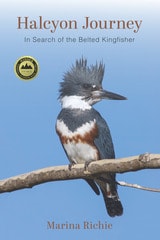
Halcyon Journey
In Search of the Belted KingfisherMarina Richie
Oregon State University Press, 2022
Winner of a 2022 National Outdoor Award
Winner of a Foreword INDIES Award
More than one hundred species of kingfishers brighten every continent but Antarctica. Not all are fishing birds. They range in size from the African dwarf kingfisher to the laughing kookaburra of Australia. This first book to feature North America’s belted kingfisher is a lyrical story of observation, revelation, and curiosity in the presence of flowing waters.
The kingfisher—also known as the halcyon bird—is linked to the mythic origin of halcyon days, a state of happiness that Marina Richie hopes to find outside her back door in Missoula, Montana. Epiphanies and a citizen science discovery punctuate days tracking a bird that outwits at every turn. The female is more colorful than the male (unusual and puzzling) and the birds’ earthen nest holes are difficult to locate.
While the heart of the drama takes place on Rattlesnake Creek in Missoula, the author’s adventures in search of kingfisher kin on the lower Rio Grande, in South Africa, and in London illuminate her relationships with the birds of Montana. In the quiet of winter, she explores tribal stories of the kingfisher as messenger and helper, pivotal qualities for her quest. For all who love birds or simply seek solace in nature, Halcyon Journey is an inviting introduction to the mythic and mysterious belted kingfisher.
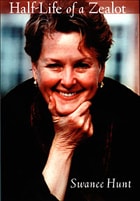
Half-Life of a Zealot
Swanee Hunt
Duke University Press, 2006
Half-Life of a Zealot tells how the girl who spoke against “Reds” alongside her father became a fierce advocate for progressive change in America and abroad, an innovative philanthropist, and Bill Clinton’s Ambassador to Austria. In captivating prose, Hunt describes the warmth and wear of Southern Baptist culture, which instilled in her a calling to help those who are vulnerable. The reader is drawn into her full-throttle professional life as it competes with critical family needs.
Hunt gives a remarkably frank account of her triumphs and shortcomings; her sorrows, including a miscarriage and the failure of a marriage; the joys and struggles of her second marriage; and her angst over the life-threatening illness of one of her three children. She is candid about the opportunities her fortune has created, as well as the challenge of life as an heiress.
Much of Swanee Hunt’s professional life is devoted to expanding women’s roles in making and shaping public policy. She is the founding director of Harvard’s Women and Public Policy Program at the Kennedy School of Government, chair of the Initiative for Inclusive Security, and president of the Hunt Alternatives Fund.
Swanee Hunt’s autobiography brims over with strong women: her mother, whose religious faith and optimism were an inspiration; her daughter, who fights the social stigma of mental disorders; the women of war-torn Bosnia, who transformed their grief into action; and friends like Hillary Clinton, who used her position as First Lady to strengthen the voices of others.
Hunt is one more strong woman. Half-Life of a Zealot is her story—so far.
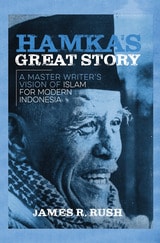
Hamka’s Great Story
A Master Writer’s Vision of Islam for Modern IndonesiaJames R. Rush
University of Wisconsin Press, 2016
Hamka (Haji Abdul Malik Karim Amrullah) was born when Indonesia was still a Dutch colony and came of age as the nation itself was emerging through tumultuous periods of Japanese occupation, revolution, and early independence. He became a prominent author and controversial public figure. In his lifetime of prodigious writing, Hamka advanced Islam as a liberating, enlightened, and hopeful body of beliefs around which the new nation could form and prosper. He embraced science, human agency, social justice, and democracy, arguing that these modern concepts comported with Islam’s true teachings. Hamka unfolded this big idea—his Great Story—decade by decade in a vast outpouring of writing that included novels and poems and chatty newspaper columns, biographies, memoirs, and histories, and lengthy studies of theology including a thirty-volume commentary on the Holy Qur’an. In introducing this influential figure and his ideas to a wider audience, this sweeping biography also illustrates a profound global process: how public debates about religion are shaping national societies in the postcolonial world.
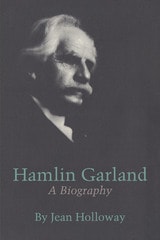
Hamlin Garland
A BiographyBy Jean Holloway
University of Texas Press, 1960
Hamlin Garland’s Main-Travelled Roads is recognized as one of the early landmarks of American literary realism. But Garland’s shift in mid-career from the harsh verisimilitude of Prairie Folks and Prairie Songs to a romanticizing of the Far West, and from ardent espousal of the principles of “veritism” to violent denunciations of naturalism, is a paradox which has long puzzled literary historians.
In tracing the evolution of Garland’s work, the various reactions of his stories under the influence of editorial comment and of contemporary critical reaction, Jean Holloway suggests that the Garland apostasy was an illusion produced by his very intellectual immobility amidst the swirling currents of American thought. His extensive correspondence with Gilder of the Century, Alden of Harper’s Monthly, McClure of McClure’s, and Bok of the Ladies’ Home Journal is adduced in support of the thesis that the writer’s choices of subject and of treatment were psychologically forced rather than conditioned primarily by literary theory.
As a subject for biography, however, Garland has an appeal far beyond the scope of his literary influence. The friendships of this gregarious peripatetic with the famous began with Howells, Twain, Whitman, and Stephen Crane, stretched down the years to include such younger men as Bret Harte and Carl Van Doren, and crossed the seas to embrace such British literary lions as Barrie, Shaw, and Kipling. Garland’s fervent espousal of “causes”—the Single Tax Movement, psychic experimentation, Indian rights-brought him into close contact with other prominent men—Henry George, Theodore Roosevelt, and William Jennings Bryan.
These public figures form the incidental characters in Garland’s spate of autobiographical works. Yet it is the central figure of his own story which has become permanently identified with the “Middle Border,” that region “between the land of the hunter and the harvester” which Augustus Thomas defined as “wherever Hamlin Garland is.” In A Son of the Middle Border Garland nostalgically recreated his boyhood on the frontier and, regardless of the detractions of literary critics, preserved for posterity an important segment of American social history.
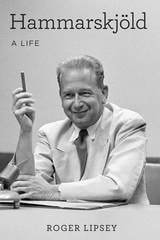
Hammarskjöld
A LifeRoger Lipsey
University of Michigan Press, 2015
After his mysterious death, Dag Hammarskjöld was described by John F. Kennedy as the "greatest statesman of our century." Second secretary-general of the United Nations (1953 - 61), he is the only person to have been awarded the Nobel Peace Prize posthumously. Through extensive research in little explored archives and personal correspondence, Roger Lipsey has produced the definitive biography of Dag Hammarskjöld. Hammarskjöld: A Life provides vivid new insights into the life and mind of a truly great individual. Hammarskjöld the statesman and Hammarskjöld the author of the classic spiritual journal Markings meet in this new biography - and the reader will meet them both in these pages. A towering mid-twentieth-century figure, Hammarskjöld speaks directly to our time.
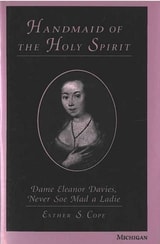
Handmaid of the Holy Spirit
Dame Eleanor Davies, Never Soe Mad a LadieEsther S. Cope
University of Michigan Press, 1993
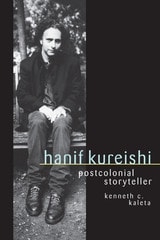
Hanif Kureishi
Postcolonial StorytellerBy Kenneth C. Kaleta
University of Texas Press, 1997
"Hanif Kureishi is a proper Englishman. Almost." So observes biographer Kenneth Kaleta. Well known for his films My Beautiful Laundrette and Sammy and Rosie Get Laid, the Anglo-Asian screenwriter, essayist, and novelist has become one of the leading portrayers of Britain's multicultural society. His work raises important questions of personal and national identity as it probes the experience of growing up in one culture with roots in another, very different one.
This book is the first critical biography of Hanif Kureishi. Kenneth Kaleta interviewed Kureishi over several years and enjoyed unlimited access to all of his working papers, journals, and personal files. From this rich cache of material, he opens a fascinating window onto Kureishi's creative process, tracing such works as My Beautiful Laundrette, Sammy and Rosie Get Laid, The Buddha of Suburbia, London Kills Me, The Black Album, and Love in a Blue Time from their genesis to their public reception. Writing for Kureishi fans as well as film and cultural studies scholars, Kaleta pieces together a vivid mosaic of the postcolonial, hybrid British culture that has nourished Kureishi and his work.

Hannah Arendt
A Critical IntroductionFinn Bowring
Pluto Press, 2011
Hannah Arendt is one of the most famous political theorists of the twentieth century, yet in the social sciences her work has rarely been given the attention it deserves. This careful and comprehensive study introduces Arendt to a wider audience.
Finn Bowring shows how Arendt's writings have engaged with and influenced prominent figures in the sociological canon, and how her ideas may shed light on some of the most pressing social and political problems of today. He explores her critique of Marx, her relationship to Weber, the influence of her work on Habermas and the parallels and discrepancies between her and Foucault. This is a clearly written and scholarly text which surveys the leading debates over Arendt’s work, including discussions of totalitarianism, the public sphere and the nature of political responsibility.
This book will bring new perspectives to students and lecturers in sociology and politics.
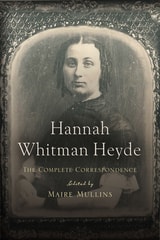
Hannah Whitman Heyde
The Complete CorrespondenceMaire Mullins
Bucknell University Press, 2022
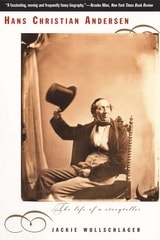
Hans Christian Andersen
The Life of a StorytellerJackie Wullschlager
University of Chicago Press, 2002
Drawing on letters, diaries, and other original sources (many never before translated from the Danish), Wullschlager shows in this compelling, extensively researched biography how Andersen's writings—darker and more diverse than previously recognized—reflected the complexities of his life, a far cry from the "happily ever after" of a fairy tale. As we follow in his footsteps from Golden Age Copenhagen to the princely courts of Germany and the villas of southern Italy, Andersen becomes a figure every bit as fascinating as a character from one of his stories—a gawky, self-pitying, and desperate man, but also one of the most gifted storytellers the world has ever known.
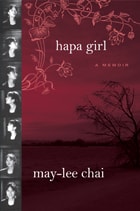
Hapa Girl
A MemoirMay-lee Chai
Temple University Press, 2008
In the mid-1960s, Winberg Chai, a young academic and the son of Chinese immigrants, married an Irish-American artist. In Hapa Girl ("hapa" is Hawaiian for "mixed") their daughter tells the story of this loving family as they moved from Southern California to New York to a South Dakota farm by the 1980s. In their new Midwestern home, the family finds itself the object of unwelcome attention, which swiftly escalates to violence. The Chais are suddenly socially isolated and barely able to cope with the tension that arises from daily incidents of racial animosity, including random acts of cruelty.
May-lee Chai's memoir ends in China, where she arrives just in time to witness a riot and demonstrations. Here she realizes that the rural Americans' "fears of change, of economic uncertainty, of racial anxiety, of the unknowable future compared to the known past were the same as China's. And I realized finally that it had not been my fault."
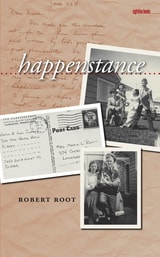
Happenstance
Robert Root
University of Iowa Press, 2013
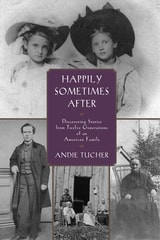
Happily Sometimes After
Discovering Stories from Twelve Generations of an American FamilyAndie Tucher
University of Massachusetts Press, 2014
A 2015 CHOICE Outstanding Academic Title
For more than four hundred years, members of the author's family have been telling stories about their American lives. They have told of impassioned elopements and heart-breaking kidnaps, of hairbreadth escapes and shocking murders, of bigamists, changelings, patriots, Indians, fires, floods, and how the great-grandmother of Chief Justice John Marshall married the pirate Blackbeard by mistake.
In this beautifully written work, Andie Tucher considers family stories as another way to look at history, neither from the top down nor the bottom up but from the inside out. She explores not just what happened—everywhere from Jamestown to Boonesborough, from the bloody field at Chickamauga to the metropolis of the Gilded Age—but also what the storytellers thought or wished or hoped or feared happened. She offers insights into what they valued, what they lost, how they judged their own lives and found meaning in them. The narrative touches on sorrow, recompense, love, pain, and the persistent tension between hope and disappointment in a nation that by making the pursuit of happiness thinkable also made unhappiness regrettable.
Based on extensive research in archives, local history societies, and family-history sources as well as conversations and correspondence, Happily Sometimes After offers an intimate and unusual perspective on how ordinary people used stories to imagine the world they wished for, and what those stories reveal about their relationships with the world they actually had.
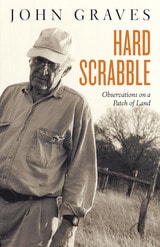
Hard Scrabble
Observations on a Patch of LandBy John Graves<br>Introduction by Rick Bass
University of Texas Press, 2016
“A kind of homemade book—imperfect like a handmade thing, a prize. It’s a galloping, spontaneous book, on occasion within whooping distance of that greatest and sweetest of country books, Ivan Turgenev’s A Sportsman’s Notebook.” —Edward Hoagland, New York Times Book Review
“His subjects are trees and brush, hired help, fences, soil, armadillos and other wildlife, flood and drought, local history, sheep and goats . . . and they come to us reshaped and reenlivened by his agreeably individual (and sometimes cranky) notions.” —New Yorker
“If Goodbye to a River was in some sense Graves’s Odyssey, this book is his [version of Hesiod’s] Works and Days. It is partly a book about work, partly a book about nature, but mostly a book about belonging. In the end John Graves has learned to belong to his patch of land so thoroughly that at moments he can sense in himself a unity with medieval peasants and Sumerian farmers, working with their fields by the Tigris.” —Larry McMurtry, Washington Post Book World
“Hard Scrabble is hard pastoral of the kind we have learned to recognize in Wordsworth, Frost, Hemingway, and Faulkner. It celebrates life in accommodation with a piece of the ‘given’ creation, a recalcitrant four hundred or so acres of Texas cedar brake, old field, and creek bottom, which will require of any genuine resident all the character he can muster.” —Southwest Review

Hardwood Glory
A Life of John WoodenBarbara Olenyik Morrow
Indiana Historical Society Press, 2014
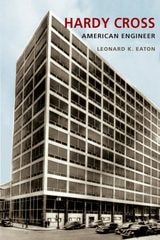
Hardy Cross
American EngineerLeonard K. Eaton
University of Illinois Press, 2006

Harley and the Davidsons
Motorcycle LegendsPete Barnes
Wisconsin Historical Society Press, 2007
This addition to the Badger Biographies series tells the story of four young inventors who shared a dream: to create the best motorized bicycle in America. Their turn of the century aspirations took them from a backyard machine shop to a highly successful business empire - and all in the span of just a few years. With grit, determination, and not a little elbow grease, Bill Harley and the Davidson brothers - Arthur, William, and Walter - used their engineering and machine-shop expertise to continually perfect their designs and present the best possible products to the American public. Along the way they made their mark on the racing circuit and introduced safety measures that continue to this day. After their deaths, their sons and daughters continued this legacy, buying back the company after it changed hands and re-establishing Harley-Davidson as the king of the motorcycle world. From the old Knucklehead, Panhead and Shovelhead motors to the Evolution, Revolution and Twin Cam engines that followed, the story of Harley and the Davidsons remains one of the great success stories of the 20th century.
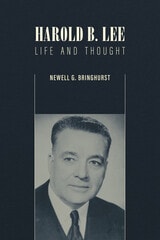
Harold B. Lee
Life and ThoughtNewell G. Bringhurst
Signature Books, 2021
Harold Frederic - American Writers 83
University of Minnesota Pamphlets on American WritersStanton Garner
University of Minnesota Press, 1969
Harold Frederic - American Writers 83 was first published in 1969. Minnesota Archive Editions uses digital technology to make long-unavailable books once again accessible, and are published unaltered from the original University of Minnesota Press editions.
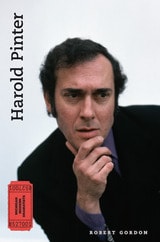
Harold Pinter
The Theatre of PowerRobert Gordon
University of Michigan Press, 2013
The latest volume in the Michigan Modern Dramatists series offers an authoritative but accessible look at Harold Pinter, one of the greatest and most influential postwar British playwrights and author of classic works such as The Birthday Party and The Homecoming. Pinter was awarded the Nobel Prize for Literature in 2005 for his remarkable body of work and plays that "uncover the precipice under everyday prattle and force entry into oppression's closed rooms."
Harold Pinter: The Theatre of Power focuses on the playwright's continuously innovative experiments in theatrical form while tracing the recurrence of a consistent set of ethical and epistemological concerns. Exploring important plays from across this prolific writer’s career, author Robert Gordon argues that the motivating force in almost all of Pinter's drama is the ceaseless desire for power, represented in his work as a compulsive drive to achieve or maintain dominance—whether it be the struggle to defend one's own territory from intruders, the father's battle with his sons to assert his patriarchal position in the family, the manipulation of erotic feelings in the gender warfare that motivates sexual relationships, the abuse of brute force by dictatorships and democracies, or simply the masculine obsession to dominate. Gordon demonstrates the adventurousness of Pinter's experimentation with form while at the same time exposing the ethical, epistemological, and aesthetic preoccupations that have persisted with remarkable consistency throughout his career.
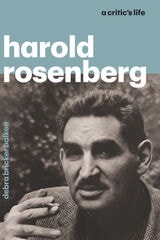
Harold Rosenberg
A Critic‘s LifeDebra Bricker Balken
University of Chicago Press, 2021
With Harold Rosenberg: A Critic’s Life, Debra Bricker Balken offers the first-ever complete biography of this great and eccentric man. Although he is now known mainly for his role as an art critic at the New Yorker from 1962 to 1978, Balken weaves together a complete tapestry of Rosenberg’s life and literary production, cast against the dynamic intellectual and social ferment of his time. She explores his role in some of the most contentious cultural debates of the Cold War period, including those over the commodification of art and the erosion of individuality in favor of celebrity, demonstrated in his famous essay “The Herd of Independent Minds.” An outspoken socialist and advocate for the political agency of art, he formed deep alliances with figures such as Hannah Arendt, Saul Bellow, Paul Goodman, Mary McCarthy, Jean-Paul Sartre, Willem de Kooning, and Jackson Pollock, all of whom Balken portrays with vivid accounts from Rosenberg’s life.
Thoroughly researched and captivatingly written, this book tells in full Rosenberg’s brilliant, fiercely independent life and the five decades in which he played a leading role in US cultural, intellectual, and political history.
Harriet Bosse
Strindberg's Muse and InterpreterCarla Waal
Southern Illinois University Press, 1990
Harriet Hosmer
A Cultural BiographyKate Culkin
University of Massachusetts Press, 2010
In 1852 Hosmer moved from Boston to Rome, where she shared a house with actress Charlotte Cushman and soon formed close friendships with such prominent expatriates as Robert and Elizabeth Barrett Browning and fellow sculptors John Gibson, Emma Stebbins, and William Wetmore Story. References to Hosmer or characters inspired by her appear in the work of Nathaniel Hawthorne, Louisa May Alcott, and Kate Field among others. Culkin argues that Hosmer's success was made possible by her extensive network of supporters, including her famous friends, boosters of American gentility, and women's rights advocates. This unlikely coalition, along with her talent, ambition, and careful maintenance of her public profile, ultimately brought her great acclaim. Culkin also addresses Hosmer's critique of women's position in nineteenth-century culture through her sculpture, women's rights advocates' use of high art to promote their cause, the role Hosmer's relationships with women played in her life and success, and the complex position a female artist occupied within a country increasingly interested in proving its gentility.
Harriet Tubman
The Life and the Life StoriesJean M. Humez
University of Wisconsin Press, 2005
Harriet Tubman’s name is known world-wide and her exploits as a self-liberated Underground Railroad heroine are celebrated in children’s literature, film, and history books, yet no major biography of Tubman has appeared since 1943. Jean M. Humez’s comprehensive Harriet Tubman is both an important biographical overview based on extensive new research and a complete collection of the stories Tubman told about her life—a virtual autobiography culled by Humez from rare early publications and manuscript sources. This book will become a landmark resource for scholars, historians, and general readers interested in slavery, the Underground Railroad, the Civil War, and African American women.
Born in slavery in Maryland in or around 1820, Tubman drew upon deep spiritual resources and covert antislavery networks when she escaped to the north in 1849. Vowing to liberate her entire family, she made repeated trips south during the 1850s and successfully guided dozens of fugitives to freedom. During the Civil War she was recruited to act as spy and scout with the Union Army. After the war she settled in Auburn, New York, where she worked to support an extended family and in her later years founded a home for the indigent aged. Celebrated by her primarily white antislavery associates in a variety of private and public documents from the 1850s through the 1870s, she was rediscovered as a race heroine by woman suffragists and the African American women’s club movement in the early twentieth century. Her story was used as a key symbolic resource in education, institutional fundraising, and debates about the meaning of "race" throughout the twentieth century.
Humez includes an extended discussion of Tubman’s work as a public performer of her own life history during the nearly sixty years she lived in the north. Drawing upon historiographical and literary discussion of the complex hybrid authorship of slave narrative literature, Humez analyzes the interactive dynamic between Tubman and her interviewers. Humez illustrates how Tubman, though unable to write, made major unrecognized contributions to the shaping of her own heroic myth by early biographers like Sarah Bradford. Selections of key documents illustrate how Tubman appeared to her contemporaries, and a comprehensive list of primary sources represents an important resource for scholars.
Harry Bridges
Labor Radical, Labor LegendRobert W. Cherny
University of Illinois Press, 2023
- Winner of a Silver Medal from the Independent Publisher Book Awards
- Won Honorable Mention for 2023 ILHA Book of the Year (International Labor History Association)
The iconic leader of one of America’s most powerful unions, Harry Bridges put an indelible stamp on the twentieth century labor movement. Robert Cherny’s monumental biography tells the life story of the figure who built the International Longshore and Warehouse Union (ILWU) into a labor powerhouse that still represents almost 30,000 workers.
An Australian immigrant, Bridges worked the Pacific Coast docks. His militant unionism placed him at the center of the 1934 West Coast Waterfront Strike and spurred him to expand his organizing activities to warehouse laborers and Hawaiian sugar and pineapple workers. Cherny examines the overall effectiveness of Bridges as a union leader and the decisions and traits that made him effective. Cherny also details the price paid by Bridges as the US government repeatedly prosecuted him for his left-wing politics.
Drawing on personal interviews with Bridges and years of exhaustive research, Harry Bridges places an extraordinary individual and the ILWU within the epic history of twentieth-century labor radicalism.
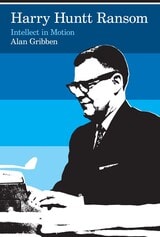
Harry Huntt Ransom
Intellect in MotionBy Alan Gribben
University of Texas Press, 2008
Both a life story and a portrait of public higher education during the twentieth century, Harry Huntt Ransom captures the spirit of a dynamic individual who dedicated his talents to nurturing intellectual life in Texas and beyond. Tracing the details of Ransom's youth in Galveston and Tennessee and his education at Yale, where he earned a doctorate, Alan Gribben provides new insight into the factors that shaped Ransom's future as a renowned administrator and defender of the humanities.
Ransom's career at the University of Texas began in 1935, when he was hired as an instructor of English. He rose through the ranks to become chancellor, stepping down in 1971 during a volatile period when debates about the University's central mission raged—particularly over the question of commercializing higher education. The development of Ransom's lasting legacy, the Humanities Research Center bearing his name, is explored in depth as well. Bringing to life a legendary figure, Harry Huntt Ransom is a colorful testament to a singular man of letters who had the audacity to propose "that there be established somewhere in Texas—let's say in the capital city—a center of our cultural compass, a research center to be the Bibliothèque Nationale of the only state that started out as an independent nation."
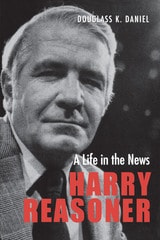
Harry Reasoner
A Life in the NewsBy Douglass K. Daniel
University of Texas Press, 2007
Harry Reasoner was one of the most trusted and well-liked journalists of the golden age of network television news. Whether anchoring the evening newscast on CBS in the 1960s or on ABC in the 1970s, providing in-depth reporting on 60 Minutes, or hosting numerous special programs covering civil rights struggles, the Vietnam War, and Watergate, Reasoner had "that almost mystical quality it seems to take for good television reporting, exuding this atmosphere of truth and believability," in the words of Walter Cronkite. Yet his reassuring manner and urbane, often witty, on-air persona masked a man who was far more complex and contradictory. Though gifted with the intelligence and drive to rise to the top of his profession, Reasoner was regarded by many colleagues as lazy and self-indulgent, a man who never achieved his full potential despite his many accomplishments.
Harry Reasoner: A Life in the News covers the entire sweep of this enigmatic journalist's life and career. Douglass K. Daniel opens with Reasoner's Depression-era Midwestern upbringing and follows him through his early work in newspapers and radio before he joined CBS in 1956. Focusing on Reasoner's thirty-five-year tenure in television news, Daniel presents fascinating, behind-the-scenes accounts of Reasoner's key role in founding the top-rated newsmagazine 60 Minutes. He also explores Reasoner's highly publicized move to ABC in 1970, where he anchored the nightly newscast, first with Howard K. Smith and later with Barbara Walters—a disastrous pairing from which Reasoner's career never fully recovered.
Based on scores of interviews and unpublished letters, memos, and other primary sources, this first biography of the man once rated second in credibility only to Walter Cronkite illuminates an entire era in broadcast journalism, as well as many of the unique personalities, from Andy Rooney to Mike Wallace, who made that era distinctive.
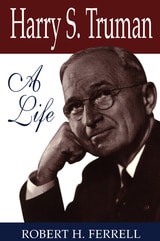
Harry S. Truman
A LifeRobert H. Ferrell
University of Missouri Press, 1995
Few U.S. presidents have captured the imagination of the American people as has Harry S. Truman, “the man from Missouri.”
In this major new biography, Robert H. Ferrell, widely regarded as an authority on the thirty-third president, challenges the popular characterization of Truman as a man who rarely sought the offices he received, revealing instead a man who—with modesty, commitment to service, and basic honesty—moved with method and system toward the presidency.
Truman was ambitious in the best sense of the word. His powerful commitment to service was accompanied by a remarkable shrewdness and an exceptional ability to judge people. He regarded himself as a consummate politician, a designation of which he was proud. While in Washington, he never succumbed to the “Potomac fever” that swelled the heads of so many officials in that city. A scrupulously honest man, Truman exhibited only one lapse when, at the beginning of 1941, he padded his Senate payroll by adding his wife and later his sister.
From his early years on the family farm through his pivotal decision to use the atomic bomb in World War II, Truman’s life was filled with fascinating events. Ferrell’s exhaustive research offers new perspectives on many key episodes in Truman’s career, including his first Senate term and the circumstances surrounding the Truman Doctrine and the Marshall Plan. In addition, Ferrell taps many little-known sources to relate the intriguing story of the machinations by which Truman gained the vice presidential nomination in 1944, a position which put him a heartbeat away from the presidency.
No other historian has ever demonstrated such command over the vast amounts of material that Robert Ferrell brings to bear on the unforgettable story of Truman’s life. Based upon years of research in the Truman Library and the study of many never-before-used primary sources, Harry S. Truman is destined to become the authoritative account of the nation’s favorite president.
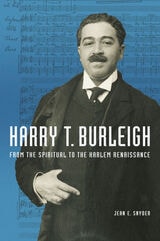
Harry T. Burleigh
From the Spiritual to the Harlem RenaissanceJean E. Snyder
University of Illinois Press, 2021
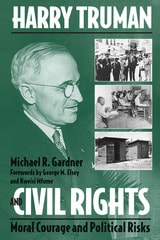
Harry Truman and Civil Rights
Moral Courage and Political RisksMichael R. Gardner. Forewords by George M. Elsey and Kweisi Mfume
Southern Illinois University Press, 2002
Given his background, President Truman was an unlikely champion of civil rights. Where he grew up—the border state of Missouri—segregation was accepted and largely unquestioned. Both his maternal and paternal grandparents had owned slaves, and his mother, victimized by Yankee forces, railed against Abraham Lincoln for the remainder of her ninety-four years. When Truman assumed the presidency on April 12, 1945, Michael R. Gardner points out, Washington, DC, in many ways resembled Cape Town, South Africa, under apartheid rule circa 1985.
Truman’s background notwithstanding, Gardner shows that it was Harry Truman—not Franklin D. Roosevelt, Dwight D. Eisenhower, or John F. Kennedy—who energized the modern civil rights movement, a movement that basically had stalled since Abraham Lincoln had freed the slaves. Gardner recounts Truman’s public and private actions regarding black Americans. He analyzes speeches, private conversations with colleagues, the executive orders that shattered federal segregation policies, and the appointments of like-minded civil rights activists to important positions. Among those appointments was the first black federal judge in the continental United States.
One of Gardner’s essential and provocative points is that the Frederick Moore Vinson Supreme Court—a court significantly shaped by Truman—provided the legal basis for the nationwide integration that Truman could not get through the Congress. Challenging the myth that the civil rights movement began with Brown v. Board of Education under Chief Justice Earl Warren, Gardner contends that the life-altering civil rights rulings by the Vinson Court provided the necessary legal framework for the landmark Brown v. Board of Education decision.
Gardner characterizes Truman’s evolution from a man who grew up in a racist household into a president willing to put his political career at mortal risk by actively supporting the interests of black Americans.
Hart Crane - American Writers 47
University of Minnesota Pamphlets on American WritersMonroe K. Spears
University of Minnesota Press, 1965
Hart Crane - American Writers 47 was first published in 1965. Minnesota Archive Editions uses digital technology to make long-unavailable books once again accessible, and are published unaltered from the original University of Minnesota Press editions.
The University of Minnesota Pamphlets on American Writers series provides concise, stimulating introductions to American writers of all periods. The pamphlet authors are critics and writers recognized for their competence in their particular fields. Each pamphlet devoted to a single writer contains biographical information, a discussion and critical evaluation of his work, and a selected bibliography. Teachers of American literature, both in the United States and abroad, in colleges, universities, and secondary schools find the pamphlets ideal for their students' use. For general readers and librarians they are equally useful and interesting.
Hart Crane
A Re-IntroductionWarner Berthoff
University of Minnesota Press, 1989
Hart Crane was first published in 1989. Minnesota Archive Editions uses digital technology to make long-unavailable books once again accessible, and are published unaltered from the original University of Minnesota Press editions.
More than half a century after his death, the work of Hart Crane (1899–1932) remains central to our understanding of twentieth-century American poetry. During his short life, Crane's contemporaries had difficulty seeing past the "roaring boy" who drank too much and hurled typewriters from windows; in recent years, he has come to be seen as a kind of "last poet" whose only theme is self-destruction, and who himself exemplifies the breakdown of poetry in the modern age. Taking as a point of departure Robert Lowell's 1961 valuation of Crane and his power to speak from "the center of things," Warner Berthoff in this book reappraises the essential character and force of Crane's still problematic achievement. Though he takes into account the substantial body of commentary on Crane's work, his primary intent is to look afresh at the poems themselves, and at the poet's clear-eyed (and brilliant) letters. This approach enables Berthoff, first, to track the emergence and development of Crane's lyric style—an art that recreates, in compact form, the turbulence of the modern city. He then explores the background and historical community that nourished Crane's creative imagination, and he evaluates Crane's conception of the ideal modern poetic: a poetry of ecstasy created with architectural craft. His final chapter is devoted to The Bridge, the ambitious lyric suite that proved to be the climax and terminus of Crane's work. Berthoff's emphasis throughout is on the beauty and power of individual poems, and on the sanity, shrewdness, and sense of purpose that informed Crane's working intelligence.
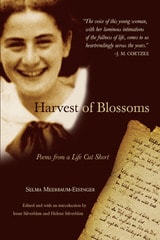
Harvest of Blossoms
Poems from a Life Cut ShortSelma Meerbaum-Eisinger
Northwestern University Press, 2008
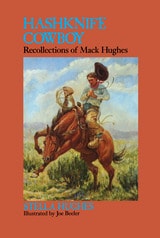
Hashknife Cowboy
Recollections of Mack HughesStella Hughes; Illustrated by Joe Beeler
University of Arizona Press, 1984
Stella Hughes, author of the best-selling Chuck Wagon Cookin' and a cowhand in her own right, has compiled from her husband's reminiscences an authentic look both at Arizona history and at cowboying as it really was. Illustrated by Joe Beeler, founding member of the Cowboy Artists of America.

Haunted Heart
A Biography of Susannah McCorkleLinda Dahl
University of Michigan Press, 2006
"In this comprehensive biography, compiled from meticulous research and interviews with many of McCorkle's confidants . . . Dahl reconstructs a career distinguished by great promise and great sadness . . . doing her best to address a large, looming 'Why?' that can never be completely answered."
—New York Times
"A compelling, sympathetic but often chilling view not only of McCorkle's complexities but also of the difficult business of music itself and of the widespread always potentially fatal illness now better known as bipolar disorder, which the singer hid from so many, even from herself for many years."
—Newsweek
“Susannah's life was dark and daunting. Her music was suave and sunny. Both are honored in this remarkably well-researched and constantly revealing keyhole peek into a haunted life that is both chilling and exhilarating. I could not put it down.”
—Rex Reed
“Susannah McCorkle was a mesmerizing singer with a dark side she hid even from her closest friends. Now, thanks to this probing and courageous biography, we can understand the gut ambition that took her to the top of her field and the turmoil that brought her down.”
—James Gavin, author of Deep in a Dream: The Long Night of Chet Baker
“Haunted Heart strikingly resembles the woman it describes: it is vivacious, tender, saturnine, industrious, and deeply intelligent. Like Susannah's way with certain ballads, it opens a wound and begins the work of healing it. I am grateful for Linda Dahl's diligence and sympathy.”
—Leon Wieseltier
Linda Dahl is the author of Stormy Weather: The Music and Lives of a Century of Jazzwomen and Morning Glory: A Biography of Mary Lou Williams. Visit the author’s website at www.dahljazz.com.
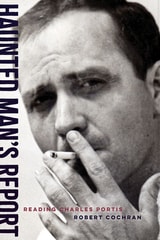
Haunted Man's Report
Reading Charles PortisRobert Cochran
University of Arkansas Press, 2024
Haunted Man’s Report, a deeply insightful literary exploration of Portis’s singular and underexamined oeuvre, celebrates this novelist’s great achievement and is certain to prove a valuable guide for readers new to Portis as well as aficionados.
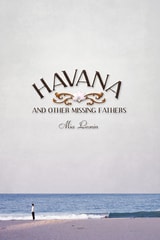
Havana and Other Missing Fathers
Mia Leonin
University of Arizona Press, 2009
Shortly after her sixteenth birthday, Leonin learned from her mother that her father, a Cuban exile, was very much alive and living in Florida. Her attempts to contact him, however, were thwarted until four years later, when she left home in search of her roots.
She meets her father, but trying to discover the truth behind him proves to be a more daunting task. Her journey takes her to Miami, Colombia, and Cuba, and her search for cultural identity leads her to create memories, friendships, and romances. She finds moments of connection and redemption, ending up in Havana not as a cultural tourist but as an illegitimate daughter of Cuba looking for validation. What she discovers is an island bereft of fathers and brimming with paternalism. As she becomes entangled with two different men, she descends further into the Havana of poverty, humiliation, and despair, as well as the ever-inventive city that is as passionate as it is contradictory.
Insightful, imaginative, and often poetic, Havana and Other Missing Fathers is Mia Leonin’s recollection of this journey and her longing to learn more about her origins. In the end, she must learn to accept the answers she discovers as well as the questions that remain.
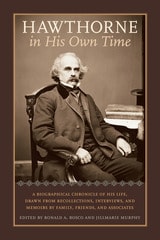
Hawthorne in His Own Time
A Biographical Chronicle of His Life,Drawn from Recollections,Interviews, and Memoirs by Family,FrieRonald A Bosco
University of Iowa Press, 2007
At his death, Nathaniel Hawthorne (1804–1864) was universally acknowledged in America and England as "the Great Romancer." Novels such as The Scarlet Letter and The House of the Seven Gables and stories published in such collections as Twice-Told Tales continue to capture the minds and imaginations of readers and critics to this day. Harder to capture, however, were the character and personality of the man himself. So few of the essays that appeared in the two years after his death offered new insights into his life, art, and reputation that Hawthorne seemed fated to premature obscurity or, at least, permanent misrepresentation. This first collection of personal reminiscences by those who knew Hawthorne intimately or knew about him through reliable secondary sources rescues him from these confusions and provides the real human history behind the successful writer.
Remembrances from Elizabeth Peabody, Sophia Hawthorne, Oliver Wendell Holmes, Ralph Waldo Emerson, Bronson Alcott, Rebecca Harding Davis, and twenty others printed in Hawthorne in His Own Time follow him from his childhood in Salem, through his years of initial literary obscurity, his days in the Boston and Salem Custom Houses, his service as U.S. Consul to Liverpool and Manchester and his life in the Anglo-American communities at Rome and Florence, to his late years as the "Great Romancer."
In their enlightening introduction, editors Ronald Bosco and Jillmarie Murphy assess the postmortem building of Hawthorne's reputation as well as his relationship to the prominent Transcendentalists, spiritualists, Swedenborgians, and other personalities of his time. By clarifying the sentimental associations between Hawthorne's writings and his actual personality and moving away from the critical review to the personal narrative, these artful and perceptive reminiscences tell the private and public story of a remarkable life.
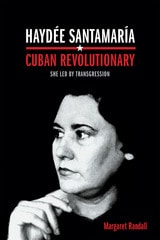
Haydée Santamaría, Cuban Revolutionary
She Led by TransgressionMargaret Randall
Duke University Press, 2015
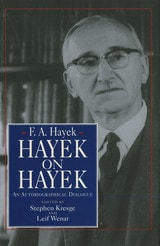
Hayek on Hayek
An Autobiographical DialogueF. A. Hayek
University of Chicago Press, 1994
Through a complete collection of previously unpublished autobiographical sketches and a wide selection of interviews, Hayek on Hayek provides the first detailed chronology of Hayek's early life and education, his intellectual progress, and the academic and public reception of his ideas. His discussions range from economic methodology and the question of religious faith to the atmosphere of post-World War I Vienna and the British character.
Born in 1899 into a Viennese family of academics and civil servants, Hayek was educated at the University of Vienna, fought in the Great War, and later moved to London, where, as he watched liberty vanish under fascism and communism across Europe, he wrote The Road to Serfdom. Although this book attracted great public attention, Hayek was ignored by other economists for thirty years after World War II, when European social democracies boomed and Keynesianism became the dominant intellectual force. However, the award of the Nobel Prize in economics for 1974 signaled a reversal in Hayek's fortunes, and before his death in 1992 he saw his life's work vindicated in the collapse of the planned economies of Eastern Europe.
Hayek on Hayek is as close to an autobiography of Hayek as we will ever have. In his own eloquent words, Hayek reveals the remarkable life of a revolutionary thinker in revolutionary times.
"One of the great thinkers of our age who explored the promise and contours of liberty....[Hayek] revolutionized the world's intellectual and political life"—President George Bush, on awarding F. A. Hayek the Medal of Freedom
F. A. Hayek, recipient of the Medal of Freedom 1991 and the Nobel Memorial Prize in Economics in 1974, was a pioneer in monetary theory and the principal proponent of the libertarian philosophy. Hayek is the author of numerous books in economics, as well as books in political philosophy and psychology.
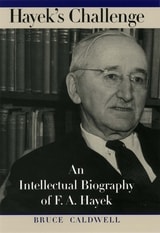
Hayek's Challenge
An Intellectual Biography of F.A. HayekBruce Caldwell
University of Chicago Press, 2005
Caldwell begins by providing the necessary background for understanding Hayek's thought, tracing the emergence, in fin-de-siècle Vienna, of the Austrian school of economics—a distinctive analysis forged in the midst of contending schools of thought. In the second part of the book, Caldwell follows the path by which Hayek, beginning from the standard Austrian assumptions, gradually developed his unique perspective on not only economics but a broad range of social phenomena. In the third part, Caldwell offers both an assessment of Hayek's arguments and, in an epilogue, an insightful estimation of how Hayek's insights can help us to clarify and reexamine changes in the field of economics during the twentieth century.
As Hayek's ideas matured, he became increasingly critical of developments within mainstream economics: his works grew increasingly contrarian and evolved in striking—and sometimes seemingly contradictory—ways. Caldwell is ideally suited to explain the complex evolution of Hayek's thought, and his analysis here is nothing short of brilliant, impressively situating Hayek in a broader intellectual context, unpacking the often difficult turns in his thinking, and showing how his economic ideas came to inform his ideas on the other social sciences.
Hayek's Challenge will be received as one of the most important works published on this thinker in recent decades.