Results by title
547 books match the query 'California' and 28 start with h

Hardboiled in Hollywood
Five Black Mask Writers and the MoviesUniversity of Wisconsin Press, 1991
Headline Hollywood
A Century of Film ScandalMcLean, Adrienne L
Rutgers University Press, 2001
Hear Him Roar
A NovelAndrew Wingfield
Utah State University Press, 2005
Heartbeat of Struggle
The Revolutionary Life of Yuri KochiyamaDiane C. Fujino
University of Minnesota Press, 2005
Heavy Ground
William Mulholland and the St. Francis Dam DisasterNorris Hundley
University of Nevada Press, 2020
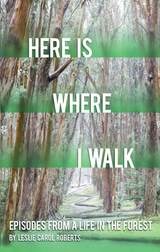
Here is Where I Walk
Episodes From a Life in the ForestLeslie Carol Roberts
University of Nevada Press, 2019
In layered stories of her life and travels, Leslie turns her daily walks into revelations of deeper meaning. From Maryland to Iowa to Tasmania, we follow a fierce and keenly observant walker through places of exquisite beauty and complexity. Her daily walks inspire Leslie to accept the invitation of the beckoning trees where she finds herself colliding with the urban coyote, the peculiar banana slug, and the manzanita. She also notes both ridiculous and poignant aspects of human ecosystems in pursuit of what it means to live a life of creativity and creation from scientist-activists battling to save environments to the tragic realities of ordinary life.
In this finely crafted eco-memoir, each place provides Leslie with exactly the scaffolding needed to survive, with nature serving as the tonic. Here is Where I Walk provides a vivid answer to how we can find our place, not only in nature but within ourselves and the world we walk.
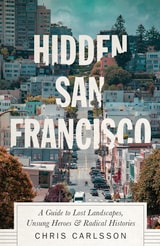
Hidden San Francisco
A Guide to Lost Landscapes, Unsung Heroes and Radical HistoriesChris Carlsson
Pluto Press, 2020
Hidden San Francisco is a guidebook like no other. It’s a radical, alternative guidebook and history of San Francisco, complete with maps detailing walking and bike routes around the city.
San Francisco is an iconic and symbolic city. But only when you look beyond the picture-postcards of the Golden Gate Bridge and the quaint cable cars do you realize that the city's most interesting stories are not the Summer of Love, the Beats or even the latest gold rush in Silicon Valley.
Carlsson delves into the Bay Area's long prehistory, examining the region's geography and the lives of its inhabitants before the 1849 Gold Rush changed everything, setting in motion the clash between capital and labor that shaped the modern city. Structured around the four major themes of ecology, labor, transit and dissent, Chris Carlsson’s book peels back the layers of San Francisco's history to reveal a storied past: behind old walls and gleaming glass facades lurk former industries, secret music and poetry venues, forgotten terrorist bombings, and much more.
From the perspective of the students and secretaries, hippies and beatniks, longshoremen and waitresses, Hidden San Francisco uncovers dozens of overlooked, forgotten and buried histories that pulse through the streets and hills even today, inviting the reader to see themselves in the middle of the ongoing, everyday process of making history together.
Hip Hop Underground
The Integrity and Ethics of Racial IdentificationAnthony Kwame Harrison
Temple University Press, 2009
Hip Hop Underground is a vivid ethnography of the author's observations and experiences in the multiracial world of the San Francisco underground hip hop scene. While Anthony Kwame Harrison interviewed area hip hop artists for this entertaining and informative book, he also performed as the emcee "Mad Squirrel." His immersion in the subculture provides him with unique insights into this dynamic and racially diverse but close-knit community.
Hip Hop Underground examines the changing nature of race among young Americans, and examines the issues of ethnic and racial identification, interaction, and understanding. Critiquing the notion that the Bay Area underground music scene is genuinely "colorblind," Harrison focuses on the issue of race to show how various ethnic groups engage hip hop in remarkably divergent ways—as a means to both claim subcultural legitimacy and establish their racial authenticity.
History Of Louisa Barnes Pratt
The Autobiography of a Mormon Missionary Widow and PioneerGeorge S Ellsworth
Utah State University Press, 1998
Volume 3, Life Writings of Frontier Women series, ed. Maureen Ursenbach Beecher
In her memoir, and 1870s revision of her journal and diary, Louisa Barnes Pratt tells of childhood in Massachusetts and Canada during the War of 1812, and independent career as a teacher and seamstress in New England, and her marriage to the Boston seaman Addison Pratt.
Converting to the LDS Church, the Pratts moved to Nauvoo, Illinois, from where Brigham Young sent Addison on the first of the long missions to the Society Islands that would leave Louisa on her own. As a sole available parent, she hauled her children west to Winter Quarters, to Utah in 1848, to California, and, in Addison's wake, to Tahiti in 1850.
The Pratts joined the Mormon colony at San Bernardino, California. When in 1858 a federal army's march on Utah led to the colonists' recall, Addision—alienated from the Mormon Church after long absences—chose not to go. Mostly separated thereafter (Addison died in 1872), Louisa settled in Beaver, Utah, where she campaigned for women's rights, contributed to the Woman's Exponent, and depended on her own means, as she had much of her life, until her death in 1880.
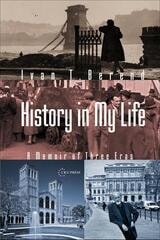
History in My Life
A Memoir of Three ErasIvan T. Berend is Distinguished Research Professor at the History Department of the University of California Los Angeles.
Central European University Press, 2009
Ivan T. Berend is Distinguished Professor at the University of California Los Angeles, Director of the European Studies Program. He was one of the masterminds of regime change in Hungary. He made a career in Hungary as a university professor, Rector of the University of Economics (1973–79), and President of the Hungarian Academy of Sciences (1985–90). He was President of the International Committee of Historical Sciences (1995–2000), and Vice-President of the International Economic History Association (1986–1994). His research interests are the complex economic, social, ideological, and cultural history of Central and Eastern Europe in the 19th–20th century; economic modernization; problems of European backwardness; transition from state socialism to capitalism. He published and 26 books and more than 120 studies.
Before he became a professor at UCLA, Ivan Berend had survived five regime changes and two revolutions in Hungary, had been in prison and German concentration camp in 1944–45.
His memoir offers an interesting case study, a subjective addition to the “objective” historical works on Central and Eastern European state socialism. It describes the hard choices of intellectuals in a dictatorial state: 1. remain in isolation, concentrate on scholarly works, and exclude politics in your personal life; 2. be in opposition, criticize and unveil the regime, accept discrimination and exclusion; 3. remain within the establishment and work for reforming the country using legal possibilities to criticize the regime and to achieve changes from within.
Berend’s book raises basic historical questions and debates, compares East European and American higher education systems, and presents an eyewitness’ insights on life in the United States.
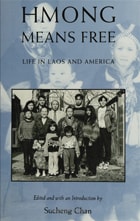
Hmong Means Free
Life in Laos and AmericaSucheng Chan
Temple University Press, 1994
This collection of evocative personal testimonies by three generations of Hmong refugees is the first to describe their lives in Laos as slash-and-burn farmers, as refugees after a Communist government came to power in 1975, and as immigrants in the United States. Reflecting on the homes left behind, their narratives chronicle the difficulties of forging a new identity.
From Jou Yee Xiong's Life Story:
"I stopped teaching my sons many of the Hmong ways because I felt my ancestors and I had suffered enough already. I thought that teaching my children the old ways would only place a burden on them."
From Ka Pao Xiong's (Jou Yee Xiong's son) Life Story:
"It has been very difficult for us to adapt because we had no professions or trades and we suffered from culture shock. Here in America, both the husband and wife must work simultaneously to earn enough money to live on. Many of our children are ignorant of the Hmong way of life…. Even the old people are forgetting about their life in Laos, as they enjoy the prosperity and good life in America."
From Xang Mao Xiong's Life Story:
"When the Communists took over Laos and General Vang Pao fled with his family, we, too, decided to leave. Not only my family, but thousands of Hmong tried to flee. I rented a car for thirty thousand Laotian dollars, and it took us to Nasu…. We felt compelled to leave because many of us had been connected to the CIA…. Thousands of Hmong were traveling on foot. Along the way, many of them were shot and killed by Communist soldiers. We witnessed a bloody massacre of civilians."
From Vue Vang's Life Story:
"Life was so hard in the [Thai refugee] camp that when we found out we could go to the United States, we did not hesitate to grasp the chance. We knew that were we to remain in the camp, there would be no hope for a better future. We would not be able to offer our children anything better than a life of perpetual poverty and anguish."
Hold-Outs
The Los Angeles Poetry Renaissance, 1948-1992Bill Mohr
University of Iowa Press, 2011
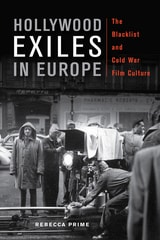
Hollywood Exiles in Europe
The Blacklist and Cold War Film CulturePrime, Rebecca
Rutgers University Press, 2014
Rebecca Prime documents the untold story of the American directors, screenwriters, and actors who exiled themselves to Europe as a result of the Hollywood blacklist. During the 1950s and 1960s, these Hollywood émigrés directed, wrote, or starred in almost one hundred European productions, their contributions ranging from crime film masterpieces like Du rififi chez les hommes (1955, Jules Dassin, director) to international blockbusters like The Bridge on the RiverKwai (1957, Carl Foreman and Michael Wilson, screenwriters) and acclaimed art films like The Servant (1963, Joseph Losey, director).
At once a lively portrait of a lesser-known American “lost generation” and an examination of an important transitional moment in European cinema, the book offers a compelling argument for the significance of the blacklisted émigrés to our understanding of postwar American and European cinema and Cold War relations. Prime provides detailed accounts of the production and reception of their European films that clarify the ambivalence with which Hollywood was regarded within postwar European culture. Drawing upon extensive archival research, including previously classified material, Hollywood Exiles in Europe suggests the need to rethink our understanding of the Hollywood blacklist as a purely domestic phenomenon. By shedding new light on European cinema’s changing relationship with Hollywood, the book illuminates the postwar shift from national to transnational cinema.
Hollywood Faith
Holiness, Prosperity, and Ambition in a Los Angeles ChurchMarti, Gerardo
Rutgers University Press, 2008
In Hollywood Faith, Gerardo Marti shows how a multiracial evangelical congregation of 2,000 people accommodates itself to the entertainment industry and draws in many striving to succeed in this harsh and irreverent business. Oasis strategically sanctifies ambition and negotiates social change by promoting a new religious identity as "champion of life"-an identity that provides people who face difficult career choices and failed opportunities a sense of empowerment and endurance.
The first book to provide an in-depth look at religion among the "creative class," Hollywood Faith will fascinate those interested in the modern evangelical movement and anyone who wants to understand how religion adapts to social change.

Hollywood Independents
The Postwar Talent TakeoverDenise Mann
University of Minnesota Press, 2008
Hollywood Independents explores the crucial period from 1948 to 1962 when independent film producers first became key components of the modern corporate entertainment industry. Denise Mann examines the impact of the radically changed filmmaking climate—the decline of the studios, the rise of television, and the rise of potent talent agencies like MCA—on a group of prominent talent-turned-producers including Burt Lancaster, Joseph Mankiewicz, Elia Kazan, and Billy Wilder.
In order to show how these newly independent filmmakers negotiated through an increasingly fraught, reactionary creative atmosphere, Mann analyzes the reflexive portraits of their altered working conditions in such films as A Face in the Crowd, Sweet Smell of Success, and Will Success Spoil Rock Hunter? These artists, she shows, took on the corporate middle-managers at television networks and talent agencies as a way of challenging the status quo without risking censorship or blacklisting.
This period saw the evolution of film production from the studio-governed system to one of entrepreneurs. Out of this new arrangement, which encouraged greater creative freedom, emerged a nascent form of independent art cinema that sowed the seeds of the Hollywood Renaissance that followed.
Denise Mann is associate professor of film, TV and digital media at UCLA. She is coeditor of Private Screenings: Television and the Female Consumer (Minnesota, 1992).
Hollywood Modernism
Film & Politics In Age Of New DealSaverio Giovacchini
Temple University Press, 2001
Seeing Hollywood as a forcefield, Giovacchini examines the social networks, working relationships, and political activities of artists, intellectuals, and film workers who flocked to Hollywood from Europe and the eastern United States before and during the second world war. He creates a complex and nuanced portrait of this milieu, adding breadth and depth to the conventional view of the era's film industry as little more than an empire for Jewish moguls or the major studios. In his rendering Hollywood's newcomers joined with its established elite to develop a modernist aesthetic for film that would bridge popular and avant-garde sensibilities; for them, realism was the most effective vehicle for conveying their message and involving a mass audience in the democratic struggle for process.
Hollywood Shutdown
Production, Distribution, and Exhibition in the Time of COVIDBy Kate Fortmueller
University of Texas Press, 2021
By March 2020, the spread of COVID-19 had reached pandemic proportions, forcing widespread shutdowns across industries, including Hollywood. Studios, networks and production companies, and the thousands of workers who make film and television possible, were forced to adjust their time-honored business and labor practices. In this book, Kate Fortmueller asks what happened when the coronavirus closed Hollywood.
Hollywood Shutdown examines how the COVID-19 pandemic affected film and television production, influenced trends in distribution, reshaped theatrical exhibition, and altered labor practices. From January movie theater closures in China to the bumpy September release of Mulan on the Disney+ streaming platform, Fortmueller probes various choices made by studios, networks, unions and guilds, distributors, and exhibitors during the evolving crisis. In seeking to explain what happened in the first nine months of 2020, this book also considers how the pandemic will transform Hollywood practices in the twenty-first century.
Hollywood TV
The Studio System in the FiftiesBy Christopher Anderson
University of Texas Press, 1994
The 1950s was one of the most turbulent periods in the history of motion pictures and television. During the decade, as Hollywood's most powerful studios and independent producers shifted into TV production, TV replaced film as America's principal postwar culture industry.
This pioneering study offers the first thorough exploration of the movie industry's shaping role in the development of television and its narrative forms. Drawing on the archives of Warner Bros. and David O. Selznick Productions and on interviews with participants in both industries, Christopher Anderson demonstrates how the episodic telefilm series, a clear descendant of the feature film, became and has remained the dominant narrative form in prime-time TV.
This research suggests that the postwar motion picture industry was less an empire on the verge of ruin—as common wisdom has it—than one struggling under unsettling conditions to redefine its frontiers. Beyond the obvious contribution to film and television studies, these findings add an important chapter to the study of American popular culture of the postwar period.
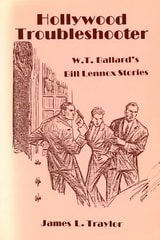
Hollywood Troubleshooter
W. T. Ballard's Bill Lennox StoriesJames L. Traylor
University of Wisconsin Press, 1985
This is the first collection of short stories by W.T. Ballard. This volume is just a sampling of Ballard's most famous character Bill Lennox, a selection for both the connoisseur of crime and the lover of good, fast-moving crime/adventure stories.
Hollywood Unions
Kate Fortmueller
Rutgers University Press, 2025
Hollywood and Broadcasting
From Radio to CableMichelle Hilmes
University of Illinois Press, 1990
an excellent introduction to a most important subject. This is an invaluable
work for both scholars and students that places film, radio, and television
within the context of the national culture experience."
--- American Historical Review
"Hilmes is one of the few historians
of broadcasting to move beyond a political economy of the media. . . . Her work
should serve as a model for future histories of broadcasting."
--- Journal of Communication
"All media historians will
find this work a critical addition to their bookshelves."
--- American Journalism
"A major addition to media
history literature."
--- Journalism History
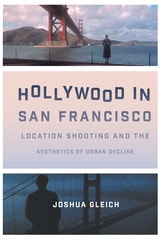
Hollywood in San Francisco
Location Shooting and the Aesthetics of Urban DeclineBy Joshua Gleich
University of Texas Press, 2018
One of the country’s most picturesque cities and conveniently located just a few hours’ drive from Hollywood, San Francisco became the most frequently and extensively filmed American city beyond the production hubs of Los Angeles and New York in the three decades after World War II. During those years, the cinematic image of the city morphed from the dreamy beauty of Vertigo to the nightmarish wasteland of Dirty Harry, although San Francisco itself experienced no such decline. This intriguing disconnect gives impetus to Hollywood in San Francisco, the most comprehensive study to date of Hollywood’s move from studio to location production in the postwar era.
In this thirty-year history of feature filmmaking in San Francisco, Joshua Gleich tracks a sea change in Hollywood production practices, as location shooting overtook studio-based filming as the dominant production method by the early 1970s. He shows how this transformation intersected with a precipitous decline in public perceptions of the American city, to which filmmakers responded by developing a stark, realist aesthetic that suited America’s growing urban pessimism and superseded a fidelity to local realities. Analyzing major films set in San Francisco, ranging from Dark Passage and Vertigo to The Conversation, The Towering Inferno, and Bullitt, as well as the TV show The Streets of San Francisco, Gleich demonstrates that the city is a physical environment used to stage urban fantasies that reveal far more about Hollywood filmmaking and American culture than they do about San Francisco.
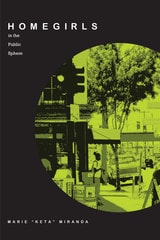
Homegirls in the Public Sphere
By Marie "Keta" Miranda
University of Texas Press, 2003
Girls in gangs are usually treated as objects of public criticism and rejection. Seldom are they viewed as objects worthy of understanding and even more rarely are they allowed to be active subjects who craft their own public persona—which is what makes this work unique. In this book, Marie "Keta" Miranda presents the results of an ethnographic collaboration with Chicana gang members, in which they contest popular and academic representations of Chicana/o youth and also construct their own narratives of self identity through a documentary film, It's a Homie Thang!
In telling the story of her research in the Fruitvale community of Oakland, California, Miranda honestly reveals how even a sympathetic ethnographer from the same ethnic group can objectify the subjects of her study. She recounts how her project evolved into a study of representation and its effects in the public sphere as the young women spoke out about how public images of their lives rarely come close to the reality. As Miranda describes how she listened to the gang members and collaborated in the production of their documentary, she sheds new light on the politics of representation and ethnography, on how inner city adolescent Chicanas present themselves to various publics, and on how Chicana gangs actually function.

Homeless Families
THE STRUGGLE FOR DIGNITYBarry Jay Seltser and Donald E. Miller
University of Illinois Press, 1993
Homeless In Paradise
A Map of the TerrainRobert Rosenthal
Temple University Press, 1993
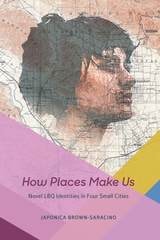
How Places Make Us
Novel LBQ Identities in Four Small CitiesJaponica Brown-Saracino
University of Chicago Press, 2017
Taking us into communities in Ithaca, New York; San Luis Obispo, California; Greenfield, Massachusetts; and Portland, Maine; Brown-Saracino shows how LBQ migrants craft a unique sense of self that corresponds to their new homes. How Places Make Us demonstrates that sexual identities are responsive to city ecology. Despite the fact that the LBQ residents share many demographic and cultural traits, their approaches to sexual identity politics and to ties with other LBQ individuals and heterosexual residents vary markedly by where they live. Subtly distinct local ecologies shape what it feels like to be a sexual minority, including the degree to which one feels accepted, how many other LBQ individuals one encounters in daily life, and how often a city declares its embrace of difference. In short, city ecology shapes how one “does” LBQ in a specific place. Ultimately, Brown-Saracino shows that there isn’t one general way of approaching sexual identity because humans are not only social but fundamentally local creatures. Even in a globalized world, the most personal of questions—who am I?—is in fact answered collectively by the city in which we live.
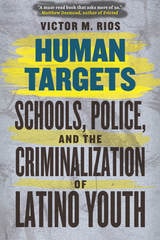
Human Targets
Schools, Police, and the Criminalization of Latino YouthVictor M. Rios
University of Chicago Press, 2017
In Human Targets, Rios takes us to the streets of California, where we encounter young men who find themselves in much the same situation as fifteen-year-old Victor. We follow young gang members into schools, homes, community organizations, and detention facilities, watch them interact with police, grow up to become fathers, get jobs, get rap sheets—and in some cases get killed. What is it that sets apart young people like Rios who succeed and survive from the ones who don’t? Rios makes a powerful case that the traditional good kid/bad kid, street kid/decent kid dichotomy is much too simplistic, arguing instead that authorities and institutions help create these identities—and that they can play an instrumental role in providing young people with the resources for shifting between roles. In Rios’s account, to be a poor Latino youth is to be a human target—victimized and considered an enemy by others, viewed as a threat to law enforcement and schools, and burdened by stigma, disrepute, and punishment. That has to change.
This is not another sensationalistic account of gang bangers. Instead, the book is a powerful look at how authority figures succeed—and fail—at seeing the multi-faceted identities of at-risk youths, youths who succeed—and fail—at demonstrating to the system that they are ready to change their lives. In our post-Ferguson era, Human Targets is essential reading.
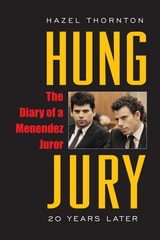
Hung Jury
The Diary of a Menendez JurorHazel Thornton
Temple University Press, 2017
More than two decades after serving as a juror on the high-profile seven-month murder trial People v. Erik Galen Menendez, Hazel Thornton updates her book Hung Jury with a new preface and a postscript essay of observations about the Menendez brothers’ second trial. Includes psychological commentary by Lawrence S. Wrightsman and Amy J. Posey, and legal commentary by Alan Scheflin.