Results by title
434 books match the query 'Ethics & Moral Philosophy' and 18 start with h
Habits and Holiness
Ethics, Theology, and BiopsychologyEzra, OP Sullivan
Catholic University of America Press, 2021
Happiness and Utility
Essays Presented to Frederick RosenEdited by Georgios Varouxakis and Mark Philp
University College London, 2019
The chapters are written in celebration of the career of Professor Fredrick Rosen. They follow his work by concentrating on Bentham and the two Mills, and by the subtleties and sophistication of their understanding of one of the most alluring but elusive ideas of modern times. The volume will be of interest not only to admirers of Rosen but to academics and postgraduate students in disciplines such as philosophy, political theory, the history of political thought, legal theory and legal history.
Health Humanities Reader
Jones, Therese
Rutgers University Press, 2014
In Health Humanities Reader, editors Therese Jones, Delese Wear, and Lester D. Friedman have assembled fifty-four leading scholars, educators, artists, and clinicians to survey the rich body of work that has already emerged from the field—and to imagine fresh approaches to the health humanities in these original essays. The collection’s contributors reflect the extraordinary diversity of the field, including scholars from the disciplines of disability studies, history, literature, nursing, religion, narrative medicine, philosophy, bioethics, medicine, and the social sciences.
With warmth and humor, critical acumen and ethical insight, Health Humanities Reader truly humanizes the field of medicine. Its accessible language and broad scope offers something for everyone from the experienced medical professional to a reader interested in health and illness.
Hope, Trust, and Forgiveness
Essays in FinitudeJohn T. Lysaker
University of Chicago Press, 2023
As ethical beings, we strive for lives that are meaningful and praiseworthy. But we are finite. We do not know, so we hope. We need, so we trust. We err, so we forgive. In this book, philosopher John T. Lysaker draws our attention to the ways in which these three capacities—hope, trust, and forgiveness—contend with human limits. Each experience is vital to human flourishing, yet each also poses significant personal and institutional challenges as well as opportunities for growth. Hope, Trust, and Forgiveness explores these challenges and opportunities and proposes ways to best meet them. In so doing, Lysaker experiments with the essay as a form and advances an improvisational perfectionism to deepen and expand our ethical horizons.
Hospitality, Volume I
Jacques Derrida
University of Chicago Press, 2023
Hospitality reproduces a two-year seminar series delivered by Jacques Derrida at the École des hautes études en sciences sociales in Paris between 1995 and 1997. In these lectures, Derrida asks a series of related questions about responsibility and “the foreigner”: How do we welcome or turn away the foreigner? What does the idea of the foreigner reveal about kinship and the state, particularly in relation to friendship, citizenship, migration, asylum, assimilation, and xenophobia? Derrida approaches these questions through readings of several classical texts as well as modern texts by Heidegger, Arendt, Camus, and others. Central to his project is a rigorous distinction between conventional, finite hospitality, with its many conditions, and the aspirational idea of hospitality as something offered unconditionally to the stranger. This volume collects the first year of the seminar.
Hospitality, Volume II
Jacques Derrida
University of Chicago Press, 2024
Hospitality reproduces a two-year seminar series delivered by Jacques Derrida at the École des hautes études en sciences sociales in Paris between 1995 and 1997. In these lectures, Derrida asks a series of related questions about responsibility and “the foreigner”: How do we welcome or turn away the foreigner? What does the idea of the foreigner reveal about kinship and the state, particularly in relation to friendship, citizenship, migration, asylum, assimilation, and xenophobia? Central to his project is a rigorous distinction between conventional, finite hospitality, with its many conditions, and the aspirational idea of hospitality as something offered unconditionally to the stranger. This volume collects the second year of the seminar, which considers an Islamic problematic of hospitality, the relevance of forgiveness, and the work of Emmanuel Levinas.
How Is It Between Us?
Relational Ethics and Care for the WorldJarrett Zigon
HAU, 2024
In How Is It Between Us?, Jarrett Zigon puts anthropology and phenomenological hermeneutics in conversation to develop a new theory of relational ethics. This relational ethics takes place in the between, the interaction not just between people, but all existents. Importantly, this theory is utilized as a framework for considering some of today’s most pressing ethical concerns—for example, living in a condition of post-truth and worlds increasingly driven by algorithms and data extraction, various and competing calls for justice, and the ethical demands of the climate crisis. Written by one of the preeminent contributors to the anthropology of ethics, this is a ground-breaking book within that literature, developing a robust and systematic ethical theory to think through contemporary ethical problems.
How Many Is Too Many?
The Progressive Argument for Reducing Immigration into the United StatesPhilip Cafaro
University of Chicago Press, 2015
Cafaro roots his argument in human rights, equality, economic security, and environmental sustainability—hallmark progressive values. He shows us the undeniable realities of mass migration to which we have turned a blind eye: how flooded labor markets in sectors such as meatpacking and construction have driven down workers’ wages and driven up inequality; how excessive immigration has fostered unsafe working conditions and political disempowerment; how it has stalled our economic maturity by keeping us ever-focused on increasing consumption and growth; and how it has caused our cities and suburbs to sprawl far and wide, destroying natural habitats, driving other species from the landscape, and cutting us off from nature.
In response to these hard-hitting truths, Cafaro lays out a comprehensive plan for immigration reform that is squarely in line with progressive political goals. He suggests that we shift enforcement efforts away from border control and toward the employers who knowingly hire illegal workers. He proposes aid and foreign policies that will help people create better lives where they are. And indeed he supports amnesty for those who have, at tremendous risk, already built their lives here. Above all, Cafaro attacks our obsession with endless material growth, offering in its place a mature vision of America, not brimming but balanced, where all the different people who constitute this great nation of immigrants can live sustainably and well, sheltered by a prudence currently in short supply in American politics.
How Should We Live?
A Practical Approach to Everyday MoralityJohn Kekes
University of Chicago Press, 2014
Kekes argues that ideal theories are abstractions from the realities of everyday life and its problems. The well-known arenas where absolute ideals conflict—dramatic moral controversies about complex problems involved in abortion, euthanasia, plea bargaining, privacy, and other hotly debated topics—should not be the primary concerns of moral thinking. Instead, he focuses on the simpler problems of ordinary lives in ordinary circumstances. In each chapter he presents the conflicts that a real person—a schoolteacher, lawyer, father, or nurse, for example—is likely to face. He then uses their situations to shed light on the mundane issues we all must deal with in everyday life, such as how we use our limited time, energy, or money; how we balance short- and long-term satisfactions; how we deal with conflicting loyalties; how we control our emotions; how we deal with people we dislike; and so on. Along the way he engages some of our most important theorists, including Donald Davidson, Thomas Nagel, Christine Korsgaard, Harry Frankfurt, Charles Taylor, Alasdair MacIntyre, and Bernard Williams, ultimately showing that no ideal—whether autonomy, love, duty, happiness, or truthfulness—trumps any other. No single ideal can always guide how we overcome the many different problems that stand in the way of living as we should. Rather than rejecting such ideals, How Should We Live? offers a way of balancing them by a practical and pluralistic approach—rather than a theory—that helps us cope with our problems and come closer to what our lives should be.
How to Read Hegel Now
Shannon Hoff
University of Chicago Press, 2026
One might be forgiven for feeling that the philosophical tradition, notoriously replete with seemingly aloof and problematic men like Hegel, has little to offer contemporary conversations about justice. Yet for Shannon Hoff, Hegel’s ideas about freedom in particular contain vital resources for efforts to redress racism, sexism, colonialism, ableism, and capitalism today.
In How to Read Hegel Now, Hoff rereads the German philosopher alongside our most compelling thinkers about how oppression disavows our common humanity, including Frantz Fanon, Jessica Benjamin, Saba Mahmood, la paperson, Jean-Paul Sartre, Georges Canguilhem, and Rosemarie Garland-Thomson. Along the way, Hoff recovers in Hegel a new vision for human freedom that challenges the heritage of modern liberalism he helped to construct.
How to Think About Catastrophe
Toward a Theory of Enlightened DoomsayingJean-Pierre Dupuy
Michigan State University Press, 2022
How to Think like a Philosopher
Twelve Key Principles for More Humane, Balanced, and Rational ThinkingJulian Baggini
University of Chicago Press, 2023
By now, it should be clear: in the face of disinformation and disaster, we cannot hot take, life hack, or meme our way to a better future. But how should we respond instead? In How to Think like a Philosopher, Julian Baggini turns to the study of reason itself for practical solutions to this question, inspired by our most eminent philosophers, past and present.
Baggini offers twelve key principles for a more humane, balanced, and rational approach to thinking: pay attention; question everything (including your questions); watch your steps; follow the facts; watch your language; be eclectic; be a psychologist; know what matters; lose your ego; think for yourself, not by yourself; only connect; and don’t give up. Each chapter is chockful of real-world examples showing these principles at work—from the discovery of penicillin to the fight for trans rights—and how they lead to more thoughtful conclusions. More than a book of tips and tricks (or ways to be insufferably clever at parties), How to Think like a Philosopher is an invitation to develop the habits of good reasoning that our world desperately needs.
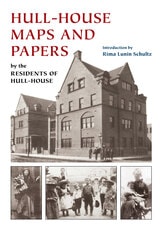
Hull-House Maps and Papers
A Presentation of Nationalities and Wages in a Congested District of Chicago, Together with Comments and Essays on Problems Growing Out of the Social ConditionsBy the Residents of Hull-House
University of Illinois Press, 2007
Inspired by their Progressive Era faith in social science solutions to society’s problems, the residents of Hull-House collaborated on this work of sociology based on their experiences as residents of Chicago’s Near West Side. The contributors to this book believed that an enlightened citizenry could be mobilized for reform, and that by publishing maps with explicit information about the wages and conditions of the working poor in Chicago’s Nineteenth Ward they would educate the public and inspire reforms.
In addition to Jane Addams’s own prefatory note and paper on the role of social settlements in the labor movement, contributors provided detailed, real-world analyses of the Chicago Jewish ghetto, garment workers and the sweatshops, child labor, immigrant neighborhoods in the vicinity of Hull-House, and local charities. This edition also contains eight color reproductions of the original Hull-House neighborhood maps. The year 2006 marks the one hundred and eleventh anniversary of the publication of Hull-House Maps and Papers, and the volume remains a dramatic statement about the residents’ shared values as well as a major influence on subsequent social surveys.
Human Cloning
Science, Ethics, and Public PolicyEdited by Barbara MacKinnon
University of Illinois Press, 2000
In this concise volume, experts on all sides of the debate make arguments for why we should either pursue, regulate, or ban the cloning of human beings. From this collection, readers will gain a clearer picture of the history of cloning in agriculture and animal science, the various biological procedures that are encompassed by the term "cloning," the philosophical arguments in support of and opposed to cloning humans, and the considerations that should inform discussions about public policy matters related both the cloning research and to human cloning itself.
Balancing scientific detail with philosophical argument, Human Cloning succinctly outlines what cloning is and is not (e.g., cloning does not produce identical individuals), what has led to recent scientific developments, what is now possible, and what ethical dilemmas cloning presents. Opponents claim that cloning subverts human dignity, makes a mockery of spousal love, and poses serious safety hazards. Proponents cite a range of potential benefits, such as producing transplant tissue that is less likely to be rejected, extending current techniques of artificial insemination, and controlling genetic abnormalities to prevent birth defects.
Cloning itself is not new, but as the science of cloning continues to advance--and as human cloning thus inches closer to reality--we are compelled to consider its implications for society. Human Cloning is a lucid, substantive guide to this contentious and potentially revolutionary issue.
Human Embryos, Human Beings
A Scientific and Philosophical ApproachSamuel B. Condic
Catholic University of America Press, 2018
Human Predicaments
And What to Do about ThemJohn Kekes
University of Chicago Press, 2016
Kekes considers how we might deal with these predicaments by comparing how others in different times and cultures have approached them. He examines what is good, bad, instructive, and dangerous in the sexually charged politics of the Shilluk, the Hindu caste system, Balinese role-morality, the religious passion of Cortes and Simone Weil, the fate of Colonel Hiromichi Yahara during and after the battle for Okinawa, the ritual human sacrifices of the Aztecs, and the tragedies to which innocence may lead. In doing so, he shakes us out of our deep-seated ways of thinking, enlarging our understanding of the possibilities available to us as we struggle with the problems that stand in the way of how we want to live. The result is a highly interesting journey through time and space that illuminates and helps us cope with some of the most basic predicaments we all face as human beings.
Human Rights and the Care of the Self
Alexandre Lefebvre
Duke University Press, 2018
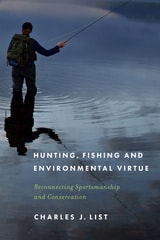
Hunting, Fishing, and Environmental Virtue
Reconnecting Sportsmanship and ConservationCharles J. List
Oregon State University Press, 2013
In his argument, List examines the connection between certain activities and the development of virtue in the classical sources, such as Aristotle and Plato. He then explores the work of Aldo Leopold, identifying three key environmental virtues that field sports instill in practitioners in the kind of conservation advocated by Leopold and others.
After reviewing several powerful philosophical objections to his viewpoint, List considers the future of environmental sportsmanship. He suggests that, in order to incorporate a revived connection between field sports and environmental virtue, the practice of hunting and angling must undergo changes, including shifts that would impact hunter education, civic engagement, the role of firearms, our understanding of “game” animals, and alliances with other sorts of outdoor recreation.
Hunting, Fishing, and Environmental Virtue will appeal to academics interested in the ethical issues surrounding hunting and fishing, professionals in wildlife management, and hunters and anglers interested in conservation.