Results by title
230 books match the query 'Ethnicity' and 7 start with h
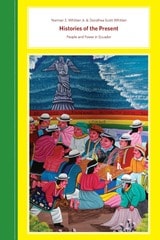
Histories of the Present
People and Power in EcuadorNorman E. Whitten Jr. and Dorothea Scott Whitten
University of Illinois Press, 2011
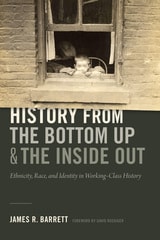
History from the Bottom Up and the Inside Out
Ethnicity, Race, and Identity in Working-Class HistoryJames R. Barrett
Duke University Press, 2017

History, Power, and Identity
Ethnogenesis in the Americas, 1492-1992Jonathan D. Hill
University of Iowa Press, 1996
For the past five centuries, indigenous and African American communities throughout the Americas have sought to maintain and recreate enduring identities under conditions of radical change and discontinuity. The essays in this groundbreaking volume document this cultural activity—this ethnogenesis—within and against the broader contexts of domination; the authors simultaneously encompass the entanglements of local communities in the webs of national and global power relations as well as people's unique abilities to gain control over their history and identity.
By defining ethnogenesis as the synthesis of people's cultural and political struggles, History, Power, and Identity breaks out of the implicit contrast between isolated local cultures and dynamic global history. From the northeastern plains of North America to Amazonia, colonial and independent states in the Americas interacted with vast multilingual and multicultural networks, resulting in the historical emergence of new ethnic identities and the disappearance of many earlier ones. The importance of African, indigenous American, and European religions, myths, and symbols, as historical cornerstones in the building of new ethnic identities, emerges as one of the central themes of this convincing collection.

Hollywood Faith
Holiness, Prosperity, and Ambition in a Los Angeles ChurchMarti, Gerardo
Rutgers University Press, 2008
In Hollywood Faith, Gerardo Marti shows how a multiracial evangelical congregation of 2,000 people accommodates itself to the entertainment industry and draws in many striving to succeed in this harsh and irreverent business. Oasis strategically sanctifies ambition and negotiates social change by promoting a new religious identity as "champion of life"-an identity that provides people who face difficult career choices and failed opportunities a sense of empowerment and endurance.
The first book to provide an in-depth look at religion among the "creative class," Hollywood Faith will fascinate those interested in the modern evangelical movement and anyone who wants to understand how religion adapts to social change.

Hope's Promise
Religion and Acculturation in the Southern BackcountryS. Scott Rohrer
University of Alabama Press, 2013
In Hope's Promise, Scott Rohrer dissects the internal workings of the ecumenical Moravian movement at Wachovia—how this disparate group of pilgrims hailing from many countries (Germany, Ireland, Scandinavia, England) and different denominations (Lutheran, Reformed, Methodist, Anglican) yielded their ethnicities as they became, above all, a people of faith. By examining the "open" farm congregations of Hope, Friedberg, and Friedland, Rohrer offers a sensitive portrayal of their evangelical life and the momentous cultural changes it wrought: the organization of tight-knit congregations bound by "heart religion;" the theology of the new birth; the shape of religious discipline; the sacrament of communion; and the role of music. Drawing on courthouse documents and church records, Rohrer carefully demonstrates how various groups began to take on traits of the others. He also illustrates how evangelical values propelled interaction with the outside world—at the meetinghouse and the frontier store, for example—and fostered even more collective and accelerated change.
As the Moravians became ever more "American" and "southern," the polyglot of ethnicities that was Wachovia would, under the unifying banner of evangelicalism, meld into one of the most sophisticated religious communities in early America.

House/Garden/Nation
Space, Gender, and Ethnicity in Post-Colonial Latin American Literatures by WomenIleana Yamileth Rodriguez
Duke University Press, 1994
In House/Garden/Nation the narratives of five Centro-Caribbean writers illustrate these times of transition: Dulce María Loynáz, from colonial rule to independence in Cuba; Jean Rhys, from colony to commonwealth in Dominica; Simone Schwarz-Bart, from slave to free labor in Guadeloupe; Gioconda Belli, from oligarchic capitalism to social democratic socialism in Nicaragua; and Teresa de la Parra, from independence to modernity in Venezuela. Focusing on the nation as garden, hacienda, or plantation, Rodríguez shows us these writers debating the predicament of women under nation formation from within the confines of marriage and home.
In reading these post-colonial literatures by women facing the crisis of transition, this study highlights urgent questions of destitution, migration, exile, and inexperience, but also networks of value allotted to women: beauty, clothing, love. As a counterpoint on issues of legality, policy, and marriage, Rodriguez includes a chapter on male writers: José Eustacio Rivera, Omar Cabezas, and Romulo Gallegos. Her work presents a sobering picture of women at a crossroads, continually circumscribed by history and culture, writing their way.

How Informal Institutions Matter
Evidence from Turkish Social and Political SpheresZeki Sarigil
University of Michigan Press, 2023
In How Informal Institutions Matter, Zeki Sarigil examines the role of informal institutions in sociopolitical life and addresses the following questions: Why and how do informal institutions emerge? To ask this differently, why do agents still create or resort to informal institutions despite the presence of formal institutional rules and regulations? How do informal institutions matter? What roles do they play in sociopolitical life? How can we classify informal institutions? What novel types of informal institutions can we identify and explain? How do informal institutions interact with formal institutions? How do they shape formal institutional rules, mechanisms, and outcomes? Finally, how do existing informal institutions change? What factors might trigger informal institutional change? In order to answer these questions, Sarigil examines several empirical cases of informal institution as derived from various issue areas in the Turkish sociopolitical context (i.e., civil law, conflict resolution, minority rights, and local governance) and from multiple levels (i.e., national and local).