Results by title
375 books match the query 'Excavations (Archaeology)' and 15 start with h
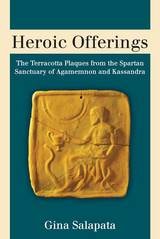
Heroic Offerings
The Terracotta Plaques from the Spartan Sanctuary of Agamemnon and KassandraGina Salapata
University of Michigan Press, 2015
This volume focuses on a large group of decorated terracotta plaques, from the sixth to fourth centuries BCE. These molded plaques were discovered with other offerings in a sanctuary deposit excavated near Sparta more than fifty years ago, but they have remained unpublished until now. They number over 1,500 complete and fragmentary pieces. In technique, style, and iconography they form a homogeneous group unlike any other from mainland Greece. The large number of plaques and variety of types reveal a stable and vigorous coroplastic tradition in Lakonia during the late Archaic and Classical period.
Heroic Offerings will be of interest to students and scholars of Greek history, art, and archaeology, to those interested in ancient religious practice in the Mediterranean, and to all inspired by Athens’ chief political rival, Sparta.
This volume received financial support from the Archaeological Institute of America.
Hinterland Households
Rural Agrarian Household Diversity in Northwest HondurasJohn G. Douglass
University Press of Colorado, 2002

Hinterlands and Regional Dynamics in the Ancient Southwest
Alan P. Sullivan
University of Arizona Press, 2007
Historical Archaeology and the Latter-day Saint Past
Benjamin C. Pykles
Utah State University Press, 2025
The Arrington Lecture series, established in honor of one of the twentieth-century American West’s most distinguished historians, Leonard Arrington, has become a leading forum for prominent scholars to address topics related to Latter-day Saint history. Utah State University hosts the Leonard J. Arrington Mormon History Lecture Series through the Merrill-Cazier Library’s Special Collections and Archives.
Historical and Archaeological Perspectives on the Itzas of Petén, Guatemala
Prudence M. Rice
University Press of Colorado, 2018
Historical and Archaeological Perspectives on the Itzas of Petén, Guatemala is the first exhaustively detailed and thorough account of the Itzas—a Maya group that dominated much of the western lowland area of tropical forest, swamps, and grasslands in Petén, Guatemala. Examining archaeological and historical evidence, Prudence Rice and Don Rice present a theoretical perspective on the Itzas’ origins and an overview of the social, political, linguistic, and environmental history of the area; explain the Spanish view of the Itzas during the Conquest; and explore the material culture of the Itzas as it has been revealed in recent surveys and excavations.
The long but fragmented history of the Petén Itzas requires investigation across multiple periods and regions. Chapters in this six-part overview interweave varying data pertaining to this group—archaeological, artifactual, indigenous textual, Spanish historical—from multiple languages and academic fields, such as anthropology, archaeology, linguistics, ecology, and history. Part I introduces the lowland Itzas, northern and southern, with an emphasis on those of the central Petén lakes area. Part II discusses general Itza origins and identities in the Epiclassic period, while part III reviews Spanish perceptions and misconceptions of the Petén Itzas in their Contact-period writings. With these temporal anchors, parts IV and V present the archaeology and artifacts of the Petén Itzas, including pottery, architecture, and arrow points, from varied sites and excavations but primarily focusing on the island capital of Tayza/Nojpetén. Part VI summarizes key data and themes of the preceding chapters for a new understanding of the Petén Itzas.
A companion volume to The Kowoj—a similar treatment of the Petén Itzas’ regional neighbors—Historical and Archaeological Perspectives on the Itzas of Petén, Guatemala demonstrates the unique physical, cultural, and social framework that was home to the Petén Itza, along with their backstory in northern Yucatán. Archaeologists, historians, art historians, and geographers who specialize in the Maya and the Postclassic, Contact, and Colonial periods will find this book of particular interest.
Contributors: Mark Brenner, Leslie G. Cecil, Charles Andrew Hofling, Nathan J. Meissner, Timothy W. Pugh, Yuko Shiratori
Histories of Southeastern Archaeology
Edited by Shannon Tushingham, Jane Hill, and Charles H. McNutt
University of Alabama Press, 2002
Histories of Southeastern Archaeology originated as a symposium at the 1999 Southeastern Archaeological Conference (SEAC) organized in honor of the retirement of Charles H. McNutt following 30 years of teaching anthropology. Written for the most part by members of the first post-depression generation of southeastern archaeologists, this volume offers a window not only into the archaeological past of the United States but also into the hopes and despairs of archaeologists who worked to write that unrecorded history or to test scientific theories concerning culture.
The contributors take different approaches, each guided by experience, personality, and location, as well as by the legislation that shaped the practical conduct of archaeology in their area. Despite the state-by-state approach, there are certain common themes, such as the effect (or lack thereof) of changing theory in Americanist archaeology, the explosion of contract archaeology and its relationship to academic archaeology, goals achieved or not achieved, and the common ground of SEAC.
This book tells us how we learned what we now know about the Southeast's unwritten past. Of obvious interest to professionals and students of the field, this volume will also be sought after by historians, political scientists, amateurs, and anyone interested in the South.
Additional reviews:
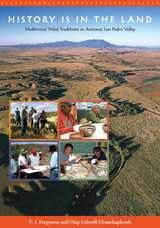
History Is in the Land
Multivocal Tribal Traditions in Arizona's San Pedro ValleyT. J. Ferguson and Chip Colwell-Chanthaphonh
University of Arizona Press, 2006
Previous research in the San Pedro Valley has focused on scientific archaeology and documentary history, with a conspicuous absence of indigenous voices, yet Native Americans maintain oral traditions that provide an anthropological context for interpreting the history and archaeology of the valley. The San Pedro Ethnohistory Project was designed to redress this situation by visiting archaeological sites, studying museum collections, and interviewing tribal members to collect traditional histories. The information it gathered is arrayed in this book along with archaeological and documentary data to interpret the histories of Native American occupation of the San Pedro Valley.
This work provides an example of the kind of interdisciplinary and politically conscious work made possible when Native Americans and archaeologists collaborate to study the past. As a methodological case study, it clearly articulates how scholars can work with Native American stakeholders to move beyond confrontations over who “owns” the past, yielding a more nuanced, multilayered, and relevant archaeology.
Holocene Hunter-Gatherers of the Lower Ohio River Valley
Richard Jefferies
University of Alabama Press, 2009
Homol'ovi
An Ancient Hopi Settlement ClusterE. Charles Adams
University of Arizona Press, 2002
Charles Adams has directed fifteen years of research at these sites for the Arizona State Museum, including excavations in five of the seven primary Homol'ovi villages and in other villages predating them. Through this research he concludes that the founders of these settlements were Hopis who sought to protect their territory from migrating groups elsewhere in the Pueblo world. This book summarizes that research and broadens our understanding of the relationship of Homol'ovi to ancient and modern Hopi people.
Each Homol'ovi village had a unique history of establishment, growth, sociopolitical organization, length of occupation, and abandonment; and although the villages shared much in the way of material culture, their size and configuration were tremendously varied. By comparing Homol'ovi research to information from projects on other settlements in the area, Adams has been able to reconstruct a provocative history of the Homol'ovi cluster that includes relationships among the individual villages and their relationships to nearby clusters. He shows that social organization within villages is apparent by the number and variety of ritual structures, while political organization among villages is indicated by the need for cooperation to share water for irrigation and by the exchange of such materials as pottery, obsidian, and ground stone.
Adams advances several important theories about why Homol'ovi was founded where and when it was, who its founders were, and the importance of cotton in making Homol'ovi an important center of trade in the 1300s. He also considers why Pueblo settlements suddenly became so large, addressing theoretical issues pertaining to multiple settlements and the rise of enormous villages containing more than 1,000 rooms.
Homol'ovi is a rich work of synthesis and interpretation that will be important for anyone with an interest in Southwest archaeology, Arizona history, or Hopi culture. By considering the settlement trajectory of an entire cluster of sites, it will also prove valuable to archaeologists worldwide.
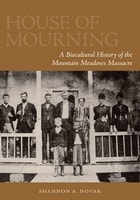
House of Mourning
A Biocultural History of the Mountain Meadows MassacreShannon A Novak
University of Utah Press, 2008
On September 11, 1857, some 120 men, women, and children from the Arkansas hills were murdered in the remote desert valley of Mountain Meadows, Utah. This notorious massacre was, in fact, a mass execution: having surrendered their weapons, the victims were bludgeoned to death or shot at point-blank range. The perpetrators were local Mormon militiamen whose motives have been fiercely debated for 150 years.
In House of Mourning, Shannon A. Novak goes beyond the question of motive to the question of loss. Who were the victims at Mountain Meadows? How had they settled and raised their families in the American South, and why were they moving west once again? What were they hoping to find or make for themselves at the end of the trail? By integrating archival records and oral histories with the first analysis of skeletal remains from the massacre site, Novak offers a detailed and sensitive portrait of the victims as individuals, family members, cultural beings, and living bodies.
The history of the massacre has often been treated as a morality tale whose chief purpose was to vilify (or to glorify) some collective body. Resisting this tendency to oversimplify the past, Novak explores Mountain Meadows as a busy and dangerous intersection of cultural and material forces in antebellum America. House of Mourning is a bold experiment in a new kind of history, the biocultural analysis of complex events.
Winner of the Society for Historical Archaeology James Deetz Book Award.
Household Archaeology at the Bridge River Site (EeRl4), British Columbia
Spatial Distributions of Features, Lithic Artifacts, and Faunal Remains on Fifteen Anthropogenic Floors from Housepit 54Anna Marie Prentiss, Ethan Ryan, Ashley Hampton, Kathryn Bobolinski, Pei-Lin Yu, Matthew Schmader, and Alysha Edwards
University of Utah Press, 2022
The authors take a methodological approach that integrates the study of household spatial organization with consideration of archaeological formation processes. Repeating the same set of analyses for each floor, they examine stability from standpoints of occupation and abandonment cycles, structure and organization of activity areas, and variation in positioning of wealth-related items. This volume is an outstanding example of research undertaken through a collaborative partnership between scholars from the University of Montana and the community of the St’át’imc Nation.

Household Economy at Wall Ridge
A Fourteenth-Century Central Plains Farmstead in the Missouri ValleyEdited by Stephen C. Lensink, Joseph A. Tiffany, and Shirley J. Schermer
University of Utah Press, 2020
Household Economy at Wall Ridge tells the story of a Native American household that occupied a lodge on the eastern Plains border during the early 1300s AD. Contributors use cutting-edge methods and the site’s unparalleled archaeological record to shed light on the daily technological, subsistence, and dietary aspects of the occupants’ lives. This work represents the first comprehensive study of a prehistoric Central Plains household in over half a century.
The research covers archaeobotany, zooarchaeology, dating, ceramics, lithics, bone and shell tools, diet, climate, ecology, and more. The study of plant and animal usage from the lodge stands as a tour de force of analytical methods, including stable isotope data that permit the discovery of dietary items missed by traditional studies. Many of these items have never been reported before from Central Plains sites. The book firmly sets the site’s occupancy at AD 1305, with a margin of error of only a few years. This result, based on high-precision dating methods, exceeds in accuracy all previously dated Plains lodges and provides a temporal backdrop for evaluating household activities.
Households on the Mimbres Horizon
Excavations at La Gila Encantada, Southwestern New MexicoBarbara J. Roth
University of Arizona Press, 2023
Little is known about the variability present at pithouse sites away from the major Mimbres and Gila River Valleys. Nonriverine occupations have been understudied until now. This book describes subsistence and settlement practices and compares the results with recent research conducted at the larger villages in the Mimbres River Valley. Despite basic similarities in material culture, households at La Gila Encantada appear to have followed different trajectories than those along the rivers. Examining these differences, archaeologist Barbara J. Roth provides insights into some of the reasons why they existed and shows that the variability present in pithouse occupations over the years was tied to multiple factors, including environmental differences, economic practices, and the social composition of groups occupying the sites. With chapters assessing ceramic data, chipped and groundstone analysis, shell and mineral jewelry, and regional context, this look at the past offers relevant insights into current issues in Southwest archaeology, including identity, interaction, and household organization.
Hunter-Gatherer Archaeology as Historical Process
Edited by Kenneth E. Sassaman and Donald H. Holly Jr.
University of Arizona Press, 2011
Combining the latest empirical studies of archaeological practice with the latest conceptual tools of anthropological and historical theory, this volume seeks to set a new course for hunter-gatherer archaeology by organizing the chapters around three themes. The first section offers diverse views of the role of human agency, challenging the premise that hunter-gatherer societies were bound by their interactions with the natural world. The second section considers how society and culture are constituted. Chapters in the final section take the long view of the historical process, examining how cultural diversity arises out of interaction and the continuity of ritual practices.
A closing commentary by H. Martin Wobst underscores the promise of an archaeology of foragers that does not associate foraging with any particular ideology or social structure but instead invites inquiry into counterintuitive alternatives. Hunter-Gatherer Archaeology as Historical Process seeks to blur the divisions between prehistory and history, between primitive and modern, and between hunter-gatherers and people in other societies. Because it offers alternatives to the dominant discourse and contributes to the agenda of hunter-gatherer research, this book will be of interest to anyone involved in the study of foraging peoples.
Hunting for Hides
Deerskins, Status, and Cultural Change in the Protohistoric AppalachiansHeather A. Lapham
University of Alabama Press, 2006
Through research on faunal remains and mortuary assemblages, Lapham tracks both the products Native Americans produced for colonial trade--deerskins and other furs--as well as those items received in exchange--European and native prestige goods that end up in burial contexts. Zooarchaeological analyses provide insights into subsistence practices, deer-hunting strategies, and deer-hide production activities, while an examination of mortuary practices contributes information on the use of the nonlocal goods acquired through trade in deerskins. This study reveals changes in economic organization and mortuary practices that provide new insights into how participation in the colonial deerskin trade initially altered Native American social relations and political systems.