Results by title
775 books match the query 'Germany' and 20 start with h
Hegel and the Freedom of Moderns
Domenico Losurdo
Duke University Press, 2004
Hegel and the Freedom of Moderns persuasively argues that the tug of war between “conservative” and “liberal” interpretations of Hegel has obscured and distorted the most important aspects of his political thought. Losurdo unravels this misleading dualism and provides an illuminating discussion of the relation between Hegel’s political philosophy and the thinking of Karl Marx and Friedrich Engels. He also discusses Hegel’s ideas in relation to the pertinent writings of other major figures of modern political philosophy such as Jean-Jacques Rousseau, John Locke, Edmund Burke, John Stuart Mill, Jeremy Bentham, Karl Popper, Norberto Bobbio, and Friedrich Hayek.

Hegel on Hamann
G. W. F. Hegel
Northwestern University Press, 2008
In 1828, G. W. F. Hegel published a critical review of Johann George Hamann, a retrospective of the life and works of one of Germany's most enigmatic and challenging thinkers and writers. While Hegel's review had enjoyed a central place in Hamann studies since its appearance, Hegel on Hamann is the first English translation of the important work. Philosophers, theologians, and literary critics welcome Anderson's stunning translation since Hamann is gaining renewed attention, not only as a key figure of German intellectual history, but also as an early forerunner of postmodern thought. Relationships between Enlightenment, Counter Enlightenment, and Idealism come to the fore as Hegel reflects on Hamann's critiques of his contemporaries Immanuel Kant, Moses Mendelssohn, J. G. Herder, and F. H. Jacobi. Hegel on Hamann also includes an introduction to Hegel's review, as well as an essay on the role of friendship in Hamann's life, in Hegel's thought, and in German intellectual culture more broadly. Rounding out the volume are its extensive annotations and bibliography, which facilitate further study of eighteenth- and nineteenth-century philosophy in English and German. This book is essential both for readers of Hegel or Hamann and for those interested in the history of German thought, the philosophy of religion, language and hermeneutics, or friendship as a philosophical category.
Heidegger and the Myth of a Jewish World Conspiracy
Peter Trawny
University of Chicago Press, 2015
While Heidegger’s affiliation with National Socialism is well known, the anti-Semitic dimension of that engagement could not be fully told until now. Trawny traces Heidegger’s development of a grand “narrative” of the history of being, the “being-historical thinking” at the center of Heidegger’s work after Being and Time. Two of the protagonists of this narrative are well known to Heidegger’s readers: the Greeks and the Germans. The world-historical antagonist of this narrative, however, has remained hitherto undisclosed: the Jews, or, more specifically, “world Judaism.” As Trawny shows, world Judaism emerges as a racialized, destructive, and technological threat to the German homeland, indeed, to any homeland whatsoever. Trawny pinpoints recurrent, anti-Semitic themes in the Notebooks, including Heidegger’s adoption of crude cultural stereotypes, his assigning of racial reasons to philosophical decisions (even undermining his Jewish teacher, Edmund Husserl), his endorsement of a Jewish “world conspiracy,” and his first published remarks on the extermination camps and gas chambers (under the troubling aegis of a Jewish “self-annihilation”). Trawny concludes with a thoughtful meditation on how Heidegger’s achievements might still be valued despite these horrifying facets. Unflinching and systematic, this is one of the most important assessments of one of the most important philosophers in our history.
Heidegger's Political Thinking
James F. Ward
University of Massachusetts Press, 1995
In recent years there has been much controversy concerning Martin Heidegger’s politics, prompted by new research on the nature and extent of his engagement with National Socialism. Examining the political ideas embedded in Heidegger’s larger philosophical oeuvre, James F. Ward moves beyond the narrow preoccupation with Heidegger’s overtly pro-Nazi utterances and activities to show how the central theme of Heidegger’s philosophy—the question of Being—is itself inherently political.
Ward builds his case on close readings of texts drawn from nearly all of the writings published during Heidegger’s lifetime as well as from lectures, course transcripts, and other materials that appeared posthumously. With subtlety and insight, he uncovers the political content of Heidegger’s thinking on such topics as the temporality of Being, the role of science in the crisis of the West, and the presumed special status and destiny of the German people. In an epilogue, Ward reflects on the implications of Heidegger’s political thinking for postmodern political theory.
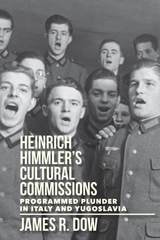
Heinrich Himmler's Cultural Commissions
Programmed Plunder in Italy and YugoslaviaJames R. Dow
University of Wisconsin Press, 2018
Drawing on extensive research in public and private archives and interviews with family members of fieldworkers, James R. Dow uncovers both details of the SS cultural commissions' work and the continuing vestiges of the materials they assembled. Teams of poorly qualified and ideologically motivated collectors were sent to South Tyrol in Italy and Gottschee in Slovenian Yugoslavia, from which ethnically German communities were to be resettled in the German Reich. Although a mass of information on narratives, songs and dances, beliefs, customs, local clothing and architecture, and folk speech was collected, the research was deeply tainted and skewed by racialist and nationalist preconditions. Dow sharply critiques the continued use of these ersatz archives.
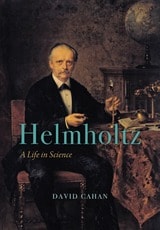
Helmholtz
A Life in ScienceDavid Cahan
University of Chicago Press, 2018
Utilizing all of Helmholtz’s scientific and philosophical writings, as well as previously unknown letters, this book reveals the forces that drove his life—a passion to unite the sciences, vigilant attention to the sources and methods of knowledge, and a deep appreciation of the ways in which the arts and sciences could benefit each other. By placing the overall structure and development of his scientific work and philosophy within the greater context of nineteenth-century Germany, Helmholtz also serves as cultural biography of the construction of the scientific community: its laboratories, institutes, journals, disciplinary organizations, and national and international meetings. Helmholtz’s life is a shining example of what can happen when the sciences and the humanities become interwoven in the life of one highly motivated, energetic, and gifted person.
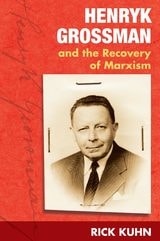
Henryk Grossman and the Recovery of Marxism
Rick Kuhn
University of Illinois Press, 2006
Rick Kuhn’s Henryk Grossman and the Recovery of Marxism is the definitive study of the life and work of this renowned economist, activist, and intellectual. As a young man, Grossman joined the socialist movement and participated in Jewish workers' strikes and demonstrations, as well as in boycotts against employers and the Austro-Hungarian state. He moved to Vienna, but was driven back to Poland by the Austrian state's racist citizenship policies. A member of the illegal Polish Communist Party, Grossman was frequently arrested and jailed, finally leaving Poland for a post at the Institute for Social Research in Frankfurt am Main, which gave rise to the famous 'Frankfurt School'.
Grossman published his best known work in Frankfurt, including studies of Marx's method in Capital and theories of economic crisis that remain influential today. In tracing Grossman's experiences, from Kraków to New York, and offering a detailed account of his ideas, the biography provides an intimate account of key events in twentieth century history, including the politicization of east European Jewry, the World Wars, the rise of Stalinism and Nazism, and the cold war.
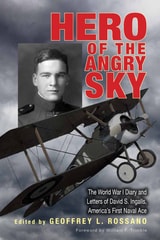
Hero of the Angry Sky
The World War I Diary and Letters of David S. Ingalls, America’s First Naval AceDavid S. Ingalls
Ohio University Press, 2012
Hero of the Angry Sky draws on the unpublished diaries, correspondence, informal memoir, and other personal documents of the U.S. Navy’s only flying “ace” of World War I to tell his unique story. David S. Ingalls was a prolific writer, and virtually all of his World War I aviation career is covered, from the teenager’s early, informal training in Palm Beach, Florida, to his exhilarating and terrifying missions over the Western Front. This edited collection of Ingalls’s writing details the career of the U.S. Navy’s most successful combat flyer from that conflict.
While Ingalls’s wartime experiences are compelling at a personal level, they also illuminate the larger, but still relatively unexplored, realm of early U.S. naval aviation. Ingalls’s engaging correspondence offers a rare personal view of the evolution of naval aviation during the war, both at home and abroad. There are no published biographies of navy combat flyers from this period, and just a handful of diaries and letters in print, the last appearing more than twenty years ago. Ingalls’s extensive letters and diaries add significantly to historians’ store of available material.
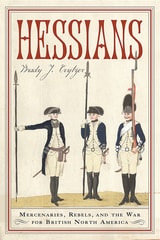
Hessians
Officer, Baroness, Chaplain—Three German Experiences in the American RevolutionBrady J. Crytzer
Westholme Publishing, 2023
In 1775 the British Empire was in crisis. While it was buried in debt from years of combat against the French, revolution was stirring in its wealthiest North American colonies. To allow the rebellion to fester would cost the British dearly, but to confront it would press their exhausted armed forces to a breaking point. Faced with a nearly impossible decision, the administrators of the world’s largest empire elected to employ the armies of the Holy Roman Empire to suppress the sedition of the American revolutionaries. By 1776 there would be 18,000 German soldiers marching through the wilds of North America, and by war’s end there would be over 30,000.
To the colonists these forces were “mercenaries,” and to the Germans the Americans were “rebels. ”While soldiers of fortune fight for mere profit, the soldiers of the Holy Roman Empire went to war in the name of their country, and were paid little for their services, while their respective kings made fortunes off of their blood and sacrifice among the British ranks. Labeled erroneously as “Hessians,” the armies of the Holy Roman Empire came from six separate German states, each struggling to retain relevance in a newly enlightened and ever-changing world.
In Hessians: Officer, Baroness, Chaplain—Three German Experiences in the American Revolution historian Brady J. Crytzer explores the German experience during the American Revolution through the lives of three individuals from vastly different walks of life, all thrust into the maelstrom of North American combat. Here are the stories of a dedicated career soldier, Johann Ewald, captain of a Field-Jäger Corps, who fought from New York to the final battles along the Potomac; Frederika Charlotte Louise von Massow, Baroness von Riedesel, who raced with her young children through the Canadian wilderness to reunite with her long-distant husband; and middle-aged chaplain Philipp Waldeck, who struggled to make sense of it all while accompanying his unit through the exotic yet brutal conditions of the Caribbean and British Florida. Beautifully written, Hessians offers a glimpse into the American Revolution as seen through the eyes of the German armies commanded to destroy it.
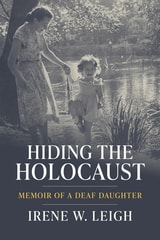
Hiding the Holocaust
Memoir of a Deaf DaughterIrene W. Leigh
Gallaudet University Press, 2026
Hildegard of Bingen
Honey Meconi
University of Illinois Press, 2018
Honey Meconi draws on her own experience as a scholar and performer of Hildegard's music to explore the life and work of this foundational figure. Combining historical detail with musical analysis, Meconi delves into Hildegard's mastery of plainchant, her innovative musical drama, and her voluminous writings. Hildegard's distinctive musical style still excites modern listeners through wide-ranging, sinuous melodies set to her own evocative poetry. Together with her passionate religious texts, her music reveals a holistic understanding of the medieval world still relevant to today's readers.
Hitler and the Germans
Eric Voegelin, Edited, Translated, & Intro by Detlev Clemens & Brendan Purcell
University of Missouri Press, 2003
Hitler in History
Eberhard Jäckel
Brandeis University Press, 2000
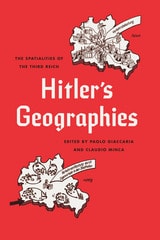
Hitler's Geographies
The Spatialities of the Third ReichEdited by Paolo Giaccaria and Claudio Minca
University of Chicago Press, 2016
With Hitler’s Geographies, editors Paolo Giaccaria and Claudio Minca examine the variety of ways in which spatial theory evolved and was translated into real-world action under the Third Reich. They have gathered an outstanding collection by leading scholars, presenting key concepts and figures as well exploring the undeniable link between biopolitical power and spatial expansion and exclusion.

Hitler's Heroines
Stardom & Womanhood In Nazi CinemaAntje Ascheid
Temple University Press, 2003
Hitler's Library
Ambrus Miskolczy
Central European University Press, 2003
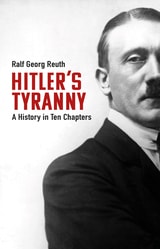
Hitler's Tyranny
A History in Ten ChaptersRalf Georg Reuth
Haus Publishing, 2022
Hitler’s tyranny is still difficult to understand today. In this book, Ralf Georg Reuth examines ten aspects of this catastrophe. Among other things, he asks: Was anti-Semitism more pronounced in Germany than elsewhere? Was Versailles really responsible for Hitler’s rise and why did the Germans follow a racial fanatic like him? How did his war differ from all others before it? The disturbing answers provide an overall picture that shows Hitler was not the consequence of the depths of German history, but the result of chance, deception, and seduction.
This thought-provoking new study takes aim at several of the norms of Hitler scholarship from the past forty years. Reuth interrogates and challenges a range of orthodox views on such topics as how mainstream politicians facilitated Hitler’s rise to power, the Führer’s infamous pact with Stalin, and the complicity of ordinary Germans in his genocidal tyranny. Eschewing a conventional chronological approach in favor of a forensic analysis of Hitler’s mainsprings of action both as chancellor and military commander, Reuth portrays Hitler as the apotheosis of what he argues is a specifically German strain of militarism and imperialism, shifting the focus firmly back to the mindset and modus operandi of Hitler himself. The portrait that emerges is one of a murderous fantasist and political opportunist driven by an all-embracing ideology of racial superiority. Reuth’s account courts controversy on a number of points and offers a fascinating counterpoint to much recent scholarship.

Home Front to Battlefront
An Ohio Teenager in World War IIFrank Lavin
Ohio University Press, 2016
Carl Lavin was a high school senior when Pearl Harbor was attacked. The Canton, Ohio, native was eighteen when he enlisted, a decision that would take him with the US Army from training across the United States and Britain to combat with the 84th Infantry Division in the Battle of the Bulge. Home Front to Battlefront is the tale of a foot soldier who finds himself thrust into a world where he and his unit grapple with the horrors of combat, the idiocies of bureaucracy, and the oddities of life back home—all in the same day. The book is based on Carl’s personal letters, his recollections and those of the people he served beside, official military history, private papers, and more.
Home Front to Battlefront contributes the rich details of one soldier’s experience to the broader literature on World War II. Lavin’s adventures, in turn disarming and sobering, will appeal to general readers, veterans, educators, and students of the war. As a history, the book offers insight into the wartime career of a Jewish Ohioan in the military, from enlistment to training through overseas deployment. As a biography, it reflects the emotions and the role of the individual in a total war effort that is all too often thought of as a machine war in which human soldiers were merely interchangeable cogs.
How Green Were the Nazis?
Nature, Environment, and Nation in the Third ReichFranz-Josef Brüggemeier
Ohio University Press, 2005

How World Politics Is Made
France and the Reunification of GermanyTilo Schabert
University of Missouri Press, 2009