Results by title
767 books match the query 'Hispanic & Latino Studies' and 17 start with h
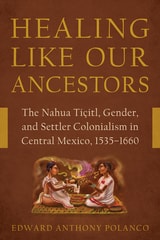
Healing Like Our Ancestors
The Nahua Tiçitl, Gender, and Settler Colonialism in Central Mexico, 1535–1660Edward Anthony Polanco
University of Arizona Press, 2024
Early colonial Spanish settlers defined, assessed, and admonished Nahua titiçih (healing specialists) and tiçiyotl (healing knowledge) in the process of building a society in Mexico that mirrored Iberia. Nevertheless, Nahua survivance (intergenerational knowledge transfer) has allowed communities to heal like their ancestors through changes and adaptations. Edward Anthony Polanco draws from diverse colonial primary sources, largely in Spanish and Nahuatl (the Nahua ancestral language), to explore how Spanish settlers framed titiçih, their knowledge, and their practices within a Western complex. Polanco argues for the usage of Indigenous terms when discussing Indigenous concepts and arms the reader with the Nahuatl words to discuss central Mexican Nahua healing. In particular, this book emphasizes the importance of women as titiçih and highlights their work as creators and keepers of knowledge. These vital Nahua perspectives of healing—and how they differed from the settler narrative—will guide community members as well as scholars and students of the history of science, Latin America, and Indigenous studies.
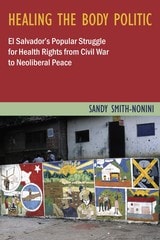
Healing the Body Politic
El Salvador's Popular Struggle for Health Rights from Civil War to Neoliberal PeaceSmith-Nonini, Sandy
Rutgers University Press, 2010

Heartthrob
Del Balboa Cafe al Apartheid and BackSusana Chávez-Silverman
University of Wisconsin Press, 2019
Their attraction was intense, but the social and political climate of South Africa, still in the grip of apartheid, threatened to tear them apart. Describing the vicissitudes of the Latina migratory experience, Chávez-Silverman struggles to overcome the hostility of a place that is so unwelcoming to nonwhite persons and outsiders.
Heartthrob, a love story for the ages, implores us to consider how things could have been. In these romantic crónicas based on detailed diary entries and confessional letters to family and friends, Chávez-Silverman weaves together English and Spanish to lay bare the raw intensity and true fragility of love. Anyone who has wondered about the-one-that-got-away or sought out the true meaning of happily-ever-after will be enraptured by this intimate exploration of love, loss, and regret.
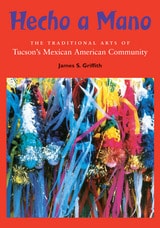
Hecho a Mano
The Traditional Arts of Tucson's Mexican American CommunityJames S. Griffith; Foreword by Patricia Preciado Martin
University of Arizona Press, 2000
Arts as intimate as a piece of needlework or a home altar. Arts as visible as decorative iron, murals, and low riders. Through such arts, members of Tucson's Mexican American community contribute much of the cultural flavor that defines the city to its residents and to the outside world. Now Tucson folklorist Jim Griffith celebrates these public and private artistic expressions and invites us to meet the people who create them.
- Josefina Lizárraga learned to make paper flowers as a girl in her native state of Nayarit, Mexico, and ensures that this delicate art is not lost.
- Ornamental blacksmith William Flores runs the oldest blacksmithing business in town, a living link with an earlier Tucson.
- Ramona Franco's family has maintained an elaborate altar to Our Lady of Guadalupe for three generations.
- Signmaker Paul Lira, responsible for many of Tucson's most interesting signs, brings to his work a thoroughly mexicano sense of aesthetics and humor.
- Muralists David Tineo and Luis Mena proclaim Mexican cultural identity in their work and carry on a tradition that has blossomed in the last twenty years.
Featuring a foreword by Tucson author Patricia Preciado Martin and a spectacular gallery of photographs, many by Pulitzer prize-winning photographer José Galvez, this remarkable book offers a close-up view of a community rich with tradition and diverse artistic expression. Hecho a Mano is a piñata bursting with unexpected treasures that will inspire and inform anyone with an interest in folk art or Mexican American culture.
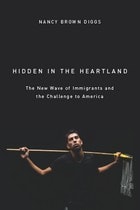
Hidden in the Heartland
The New Wave of Immigrants and the Challenge to AmericaNancy Brown Diggs
Michigan State University Press, 2011
As other teens returned home from school, thirteen-year-old José Silva headed for work at a restaurant, where he would remain until 2:00 a.m. Francisca Herrera, a tomato picker, was exposed to pesticides while she was pregnant and gave birth to a baby without arms or legs. Silva and Herrera immigrated illegally to the United States, and their experiences are far from unique. In this comprehensive, balanced overview of the immigration crisis, Nancy Brown Diggs examines the abusive, unethical conditions under which many immigrants work, and explores how what was once a border problem now extends throughout the country. Drawing from a wide spectrum of sources, Hidden in the Heartland demonstrates how the current situation is untenable for both illegal immigrants and American citizens. A vivid portrait of the immigration crisis, the book makes a passionate case for confronting this major human rights issue—a threat to the very unity of the country.
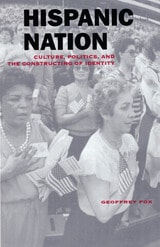
Hispanic Nation
Culture, Politics, and the Constructing of IdentityGeoffrey Fox
University of Arizona Press, 1997
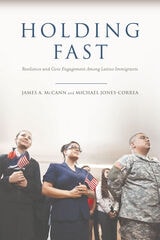
Holding Fast
Resilience and Civic Engagement Among Latino ImmigrantsJames A. McCann
Russell Sage Foundation, 2020
Holding Fast draws largely from a yearlong survey of Latino immigrants, including both citizens and noncitizens, conducted before and after the 2016 election. The survey gauges immigrants’ attitudes about the direction of the country and the emotional underpinnings of their political involvement. While survey respondents expressed pessimism about the direction of the United States following the 2016 election, there was no evidence of their withdrawal from civic life. Instead, immigrants demonstrated remarkable resilience in their political engagement, and their ties to America remained robust.
McCann and Jones-Correa examine Latino immigrants’ trust in government as well as their economic concerns and fears surrounding possible deportations of family members and friends. They find that Latino immigrants who were concerned about the likelihood of deportation were more likely to express a lack of trust in government. Concerns about personal finances were less salient. Disenchantment with the U.S. government did not differ based on citizenship status, length of stay in America, or residence in immigrant-friendly states. Foreign-born Latinos who are naturalized citizens shared similar sentiments to those with fewer political rights, and immigrants in California, for example, express views similar to those in Texas.
Addressing the potential influence immigrant voters may wield in in the coming election, the authors point to signs that the turnout rate for naturalized Latino immigrant may be higher than that for Latinos born in the United States. The authors further underscore the importance of the parties' platforms and policies, noting the still-tenuous nature of Latino immigrants’ affiliations with the Democratic Party.
Holding Fast outlines the complex political situation in which Latino immigrants find themselves today. Despite well-founded feelings of anger, fear, and skepticism, in general they maintain an abiding faith in the promise of American democracy. This book provides a comprehensive account of Latino immigrants’ political opinions and a nuanced, thoughtful outlook on the future of Latino civic participation. It will be an important contribution to scholarly work on civic engagement and immigrant integration.
Home Girls
Chicana Literary VoicesAlvina E. Quintana
Temple University Press, 1996
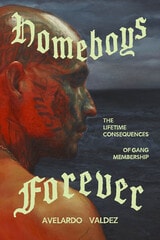
Homeboys Forever
The Lifetime Consequences of Gang MembershipAvelardo Valdez
University of Chicago Press, 2026
Violence, addiction, imprisonment . . . we don’t have to look hard to see the negative consequences of gang involvement. But what does it look like to spend a life—from adolescence to adulthood—in gangs? Sociologist Avelardo Valdez and his research team have been following the lives of Mexican American men in San Antonio, Texas, over a remarkable twenty years, watching and listening as they navigate adolescent delinquency and gang involvement, advance into a life of crime, and—sometimes—attempt to break from gang life and build lives in conventional society.
When gang affiliation exploded in the 1990s, adolescent street gang membership surged in the Mexican American community of Westside San Antonio. Valdez was quick to begin investigating how young men embedded in a system with little support for lasting change turned to gang violence, drug use, and other risky behaviors. The honesty of these men’s accounts draws our attention to the economic, political, and sociocultural context of impoverished communities in San Antonio. Being constantly written off as troublemakers and criminals eroded the self-respect that these young men once had. They were once lithe, active, and full of self-confidence, but after a lifetime of constant harassment and entanglements with the legal system, they now have a perpetual look of exhaustion and defeat.
Encouraging readers to question who is at fault when young men become involved in gangs and other delinquent behaviors, Homeboys Forever is a humanizing account of marginalized youth who struggle to overcome the systemic inequities that have led to a lifetime of heartbreaking consequences.
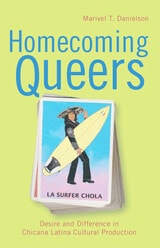
Homecoming Queers
Desire and Difference in Chicana Latina Cultural ProductionDanielson, Marivel T
Rutgers University Press, 2009
Spanning multiple genres and forms, and including scholarly theory alongside performances, films, narratives, and testimonials, Homecoming Queers leads readers along a crucial path toward understanding and overcoming the silences that previously existed across these fields.
Honor and the American Dream
Culture and Identity in a Chicano CommunityHorowitz, Ruth
Rutgers University Press, 1983
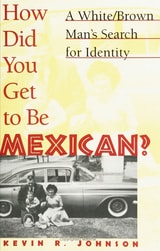
How Did You Get To Be Mexican
Kevin R. Johnson
Temple University Press, 1999
Johnson also grew up in the borderlands between classes. He spent his childhood with his mother, first on welfare and then with a racist working-class stepfather. As an adolescent, he moved to his father's home in a predominantly upper-middle-class suburb. His educational experiences too extend from a racially mixed elementary school to an all-white high school, and from Berkeley to Harvard Law School. From this vantage point, he analyzes the intersection of race and class in the United States.
This book looks not just at the question "Who is a Latino?" but also at the question of where persons of mixed Anglo-Latino heritage fit into the racial dynamics of the United States. Professor Johnson's mother was an ardent assimilationist who classified herself as "Spanish"; her failure to become a part o f middle America led her into depression and eventually mental illness. Her son has woven not just her experiences and his own, but also those of friends and relatives, into a complex and moving story of one white/brown man's search for identity.
How Myth Became History
Texas Exceptionalism in the BorderlandsJohn E. Dean
University of Arizona Press, 2016
How Myth Became History explores the formation of national, ethnic, racial, and class identities in the Texas borderlands. Examining Mexican, Mexican American, and Anglo Texan narratives as competing representations of the period spanning the Texas Declaration of Independence to the Mexican Revolution, John E. Dean traces the creation and development of border subjects and histories. Dean uses history, historical fiction, postcolonial theory, and U.S.-Mexico border theory to disrupt “official” Euro-American histories.
Dean argues that the Texas-Mexico borderlands complicate national, ethnic, and racial differences. He makes this clear in his discussion of the Mexican Revolution, when many Mexican Americans who saw themselves as Mexicans fought for competing revolutionary factions in Mexico, while others who saw themselves as U.S. Americans tried to distance themselves from Mexico altogether.
Analyzing literary representations of the border, How Myth Became History emphasizes the heterogeneity of border communities and foregrounds narratives that have often been occluded, such as Mexican-Indio histories. The border, according to Dean, still represents a contested geographical entity that destabilizes ethnic and racial groups. Border dynamics provide critical insight into the vexed status of the contemporary Texas-Mexico divide and point to broader implications for national and transnational identity.
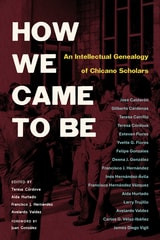
How We Came to Be
An Intellectual Genealogy of Chicano ScholarsEdited by Teresa Córdova, Aída Hurtado, Francisco J. Hernández, Avelardo Valdez; Foreword by Juan González
University of Arizona Press, 2026
This work chronicles the lives and legacies of Chicana and Chicano scholars whose formative experiences in the Chicano Movement shaped the development of Chicano studies and transformed higher education. Originating from the Reuniónes de Colegas—gatherings of veteran scholars reflecting on their shared histories—the volume features sixteen essays organized into five thematic sections that explore the intersections of activism, scholarship, and institutional change.
The contributors document how grassroots organizing evolved into academic inquiry, leading to the creation of departments, student support systems, and policy reforms that advanced equity and representation in universities. Essays address how community-engaged research influenced urban planning, health advocacy, and cultural production, while also highlighting Indigenous and transnational epistemologies that redefined theoretical frameworks in Chicano studies. The volume concludes with reflections on academic leadership and the breaking of barriers by Chicana scholars in higher education administration.
Together, these essays offer a powerful intellectual history and a testament to a generation’s enduring commitment to social justice. How We Came to Be is both a scholarly archive and a call to action, preserving the legacy of those who built Chicano studies and inspiring future generations to continue the work of transformation within and beyond the academy.
Contributors
José Calderón
Gilberto Cárdenas
Teresa Carrillo
Teresa Córdova
Estevan Flores
Yvette G. Flores
Felipe Gonzales
Deena J. González
Francisco J. Hernández
Inés Hernández-Ávila
Francisco Hernández Vázquez
Aída Hurtado
Larry Trujillo
Avelardo Valdez
Carlos G. Vélez-Ibáñez
James Diego Vigil
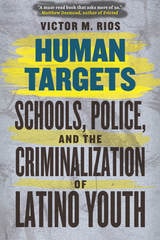
Human Targets
Schools, Police, and the Criminalization of Latino YouthVictor M. Rios
University of Chicago Press, 2017
In Human Targets, Rios takes us to the streets of California, where we encounter young men who find themselves in much the same situation as fifteen-year-old Victor. We follow young gang members into schools, homes, community organizations, and detention facilities, watch them interact with police, grow up to become fathers, get jobs, get rap sheets—and in some cases get killed. What is it that sets apart young people like Rios who succeed and survive from the ones who don’t? Rios makes a powerful case that the traditional good kid/bad kid, street kid/decent kid dichotomy is much too simplistic, arguing instead that authorities and institutions help create these identities—and that they can play an instrumental role in providing young people with the resources for shifting between roles. In Rios’s account, to be a poor Latino youth is to be a human target—victimized and considered an enemy by others, viewed as a threat to law enforcement and schools, and burdened by stigma, disrepute, and punishment. That has to change.
This is not another sensationalistic account of gang bangers. Instead, the book is a powerful look at how authority figures succeed—and fail—at seeing the multi-faceted identities of at-risk youths, youths who succeed—and fail—at demonstrating to the system that they are ready to change their lives. In our post-Ferguson era, Human Targets is essential reading.
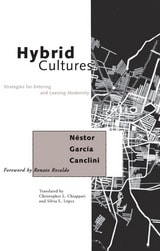
Hybrid Cultures
Strategies for Entering and Leaving ModernityNestor Garcia Canclini
University of Minnesota Press, 1995
Hybrid Cultures
Strategies for Entering and Leaving ModernityNestor Garcia Canclini
University of Minnesota Press, 2005