Results by title
998 books match the query 'Life' and 36 start with h
H. G. Adler
Life, Literature, LegacyEdited by Julia Creet, Sara R. Horowitz, and Amira Bojadzija-Dan
Northwestern University Press, 2016
H. G. Adler: Life, Literature, Legacy is the first collection of essays in English dedicated to the life and work of German-language author H. G. Adler. Among the international scholars of German, Jewish, and Holocaust literature and history who reveal the range of Adler’s legacy across genres are Adler’s son, Jeremy Adler, and Peter Filkins, translator of Adler’s trilogy, Panorama, (The Journey). Together, the essays examine Adler’s writing in relation to his life, especially his memory as a survivor of the Nazi death camps and his posthumous recognition for having produced a Gesamtkunstwerk, an aesthetic synthesis of the Shoah. The book carries the moral charge of Adler’s work, moving beyond testimony to a complex dialectic between fact and fiction, exploring Adler’s experiments with voice and the ethical work of literary engagement with the Shoah.
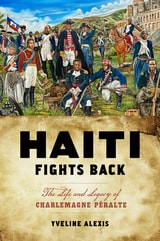
Haiti Fights Back
The Life and Legacy of Charlemagne PéralteYveline Alexis
Rutgers University Press, 2021
Haiti Fights Back: The Life and Legacy of Charlemagne Péralte is the first US scholarly examination of the politician and caco leader (guerrilla fighter) who fought against the US military occupation of Haiti. The occupation lasted close to two decades, from 1915-1934. Alexis argues for the importance of documenting resistance while exploring the occupation’s mechanics and its imperialism. She takes us to Haiti, exploring the sites of what she labels as resistance zones, including Péralte’s hometown of Hinche and the nation’s large port areas--Port-au-Prince and Cap-Haïtien. Alexis offers a new reading of U.S. military archival sources that record Haitian protests as banditry. Haiti Fights Back illuminates how Péralte launched a political movement, and meticulously captures how Haitian women and men resisted occupation through silence, military battles, and writings. She locates and assembles rare, multilingual primary sources from traditional repositories, living archives (oral stories), and artistic representations in Haiti and the United States. The interdisciplinary work draws on legislation, cacos’ letters, newspapers, and murals, offering a unique examination of Péralte’s life (1885-1919) and the significance of his legacy through the twenty-first century. Haiti Fights Back offers a new approach to the study of the U.S. invasion of the Americas by chronicling how Caribbean people fought back.
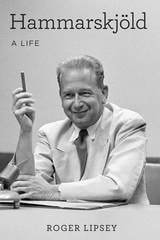
Hammarskjöld
A LifeRoger Lipsey
University of Michigan Press, 2015
After his mysterious death, Dag Hammarskjöld was described by John F. Kennedy as the "greatest statesman of our century." Second secretary-general of the United Nations (1953 - 61), he is the only person to have been awarded the Nobel Peace Prize posthumously. Through extensive research in little explored archives and personal correspondence, Roger Lipsey has produced the definitive biography of Dag Hammarskjöld. Hammarskjöld: A Life provides vivid new insights into the life and mind of a truly great individual. Hammarskjöld the statesman and Hammarskjöld the author of the classic spiritual journal Markings meet in this new biography - and the reader will meet them both in these pages. A towering mid-twentieth-century figure, Hammarskjöld speaks directly to our time.
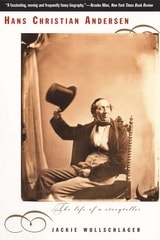
Hans Christian Andersen
The Life of a StorytellerJackie Wullschlager
University of Chicago Press, 2002
Drawing on letters, diaries, and other original sources (many never before translated from the Danish), Wullschlager shows in this compelling, extensively researched biography how Andersen's writings—darker and more diverse than previously recognized—reflected the complexities of his life, a far cry from the "happily ever after" of a fairy tale. As we follow in his footsteps from Golden Age Copenhagen to the princely courts of Germany and the villas of southern Italy, Andersen becomes a figure every bit as fascinating as a character from one of his stories—a gawky, self-pitying, and desperate man, but also one of the most gifted storytellers the world has ever known.
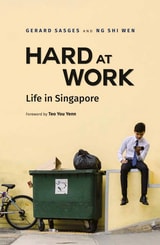
Hard at Work
Life in SingaporeGerard Sasges and Ng Shi Wen
National University of Singapore Press, 2019
Through first-person narratives based on detailed interviews, vividly augmented with color photographs, Hard at Work reminds us of the everyday labor that continually goes on around us, and that every job can reveal something interesting if we just look closely enough. It shows us too the ways inequalities of status and income are felt and internalized in this highly globalized society.

Hardwood Glory
A Life of John WoodenBarbara Olenyik Morrow
Indiana Historical Society Press, 2014
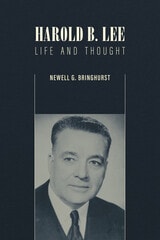
Harold B. Lee
Life and ThoughtNewell G. Bringhurst
Signature Books, 2021
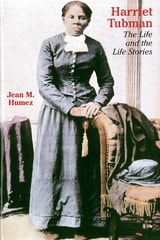
Harriet Tubman
The Life and the Life StoriesJean M. Humez
University of Wisconsin Press, 2005
Harriet Tubman’s name is known world-wide and her exploits as a self-liberated Underground Railroad heroine are celebrated in children’s literature, film, and history books, yet no major biography of Tubman has appeared since 1943. Jean M. Humez’s comprehensive Harriet Tubman is both an important biographical overview based on extensive new research and a complete collection of the stories Tubman told about her life—a virtual autobiography culled by Humez from rare early publications and manuscript sources. This book will become a landmark resource for scholars, historians, and general readers interested in slavery, the Underground Railroad, the Civil War, and African American women.
Born in slavery in Maryland in or around 1820, Tubman drew upon deep spiritual resources and covert antislavery networks when she escaped to the north in 1849. Vowing to liberate her entire family, she made repeated trips south during the 1850s and successfully guided dozens of fugitives to freedom. During the Civil War she was recruited to act as spy and scout with the Union Army. After the war she settled in Auburn, New York, where she worked to support an extended family and in her later years founded a home for the indigent aged. Celebrated by her primarily white antislavery associates in a variety of private and public documents from the 1850s through the 1870s, she was rediscovered as a race heroine by woman suffragists and the African American women’s club movement in the early twentieth century. Her story was used as a key symbolic resource in education, institutional fundraising, and debates about the meaning of "race" throughout the twentieth century.
Humez includes an extended discussion of Tubman’s work as a public performer of her own life history during the nearly sixty years she lived in the north. Drawing upon historiographical and literary discussion of the complex hybrid authorship of slave narrative literature, Humez analyzes the interactive dynamic between Tubman and her interviewers. Humez illustrates how Tubman, though unable to write, made major unrecognized contributions to the shaping of her own heroic myth by early biographers like Sarah Bradford. Selections of key documents illustrate how Tubman appeared to her contemporaries, and a comprehensive list of primary sources represents an important resource for scholars.
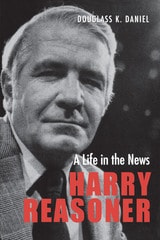
Harry Reasoner
A Life in the NewsBy Douglass K. Daniel
University of Texas Press, 2007
Harry Reasoner was one of the most trusted and well-liked journalists of the golden age of network television news. Whether anchoring the evening newscast on CBS in the 1960s or on ABC in the 1970s, providing in-depth reporting on 60 Minutes, or hosting numerous special programs covering civil rights struggles, the Vietnam War, and Watergate, Reasoner had "that almost mystical quality it seems to take for good television reporting, exuding this atmosphere of truth and believability," in the words of Walter Cronkite. Yet his reassuring manner and urbane, often witty, on-air persona masked a man who was far more complex and contradictory. Though gifted with the intelligence and drive to rise to the top of his profession, Reasoner was regarded by many colleagues as lazy and self-indulgent, a man who never achieved his full potential despite his many accomplishments.
Harry Reasoner: A Life in the News covers the entire sweep of this enigmatic journalist's life and career. Douglass K. Daniel opens with Reasoner's Depression-era Midwestern upbringing and follows him through his early work in newspapers and radio before he joined CBS in 1956. Focusing on Reasoner's thirty-five-year tenure in television news, Daniel presents fascinating, behind-the-scenes accounts of Reasoner's key role in founding the top-rated newsmagazine 60 Minutes. He also explores Reasoner's highly publicized move to ABC in 1970, where he anchored the nightly newscast, first with Howard K. Smith and later with Barbara Walters—a disastrous pairing from which Reasoner's career never fully recovered.
Based on scores of interviews and unpublished letters, memos, and other primary sources, this first biography of the man once rated second in credibility only to Walter Cronkite illuminates an entire era in broadcast journalism, as well as many of the unique personalities, from Andy Rooney to Mike Wallace, who made that era distinctive.
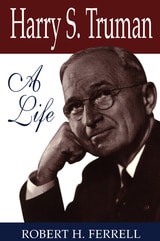
Harry S. Truman
A LifeRobert H. Ferrell
University of Missouri Press, 1995
Few U.S. presidents have captured the imagination of the American people as has Harry S. Truman, “the man from Missouri.”
In this major new biography, Robert H. Ferrell, widely regarded as an authority on the thirty-third president, challenges the popular characterization of Truman as a man who rarely sought the offices he received, revealing instead a man who—with modesty, commitment to service, and basic honesty—moved with method and system toward the presidency.
Truman was ambitious in the best sense of the word. His powerful commitment to service was accompanied by a remarkable shrewdness and an exceptional ability to judge people. He regarded himself as a consummate politician, a designation of which he was proud. While in Washington, he never succumbed to the “Potomac fever” that swelled the heads of so many officials in that city. A scrupulously honest man, Truman exhibited only one lapse when, at the beginning of 1941, he padded his Senate payroll by adding his wife and later his sister.
From his early years on the family farm through his pivotal decision to use the atomic bomb in World War II, Truman’s life was filled with fascinating events. Ferrell’s exhaustive research offers new perspectives on many key episodes in Truman’s career, including his first Senate term and the circumstances surrounding the Truman Doctrine and the Marshall Plan. In addition, Ferrell taps many little-known sources to relate the intriguing story of the machinations by which Truman gained the vice presidential nomination in 1944, a position which put him a heartbeat away from the presidency.
No other historian has ever demonstrated such command over the vast amounts of material that Robert Ferrell brings to bear on the unforgettable story of Truman’s life. Based upon years of research in the Truman Library and the study of many never-before-used primary sources, Harry S. Truman is destined to become the authoritative account of the nation’s favorite president.
Hasidism
Writings on Devotion, Community, and Life in the Modern WorldEdited by Ariel Evan Mayse Editor and Sam Berrin Shonkoff
Brandeis University Press, 2020
While this volume focuses on Hasidism, it wrestles with a core set of questions that permeate modern Jewish thought and religious thought more generally: What is the relationship between God and the world? What is the relationship between God and the human being? But Hasidic thought is cast with mystical, psychological, and even magical accents, and offers radically different answers to core issues of modern concern. The editors draw selections from an array of genres including women’s supplications; sermons and homilies; personal diaries and memoirs; correspondence; stories; polemics; legal codes; and rabbinic response. These selections consciously move between everyday lived experience and the most ineffable mystical secrets, reflecting the multidimensional nature of this unusual religious and social movement. The editors include canonical texts from the first generation of Hasidic leaders up through present-day ultra-orthodox, as well as neo-Hasidic voices and, in so doing, demonstrate the unfolding of a rich and complex phenomenon that continues to evolve today.

Have Horn, Will Travel
The Life and Music of Herman "Junior" CookCourtney M. Nero
University of North Texas Press, 2025
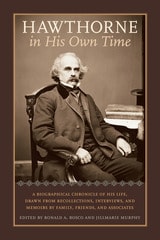
Hawthorne in His Own Time
A Biographical Chronicle of His Life,Drawn from Recollections,Interviews, and Memoirs by Family,FrieRonald A Bosco
University of Iowa Press, 2007
At his death, Nathaniel Hawthorne (1804–1864) was universally acknowledged in America and England as "the Great Romancer." Novels such as The Scarlet Letter and The House of the Seven Gables and stories published in such collections as Twice-Told Tales continue to capture the minds and imaginations of readers and critics to this day. Harder to capture, however, were the character and personality of the man himself. So few of the essays that appeared in the two years after his death offered new insights into his life, art, and reputation that Hawthorne seemed fated to premature obscurity or, at least, permanent misrepresentation. This first collection of personal reminiscences by those who knew Hawthorne intimately or knew about him through reliable secondary sources rescues him from these confusions and provides the real human history behind the successful writer.
Remembrances from Elizabeth Peabody, Sophia Hawthorne, Oliver Wendell Holmes, Ralph Waldo Emerson, Bronson Alcott, Rebecca Harding Davis, and twenty others printed in Hawthorne in His Own Time follow him from his childhood in Salem, through his years of initial literary obscurity, his days in the Boston and Salem Custom Houses, his service as U.S. Consul to Liverpool and Manchester and his life in the Anglo-American communities at Rome and Florence, to his late years as the "Great Romancer."
In their enlightening introduction, editors Ronald Bosco and Jillmarie Murphy assess the postmortem building of Hawthorne's reputation as well as his relationship to the prominent Transcendentalists, spiritualists, Swedenborgians, and other personalities of his time. By clarifying the sentimental associations between Hawthorne's writings and his actual personality and moving away from the critical review to the personal narrative, these artful and perceptive reminiscences tell the private and public story of a remarkable life.
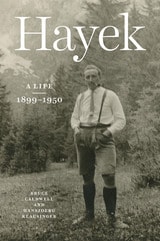
Hayek
A Life, 1899–1950Bruce Caldwell and Hansjoerg Klausinger
University of Chicago Press, 2022
The definitive account of the distinguished economist’s formative years.
Few twentieth-century figures have been lionized and vilified in such equal measure as Friedrich Hayek—economist, social theorist, leader of the Austrian school of economics, and champion of classical liberalism. Hayek’s erudite arguments in support of individualism and the market economy have attracted a devout following, including many at the levers of power in business and government. Critics, meanwhile, cast Hayek as the intellectual forefather of “neoliberalism” and of all the evils they associate with that pernicious doctrine.
In Hayek: A Life, historians of economics Bruce Caldwell and Hansjörg Klausinger draw on never-before-seen archival and family material to produce an authoritative account of the influential economist’s first five decades. This includes portrayals of his early career in Vienna; his relationships in London and Cambridge; his family disputes; and definitive accounts of the creation of The Road to Serfdom and of the founding meeting of the Mont Pèlerin Society.
A landmark work of history and biography, Hayek: A Life is a major contribution both to our cultural accounting of a towering figure and to intellectual history itself.
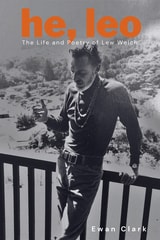
He, Leo
The Life and Poetry of Lew WelchEwan Clark
Oregon State University Press, 2023
He, Leo investigates Welch’s life and work in a chronological fashion, structured around Welch’s own notion of how three main aspects of his life—The Man, The Mountain, and The City—were interdependent. From his birth until his disappearance and presumed death, Welch’s life was often defined by problems, including a complex relationship with his mother, a long struggle with alcohol, and a fluctuating mental state. Yet he was open and candid about everything, a fact that is evident in all aspects of his work.
Each of the three main sections of He, Leo includes key poems, essays, and events—both personal and cultural—to help establish Welch’s importance as a prominent poet and figure during the San Francisco Renaissance. Despite his crushing self-criticism and his reputation as a “friend of,” he was bona fide poet with a strong voice and message of his own. With this first full-length biography, Ewan Clark restores Lew Welch to his rightful place as an important member of a significant American literary and cultural movement.
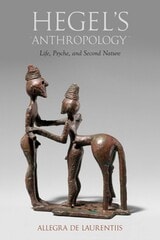
Hegel’s Anthropology
Life, Psyche, and Second NatureAllegra de Laurentiis
Northwestern University Press, 2021
A groundbreaking contribution to scholarship on Hegel and nineteenth-century philosophy, this book shows that the Anthropology is essential to understanding Hegel’s concept of spirit, not only in its connection with nature but also in its more sophisticated realizations as objective and absolute spirit. Future scholarship on this subject will recount—and build upon—de Laurentiis’s innovative study.
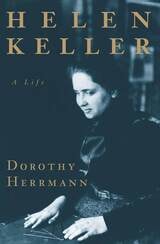
Helen Keller
A LifeDorothy Herrmann
University of Chicago Press, 1999
"Fascinating. . . . Stripping away decades of well-meaning sentimentality, Herrmann presents a pair of strong-willed women, who struggled to build their own lives while never forgetting their dependence on each other."—Ron Charles, Christian Science Monitor
"We meet an entirely unexpected Helen Keller—a woman with deep if concealed ambivalence toward her self-sacrificing teacher; a political radical; and a woman longing for romantic love and the fulfilled sexual life of a woman."—Joan Mellen, Philadelphia Inquirer
"Herrmann's portrait of Keller is both fully embodied and unflinchingly candid."—Mary Loeffelholz, Boston Sunday Globe
"This well-proportioned biography of the deaf and blind girl who became a great American crusader rescues its subject from the shackles of sainthood without destroying her as an American hero."—Dennis Drabelle, Cleveland Plain Dealer
"Herrmann's engrossing biography helps us see beyond the public's fascination with how Keller dealt with her disabilities to discover the woman Keller strived to be."—Nancy Seidman, Atlanta Journal-Constitution
"Perhaps the most intimate biography [of Helen Keller]. [Herrmann] gives her back her sexuality [and] imbues her with a true humanity. . . . Helen Keller: A Life has some of the texture and the dramatic arc of a good novel."—Dinitia Smith, New York Times
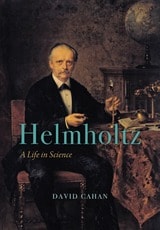
Helmholtz
A Life in ScienceDavid Cahan
University of Chicago Press, 2018
Utilizing all of Helmholtz’s scientific and philosophical writings, as well as previously unknown letters, this book reveals the forces that drove his life—a passion to unite the sciences, vigilant attention to the sources and methods of knowledge, and a deep appreciation of the ways in which the arts and sciences could benefit each other. By placing the overall structure and development of his scientific work and philosophy within the greater context of nineteenth-century Germany, Helmholtz also serves as cultural biography of the construction of the scientific community: its laboratories, institutes, journals, disciplinary organizations, and national and international meetings. Helmholtz’s life is a shining example of what can happen when the sciences and the humanities become interwoven in the life of one highly motivated, energetic, and gifted person.
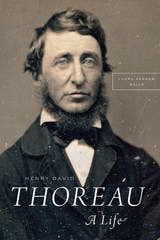
Henry David Thoreau
A LifeLaura Dassow Walls
University of Chicago Press, 2017
But there was much more to Thoreau than his brief experiment in living at Walden Pond. A member of the vibrant intellectual circle centered on his neighbor Ralph Waldo Emerson, he was also an ardent naturalist, a manual laborer and inventor, a radical political activist, and more. Many books have taken up various aspects of Thoreau’s character and achievements, but, as Laura Dassow Walls writes, “Thoreau has never been captured between covers; he was too quixotic, mischievous, many-sided.” Two hundred years after his birth, and two generations after the last full-scale biography, Walls restores Henry David Thoreau to us in all his profound, inspiring complexity.
Walls traces the full arc of Thoreau’s life, from his early days in the intellectual hothouse of Concord, when the American experiment still felt fresh and precarious, and “America was a family affair, earned by one generation and about to pass to the next.” By the time he died in 1862, at only forty-four years of age, Thoreau had witnessed the transformation of his world from a community of farmers and artisans into a bustling, interconnected commercial nation. What did that portend for the contemplative individual and abundant, wild nature that Thoreau celebrated?
Drawing on Thoreau’s copious writings, published and unpublished, Walls presents a Thoreau vigorously alive in all his quirks and contradictions: the young man shattered by the sudden death of his brother; the ambitious Harvard College student; the ecstatic visionary who closed Walden with an account of the regenerative power of the Cosmos. We meet the man whose belief in human freedom and the value of labor made him an uncompromising abolitionist; the solitary walker who found society in nature, but also found his own nature in the society of which he was a deeply interwoven part. And, running through it all, Thoreau the passionate naturalist, who, long before the age of environmentalism, saw tragedy for future generations in the human heedlessness around him.
“The Thoreau I sought was not in any book, so I wrote this one,” says Walls. The result is a Thoreau unlike any seen since he walked the streets of Concord, a Thoreau for our time and all time.
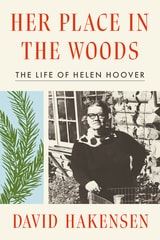
Her Place in the Woods
The Life of Helen HooverDavid Hakensen
University of Minnesota Press, 2025
The biography of one of Minnesota’s most beloved nature writers, from her career in the city to her rustic cabin on Gunflint Lake
During the late 1950s through the early 1970s, Helen Hoover’s stories and essays of life in the wilderness on northern Minnesota’s Gunflint Lake, published in popular magazines and several bestselling books (including The Gift of the Deer in 1966 and A Place in the Woods in 1969), found millions of fans and earned her accolades alongside nature writers like Sigurd Olson, Rachel Carson, Sally Carrighar, and Calvin Rutstrum. Hoover’s own unlikely history of leaving a corporate career in Chicago for a small cabin without electricity or running water—with no interest in hunting or fishing—is just one chapter of the remarkable life that David Hakensen describes in Her Place in the Woods. This first complete biography illuminates how Helen Hoover (1910–1984) made a place for herself and for countless readers in, as she put it, the world of her time.
Hoover defied convention. Self-trained and without an academic degree, she worked in the male-dominated metallurgical field as a researcher at International Harvester, where she solved a long-standing problem with the manufacture of discs for farm implements and earned a patent. She and her husband, Adrian, a commercial artist, had long dreamed of moving to a remote cabin in the woods. As they started the long return drive to Chicago after a summer spent on Gunflint Lake, they finally made the leap, quitting their jobs with a long-distance phone call from Grand Marais and figuring out the rest as they went.
The Hoovers were woefully unprepared for life off the grid and slowly learned how to convert sheds into chicken coops and fend off bears. Social encounters presented their own challenges, with Helen’s fiery personality leading to clashes with hunters and other Gunflint neighbors. Gradually, the Hoovers settled into the rhythms of their remote homestead, and Helen would craft a prolific literary livelihood from her keen observations of nature and encounters with animals in the surrounding woods.
Her Place in the Woods captures both an awakening to the power and fragility of the natural world and the efforts and talents of an extraordinary woman defining herself as a writer. Though Helen Hoover would move on from the secluded North Woods, as she wrote in her final book, The Years of the Forest, “From this time on it would be both here and with me wherever I might be, as long as I should live.”
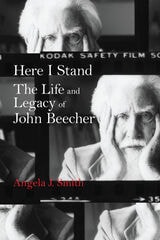
Here I Stand
The Life and Legacy of John BeecherAngela J. Smith
University of Alabama Press, 2017
Biography of a forgotten poet who used his name and influence to speak up for those on the margins of society.
Few surnames resonate in American history more than Beecher. The family’s abolitionist ministers, educators, and writers are central figures in the historical narrative of the United States. The Beechers’ influence was greatest in the nineteenth century, but the family story continued—albeit with less public attention—with a descendant who grew up in Birmingham, Alabama, during the early twentieth century.
John Beecher (1904–1980) never had the public prominence of his famous ancestors, but as a poet, professor, sociologist, New Deal administrator, journalist, and civil rights activist, he spent his life fighting for the voiceless and oppressed with a distinct moral sensibility that reflected his self-identification as the twentieth-century torchbearer for his famous family. While John Beecher had many vocations in his lifetime, he always considered himself a poet and a teacher. Some critics have compared the populist elements of Beecher’s poetry to the work of Walt Whitman and Carl Sandburg, but his writing never gained a broad audience or critical acclaim during his lifetime.
In Here I Stand: The Life and Legacy of John Beecher, Angela J. Smith examines Beecher’s writing and activism and places them in the broader context of American culture at pivotal points in the twentieth century. Employing his extensive letters, articles, unpublished poetry and prose, and audio interviews in addition to his numerous published books, Smith uncovers a record of public concerns in American history ranging from the plight of workers in 1920s steel mills to sharecroppers’ struggles during the Depression to the civil rights movement of the 1960s.
Here is Where I Walk
Episodes From a Life in the ForestLeslie Carol Roberts
University of Nevada Press, 2019
In layered stories of her life and travels, Leslie turns her daily walks into revelations of deeper meaning. From Maryland to Iowa to Tasmania, we follow a fierce and keenly observant walker through places of exquisite beauty and complexity. Her daily walks inspire Leslie to accept the invitation of the beckoning trees where she finds herself colliding with the urban coyote, the peculiar banana slug, and the manzanita. She also notes both ridiculous and poignant aspects of human ecosystems in pursuit of what it means to live a life of creativity and creation from scientist-activists battling to save environments to the tragic realities of ordinary life.
In this finely crafted eco-memoir, each place provides Leslie with exactly the scaffolding needed to survive, with nature serving as the tonic. Here is Where I Walk provides a vivid answer to how we can find our place, not only in nature but within ourselves and the world we walk.
High Stakes of Identity
Gambling in the Life and Literature of Nineteenth-Century RussiaIan M. Helfant
Northwestern University Press, 2002
During the reigns of Alexander I and Nicholas I, Ian Helfant argues, gambling became an essential proving-ground and symbolic locus for noble identity in Russia--a way for the nobility to assert its values (fearlessness, disdain for money, implacable self-possession, deification of whim and will, and stylish performance) against nineteenth-century economics and bourgeois sentimentality. In <i>The High Stakes of Identity</i> Helfant's twin concerns are to analyze the structural components of the myth of the noble "beau joueur" and to show how gambling performances in society and in literature reciprocally reinforced, complicated, and eventually disintegrated its mystique.
Using a broad variety of sources--memoiristic, epistolary, journalistic, legal, fictional, theatrical--Helfant reconstructs both the prevalence and the particular codes of gambling's cultural system in the first few decades of the nineteenth century. These codes allow him to interpret the iconoclastic performances of truly legendary gamblers and to assess the importance and purpose of gambling in works ranging from Pushkin's "Queen of Spades" to Lermontov's "Masquerade." Throughout, Helfant gives voice to the rich variety of discourses, from tsarist laws to moralistic tracts, that came to bear on the culture of gambling in the 1830s and eventually led to its displacement as the key marker of nobility.
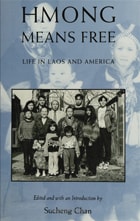
Hmong Means Free
Life in Laos and AmericaSucheng Chan
Temple University Press, 1994
This collection of evocative personal testimonies by three generations of Hmong refugees is the first to describe their lives in Laos as slash-and-burn farmers, as refugees after a Communist government came to power in 1975, and as immigrants in the United States. Reflecting on the homes left behind, their narratives chronicle the difficulties of forging a new identity.
From Jou Yee Xiong's Life Story:
"I stopped teaching my sons many of the Hmong ways because I felt my ancestors and I had suffered enough already. I thought that teaching my children the old ways would only place a burden on them."
From Ka Pao Xiong's (Jou Yee Xiong's son) Life Story:
"It has been very difficult for us to adapt because we had no professions or trades and we suffered from culture shock. Here in America, both the husband and wife must work simultaneously to earn enough money to live on. Many of our children are ignorant of the Hmong way of life…. Even the old people are forgetting about their life in Laos, as they enjoy the prosperity and good life in America."
From Xang Mao Xiong's Life Story:
"When the Communists took over Laos and General Vang Pao fled with his family, we, too, decided to leave. Not only my family, but thousands of Hmong tried to flee. I rented a car for thirty thousand Laotian dollars, and it took us to Nasu…. We felt compelled to leave because many of us had been connected to the CIA…. Thousands of Hmong were traveling on foot. Along the way, many of them were shot and killed by Communist soldiers. We witnessed a bloody massacre of civilians."
From Vue Vang's Life Story:
"Life was so hard in the [Thai refugee] camp that when we found out we could go to the United States, we did not hesitate to grasp the chance. We knew that were we to remain in the camp, there would be no hope for a better future. We would not be able to offer our children anything better than a life of perpetual poverty and anguish."
Home and Beyond
Generative Phenomenology after HusserlAnthony J. Steinbock
Northwestern University Press, 1995
Homeward
Life in the Year After PrisonBruce Western
Russell Sage Foundation, 2018
Western and his research team conducted comprehensive interviews with men and women released from the Massachusetts state prison system who returned to neighborhoods around Boston. Western finds that for most, leaving prison is associated with acute material hardship. In the first year after prison, most respondents could not afford their own housing and relied on family support and government programs, with half living in deep poverty. Many struggled with chronic pain, mental illnesses, or addiction—the most important predictor of recidivism. Most respondents were also unemployed. Some older white men found union jobs in the construction industry through their social networks, but many others, particularly those who were black or Latino, were unable to obtain full-time work due to few social connections to good jobs, discrimination, and lack of credentials. Violence was common in their lives, and often preceded their incarceration. In contrast to the stereotype of tough criminals preying upon helpless citizens, Western shows that many former prisoners were themselves subject to lifetimes of violence and abuse and encountered more violence after leaving prison, blurring the line between victims and perpetrators.
Western concludes that boosting the social integration of former prisoners is key to both ameliorating deep disadvantage and strengthening public safety. He advocates policies that increase assistance to those in their first year after prison, including guaranteed housing and health care, drug treatment, and transitional employment. By foregrounding the stories of people struggling against the odds to exit the criminal justice system, Homeward shows how overhauling the process of prisoner reentry and rethinking the foundations of justice policy could address the harms of mass incarceration.
Hooked on Oregon
Tales of Life, Death, and FishingEben Pindyck
Oregon State University Press, 2027
Far from your average fishing book, Hooked on Oregon invites readers to visit unexpected places—behind prison walls, inside a bait factory, deep in a forbidden forest, up a mountain, and around a desert oasis—while introducing a troop of unforgettable fishing buddies. A German orphan adopted by an American war hero, a parolee busted for fishing without a license, and a Marine veteran, among others, help show what life looks like through the eyes of an inveterate angler.
Fishing stories in Oregon have never been greater than those told by Eben Pindyck. Whether casting a line on the Columbia River or visiting Herman the Sturgeon at the State Fair, there’s a real-life tale to capture the interest and fancy of anyone in search of a good story. These funny, honest, and elucidative essays take you to lakes, streams, and waterways throughout the state—and far beyond the anecdote about the one that got away.
Hoosier Public Enemy
A Life of John DillingerJohn Beineke
Indiana Historical Society Press, 2014
Hope and Hard Truth
A Life in Texas PoliticsMary Beth Rogers
University of Texas Press, 2022
Mary Beth Rogers has led an eventful life rooted in the weeds of Texas politics, occasionally savoring a few victories—particularly the 1990 governor’s race when, as campaign manager for Ann Richards, she did the impossible and put a Democratic woman in office. She also learned to absorb her losses—after all, she was a liberal feminist in America’s most aggressively conservative state.
Rogers’s road to a political life was complex. Candidly and vulnerably, she shares both public and private memories of how she tried to maintain a rich family life with growing children and a husband with a debilitating illness. She goes on to provide an insider’s account of her experiences as Richards’s first chief of staff while weaving her way through the highs and lows of political intrigue and legislative maneuvering.
Reflecting on her family heritage and nascent spiritual quest, Rogers discovers a reality at once sobering and invigorating: nothing is ever completely lost or completely won. It is a constant struggle to create humane public policies built on a foundation of fairness and justice—particularly in her beloved Texas.
Hope, Trust, and Forgiveness
Essays in FinitudeJohn T. Lysaker
University of Chicago Press, 2023
As ethical beings, we strive for lives that are meaningful and praiseworthy. But we are finite. We do not know, so we hope. We need, so we trust. We err, so we forgive. In this book, philosopher John T. Lysaker draws our attention to the ways in which these three capacities—hope, trust, and forgiveness—contend with human limits. Each experience is vital to human flourishing, yet each also poses significant personal and institutional challenges as well as opportunities for growth. Hope, Trust, and Forgiveness explores these challenges and opportunities and proposes ways to best meet them. In so doing, Lysaker experiments with the essay as a form and advances an improvisational perfectionism to deepen and expand our ethical horizons.
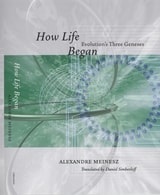
How Life Began
Evolution's Three GenesesAlexandre Meinesz
University of Chicago Press, 2008
How Life Began elucidates three origins, or geneses, of life—bacteria, nucleated cells, and multicellular organisms—and shows how evolution has sculpted life to its current biodiversity through four main events—mutation, recombination, natural selection, and geologic cataclysm. As an ecologist who specializes in algae, the first organisms to colonize Earth, Meinesz brings a refreshingly novel voice to the history of biodiversity and emphasizes here the role of unions in organizing life. For example, the ingestion of some bacteria by other bacteria led to mitochondria that characterize animal and plant cells, and the chloroplasts of plant cells.
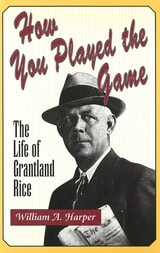
How You Played the Game
The Life of Grantland RiceWilliam Harper
University of Missouri Press, 1999
Centering around the life and times of the revered American sportswriter Grantland Rice (1880-1954), How You Played the Game takes us back to those magical days of sporting tales and mythic heroes. Through Rice's eyes we behold such sports as bicycle racing, boxing, golf, baseball, football, and tennis as they were played before 1950. We witness ups and downs in the careers of such legendary figures as Christy Mathewson, Jack Dempsey, Ty Cobb, Babe Ruth, Jim Thorpe, Red Grange, Bobby Jones, Bill Tilden, Notre Dame's Four Horsemen, Gene Tunney, and Babe Didrikson--all of whom Rice helped become household names.
Grantland Rice was a remarkably gifted and honorable sportswriter. From his early days in Nashville and Atlanta, to his famed years in New York, Rice was acknowledged by all for his uncanny grasp of the ins and outs of a dozen sports, as well as his personal friendship with hundreds of sportsmen and sportswomen. As a pioneer in American sportswriting, Rice helped establish and dignify the profession, sitting shoulder to shoulder in press boxes around the nation with the likes of Ring Lardner, Damon Runyon, Heywood Broun, and Red Smith.
Besides being a first-rate reporter, Rice was also a columnist, poet, magazine and book writer, film producer, family man, war veteran, fund-raiser, and skillful golfer. His personal accomplishments over a half century as an advocate for sports and good sportsmanship are astounding by any standard. What truly set Rice apart from so many of his peers, however, was the idea behind his sports reporting and writing. He believed that good sportsmanship was capable of lifting individuals, societies, and even nations to remarkable heights of moral and social action.
More than just a biography of Grantland Rice, How You Played the Game is about the rise of American sports and the early days of those who created the art and craft of sportswriting. Exploring the life of a man who perfectly blended journalism and sporting culture, this book is sure to appeal to all, sports lovers or not.
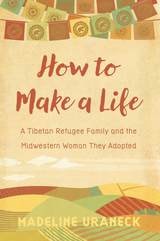
How to Make a Life
A Tibetan Refugee Family and the Midwestern Woman They AdoptedMadeline Uraneck
Wisconsin Historical Society Press, 2018
When Madeline Uraneck said hello to the Tibetan woman cleaning her office cubicle, she never imagined the moment would change her life. After learning that Tenzin Kalsang had left her husband and four children behind in a Tibetan refugee settlement in India to try to forge a better life for them, Madeline took on the task of helping her apply for US visas. When the family reunited in their new Midwestern home, Madeline became swept up in their lives, from homework and soccer games to family dinners and shared holiday traditions. By reaching out, she found more than she bargained for—a family who welcomed her as their own and taught her more than she offered them.
An evocative blend of immersion journalism and memoir, How to Make a Life shares the immigration story of a Tibetan refugee family who crossed real and cultural bridges to make a life in Madison, Wisconsin, with the assistance of the Midwestern woman they befriended. From tales of escaping Tibet over the Himalayas, to striking a balance between old traditions with new, to bridging divides one friendly gesture at a time, readers will expand their understanding of family, culture, and belonging.
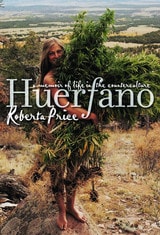
Huerfano
A Memoir of Life in the CountercultureRoberta M. Price
University of Massachusetts Press, 2004
In the late 1960s, new age communes began springing up in the American Southwest with names like Drop City, New Buffalo, Lama Foundation, Morning Star, Reality Construction Company, and the Hog Farm. In the summer of 1969, Roberta Price, a recent college graduate, secured a grant to visit these communities and photograph them. When she and her lover David arrived at Libre in the Huerfano Valley of southern Colorado, they were so taken with what they found that they wanted to participate instead of observe. The following spring they married, dropped out of graduate school in upstate New York, packed their belongings into a 1947 Chrysler Windsor Coupe, and moved to Libre, leaving family and academia behind.
Huerfano is Price's captivating memoir of the seven years she spent in the Huerfano ("Orphan") Valley when it was a petri dish of countercultural experiments. She and David joined with fellow baby boomers in learning to mix cement, strip logs, weave rugs, tan leather, grow marijuana, build houses, fix cars, give birth, and make cheese, beer, and furniture as well as poetry, art, music, and love. They built a house around a boulder high on a ridge overlooking the valley and made ends meet by growing their own food, selling homemade goods, and hiring themselves out as day laborers. Over time their collective ranks swelled to more than three hundred, only to diminish again as, for many participants, the dream of a life of unbridled possibility gradually yielded to the hard realities of a life of voluntary poverty.
Price tells her story with a clear, distinctive voice, documenting her experiences with photos as well as words. Placing her story in the larger context of the times, she describes her participation in the antiwar movement, the advent of the women's movement, and her encounters with such icons as Ken Kesey, Gary Snyder, Abbie Hoffman, Stewart Brand, Allen Ginsberg, and Baba Ram Dass.
At once comic, poignant, and above all honest, Huerfano recaptures the sense of affirmation and experimentation that fueled the counterculture without lapsing into nostalgic sentimentality on the one hand or cynicism on the other.
Huguccio
The Life, Works, and Thought of a Twelfth-Century JuristWolfgang Muller
Catholic University of America Press, 1994
This book provides the point of departure for anyone wishing to study Huguccio first-hand. It will be worthy reading for students of medieval canon law and an essential addition to all libraries supporting research in medieval studies.
Humanae Vitae, 50 Years Later
Embracing God's Vision for Marriage, Love, and Life; A CompendiumPreface by Most. Rev. Charles J. Chaput, OFM, Cap.
Catholic University of America Press, 2019