Results by title
534 books match the query 'Making' and 14 start with h
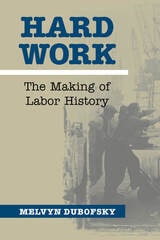
Hard Work
The Making of Labor HistoryMelvyn Dubofsky
University of Illinois Press, 2000
A career-spanning collection of writings by the legendary labor historian
One of American labor history's most prominent scholars, Melvyn Dubofsky curated an accessible style and historical reach that have long marked his work as required reading for students and scholars.
This collection juxtaposes Dubofsky's early writings with scholarship from the 1990s. Selections include work on western working-class radicalism, U.S. labor history in transnational and comparative settings, and the impact of technological change on American worker’s movements. Throughout, the writings provide an invaluable eyewitness perspective on the academic and political climate of the 1960s and 1970s while tracing the development of labor history as a discipline.
An exploration of important themes in labor history, Hard Work combines essential scholarship with the story of how past and present interact in the work of historians.
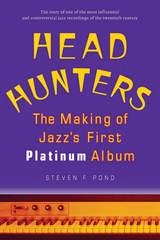
Head Hunters
The Making of Jazz's First Platinum AlbumSteven F. Pond
University of Michigan Press, 2010
---Jazzwise Magazine
---Travis Jackson, Associate Professor of American Music, University of Chicago
Health and Work Productivity
Making the Business Case for Quality Health CareEdited by Ronald C. Kessler and Paul E. Stang
University of Chicago Press, 2006
Health and Work Productivity presents state-of-the-art health and productivity research that suggests interventions aimed at prevention, early detection, and best-practice treatment of workers along with an informed allocation strategy can produce significant cost-benefits for employers. Contributors cover all the major aspects of this new area of research: approaches to studying the effects of health on productivity, ways for employers to estimate the costs of productivity loss, concrete suggestions for future research developments in the area, and the implications of this research for public policy.
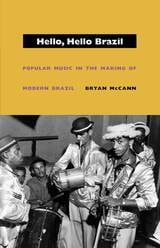
Hello, Hello Brazil
Popular Music in the Making of Modern BrazilBryan McCann
Duke University Press, 2004
McCann explores the links between the growth of the culture industry, rapid industrialization, and the rise and fall of Getúlio Vargas’s Estado Novo dictatorship. He argues that these processes opened a window of opportunity for the creation of enduring cultural patterns and demonstrates that the understandings of popular music cemented in the mid–twentieth century continue to structure Brazilian cultural life in the early twenty-first.
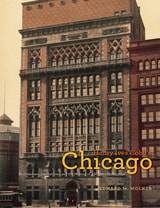
Henry Ives Cobb's Chicago
Architecture, Institutions, and the Making of a Modern MetropolisEdward W. Wolner
University of Chicago Press, 2011
When championing the commercial buildings and homes that made the Windy City famous, one can’t help but mention the brilliant names of their architects—Daniel Burnham, Louis Sullivan, and Frank Lloyd Wright, among others. But few people are aware of Henry Ives Cobb (1859–1931), the man responsible for an extraordinarily rich chapter in the city’s turn-of-the-century building boom, and fewer still realize Cobb’s lasting importance as a designer of the private and public institutions that continue to enrich Chicago’s exceptional architectural heritage.
Henry Ives Cobb’s Chicago is the first book about this distinguished architect and the magnificent buildings he created, including the Newberry Library, the Chicago Historical Society, the Chicago Athletic Association, the Fisheries Building for the 1893 World’s Fair, and the Chicago Federal Building. Cobb filled a huge institutional void with his inventive Romanesque and Gothic buildings—something that the other architect-giants, occupied largely with residential and commercial work, did not do. Edward W. Wolner argues that these constructions and the enterprises they housed—including the first buildings and master plan for the University of Chicago—signaled that the city had come of age, that its leaders were finally pursuing the highest ambitions in the realms of culture and intellect.
Assembling a cast of colorful characters from a free-wheeling age gone by, and including over 140 images of Cobb’s most creative buildings, Henry Ives Cobb’s Chicago is a rare achievement: a dynamic portrait of an architect whose institutional designs decisively changed the city’s identity during its most critical phase of development.
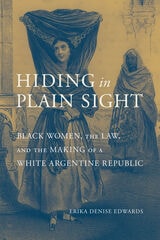
Hiding in Plain Sight
Black Women, the Law, and the Making of a White Argentine RepublicErika Denise Edwards
University of Alabama Press, 2020
WINNER OF THE ASSOCIATION OF BLACK WOMEN HISTORIANS 2020 LETITIA WOODS-BROWN AWARD FOR THE BEST BOOK IN AFRICAN AMERICAN WOMEN'S HISTORY
WINNER OF THE WESTERN ASSOCIATION OF WOMEN HISTORIAN'S BARBARA “PENNY” KANNER AWARD
2021 FINALIST FOR THE HARRIET TUBMAN BOOK PRIZE
2020 FINALIST BERSHIRE CONFERENCE OF WOMEN HISTORIANS BOOK PRIZE
Uncovering the Afro-Argentine women behind the myth of a white nation.
Argentina promotes itself as a country of European immigrants. This makes it an exception to other Latin American countries, which embrace a more mixed—African, Indian, European—heritage. Hiding in Plain Sight: Black Women, the Law, and the Making of a White Argentine Republic traces the origins of what some white Argentines mischaracterize as a “black disappearance” by delving into the intimate lives of black women and explaining how they contributed to the making of a “white” Argentina. Erika Denise Edwards has produced the first comprehensive study in English of the history of African descendants outside of Buenos Aires in the late colonial and early republican periods, with a focus on how these women sought whiteness to better their lives and that of their children.
Edwards argues that attempts by black women to escape the stigma of blackness by recategorizing themselves and their descendants as white began as early as the late eighteenth century, challenging scholars who assert that the black population drastically declined at the end of the nineteenth century because of the whitening or modernization process. She further contends that in Córdoba, Argentina, women of African descent (such as wives, mothers, daughters, and concubines) were instrumental in shaping their own racial reclassifications and destinies.
This volume makes use of a wealth of sources to relate these women’s choices. The sources consulted include city censuses and notarial and probate records that deal with free and enslaved African descendants; criminal, ecclesiastical, and civil court cases; marriages and baptisms records and newsletters. These varied sources provide information about the day-to-day activities of cordobés society and how women of African descent lived, formed relationships, thrived, and partook in the transformation of racial identities in Argentina.
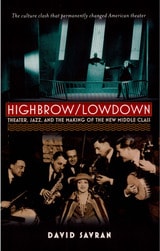
Highbrow/Lowdown
Theater, Jazz, and the Making of the New Middle ClassDavid Savran
University of Michigan Press, 2010
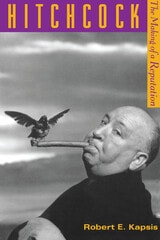
Hitchcock
The Making of a ReputationRobert E. Kapsis
University of Chicago Press, 1992
Through a close examination of Hitchcock's personal papers, scripts, production notes, publicity files, correspondence, and hundreds of British and American reviews, Robert Kapsis here traces Hitchcock's changing critical fortunes. Vertigo, for instance, was considered a flawed film when first released; today it is viewed by many as the signal achievement of a great director. According to Kapsis, this dramatic change occurred because the making of the Hitchcock legend was not solely dependent on the quality of his films. Rather, his elevation to artist was caused by a successful blending of self-promotion, sponsorship by prominent members of the film community, and, most important, changes in critical theory which for the first time allowed for the idea of director as auteur.
Kapsis also examines the careers of several other filmmakers who, like Hitchcock, have managed to cross the line that separates craftsman from artist, and shows how Hitchcock's legacy and reputation shed light on the way contemporary reputations are made. In a chapter about Brian De Palma, the most reknowned thriller director since Hitchcock, Kapsis explores how Hitchcock's legacy has affected contemporary work in—and criticism of—the thriller genre.
Filled with fascinating anecdotes and intriguing excerpts, and augmented by interviews with Hitchcock's associates, this thoroughly documented and engagingly written book will appeal to scholars and film enthusiasts alike.
"Required reading for Hitchcock scholars...scrupulously researched, invaluable material for those who continue to ask: what made the master tick?"—Anthony Perkins
Hog Butchers, Beggars, and Busboys
Poverty, Labor, and the Making of Modern American PoetryJohn Marsh
University of Michigan Press, 2011
"Impressive—Marsh successfully rewrites the founding moment of American Modernist poetry."
---Mark Van Wienen, Northern Illinois University
"Cogently argued, instructive, and sensitive, Marsh’s revisionist reading opens new insights that will elicit lively comment and critical response."
---Douglas Wixson, University of Missouri–Rolla
Between 1909 and 1922, the genre of poetry was remade. Literary scholars have long debated why modern American poetry emerged when and how it did. While earlier poetry had rhymed, scanned, and dealt with conventional subjects such as love and nature, modern poetry looked and sounded very different and considered new areas of experience. Hog Butchers, Beggars, and Busboys: Poverty, Labor, and the Making of Modern American Poetry argues that this change was partially the result of modern poets writing into their verse what other poetry had suppressed: the gritty realities of modern life, including the problems of the poor and working class.
A closer look at the early works of the 20th century's best known poets (William Carlos Williams, T. S. Eliot, Edna St. Vincent Millay, Claude McKay, Langston Hughes, and Carl Sandburg) reveals the long-neglected role the labor problem—including sweatshops, strikes, unemployment, woman and child labor, and immigration---played in the formation of canonical modern American poetry. A revisionary history of literary modernism and exploration into how poets uniquely made the labor problem their own, this book will appeal to modernists in the fields of American and British literature as well as scholars in American studies and the growing field of working-class literature.
Hollywood Renegade
Elaine May, Mikey and Nicky, and the Making of a MasterpieceTodd Berliner
University of Texas Press, 2026
Examines the career and unorthodox filmmaking practices of director Elaine May, whose Mikey and Nicky, over a span of fifty years, transformed from a fiasco to a masterpiece of seventies cinema.
Elaine May’s Mikey and Nicky stands out in the history of Hollywood. After a troubled production, massive cost overruns, and lawsuits between May and the studio, the film received scathing reviews and failed at the box office. But the very qualities that initially alienated viewers and reviewers led later generations to regard the film as an overlooked masterpiece.
Written and directed by the period’s only female New Hollywood filmmaker, Mikey and Nicky has not received the attention given to other unconventional films of the 1970s. But May worked for years to give each moment of the movie multiple areas of interest. She made every character, even peripheral ones, nuanced and memorable. And she designed every scene, even minor ones, as a performance event. Her lead actors, Peter Falk and John Cassavetes, thrived under her unorthodox directing style, earning acclaim even from reviewers who hated the movie. Decades in the making—years of scriptwriting, a shoot that spanned ten months, and three years spent editing—Mikey and Nicky shows us what Hollywood cinema can accomplish when talented filmmakers challenge Hollywood’s limited notion of professionalism, rejecting the harsh time pressures of commercial filmmaking in order to get the most out of every scene.
Horizontal Comparison
Africa, the Caribbean, and the Making of Black World LiteratureCajetan Iheka
University of Chicago Press, 2026
By analyzing African and Caribbean texts on their own terms, Horizontal Comparison articulates new forms of transoceanic solidarity.
The fields of comparative literature and Black Atlantic studies have an Africa problem: despite sustained attempts to decenter Western paradigms, they still privilege the United States and Europe as the primary loci of reference. So argues Cajetan Iheka in Horizontal Comparison, which aims to redirect both fields toward a non-hierarchical, South-South orientation focusing on the links between Africa and the Caribbean.
By analyzing the literary work and real-life trajectories of writers such as Peter Abrahams, Chimamanda Adichie, Maryse Condé, Buchi Emecheta, Jamaica Kincaid, Claude McKay, Dinaw Mengestu, Ferdinand Oyono, Taiye Selasi, and Sam Selvon, Iheka draws our attention to the ways in which African and Caribbean texts inform and mutually constitute each other, bypassing the usual comparisons to Western literary canons. The book challenges not only Western cultural hegemony in the study of global Black writing but also the very methodologies of comparative literary studies, offering fresh insights into reading, trauma, character, and the “worlding” of literature.

How Color Became a Technology
The Making of Chromatic CapitalismLida Zeitlin-Wu
Duke University Press, 2027
How Did Poetry Survive?
The Making of Modern American VerseJohn Timberman Newcomb
University of Illinois Press, 2013
This book traces the emergence of modern American poetry at the turn of the nineteenth century. With a particular focus on four "little magazines"--Poetry, The Masses, Others, and The Seven Arts--John Timberman Newcomb shows how each advanced ambitious agendas combining urban subjects, stylistic experimentation, and progressive social ideals. While subsequent literary history has favored the poets whose work made them distinct--individuals singled out usually on the basis of a novel technique--Newcomb provides a denser, richer view of the history that hundreds of poets made.
How Green Became Good
Urbanized Nature and the Making of Cities and CitizensHillary Angelo
University of Chicago Press, 2021