Results by title
1488 books match the query 'Media Studies' and 48 start with h
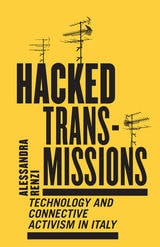
Hacked Transmissions
Technology and Connective Activism in ItalyAlessandra Renzi
University of Minnesota Press, 2020
Mapping the transformation of media activism from the seventies to the present day
Hacked Transmissions is a pioneering exploration of how social movements change across cycles of struggle and alongside technology. Weaving a rich fabric of local and international social movements and media practices, politicized hacking, and independent cultural production, it takes as its entry point a multiyear ethnography of Telestreet, a network of pirate television channels in Italy that combined emerging technologies with the medium of television to challenge the media monopoly of tycoon-turned-prime minister Silvio Berlusconi.
Street televisions in Italy represented a unique experiment in combining old and new media to forge grassroots alliances, fight social isolation, and build more resilient communities. Alessandra Renzi digs for the roots of Telestreet in movements of the 1970s and the global activism of the 1990s to trace its transformations in the present work of one of the network’s more active nodes, insu^tv, in Naples. In so doing, she offers a comprehensive account of transnational media activism, with particular attention to the relations among groups and projects, their modes of social reproduction, the contexts giving rise to them, and the technology they adopt—from zines and radios to social media. Hacked Transmissions is also a study in method, providing examples of co-research between activist researchers and social movements, and a theoretical framework that captures the complexities of grassroots politics and the agency of technology.
Providing a rare and timely glimpse into a key activist/media project of the twenty-first century, Hacked Transmissions marks a vital contribution to debates in a range of fields, including media and communication studies, anthropology, science and technology studies, social movements studies, sociology, and cultural theory.
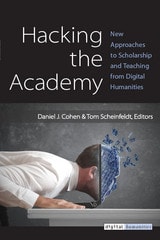
Hacking the Academy
New Approaches to Scholarship and Teaching from Digital HumanitiesDaniel J. Cohen and Tom Scheinfeldt, Editors
University of Michigan Press, 2013
On May 21, 2010, Daniel J. Cohen and Tom Scheinfeldt posted the following provocative questions online:
“Can an algorithm edit a journal? Can a library exist without books? Can students build and manage their own learning management platforms? Can a conference be held without a program? Can Twitter replace a scholarly society?”
As recently as the mid-2000s, questions like these would have been unthinkable. But today serious scholars are asking whether the institutions of the academy as they have existed for decades, even centuries, aren’t becoming obsolete. Every aspect of scholarly infrastructure is being questioned, and even more importantly, being hacked. Sympathetic scholars of traditionally disparate disciplines are canceling their association memberships and building their own networks on Facebook and Twitter. Journals are being compiled automatically from self-published blog posts. Newly minted PhDs are forgoing the tenure track for alternative academic careers that blur the lines between research, teaching, and service. Graduate students are looking beyond the categories of the traditional CV and building expansive professional identities and popular followings through social media. Educational technologists are “punking” established technology vendors by rolling out their own open source infrastructure.
Here, in Hacking the Academy, Daniel J. Cohen and Tom Scheinfeldt have gathered a sampling of the answers to their initial questions from scores of engaged academics who care deeply about higher education. These are the responses from a wide array of scholars, presenting their thoughts and approaches with a vibrant intensity, as they explore and contribute to ongoing efforts to rebuild scholarly infrastructure for a new millennium.
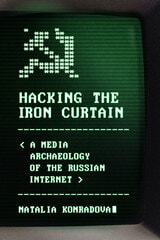
Hacking the Iron Curtain
A Media Archaeology of the Russian InternetNatalia Konradova
University of Wisconsin Press, 2026
Media archaeologist Natalia Konradova examines the history of the internet in Russia and its predecessor state, cutting through layers of technological history and dusting off conceptual artifacts of the past. Inspired by the fundamental question of how Soviets imagined future technologies, she investigates experiments with telepathy alongside the (then equally improbable) dream of a global, digitally connected computer network. Since the story of the Russian internet is inextricably wound up with Soviet society and the history of the Cold War, Hacking the Iron Curtain is as much a cultural and political history as it is a technological one—a history that illustrates how collective dreams can challenge geopolitical ambitions and inspire world-changing technologies.
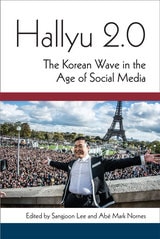
Hallyu 2.0
The Korean Wave in the Age of Social MediaSangjoon Lee and Abé Mark Nornes, editors
University of Michigan Press, 2015
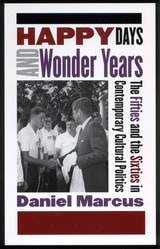
Happy Days and Wonder Years
The Fifties and the Sixties in Contemporary Cultural PoliticsMarcus, Daniel
Rutgers University Press, 2004
From Ronald Reagan's image as a Fifties Cold Warrior to Bill Clinton's fandom for Elvis Presley and John F. Kennedy, politicians have invoked the Fifties and the Sixties to connect to their public. Marcus shows how films, television, music, and memoirs have responded to the political nostalgia of today, and why our entertainment remains immersed in reruns, revivals, and references to earlier times. This book offers a new understanding of how politics and popular culture have influenced our notions of the past, and how events from long ago continue to shape our understanding of the present day.

Hard-Core Romance
"Fifty Shades of Grey," Best-Sellers, and SocietyEva Illouz
University of Chicago Press, 2014
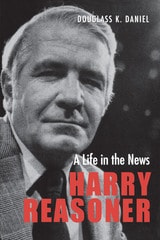
Harry Reasoner
A Life in the NewsBy Douglass K. Daniel
University of Texas Press, 2007
Harry Reasoner was one of the most trusted and well-liked journalists of the golden age of network television news. Whether anchoring the evening newscast on CBS in the 1960s or on ABC in the 1970s, providing in-depth reporting on 60 Minutes, or hosting numerous special programs covering civil rights struggles, the Vietnam War, and Watergate, Reasoner had "that almost mystical quality it seems to take for good television reporting, exuding this atmosphere of truth and believability," in the words of Walter Cronkite. Yet his reassuring manner and urbane, often witty, on-air persona masked a man who was far more complex and contradictory. Though gifted with the intelligence and drive to rise to the top of his profession, Reasoner was regarded by many colleagues as lazy and self-indulgent, a man who never achieved his full potential despite his many accomplishments.
Harry Reasoner: A Life in the News covers the entire sweep of this enigmatic journalist's life and career. Douglass K. Daniel opens with Reasoner's Depression-era Midwestern upbringing and follows him through his early work in newspapers and radio before he joined CBS in 1956. Focusing on Reasoner's thirty-five-year tenure in television news, Daniel presents fascinating, behind-the-scenes accounts of Reasoner's key role in founding the top-rated newsmagazine 60 Minutes. He also explores Reasoner's highly publicized move to ABC in 1970, where he anchored the nightly newscast, first with Howard K. Smith and later with Barbara Walters—a disastrous pairing from which Reasoner's career never fully recovered.
Based on scores of interviews and unpublished letters, memos, and other primary sources, this first biography of the man once rated second in credibility only to Walter Cronkite illuminates an entire era in broadcast journalism, as well as many of the unique personalities, from Andy Rooney to Mike Wallace, who made that era distinctive.

Haunted Life
Visual Culture and Black ModernityMarriott, David
Rutgers University Press, 2007
Drawing on a range of comparative readings by writers, theorists, and filmmakers, including John Edgar Wideman, Frantz Fanon, Richard Wright, Issac Julien, Alain Locke, and Sidney Poitier, Haunted Life is a bold and original exploration of the legacies of black visual culture and the political, deeply sexualized violence that lies buried beneath it.
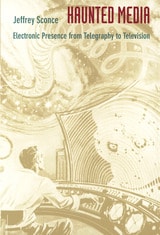
Haunted Media
Electronic Presence from Telegraphy to TelevisionJeffrey Sconce
Duke University Press, 2000
Sconce focuses on five important cultural moments in the history of telecommunication from the mid-nineteenth century to the present: the advent of telegraphy; the arrival of wireless communication; radio’s transformation into network broadcasting; the introduction of television; and contemporary debates over computers, cyberspace, and virtual reality. In the process of examining the trajectory of these technological innovations, he discusses topics such as the rise of spiritualism as a utopian response to the electronic powers presented by telegraphy and how radio, in the twentieth century, came to be regarded as a way of connecting to a more atomized vision of the afterlife. Sconce also considers how an early preoccupation with extraterrestrial radio communications tranformed during the network era into more unsettling fantasies of mediated annihilation, culminating with Orson Welles’s legendary broadcast of War of the Worlds. Likewise, in his exploration of the early years of television, Sconce describes how programs such as The Twilight Zone and The Outer Limits continued to feed the fantastical and increasingly paranoid public imagination of electronic media. Finally, Sconce discusses the rise of postmodern media criticism as yet another occult fiction of electronic presence, a mythology that continues to dominate contemporary debates over television, cyberspace, virtual reality, and the Internet.
As an engaging cultural history of telecommunications, Haunted Media will interest a wide range of readers including students and scholars of media, history, American studies, cultural studies, and literary and social theory.
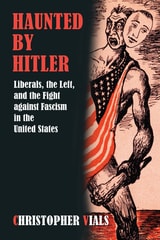
Haunted by Hitler
Liberals, the Left, and the Fight against Fascism in the United StatesChristopher Vials
University of Massachusetts Press, 2014
Although fascism is typically associated with Europe, the threat of fascism in the United States haunted the imaginations of activists, writers, and artists, spurring them to create a rich, elaborate body of cultural and political work. Traversing the Popular Front of the 1930s, the struggle against McCarthyism in the 1950s, the Black Power movement of the 1960s, and the AIDS activism of the 1980s, Haunted by Hitler highlights the value of “antifascist” cultural politics, showing how it helped to frame the national discourse.
Christopher Vials examines the ways in which anxieties about fascism in the United States have been expressed in the public sphere, through American television shows, Off-Broadway theater, party newspapers, bestselling works of history, journalism, popular sociology, political theory, and other media. He argues that twentieth-century liberals and leftists were more deeply unsettled by the problem of fascism than those at the center or the right and that they tirelessly and often successfully worked to counter America's fascist equivalents.
Hear #MeToo in India
News, Social Media, and Anti-Rape and Sexual Harassment ActivismPallavi Guha
Rutgers University Press, 2021
Hedged
How Private Investment Funds Helped Destroy American Newspapers and Undermine DemocracyMargot Susca
University of Illinois Press, 2024
The ultrawealthy largely own and guide the newspaper system in the United States. Through entities like hedge funds and private equity firms, this investor class continues to dismantle the one institution meant to give voice to average citizens in a democracy.
Margot Susca reveals the little-known history of how private investment took over the newspaper industry. Drawing on a political economy of media, Susca’s analysis uses in-depth interviews and documentary evidence to examine issues surrounding ownership and power. Susca also traces the scorched-earth policies of layoffs, debt, cash-outs, and wholesale newspaper closings left behind by private investors and the effects of the devastation on the future of news and information. Throughout, Susca reveals an industry rocked less by external forces like lost ad revenue and more by ownership and management obsessed with profit and beholden to private fund interests that feel no responsibility toward journalism or the public it is meant to serve.
Hegemonic Mimicry
Korean Popular Culture of the Twenty-First CenturyKyung Hyun Kim
Duke University Press, 2021

Hell of a Way to Make a Living
The Unvarnished Truth about What It's Like to Cover Major League BaseballPaul Hagen
Temple University Press, 2027
For 50 years, Paul Hagen lived the dream of being a beat writer covering the Dodgers, Rangers, and Phillies. But, as Hell of a Way to Make a Living demonstrates, the enviable job isn’t always as glamorous as it seems.
This insider’s account gives readers an all-access pass to the press box, clubhouse, and dugout to discover what the experience is really about. It’s both a clear-eyed dissection of the daily grind and a breezy, occasionally gossipy, account of being to paid to watch baseball games.
Hagen features entertaining and insightful anecdotes such as confirming to manager Terry Francona that the Phillies were going to fire him two weeks before it happened and building trust with players from the last man on the roster to future Hall of Famers like Mike Schmidt, Ferguson Jenkins, Billy Wagner, and Scott Rolen. He also addresses the changing media landscape, what’s on the record and off, the ethics of reporting on a team fairly, and how sports writing has changed over the decades.
Covering all the bases, Hell of a Way to Make a Living is an ode to the importance of conscientious beat writing and building trust with readers.
Her Stories
Daytime Soap Opera and US Television HistoryElana Levine
Duke University Press, 2020
Hero Me Not
The Containment of the Most Powerful Black, Female SuperheroChesya Burke
Rutgers University Press, 2023
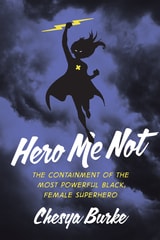
First introduced in the pages of X-Men, Storm is probably the most recognized Black female superhero. She is also one of the most powerful characters in the Marvel Universe, with abilities that allow her to control the weather itself. Yet that power is almost always deployed in the service of White characters, and Storm is rarely treated as an authority figure.
Hero Me Not offers an in-depth look at this fascinating yet often frustrating character through all her manifestations in comics, animation, and films. Chesya Burke examines the coding of Storm as racially “exotic,” an African woman who nonetheless has bright white hair and blue eyes and was portrayed onscreen by biracial actresses Halle Berry and Alexandra Shipp. She shows how Storm, created by White writers and artists, was an amalgam of various Black stereotypes, from the Mammy and the Jezebel to the Magical Negro, resulting in a new stereotype she terms the Negro Spiritual Woman.
With chapters focusing on the history, transmedia representation, and racial politics of Storm, Burke offers a very personal account of what it means to be a Black female comics fan searching popular culture for positive images of powerful women who look like you.
Hidden Hitchcock
D. A. Miller
University of Chicago Press, 2016
Focusing on three films—Strangers on a Train, Rope, and The Wrong Man—Miller shows how Hitchcock anticipates, even demands a “Too-Close Viewer.” Dwelling within us all and vigilant even when everything appears to be in good order, this Too-Close Viewer attempts to see more than the director points out, to expand the space of the film and the duration of the viewing experience. And, thanks to Hidden Hitchcock, that obsessive attention is rewarded. In Hitchcock’s visual puns, his so-called continuity errors, and his hidden appearances (not to be confused with his cameos), Miller finds wellsprings of enigma.
Hidden Hitchcock is a revelatory work that not only shows how little we know this best known of filmmakers, but also how near such too-close viewing comes to cinephilic madness.

Hidden in Plain Sight
An Archaeology of Magic and the CinemaWilliamson, Colin
Rutgers University Press, 2015
To answer these questions, Colin Williamson situates film within a long tradition of magical practices that combine art and science, involve deception and discovery, and evoke two forms of wonder—both awe at the illusion displayed and curiosity about how it was performed. He thus considers how, even as they mystify audiences, cinematic illusions also inspire them to learn more about the technologies and techniques behind moving images. Tracing the overlaps between the worlds of magic and filmmaking, Hidden in Plain Sight examines how professional illusionists and their tricks have been represented onscreen, while also considering stage magicians who have stepped behind the camera, from Georges Méliès to Ricky Jay.
Williamson offers an insightful, wide-ranging investigation of how the cinema has functioned as a “device of wonder” for more than a century, while also exploring how several key filmmakers, from Orson Welles to Christopher Nolan and Martin Scorsese, employ the rhetoric of magic. Examining pre-cinematic visual culture, animation, nonfiction film, and the digital trickery of today’s CGI spectacles, Hidden in Plain Sight provides an eye-opening look at the powerful ways that magic has shaped our modes of perception and our experiences of the cinema.
Hollywood Diplomacy
Film Regulation, Foreign Relations, and East Asian RepresentationsHye Seung Chung
Rutgers University Press, 2020
Hollywood Unions
Kate Fortmueller
Rutgers University Press, 2025
Hollywood on Location
An Industry HistoryGleich, Joshua
Rutgers University Press, 2019
Hollywood's Cold War
Tony Shaw
University of Massachusetts Press, 2007
At a moment when American film reflects a deepening preoccupation with the Bush administration's War on Terror, this authoritative and timely book offers the first comprehensive account of Hollywood's propaganda role during the defining ideological conflict of the twentieth century: the Cold War. In an analysis of films dating from America's first Red Scare in the wake of the 1917 Bolshevik Revolution to the collapse of the Berlin Wall in 1989, Tony Shaw examines the complex relationship between filmmakers, censors, politicians, and government propagandists.
Movies, Shaw demonstrates, were at the center of the Cold War's battle for hearts and minds. Hollywood's comedies, love stories, musicals, thrillers, documentaries, and science fiction shockers played a critical dual role: on the one hand teaching millions of Americans why communism represented the greatest threat their country had ever faced, and on the other selling America's liberal-capitalist ideas around the globe. Drawing on declassified government documents, studio archives, and filmmakers' private papers, Shaw reveals the different ways in which cinematic propaganda was produced, disseminated, and received by audiences during the Cold War. In the process, he addresses subjects as diverse as women's fashions, McCarthyism, drug smuggling, Christianity, and American cultural diplomacy in India. Anyone seeking to understand wartime propaganda today will find striking contemporary resonance in his conclusions about Hollywood's versatility and power.
Hollywood's Hawaii
Race, Nation, and WarDelia Malia Caparoso Konzett
Rutgers University Press, 2017
Delia Malia Caparoso Konzett highlights films that mirror the cultural and political climate of the country over more than a century—from the era of U.S. imperialism on through Jim Crow racial segregation, the attack on Pearl Harbor and WWII, the civil rights movement, the contemporary articulation of consumer and leisure culture, as well as the buildup of the modern military industrial complex. Focusing on important cultural questions pertaining to race, nationhood, and war, Konzett offers a unique view of Hollywood film history produced about the national periphery for mainland U.S. audiences. Hollywood’s Hawaii presents a history of cinema that examines Hawaii and the Pacific and its representations in film in the context of colonialism, war, Orientalism, occupation, military buildup, and entertainment.
Hollywood’s Africa after 1994
MaryEllen Higgins
Ohio University Press, 2012
Hollywood’s Africa after 1994 investigates Hollywood’s colonial film legacy in the postapartheid era, and contemplates what has changed in the West’s representations of Africa. How do we read twenty-first-century projections of human rights issues—child soldiers, genocide, the exploitation of the poor by multinational corporations, dictatorial rule, truth and reconciliation—within the contexts of celebrity humanitarianism, “new” military humanitarianism, and Western support for regime change in Africa and beyond? A number of films after 1994, such as Black Hawk Down, Hotel Rwanda, Blood Diamond, The Last King of Scotland, The Constant Gardener, Shake Hands with the Devil, Tears of the Sun, and District 9, construct explicit and implicit arguments about the effects of Western intervention in Africa. Do the emphases on human rights in the films offer a poignant expression of our shared humanity? Do they echo the colonial tropes of former “civilizing missions?” Or do human rights violations operate as yet another mine of sensational images for Hollywood’s spectacular storytelling?
The volume provides analyses by academics and activists in the fields of African studies, English, film and media studies, international relations, and sociology across continents. This thoughtful and highly engaging book is a valuable resource for those who seek new and varied approaches to films about Africa.
Contributors
Harry Garuba and Natasha Himmelman
Margaret R. Higonnet, with Ethel R. Higgonet
Joyce B. Ashuntantang
Kenneth W. Harrow
Christopher Odhiambo
Ricardo Guthrie
Clifford T. Manlove
Earl Conteh-Morgan
Bennetta Jules-Rosette, J. R. Osborn, and Lea Marie Ruiz-Ade
Christopher Garland
Kimberly Nichele Brown
Jane Bryce
Iyunolu Osagie
Dayna Oscherwitz

Home Team Away
Watching European Football in Urban ChinaYuan Gong
University of Michigan Press, 2026
Home Team Away calls for a rethinking of sport fandom that is divorced from an attachment to location. As the first comprehensive account of the European football fandom in China, this book explores how the Chinese middle class subjectivity is formed through the cross-cultural, digital consumption of the Big Five leagues. Yuan Gong captures the embodied experiences of fans and fan clubs, fan discourses and activities unfolding on digital platforms on Weibo, Weixin, and Hupu, combining fieldwork in Shanghai and virtual ethnography. Gong argues that Chinese fans’ decisions to follow and engage with European football result from their material conditions, ideological contestation, and technology appropriation as a new demographic bloc arising during China’s transition to authoritarian digital capitalism. By engaging with their home teams away, the Chinese middle class fans perform as citizens with a global vision despite the resurgence of the nationalist and anti-Western sentiments.
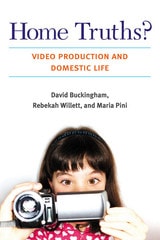
Home Truths?
Video Production and Domestic LifeDavid Buckingham, Rebekah Willett, and Maria Pini
University of Michigan Press, 2011
Over the past decade, the video camera has become a commonplace household technology. With falling prices on compact and easy-to-use cameras, as well as mobile phones and digital still cameras with video recording capabilities, access to moving image production technology is becoming virtually universal. Home Truths? represents one of the few academic research studies exploring this everyday, popular use of video production technology, looking particularly at how families use and engage with the technology and how it fits into the routines of everyday life.
The authors draw on interviews, observations, and the participants' videos themselves, seeking to paint a comprehensive picture of the role of video making in their everyday lives. While readers gain a sense of the individual characters involved in the project and the complexities and diversities of their lives, the analysis also raises a range of broader issues about the nature of learning and creativity, subjectivity and representation, and the "domestication" of technology---issues that are of interest to many in the fields of sociology and media/cultural studies.
David Buckingham is Professor of Education at the Institute of Education, University of London, and Director of the Institute's Centre for the Study of Children, Youth and Media.
Rebekah Willett is Lecturer at the Institute of Education, University of London, where she teaches in Media, Culture and Communication.
Maria Pini previously worked as Lecturer in Media and Communications at Goldsmiths College, London University, and is now a researcher on the Camcorder Cultures project at the Institute of Education.
Cover art: Young videomaker ©iStockphoto.com/ kaisersosa67
Technologies of the Imagination: New Media in Everyday Life
digitalculturebooks is an imprint of the University of Michigan Press and the Scholarly Publishing Office of the University of Michigan Library dedicated to publishing innovative and accessible work exploring new media and their impact on society, culture, and scholarly communication. Visit the website at www.digitalculture.org.
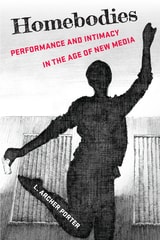
Homebodies
Performance and Intimacy in the Age of New MediaL. Archer Porter
University of Michigan Press, 2026
Homebodies: Performance and Intimacy in the Age of New Media sheds light on a fascinating yet often overlooked phenomenon: how ordinary people transform their private lives into captivating performances for the digital stage. Focusing on home dance videos shared on Instagram from 2010 to 2020, the book explores the delicate art of "intimaesthetics"—the aestheticization of intimacy through the interplay of body, space, and media—and the paradox of the homebody. These seemingly spontaneous performances reveal how users craft images of closeness and authenticity, drawing audiences into a curated version of their domestic lives. Yet, Porter argues, these intimate portrayals exist within a larger system of platform control, algorithmic surveillance, and the commodification of personal expression.
Porter utilizes hand-drawn illustrations in place of screenshots, which reflects their commitment to critiquing the exploitative dynamics of digital visibility while respecting the personal nature of the media studied. By examining the intersection of personal agency, algorithmic control, and the commodification of authenticity, Homebodies provides a nuanced understanding of how technology redefines intimacy, identity, and creativity in the twenty-first century.

Hoodlum Movies
Seriality and the Outlaw Biker Film Cycle, 1966-1972Stanfield, Peter
Rutgers University Press, 2018
Horn, or The Counterside of Media
Henning Schmidgen
Duke University Press, 2022
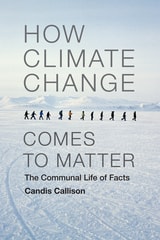
How Climate Change Comes to Matter
The Communal Life of FactsCandis Callison
Duke University Press, 2014
The disparate efforts of these groups illuminate the challenge of maintaining fidelity to scientific facts while transforming them into ethical and moral calls to action. Callison investigates the different vernaculars through which we understand and articulate our worlds, as well as the nuanced and pluralistic understandings of climate change evident in different forms of advocacy. As she demonstrates, climate change offers an opportunity to look deeply at how issues and problems that begin in a scientific context come to matter to wide publics, and to rethink emerging interactions among different kinds of knowledge and experience, evolving media landscapes, and claims to authority and expertise.

How Color Became a Technology
The Making of Chromatic CapitalismLida Zeitlin-Wu
Duke University Press, 2027

How Comics Travel
Publication, Translation, Radical LiteraciesKatherine Kelp-Stebbins
The Ohio State University Press, 2022
Honorable Mention, 2023 CSS Charles Hatfield Book Prize
In How Comics Travel: Publication, Translation, Radical Literacies, Katherine Kelp-Stebbins challenges the clichéd understanding of comics as a “universal” language, circulating without regard for cultures or borders. Instead, she develops a new methodology of reading for difference. Kelp-Stebbins’s anticolonial, feminist, and antiracist analytical framework engages with comics as sites of struggle over representation in a diverse world. Through comparative case studies of Metro, Tintin, Persepolis, and more, she explores the ways in which graphic narratives locate and dislocate readers in every phase of a transnational comic’s life cycle according to distinct visual, linguistic, and print cultures. How Comics Travel disengages from the constrictive pressures of nationalism and imperialism, both in comics studies and world literature studies more broadly, to offer a new vision of how comics depict and enact the world as a transcultural space.
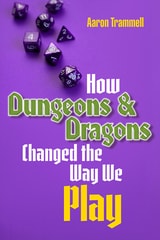
How Dungeons & Dragons Changed the Way We Play
Aaron Trammell
Duke University Press, 2026
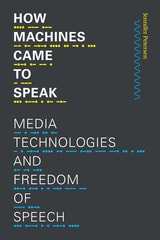
How Machines Came to Speak
Media Technologies and Freedom of SpeechJennifer Petersen
Duke University Press, 2022
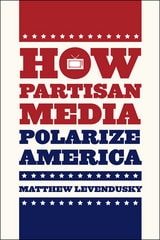
How Partisan Media Polarize America
Matthew Levendusky
University of Chicago Press, 2013
In How Partisan Media Polarize America, Matthew Levendusky confirms—but also qualifies—both of these claims. Drawing on experiments and survey data, he shows that Americans who watch partisan programming do become more certain of their beliefs and less willing to weigh the merits of opposing views or to compromise. And while only a small segment of the American population watches partisan media programs, those who do tend to be more politically engaged, and their effects on national politics are therefore far-reaching.
In a time when politics seem doomed to partisan discord, How Partisan Media Polarize America offers a much-needed clarification of the role partisan media might play.

How Slavoj Became Zizek
The Digital Making of a Public IntellectualEliran Bar-El
University of Chicago Press, 2025
This revised edition corrects several erroneous and insufficient references in the first edition of this book.
Slovenian philosopher bad boy Slavoj Žižek is one of the most famous intellectuals of our time, publishing at a breakneck speed and lecturing around the world. With his unmistakable speaking style and set of mannerisms that have made him ripe material for internet humor and meme culture, he is recognizable to a wide spectrum of fans and detractors. But how did an intellectual from a small Eastern European country come to such popular notoriety? In How Slavoj Became Žižek, sociologist Eliran Bar-El plumbs the emergence, popularization, and development of the phenomenon called “Žižek.”
Beginning with Žižek’s early years as a thinker and political figure in Slovenian civil society, Bar-El traces Žižek’s rise from Marxist philosopher to political candidate to eventual intellectual celebrity, as Žižek perfected his unique performative style and a rhetorical arsenal of “Hegelacanese.” Following 9/11, Žižek’s career as a global op-ed writer and TV commentator married his rhetoric with global events such as the war on terror, the financial crisis of 2008, and the Arab Spring of 2011. Yet, at the same time, this mainstream popularity, as well as a series of politically incorrect views, almost entirely estranged the Slovenian from the normal workings of academia. Ultimately, this account shows how Žižek has harnessed the power of the digital era in his own self-fashioning as a public intellectual.
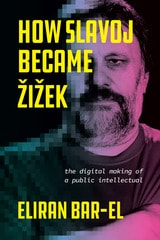
How Slavoj Became Žižek
The Digital Making of a Public IntellectualEliran Bar-El
University of Chicago Press, 2023
Slovenian philosopher bad boy Slavoj Žižek is one of the most famous intellectuals of our time, publishing at a breakneck speed and lecturing around the world. With his unmistakable speaking style and set of mannerisms that have made him ripe material for internet humor and meme culture, he is recognizable to a wide spectrum of fans and detractors. But how did an intellectual from a remote Eastern European country come to such popular notoriety? In How Slavoj Became Žižek, sociologist Eliran Bar-El plumbs the emergence, popularization, and development of this phenomenon called “Žižek.”
Beginning with Žižek’s early years as a thinker and political figure in Slovenian civil society, Bar-El traces Žižek’s rise from Marxist philosopher to a political candidate to eventual intellectual celebrity as Žižek perfects his unique performative style and a rhetorical arsenal of “Hegelacanese.” Following 9/11, Žižek’s career as a global op-ed writer and TV commentator married his rhetoric with global events such as the War on Terror, the financial crisis of 2008, and the Arab Spring of 2011. Yet, at the same time, this mainstream popularity, as well as a series of politically incorrect views, almost entirely estranged the Slovenian from the normal workings of academia. Ultimately, this account shows how Žižek harnessed the power of the digital era in his own self-fashioning as a public intellectual.
How We Became Our Data
A Genealogy of the Informational PersonColin Koopman
University of Chicago Press, 2019
In How We Became Our Data, Colin Koopman excavates early moments of our rapidly accelerating data-tracking technologies and their consequences for how we think of and express our selfhood today. Koopman explores the emergence of mass-scale record keeping systems like birth certificates and social security numbers, as well as new data techniques for categorizing personality traits, measuring intelligence, and even racializing subjects. This all culminates in what Koopman calls the “informational person” and the “informational power” we are now subject to. The recent explosion of digital technologies that are turning us into a series of algorithmic data points is shown to have a deeper and more turbulent past than we commonly think. Blending philosophy, history, political theory, and media theory in conversation with thinkers like Michel Foucault, Jürgen Habermas, and Friedrich Kittler, Koopman presents an illuminating perspective on how we have come to think of our personhood—and how we can resist its erosion.
How We Became Sensorimotor
Movement, Measurement, SensationMark Paterson
University of Minnesota Press, 2021
An engrossing history of the century that transformed our knowledge of the body’s inner senses
The years between 1833 and 1945 fundamentally transformed science’s understanding of the body’s inner senses, revolutionizing fields like philosophy, the social sciences, and cognitive science. In How We Became Sensorimotor, Mark Paterson provides a systematic account of this transformative period, while also demonstrating its substantial implications for current explorations into phenomenology, embodied consciousness, the extended mind, and theories of the sensorimotor, the body, and embodiment.
Each chapter of How We Became Sensorimotor takes a particular sense and historicizes its formation by means of recent scientific studies, case studies, or coverage in the media. Ranging among a diverse array of sensations, including balance, fatigue, pain, the “muscle sense,” and what Maurice Merleau-Ponty termed “motricity,” Paterson’s analysis moves outward from the familiar confines of the laboratory to those of the industrial world and even to wild animals and their habitats. He uncovers important stories, such as how forgotten pain-measurement schemes transformed criminology, or how Penfield’s outmoded concepts of the sensory and motor homunculi of the brain still mar psychology textbooks.
Complete with original archival research featuring illustrations and correspondence, How We Became Sensorimotor shows how the shifting and sometimes contested historical background to our understandings of the senses are being extended even today.
How the World Changed Social Media
Daniel Miller, Elisabetta Costa, Nell Haynes, Tom McDonald, Razvan Nicolescu, Jolynna Sinanan, Juliano Spyer, Shriram Venkatraman, and Xinyuan Wang,
University College London, 2016
How to Be an Intellectual in the Age of TV
The Lessons of Gore VidalMarcie Frank
Duke University Press, 2005
Frank highlights the connections between Vidal’s attitudes toward TV, sex, and American politics as they have informed his literary and political writings and screen appearances. She deftly situates his public persona in relation to those of Andy Warhol, Jacqueline Susann, Mary McCarthy, Susan Sontag, and others. By describing Vidal’s shrewd maneuvering between different media, Frank suggests that his career offers a model to aspiring public intellectuals and a refutation to those who argue that electronic media have eviscerated public discourse.
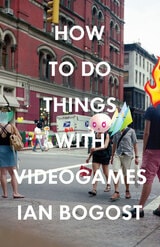
How to Do Things with Videogames
Ian Bogost
University of Minnesota Press, 2011
In recent years, computer games have moved from the margins of popular culture to its center. Reviews of new games and profiles of game designers now regularly appear in the New York Times and the New Yorker, and sales figures for games are reported alongside those of books, music, and movies. They are increasingly used for purposes other than entertainment, yet debates about videogames still fork along one of two paths: accusations of debasement through violence and isolation or defensive paeans to their potential as serious cultural works. In How to Do Things with Videogames, Ian Bogost contends that such generalizations obscure the limitless possibilities offered by the medium’s ability to create complex simulated realities.
Bogost, a leading scholar of videogames and an award-winning game designer, explores the many ways computer games are used today: documenting important historical and cultural events; educating both children and adults; promoting commercial products; and serving as platforms for art, pornography, exercise, relaxation, pranks, and politics. Examining these applications in a series of short, inviting, and provocative essays, he argues that together they make the medium broader, richer, and more relevant to a wider audience.
Bogost concludes that as videogames become ever more enmeshed with contemporary life, the idea of gamers as social identities will become obsolete, giving rise to gaming by the masses. But until games are understood to have valid applications across the cultural spectrum, their true potential will remain unrealized. How to Do Things with Videogames offers a fresh starting point to more fully consider games’ progress today and promise for the future.
How to Have Theory in an Epidemic
Cultural Chronicles of AIDSPaula A. Treichler
Duke University Press, 1999
“AIDS is more than an epidemic disease,” Treichler writes, “it is an epidemic of meanings.” Exploring how such meanings originate, proliferate, and take hold, her essays investigate how certain interpretations of the epidemic dominate while others are obscured. They also suggest ways to understand and choose between overlapping or competing discourses. In her coverage of roughly fifteen years of the AIDS epidemic, Treichler addresses a range of key issues, from biomedical discourse and theories of pathogenesis to the mainstream media’s depictions of the crisis in both developed and developing countries. She also examines representations of women and AIDS, treatment issues, and the role of activism in shaping the politics of the epidemic. Linking the AIDS tragedy to a uniquely broad spectrum of contemporary theory and culture, this collection concludes with an essay on the continued importance of theoretical thought for untangling the sociocultural phenomena of AIDS—and for tackling the disease itself.
With an exhaustive bibliography of critical and theoretical writings on HIV and AIDS, this long-awaited volume will be essential to all those invested in studying the course of AIDS, its devastating medical effects, and its massive impact on contemporary culture. It should become a standard text in university courses dealing with AIDS in biomedicine, sociology, anthropology, gay and lesbian studies, women’s studies, and cultural and media studies.

How to Look Good in a War
Justifying and Challenging State ViolenceBrian Rappert
Pluto Press, 2012
How to Look Good in A War examines the methods used to depict, defend and justify the use of state violence. Many books have shown how 'truth is the first casualty of war' but this is the first to analyse exactly how pro-war narratives are constructed and normalised.
Brian Rappert details the 'upside-down' world of war in which revelation conceals, knowledge fosters uncertainty, and transparency obscures. He looks at government spin during recent wars in Iraq, Afghanistan and Libya where officials manoeuvre between circulating and withholding information.
Examining how organised violence is justified, How to Look Good in A War draws on experiences from recent controversy to consider how ignorance about the operation of war is produced and how concerned individuals and groups can intervene to make a difference.
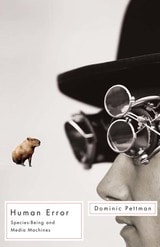
Human Error
Species-Being and Media MachinesDominic Pettman
University of Minnesota Press, 2010
In Human Error, Pettman describes the three sides of the cybernetic triangle—human, animal, and machine—as a rubric for understanding key figures, texts, and sites where our species-being is either reinforced or challenged by our relationship to our own narcissistic technologies. Consequently, species-being has become a matter of specious-being, in which the idea of humanity is not only a case of mistaken identity but indeed the mistake of identity.
Human Error boldly insists on the necessity of relinquishing our anthropomorphism but also on the extreme difficulty of doing so, given how deeply this attitude is bound with all our other most cherished beliefs about forms of life.
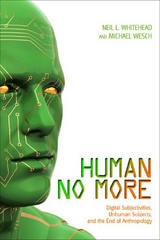
Human No More
Digital Subjectivities, Unhuman Subjects, and the End of AnthropologyNeil L. Whitehead
University Press of Colorado, 2012
Online worlds have recently thrown into question the traditional anthropological conception of place-based ethnography. They break definitions, blur distinctions, and force us to rethink the notion of the "subject." Human No More asks how digital cultures can be integrated and how the ethnography of both the "unhuman" and the "digital" could lead to possible reconfiguring the notion of the "human."
This provocative and groundbreaking work challenges fundamental assumptions about the entire field of anthropology. Cross-disciplinary research from well-respected contributors makes this volume vital to the understanding of contemporary human interaction. It will be of interest not only to anthropologists but also to students and scholars of media, communication, popular culture, identity, and technology.

Hush
Media and Sonic Self-ControlMack Hagood
Duke University Press, 2019
Hybridity
The Cultural Logic Of GlobalizationMarwan Kraidy
Temple University Press, 2005