Results by title
21 books match the query 'Socialization'

Archiving Mexican Masculinities in Diaspora
Nicole M. Guidotti-Hernández
Duke University Press, 2021
Between Self and Community
Children’s Personhood in a Globalized South KoreaJunehui Ahn
Rutgers University Press, 2023

Body Language
Sisters in Shape, Black Women's Fitness, and Feminist Identity PoliticsKimberly J. Lau
Temple University Press, 2011
In her evocative ethnographic study, Body Language, Kimberly Lau traces the multiple ways in which the success of an innovative fitness program illuminates what identity means to its Black female clientele and how their group interaction provides a new perspective on feminist theories of identity politics—especially regarding the significance of identity to political activism and social change.
Sisters in Shape, Inc., Fitness Consultants (SIS), a Philadelphia company, promotes balance in physical, mental, and spiritual health. Its program goes beyond workouts, as it educates and motivates women to make health and fitness a priority. Discussing the obstacles at home and the importance of the group's solidarity to their ability to stay focused on their goals, the women speak to the ways in which their commitment to reshaping their bodies is a commitment to an alternative future.
Body Language shows how the group's explorations of black women's identity open new possibilities for identity-based claims to recognition, justice, and social change.

Crime and Family
Selected Essays of Joan McCordJoan McCord, introduction by David Farrington, foreword by Geoffrey Sayre-McCord
Temple University Press, 2007

Daughters of Suburbia
Growing Up White, Middle Class, and FemaleEdited by Lorraine Delia Kenny
Rutgers University Press, 2000
In order to move beyond characterizations of "the normal" (a loaded term that can obscure much of what actually defines this culture), Kenny highlights both the experiences of the middle-school students and the stories of three notoriously "bad" white middle-class teenage girls: Amy Fischer, the "Pistol-Packing Long Island Lolita," Cheryl Pierson, who hired a classmate to murder her father, and Emily Heinrichs, a former white supremacist and a teen mom. Arguing that middle-class whiteness thrives on its invisibility--on not being recognized as a cultural phenomenon--Kenny suggests that what the media identify as aberrant, as well as what they choose not to represent, are the keys to identifying the unspoken assumptions that constitute middle-class whiteness as a cultural norm. Daughters of Suburbia makes the familiar strange and gives substance to an otherwise intangible social position. Lorraine Kenny is the Public Education Coordinator for the American Civil Liberties Union's Reproductive Freedom Project. She has taught anthropology at Sarah Lawrence College.

Dependent States
The Child's Part in Nineteenth-Century American CultureKaren Sánchez-Eppler
University of Chicago Press, 2005
Dependent States examines the ties between children's literacy training and the growing cultural prestige of the novel; the way children functioned rhetorically in reform literature to enforce social norms; the way the risks of death to children shored up emotional power in the home; how Sunday schools socialized children into racial, religious, and national identities; and how class identity was produced, not only in terms of work, but also in the way children played. For Sánchez-Eppler, nineteenth-century childhoods were nothing less than vehicles for national reform. Dependent on adults for their care, children did not conform to the ideals of enfranchisement and agency that we usually associate with historical actors. Yet through meticulously researched examples, Sánchez-Eppler reveals that children participated in the making of social meaning. Her focus on childhood as a dependent state thus offers a rewarding corrective to our notions of autonomous individualism and a new perspective on American culture itself.
Discovering Successful Pathways in Children's Development
Mixed Methods in the Study of Childhood and Family LifeEdited by Thomas S. Weisner
University of Chicago Press, 2005
This volume includes new studies of minority and immigrant families, school achievement, culture, race and gender, poverty, identity, and experiments and interventions meant to improve family and child contexts. Discovering Successful Pathways in Children's Development will be of enormous value to everyone interested in the issues of human development, education, and social welfare, and among professionals charged with the task of improving the lives of children in our communities.
Ethnography and Human Development
Context and Meaning in Social InquiryEdited by Richard Jessor, Anne Colby, and Richard A. Shweder
University of Chicago Press, 1996
Part 1, informed by a post-positivist philosophy of science, argues for the validity of ethnographic knowledge. Part 2 examines a range of qualitative methods, from participant observation to the hermeneutic elaboration of texts. In Part 3, ethnographic methods are applied to issues of human development across the life span and to social problems including poverty, racial and ethnic marginality, and crime.
Restoring ethnographic methods to a central place in social inquiry, these twenty-two lively essays will interest everyone concerned with the epistemological problems of context, meaning, and subjectivity in the behavioral sciences.
From Multiculturalism to Democratic Discrimination
The Challenge of Islam and the Re-emergence of Europe’s NationalismAlberto Spektorowski and Daphna Elfersy
University of Michigan Press, 2020

Fútbol in the Park
Immigrants, Soccer, and the Creation of Social TiesDavid Trouille
University of Chicago Press, 2021
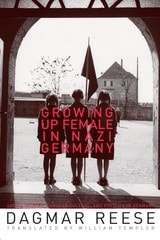
Growing Up Female in Nazi Germany
Dagmar Reese, Translated by William Templer
University of Michigan Press, 2010
Dagmar Reese, however, depicts another picture of life in the BDM. She explores how and in what way the National Socialists were successful in linking up with the interests of contemporary girls and young women and providing them a social life of their own. The girls in the BDM found latitude for their own development while taking on responsibilities that integrated them within the folds of the National Socialist state.
"At last available in English, this pioneering study provides fresh insights into the ways in which the Nazi regime changed young 'Aryan' women's lives through appeals to female self-esteem that were not obviously defined by Nazi ideology, but drove a wedge between parents and children. Thoughtful analysis of detailed interviews reveals the day-to-day functioning of the Third Reich in different social milieus and its impact on women's lives beyond 1945. A must-read for anyone interested in the gendered dynamics of Nazi modernity and the lack of sustained opposition to National Socialism."
--Uta Poiger, University of Washington
"In this highly readable translation, Reese provocatively identifies Nazi girls league members' surprisingly positive memories and reveals significant implications for the functioning of Nazi society. Reaching across disciplines, this work is for experts and for the classroom alike."
--Belinda Davis, Rutgers University
Dagmar Reese is The Moses Mendelssohn Zentrum Potsdam researcher on the DFG-project "Georg Simmels Geschlechtertheorien im ‚fin de siecle' Berlin", 2004
William Templer is a widely published translator from German and Hebrew and is on the staff of Rajamangala University of Technology Srivijaya.
Information Brokers
Political Socialization in Latino Immigrant FamiliesRoberto F. Carlos
University of Chicago Press, 2026
An insightful rethinking of political socialization within Latino immigrant households.
Conventional wisdom tells us that children are passive recipients of political lessons from their parents, with caregivers being the ones who mold the developing behavior and beliefs of the children under their roof. Roberto F. Carlos challenges this preconception by revealing how Latino children, especially those with immigrant parents, often become key sources of political information and guidance in their families. As migrant parents navigate unfamiliar institutions and customs in the United States, they often turn to their children to broker information about everything from daily life to civic engagement. These roles not only place unique responsibilities on children but also create new pathways for them to shape the political behavior of their parents. Moreover, by taking on these roles, children learn the skills that can make them effective advocates later in life, even as they face resource disadvantages that normally correlate with reduced political participation and sense of political efficacy.
Drawing on six original surveys, multiple experiments, and in-depth interviews, including the accounts of youth helping protect their families from deportation, InformationBrokers shows how these dynamics influence both immigrant parents and their children in politically consequential ways. With the Latino population now over 64 million, Information Brokers offers vital insight into the political incorporation of America’s largest ethnic group.

Manufacturing Morals
The Values of Silence in Business School EducationMichel Anteby
University of Chicago Press, 2013
In an era when many organizations are focused on principles of responsibility, Harvard Business School has long tried to promote better business standards. Anteby’s rich account reveals the surprising role of silence and ambiguity in HBS’s process of codifying morals and business values. As Anteby describes, at HBS specifics are often left unspoken; for example, teaching notes given to faculty provide much guidance on how to teach but are largely silent on what to teach. Manufacturing Morals demonstrates how faculty and students are exposed to a system that operates on open-ended directives that require significant decision-making on the part of those involved, with little overt guidance from the hierarchy. Anteby suggests that this model—which tolerates moral complexity—is perhaps one of the few that can adapt and endure over time.
Manufacturing Morals is a perceptive must-read for anyone looking for insight into the moral decision-making of today’s business leaders and those influenced by and working for them.

Native Hubs
Culture, Community, and Belonging in Silicon Valley and BeyondRenya K. Ramirez
Duke University Press, 2007
Ramirez’s ethnography revolves around the Paiute American activist Laverne Roberts’s notion of the “hub,” a space that allows for the creation of a sense of belonging away from a geographic center. Ramirez describes “hub-making” activities in Silicon Valley, including sweat lodge ceremonies, powwows, and American Indian Alliance meetings, gatherings at which urban Indians reinforce bonds of social belonging and forge intertribal alliances. She examines the struggle of the Muwekma Ohlone, a tribe aboriginal to the San Francisco Bay area, to maintain a sense of community without a land base and to be recognized as a tribe by the federal government. She considers the crucial role of Native women within urban indigenous communities; a 2004 meeting in which Native Americans from Mexico and the United States discussed cross-border indigenous rights activism; and the ways that young Native Americans in Silicon Valley experience race and ethnicity, especially in relation to the area’s large Chicano community. A unique and important exploration of diaspora, transnationalism, identity, belonging, and community, Native Hubs is intended for scholars and activists alike.
Professional Identity Crisis
Race, Class, Gender, and Success at Professional SchoolsCarrie Yang Costello
Vanderbilt University Press, 2006
The author spent over 400 hours observing how first-year students are socialized in two very different environments, Boalt School of Law and the School of Social Welfare at UC Berkeley, watching how they adapted to different expectations of how to speak, dress, and behave in the classroom.
Costello found that students who were female, of color, disabled, or poor were not underqualified compared with their privileged peers. Nor did the research uncover intentional bigotry. Instead, the disproportionate success of white men can be explained by the fact that they are more likely to acquire appropriate professional identities swiftly, with little inner conflict. Students from less privileged backgrounds, however, suffered from "identity dissonance." For example, Jasmine, a Filipino student from Los Angeles, explained, "In the legal culture you have to adopt a different way of being, a different vocabulary and way to carry yourself . . . That's how I got this far. And when I go home, if I act the way I do here, they won't get it. My cousins and my friends say, 'You're kind of whitewashed.' And when I come back here I have to get back my law style."
Promotion of Social Awareness
Powerful Lessons for the Partnership of Developmental Theory andRobert L. Selman
Russell Sage Foundation, 2003

The Color of Love
Racial Features, Stigma, and Socialization in Black Brazilian FamiliesBy Elizabeth Hordge-Freeman
University of Texas Press, 2015
Winner, Section on the Sociology of Emotions Outstanding Recent Contribution (Book) Award, American Sociological Association, 2016
Charles Horton Cooley Award for Recent Book, Society for the Study of Symbolic Interaction, 2017
Best Publication Award, Section on Body and Embodiment, American Sociological Association (ASA), 2018
The Color Of Love reveals the power of racial hierarchies to infiltrate our most intimate relationships. Delving far deeper than previous sociologists have into the black Brazilian experience, Elizabeth Hordge-Freeman examines the relationship between racialization and the emotional life of a family. Based on interviews and a sixteen-month ethnography of ten working-class Brazilian families, this provocative work sheds light on how families simultaneously resist and reproduce racial hierarchies. Examining race and gender, Hordge-Freeman illustrates the privileges of whiteness by revealing how those with “blacker” features often experience material and emotional hardships. From parental ties, to sibling interactions, to extended family and romantic relationships, the chapters chart new territory by revealing the connection between proximity to whiteness and the distribution of affection within families.
Hordge-Freeman also explores how black Brazilian families, particularly mothers, rely on diverse strategies that reproduce, negotiate, and resist racism. She frames efforts to modify racial features as sometimes reflecting internalized racism, and at other times as responding to material and emotional considerations. Contextualizing their strategies within broader narratives of the African diaspora, she examines how Salvador’s inhabitants perceive the history of the slave trade itself in a city that is referred to as the “blackest” in Brazil. She argues that racial hierarchies may orchestrate family relationships in ways that reflect and reproduce racial inequality, but black Brazilian families actively negotiate these hierarchies to assert their citizenship and humanity.
The Political Integration of Women
Roles, Socialization, and PoliticsVirginia Sapiro
University of Illinois Press, 1983

Theorizing Self in Samoa
Emotions, Genders, and SexualitiesJeannette Marie Mageo
University of Michigan Press, 1998
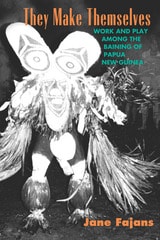
They Make Themselves
Work and Play among the Baining of Papua New GuineaJane Fajans
University of Chicago Press, 1997
In a new work sure to evoke considerable repercussions and debate in anthropological theory, Jane Fajans courageously takes on the "Baining Problem," arguing that the Baining define themselves not through intricate cosmologies or social networks, but through the meanings generated by their own productive and reproductive work.

Women and Borderline Personality Disorder
Symptoms and StoriesWirth-Cauchon, Janet
Rutgers University Press, 2000
At the beginning of the twentieth century, “hysteria” was a medical or psychiatric diagnosis applied primarily to women. In fact, the term itself comes from the Greek, meaning “wandering womb.” We have since learned, however, that this diagnosis evolved from certain assumptions about women’s social roles and mental characteristics, and is no longer in use.
The modern equivalent of hysteria, however, may be borderline personality disorder, defined as “a pervasive pattern of instability of self-image, interpersonal relationships, and mood, beginning in early adulthood and present in a variety of contexts.” This diagnosis is applied to women so much more often than to men that feminists have begun to raise important questions about the social, cultural, and even the medical assumptions underlying this “illness.” Women are said to be “unstable” when they may be trying to reconcile often contradictory and conflicting social expectations.
In Women and Borderline Personality Disorder, Janet Wirth-Cauchon presents a feminist cultural analysis of the notions of “unstable” selfhood found in case narratives of women diagnosed with borderline personality disorder. This exploration of contemporary post-Freudian psychoanalytic notions of the self as they apply to women’s identity conflicts is an important contribution to the literature on social constructions of mental illness in women and feminist critiques of psychiatry in general.