Results by title
1414 books match the query 'Medical' and 73 start with h
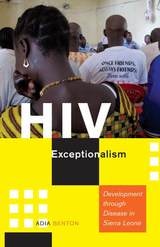
HIV Exceptionalism
Development through Disease in Sierra LeoneAdia Benton
University of Minnesota Press, 2015
WINNER, 2017 RACHEL CARSON PRIZE, SOCIETY FOR THE SOCIAL STUDIES OF SCIENCE
In 2002, Sierra Leone emerged from a decadelong civil war. Seeking international attention and development aid, its government faced a dilemma. Though devastated by conflict, Sierra Leone had a low prevalence of HIV. However, like most African countries, it stood to benefit from a large influx of foreign funds specifically targeted at HIV/AIDS prevention and care.
What Adia Benton chronicles in this ethnographically rich and often moving book is how one war-ravaged nation reoriented itself as a country suffering from HIV at the expense of other, more pressing health concerns. During her fieldwork in the capital, Freetown, a city of one million people, at least thirty NGOs administered internationally funded programs that included HIV/AIDS prevention and care. Benton probes why HIV exceptionalism—the idea that HIV is an exceptional disease requiring an exceptional response—continues to guide approaches to the epidemic worldwide and especially in Africa, even in low-prevalence settings.
In the fourth decade since the emergence of HIV/AIDS, many today are questioning whether the effort and money spent on this health crisis has in fact helped or exacerbated the problem. HIV Exceptionalism does this and more, asking, what are the unanticipated consequences that HIV/AIDS development programs engender?
Handbook for Rural Health Care Ethics
A Practical Guide for ProfessionalsEdited by William A. Nelson
Dartmouth College Press, 2010

Handbook of Medical Sociology, Sixth Edition
Chloe E. Bird
Vanderbilt University Press, 2010
• social networks, neighborhoods, and social capital
• disability
• dying and "the right to die"
• health disparities
• the growing influence of the pharmaceutical industry
• the Internet
• evidence-based medicine and quality of care
• health social movements
• genetics
• religion, spirituality, and health
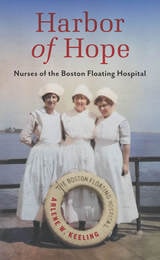
Harbor of Hope
Nurses of the Boston Floating HospitalArlene W. Keeling
University of Massachusetts Press, 2026
The untold story of Boston’s Floating Hospital and the nurses whose work redefined infant care
In late nineteenth-century Boston, nearly one in five babies did not survive infancy. Each summer, outbreaks of “summer complaint”—a deadly gastrointestinal illness caused by contaminated cow’s milk—swept through the city’s poorest neighborhoods. Infants born to immigrant families were especially vulnerable, trapped in stifling tenements with poor sanitation and little access to safe nutrition. Searching for a solution, reform-minded Bostonians looked to New York City’s hospital boats, which offered sick children relief from the heat. In the summer of 1894, Boston launched its own bold experiment: the Boston Floating Hospital.
What began as a modest charitable venture in Boston Harbor soon transformed pediatric care. While physicians have long received credit for the Floating Hospital’s success in reducing infant mortality, Harbor of Hope tells a deeper story. Historian Arlene W. Keeling reveals the essential and often overlooked role of nurses. It was nurses who translated medical theory into lifesaving practice: feeding and bathing fragile infants, administering treatments, calming anxious mothers, and carefully observing each child’s response. Serving as the vital link between doctors and families, they became the heart of the Floating Hospital’s mission.
Tracing the hospital’s story from its first voyage to its tragic destruction by fire in 1927, Harbor of Hope situates these nurses within a city undergoing dramatic change. Against the backdrop of rapid industrial growth, mass immigration, and emerging movements in public health and social reform, Keeling shows how skill, compassion, and persistence reshaped the fate of Boston’s most vulnerable children. Set afloat on Boston Harbor, this is a powerful story of caregiving, innovation, and the women who fought day after day to save babies’ lives.
Healing Powers
Alternative Medicine, Spiritual Communities, and the StateFred M. Frohock
University of Chicago Press, 1992
"Frohock goes beyond the often irreconcilable differences between scientific biomedicine and alternative care by clarifying the social and legal dilemmas they present. . . . A noteworthy contribution forcing us to rethink what medical care is all about."—Jeffrey Michael Clare, Journal of the American Medical Association
"The book does more and better than simply provide a social-scientific proposal. It also gives not only a hearing but a voice to those who follow alternative therapies. . . . Frohock's accounts of their stories—along with the stories of the medical professionals—are eloquent and fascinating."—Allen Verhey, Medical Humanities Review
"Contains a storehouse of valuable information about the historical, philosophical, and psychological bases of alternative approaches to healing."—Marshall B. Kapp, New England Journal of Medicine
"Frohock introduces us to the scientific naturopaths and to physicians who believe in the mind's power to heal, to charismatics who believe in but cannot explain their powers, to those who test God and those who merely accept. He writes so well that I felt I had met these people."—Arthur W. Frank, Christian Century
Healing Traditions
African Medicine, Cultural Exchange, and Competition in South Africa, 1820–1948Karen E. Flint
Ohio University Press, 2008
In August 2004, South Africa officially sought to legally recognize the practice of traditional healers. Largely in response to the HIV/AIDS pandemic, and limited both by the number of practitioners and by patients’ access to treatment, biomedical practitioners looked toward the country’s traditional healers as important agents in the development of medical education and treatment. This collaboration has not been easy. The two medical cultures embrace different ideas about the body and the origin of illness, but they do share a history of commercial and ideological competition and different relations to state power. Healing Traditions: African Medicine, Cultural Exchange, and Competition in South Africa, 1820–1948 provides a long-overdue historical perspective to these interactions and an understanding that is vital for the development of medical strategies to effectively deal with South Africa’s healthcare challenges.
Between 1820 and 1948 traditional healers in Natal, South Africa, transformed themselves from politically powerful men and women who challenged colonial rule and law into successful entrepreneurs who competed for turf and patients with white biomedical doctors and pharmacists. To understand what is “traditional” about traditional medicine, Flint argues that we must consider the cultural actors and processes not commonly associated with African therapeutics: white biomedical practitioners, Indian healers, and the implementing of white rule.
Carefully crafted, well written, and powerfully argued, Flint’s analysis of the ways that indigenous medical knowledge and therapeutic practices were forged, contested, and transformed over two centuries is highly illuminating, as is her demonstration that many “traditional” practices changed over time. Her discussion of African and Indian medical encounters opens up a whole new way of thinking about the social basis of health and healing in South Africa. This important book will be core reading for classes and future scholarship on health and healing in Africa.

Healing and Society in Medieval England
A Middle English Translation of the Pharmaceutical Writings of Gilbertus AnglicusFaye M. Getz
University of Wisconsin Press, 1991
Originally composed in Latin by Gilbertus Anglicus (Gilbert the Englishman), his Compendium of Medicine was a primary text of the medical revolution in thirteenth-century Europe. Composed mainly of medicinal recipes, it offered advice on diagnosis, medicinal preparation, and prognosis. In the fifteenth-century it was translated into Middle English to accommodate a widening audience for learning and medical “secrets.”
Faye Marie Getz provides a critical edition of the Middle English text, with an extensive introduction to the learned, practical, and social components of medieval medicine and a summary of the text in modern English. Getz also draws on both the Latin and Middle English texts to create an extensive glossary of little-known Middle English pharmaceutical and medical vocabulary.
Healing the African Body
British Medicine in West Africa, 1800-1860John Rankin
University of Missouri Press, 2015
This timely book explores the troubled intertwining of religion, medicine, empire, and race relations in the early nineteenth century. John Rankin analyzes the British use of medicine in West Africa as a tool to usher in a “softer” form of imperialism, considers how British colonial officials, missionaries, and doctors regarded Africans, and explores the impact of race classification on colonial constructs.
Rankin goes beyond contemporary medical theory, examining the practice of medicine in colonial Africa as Britons dealt with the challenges of providing health care to their civilian employees, African soldiers, and the increasing numbers of freed slaves in the general population, even while the imperialists themselves were threatened by a lack of British doctors and western medicines. As Rankin writes, “The medical system sought to not only heal Africans but to ‘uplift’ them and make them more amenable to colonial control . . . Colonialism starts in the mind and can be pushed on the other solely through ideological pressure.”
Healing the Herds
Disease, Livestock Economies, and the Globalization of Veterinary MedicineKaren Brown
Ohio University Press, 2010
During the early 1990s, the ability of dangerous diseases to pass between animals and humans was brought once more to the public consciousness. These concerns continue to raise questions about how livestock diseases have been managed over time and in different social, economic, and political circumstances. Healing the Herds: Disease, Livestock Economies, and the Globalization of Veterinary Medicine brings together case studies from the Americas, western Europe, and the European and Japanese colonies to illustrate how the rapid growth of the international trade in animals through the nineteenth century engendered the spread of infectious diseases, sometimes with devastating consequences for indigenous pastoral societies. At different times and across much of the globe, livestock epidemics have challenged social order and provoked state interventions, often opposed by farmers and herders. The intensification of agriculture has transformed environments, with consequences for animal and human health.
But the last two centuries have also witnessed major changes in the way societies have conceptualized diseases and sought to control them. From the late nineteenth century, advances in veterinary technologies afforded veterinary scientists a new professional status and allowed them to wield greater political influence. While older methods have remained important to strategies of control and prevention, as demonstrated during the outbreak of foot-and-mouth disease in Britain in 2001, the rise of germ theories and the discovery of vaccines against some infections made it possible to move beyond the blunt tools of animal culls and restrictive quarantines of the past. Healing the Herds: Disease, Livestock Economies, and the Globalization of Veterinary Medicine offers a new and exciting comparative approach to the complex interrelationships of microbes, markets, and medicine in the global economy.

Healing the Land and the Nation
Malaria and the Zionist Project in Palestine, 1920-1947Sandra M. Sufian
University of Chicago Press, 2007
Taking its title from a Jewish public health mantra, Healing the Land and the Nation situates antimalarial medicine and politics within larger colonial histories. By analyzing the science alongside the politics of Jewish settlement, Sufian addresses contested questions of social organization and the effects of land reclamation upon the indigenous Palestinian population in a decidedly innovative way. The book will be of great interest to scholars of the Middle East, Jewish studies, and environmental history, as well as to those studying colonialism, nationalism, and public health and medicine.
Healing to All Their Flesh
Jewish and Christian Perspectives on Spirituality, Theology, and HealthJeff Levin
Templeton Press, 2012
The editors of this collection, Drs. Jeff Levin and Keith G. Meador, have gathered together the writings of leading Jewish and Christian theological, pastoral, ethical, and religious scholars to answer these important questions. Contributors include Richard Address, William Cutter, Elliot N. Dorff, Dayle A. Friedman, Stanley Hauerwas, Warren Kinghorn, M. Therese Lysaught, Stephen G. Post, John Swinton, and Simkha Y. Weintraub, with a foreword by Samuel E. Karff.
Health Benefits at Work
An Economic and Political Analysis of Employment-Based Health InsuranceMark V. Pauly
University of Michigan Press, 1999
Health Care Divided
Race and Healing a NationDavid Barton Smith
University of Michigan Press, 1999

Health Care Reform and the Battle for the Body Politic
Dan Beauchamp
Temple University Press, 1996
Health Care and Gender
Charlotte Muller
Russell Sage Foundation, 1990
Health Care at Risk
A Critique of the Consumer-Driven MovementTimothy Stoltzfus Jost
Duke University Press, 2007
In this concise, straightforward analysis, Jost challenges the historical and theoretical assumptions on which the consumer-driven health care movement is based and reexamines the empirical evidence that it claims as support. He traces the histories of both private health insurance in the United States and the CDHC movement. The idea animating the drive for consumer-driven health care is that the fundamental problem with the American health care system is what economists call “moral hazard,” the risk that consumers overuse services for which they do not bear the cost. Jost reveals moral hazard as an inadequate explanation of the complex problems plaguing the American health care system, and he points to troubling legal and ethical issues raised by CDHC. He describes how other countries have achieved universal access to high-quality health care at lower cost, without relying extensively on cost sharing, and he concludes with a proposal for how the United States might do the same, incorporating aspects of CDHC while recognizing its limitations.
Health Care for Some
Rights and Rationing in the United States since 1930Beatrix Hoffman
University of Chicago Press, 2012
Health Colonialism
Urban Wastelands and Hospital FrontiersShiloh Krupar
University of Minnesota Press, 2023
The role of American hospital expansions in health disparities and medical apartheid
Health Colonialism considers how U.S. urban development policies contribute to the uneven and unjust distribution of health care in this country. Here, Shiloh Krupar investigates the racially inequitable effects of elite U.S. hospitals on their surrounding neighborhoods and their role in consolidating frontiers of land primed for redevelopment.
Naming this frontier “medical brownfields,” Krupar shows how hospitals leverage their domestic real estate empires to underwrite international prospecting for patients and overseas services and specialty clinics. Her pointed analysis reveals that decolonizing health care efforts must scrutinize the land practices of nonprofit medical institutions and the liberal foundations of medical apartheid perpetuated by globalizing American health care.
Health Humanities Reader
Jones, Therese
Rutgers University Press, 2014
In Health Humanities Reader, editors Therese Jones, Delese Wear, and Lester D. Friedman have assembled fifty-four leading scholars, educators, artists, and clinicians to survey the rich body of work that has already emerged from the field—and to imagine fresh approaches to the health humanities in these original essays. The collection’s contributors reflect the extraordinary diversity of the field, including scholars from the disciplines of disability studies, history, literature, nursing, religion, narrative medicine, philosophy, bioethics, medicine, and the social sciences.
With warmth and humor, critical acumen and ethical insight, Health Humanities Reader truly humanizes the field of medicine. Its accessible language and broad scope offers something for everyone from the experienced medical professional to a reader interested in health and illness.
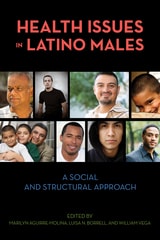
Health Issues in Latino Males
A Social and Structural ApproachAguirre-Molina, Marilyn
Rutgers University Press, 2010

Health Networks
Can They Be the Solution?Thomas P. Weil
University of Michigan Press, 2001
Unfortunately, most hospitals that have formed alliances with a previous competitor or nearby teaching facility have found that they are not yet achieving the savings originally forecast. Weil finds that these shortcomings often have been caused by the difficulties in achieving a strategic fit between two partners, in finding a middle ground when differences in culture and values surface, and in implementing operational efficiencies. The book concludes with a discussion of a number of ways in which networks might cut costs in the future.
Health Networks will be of interest to medical practitioners and administrators, as well as to students in health services management programs.
Thomas P. Weil is President, Bedford Health Associates, Inc., management consultants for health and hospital services.

Health Policy and the Disadvantaged
Lawrence D. Brown, ed.
Duke University Press, 1991
Focusing on the particular needs of disadvantaged groups—the elderly, children, people with AIDS, the mentally ill, the chemically dependent, the homeless, the hungry, the medically uninsured—these essays develop strong policy statements. The authors describe the growth in U.S. health care programs, from Kerr-Mills to Medicare, Medicaid, and subsequent revisions, and stress the serious omissions resulting from incremental policy expansion, both in identifying disadvantaged groups and in implementing programs. They report the weakness of the U.S. health care system compared to systems of other technologically developed countries.
Contributors. Deborah A. Stone and Theodore R. Marmor, Judith Feder, Alice Sardell, Bruce C. Vladeck, Michael Lipsky and Marc A. Thibodeau, Daniel M. Fox, William E. McAuliffe, M. Gregg Bloche and Francine Cournos, Lawrence D. Brown, James A. Morrone

Health Psychology
A Discipline and a ProfessionEdited by George C. Stone
University of Chicago Press, 1987

Health Services Privatization in Industrial Societies
Scarpaci, Joseph L
Rutgers University Press, 1989
Health Work with the Poor
A Practical GuideKiefer, Christie W
Rutgers University Press, 2000
Christie Kiefer vividly brings home the meaning of poverty in peoples’ lives as he examines both their access to—and their lack of—health care.
Aimed at both students and professionals in the field, this book argues that individuals serving the poor have the means and obligation to address the root causes of ill health of the poor, not just the symptoms. These causes, Kiefer argues, are overwhelmingly social and political. In a ringing indictment of the factors that perpetuate poverty, he declares that the work of healing at its best must include advocacy.
Health Work with the Poor offers to both health workers and activists a wealth of practical information. Kiefer’s trenchant analysis of the factors that help cause and perpetuate poverty offers students the needed intellectual framework not only to accomplish short-term change but also to strive toward long-term social advocacy. Each chapter ends with a set of discussion questions—a real boon for instructors. Appendices on Internet resources for the study of poverty and on a proposed program detailing how to teach health workers in a way that promotes social awareness make this book a valuable resource for courses on poverty and health. It will also be an indispensable manual for all those who work with the poor.
Health and Disease in the Neolithic Lengyel Culture
Edited by Václav Smrcka and Olivér Gábor
Karolinum Press, 2020

Health and Efficiency
Fatigue, the Science of Work, and the Making of the Working-Class BodySteffan Blayney
University of Massachusetts Press, 2022
A new model of health emerged in Britain between 1870 and 1939. Centered on the working body, organized around the concept of efficiency, and grounded in scientific understandings of human labor, scientists, politicians, and capitalists of the era believed that national economic productivity could be maximized by transforming the body of the worker into a machine. At the core of this approach was the conviction that worker productivity was intimately connected to worker health.
Under this new “science of work,” fatigue was seen as the ultimate pathology of the working-class body, reducing workers’ capacity to perform continued physical or mental labor. As Steffan Blayney shows, the equation between health and efficiency did not go unchallenged. While biomedical and psychological experts sought to render the body measurable, governable, and intelligible, ordinary men and women found ways to resist the logics of productivity and efficiency imposed on them, and to articulate alternative perspectives on work, health, and the body.
Health and Health Care In Developing Countries
Sociological PerspectivesPeter Conrad
Temple University Press, 1993
In this seminal collection of articles on health care in the Third World, sociological perspectives are applied to medical issues in revealing ways. Fourteen essays (all but two of which are original to this volume) examine the social production of health, disease, and systems of care throughout the developing world. The volume covers a range of areas—central Africa, Nigeria, Singapore, Taiwan, Indonesia, Nepal, China, United Arab Emirates, Oman, and Mexico—and a broad scope of topics, from emergency care, the AIDS epidemic, and women's health care, to public health programs and national health care policies.
Contributors address the central question of whether health systems in developing areas should emphasize the role of clinical medicine and individual physicians or community and preventive medical resources. The major health problems faced by these societies—inadequate sanitation, infectious disease, high infant-child mortality, and a lack of family planning—indicate the greater need for health educators and public health workers despite many poor nations' desire for Western doctors. Other topics that are examined include the process of seeking medical aid; the relationship between traditional and modern medicines; medical education, hospital care, and communication between doctors and patients in developing countries; and the relevance and application of sociology in Third World settings.
This volume seeks to draw attention to the significance of medical sociology for understanding Third World health problems and to show how examining developing societies may necessitate reframing or modifying some Western sociological notions. In addition, these essays stretch the boundaries of medical sociology to include Third World issues.
Health and Hygiene in Chinese East Asia
Policies and Publics in the Long Twentieth CenturyAngela Ki Che Leung and Charlotte Furth, eds.
Duke University Press, 2010
Contributors. Warwick Anderson, Charlotte Furth, Marta E. Hanson, Sean Hsiang-lin Lei, Angela Ki Che Leung, Shang-Jen Li, Yushang Li, Yi-Ping Lin, Shiyung Liu, Ruth Rogaski, Yen-Fen Tseng, Chia-ling Wu, Xinzhong Yu
Health and Work Productivity
Making the Business Case for Quality Health CareEdited by Ronald C. Kessler and Paul E. Stang
University of Chicago Press, 2006
Health and Work Productivity presents state-of-the-art health and productivity research that suggests interventions aimed at prevention, early detection, and best-practice treatment of workers along with an informed allocation strategy can produce significant cost-benefits for employers. Contributors cover all the major aspects of this new area of research: approaches to studying the effects of health on productivity, ways for employers to estimate the costs of productivity loss, concrete suggestions for future research developments in the area, and the implications of this research for public policy.
Health at Older Ages
The Causes and Consequences of Declining Disability Among the ElderlyEdited by David M. Cutler and David A. Wise
University of Chicago Press, 2009
This breakthrough volume argues that educational attainment, high socioeconomic status, an older retirement age, and accessible medical care have improved the health and quality of life of seniors. Along the way, it outlines the economic benefits of disability decline, such as an increased rate of seniors in the workplace, relief for the healthcare system and care-giving families, and reduced medical expenses for the elderly themselves. Health at Older Ages will be an essential contribution to the debate about meeting the medical needs of an aging nation.
Health in Ruins
The Capitalist Destruction of Medical Care at a Colombian Maternity HospitalCésar Ernesto Abadía-Barrero
Duke University Press, 2022

Health in a Fragile State
Science, Sorcery, and Spirit in the Lower CongoJohn M. Janzen
University of Wisconsin Press, 2019
Janzen explores the manner in which power and information, including science, are legitimized in the preservation and improvement of health. Institutional validity and knowledge empower citizens and health practitioners to gain the upper hand over the region's principal diseases, including malaria, tuberculosis, typhoid, and HIV/AIDS.
Health, Culture, and Community
Benjamin D. Paul
Russell Sage Foundation, 1955

Health, Hygiene and Eugenics in Southeastern Europe to 1945
Christian Promitzer
Central European University Press, 2011

Healthcare Reform and Poverty in Latin America
Edited by Peter Lloyd-Sherlock
University of London Press, 2000
Healthcare and Human Dignity
Law MattersFrank M. McClellan
Rutgers University Press, 2020

Healthy Markets?
The New Competition in Medical CareMark A. Peterson, ed.
Duke University Press, 1999
With original contributions from leading social science health policy analysts, this volume addresses the full context of health system change. Believing that the analysis of health care change is too important to be left to economists alone, Mark A. Peterson has collected a mulitdisciplinary group of experts who revisit the contentious debate over the market approaches to health care and consider the disparate effects of these approaches on cost, quality, and coverage of both managed care and Medicaid and Medicare. While market enthusiasts applaud the enhanced efficiency, reduced excess capacity, and abatement of the decades-long health care cost explosion, a backlash has emerged among many providers and the public against the perceived excesses of the market: diminished access to care, commercialization of the physician-patient relationship, and exacerbated inequality. Contributors assess these varied responses while examining the impact that market-based applications are likely to have for future health policy making, the significance of the U.S. experience for policy makers abroad, and the lessons that these changes might provide for thinking sensibly about the future of our health care system.
This volume will be useful for public policy analysts, economists, social scientists, health care providers and administrators, and others interested in the future—and in understanding the past—of American health care.
Contributors. Gary S. Belkin, Lawrence D. Brown, Robert G. Evans, Martin Gaynor, Paul B. Ginsburg, Marsha Gold, Theodore R. Marmor, Cathie Jo Martin, Jonathan B. Oberlander, Mark V. Pauly, Mark A. Peterson, Thomas Rice, Deborah A. Stone, William B. Vogt, Kenneth E. Thorpe

Hearing Happiness
Deafness Cures in HistoryJaipreet Virdi
University of Chicago Press, 2020
At the age of four, Jaipreet Virdi’s world went silent. A severe case of meningitis left her alive but deaf, suddenly treated differently by everyone. Her deafness downplayed by society and doctors, she struggled to “pass” as hearing for most of her life. Countless cures, treatments, and technologies led to dead ends. Never quite deaf enough for the Deaf community or quite hearing enough for the “normal” majority, Virdi was stuck in aural limbo for years. It wasn’t until her thirties, exasperated by problems with new digital hearing aids, that she began to actively assert her deafness and reexamine society’s—and her own—perception of life as a deaf person in America.
Through lyrical history and personal memoir, Hearing Happiness raises pivotal questions about deafness in American society and the endless quest for a cure. Taking us from the 1860s up to the present, Virdi combs archives and museums in order to understand the long history of curious cures: ear trumpets, violet ray apparatuses, vibrating massagers, electrotherapy machines, airplane diving, bloodletting, skull hammering, and many more. Hundreds of procedures and products have promised grand miracles but always failed to deliver a universal cure—a harmful legacy that is still present in contemporary biomedicine.
Weaving Virdi’s own experiences together with her exploration into the fascinating history of deafness cures, Hearing Happiness is a powerful story that America needs to hear.

Hearing Happiness
Deafness Cures in HistoryJaipreet Virdi
University of Chicago Press, 2020
This is an auto-narrated audiobook edition of this book.
Weaving together lyrical history and personal memoir, Virdi powerfully examines society’s—and her own—perception of life as a deaf person in America.
At the age of four, Jaipreet Virdi’s world went silent. A severe case of meningitis left her alive but deaf, suddenly treated differently by everyone. Her deafness downplayed by society and doctors, she struggled to “pass” as hearing for most of her life. Countless cures, treatments, and technologies led to dead ends. Never quite deaf enough for the Deaf community or quite hearing enough for the “normal” majority, Virdi was stuck in aural limbo for years. It wasn’t until her thirties, exasperated by problems with new digital hearing aids, that she began to actively assert her deafness and reexamine society’s—and her own—perception of life as a deaf person in America.
Through lyrical history and personal memoir, Hearing Happiness raises pivotal questions about deafness in American society and the endless quest for a cure. Taking us from the 1860s up to the present, Virdi combs archives and museums in order to understand the long history of curious cures: ear trumpets, violet ray apparatuses, vibrating massagers, electrotherapy machines, airplane diving, bloodletting, skull hammering, and many more. Hundreds of procedures and products have promised grand miracles but always failed to deliver a universal cure—a harmful legacy that is still present in contemporary biomedicine.
Weaving Virdi’s own experiences together with her exploration into the fascinating history of deafness cures, Hearing Happiness is a powerful story that America needs to hear.
Heart to Heart
The Twentieth Century Battle against Cardiac Disease--An Oral HistoryWeisse, Allen B
Rutgers University Press, 2002
In Heart to Heart, Dr. Allen B. Weisse presents the first collection of in-depth conversations with some of the world's most renowned cardiologists and surgeons. Weisse's interviews bring a special vitality to the doctors' recollections of the people and events that influenced them, their motivations, their problems, their interactions with their contemporaries, and their hopes and beliefs for the future. Since not every doctor who has made important contributions to the treatment and prevention of heart disease could be interviewed for this volume, Weisse includes a biographical section listing other prominent cardiologists and surgeons as well as a list of recommended reading. This comprehensive history will be a resource for any student of cardiology or general medicine.
Helping Yourself Help Others
A Book for CaregiversRosalynn Carter
University of Arkansas Press, 2023
“A practical, highly informative, and sympathetic guide.”
—The Washington Post
Most of us will become a caregiver at some point in our lives. And we will assume this role for the most personal reason imaginable: wanting to help someone we love. But we may not know where to start, and we may be afraid of losing ourselves in this daunting task.
Former first lady Rosalynn Carter, a longtime advocate for caregivers and mental health, knows firsthand the challenges of this labor of love. Drawing upon her own experiences and those of hundreds of others whose stories she gathered over many decades, Mrs. Carter offers reassuring, practical advice to any caregiver who has faced stress, anxiety, or loneliness.
Helping Yourself Help Others, reissued here with a new foreword, is as relevant as ever. Long before the COVID-19 pandemic inspired national conversations about the vast undervaluing of unpaid caregiving, the dangers of burnout, and the merits of self-care for relief, Rosalynn Carter was shining a light on these matters and everything else that caregivers confront. Filled with empathy, this encouraging guide will help you meet a difficult challenge head-on and find fulfillment and empowerment in your caregiving role.
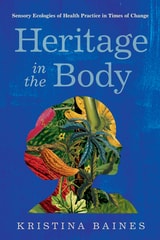
Heritage in the Body
Sensory Ecologies of Health Practice in Times of ChangeKristina Baines
University of Arizona Press, 2024
Employing an embodied ecological heritage (EEH) framework, Baines explores the links between health and heritage as a fluid series of ecological practices. Health and wellness are holistically defined and approached from a phenomenological perspective. Baines focuses on how sensory experiences change the body through practice and provides insights into community-driven alternatives as a means to maintain and support happy, healthy lives.

Hidden Arguments
Political Ideology and Disease Prevention PolicySylvia Noble Tesh
Rutgers University Press, 1988
Along the way she makes these principal points: She criticizes as politically conservative the idea that diseases result from a multifactorial web of causes. Placing responsibility for disease prevention on "society" is ideological, she argues. In connection with the air traffic controllers she questions whether it is in a union's best interests to claim that workers' jobs are stressful. She shows why there are no entirely neutral answers to questions about the toxicity of environmental pollutants. In a final chapter, Tesh urges scientists to incorporate egalitarian values into their search for the truth, rather than pretending science can be divorced from that political ideology.

Higher and Colder
A History of Extreme Physiology and ExplorationVanessa Heggie
University of Chicago Press, 2019
Unlike most books on modern biomedicine, Higher and Colder focuses on fieldwork, expeditions, and exploration, and in doing so provides a welcome alternative to laboratory-dominated accounts of the history of modern life sciences. Though centered on male-dominated practices—science and exploration—it recovers the stories of women’s contributions that were sometimes accidentally, and sometimes deliberately, erased. Engaging and provocative, this book is a history of the scientists and physiologists who face challenges that are physically demanding, frequently dangerous, and sometimes fatal, in the interest of advancing modern science and pushing the boundaries of human ability.

Hijacked Brains
The Experience and Science of Chronic AddictionHenrietta Robin Barnes
Dartmouth College Press, 2015
Histories of Global Health in Africa
Melissa Graboyes and Jennifer Tappan
Ohio University Press, 0
Histories of Global Health in Africa offers a concise and compelling introduction to the development and practice of global health on the African continent over the past century. Rather than centering institutions, the book foregrounds the people whose lives and labor have shaped global health—including African communities receiving care and the practitioners and experts who have long driven biomedical work across the region.
Drawing on cutting-edge scholarship, the book traces the colonial roots of global health and examines how these legacies continue to influence contemporary interventions, from vaccination campaigns and disease eradication efforts to epidemic responses. Its accessible thematic chapters explore key topics, including data collection, demography, ethics, and equity.
Designed for classroom use and ideal for nonspecialists, Histories of Global Health in Africa provides a flexible structure and a rich suite of teaching materials, including online multimedia components. It is an essential resource for students and readers seeking to understand how global health has evolved—and why its future depends on confronting its past.

Histories of the Transgender Child
Jules Gill-Peterson
University of Minnesota Press, 2018
A groundbreaking twentieth-century history of transgender children
With transgender rights front and center in American politics, media, and culture, the pervasive myth still exists that today’s transgender children are a brand new generation—pioneers in a field of new obstacles and hurdles. Histories of the Transgender Child shatters this myth, uncovering a previously unknown twentieth-century history when transgender children not only existed but preexisted the term transgender and its predecessors, playing a central role in the medicalization of trans people, and all sex and gender.
Beginning with the early 1900s when children with “ambiguous” sex first sought medical attention, to the 1930s when transgender people began to seek out doctors involved in altering children’s sex, to the invention of the category gender, and finally the 1960s and ’70s when, as the field institutionalized, transgender children began to take hormones, change their names, and even access gender confirmation, Julian Gill-Peterson reconstructs the medicalization and racialization of children’s bodies. Throughout, they foreground the racial history of medicine that excludes black and trans of color children through the concept of gender’s plasticity, placing race at the center of their analysis and at the center of transgender studies.
Until now, little has been known about early transgender history and life and its relevance to children. Using a wealth of archival research from hospitals and clinics, including incredible personal letters from children to doctors, as well as scientific and medical literature, this book reaches back to the first half of the twentieth century—a time when the category transgender was not available but surely existed, in the lives of children and parents.
History and Health Policy in the United States
Putting the Past Back InStevens, Rosemary A
Rutgers University Press, 2006
In History and Health Policy in the United States, seventeen leading scholars of history, the history of medicine, bioethics, law, health policy, sociology, and organizational theory make the case for the usefulness of history in evaluating and formulating health policy today. In looking at issues as varied as the consumer economy, risk, and the plight of the uninsured, the contributors uncover the often unstated assumptions that shape the way we think about technology, the role of government, and contemporary medicine. They show how historical perspectives can help policymakers avoid the pitfalls of partisan, outdated, or merely fashionable approaches, as well as how knowledge of previous systems can offer alternatives when policy directions seem unclear.
Together, the essays argue that it is only by knowing where we have been that we can begin to understand health services today or speculate on policies for tomorrow.
History of Public Health in New York City, 1625-1866
Volume 1John Duffy
Russell Sage Foundation, 1968