Results by title
140 books match the query 'Mental Health' and 8 start with h
Hand Trembling, Frenzy Witchcraft, and Moth Madness
A Study of Navajo Seizure DisordersJerrold E. Levy
University of Arizona Press, 1987
Head-to-Head and Heart-to-Heart
Contemporary Discourse on Deaf Mental HealthCathy J. Chovaz
Gallaudet University Press, 2026
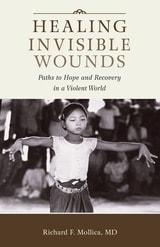
Healing Invisible Wounds
Paths to Hope and Recovery in a Violent WorldRichard F. Mollica
Vanderbilt University Press, 2006
Here is how Neil Boothby, Director of the Program on Forced Migration and Health at the Mailman School of Public Health, Columbia University, describes the book:
"Mollica provides a wealth of ethnographic and clinical evidence that suggests the human capacity to heal is innate--that the 'survival instinct' extends beyond the physical to include the psychological as well. He enables us to see how recovery from 'traumatic life events' needs to be viewed primarily as a 'mystery' to be listened to and explored, rather than solely as a 'problem' to be identified and solved. Healing involves a quest for meaning--with all of its emotional, cultural, religious, spiritual and existential attendants--even when bio-chemical reactions are also operative."
Healing Invisible Wounds reveals how trauma survivors, through the telling of their stories, teach all of us how to deal with the tragic events of everyday life. Mollica's important discovery that humiliation--an instrument of violence that also leads to anger and despair--can be transformed through his therapeutic project into solace and redemption is a remarkable new contribution to survivors and clinicians.
This book reveals how in every society we have to move away from viewing trauma survivors as "broken people" and "outcasts" to seeing them as courageous people actively contributing to larger social goals. When violence occurs, there is damage not only to individuals but to entire societies, and to the world. Through the journey of self-healing that survivors make, they enable the rest of us not only as individuals but as entire communities to recover from injury in a violent world.
Healing Souls
Psychotherapy in the Latter-day Saint CommunityEric G. Swedin
University of Illinois Press, 2003
The psychological professions pervasive in twentieth-century American society were viewed as dangerous by some religious communities. Healing Souls describes the LDS community's mixed feelings about science and modernity: while valuing knowledge, Mormons feared a challenge to faith. Nonetheless, psychology courses were introduced at Brigham Young University, and LDS psychotherapists began to introduce new ideas and practices to the community.
Swedin portrays the rise of professional organizations such as the Association of Mormon Counselors and Psychotherapists, as well as the importance of Allen E. Bergin, first director of the BYU Institute for Studies in Values and Human Behavior. Bergin and others paved the way for the LDS adoption of professional psychotherapy as an essential element of their "cure of souls."
Important chapters take up LDS psychopathology, feminist dissent, LDS philosophies of sexuality, and the LDS rejection of mainstream psychotherapy's selfist psychology on the basis of theological doctrines of family salvation, eternalism, and the natural man.
Healing Souls contributes to a more complete historical picture of the mental health professions in North America and a better understanding of how religious traditions and psychology have influenced each other.
Helping Groups Heal
Leading Groups in the Process of TransformationJan Paul Hook
Templeton Press, 2017
Helping Groups Heal presents “The Healing Cycle,” a grace-based model that facilitates healing and growth in groups. It has been tested with a variety of settings, and can be adapted to nearly any small group, from sex addiction therapy to marriage therapy to Bible studies.
The basic components of “The Healing Cycle” are grace, safety, vulnerability, truth, ownership, and confession. Helping Groups Heal guides the reader through these elements, offering case studies and practical advice from the voices of researchers and practitioners. Each chapter shows how “The Healing Cycle” moves its members to share their truth, own it, and make positive change in their lives. Each step of the process allows participants to move past surface issues and find depth in their understanding of their pain.
Whether you have been leading small groups for years or are about to lead your first session, Helping Groups Heal is an accessible, easy-to-follow guide through “The Healing Cycle” that will give each group member what’s needed to grow, relate, and heal.

Homicidal Insanity, 1800-1985
Janet Colaizzi, with a foreword by Jonas R. Rappeport
University of Alabama Press, 1989
Where madness meets the law, history leaves no easy verdict.
Homicidal insanity has remained a vexation to both the psychiatric and legal professions despite the panorama of scientific and social change during the past 200 years. The predominant opinion today among psychiatrists is that no correlation exists between dangerousness and specific mental disorders. But for generation after generation, psychiatrists have reported cases of insane homicide that were clinically similar. Although psychiatric theory changed and psychiatric nosology was inconsistent, the mental phenomena psychiatrists identified in such cases remained the same. The central thesis of Homicidal Insanity is that as psychiatric theory changed, psychiatrists regarded these phenomena variously as symptoms of mental disease or the disease in itself. It is possible to trace these phenomena throughout the history of Anglo-American psychiatric theory and practice. A secondary thesis of the book is that psychiatrists have used these phenomena as predictors and markers in the practical matters of preventing insane homicide and of testifying in the courts to defend the irresponsible and expose the culpable.
For 200 years, scientific and philosophical disagreement raised controversy and brought the issues to public attention. Still, to this day no rational method exists to discriminate the dangerous from the harmless in matters of involuntary commitment, nor insanity from crime in the courts.
How Healthy Are We?
A National Study of Well-Being at MidlifeEdited by Orville Gilbert Brim, Carol D. Ryff, and Ronald C. Kessler
University of Chicago Press, 2003
The MacArthur Foundation addressed these questions head-on by funding a landmark study known as "Midlife in the U.S.," or MIDUS. For the first time in a single study, researchers were able to integrate epidemiological, sociological, and psychological assessments, as well as innovative new measures to evaluate how work and family life influence each other.
How Healthy Are We? presents the key findings from the survey in three sections: physical health, quality of life and psychological well-being, and the contexts (family, work) of the midlife. The topics covered by almost forty scholars in a wide variety of fields are vast, including everything from how health and well-being vary with socioeconomic standing, gender, race, or region of the country to how middle-aged people differ from younger or older adults in their emotional experience and quality of life. This health—the study measures not only health-the absence of illness—but also reports on the presence of wellness in middle-aged Americans.
The culmination of a decade and a half of research by leading scholars, How Healthy Are We? will dramatically alter the way we think about health in middle age and the factors that influence it. Researchers, policymakers, and others concerned about the quality of midlife in contemporary America will welcome its insights.
* Having a good life means having good relationships with others to almost 70% of those surveyed. Less than 40% mentioned their careers.
* Reports of disruptive daily stressors vary by age, with young adults and those in midlife experiencing more than those in later adulthood.
* Men have higher assessments of their physical and mental health than woman until the age of 60.
Hunger So Wide And So Deep
A Multiracial View of Women’s Eating ProblemsBecky Thompson
University of Minnesota Press, 1996
A new feminist classic--now in paper!
Based on in-depth life history interviews with African-American, Latina, and white women-both lesbian and heterosexual-this book chronicles the effects of racism, sexism, acculturation, and sexual abuse on women’s bodies and eating patterns.
“A wonderful book: gripping, creative and profoundly humane. In lucid prose Thompson offers an original explanation for women’s eating problems. She argues that many women turn to food-bingeing, dieting, purging, or starving- as a sensible means of coping with physical and psychic ‘atrocities’ deriving from ‘racism, sexism, homophobia, classism, the stress of acculturation, and emotional, physical, and sexual abuse.’” Women’s Review of Books“Surprising and alarming. . . . Thompson urges a second look at our national obsession with weight and proffers theories and practices that could save the lives of women of all colors and sexual orientations.” Lambda Book Report“Thompson breaks new ground and offers hope for the multitudes of women who have swallowed their pain.” Evelyn C. White, Editor, The Black Women's Health Book