Results by title
1210 books match the query 'Mexico' and 26 start with h
Haciendas and Economic Development
Guadalajara, Mexico, at IndependenceBy Richard B. Lindley
University of Texas Press, 1983
Agriculture, commerce, and mining were the engines that drove New Spain, and past historians have treated these economic categories as sociological phenomena as well. For these historians, society in eighteenth-century New Spain was comprised, on the one hand, of creoles, feudalistic land barons who were natives of the New World, and, on the other, of peninsulars, progressive, urban merchants born on the Iberian peninsula. In their view, creole-peninsular resentment ultimately led to the wars for independence that took place in the American hemisphere in the early nineteenth century.
Richard B. Lindley’s study of Guadalajara’s wealthy citizens on the eve of independence contradicts this view, clearly demonstrating that landowners, merchants, creoles, and peninsulars, through intermarriage, formed large family enterprises with mixed agricultural, commercial, and mining interests. These family enterprises subdued potential conflicts of interest between Spaniards and Americans, making partners of potential competitors.
When the wars for national independence began in 1810, Spain’s ability to protect its colonies from outside influence was destroyed. The resultant influx of British trade goods and finance shook the structure of colonial society, as abundant British capital quickly reduced the capital shortage that had been the main reason for large-scale, diversified family businesses.
Elite family enterprises survived, but became less traditional and more specialized institutions. This transformation from traditional, personalized community relations to modern, anonymous corporations, with all that it implied for government and productivity, constitutes the real revolution that began in 1810.
Hall of Mirrors
Power, Witchcraft, and Caste in Colonial MexicoLaura A. Lewis
Duke University Press, 2003
Using judicial records from a variety of colonial courts, Lewis highlights the ethnographic details of legal proceedings as she demonstrates how Indians, in particular, came to be the masters of witchcraft, a domain of power that drew on gendered and hegemonic caste distinctions to complicate the colonial hierarchy. She also reveals the ways in which blacks, mulattoes, and mestizos mediated between Spaniards and Indians, alternatively reinforcing Spanish authority and challenging it through alliances with Indians. Bringing to life colonial subjects as they testified about their experiences, Hall of Mirrors discloses a series of contradictions that complicate easy distinctions between subalterns and elites, resistance and power.
Healing Like Our Ancestors
The Nahua Tiçitl, Gender, and Settler Colonialism in Central Mexico, 1535–1660Edward Anthony Polanco
University of Arizona Press, 2024
Early colonial Spanish settlers defined, assessed, and admonished Nahua titiçih (healing specialists) and tiçiyotl (healing knowledge) in the process of building a society in Mexico that mirrored Iberia. Nevertheless, Nahua survivance (intergenerational knowledge transfer) has allowed communities to heal like their ancestors through changes and adaptations. Edward Anthony Polanco draws from diverse colonial primary sources, largely in Spanish and Nahuatl (the Nahua ancestral language), to explore how Spanish settlers framed titiçih, their knowledge, and their practices within a Western complex. Polanco argues for the usage of Indigenous terms when discussing Indigenous concepts and arms the reader with the Nahuatl words to discuss central Mexican Nahua healing. In particular, this book emphasizes the importance of women as titiçih and highlights their work as creators and keepers of knowledge. These vital Nahua perspectives of healing—and how they differed from the settler narrative—will guide community members as well as scholars and students of the history of science, Latin America, and Indigenous studies.
Healing with Plants in the American and Mexican West
Margarita Artschwager Kay
University of Arizona Press, 1996
Acacia (Cassie, Acacia)
Achillea (Yarrow)
Agastache (Giant Hyssop)
Agave (Century Plant)
Allium (Garlic, Onion)
Aloe (Aloe)
Ambrosia (Ragweed)
Anemopsis (Yerba Mansa)
Arctostaphylos (Bearberry, Uva Ursi)
Argemone (Prickly Poppy)
Aristolochia (Bithwort, Snakeroot)
Arracacia (Arracacha)
Artemisia (Wormwood, Mugwort, Western Mugwort, Sagebrush)
Asclepias (Milkweed)
Baccharis (Desert Broom, Seep Willow)
Bocconia (Tree Celandine)
Buddleia (Butterfly Bush)
Bursera (Elephant Tree)
Caesalpinia (Mexican Bird-of-Paradise)
Cannabis (Marijuana)
Capsicum (Chili)
Carnegiea (Saguaro)
Casimiroa (Zapote)
Cassia (Senna)
Cereus (Cactus)
Chenopodium (Goosefoot, Wormseed)
Citrus (Lemon, Lime, Orange)
Datura (Jimson Weed)
Ephedra (Mormon Tea)
Equisetum (Horsetail)
Eryngium (Eryngo, Button Snakeroot)
Eucalyptus (Eucalyptus)
Euphorbia (Spurge)
Eysenhardtia (Kidneywood)
Gnaphalium (Everlasting, Cudweed)
Guaiacum (Lignum Vitae)
Guazuma (Guazuma)
Gutierrezia (Turpentine Bush)
Haematoxylon (Logwood)
Haplopappus (Jimmyweed)
Heterotheca (Telegraph Plant, Falso Arnica)
Hintonia (Copalqu¡n)
Ibervillea (Coyote Melon)
Jacquinia (Jacquinia)
Jatropha (Limberbush)
Juniperus (Juniper)
Karwinskia (Coffeeberry)
Kohleria (Tree Gloxinia)
Krameria (Ratany)
Lantana (Lantana)
Larrea (Creosote Bush, Greasewood)
Ligusticum (Lovage)
Lippia (Oregano)
Lysiloma (Featherbush)
Malva (Mallow)
Mammillaria (Pincushion Cactus)
Mascagnia (Mascagnia)
Matricaria (Chamomile)
Mentha (Mint)
Nicotiana (Tobacco)
Ocimum (Basil)
Opuntia (Cholla, Prickly Pear)
Perezia (Perezia)
Persea (Avocado)
Phaseolus (Bean)
Phoradendron, Stru
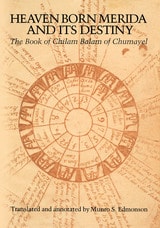
Heaven Born Merida and Its Destiny
The Book of Chilam Balam of ChumayelTranslated and annotated by Munro S. Edmonson
University of Texas Press, 1986
When the Spaniards conquered the Yucatan Peninsula in the early 1500s, they made a great effort to destroy or Christianize the native cultures flourishing there. That they were in large part unsuccessful is evidenced by the survival of a number of documents written in Maya and preserved and added to by literate Mayas up to the 1830s. The Book of Chilam Balam of Chumayel is such a document, literally the history of Yucatan written by and for Mayas, and it contains much information not available from Spanish sources because it was part of an underground resistance movement of which the Spanish were largely unaware.
Well known to Mayanists, The Book of Chilam Balam of Chumayel is presented here in Munro S. Edmonson's English translation, extensively annotated. Edmonson reinterprets the book as literature and as history, placing it in chronological order and translating it as poetry. The ritual nature of Mayan history clearly emerges and casts new light on Mexican and Spanish acculturation of the Yucatecan Maya in the post-Classic and colonial periods.
Centered in the city of Merida, the Chumayel provides the western (Xiu) perspective on Yucatecan history, as Edmonson's earlier book The Ancient Future of the Itza: The Book of Chilam Balam of Tizimin presented the eastern (Itza) viewpoint. Both document the changing calendar of the colonial period and the continuing vitality of pre-Columbian ritual thought down to the nineteenth century. Perhaps the biggest surprise is the survival of the long-count dating system down to the Baktun Ceremonial of 1618 (12.0.0.0.0). But there are others: the use of rebus writing, the survival of the tun until 1752, graphic if oblique accounts of Mayan ceremonial drama, and the depiction of the Spanish conquest as a long-term inter-Mayan civil war.
Hegemonies of Language and Their Discontents
The Southwest North American Region Since 1540Carlos G. Vélez-Ibáñez
University of Arizona Press, 2017
Well-regarded author Carlos G. Vélez-Ibáñez details the linguistic and cultural processes used by penetrating imperial and national states. He argues that these impositions have been not linear but hydra-headed, complex and contradictory, sometimes accommodated and sometimes forcefully imposed. Such impositions have created discontent resulting in physical and linguistic revolts, translanguage versions, and multilayered capacities of use and misuse of imposed languages—even the invention of community-created trilingual dictionaries.
Vélez-Ibáñez gives particular attention to both sides of the border, explaining the consequences of the fragile splitting of the area through geopolitical border formation. He illustrates the many ways those discontents have manifested in linguistic, cultural, educational, political, and legal forms.
From revolt to revitalization, from silent objection to expressive defiance, people in the Southwest North American Region have developed arcs of discontent from the Spanish colonial period to the present. These narratives are supported by multiple sources, including original Spanish colonial documents and new and original ethnographic studies of performance rituals like the matachines of New Mexico. This unique work discusses the most recent neurobiological studies of bilingualism and their implications for cognitive development and language as it spans multiple disciplines. Finally, it provides the most important models for dual language development and their integration to the "Funds of Knowledge" concept as creative contemporary discontents with monolingual approaches.
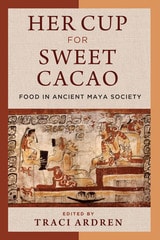
Her Cup for Sweet Cacao
Food in Ancient Maya SocietyEdited by Traci Ardren
University of Texas Press, 2020
For the ancient Maya, food was both sustenance and a tool for building a complex society. This collection, the first to focus exclusively on the social uses of food in Classic Maya culture, deploys a variety of theoretical approaches to examine the meaning of food beyond diet—ritual offerings and restrictions, medicinal preparations, and the role of nostalgia around food, among other topics. For instance, how did Maya feasts build community while also reinforcing social hierarchy? What psychoactive substances were the elite Maya drinking in their caves, and why? Which dogs were good for eating, and which breeds became companions? Why did even some non-elite Maya enjoy cacao, but rarely meat? Why was meat more available for urban Maya than for those closer to hunting grounds on the fringes of cities? How did the molcajete become a vital tool and symbol in Maya gastronomy?
These chapters, written by some of the leading scholars in the field, showcase a variety of approaches and present new evidence from faunal remains, hieroglyphic texts, chemical analyses, and art. Thoughtful and revealing, Her Cup for Sweet Cacao unlocks a more comprehensive understanding of how food was instrumental to the development of ancient Maya culture.
Here and There in Mexico
The Travel Writings of Mary Ashley TownsendMary Ashley Townsend, edited by Ralph Lee Woodward Jr.
University of Alabama Press, 2001
Mary Ashley Townsend was a novelist, newspaper columnist, and poet laureate of New Orleans who made several trips to Mexico with her daughter Cora during the last two decades of the 19th century. She collected her impressions of many aspects of life in that country—flora, fauna, architecture, people at work and play, fashion, society, food—and wrote about them during a time when few women engaged in solo travel, much less the pursuit of travel writing. Her collected work was still in progress when she died in a train accident in 1901, and was never published.
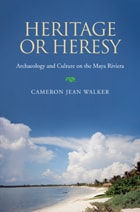
Heritage or Heresy
Archaeology and Culture on the Maya RivieraCameron Jean Walker
University of Alabama Press, 2008
How can we effectively interpret and present one culture to another without stereotypes or over-simplifications? What is the best way to present an authoritative version of a national heritage without also endangering ancient sites or being insensitive to the local customs, beliefs, and religious practices of the indigenous peoples?
This volume addresses the ongoing thrust in archaeology to take the next step after preserving the past: interpreting that past for the future. That future audience includes both local citizens and tourists who may have little background in archaeology, anthropology, or the history of the culture featured. Walker presents the key components of the anthropological study of tourism as a global phenomenon, with particular emphasis on the more prominent arguments for how and why tourism is a universal and meaningful human activity. The highly controversial topic of authenticity is examined, with special attention given to how "authentic" has been defined and how it relates to the ways in which archaeological sites, artifacts, and cultural traditions are presented--or not presented--to the visiting public. The ephemeral promise of “authenticity” drives the heritage tourism industry, which is a key consideration for the long term economy of the Maya Riviera and elsewhere. Through analysis of seven archaeological sites on the Yucatan peninsula that are open to heritage touring, Walker reveals the planned growth of the Maya Riviera since the early 1970s and examines the impact of international tourism on both ancient structures and the contemporary Maya people and culture.
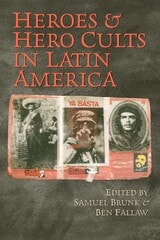
Heroes and Hero Cults in Latin America
Edited by Samuel Brunk and Ben Fallaw
University of Texas Press, 2006
Latin American history traditionally has been defined by larger-than-life heroes such as Símon Bolívar, Emiliano Zapata, and Evita Perón. Recent scholarship, however, tends to emphasize social and cultural factors rather than great leaders. In this new collection, Samuel Brunk and Ben Fallaw bring heroes back to the center of the debate, arguing that heroes not only shape history, they also "tell us a great deal about the places from which they come."
The original essays in this collection examine ten modern Latin American heroes whose charisma derived from the quality of their relationships with admirers, rather than their innate personal qualities. The rise of mass media, for instance, helped pave the way for populists such as radio actress-turned-hero Evita Perón. On the other hand, heroes who become president often watch their images crumble, as policies replace personality in the eyes of citizens. In the end, the editors argue, there is no formula for Latin American heroes, who both forge, and are forged by, unique national events. The conclusion points toward Mexico, where the peasant revolutions that elevated Miguel Hidalgo and, later, Emiliano Zapata are so revered that today's would-be heroes, such as the EZLN's Subcomandante Marcos, must link themselves to peasant mythology even when their personal roots are far from native ground. The enduring (or, in some cases, fading) influence of those discussed in this volume validates the central placement of heroes in Latin American history.
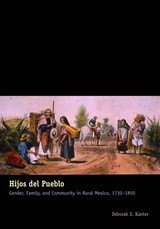
Hijos del Pueblo
Gender, Family, and Community in Rural Mexico, 1730-1850By Deborah E. Kanter
University of Texas Press, 2008
The everyday lives of indigenous and Spanish families in the countryside, a previously under-explored segment of Mexican cultural history, are now illuminated through the vivid narratives presented in Hijos del Pueblo ("offspring of the village"). Drawing on neglected civil and criminal judicial records from the Toluca region, Deborah Kanter revives the voices of native women and men, their Spanish neighbors, muleteers, and hacienda peons to showcase their struggles in an era of crisis and uncertainty (1730-1850).
Engaging and meaningful biographies of indigenous villagers, female and male, illustrate that no scholar can understand the history of Mexican communities without taking gender seriously. In legal interactions native plaintiffs and Spanish jurists confronted essential questions of identity and hegemony. At once an insightful consideration of individual experiences and sweeping paternalistic power constructs, Hijos del Pueblo contributes important new findings to the realm of gender studies and the evolution of Latin America.
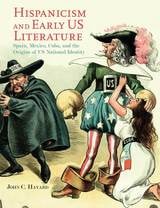
Hispanicism and Early US Literature
Spain, Mexico, Cuba, and the Origins of US National IdentityJohn C. Havard
University of Alabama Press, 2018
Revealing how Spain, Mexico, and Cuba helped shape the literary origins of American national identity.
In Hispanicism and Early US Literature, author John C. Havard posits that representations of Spain, Spanish America, Spanishness, and Spanish Americanness are integral elements in the evolution of early national and antebellum US literature. He argues that Spanish-speaking countries have long held a broad fascination for Americans and that stock narratives regarding these peoples were central to the period’s US literature.
Beginning with the work of eighteenth-century literary nationalists such as Joel Barlow, US literature has been drawn to reflect on Spain and Spanish America. Such reflection was often inspired by geopolitical conflicts such as US expansion into Spanish Louisiana and the US-Mexican War. Havard terms the discourse emerging from these reflections “Hispanicism.” This discourse was used to portray the dominant viewpoint of classical liberalism that propounded an American exceptionalism premised on the idea that Hispanophone peoples were comparatively lacking the capacity for self-determination, hence rationalizing imperialism. On the conservative side were warnings against progress through conquest.
Havard delves into selected works of early national and antebellum literature on Spain and Spanish America to illuminate US national identity. Poetry and novels by Joel Barlow, James Fenimore Cooper, and Herman Melville are mined to further his arguments regarding identity, liberalism, and conservatism. Understudied authors Mary Peabody Mann and José Antonio Saco are held up to contrast American and Cuban views on Hispanicism and Cuban annexation as well as to develop the focus on nationality and ideology via differences in views on liberalism.
More than just a work of literary criticism, there is a substantial amount of cultural and political history discussed. Havard’s use of archival sources such as political articles and personal correspondence elucidates not just literary genres and movements such as early national epic poetry, abolitionist fiction, and the American Renaissance, but also US prominent culture.
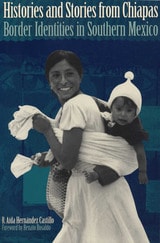
Histories and Stories from Chiapas
Border Identities in Southern MexicoBy R. Aída Hernández Castillo
University of Texas Press, 2001
The 1994 Zapatista uprising of Chiapas' Maya peoples against the Mexican government shattered the state myth that indigenous groups have been successfully assimilated into the nation. In this wide-ranging study of identity formation in Chiapas, Aída Hernández delves into the experience of a Maya group, the Mam, to analyze how Chiapas' indigenous peoples have in fact rejected, accepted, or negotiated the official discourse on "being Mexican" and participating in the construction of a Mexican national identity.
Hernández traces the complex relations between the Mam and the national government from 1934 to the Zapatista rebellion. She investigates the many policies and modernization projects through which the state has attempted to impose a Mexican identity on the Mam and shows how this Maya group has resisted or accommodated these efforts. In particular, she explores how changing religious affiliation, women's and ecological movements, economic globalization, state policies, and the Zapatista movement have all given rise to various ways of "being Mam" and considers what these indigenous identities may mean for the future of the Mexican nation. The Spanish version of this book won the 1997 Fray Bernardino de Sahagún national prize for the best social anthropology research in Mexico.
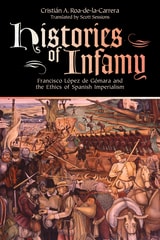
Histories of Infamy
Francisco López de Gómara and the Ethics of Spanish ImperialismCristián A. Roa-de-la-Carrera
University Press of Colorado, 2005
- Luis Fernando Restrepo, University of Arkansas
“In an eloquent and thorough exegesis, Roa-de-la-Carrera reveals how and why López de Gómara, having written the best of all possible books in exultation of Spanish imperialism, nevertheless failed to convince the readers of his time."
- Susan Schroeder, Tulane University
In Histories of Infamy, Cristián Roa-de-la-Carrera explores Francisco López de Gómara's (1511-ca.1559) attempt to ethically reconcile Spain's civilizing mission with the conquistadors' abuse and exploitation of Native peoples.
The most widely read account of the conquest in its time, Gómara's Historia general de las Indias y Conquista de México rationalized the conquistadors' crimes as unavoidable evils in the task of bringing "civilization" to the New World. Through an elaborate defense of Spanish imperialism, Gómara aimed to convince his readers of the merits of the conquest, regardless of the devastation it had wrought upon Spain's new subjects. Despite his efforts, Gómara's apologist text quickly fell into disrepute and became ammunition for Spain's critics. Evaluating the effectiveness of ideologies of colonization, Roa-de-la-Carrera's analysis will appeal to scholars in colonial studies and readers interested in the history of the Americas.

History and Modern Media
A Personal JourneyJohn Mraz
Vanderbilt University Press, 2021
The book interweaves an autobiographical narrative with concrete research. Mraz describes the resistance he encountered in US academia to this new way of showing and describing the past in films and photographs, as well as some illuminating experiences as a visiting professor at several US universities. More importantly, he reflects on what it has meant to move to Mexico and become a Mexican. Mexico is home to a thriving school of photohistorians perhaps unequaled in the world. Some were trained in art history, and a few continue to pursue that discipline. However, the great majority work from the discipline known as "photohistory" which focuses on vernacular photographs made outside of artistic intentions.
A central premise of the book is that knowing the cultures of the past and of the other is crucial in societies dominated by short-term and parochial thinking, and that today's hyper-audiovisuality requires historians to use modern media to offer their knowledge as alternatives to the "perpetual present" in which we live.
History and Mythology of the Aztecs
The Codex ChimalpopocaJohn Bierhorst
University of Arizona Press, 1992
Of particular interest are the stories of the hero-god Quetzalcoatl, for which the Chimalpopoca is the premier source. John Bierhorst's work is the first major scholarship on the Codex Chimalpopoca in more than forty years. His is the first edition in English and the first in any language to include the complete text of the Legend of the Suns. The precise, readable translation not only contributes to the study of Aztec history and literature but also makes the codex an indispensable reference for Aztec cultural topics, including land tenure, statecraft, the role of women, the tribute system, warfare, and human sacrifice.
History of the Triumphs of Our Holy Faith amongst the Most Barbarous and Fierce Peoples of the New World
Andrés Pérez de Ribas; Translated by Daniel T. Reff, Maureen Ahern, and Richard K. Danford; Annotated and with a Critical Introduction by Daniel T. Reff
University of Arizona Press, 1999
Pérez de Ribas was the first permanent missionary to the Ahome, Zuaque, and Yaqui Indians. After fifteen years on the mission frontier he was recalled to Mexico City, where he held various posts, including Jesuit Provincial. Addressed to novitiates ignorant of the challenges they would face in the field, his Historia was a virtual textbook on missionary work in the New World. Also written to encourage ongoing support of the Jesuit missions, it reflected the author's deep grasp of what rhetorically soothed and moved Church and Crown officials.
Perhaps of greatest interest to the modern reader are Pérez de Ribas's often detailed comments on indigenous beliefs and practices. These firsthand observations provide a rich resource of ethnographic and historical data concerning everything from native subsistence, settlement patterns, and myths to the dynamics of Jesuit-Indian relations. The many cases of conversion that Pérez de Ribas describes are especially rich in ethnographic data, clarifying the values and beliefs from which the Indians were "rescued."
History of the Triumphs is a primary document of great importance, made more valuable here by an exceptionally fluid translation and painstaking annotations. It will be a standard reference for all engaged in research on New Spain and a captivating read for anyone interested in this chapter of American history.
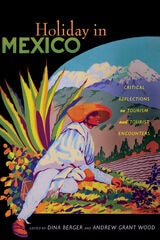
Holiday in Mexico
Critical Reflections on Tourism and Tourist EncountersDina Berger and Andrew Grant Wood, eds.
Duke University Press, 2009
Essays feature research on prototourist American soldiers of the mid-nineteenth century, archaeologists who excavated Teotihuacán, business owners who marketed Carnival in Veracruz during the 1920s, American tourists in Mexico City who promoted goodwill during the Second World War, American retirees who settled San Miguel de Allende, restaurateurs who created an “authentic” cuisine of Central Mexico, indigenous market vendors of Oaxaca who shaped the local tourist identity, Mayan service workers who migrated to work in Cancun hotels, and local officials who vied to develop the next “it” spot in Tijuana and Cabo San Lucas. Including insightful studies on food, labor, art, diplomacy, business, and politics, this collection illuminates the many processes and individuals that constitute the tourism industry. Holiday in Mexico shows tourism to be a complicated set of interactions and outcomes that reveal much about the nature of economic, social, cultural, and environmental change in Greater Mexico over the past two centuries.
Contributors. Dina Berger, Andrea Boardman, Christina Bueno, M. Bianet Castellanos, Mary K. Coffey, Lisa Pinley Covert, Barbara Kastelein, Jeffrey Pilcher, Andrew Sackett, Alex Saragoza, Eric M. Schantz, Andrew Grant Wood
Honor and Personhood in Early Modern Mexico
Osvaldo F. Pardo
University of Michigan Press, 2015
How Political Parties Mobilize Religion
Lessons from Mexico and TurkeyLuis Felipe Mantilla
Temple University Press, 2021
Political mobilization tends to take different forms in contemporary Catholic- and Sunni-majority countries. Luis Felipe Mantilla attributes this dynamic to changes taking place in religious communities and the political institutions that govern religious political engagement.
In How Political Parties Mobilize Religion, Mantillaevenhandedly traces the emergence and success of religious parties in Mexico and Turkey, two countries shaped by assertive secular regimes. In doing so, he demonstrates that religious parties are highly responsive to political institutions, such as electoral laws, as well as to the structure of broader religious communities.
Whereas in both countries, the electoral success of religious mobilizers was initially a boon for democracy, in Mexico it was marred by political mismanagement and became entangled with persistent corruption and escalating violence. In Turkey, the democratic credentials of religious mobilizers were profoundly eroded as the government became increasingly autocratic, concentrating power in very few hands and rolling back basic liberal rights.
Mantilla investigates the role religious mobilization plays in the evolution of electoral politics and democratic institutions, and to what extent their trajectories reflect broader trends in political Catholicism and Islam.
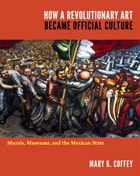
How a Revolutionary Art Became Official Culture
Murals, Museums, and the Mexican StateMary K. Coffey
Duke University Press, 2012
Huichol Mythology
Robert M. Zingg; Edited by Jay C. Fikes, Phil C. Weigand, and Acelia García de Weigand
University of Arizona Press, 2004
Zingg was the first professional anthropologist to study the Huichol, and his generosity toward them and political advocacy on their behalf allowed him to overcome tribal sanctions against divulging secrets to outsiders. He is fondly remembered today by some Huichols who were children when he lived among them. Zingg recognized that the alternation between dry and wet seasons pervades Huichol myth and ritual as it does their subsistence activities, and his arrangement of the texts sheds much light on Huichol tradition. The volume contains both aboriginal myths that attest to the abiding Huichol obligation to serve ancestors who control nature and its processes, and Christian-inspired myths that document the traumatic effect that silver mining and Franciscan missions had on Huichol society.
First published in 1998 in a Spanish-language edition, Huichol Mythology is presented here for the first time in English, with more than 40 original photographs by Zingg accompanying the text. For this volume, the editors provide a meticulous historical account of Huichol society from about 200 A.D. through the colonial era, enabling readers to fully grasp the significance of the myths free of the sensationalized interpretations found in popular accounts of the Huichol. Zingg’s compilation is a landmark work, indispensable to the study of mythology, Mexican Indians, and comparative religion.
Huichol Territory and the Mexican Nation
Indigenous Ritual, Land Conflict, and Sovereignty ClaimsPaul M. Liffman
University of Arizona Press, 2011
Liffman writes that “the cultural grounds for territorial claims were what the people I wanted to study wanted me to work on.” Based on six years of collaboration with a land-rights organization, interviews, and participant observation in meetings, ceremonies, and extended stays on remote rancherías, Huichol Territory and the Mexican Nation analyzes the sites where people define Huichol territory. The book’s innovative structure echoes Huichols’ own approach to knowledge and examines the nation and state, not just the community. Liffman’s local, regional, and national perspective informs every chapter and expands the toolkit for researchers working with indigenous communities. By describing Huichols’ ceremonially based placemaking to build a theory of “historical territoriality,” he raises provocative questions about what “place” means for native peoples worldwide.
Human Adaptation in Ancient Mesoamerica
Empirical Approaches to Mesoamerican ArchaeologyNancy Gonlin
University Press of Colorado, 2016
This volume explores the dynamics of human adaptation to social, political, ideological, economic, and environmental factors in Mesoamerica and includes a wide array of topics, such as the hydrological engineering behind Teotihuacan’s layout, the complexities of agriculture and sustainability in the Maya lowlands, and the nuanced history of abandonment among different lineages and households in Maya centers.
The authors aptly demonstrate how culture is the mechanism that allows people to adapt to a changing world, and they address how ecological factors, particularly land and water, intersect with nonmaterial and material manifestations of cultural complexity. Contributors further illustrate the continuing utility of the cultural ecological perspective in framing research on adaptations of ancient civilizations.
This book celebrates the work of Dr. David Webster, an influential Penn State archaeologist and anthropologist of the Maya region, and highlights human adaptation in Mesoamerica through the scientific lenses of anthropological archaeology and cultural ecology.
Contributors include Elliot M. Abrams, Christopher J. Duffy, Susan Toby Evans, Kirk D. French, AnnCorinne Freter, Nancy Gonlin, George R. Milner, Zachary Nelson, Deborah L. Nichols, David M. Reed, Don S. Rice, Prudence M. Rice, Rebecca Storey, Kirk Damon Straight, David Webster, Stephen L. Whittington, Randolph J. Widmer, John D. Wingard, and W. Scott Zeleznik.
Human Rights in the Maya Region
Global Politics, Cultural Contentions, and Moral EngagementsPedro Pitarch, Shannon Speed, and Xochitl Leyva Solano, eds.
Duke University Press, 2008
The collection includes a reflection on the effects of truth-finding and documenting particular human rights abuses, a look at how Catholic social teaching validates the human rights claims advanced by indigenous members of a diocese in Chiapas, and several analyses of the limitations of human rights frameworks. A Mayan intellectual seeks to bring Mayan culture into dialogue with western feminist notions of women’s rights, while another contributor critiques the translation of the United Nations Declaration of Human Rights into Tzeltal, an indigenous language in Chiapas. Taken together, the essays reveal a broad array of rights-related practices and interpretations among the Mayan population, demonstrating that global-local-state interactions are complex and diverse even within a geographically limited area. So too are the goals of indigenous groups, which vary from social reconstruction and healing following years of violence to the creation of an indigenous autonomy that challenges the tenets of neoliberalism.
Contributors: Robert M. Carmack, Stener Ekern, Christine Kovic, Xochitl Leyva Solano, Julián López García, Irma Otzoy, Pedro Pitarch, Álvaro Reyes, Victoria Sanford, Rachel Sieder, Shannon Speed, Rodolfo Stavenhagen, David Stoll, Richard Ashby Wilson
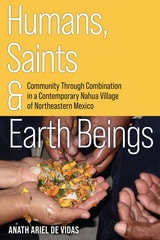
Humans, Saints, and Earth Beings
Community Through Combination in a Contemporary Nahua Village of Northeastern MexicoAnath Ariel De Vidas
University Press of Colorado, 2025
In her work, Ariel de Vidas demonstrates how villagers blend traditional earth-based rituals with Catholic practices, creating a sophisticated system of coexistence between humans and nonhuman entities. These ritual combinations serve as the primary mechanism for social production, cultural continuity, and political authority. The book challenges conventional anthropological binaries of tradition versus modernity and continuity versus acculturation through “thick” ethnographic descriptions that focus on the ethics of coexistence among humans themselves as well as between humans and the peculiar nonhuman inhabitants of their environment.
Originally published in Spanish as Combinar para convivir (2021), Humans, Saints, and Earth Beings contributes to contemporary theoretical discussions about Indigenous ontologies, ritual practice, and social cohesion. It offers crucial insights into how rural communities worldwide might navigate the tensions between maintaining cultural particularities and participating in broader social transformations, making it essential reading for anthropologists, Latin American studies scholars, and anyone interested in Indigenous resilience and adaptation.