Results by title
618 books match the query 'Motion pictures' and 29 start with h

Hardboiled in Hollywood
Five Black Mask Writers and the MoviesUniversity of Wisconsin Press, 1991
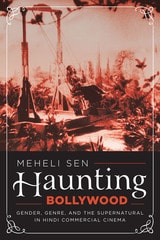
Haunting Bollywood
Gender, Genre, and the Supernatural in Hindi Commercial CinemaBy Meheli Sen
University of Texas Press, 2017
Haunting Bollywood is a pioneering, interdisciplinary inquiry into the supernatural in Hindi cinema that draws from literary criticism, postcolonial studies, queer theory, history, and cultural studies. Hindi commercial cinema has been invested in the supernatural since its earliest days, but only a small segment of these films have been adequately explored in scholarly work; this book addresses this gap by focusing on some of Hindi cinema’s least explored genres.
From Gothic ghost films of the 1950s to snake films of the 1970s and 1980s to today’s globally influenced zombie and vampire films, Meheli Sen delves into what the supernatural is and the varied modalities through which it raises questions of film form, history, modernity, and gender in South Asian public cultures. Arguing that the supernatural is dispersed among multiple genres and constantly in conversation with global cinematic forms, she demonstrates that it is an especially malleable impulse that routinely pushes Hindi film into new formal and stylistic territories. Sen also argues that gender is a particularly accommodating stage on which the supernatural rehearses its most basic compulsions; thus, the interface between gender and genre provides an exceptionally productive lens into Hindi cinema’s negotiation of the modern and the global. Haunting Bollywood reveals that the supernatural’s unruly energies continually resist containment, even as they partake of and sometimes subvert Hindi cinema’s most enduring pleasures, from songs and stars to myth and melodrama.
Headline Hollywood
A Century of Film ScandalMcLean, Adrienne L
Rutgers University Press, 2001
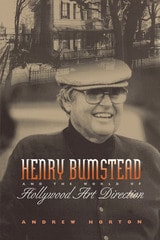
Henry Bumstead and the World of Hollywood Art Direction
By Andrew Horton
University of Texas Press, 2003
From a hotel in Marrakech in The Man Who Knew Too Much, to small-town Alabama in To Kill a Mockingbird, to Mission Control in Space Cowboys, creating a fictional, yet wholly believable world in which to film a movie has been the passion and life's work of Henry Bumstead, one of Hollywood's most celebrated production designers. In a career that has spanned nearly seventy years, Bumstead has worked on more than one hundred movies and television films. His many honors include Academy Awards for Art Direction for To Kill a Mockingbird and The Sting, as well as nominations for Vertigo and The Unforgiven.
This popularly written and extensively illustrated book tells the intertwining stories of Henry Bumstead's career and the evolution of Hollywood art direction. Andrew Horton combines his analysis of Bumstead's design work with wide-ranging interviews in which Bumstead talks about working with top directors, including Alfred Hitchcock, George Roy Hill, Robert Mulligan, and Clint Eastwood, as well as such stars as Paul Newman, Robert Redford, Doris Day, Jimmy Stewart, Sidney Poitier, Bill Cosby, Jerry Lewis, and James Cagney. Numerous production drawings, storyboards, and film stills illustrate how Bumstead's designs translated to film. This portrait of Bumstead's career underscores an art director's crucial role in shaping the look of a film and also tracks the changes in production design from the studio era through location shooting to today's use of high-tech special effects.
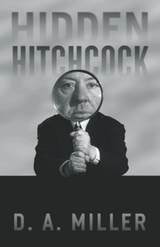
Hidden Hitchcock
D. A. Miller
University of Chicago Press, 2016
Focusing on three films—Strangers on a Train, Rope, and The Wrong Man—Miller shows how Hitchcock anticipates, even demands a “Too-Close Viewer.” Dwelling within us all and vigilant even when everything appears to be in good order, this Too-Close Viewer attempts to see more than the director points out, to expand the space of the film and the duration of the viewing experience. And, thanks to Hidden Hitchcock, that obsessive attention is rewarded. In Hitchcock’s visual puns, his so-called continuity errors, and his hidden appearances (not to be confused with his cameos), Miller finds wellsprings of enigma.
Hidden Hitchcock is a revelatory work that not only shows how little we know this best known of filmmakers, but also how near such too-close viewing comes to cinephilic madness.
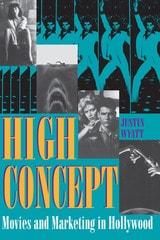
High Concept
Movies and Marketing in HollywoodBy Justin Wyatt
University of Texas Press, 1994
Steven Spielberg once said, "I like ideas, especially movie ideas, that you can hold in your hand. If a person can tell me the idea in twenty-five words or less, it's going to make a pretty good movie." Spielberg's comment embodies the essence of the high concept film, which can be condensed into one simple sentence that inspires marketing campaigns, lures audiences, and separates success from failure at the box office.
This pioneering study explores the development and dominance of the high concept movie within commercial Hollywood filmmaking since the late 1970s. Justin Wyatt describes how box office success, always important in Hollywood, became paramount in the era in which major film studios passed into the hands of media conglomerates concerned more with the economics of filmmaking than aesthetics. In particular, he shows how high concept films became fully integrated with their marketing, so that a single phrase ("Just when you thought it was safe to go back in the water...") could sell the movie to studio executives and provide copy for massive advertising campaigns; a single image or a theme song could instantly remind potential audience members of the movie, and tie-in merchandise could generate millions of dollars in additional income.
Hitchcock's People, Places, and Things
John Bruns
Northwestern University Press, 2019
This book offers new readings of well-known Hitchcock films, including The Lodger, Shadow of a Doubt, Psycho, The Birds, and Marnie, as well as insights into lesser-discussed films such as I Confess and Family Plot. Additional close readings of the original theatrical trailer for Psycho and a Hitchcock-directed episode of Alfred Hitchcock Presents expand the Hitchcock landscape beyond conventional critical borders. In tracing the network of relations in Hitchcock’s work, Bruns brings new Hitchcockian tropes to light. For students, scholars, and serious fans, the author promises a thrilling critical navigation of the Hitchcock landscape, with frequent “mental shake-ups” that Hitchcock promised his audience.
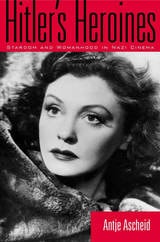
Hitler's Heroines
Stardom & Womanhood In Nazi CinemaAntje Ascheid
Temple University Press, 2003
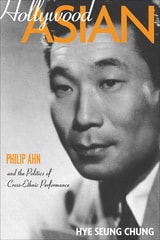
Hollywood Asian
Philip Ahn and the Politics of Cross-Ethnic PerformanceHye Seung Chung
Temple University Press, 2006
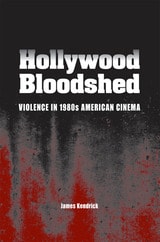
Hollywood Bloodshed
Violence in 1980s American CinemaJames Kendrick
Southern Illinois University Press, 2009
In Hollywood Bloodshed, James Kendrick presents a fascinating look into the political and ideological instabilities of the 1980s as studied through the lens of cinema violence.
Kendrick uses in-depth case studies to reveal how dramatic changes in the film industry and its treatment of cinematic bloodshed during the Reagan era reflected shifting social tides as Hollywood struggled to find a balance between the lucrative necessity of screen violence and the rising surge of conservatism.
As public opinion shifted toward the right and increasing emphasis was placed on issues such as higher military spending, family values, and “money culture,” film executives were faced with an epic dilemma: the violent aspects of cinema that had been the studios’ bread and butter were now almost universally rejected by mainstream audiences. Far from eliminating screen bloodshed altogether, studios found new ways of packaging violence that would allow them to continue to attract audiences without risking public outcry, ushering in a period of major transition in the film industry. Studios began to shy away from the revolutionary directors of the 1970s—many of whom had risen to fame through ideologically challenging films characterized by a more disturbing brand of violence—while simultaneously clearing the way for a new era in film. The 1980s would see the ascent of entertainment conglomerates and powerful producers and the meteoric rise of the blockbuster—a film with no less violence than its earlier counterparts, but with action-oriented thrills rather than more troubling images of brutality.
Kendrick analyzes these and other radical cinematic changes born of the conservative social climate of the 1980s, including the disavowal of horror films in the effort to present a more acceptable public image; the creation of the PG-13 rating to designate the gray area of movie violence between PG and R ratings; and the complexity of marketing the violence of war movies for audience pleasure. The result is a riveting study of an often overlooked, yet nevertheless fascinating time in cinema history. While many volumes have focused on the violent films of the New American Cinema directors of the 1970s or the rise of icons such as Woo, Tarantino, and Rodriguez in the 1990s, Kendrick’s Hollywood Bloodshed bridges a major gap in film studies.This comprehensive volume offers much-needed perspective on a decade that altered the history of Hollywood—and American culture—forever.
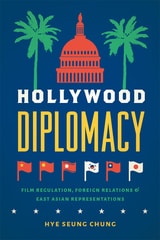
Hollywood Diplomacy
Film Regulation, Foreign Relations, and East Asian RepresentationsHye Seung Chung
Rutgers University Press, 2020
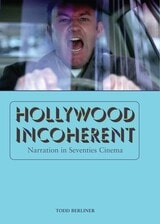
Hollywood Incoherent
Narration in Seventies CinemaBy Todd Berliner
University of Texas Press, 2010
In the 1970s, Hollywood experienced a creative surge, opening a new era in American cinema with films that challenged traditional modes of storytelling. Inspired by European and Asian art cinema as well as Hollywood's own history of narrative ingenuity, directors such as Martin Scorsese, Robert Altman, William Friedkin, Stanley Kubrick, Woody Allen, and Francis Ford Coppola undermined the harmony of traditional Hollywood cinema and created some of the best movies ever to come out of the American film industry. Critics have previously viewed these films as a response to the cultural and political upheavals of the 1970s, but until now no one has explored how the period's inventive narrative design represents one of the great artistic accomplishments of American cinema.
In Hollywood Incoherent, Todd Berliner offers the first thorough analysis of the narrative and stylistic innovations of seventies cinema and its influence on contemporary American filmmaking. He examines not just formally eccentric films—Nashville; Taxi Driver; A Clockwork Orange; The Godfather, Part II; and the films of John Cassavetes—but also mainstream commercial films, including The Exorcist, The Godfather, The French Connection, Willy Wonka and the Chocolate Factory, Dog Day Afternoon, Chinatown, The Bad News Bears, Patton, All the President's Men, Annie Hall, and many others. With persuasive revisionist analyses, Berliner demonstrates the centrality of this period to the history of Hollywood's formal development, showing how seventies films represent the key turning point between the storytelling modes of the studio era and those of modern American cinema.

Hollywood Independents
The Postwar Talent TakeoverDenise Mann
University of Minnesota Press, 2008
Hollywood Independents explores the crucial period from 1948 to 1962 when independent film producers first became key components of the modern corporate entertainment industry. Denise Mann examines the impact of the radically changed filmmaking climate—the decline of the studios, the rise of television, and the rise of potent talent agencies like MCA—on a group of prominent talent-turned-producers including Burt Lancaster, Joseph Mankiewicz, Elia Kazan, and Billy Wilder.
In order to show how these newly independent filmmakers negotiated through an increasingly fraught, reactionary creative atmosphere, Mann analyzes the reflexive portraits of their altered working conditions in such films as A Face in the Crowd, Sweet Smell of Success, and Will Success Spoil Rock Hunter? These artists, she shows, took on the corporate middle-managers at television networks and talent agencies as a way of challenging the status quo without risking censorship or blacklisting.
This period saw the evolution of film production from the studio-governed system to one of entrepreneurs. Out of this new arrangement, which encouraged greater creative freedom, emerged a nascent form of independent art cinema that sowed the seeds of the Hollywood Renaissance that followed.
Denise Mann is associate professor of film, TV and digital media at UCLA. She is coeditor of Private Screenings: Television and the Female Consumer (Minnesota, 1992).
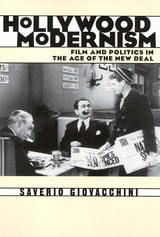
Hollywood Modernism
Film & Politics In Age Of New DealSaverio Giovacchini
Temple University Press, 2001
Seeing Hollywood as a forcefield, Giovacchini examines the social networks, working relationships, and political activities of artists, intellectuals, and film workers who flocked to Hollywood from Europe and the eastern United States before and during the second world war. He creates a complex and nuanced portrait of this milieu, adding breadth and depth to the conventional view of the era's film industry as little more than an empire for Jewish moguls or the major studios. In his rendering Hollywood's newcomers joined with its established elite to develop a modernist aesthetic for film that would bridge popular and avant-garde sensibilities; for them, realism was the most effective vehicle for conveying their message and involving a mass audience in the democratic struggle for process.
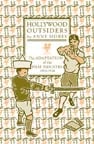
Hollywood Outsiders
The Adaptation of the Film Industry, 1913-1934Anne Morey
University of Minnesota Press, 2003
An innovative approach to the relationship between filmmaking and society during Hollywood’s golden age
The 1910s and 1920s witnessed the inception of a particular brand of negotiation between filmdom and its public in the United States. Hollywood, its proponents, and its critics sought to establish new connections between audience and industry, suggesting means by which Hollywood outsiders could become insiders. Hollywood Outsiders looks at how four disparate entities—the Palmer Photoplay correspondence school of screenwriting, juvenile series fiction about youngsters involved in the film industry, film appreciation and character education programs for high school students, and Catholic and Protestant efforts to use and influence filmmaking—conceived of these connections, and thus of the relationship of Hollywood to the individual and society. Anne Morey’s exploration of the diverse discourses generated by these different conjunctions leads to a fresh and compelling interpretation of Hollywood’s place in American cultural history.
In its analysis of how four distinct groups, each addressing constituencies of various ages and degrees of social authority, defined their interest in the film industry, Hollywood Outsiders combines concrete discussions of cultural politics with a broader argument about how outsiders viewed the film industry as a vehicle of self-validation and of democratic ideals.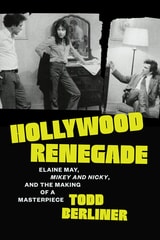
Hollywood Renegade
Elaine May, Mikey and Nicky, and the Making of a MasterpieceTodd Berliner
University of Texas Press, 2026
Examines the career and unorthodox filmmaking practices of director Elaine May, whose Mikey and Nicky, over a span of fifty years, transformed from a fiasco to a masterpiece of seventies cinema.
Elaine May’s Mikey and Nicky stands out in the history of Hollywood. After a troubled production, massive cost overruns, and lawsuits between May and the studio, the film received scathing reviews and failed at the box office. But the very qualities that initially alienated viewers and reviewers led later generations to regard the film as an overlooked masterpiece.
Written and directed by the period’s only female New Hollywood filmmaker, Mikey and Nicky has not received the attention given to other unconventional films of the 1970s. But May worked for years to give each moment of the movie multiple areas of interest. She made every character, even peripheral ones, nuanced and memorable. And she designed every scene, even minor ones, as a performance event. Her lead actors, Peter Falk and John Cassavetes, thrived under her unorthodox directing style, earning acclaim even from reviewers who hated the movie. Decades in the making—years of scriptwriting, a shoot that spanned ten months, and three years spent editing—Mikey and Nicky shows us what Hollywood cinema can accomplish when talented filmmakers challenge Hollywood’s limited notion of professionalism, rejecting the harsh time pressures of commercial filmmaking in order to get the most out of every scene.
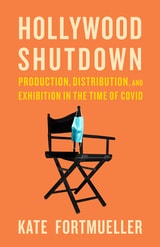
Hollywood Shutdown
Production, Distribution, and Exhibition in the Time of COVIDBy Kate Fortmueller
University of Texas Press, 2021
By March 2020, the spread of COVID-19 had reached pandemic proportions, forcing widespread shutdowns across industries, including Hollywood. Studios, networks and production companies, and the thousands of workers who make film and television possible, were forced to adjust their time-honored business and labor practices. In this book, Kate Fortmueller asks what happened when the coronavirus closed Hollywood.
Hollywood Shutdown examines how the COVID-19 pandemic affected film and television production, influenced trends in distribution, reshaped theatrical exhibition, and altered labor practices. From January movie theater closures in China to the bumpy September release of Mulan on the Disney+ streaming platform, Fortmueller probes various choices made by studios, networks, unions and guilds, distributors, and exhibitors during the evolving crisis. In seeking to explain what happened in the first nine months of 2020, this book also considers how the pandemic will transform Hollywood practices in the twenty-first century.
Hollywood Speaks
Deafness and the Film Entertainment IndustryJohn S. Schuchman
University of Illinois Press, 1988
a remarkable book. Schuchman's inquiry into how deafness has been treated in
movies provides us with yet another window onto social history in addition to
a fresh angle from which to view Hollywood. Moreover, he joins the ranks of
the few scholars who have made use of Hollywood studio archives."
-- Thomas Cripps, author of Slow Fade to Black: The Negro in American
Film, 1900-1942
Hollywood at the Intersection of Race and Identity
Delia Malia Caparoso Konzett
Rutgers University Press, 2020
Hollywood in San Francisco
Location Shooting and the Aesthetics of Urban DeclineBy Joshua Gleich
University of Texas Press, 2018
One of the country’s most picturesque cities and conveniently located just a few hours’ drive from Hollywood, San Francisco became the most frequently and extensively filmed American city beyond the production hubs of Los Angeles and New York in the three decades after World War II. During those years, the cinematic image of the city morphed from the dreamy beauty of Vertigo to the nightmarish wasteland of Dirty Harry, although San Francisco itself experienced no such decline. This intriguing disconnect gives impetus to Hollywood in San Francisco, the most comprehensive study to date of Hollywood’s move from studio to location production in the postwar era.
In this thirty-year history of feature filmmaking in San Francisco, Joshua Gleich tracks a sea change in Hollywood production practices, as location shooting overtook studio-based filming as the dominant production method by the early 1970s. He shows how this transformation intersected with a precipitous decline in public perceptions of the American city, to which filmmakers responded by developing a stark, realist aesthetic that suited America’s growing urban pessimism and superseded a fidelity to local realities. Analyzing major films set in San Francisco, ranging from Dark Passage and Vertigo to The Conversation, The Towering Inferno, and Bullitt, as well as the TV show The Streets of San Francisco, Gleich demonstrates that the city is a physical environment used to stage urban fantasies that reveal far more about Hollywood filmmaking and American culture than they do about San Francisco.
Hollywood's African American Films
The Transition to SoundRyan Friedman
Rutgers University Press, 2011
Hollywood's Cold War
Tony Shaw
University of Massachusetts Press, 2007
At a moment when American film reflects a deepening preoccupation with the Bush administration's War on Terror, this authoritative and timely book offers the first comprehensive account of Hollywood's propaganda role during the defining ideological conflict of the twentieth century: the Cold War. In an analysis of films dating from America's first Red Scare in the wake of the 1917 Bolshevik Revolution to the collapse of the Berlin Wall in 1989, Tony Shaw examines the complex relationship between filmmakers, censors, politicians, and government propagandists.
Movies, Shaw demonstrates, were at the center of the Cold War's battle for hearts and minds. Hollywood's comedies, love stories, musicals, thrillers, documentaries, and science fiction shockers played a critical dual role: on the one hand teaching millions of Americans why communism represented the greatest threat their country had ever faced, and on the other selling America's liberal-capitalist ideas around the globe. Drawing on declassified government documents, studio archives, and filmmakers' private papers, Shaw reveals the different ways in which cinematic propaganda was produced, disseminated, and received by audiences during the Cold War. In the process, he addresses subjects as diverse as women's fashions, McCarthyism, drug smuggling, Christianity, and American cultural diplomacy in India. Anyone seeking to understand wartime propaganda today will find striking contemporary resonance in his conclusions about Hollywood's versatility and power.
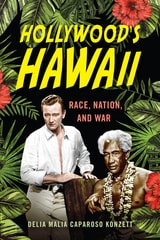
Hollywood's Hawaii
Race, Nation, and WarDelia Malia Caparoso Konzett
Rutgers University Press, 2017
Delia Malia Caparoso Konzett highlights films that mirror the cultural and political climate of the country over more than a century—from the era of U.S. imperialism on through Jim Crow racial segregation, the attack on Pearl Harbor and WWII, the civil rights movement, the contemporary articulation of consumer and leisure culture, as well as the buildup of the modern military industrial complex. Focusing on important cultural questions pertaining to race, nationhood, and war, Konzett offers a unique view of Hollywood film history produced about the national periphery for mainland U.S. audiences. Hollywood’s Hawaii presents a history of cinema that examines Hawaii and the Pacific and its representations in film in the context of colonialism, war, Orientalism, occupation, military buildup, and entertainment.
Hollywood's New Deal
Giuliana Muscio
Temple University Press, 1997
Despite the economic hardship of the thirties, people flocked to the movies in unprecedented numbers. At the same time, the Roosevelt Administration was trying to implement the New Deal and increase the influence and power of the federal government. Weaving together film and political history, Giuliana Muscio traces the connections between Depression Era Hollywood and the popularity of FDR, asserting that politics transformed its public into spectators while the movie industry transformed its spectators into a public. Hollywood's New Deal reveals the ways in which this reciprocal relationship between politics and film evolved into a strategic effort to stabilize a nation in the clutches of economic unrest by creating a unified American consciousness through national cinema.
Muscio analyzes such regulatory practices as the Hays Code, and the government's scrutinizing of monopolistic practices such as block booking and major studio ownership of movie theaters. Hollywood's New Deal, focusing on the management and structure of the film industry, delves deep into the Paramount case, detailing the behind-the-scenes negotiations and the public statements that ended with film industry leaders agreeing to self regulate and to eliminate monopolistic practices.
Hollywood's acquiescence and the government's retreat from antitrust action show that they had found a mutually beneficial way of preserving their own spheres of power and influence. This book is indispensable for understanding the growth of the film industry and the increasing political importance of mass media.
In the series Culture and the Moving Image, edited by Robert Sklar.
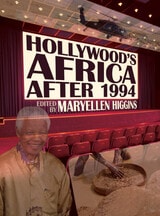
Hollywood’s Africa after 1994
MaryEllen Higgins
Ohio University Press, 2012
Hollywood’s Africa after 1994 investigates Hollywood’s colonial film legacy in the postapartheid era, and contemplates what has changed in the West’s representations of Africa. How do we read twenty-first-century projections of human rights issues—child soldiers, genocide, the exploitation of the poor by multinational corporations, dictatorial rule, truth and reconciliation—within the contexts of celebrity humanitarianism, “new” military humanitarianism, and Western support for regime change in Africa and beyond? A number of films after 1994, such as Black Hawk Down, Hotel Rwanda, Blood Diamond, The Last King of Scotland, The Constant Gardener, Shake Hands with the Devil, Tears of the Sun, and District 9, construct explicit and implicit arguments about the effects of Western intervention in Africa. Do the emphases on human rights in the films offer a poignant expression of our shared humanity? Do they echo the colonial tropes of former “civilizing missions?” Or do human rights violations operate as yet another mine of sensational images for Hollywood’s spectacular storytelling?
The volume provides analyses by academics and activists in the fields of African studies, English, film and media studies, international relations, and sociology across continents. This thoughtful and highly engaging book is a valuable resource for those who seek new and varied approaches to films about Africa.
Contributors
Harry Garuba and Natasha Himmelman
Margaret R. Higonnet, with Ethel R. Higgonet
Joyce B. Ashuntantang
Kenneth W. Harrow
Christopher Odhiambo
Ricardo Guthrie
Clifford T. Manlove
Earl Conteh-Morgan
Bennetta Jules-Rosette, J. R. Osborn, and Lea Marie Ruiz-Ade
Christopher Garland
Kimberly Nichele Brown
Jane Bryce
Iyunolu Osagie
Dayna Oscherwitz
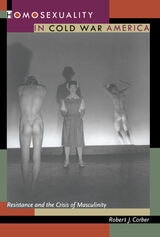
Homosexuality in Cold War America
Resistance and the Crisis of MasculinityRobert J. Corber
Duke University Press, 1997
By exploring the representation of gay men in film noir, Corber suggests that even as this Hollywood genre reinforced homophobic stereotypes, it legitimized the gay male "gaze." He emphasizes how film noir’s introduction of homosexual characters countered the national "project" to render gay men invisible, and marked a deep subversion of the Cold War mentality. Corber then considers the work of gay male writers Tennessee Williams, Gore Vidal, and James Baldwin, demonstrating how these authors declined to represent homosexuality as a discrete subculture and instead promoted a model of political solidarity rooted in the shared experience of oppression. Homosexuality in Cold War America reveals that the ideological critique of the dominant culture made by gay male authors of the 1950s laid the foundation for the gay liberation movement of the following decade.
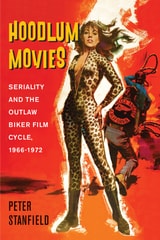
Hoodlum Movies
Seriality and the Outlaw Biker Film Cycle, 1966-1972Stanfield, Peter
Rutgers University Press, 2018
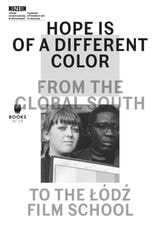
Hope Is of a Different Color
From the Global South to the Lodz Film SchoolEdited by Magda Lipska and Monika Talarczyk
Museum of Modern Art in Warsaw, 2020
As Poland’s second-largest city, Łódź was a hub for international students who studied in Poland from the mid-1960s to 1989. The Łódź Film School, a member of CILECT since 1955, was a favored destination, with students from Africa, Latin America, and the Middle East accounting for one-third of its international student body. Despite the school’s international reputation, the experience of its filmmakers from the Global South is little known beyond Poland.
Hope Is of a Different Color addresses the history of student exchanges between the Global South and the Polish People’s Republic during the Cold War. It sheds light on the experiences and careers of a generation of young filmmakers at Łódź, many of whom went on to achieve success as artists in their home countries, and provides insight into emerging areas of research and race relations in Central and Eastern Europe. The essays reflect on these issues from multiple perspectives, considering sociology, political science, art, and film history. The book also features previously unpublished photographs and film stills from private archives along with visual and written material collected at the Łódź Film School.
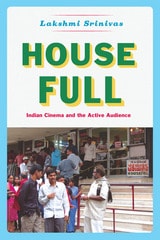
House Full
Indian Cinema and the Active AudienceLakshmi Srinivas
University of Chicago Press, 2016
With House Full, Lakshmi Srinivas takes readers deep into the moviegoing experience in India, showing us what it’s actually like to line up for a hot ticket and see a movie in a jam-packed theater with more than a thousand seats. Building her account on countless trips to the cinema and hundreds of hours of conversation with film audiences, fans, and industry insiders, Srinivas brings the moviegoing experience to life, revealing a kind of audience that, far from passively consuming the images on the screen, is actively engaged with them. People talk, shout, whistle, cheer; others sing along, mimic, or dance; at times audiences even bring some of the ritual practices of Hindu worship into the cinema, propitiating the stars onscreen with incense and camphor. The picture Srinivas paints of Indian filmgoing is immersive, fascinating, and deeply empathetic, giving us an unprecedented understanding of the audience’s lived experience—an aspect of Indian film studies that has been largely overlooked.