Results by title
283 books match the query 'Phenomenology' and 27 start with h
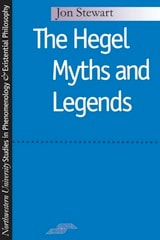
Hegel Myths and Legends
Jon Stewart
Northwestern University Press, 1996
Hegel and the Problem of Multiplicity
Andrew Haas
Northwestern University Press, 2000

Hegel's Idea of a Phenomenology of Spirit
Michael N. Forster
University of Chicago Press, 1998
The Phenomenology of Spirit emerges as an extraordinarily coherent work with a rich array of important and original ideas. These include a diagnosis of the ills of modernity in terms of its commitment to a series of dualisms, and a project for overcoming them; a sweeping naturalism; a deep rethinking of and response to problems of skepticism; subtle arguments for social theories of meaning and truth; and ideas based on the insight that human thought changes in fundamental ways over the course of history. Forster's unique and compelling reading unlocks the mysteries of Hegel's seminal work.
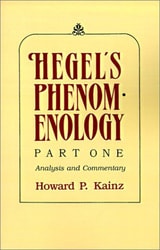
Hegel's Phenomenology, Part 1
Analysis and CommentaryHoward P. Kainz
Ohio University Press, 1976
Kainz provides an accessible entry into the complexities of Hegelian thought by asking a series of questions about such matters as the literary form of the Phenomenology, its "plot," its relation to the "system," its subject matter, the problem of objectivity, dialectical necessity, the concept of "experience," and the Hegelian concept of consciousness. Building of the work of previous commentators, and presenting the work of these commentators in a clear and unbiased manner, Kainz offers an analysis that will be helpful both to experienced Hegelian scholars and to those readers preparing to approach the large and bewildering territory of the Phenomenology for the first time.

Hegel’s Phenomenology, Part 2
The Evolution of Ethical and Religious Consciousness to the Absolute StandpointHoward P. Kainz
Ohio University Press, 1983
The publication in 1807 of Georg Wilhelm Frederich Hegel’s Phanomenologie des Geistes (translated alternately as “Phenomenology of Mind” or “Phenomenology of Spirit”) marked the beginning of the modern era in philosophy. Hegel’s remarkable insights formed the basis for what eventually became the Existentialist movement. Yet the Phenomenology remains one of the most difficult and forbidding works in the canon of philosophical literature.
Heidegger and Whitehead
A Phenomenological Examination into the Intelligibility of ExperienceRon L. Cooper
Ohio University Press, 1993
Martin Heidegger’s Being and Time can be broadly termed a transcendental inquiry into the structures that make human experience possible. Such an inquiry reveals the conditions that render human experience intelligible. Using Being and Time as a model, I attempt to show that Alfred North Whitehead’s Process and Reality not only aligns with Being and Time in opposing many elements of traditional Western philosophy but also exhibits a similar transcendental inquiry.
With this reading, Process and Reality contains concepts much like Being-in-the-world, ecstatic temporality, and others found in Being and Time. More important, this interpretation considers Whitehead’s treatment of human experience paradigmatic for understanding his cosmological scheme in general. Finally, the results of this study are employed to sketch a phenomenology of holy experience.
— Prefatory Note to Heidegger and Whitehead
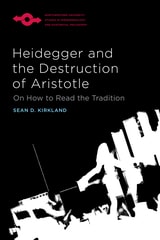
Heidegger and the Destruction of Aristotle
On How to Read the TraditionSean D. Kirkland
Northwestern University Press, 2023
A bold new conception of Heidegger’s project of Destruktion as a method of interpreting history
For Martin Heidegger, our inherited traditions provide the concepts through which we make our world intelligible. Concepts we can also oppose, disrupt, and even exceed. First, however, if Western philosophy is our inheritance, we must submit it to Destruktion—starting with Aristotle. Heidegger and the Destruction of Aristotle: On How to Read the Tradition presents a new conception of Heidegger’s “destruction” as a way of reading.
Situated between Nietzschean genealogy and Derridean deconstruction, this method uncovers in Aristotle the most vital originating articulations of the Western tradition and gives us the means to confront it. Sean D. Kirkland argues this is not a rejection of the past but a sophisticated and indeed timely hermeneutic tool—a complex, illuminating, and powerful method for interpreting historical texts at our present moment. Acknowledging the historical Heidegger as a politically compromised and still divisive figure, Kirkland demonstrates that Heideggerian destruction is a method of interpreting history that enables us to reorient and indeed transform its own most troubling legacies.

Heidegger and the Tradition
Werner Marx
Northwestern University Press, 1971

Heidegger
Phenomenology, Ecology, PoliticsMichael Marder
University of Minnesota Press, 2018
Understanding the political and ecological implications of Heidegger’s work without ignoring his noxious public engagements
The most controversial philosopher of the twentieth century, Martin Heidegger has influenced generations of intellectuals even as his involvement with Nazism and blatant anti-Semitism, made even clearer after the publication of his Black Notebooks, have recently prompted some to discard his contributions entirely. For Michael Marder, Heidegger’s thought remains critical for interpretations of contemporary politics and our relation to the natural environment.
Bringing together and reframing more than a decade of Marder’s work on Heidegger, this volume questions the wholesale rejection of Heidegger, arguing that dismissive readings of his project overlook the fact that it is impossible to grasp without appreciating his lifelong commitment to phenomenology and that Heidegger’s anti-Semitism is an aberration in his still-relevant ecological and political thought, rather than a defining characteristic. Through close readings of Heidegger’s books and seminars, along with writings by other key phenomenologists and political philosophers, Marder contends that neither Heidegger’s politics nor his reflections on ecology should be considered in isolation from his phenomenology. By demonstrating the codetermination of his phenomenological, ecological, and political thinking, Marder accounts for Heidegger’s failures without either justifying them or suggesting that they invalidate his philosophical endeavor as a whole.
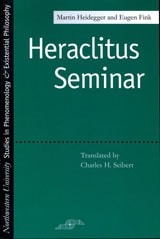
Heraclitus Seminar
Martin Heidegger
Northwestern University Press, 1993
Heidegger's remarks in this seminar illuminate his interpretations not only of pre-Socratic philosophy, but also of figures such as Hegel and Holderllin. At the same time, Heidegger clarifies many late developments in his own understanding of truth, Being, and understanding. Heidegger and Fink, both deeply rooted in the Freiburg phenomenological tradition, offer two competing approaches to the phenomenological reading of the ancient text-a kind of reading that, as Fink says, is "not so much concerned with the philological problematic . . . as with advancing into the matter itself, that is, toward the matter that must have stood before Heraclitus's spiritual view."
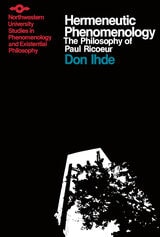
Hermeneutic Phenomenology
The Philosopher of Paul RicoeurDon Ihde
Northwestern University Press, 1971
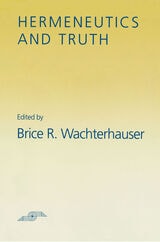
Hermeneutics and Truth
Brice R. Wachterhauser
Northwestern University Press, 1994
No thinkers have wrestled with the issue of truth and interpretation in more illuminating ways for the Continental tradition of philosophy than Heidegger and Gadamer. Hermeneutics and Truth is a dual focus on Heidegger and Gadamer, but it concentrates primarily on Gadamer's efforts to think through the issue of truth for hermeneutics and only secondarily on Heidegger's thought on this issue.
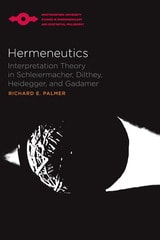
Hermeneutics
Interpretation Theory in Schleiermacher, Dilthey, Heidegger, and GadamerRichard E. Palmer
Northwestern University Press, 1969
Palmer principally treats the conception of hermeneutics enunciated by Heidegger and developed into a “philosophical hermeneutics” by Hans-Georg Gadamer. He provides a brief overview of the field of hermeneutics by surveying some half-dozen alternate definitions of the term and by examining in detail the contributions of Friedrich Schleiermacher and Wilhelm Dilthey. In the “Manifesto” which concludes the book, Palmer suggests the potential significance of hermeneutics for literary interpretation.
When the context of interpretation is pressed to its limits, hermeneutics becomes the philosophical analysis of what is involved in every act of understanding. In this context, hermeneutics becomes relevant not simply to the humanistic disciplines, in which linguistic and historical understanding are crucial, but to scientific forms of interpretation as well, for it asserts the principles involved in any and every act of interpretation.
History and Truth
Paul Ricoeur
Northwestern University Press, 1965
History and Truth
Paul Ricoeur, Foreward by David M. Rasmussen, Introduction by Charles Kelbley
Northwestern University Press, 2007
History, the Human, and the World Between
R. Radhakrishnan
Duke University Press, 2008
Radhakrishnan develops his rationale of the “between” through three linked essays where he locates the terms “world,” “history,” “human,” and “subject” between phenomenology and poststructuralism, and in the process sets forth a nuanced reading of the politics of a gendered postcolonial humanism. Critically juxtaposing the works of thinkers such as Friedrich Nietzsche, Adrienne Rich, Frantz Fanon, Edward Said, Michel Foucault, Maurice Merleau-Ponty, Martin Heidegger, David Harvey, and Ranajit Guha, Radhakrishnan examines the relationship between systems of thought and their worldly situations. History, the Human, and the World Between is a powerful argument for a theoretical perspective that combines the existential urgency of phenomenology with the discursive rigor of poststructuralist practices.
Home and Beyond
Generative Phenomenology after HusserlAnthony J. Steinbock
Northwestern University Press, 1995
Human Experience of Time
The Development of Its Philosophic MeaningCharles Sherover
Northwestern University Press, 2001
Human Flesh
Phenomenology and Evolution of the Social BodyHayden Kee
Ohio University Press, 0
Much recent research on human evolution emphasizes that social behavior and cognition are at the heart of everything that is distinctively human. This body of research generally understands sociality in terms of social reasoning and the brain that supports it. Human Flesh shifts the focus. What if human sociality is not primarily or exclusively located in the brain but rather is distributed throughout the body? What if the foundation of the human way of life lies in intercorporeity: the ways in which our affective, sensorimotor social bodies—our eyes, hands, voices, ears, and desires—open our bodies and minds up to one another?
Human Flesh develops a framework for exploring these questions based on Merleau-Ponty’s unfinished work on human evolution, combining it with contemporary research in phenomenology, embodied cognitive science, evolutionary anthropology, and primatology. It applies that framework to explore how the different senses and sensory organs take on their distinctively human variations to facilitate the intercorporeal, social human form of life. Along the way, the book interprets familiar facts about the human body in a new light and develops novel hypotheses concerning human evolution. In contrast to the widely discussed social brain hypothesis, its guiding premise is the social body hypothesis: the proposition that the human body has evolved in response to the challenges posed by the distinctively human social form of life.
Based on these concrete investigations into the human body, Human Flesh proposes a new way of thinking about familiar topics in the evolution of cognition literature, such as the emergence of higher orders of social cognition and the development of human symbolic and linguistic capacities. Ultimately, the book arrives at a new determination of human nature and the human form of life: To be human is to be Homo invisibilis, an animal obsessed with, adapted for, and dependent upon the invisible minds of other humans and the symbolic-cultural worlds opened up by their unique social bodies.

Human Identity
Claude Romano, Samuel R. Webb
Northwestern University Press, 2027
Examining philosophical views of human identity and calling for a shift in how we discuss this essential concept
The problem of identity is one of the most debated contemporary issues in philosophy and the social sciences. Human Identity does not approach this question from a sociological or political position but rather seeks to take a step away from the dominant approach in metaphysics and analytical philosophy, putting forward a dialogical concept of identity inspired mainly by the phenomenological-hermeneutic tradition. Claude Romano argues that the question of identity can only be satisfactorily formulated from the point of view of an intrinsically social understanding of the human being: The identity that matters in our lives is the one we can assume before others in truthful conduct and thus the one for which we can bear responsibility in the first person.
Romano carefully examines the full historical sweep of the philosophy of identity, referencing not only classic thinkers, including Descartes, Locke, Kant, and Husserl, but also contemporary interlocutors, such as Richard Moran and Charles Larmore. He engages in a sustained dialogue with these fellow philosophers, historical and current, while arguing for a complete paradigm shift in our approach to identity. Romano contends that we need to move on from the question Who?, as used by a prosecutor or judge to identify a guilty party, and instead look to the question used by Montaigne to define himself: Who am I?
Humanism of the Other
Emmanuel Levinas
University of Illinois Press, 2003
Husserl and the Idea of Europe
Timo Miettinen
Northwestern University Press, 2020
Husserl and the Idea of Europe argues that Edmund Husserl’s late reflections on Europe should not be read either as departures from his early transcendental phenomenology or as simple exercises of cultural criticism but rather as systematic phenomenological reflections on generativity and historicity. Timo Miettinen shows that Husserl’s deliberations on Europe contain his most compelling and radical interpretation of the intersubjective, communal, and historical dimensions of phenomenology.
Husserl and his generation worked in the aftermath of World War I, as Europe struggled to redefine itself, and he penned his late writings as the clouds of World War II gathered. Decades later, the fall of the Soviet Union again altered the continent’s identity and its political and economic divisions. Miettinen writes as a European involved in the question of Europe, and many of the recent authors and critics he addresses in this work—such as Michel Foucault, Jacques Derrida, and Giorgio Agamben—likewise deeply engaged with this new problem of European identity. The book illuminates the multifaceted problem of the idea of European rationality, and it defends novel conceptions of universalism and teleology as necessary components of radical philosophical reflection.
Husserl at the Limits of Phenomenology
Maurice Merleau-Ponty
Northwestern University Press, 2002
Husserl, Heidegger, and the Space of Meaning
Paths Toward Trancendental PhenomenologySteven Galt Crowell
Northwestern University Press, 2001
In a penetrating and lucid discussion of the enigmatic relationship between the work of Edmund Husserl and Martin Heidegger, Steven Galt Crowell proposes that the distinguishing feature of twentieth-century philosophy is not so much its emphasis on language as its concern with meaning. Arguing that transcendental phenomenology is indispensable to the philosophical explanation of the space of meaning, Crowell shows how a proper understanding of both Husserl and Heidegger reveals the distinctive contributions of each to that ongoing phenomenological project.
Husserl
An Analysis of His PhenomenologyPaul Ricoeur, Edward G. Ballard and Lester E. Embree; Foreword by David Carr
Northwestern University Press, 1967
Husserl
An Analysis of His PhenomenologyPaul Ricoeur, Edward G. Ballard and Lester E. Embree; Foreword by David Carr
Northwestern University Press, 2007
Husserlian Meditations
How Words Present ThingsRobert Sokolowski
Northwestern University Press, 1974