Results by title
3785 books match the query 'Poetry' and 122 start with h
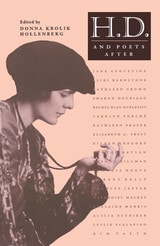
H.D. and Poets After
Donna Krolik Hollenberg
University of Iowa Press, 2000
Twenty essays—half by eminent American poets writing about their literary engagement with H.D. and half by critics writing about H.D. in relation to these same poets—provide a fruitful exchange of perceptions and interpretations. The dialogue between these two perspectives—the first autobiographical testimony and the second critical analysis by scholars attuned to both modern and contemporary poetries and poetics—calls into question both traditional notions of literary criticism and earlier theories of literary influence.
The volume includes a range of contemporary responses to H.D.'s work—from Alicia Ostriker's radical eroticism to Brenda Hillman's epistemological restlessness to Carolyn Forché's response to moral disasters of the century. H.D. and Poets After demonstrates key aspects of the poet's continuing importance as a "poet's poet" in the best sense.

HEROIC MEASURES
DAVID BERGMAN
The Ohio State University Press, 1998

HOUSE OF POURED OUT WATERS
POEMSJane Mead
University of Illinois Press, 2001
More than anything, it is her spiritual dimension that offers Mead a way into the future--but that way must be paved, image by image, with the world before her. Simultaneously conversational and lyrical, these fearless poems extend the possibilities of narrative verse.
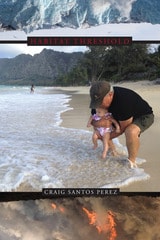
Habitat Threshold
Craig Santos Perez
Omnidawn, 2019
Through experimental forms, free verse, prose, haiku, sonnets, satire, and a method he calls “recycling,” Perez has created a diverse collection filled with passion. Habitat Threshold invites us to reflect on the damage done to our world and to look forward, with urgency and imagination, to the possibility of a better future.
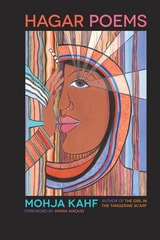
Hagar Poems
Mohja Kahf
University of Arkansas Press, 2016
“Mohja Kahf ’s Hagar Poems is brilliantly original in its conception, thrillingly artful in its execution. Its range is immense, its spiritual depth is profound, it negotiates its shifts between archaic and the contemporary with utmost skill. There’s lyricism, there’s satire, there’s comedy, there’s theology of a high order in this book.”
—Alicia Ostriker, author of For the Love of God: The Bible as an Open Book
“Hagar/ Hajar the immigrant/exile/outcast/refugee mother of a people is given multiple voices and significance in Mohja Kahf’s new book of dramatic monologues, which also reinvents Pharaoh’s daughter, Zuleika, Aïsha, and Mary in poems that are at once lively and learned, agnostic and devout. The sequence on an American mosque, and the poet’s ambivalent love for what it represents, is unique in American poetry.”
—Marilyn Hacker, author of A Stranger’s Mirror
“‘Where have all the goddesses gone,’ writes Mohja Kahf, ‘I tracked down Isis / incognito on Cyprus. /She told me Ishtar / lived under the radar / in southern Iraq. . . .’ In Hagar Poems, Mohja Kahf’s hallmark qualities—irreverence, imagination, wit, poignancy—are all exuberantly in evidence. A wonderful read.”
—Leila Ahmed, author of A Quiet Revolution: The Veil’s Resurgence, from the Middle East to America
“This brilliant collection captures all the ‘patient threading of relationship’ between Hagar and Sarah as between women, and then between women and men, between human and God. . . . At every turn of the page [Kahf] refuses complacency and circumstance but opts instead for exposing the tenuousness of threads that tie and bind and then come loose before our eyes.”
—From the foreword by Amina Wadud
The central matter of this daring new collection is the story of Hagar, Abraham, and Sarah—the ancestral feuding family of Judaism, Christianity, and Islam.
These poems delve into the Hajar story in Islam. They explore other figures from the Near Eastern heritage, such as Mary and Moses, and touch on figures from early Islam, such as Fatima and Aisha. Throughout, there is artful reconfiguring. Readers will find sequels and prequels to the traditional narratives, along with modernized figures claimed for contemporary conflicts.
Hagar Poems is a compelling shakeup of not only Hagar’s story but also of current roles of all kinds of women in all kinds of relationships.
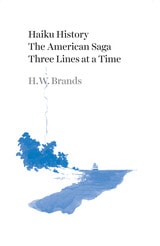
Haiku History
The American Saga Three Lines at a TimeBy H.W. Brands
University of Texas Press, 2020
For the past nine years, acclaimed historian H. W. Brands has been tweeting the history of the United States. But this has been no ordinary version of the American tale. Instead, Brands gives his 5,000-plus followers a regular dose of history and poetry combined: his tweets are in the form of haiku.
Haiku History presents a selection of these smart, shrewd, and always informative short poems. “Shivers and specters / Flit over souls in Salem / As nineteen are hanged; describes the Salem witch trials, and “In angry war paint / Men board three Indiamen / And toss the cargo” depicts the Boston Tea Party. “Then an anarchist / Makes one of the war heroes / The next president” recalls the assassination of William McKinley and the accession of Teddy Roosevelt to the presidency, while “Second invasion: / Iraq, where Saddam is still / In troubling control” returns us to the invasion of Iraq in 2003. As he travels from the thirteen colonies to the 2016 election, Brands brings to life the wars, economic crises, social upheavals, and other events that have shaped our nation. A history book like no other, Haiku History injects both fun and poetry into the story of America—three lines at a time.
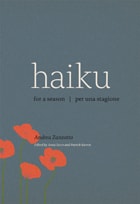
Haiku for a Season / Haiku per una stagione
Andrea Zanzotto
University of Chicago Press, 2012
Andrea Zanzotto is one of the most important and acclaimed poets of postwar Italy. This collection of ninety-one pseudo-haiku in English and Italian—written over several months during 1984 and then revised slowly over the years—confirms his commitment to experimentation throughout his life. Haiku for a Season represents a multilevel experiment for Zanzotto: first, to compose poetry bilingually; and second, to write in a form foreign to Western poetry. The volume traces the life of a woman from youth to adulthood, using the seasons and the varying landscape as a mirror to reflect her growth and changing attitudes and perceptions. With a lifelong interest in the intersections of nature and culture, Zanzotto displays here his usual precise and surprising sense of the living world. These never-before-published original poems in English appear alongside their Italian versions—not strict translations but parallel texts that can be read separately or in conjunction with the originals. As a sequence of interlinked poems, Haiku for a Season reveals Zanzotto also as a master poet of minimalism. Zanzotto’s recent death is a blow to world poetry, and the publication of this book, the last that he approved in manuscript, will be an event in both the United States and in Italy.
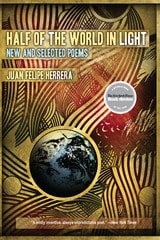
Half of the World in Light
New and Selected PoemsJuan Felipe Herrera
University of Arizona Press, 2008
For nearly four decades, Juan Felipe Herrera has documented his experience as a Chicano in the United States and Latin America through stunning, memorable poetry that is both personal and universal in its impact, themes, and approach. Often political, never fainthearted, his career has been marked by tremendous virtuosity and a unique sensibility for uncovering the unknown and the unexpected. Through a variety of stages and transformations, Herrera has evolved more than almost any other Chicano poet, always re-inventing himself into a more mature and seasoned voice.
Now, in this unprecedented collection, we encounter the trajectory of this highly innovative and original writer, bringing the full scope of his singular vision into view. Beginning with early material from A Certain Man, the volume moves through thirteen of Herrera’s collections into new, previously unpublished work. Serious scholars and readers alike will now have available to them a representative set of glimpses into his production as well as his origins and personal development. The ultimate value of bringing together such a collection, however, is that it will allow us to better understand and appreciate the complexity of what this major American poet is all about.
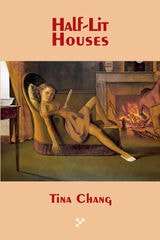
Half-Lit Houses
Tina Chang
Four Way Books, 2004
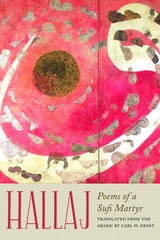
Hallaj
Poems of a Sufi MartyrTranslated from the Arabic by Carl W. Ernst
Northwestern University Press, 2018
Winner of the Global Humanities Translation Prize
Hallaj is the first authoritative translation of the Arabic poetry of Husayn ibn Mansur al-Hallaj, an early Sufi mystic. Despite his execution in Baghdad in 922 and the subsequent suppression of his work, Hallaj left an enduring literary and spiritual legacy that continues to inspire readers around the world. In Hallaj, Carl W. Ernst offers a definitive collection of 117 of Hallaj’s poems expertly translated for contemporary readers interested in Middle Eastern and Sufi poetry and spirituality.
Ernst’s fresh and direct translations reveal Hallaj’s wide range of themes and genres, from courtly love poems to metaphysical reflections on union with God. In a fascinating introduction, Ernst traces Hallaj’s dramatic story within classical Islamic civilization and early Arabic Sufi poetry. Setting himself apart by revealing Sufi secrets to the world, Hallaj was both celebrated and condemned for declaring: “I am the Truth.”
Expressing lyrics and ideas still heard in popular songs, the works of Hallaj remain vital and fresh even a thousand years after their composition. They reveal him as a master of spiritual poetry centuries before Rumi, who regarded Hallaj as a model. This unique collection makes it possible to appreciate the poems on their own, as part of the tragic legend of Hallaj, and as a formidable legacy of Middle Eastern culture.
The Global Humanities Translation Prize is awarded annually to a previously unpublished translation that strikes the delicate balance between scholarly rigor, aesthetic grace, and general readability, as judged by a rotating committee of Northwestern faculty, distinguished international scholars, writers, and public intellectuals. The Prize is organized by the Global Humanities Initiative, which is jointly supported by Northwestern University’s Buffett Institute for Global Studies and Kaplan Institute for the Humanities.

Hallowed
New and Selected PoemsPatricia Fargnoli
Tupelo Press, 2017
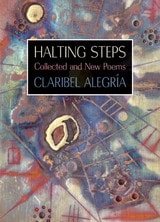
Halting Steps
Collected and New PoemsClaribel Alegria
Northwestern University Press, 2013
Halting Steps represents the most complete single-volume retrospective in English of Claribel Alegría’s seven-decade career. The volume collects all of Alegría’s poems from her fourteen previously published books and debuts several new poems under the title “Otherness.”
Her poetry is not only lyrical and introspective but also politically engaged. Her verse speaks forcefully, specifically, and fearlessly to matters of social justice in her region. She strikes a universal theme, however, in giving a voice to individuals of all classes in their struggle against oppression, but especially women who must contend with a system in which men hold the power and women are excluded. Alegría demonstrates her remarkable range with deeply personal poems, perhaps most notably in the poem cycle “Sorrow,” as she moves steadily through the waves of grief she experiences after her husband’s death.
In Halting Steps, both longtime admirers and those new to her work can appreciate the sustained creative power of Claribel Alegría’s poems.Halve
PoemsKristina Jipson
Tupelo Press, 2016

Hamlet Vocation Coleridge And Wordsworth
Martin Greenberg
University of Iowa Press, 1986
Hammer with No Master
Poems of René Char (French and English Edition)René Char
Tupelo Press, 2016
Stone Lyre was a selection of poems from Char’s numerous volumes of poems; Carlson’s new Hammer with No Master is a discrete and continuous work, the first English translation of Char’s Le marteau sans maître, first published in 1934 — a time of rumbling menace that our time resembles.
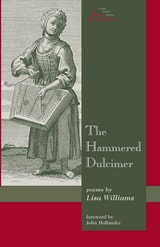
Hammered Dulcimer
Lisa Williams
Utah State University Press, 2000
Lisa William's poems are infused with what John Hollander calls "a guarded wonder." A poet of unique vision, she seems always to be "looking at," with special attention to the experience of the senses. Moreover, Williams is equally concerned with epistemology—the how of seeing. And it is perhaps this quality of attention that informs her interest in the formulations of poetry itself, in its constructed dimension. Her control of the line, of rhythmic possibilities, of structures both formal and free, is evident in every poem. Together, William's original voice and her poetic finesse allow her to create those harmonies of wonder evoked by the very instrument, the hammered dulcimer, that gives her collection its name. Judge for the 1998 May Swenson Poetry Award was John Hollander, poet, critic, professor. Long a major figure in American letters, Hollander was a personal friend to May Swenson, and has influenced the work of many of our best emerging poetic voices.
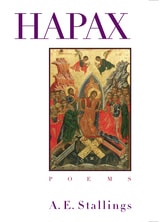
Hapax
PoemsA.E. Stallings
Northwestern University Press, 2006
Recipient of the 2008 Benjamin H. Danks Award
Hapax is ancient Greek for "once, once only, once and for all," and "onceness" pervades this second book of poems by American expatriate poet A. E. Stallings. Opening with the jolt of "Aftershocks," this book explores what does and does not survive its "gone moment"-childhood ("The Dollhouse"), ancient artifacts ("Implements from the Grave of the Poet"), a marriage's lost moments of happiness ("Lovejoy Street"). The poems also often compare the ancient world with the modern Greece where Stallings has lived for several years. Her musical lyrics cover a range of subjects from love and family to characters and themes derived from classical Greek sources ("Actaeon" and "Sisyphus").
Employing sonnets, couplets, blank verse, haiku, Sapphics, even a sequence of limericks, Stallings displays a seemingly effortless mastery of form. She makes these diverse forms seem new and relevant as modes for expressing intelligent thought as well as charged emotions and a sense of humor. The unique sensibility and linguistic freshness of her work has already marked her as an important, young poet coming into her own.
Happy Hour
Alan Shapiro
University of Chicago Press, 1987
"Happy Hour is one of the best collections I have recently read. Mr. Shapiro writes with apparently equal ease in free verse and more nearly traditional forms, and he brings his formidable technical skills to bear upon matters of great urgency: our need to love and be loved, and the often perverse ways in which we maintain our connections to those closest to us."—Henry Taylor, Washington Times
"This is a haunting, mature collection that should attract a larger audience for Shapiro's fine poems."—Thomas Swiss, Chicago Tribune
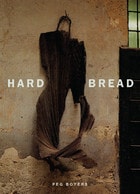
Hard Bread
Peg Boyers
University of Chicago Press, 2002
Hard Choices
An "Iowa Review" ReaderDAVID HAMILTON
University of Iowa Press, 1996
For twenty-five years, the Iowa Review has published many of America's finest writers, often helping them become established in their careers. From Tillie Olsen and William Stafford in the first volume to James Galvin and Pattiann Rogers in the twenty-fourth, the names and voices are recognizable and respected or soon will be. As editor David Hamilton notes in his introduction to this eclectic anniversary volume of nearly eighty poems and stories, "To a considerable extent we have defined ourselves by them; thus Hard Choices, a generous sampling of the best and most interesting writing from the Iowa Review's first years, defines the past and the future of American literature."
The Iowa Review is one of a small group of dedicated literary magazines that have defined American literary culture in the past quarter century. The adventurous, stimulating pieces in Hard Choices will encourage readers to look forward to the next quarter century.
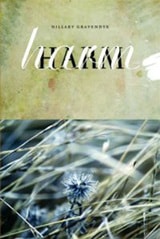
Harm
Hillary Gravendyk
Omnidawn, 2012
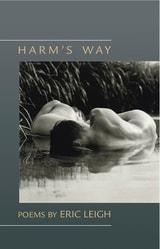
Harm's Way
PoemsEric Leigh
University of Arkansas Press, 2010
Finalist, Miller Williams Poetry Prize
“The past is a flame you must learn to hold / your hand above,” Eric Leigh writes in this stunning first volume of poems, a poignant meditation on the harm that we can and cannot keep from those we love, and the harm that cannot be kept from us. Taking place in both the rural and the urban, in fields and on sidewalks, in gay bars and in laboratories, with topics as diverse and powerful as a father’s suicide, a mother’s resilience, coming out, lost love, and the continuing plight of HIV, Leigh’s poems locate the heartbreaking music in these struggles. At the center of this profound book about loss—of family, of love, of immunity—lies the spirit’s ability to persevere. “My worst fear has come true, / and I am still here walking,” Leigh writes. Indeed, these poems are as assured and brave as those steps toward an unknown future. At turns beautiful, disturbing, mournful, and redemptive, Harm’s Way is an accomplished debut.
Harm’s Way is part of the University of Arkansas Press Poetry Series, edited by Enid Shomer.
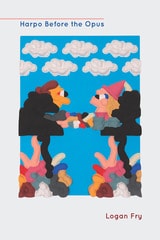
Harpo Before the Opus
Logan Fry
Omnidawn, 2019
In spiraling explorations of rhetoric, these poems allow language to break from its prescribed structures, and instead, it becomes a gestural embrace of feeling and being. Fry utilizes a Marxist lens to scrutinize and reinvent the use of language. In Fry’s hands, language is rendered a visceral and sensual material, forming poems that are both deeply felt philosophical inquiries and wildly playful exercises of wit.
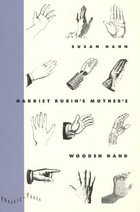
Harriet Rubin's Mother's Wooden Hand
Susan Hahn
University of Chicago Press, 1991

Hart Crane and the Homosexual Text
New Thresholds, New AnatomiesThomas E. Yingling
University of Chicago Press, 1990
"A brilliant critical model for understanding how textuality and sexuality can produce pervasive effects on each other in the writing of a figure like Crane."—Michael Moon, Duke University
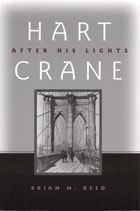
Hart Crane
After His LightsBrian M. Reed
University of Alabama Press, 2006
In Hart Crane: After His Lights, Brian Reed undertakes a study of Crane’s poetic output that takes into account, but also questions, the post-structural and theoretical developments in humanities scholarship of the last decade that have largely approached Crane in a piecemeal way, or pigeonholed him as represen-tative of his class, gender, or sexual orientation. Reed examines Crane’s career from his juvenilia to his posthumous critical reception and his impact on practicing poets following World War II. The first part of the study tests common rubrics of literary theory—nationality, sexuality, period—against Crane’s poetry, and finds that these labels, while enlightening, also obfuscate the origin and character of the poet’s work. The second part examines Crane’s poetry through the process of its composition, sources, and models, taking up questions of style, genealogy, and genre. The final section examines Crane’s influence on subsequent generations of American poets, especially by avant-garde literary circles like the New American poets, the Black Mountain School, the New York School, and the Beats.
The result is a study that complicates and enriches our understandings of Crane’s poetry and contributes to the ongoing reassessment of literary modernism’s origins, course, and legacy.
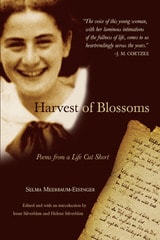
Harvest of Blossoms
Poems from a Life Cut ShortSelma Meerbaum-Eisinger
Northwestern University Press, 2008
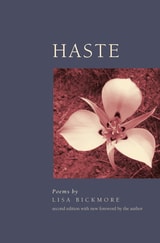
Haste
Lisa Bickmore
Signature Books, 2023
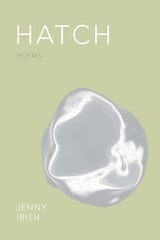
Hatch
PoemsJenny Irish
Northwestern University Press, 2024
The prose poems in Jenny Irish’s newest collection, Hatch, trace the consciousness of an artificial womb that must confront the role she has played in the continuation of the dying of the human species. This apocalyptic vision engages with the most pressing concerns of this contemporary sociopolitical moment: reproductive rights, climate crises, and mass extinction; gender and racial bias in healthcare and technology; disinformation, conspiracy theories, and pseudoscience; and the possibilities and dangers of artificial intelligence. More intimately, Hatch considers questions about how motherhood and its cultural expectations shape female identity. Working with avant strategies, Irish crafts a speculative feminist narrative, excavating and reexamining the aspects of the American experience that should have served as a call to action but have not. Part elegy and part prophecy, Hatch warns of a possible future while speaking to the present moment.
Have
Marc Gaba
Tupelo Press, 2011
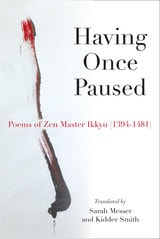
Having Once Paused
Poems of Zen Master Ikkyu (1394-1481)Ikkyu Sojun
University of Michigan Press, 2015
Haywire
PoemsGeorge Bilgere
Utah State University Press, 2006
Haywire was chosen for the Swenson Award by poet Edward Field, winner of numerous awards and a personal friend of the late May Swenson. Field describes the book this way. "This poet, you knew from his very first lines, didn’t fall for anything phony—his own language is irresistibly no-bullshit down to earth, even sassy."
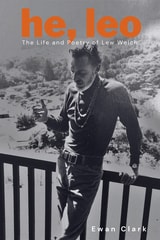
He, Leo
The Life and Poetry of Lew WelchEwan Clark
Oregon State University Press, 2023
He, Leo investigates Welch’s life and work in a chronological fashion, structured around Welch’s own notion of how three main aspects of his life—The Man, The Mountain, and The City—were interdependent. From his birth until his disappearance and presumed death, Welch’s life was often defined by problems, including a complex relationship with his mother, a long struggle with alcohol, and a fluctuating mental state. Yet he was open and candid about everything, a fact that is evident in all aspects of his work.
Each of the three main sections of He, Leo includes key poems, essays, and events—both personal and cultural—to help establish Welch’s importance as a prominent poet and figure during the San Francisco Renaissance. Despite his crushing self-criticism and his reputation as a “friend of,” he was bona fide poet with a strong voice and message of his own. With this first full-length biography, Ewan Clark restores Lew Welch to his rightful place as an important member of a significant American literary and cultural movement.
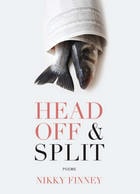
Head Off & Split
PoemsNikky Finney
Northwestern University Press, 2011
Winner, 2011 National Book Award for Poetry
Winner, 2012 GCLS Award for Poetry
Winner, 2012 SIBA Book Award for Poetry
Nominee, 2012 NAACP Image Award for Outstanding Literary Work in Poetry
The poems in Nikky Finney's breathtaking new collection Head Off & Split sustain a sensitive and intense dialogue with emblematic figures and events in African American life: from civil rights matriarch Rosa Parks to former secretary of state Condoleezza Rice, from a brazen girl strung out on lightning to a terrified woman abandoned on a rooftop during Hurricane Katrina. Finney's poetic voice is defined by an intimacy that holds a soft yet exacting eye on the erotic, on uncanny political and family events, like her mother's wedding waltz with South Carolina senator Strom Thurmond, and then again on the heartbreaking hilarity of an American president's final State of the Union address.
Artful and intense, Finney's poems ask us to be mindful of what we fraction, fragment, cut off, dice, dishonor, or throw away, powerfully evoking both the lawless and the sublime.
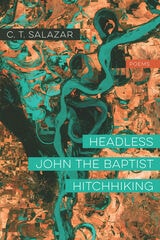
Headless John the Baptist Hitchhiking
PoemsC. T. Salazar
Acre Books, 2022
In C. T. Salazar’s striking debut poetry collection, the speaker is situated in the tradition of Southern literature but reimagines its terrain with an eye on the South’s historic and ongoing violence. His restless relationship with religion (“a child told me there was a god / and because he was smiling, I believed him”) eventually includes a reclamation of the language of belief in the name of desire. “I felt myself become gospel in your hands,” the speaker tells his beloved. And, as the title poem asserts, a headless body “leaves more room for salvation.”
Though Salazar’s South is not a tender place, the book is a petition for tenderness, revealing in both place and people the possibilities for mercy, vulnerability, and wonder. The lyric I, as it creates an archive of experience, is not distanced from the poems’ subjects or settings, but deeply enmeshed in a tangled world. In poems with lush diction, ranging from a sonnet crown to those that explore the full field of the page, Headless John the Baptist Hitchhiking seeks—and finds—where the divine resides: “Praise our hollow-bell bodies still ringing.”
Heard-Hoard
Atsuro Riley
University of Chicago Press, 2021
Recognized for his “wildly original” poetry and his “uncanny and unparalleled ability to blend lyric and narrative,” Atsuro Riley deepens here his uncommon mastery and tang. In Heard-Hoard, Riley has “razor-exacted” and “raw-wired” an absorbing new sequence of poems, a vivid weavework rendering an American place and its people.
At once an album of tales, a portrait gallery, and a soundscape; an “inscritched” dirt-mural and hymnbook, Heard-Hoard encompasses a chorus of voices shot through with (mostly human) histories and mysteries, their “old appetites as chronic as tides.” From the crackling story-man calling us together in the primal circle to Tammy figuring “time and time that yonder oak,” this collection is a profound evocation of lives and loss and lore.

Heart of the Stone / El corazón de la piedra / Uk'u'x ri ab'aj
By Rosa Chávez, translated by Gabriela Ramirez-Chavez and Wel Raxulew
Amherst College Press, 2027
In Heart of the Stone, Rosa Chávez celebrates a Maya spirituality that recognizes all things—stones included—as part of the web of life. At the center of the collection is tijax, the poet's nawal represented by obsidian, the volcanic stone. Her verses cut through grief and fear to address colonization, injustices, and environmental abuse, while carving out a space for tenderness and deep healing.
Originally written in Spanish and translated into Maya K'iche' by Wel Raxulew, this stunning trilingual edition brings the poems into English for the first time in Gabriela Ramirez-Chavez's translation. The volume is framed by an introduction from Ramirez-Chavez, photography by Carlos Bernardo Euler Coy, and illustrations by Erick Boror.

Heartless Architecture
Aris Kian
University of Arkansas Press, 2027
Winner, 2027 Miller Williams Poetry Prize
Rich with Black spirituality and familial memory, Heartless Architecture traverses Houston to interrogate how citizens can care for each other in a city that perpetually does them harm. As a third-generation Texan, former mutual aid organizer, and wavering church kid, Aris Kian renders a Southern pastoral underpinned by the heartbreak of historical violence, gentrification, and systemic indifference: “The day S was buried, another bridge / was built over 59 almost overnight. . . . / When G bit a prayer / into the blacktop, downtown erected a skyline / unrecognizable to a practiced eye. . . . A midtown park springs out of the grass / as two rounds are fired into A’s chest. / Sometimes, growth is mistaken / for healing.”
A keen observer of the contested landscapes that comprise both self and home, and eager to elicit new meanings from myths that are “the residue of a history interrupted,” Kian is at her most triumphant when she unites with her fellow citizens to combat state harm: “I do know our resistance is stronger / than any brick or barricade / they could tear down and toss out. / I do know our commitment to principle / cannot be cut through.”
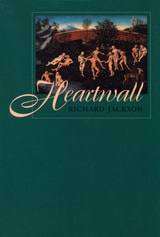
Heartwall
Richard Jackson
University of Massachusetts Press, 2000
Taking its title from a poem by Paul Celan that is both elegiac and hopeful, but also playing off the notion of the “hart” walls erected to corral deer for a medieval hunt that was more a slaughter, and evoking the very physiology of the heart itself, this collection of poems explores the possibilities for love and feeling in a world besieged by tragedies in Bosnia, Kosovo, Rwanda, and elsewhere. At times lyrical, at times satirical, and written in a surrealistic style that ranges from the formal to the aphoristic, Heartwall explores the complex and sometimes confounding relationship between the personal and the political, between our individual perceptions and the larger vision they suggest. These are poems that ask forgiveness, offer praise, and carry enough irony never to seek redemption. They are, at heart, love poems. According to the late William Matthews, Jackson's poems tell us “what it means to belong in history. . . . The wonderful amplitude . . . testifies that we can live with such chaos and not lie about it or ignore it: indeed the poems are a demonstration of how we might do such a thing.”
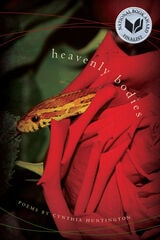
Heavenly Bodies
Cynthia Huntington
Southern Illinois University Press, 2011
In this blistering collection of lyric poems, Cynthia Huntington gives an intimate view of the sexual revolution and rebellion in a time before the rise of feminism. Heavenly Bodies is a testament to the duality of sex, the twin seductiveness and horror of drug addiction, and the social, political, and personal dramas of America in the 1960s.
From the sweetness of purloined blackberries to the bitter taste of pills, the ginger perfume of the Hawaiian Islands to the scream of the winter wind, Huntington’s fearless and candid poems offer a feast for the senses that is at once mystical and earthy, cynical and surreal. Echoing throughout are some of the most famous—and infamous—voices of the times: Joan Baez and Charles Manson, Frank Zappa and Betty Friedan. Jinns and aliens beckon while cities burn and revolutionaries thunder for change. At the center is the semiautobiographical Suzy Creamcheese, sensual and rebellious, both almighty and powerless in her sexuality.
Achingly tender yet brutally honest, Heavenly Bodies is an unflinching reflection on the most personal of physical and emotional journeys.
Univeristy Press Books for Public and Secondary Schools 2013 edition
Finalist for the National Book Award in Poetry, 2012
Heidegger and the Politics of Poetry
Philippe Lacoue-Labarthe
University of Illinois Press, 2006
This volume collects and translates Philippe Lacoue-Labarthe’s studies of Heidegger, written and revised between 1990 and 2002. All deal with Heidegger’s relation to politics, specifically through Heidegger’s interpretations of the poetry of Hölderlin. Lacoue-Labarthe argues that it is through Hölderlin that Heidegger expresses most explicitly his ideas on politics, his nationalism, and the importance of myth in his thinking, all of which point to substantial affinities with National Socialism.
Lacoue-Labarthe not only examines the intellectual background--including Romanticism and "German ideology"--of Heidegger's uses and abuses of poetry, he also attempts to reestablish the vexed relationship between poetry and philosophy outside the bounds of the Heideggerian reading. He turns to Walter Benjamin and Theodor Adorno, as well as Paul Celan, arguing for the necessity of poetry as an engagement with history. While Heidegger's readings of Hölderlin attempt to appropriate poetry for mythic and political ends, Lacoue-Labarthe insists that poetry and thought can, and must, converge in another way. Jeff Fort provides a precise translation capturing the spirit and clarity of Lacoue-Labarthe’s writing, as well as an introduction clearly situating the debates addressed in these essays.
Held by Form
Feminism, Poetics, Critical PracticeAnna Moser
University of Chicago Press, 2026
How contemporary poetry illuminates the workings—and struggles—of commitment in feminism.
In this lucid and vigorous defense of poetics for feminism, Anna Moser situates the practice of contemporary poetry in an exploratory dialogue with the work of philosophical, critical, and historical thinkers—placing Denise Riley in conversation with Judith Butler, Lyn Hejinian with Hannah Arendt, m. nourbeSe philip with Saidiya Hartman, and Susan Howe with Emily Dickinson.
Moser’s central theme is these poets’ questioning, agonistic commitment to feminism. What, the book asks, does it mean to be committed? How does such a commitment materialize? What are its consequences? What does it mean not to take for granted an affiliation like “feminist” (or even “woman”), but rather to involve one’s art in probing its historical formations, present conditions, and future trajectories? Moser explores both the risks and possibilities of making art in this equivocal condition. She reveals that the poetry of certain contemporary writers not only unfolds within this space of agonistic commitment, but that, in doing so, it offers an important contribution to feminist thinking. Moser’s book also shows that while form is a constraint that limits these poets’ freedom, it also holds them in a more sustaining sense, allowing something belatedly and imperfectly to be said.
In dialogue with feminist political theory, philosophy, historiography, and aesthetics, Held by Form reveals poetics as a unique mode of critical practice: one that models relations of care and collectivity, refigures inherited forms in ways that contest their hierarchies of value, and responds with generosity and openness to the complexities of living in gender.
Hellenistic Poetry
A SelectionDavid Sider, Editor
University of Michigan Press, 2017
The text of each poem is presented, together with basic help on obscure vocabulary, morphology, dialect, meter, syntax, and similar philological issues. The modern commentators also offer guidance on a poem’s literary significance and a brief introduction to the scholarship.
Among the 44 named and anonymous poets represented here are Apollonius of Rhodes, Archimedes, Aristotle, Callimachus, Cercidas, Corinna, Eratosthenes, Erinna, Ezekiel, Hermesianax, Herodas, Lycophron, and Phanocles.
Contributors to the volume in addition to David Sider include: Silvia Barbantani, James Clauss, Dee Clayman, Christophe Cusset, Claudio De Stefani, Marco Fantuzzi, Andrew Ford, Kathryn Gutzwiller, Johanna Hanink, Regina Hoeschele, Richard Hunter, David Konstan, Pauline LeVen, Kelly MacFarlane, Enrico Magnelli, Jackie Murray, Pura Nieto, Maria Noussia, Douglas Olson, Floris Overduin, Richard Rawles, Ralph Rosen, Chad Schroeder, Alexander Sens, Evina Sistakou, Michael Tueller, and Athanassios Vergados.
Although designed primarily as a textbook for graduate students and upper-level undergraduates, the book offers texts and subsidiary information not easily found (if at all) elsewhere. Since Latin poets made constant allusion to Hellenistic poetry, it will also be an important resource for Latinists.
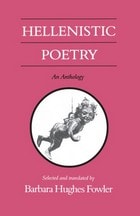
Hellenistic Poetry
An AnthologySelected and translated by Barbara Hughes Fowler
University of Wisconsin Press, 1990
An accomplished poet and classical scholar, Barbara Hughes Fowler brings Hellenistic poetry to life for the contemporary reader. Her selections engage us with the full range of Hellenistic poetic genres, styles, themes, and moods. The anthology includes Fowler’s new translation of the entire Argonautica of Apollonius of Rhodes, and eight of Theocritus’ Idylls, including the beautiful, sensuous description of late summer in Idyll VII and the shrewdly comical description of two young matrons venturing into the noisy streets of Alexandria in Idyll XV. There are translations of four hymns of Callimachus, as well as poems by Aratus, Bion, Herodas, Moschus, Pseudo-Moschus, and a substantial selection from the Greek Anthology.
An ideal companion to her recently published book, The Hellenistic Aesthetic, Barbara Fowler’s Hellenistic Poetry is both a major contribution to classical studies and an invitation to all interested readers to discover the beauty and richness of Hellenistic poetry.
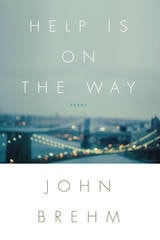
Help Is on the Way
John Brehm
University of Wisconsin Press, 2012
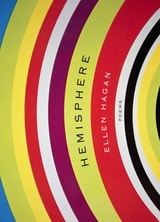
Hemisphere
PoemsEllen Hagan
Northwestern University Press, 2015
Winner, 2015 Seven Sisters Book Award for Poetry
The poems in Hemisphere explore what it means to be a daughter and what it means to bear new life. Ellen Hagan investigates the world historical hemispheres of a family legacy from around the globe and moves down to the most intimate hemisphere of impending motherhood. Her poems reclaim the female body from the violence, both literal and literary, done to it over the years. Hagan acknowledges the changing body of a mother from the strains of birth—from the growing body of a child, to the scars left most visibly by a C-section—as well as the changes wrought by age and, too often, abuse. The existence of a hemisphere implies a part seeking a whole, and as a collection, Hemisphere is a coherent and cogent journey toward reclamation and wholeness.
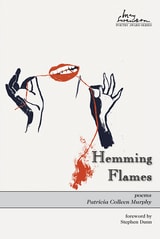
Hemming Flames
Patricia Colleen Murphy
Utah State University Press, 2016
Volume 19 of the May Swenson Poetry Award Series, 2016
Throughout this haunting first collection, Patricia Colleen Murphy shows how familial mental illness, addiction, and grief can render even the most courageous person helpless. With depth of feeling, clarity of voice, and artful conflation of surrealist image and experience, she delivers vivid descriptions of soul-shaking events with objective narration, creating psychological portraits contained in sharp, bright language and image. With Plathian relentlessness, Hemming Flames explores the deepest reaches of family dysfunction through highly imaginative language and lines that carry even more emotional weight because they surprise and delight. In landscapes as varied as an Ohio back road, a Russian mental institution, a Korean national landmark, and the summit of Kilimanjaro, each poem sews a new stitch on the dark tapestry of a disturbed suburban family’s world.
The May Swenson Poetry Award is an annual competition named for May Swenson, one of America’s most provocative and vital writers. During her long career, Swenson was loved and praised by writers from virtually every school of American poetry. She left a legacy of fifty years of writing when she died in 1989. She is buried in her hometown of Logan, Utah.

Hemming the Water
Yona Harvey
Four Way Books, 2013
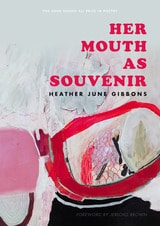
Her Mouth as Souvenir
Heather June Gibbons
University of Utah Press, 2018
In a startling voice propelled by desire and desperation on the verge of laughter, these poems leap from the mundane to the sublime, from begging to bravado, from despair to reverie, revealing the power that comes from hanging on by a thread. Poet Heather June Gibbons conjures belief in the absence of faith, loneliness in the digital age, beauty in the face of absurdity—all through the cataract of her sunglasses’ cracked lens. In this debut collection, we are shown a world so turbulent, anxious, and beautiful, we know it must be ours. Under pressure, these poems sing.
Includes a foreword by Jericho Brown.
From the poem “Bobby Reads Chekhov”
They say if you’re sad, you haven’t been
smiling enough. Want to make better decisions?
Eat more cheese. Perception is reality,
my horrible boss used to say when I’d try
to explain anything she couldn’t see,
though maybe she was right. Can we know
reality any other way? The painter saw
purple in the trees, so he painted them purple.
Leaving the gallery, we see purple everywhere.
Studies have shown meditation makes
brain waves akin to coma. Is that so,
you say, fingering your tiny screen.
Here
Sydney Lea
Four Way Books, 2019