Results by title
4038 books match the query 'Social aspects' and 97 start with h
HIGH STAKES
BIGTIME SPORTS & DOWNTOWN REDEVELOPMENTTimothy Jon Curry, Kent Schwirian, and Rachael A. Woldoff
The Ohio State University Press, 2004
Habit's Pathways
Repetition, Power, ConductTony Bennett
Duke University Press, 2023
Hacking the Iron Curtain
A Media Archaeology of the Russian InternetNatalia Konradova
University of Wisconsin Press, 2026
Media archaeologist Natalia Konradova examines the history of the internet in Russia and its predecessor state, cutting through layers of technological history and dusting off conceptual artifacts of the past. Inspired by the fundamental question of how Soviets imagined future technologies, she investigates experiments with telepathy alongside the (then equally improbable) dream of a global, digitally connected computer network. Since the story of the Russian internet is inextricably wound up with Soviet society and the history of the Cold War, Hacking the Iron Curtain is as much a cultural and political history as it is a technological one—a history that illustrates how collective dreams can challenge geopolitical ambitions and inspire world-changing technologies.
Half a Million Strong
Crowds and Power from Woodstock to CoachellaGina Arnold
University of Iowa Press, 2018
From baby boomers to millennials, attending a big music festival has basically become a cultural rite of passage in America. In Half a Million Strong, music writer and scholar Gina Arnold explores the history of large music festivals in America and examines their impact on American culture. Studying literature, films, journalism, and other archival detritus of the countercultural era, Arnold looks closely at a number of large and well-known festivals, including the Newport Folk Festival, Woodstock, Altamont, Wattstax, the New Orleans Jazz and Heritage Festival, Hardly Strictly Bluegrass, and others to map their cultural significance in the American experience. She finds that—far from being the utopian and communal spaces of spiritual regeneration that they claim for themselves— these large music festivals serve mostly to display the free market to consumers in its very best light.
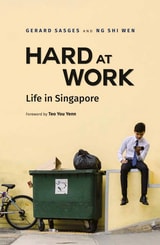
Hard at Work
Life in SingaporeGerard Sasges and Ng Shi Wen
National University of Singapore Press, 2019
Through first-person narratives based on detailed interviews, vividly augmented with color photographs, Hard at Work reminds us of the everyday labor that continually goes on around us, and that every job can reveal something interesting if we just look closely enough. It shows us too the ways inequalities of status and income are felt and internalized in this highly globalized society.

Hard-Core Romance
"Fifty Shades of Grey," Best-Sellers, and SocietyEva Illouz
University of Chicago Press, 2014
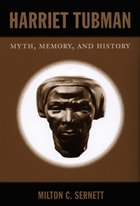
Harriet Tubman
Myth, Memory, and HistoryMilton C. Sernett
Duke University Press, 2007
Three biographies of Harriet Tubman were published within months of each other in 2003–04; they were the first book-length studies of the “Queen of the Underground Railroad” to appear in almost sixty years. Sernett examines the accuracy and reception of these three books as well as two earlier biographies first published in 1869 and 1943. He finds that the three recent studies come closer to capturing the “real” Tubman than did the earlier two. Arguing that the mythical Tubman is most clearly enshrined in stories told to and written for children, Sernett scrutinizes visual and textual representations of “Aunt Harriet” in children’s literature. He looks at how Tubman has been portrayed in film, painting, music, and theater; in her Maryland birthplace; in Auburn, New York, where she lived out her final years; and in the naming of schools, streets, and other public venues. He also investigates how the legendary Tubman was embraced and represented by different groups during her lifetime and at her death in 1913. Ultimately, Sernett contends that Harriet Tubman may be America’s most malleable and resilient icon.
Hating Jazz
A History of Its Disparagement, Mockery, and Other Forms of AbuseAndrew S. Berish
University of Chicago Press, 2025
A rock guitarist plays four notes in front of one thousand people, while a jazz guitarist plays one thousand notes in front of four people. You might laugh or groan at this jazz joke, but what is it about jazz that makes people want to disparage it in the first place?
Andrew S. Berish’s Hating Jazz listens to the voices who have denounced, disparaged, and mocked the music. By focusing on the rejection of the music, Berish says, we see more holistically jazz’s complicated place in American cultural life. Jazz is a display of Black creativity and genius, an art form that is deeply embedded in African American life. Though the explicit racial tenor of jazz jokes has become muted over time, making fun of jazz, either in a lighthearted or aggressive way, is also an engagement with the place of Blackness in America. An individual’s taste in music may seem personal, but Berish’s analysis of jazz hatred demonstrates that musical preferences and trends are a social phenomenon. Criticism of jazz has become inextricable from the ways we understand race in America, past and present. In addition to this form of criticism, Berish also considers jazz hate as a form of taste discrimination and as a conflict over genre boundaries within different jazz cultures.
Both enlightening and original, Hating Jazz shows that our response to music can be a social act, unique to our historical moment and cultural context—we react to music in certain ways because of who we are, where we are, and when we are.
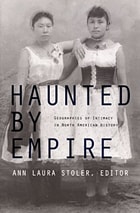
Haunted by Empire
Geographies of Intimacy in North American HistoryAnn Laura Stoler, ed.
Duke University Press, 2006
Haunted by Empire includes Ann Laura Stoler’s seminal essay “Tense and Tender Ties” as well as her bold introduction, which carves out the exciting new analytic and methodological ground animated by this comparative venture. The contributors engage in a lively cross-disciplinary conversation, drawing on history, anthropology, literature, philosophy, and public health. They address such topics as the regulation of Hindu marriages and gay sexuality in the early-twentieth-century United States; the framing of multiple-choice intelligence tests; the deeply entangled histories of Asian, African, and native peoples in the Americas; the racial categorizations used in the 1890 U.S. census; and the politics of race and space in French colonial New Orleans. Linda Gordon, Catherine Hall, and Nancy F. Cott each provide a concluding essay reflecting on the innovations and implications of the arguments advanced in Haunted by Empire.
Contributors. Warwick Anderson, Laura Briggs, Kathleen Brown, Nancy F. Cott, Shannon Lee Dawdy, Linda Gordon, Catherine Hall, Martha Hodes, Paul A. Kramer, Lisa Lowe, Tiya Miles, Gwenn A. Miller, Emily S. Rosenberg, Damon Salesa, Nayan Shah, Alexandra Minna Stern, Ann Laura Stoler, Laura Wexler
Haunting Biology
Science and Indigeneity in AustraliaEmma Kowal
Duke University Press, 2023

Having Epilepsy
The Experience and Control of IllnessJoseph W. Schneider and Peter Conrad
Temple University Press, 1985
Healing Powers
Alternative Medicine, Spiritual Communities, and the StateFred M. Frohock
University of Chicago Press, 1992
"Frohock goes beyond the often irreconcilable differences between scientific biomedicine and alternative care by clarifying the social and legal dilemmas they present. . . . A noteworthy contribution forcing us to rethink what medical care is all about."—Jeffrey Michael Clare, Journal of the American Medical Association
"The book does more and better than simply provide a social-scientific proposal. It also gives not only a hearing but a voice to those who follow alternative therapies. . . . Frohock's accounts of their stories—along with the stories of the medical professionals—are eloquent and fascinating."—Allen Verhey, Medical Humanities Review
"Contains a storehouse of valuable information about the historical, philosophical, and psychological bases of alternative approaches to healing."—Marshall B. Kapp, New England Journal of Medicine
"Frohock introduces us to the scientific naturopaths and to physicians who believe in the mind's power to heal, to charismatics who believe in but cannot explain their powers, to those who test God and those who merely accept. He writes so well that I felt I had met these people."—Arthur W. Frank, Christian Century
Health and Work Productivity
Making the Business Case for Quality Health CareEdited by Ronald C. Kessler and Paul E. Stang
University of Chicago Press, 2006
Health and Work Productivity presents state-of-the-art health and productivity research that suggests interventions aimed at prevention, early detection, and best-practice treatment of workers along with an informed allocation strategy can produce significant cost-benefits for employers. Contributors cover all the major aspects of this new area of research: approaches to studying the effects of health on productivity, ways for employers to estimate the costs of productivity loss, concrete suggestions for future research developments in the area, and the implications of this research for public policy.
Heartless Immensity
Literature, Culture, and Geography in Antebellum AmericaAnne Baker
University of Michigan Press, 2010
Building on extensive archival research as well as insights from cultural geographers and theorists of nationhood, Heartless Immensity demonstrates that national expansion had a far more complicated, multifaceted impact on antebellum American culture than has previously been recognized. Baker shows that Americans developed a variety of linguistic strategies for imagining the form of the United States and its position in relation to other geopolitical entities. Comparisons
to European empires, biblical allusions, body politic metaphors, and metaphors derived from science all reflected—and often attempted to assuage—fears that the nation was becoming either monstrously large or else misshapen in ways that threatened cherished beliefs and national self-images.
Heartless Immensity argues that, in order to understand the nation’s shift from republic to empire and to understand American culture in a global context, it is first necessary to pay close attention to the processes by which the physical entity known as the United States came into being. This impressively thorough study will make a valuable contribution to the fields of American studies and literary studies.
Anne Baker is Assistant Professor of English at North Carolina State University.

Hearts And Minds
The Controversy Over Laboratory AnimalsJulian Groves
Temple University Press, 1996
Heat Wave
A Social Autopsy of Disaster in ChicagoEric Klinenberg
University of Chicago Press, 2002
Heat waves in the United States kill more people during a typical year than all other natural disasters combined. Until now, no one could explain either the overwhelming number or the heartbreaking manner of the deaths resulting from the 1995 Chicago heat wave. Meteorologists and medical scientists have been unable to account for the scale of the trauma, and political officials have puzzled over the sources of the city's vulnerability. In Heat Wave, Eric Klinenberg takes us inside the anatomy of the metropolis to conduct what he calls a "social autopsy," examining the social, political, and institutional organs of the city that made this urban disaster so much worse than it ought to have been.
Starting with the question of why so many people died at home alone, Klinenberg investigates why some neighborhoods experienced greater mortality than others, how the city government responded to the crisis, and how journalists, scientists, and public officials reported on and explained these events. Through a combination of years of fieldwork, extensive interviews, and archival research, Klinenberg uncovers how a number of surprising and unsettling forms of social breakdown—including the literal and social isolation of seniors, the institutional abandonment of poor neighborhoods, and the retrenchment of public assistance programs—contributed to the high fatality rates. The human catastrophe, he argues, cannot simply be blamed on the failures of any particular individuals or organizations. For when hundreds of people die behind locked doors and sealed windows, out of contact with friends, family, community groups, and public agencies, everyone is implicated in their demise.
As Klinenberg demonstrates in this incisive and gripping account of the contemporary urban condition, the widening cracks in the social foundations of American cities that the 1995 Chicago heat wave made visible have by no means subsided as the temperatures returned to normal. The forces that affected Chicago so disastrously remain in play in America's cities, and we ignore them at our peril.
Heat Wave
A Social Autopsy of Disaster in ChicagoEric Klinenberg
University of Chicago Press, 2015
On Thursday, July 13, 1995, Chicagoans awoke to a blistering day in which the temperature would reach 106 degrees. The heat index, which measures how the temperature actually feels on the body, would hit 126 degrees by the time the day was over. Meteorologists had been warning residents about a two-day heat wave, but these temperatures did not end that soon. When the heat wave broke a week later, city streets had buckled; the records for electrical use were shattered; and power grids had failed, leaving residents without electricity for up to two days. And by July 20, over seven hundred people had perished-more than twice the number that died in the Chicago Fire of 1871, twenty times the number of those struck by Hurricane Andrew in 1992—in the great Chicago heat wave, one of the deadliest in American history.
Heat waves in the United States kill more people during a typical year than all other natural disasters combined. Until now, no one could explain either the overwhelming number or the heartbreaking manner of the deaths resulting from the 1995 Chicago heat wave. Meteorologists and medical scientists have been unable to account for the scale of the trauma, and political officials have puzzled over the sources of the city's vulnerability. In Heat Wave, Eric Klinenberg takes us inside the anatomy of the metropolis to conduct what he calls a "social autopsy," examining the social, political, and institutional organs of the city that made this urban disaster so much worse than it ought to have been.
Starting with the question of why so many people died at home alone, Klinenberg investigates why some neighborhoods experienced greater mortality than others, how the city government responded to the crisis, and how journalists, scientists, and public officials reported on and explained these events. Through a combination of years of fieldwork, extensive interviews, and archival research, Klinenberg uncovers how a number of surprising and unsettling forms of social breakdown—including the literal and social isolation of seniors, the institutional abandonment of poor neighborhoods, and the retrenchment of public assistance programs—contributed to the high fatality rates. The human catastrophe, he argues, cannot simply be blamed on the failures of any particular individuals or organizations. For when hundreds of people die behind locked doors and sealed windows, out of contact with friends, family, community groups, and public agencies, everyone is implicated in their demise.
As Klinenberg demonstrates in this incisive and gripping account of the contemporary urban condition, the widening cracks in the social foundations of American cities that the 1995 Chicago heat wave made visible have by no means subsided as the temperatures returned to normal. The forces that affected Chicago so disastrously remain in play in America's cities, and we ignore them at our peril.
For the Second Edition Klinenberg has added a new Preface showing how climate change has made extreme weather events in urban centers a major challenge for cities and nations across our planet, one that will require commitment to climate-proofing changes to infrastructure rather than just relief responses.
Hello, Hello Brazil
Popular Music in the Making of Modern BrazilBryan McCann
Duke University Press, 2004
McCann explores the links between the growth of the culture industry, rapid industrialization, and the rise and fall of Getúlio Vargas’s Estado Novo dictatorship. He argues that these processes opened a window of opportunity for the creation of enduring cultural patterns and demonstrates that the understandings of popular music cemented in the mid–twentieth century continue to structure Brazilian cultural life in the early twenty-first.
Helping People Help Themselves
From the World Bank to an Alternative Philosophy of Development AssistanceDavid Ellerman
University of Michigan Press, 2006
David Ellerman relates a deep theoretical groundwork for a philosophy of development, while offering a descriptive, practical suggestion of how goals of development can be better set and met. Beginning with the assertion that development assistance agencies are inherently structured to provide help that is ultimately unhelpful by overriding or undercutting the capacity of people to help themselves, David Ellerman argues that the best strategy for development is a drastic reduction in development assistance. The locus of initiative can then shift from the would-be helpers to the doers (recipients) of development. Ellerman presents various methods for shifting initiative that are indirect, enabling and autonomy-respecting. Eight representative figures in the fields of education, community organization, economic development, psychotherapy and management theory including: Albert Hirschman, Paulo Freire, John Dewey, and Søren Kierkegaard demonstrate how the major themes of assisting autonomy among people are essentially the same.
David Ellerman is currently a Visiting Scholar in the Economics Department at the University of California at Riverside.
Hemispheric Blackface
Impersonation and Nationalist Fictions in the AmericasDanielle Roper
Duke University Press, 2025
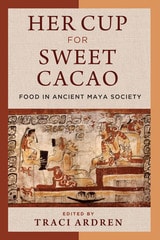
Her Cup for Sweet Cacao
Food in Ancient Maya SocietyEdited by Traci Ardren
University of Texas Press, 2020
For the ancient Maya, food was both sustenance and a tool for building a complex society. This collection, the first to focus exclusively on the social uses of food in Classic Maya culture, deploys a variety of theoretical approaches to examine the meaning of food beyond diet—ritual offerings and restrictions, medicinal preparations, and the role of nostalgia around food, among other topics. For instance, how did Maya feasts build community while also reinforcing social hierarchy? What psychoactive substances were the elite Maya drinking in their caves, and why? Which dogs were good for eating, and which breeds became companions? Why did even some non-elite Maya enjoy cacao, but rarely meat? Why was meat more available for urban Maya than for those closer to hunting grounds on the fringes of cities? How did the molcajete become a vital tool and symbol in Maya gastronomy?
These chapters, written by some of the leading scholars in the field, showcase a variety of approaches and present new evidence from faunal remains, hieroglyphic texts, chemical analyses, and art. Thoughtful and revealing, Her Cup for Sweet Cacao unlocks a more comprehensive understanding of how food was instrumental to the development of ancient Maya culture.
Heritage Conservation and Social Engagement
Edited by Rentata F. Peters, Iris L. F. den Boer, Jessica S. Johnson, and Susanna Pancaldo
University College London, 2020
Heritage Keywords
Rhetoric and Redescription in Cultural HeritageKathryn Lafrenz Samuels
University Press of Colorado, 2015
Situated at the intersection of scholarship and practice, Heritage Keywords positions cultural heritage as a transformative tool for social change. This volume unlocks the persuasive power of cultural heritage—as it shapes experiences of change and crafts present and future possibilities from historic conditions—by offering new ways forward for cultivating positive change and social justice in contemporary social debates and struggles. It draws inspiration from deliberative democratic practice, with its focus on rhetoric and redescription, to complement participatory turns in recent heritage work.
Through attention to the rhetorical edge of cultural heritage, contributors to this volume offer innovative reworkings of critical heritage categories. Each of the fifteen chapters examines a key term from the field of heritage practice—authenticity, civil society, cultural diversity, cultural property, democratization, difficult heritage, discourse, equity, intangible heritage, memory, natural heritage, place, risk, rights, and sustainability—to showcase the creative potential of cultural heritage as it becomes mobilized within a wide array of social, political, economic, and moral contexts.
This highly readable collection will be of interest to students, scholars, and professionals in heritage studies, cultural resource management, public archaeology, historic preservation, and related cultural policy fields.
Contributors include Jeffrey Adams, Sigrid Van der Auwera, Melissa F. Baird, Alexander Bauer, Malcolm A. Cooper, Anna Karlström, Paul J. Lane, Alicia Ebbitt McGill, Gabriel Moshenska, Regis Pecos, Robert Preucel, Trinidad Rico, Cecelia Rodéhn, Joshua Samuels, Kathryn Lafrenz Samuels, and Klaus Zehbe.
Heritage and Hate
Old South Rhetoric at Southern UniversitiesStephen M. Monroe
University of Alabama Press, 2021
How southern universities continue to wrestle with the words and symbols that embody and perpetuate Old South traditions
The US South is a rhetorical landscape that pulsates with division, a place where words and symbols rooted in a deeply problematic past litter the ground and contaminate the soil. Stephen M. Monroe’s provocative study focuses on predominantly white southern universities where Old South rhetoric still reverberates, where rebel flags cast a shadow over attempts at racial harmony, school cheers to reinforce racial barriers, and student yearbooks to create and protect an oppressive culture of exclusion. Across the region, in college towns like Oxford, Mississippi; Athens, Georgia; and Tuscaloosa, Alabama—communities remain locked in a difficult, recursive, and inherently rhetorical struggle that wrestles with this troubling legacy.
Words, images, and symbols are not merely passive artifacts of southern history, Monroe argues, but formative agents that influence human behavior and shape historical events. Drawing on research from many disciplines, including rhetoric, southern studies, history, sociology, and African American studies, Monroe develops the concept of confederate rhetoric: the collection of Old South words and symbols that have been and remain central to the identity conflicts of the South. He charts examples of such rhetoric at work in southern universities from Reconstruction to the present day.
Tracing the long life and legacy of Old South words and symbols at southern universities, this book provides close and nuanced analysis of the rhetorical conflicts that have resulted at places like the University of Mississippi and the University of Missouri. Some conflicts erupted during the civil rights movement, when the first African American students sought admission to all-white southern universities and colleges, and others are brewing now, as African Americans (and their progressive white peers) begin to cement genuine agency and voice in these communities. Tensions have been, and remain, high.
Ultimately, Monroe offers hope and optimism, contending that if words and symbols can be used to damage and divide, then words and symbols can also be used to heal and unify. Racist rhetoric can be replaced by antiracist rhetoric. The old South can become new. While resisting naïve or facile arguments, Heritage and Hate ultimately finds the promise of progress within the tremendous power of language.
Hidden in Plain Sight
Jews and Jewishness in British Film, Television, and Popular CultureEdited by Nathan Abrams
Northwestern University Press, 2016
High Stakes of Identity
Gambling in the Life and Literature of Nineteenth-Century RussiaIan M. Helfant
Northwestern University Press, 2002
During the reigns of Alexander I and Nicholas I, Ian Helfant argues, gambling became an essential proving-ground and symbolic locus for noble identity in Russia--a way for the nobility to assert its values (fearlessness, disdain for money, implacable self-possession, deification of whim and will, and stylish performance) against nineteenth-century economics and bourgeois sentimentality. In <i>The High Stakes of Identity</i> Helfant's twin concerns are to analyze the structural components of the myth of the noble "beau joueur" and to show how gambling performances in society and in literature reciprocally reinforced, complicated, and eventually disintegrated its mystique.
Using a broad variety of sources--memoiristic, epistolary, journalistic, legal, fictional, theatrical--Helfant reconstructs both the prevalence and the particular codes of gambling's cultural system in the first few decades of the nineteenth century. These codes allow him to interpret the iconoclastic performances of truly legendary gamblers and to assess the importance and purpose of gambling in works ranging from Pushkin's "Queen of Spades" to Lermontov's "Masquerade." Throughout, Helfant gives voice to the rich variety of discourses, from tsarist laws to moralistic tracts, that came to bear on the culture of gambling in the 1830s and eventually led to its displacement as the key marker of nobility.
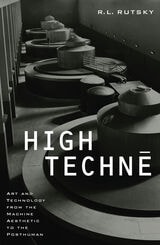
High Techne
Art and Technology from the Machine Aesthetic to the PosthumanR.L. Rutsky
University of Minnesota Press, 1999
Explores our changing cultural perceptions of the relations between technology and art.
In an age of high tech, our experience of technology has changed tremendously, yet the definition of technology has remained largely unquestioned. High Techne redresses this gap in thinking about technology, examining the shifting relations of technology, art, and culture from the beginnings of modernity to contemporary technocultures.
Drawing on the Greek root of technology, (techne, generally translated as “art, skill, or craft”), R. L. Rutsky challenges both the modernist notion of technology as an instrument or tool and the conventional idea of a noninstrumental aesthetics. Today, technology and aesthetics have again begun to come together: even basketball shoes are said to exhibit a “high-tech style” and the most advanced technology is called “state of the art.” Rutsky charts the history and vicissitudes of this new high-tech techne up to our day—from Fritz Lang to Octavia Butler, Thomas Edison to Japanese Anime, constructivism to cyberspace.Progressing from the major art movements of modernism to contemporary science fiction and cultural theory, Rutsky provides clear and compelling evidence of a shift in the cultural conceptions of technology and art and demonstrates the centrality of technology to modernism and postmodernism.
Highbrow/Lowdown
Theater, Jazz, and the Making of the New Middle ClassDavid Savran
University of Michigan Press, 2010
Higher Education and Democracy
Essays on Service-Learning and Civic EngagementEdited by John Saltmarsh and Edward Zlotkowski
Temple University Press, 2011
Higher Education and Democracy is a collection of essays written over the last ten years on how civic engagement in higher education works to achieve what authors John Saltmarsh and Edward Zlotkowsi consider to be the academic and civic purposes of higher education. These include creating new modes of teaching and learning, fostering participation in American democracy, the development and respect for community and civic institutions, and encouraging the constant renewal all of these dimensions of American life.
Organized chronologically, the twenty-two essays in this volume provide "signposts" along the road in the journey of fulfilling the civic purposes of higher education. For the authors, service-learning is positioned as centrally important to the primary academic systems and structures of higher education, departments, disciplines, curriculum, and programs that are central to the faculty domain. Progressing from the general and the contextual to specific practices embodied in ever larger academic units, the authors conclude with observations on the future of the civic engagement movement.
Hijab
Three Modern Iranian Seminarian PerspectivesLloyd Ridgeon
Gingko, 2021
Ḥijāb addresses the differences of opinion among seminarians on the hijab in the Islamic Republic of Iran, focusing on three representative thinkers: Murtaza Mutahhari who held veiling to be compulsory, Ahmad Qabil who argued for the desirability of the hijab, and Muhsin Kadivar who considers it neither necessary nor desirable. In the first chapter, the views of these three scholars are contextualized within the framework known as ‘new religious thinking’ among the seminarians. Comprehending the hermeneutics of this new religious thinking is key to appreciating how and why the younger generation of scholars have offered divergent judgements about the hijab. Following the first chapter, the book is divided into three parallel sections, each devoted to one of the three seminarians. These present a chronological approach, and each scholar’s position on the hijab is assessed with reference to historical specificity and their own general jurisprudential perspective. Extensive examples of the writings of the three scholars on the hijab are also provided.
Hinterland
America's New Landscape of Class and ConflictPhil A. Neel
Reaktion Books, 2018
Urgent and unsparing, this book opens our eyes to America’s new heart of darkness. Driven by an ever-expanding socioeconomic crisis, America’s class structure is recomposing itself in new geographies of race, poverty, and production. The center has fallen. Riots ricochet from city to city led by no one in particular. Anarchists smash financial centers as a resurgent far right builds power in the countryside. Drawing on his direct experience of recent popular unrest, from the Occupy movement to the wave of riots and blockades that began in Ferguson, Missouri, Phil A. Neel provides a close-up view of this landscape in all its grim but captivating detail. Inaugurating the new Field Notes series, published in association with the Brooklyn Rail, Neel’s book tells the intimate story of a life lived within America’s hinterland.

Hip Hop Desis
South Asian Americans, Blackness, and a Global Race ConsciousnessNitasha Tamar Sharma
Duke University Press, 2010
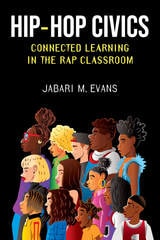
Hip-Hop Civics
Connected Learning in the Rap ClassroomJabari M. Evans
University of Michigan Press, 2025

Hip-Hop in Africa
Prophets of the City and Dustyfoot PhilosophersMsia Kibona Clark
Ohio University Press, 2018
Throughout Africa, artists use hip-hop both to describe their lives and to create shared spaces for uncensored social commentary, feminist challenges to patriarchy, and resistance against state institutions, while at the same time engaging with the global hip-hop community. In Hip-Hop in Africa, Msia Kibona Clark examines some of Africa’s biggest hip-hop scenes and shows how hip-hop helps us understand specifically African narratives of social, political, and economic realities.
Clark looks at the use of hip-hop in protest, both as a means of articulating social problems and as a tool for mobilizing listeners around those problems. She also details the spread of hip-hop culture in Africa following its emergence in the United States, assessing the impact of urbanization and demographics on the spread of hip-hop culture.
Hip-Hop in Africa is a tribute to a genre and its artists as well as a timely examination that pushes the study of music and diaspora in critical new directions. Accessibly written by one of the foremost experts on African hip-hop, this book will easily find its place in the classroom.
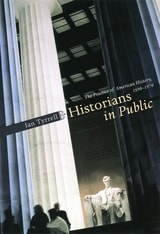
Historians in Public
The Practice of American History, 1890-1970Ian Tyrrell
University of Chicago Press, 2005
Tyrrell's elegant history of the practice of American history traces debates, beginning shortly after the profession's emergence in American academia, about history's role in school curricula. He also examines the use of historians in and by the government and whether historians should utilize mass media such as film and radio to influence the general public. As Historians in Public shows, the utility of history is a distinctive theme throughout the history of the discipline, as is the attempt to be responsive to public issues among pressure groups.
A superb examination of the practice of American history since the turn of the century, Historians in Public uncovers the often tangled ways history-makers make history-both as artisans and as actors.
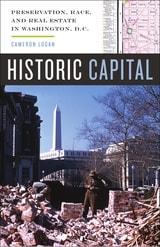
Historic Capital
Preservation, Race, and Real Estate in Washington, D.C.Cameron Logan
University of Minnesota Press, 2017
Washington, D.C. has long been known as a frustrating and sometimes confusing city for its residents to call home. The monumental core of federal office buildings, museums, and the National Mall dominates the city’s surrounding neighborhoods and urban fabric. For much of the postwar era, Washingtonians battled to make the city their own, fighting the federal government over the basic question of home rule, the right of the city’s residents to govern their local affairs.
In Historic Capital, urban historian Cameron Logan examines how the historic preservation movement played an integral role in Washingtonians’ claiming the city as their own. Going back to the earliest days of the local historic preservation movement in the 1920s, Logan shows how Washington, D.C.’s historic buildings and neighborhoods have been a site of contestation between local interests and the expansion of the federal government’s footprint. He carefully analyzes the long history of fights over the right to name and define historic districts in Georgetown, Dupont Circle, and Capitol Hill and documents a series of high-profile conflicts surrounding the fate of Lafayette Square, Rhodes Tavern, and Capitol Park, SW before discussing D.C. today.
Diving deep into the racial fault lines of D.C., Historic Capital also explores how the historic preservation movement affected poor and African American residents in Anacostia and the U Street and Shaw neighborhoods and changed the social and cultural fabric of the nation’s capital. Broadening his inquiry to the United States as a whole, Logan ultimately makes the provocative and compelling case that historic preservation has had as great an impact on the physical fabric of U.S. cities as any other private or public sector initiative in the twentieth century.
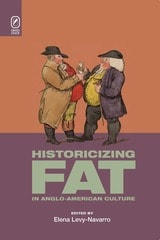
Historicizing Fat in Anglo-American Culture
Edited by Elena Levy-Navarro
The Ohio State University Press, 2010
Historicizing Fat in Anglo-American Culture, edited by Elena Levy-Navarro, is the first collection of essays to offer a historical consideration of fat bodies in Anglophone culture. The interdisciplinary essays cover periods from the medieval to the contemporary, mapping out a new terrain for historical consideration. These essays question many of the commonplace assumptions that circulate around the category of fat: that fat exists as a natural and transhistorical category; that a premodern period existed which universally celebrated fat and knew no fatphobia; and that the thin, youthful body, as the presumptively beautiful and healthy one, should be the norm by which to judge other bodies.
The essays begin with a consideration of the interrelationship between the rise of weight-watching and the rise of the novel. The essays that follow consider such wide-ranging figures as the fat child’s body as a contested site in post-Blair U.K. and in Lord of the Flies; H. G. Wells; Wilkie Collins’s subversively performative Fosco; Ben Jonson; the voluptuous Lillian Russell; Shakespeare’s Venus and Adonis; the opera diva; and the fat feminist activists of recent San Francisco. In developing their histories in a self-conscious way that addresses the pervasive fatphobia of the present-day Anglophone culture, Historicizing Fat suggests ways in which scholarship and criticism in the humanities can address, resist, and counteract the assumptions of late modern culture.
Historicizing Fear
Ignorance, Vilification, and OtheringTravis D. Boyce
University Press of Colorado, 2019
Contributors ground their work in the theory of Othering—the reductive action of labeling a person as someone who belongs to a subordinate social category defined as the Other—in relation to historical events, demonstrating that fear of the Other is universal, timeless, and interconnected. Chapters address the music of neo-Nazi white power groups, fear perpetuated through the social construct of black masculinity in a racially hegemonic society, the terror and racial cleansing in early twentieth-century Arkansas, the fear of drug-addicted Vietnam War veterans, the creation of fear by the Tang Dynasty, and more.
Timely, provocative, and rigorously researched, Historicizing Fear shows how the Othering of members of different ethnic groups has been used to propagate fear and social tension, justify state violence, and prevent groups or individuals from gaining equality. Broadening the context of how fear of the Other can be used as a propaganda tool, this book will be of interest to scholars and students of history, anthropology, political science, popular culture, critical race issues, social justice, and ethnic studies, as well as the general reader concerned with the fearful framing prevalent in politics.
Contributors:
Quaylan Allen, Melanie Armstrong, Brecht De Smet, Kirsten Dyck, Adam C. Fong, Jeff Johnson, Łukasz Kamieński, Guy Lancaster, Henry Santos Metcalf, Julie M. Powell, Jelle Versieren
History 4° Celsius
Search for a Method in the Age of the AnthropoceneIan Baucom
Duke University Press, 2020
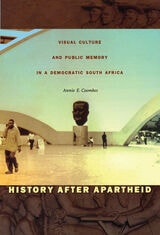
History after Apartheid
Visual Culture and Public Memory in a Democratic South AfricaAnnie E. Coombes
Duke University Press, 2003
History after Apartheid explores the dilemmas posed by a wide range of visual and material culture including key South African heritage sites. How prominent should Nelson Mandela and the African National Congress be in the museum at the infamous political prison on Robben Island? How should the postapartheid government deal with the Voortrekker Monument mythologizing the Boer Trek of 1838? Coombes highlights the contradictory investment in these sites among competing constituencies and the tensions involved in the rush to produce new histories for the “new” South Africa.
She reveals how artists and museum officials struggled to adequately represent painful and difficult histories ignored or disavowed under apartheid, including slavery, homelessness, and the attempted destruction of KhoiSan hunter-gatherers. Describing how contemporary South African artists address historical memory and the ambiguities uncovered by the Truth and Reconciliation Commission, Coombes illuminates a body of work dedicated to the struggle to simultaneously remember the past and move forward into the future.
History and Silence
Purge and Rehabilitation of Memory in Late AntiquityBy Charles W. Hedrick Jr.
University of Texas Press, 2000
The ruling elite in ancient Rome sought to eradicate even the memory of their deceased opponents through a process now known as damnatio memoriae. These formal and traditional practices included removing the person's name and image from public monuments and inscriptions, making it illegal to speak of him, and forbidding funeral observances and mourning. Paradoxically, however, while these practices dishonored the person's memory, they did not destroy it. Indeed, a later turn of events could restore the offender not only to public favor but also to re-inclusion in the public record.
This book examines the process of purge and rehabilitation of memory in the person of Virius Nicomachus Flavianus(?-394). Charles Hedrick describes how Flavian was condemned for participating in the rebellion against the Christian emperor Theodosius the Great—and then restored to the public record a generation later as members of the newly Christianized senatorial class sought to reconcile their pagan past and Christian present. By selectively remembering and forgetting the actions of Flavian, Hedrick asserts, the Roman elite honored their ancestors while participating in profound social, cultural, and religious change.
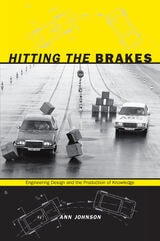
Hitting the Brakes
Engineering Design and the Production of KnowledgeAnn Johnson
Duke University Press, 2009
The development of antilock braking systems (ABS) provides an ideal case study for examining the process of engineering design because it presented an array of common difficulties faced by engineers in research and development. ABS did not develop predictably. Research and development took place in both the public and private sectors and involved individuals working in different disciplines, languages, institutions, and corporations. Johnson traces ABS development from its first patents in the 1930s to the successful 1978 market introduction of integrated ABS by Daimler and Bosch. She examines how a knowledge community first formed around understanding the phenomenon of skidding, before it turned its attention to building instruments to measure, model, and prevent cars’ wheels from locking up. While corporations’ accounts of ABS development often present a simple linear story, Hitting the Brakes describes the full social and cognitive complexity and context of engineering design.
Holding On to Reality
The Nature of Information at the Turn of the MillenniumAlbert Borgmann
University of Chicago Press, 1999
"[Borgmann] has offered a stunningly clear definition of information in Holding On to Reality. . . . He leaves room for little argument, unless one wants to pose the now vogue objection: I guess it depends on what you mean by nothing."—Paul Bennett, Wired
"A superb anecdotal analysis of information for a hype-addled age."—New Scientist
"This insightful and poetic reflection on the changing nature of information is a wonderful antidote to much of the current hype about the 'information revolution.' Borgmann reminds us that whatever the reality of our time, we need 'a balance of signs and things' in our lives."—Margaret Wertheim, LA Weekly
Hollywood's Hawaii
Race, Nation, and WarDelia Malia Caparoso Konzett
Rutgers University Press, 2017
Delia Malia Caparoso Konzett highlights films that mirror the cultural and political climate of the country over more than a century—from the era of U.S. imperialism on through Jim Crow racial segregation, the attack on Pearl Harbor and WWII, the civil rights movement, the contemporary articulation of consumer and leisure culture, as well as the buildup of the modern military industrial complex. Focusing on important cultural questions pertaining to race, nationhood, and war, Konzett offers a unique view of Hollywood film history produced about the national periphery for mainland U.S. audiences. Hollywood’s Hawaii presents a history of cinema that examines Hawaii and the Pacific and its representations in film in the context of colonialism, war, Orientalism, occupation, military buildup, and entertainment.

Holocaust Icons
Symbolizing the Shoah in History and MemoryOren Baruch Stier
Rutgers University Press, 2015
Jewish studies scholar Oren Stier offers in this volume new insight into symbols and the symbol-making process, as he traces the lives and afterlives of certain remnants of the Holocaust and their ongoing impact. Stier focuses in particular on four icons: the railway cars that carried Jews to their deaths, symbolizing the mechanics of murder; the Arbeit Macht Frei (“work makes you free”) sign over the entrance to Auschwitz, pointing to the insidious logic of the camp system; the number six million that represents an approximation of the number of Jews killed as well as mass murder more generally; and the persona of Anne Frank, associated with victimization. Stier shows how and why these icons—an object, a phrase, a number, and a person—have come to stand in for the Holocaust: where they came from and how they have been used and reproduced; how they are presently at risk from a variety of threats such as commodification; and what the future holds for the memory of the Shoah.
In illuminating these icons of the Holocaust, Stier offers valuable new perspective on one of the defining events of the twentieth century. He helps readers understand not only the Holocaust but also the profound nature of historical memory itself.
Holocene Hunter-Gatherers of the Lower Ohio River Valley
Richard Jefferies
University of Alabama Press, 2009

Home Away from Home
Japanese Corporate Wives in the United StatesSawa Kurotani
Duke University Press, 2005
Kurotani interviewed and spent time with more than 120 women in three U.S. locations with sizable expatriate Japanese communities: Centerville, a pseudonymous Midwestern town; the New York metropolitan area; and North Carolina’s Research Triangle area. She highlights the contradictory situations faced by the transient wives. Their husbands’ assignments in the United States typically last from three to five years, and they frequently emphasize the temporariness of their situation, referring to it as a “long vacation.” Yet they are responsible for creating comfortable homes for their families, which necessitates producing a familiar and permanent environment. Kurotani looks at the dynamic friendships that develop among the wives and describes their feelings about returning to Japan. She conveys how their sense of themselves as Japanese women, of home, and of their relationships with family members are altered by their personal experiences of transnational homemaking.

Home Team Away
Watching European Football in Urban ChinaYuan Gong
University of Michigan Press, 2026
Home Team Away calls for a rethinking of sport fandom that is divorced from an attachment to location. As the first comprehensive account of the European football fandom in China, this book explores how the Chinese middle class subjectivity is formed through the cross-cultural, digital consumption of the Big Five leagues. Yuan Gong captures the embodied experiences of fans and fan clubs, fan discourses and activities unfolding on digital platforms on Weibo, Weixin, and Hupu, combining fieldwork in Shanghai and virtual ethnography. Gong argues that Chinese fans’ decisions to follow and engage with European football result from their material conditions, ideological contestation, and technology appropriation as a new demographic bloc arising during China’s transition to authoritarian digital capitalism. By engaging with their home teams away, the Chinese middle class fans perform as citizens with a global vision despite the resurgence of the nationalist and anti-Western sentiments.
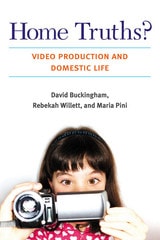
Home Truths?
Video Production and Domestic LifeDavid Buckingham, Rebekah Willett, and Maria Pini
University of Michigan Press, 2011
Over the past decade, the video camera has become a commonplace household technology. With falling prices on compact and easy-to-use cameras, as well as mobile phones and digital still cameras with video recording capabilities, access to moving image production technology is becoming virtually universal. Home Truths? represents one of the few academic research studies exploring this everyday, popular use of video production technology, looking particularly at how families use and engage with the technology and how it fits into the routines of everyday life.
The authors draw on interviews, observations, and the participants' videos themselves, seeking to paint a comprehensive picture of the role of video making in their everyday lives. While readers gain a sense of the individual characters involved in the project and the complexities and diversities of their lives, the analysis also raises a range of broader issues about the nature of learning and creativity, subjectivity and representation, and the "domestication" of technology---issues that are of interest to many in the fields of sociology and media/cultural studies.
David Buckingham is Professor of Education at the Institute of Education, University of London, and Director of the Institute's Centre for the Study of Children, Youth and Media.
Rebekah Willett is Lecturer at the Institute of Education, University of London, where she teaches in Media, Culture and Communication.
Maria Pini previously worked as Lecturer in Media and Communications at Goldsmiths College, London University, and is now a researcher on the Camcorder Cultures project at the Institute of Education.
Cover art: Young videomaker ©iStockphoto.com/ kaisersosa67
Technologies of the Imagination: New Media in Everyday Life
digitalculturebooks is an imprint of the University of Michigan Press and the Scholarly Publishing Office of the University of Michigan Library dedicated to publishing innovative and accessible work exploring new media and their impact on society, culture, and scholarly communication. Visit the website at www.digitalculture.org.
Home, Heat, Money, God
Texas and Modern ArchitectureText by Kathryn E. O’Rourke, Photographs by Ben Koush
University of Texas Press, 2024
Thematically focused analysis of modern architecture throughout Texas with gorgeous photographs illustrating works by famous and lesser-known architects.
In the mid-twentieth century, dramatic social and political change coincided with the ascendance and evolution of architectural modernism in Texas. Between the 1930s and 1980s, a state known for cowboys and cotton fields rapidly urbanized and became a hub of global trade and a heavyweight in national politics. Relentless ambition and a strong sense of place combined to make Texans particularly receptive to modern architecture’s implication of newness, forward-looking attitude, and capacity to reinterpret historical forms in novel ways. As money and people poured in, architects and their clients used modern buildings to define themselves and the state.
Illustrated with stunning photographs by architect Ben Koush, Home, Heat, Money, God analyzes buildings in big cities and small towns by world-famous architects, Texas titans, and lesser-known designers. Architectural historian Kathryn O’Rourke describes the forces that influenced architects as they addressed basic needs—such as staying cool in a warming climate and living in up-to-date housing—and responded to a culture driven by potent religiosity, by the countervailing pressures of pluralism and homogenization, and by the myth of Texan exceptionalism.