Results by title
1861 books match the query 'Social life and customs' and 57 start with h
HOUSES WITH NAMES
"THE ITALIAN IMMIGRANTS OF HIGHWOOD, ILLAdria Bernardi
University of Illinois Press, 1990

Hack
Stories from a Chicago CabDmitry Samarov
University of Chicago Press, 2011
An artist and painter trained at the School of the Art Institute of Chicago, Samarov began driving a cab in 1993 to make ends meet, and he’s been working as a taxi driver ever since. In Hack: Stories from a Chicago Cab, he recounts tales that will delight, surprise, and sometimes shock the most seasoned urbanite. We follow Samarov through the rhythms of a typical week, as he waits hours at the garage to pick up a shift, ferries comically drunken passengers between bars, delivers prostitutes to their johns, and inadvertently observes drug deals. There are long waits with other cabbies at O’Hare, vivid portraits of street corners and their regular denizens, amorous Cubs fans celebrating after a game at Wrigley Field, and customers who are pleasantly surprised that Samarov is white—and tell him so. Throughout, Samarov’s own drawings—of his fares, of the taxi garage, and of a variety of Chicago street scenes—accompany his stories. In the grand tradition of Nelson Algren, Saul Bellow, Mike Royko, and Studs Terkel, Dmitry Samarov has rendered an entertaining, poignant, and unforgettable vision of Chicago and its people.

Half Portions
Edna Ferber
University of Illinois Press, 2002
A collection of short stories from Pultizer Prize winner, Edna Ferber
The short stories in this collection take the reader from small-town Wisconsin to the bustling streets of New York and Chicago and back again. While they range greatly in length and tone, they all share the trademark wit and affectionate insight of Edna Ferber.
Showcasing the facility with words that made her a mainstay at the Algonquin round table, Ferber explores some of her favorite themes: the role of women (especially strong or unconventional women) in modern society, the mores of the midwestern small town, and the changes over time in relationships between parents and children.
In “The Maternal Feminine,” a plain, overlooked child grows into a strong, resourceful businesswoman and forms a strong motherly bond with the children of her more attractive sister. In “April 25th, As Usual,” an aging Wisconsin couple reluctantly join their successful daughter in New York, where they try to adjust to a very different lifestyle. “Old Lady Mandle” is a bittersweet tale about an elderly Chicago mother coming to terms with the fact that she is no longer the most important woman in the life of her grown son. “One Hundred Per Cent” features Ferber’s celebrated heroine Emma McChesney, now re-married, seeing her husband off to war.
The stories gathered here are beautifully observed chronicles of early twentieth-century life and are filled with characters who, despite their very human foibles, are all bestowed by Ferber with warmth and dignity.

Halfway to Freedom
The History of Black Washington, DCMaurice Jackson. Foreword by Lonnie G. Bunch III.
Duke University Press, 2026
For more than two hundred years, the history and culture of the District of Columbia have been in great part shaped by its Black residents. Several Black men were elected to political positions citywide only a handful of years after the end of the Civil War, and while the years after Reconstruction saw the region plagued with segregation and racial violence, the capital’s Black population continued to grow at all economic levels. Washington became the first major US city with a majority Black population in 1957, a status it held for almost seventy years as gentrification has led to the decline of Black political and economic power in DC in the twenty-first century.
Halfway to Freedom is a social, political, intellectual, and cultural history of African Americans in Washington, DC; it explores the role that race, gender, color, class, and power have played in the city and its relationship with the federal government. Maurice Jackson explores the material conditions that shaped life for African Americans, free and enslaved, from the earliest moments of the District’s history to more contemporary times of organization and activism. Through an array of archival materials, especially firsthand accounts of Black residents in the area, Jackson critiques how and why DC exists as a haven within the Black American imaginary given the realities of conflict its Black residents have faced and continue to face today. In doing so, he highlights and honors the gains they have earned through the concerted struggles of labor organizations, women’s movements, sports, music, art, legal activism, and more.

Han
People of the RiverCraig Mishler
University of Alaska Press, 2004
The history of the upper Yukon valley from the earliest Western contact with the Han in the 1840s has been one of continuous change. As a result of the gold rush, the Han suddenly became homeless in their own homeland. This book tells the story of that displacement and of current efforts by the Han to reclaim their lands and restore a vibrant way of life. In-depth profiles of Chief Isaac, Chief Charley, and others illustrate the critical importance of traditional leadership in stressful times.
Mishler and Simeone have carefully researched and compiled new information from historic records, adding their own, firsthand field observations and oral interviews with Elders during the 1970s, 1980s, and 1990s. They present detailed historical data on the fur trade, missionization, and the gold rush, as well as an analysis of Han social structure, settlement patterns, religion, subsistence, and expressive culture. The final chapter illustrates contemporary life in Eagle Village with two vivid ethnographic snapshots- a Christmas eve dance in 1972 and a long summer day in 1997. Appendices include a methodological essay, a historic chronology, rules for Han card games, and genealogies for many Han families. As a model of innovative ethnographic and ethnohistorical work, Han, People of the River makes an important contribution to anthropological and indigenous studies literature. As a vivid and deeply thoughtful depiction of the past, present, and future of the Han, it is meant for all Alaskans and everyone who cares about Alaska history and Alaska Native peoples.

Handbook of the Linguistic Atlas of the Middle and South Atlantic States
William A. Kretzschmar Jr., Virginia G. McDavid, Theodore K. Lerud, and Ellen Johnson
University of Chicago Press, 1993
This handbook is an essential guide to the LAMSAS project, laying out its history and describing its scope and methodology. In addition, the handbook reveals biographical information about the informants and social histories of the communities in which they lived, including primary settlement areas of the original colonies. Dialectologists will rely on it for understanding the LAMSAS, and historians will find it valuable for its original historical research.
Since much of the LAMSAS questionnaire concerns rural terms, the data collected from the interviews can pinpoint such language differences as those between areas of plantation and small-farm agriculture. For example, LAMSAS reveals that two waves of settlement through the Appalachians created two distinct speech types. Settlers coming into Georgia and other parts of the Upper South through the Shenandoah Valley and on to the western side of the mountain range had a Pennsylvania-influenced dialect, and were typically small farmers. Those who settled the Deep South in the rich lowlands and plateaus tended to be plantation farmers from Virginia and the Carolinas who retained the vocabulary and speech patterns of coastal areas.
With these revealing findings, the LAMSAS represents a benchmark study of the English language, and this handbook is an indispensable guide to its riches.
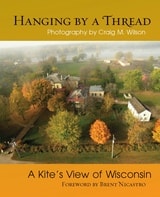
Hanging by a Thread
A Kite’s View of WisconsinCraig M. Wilson
University of Wisconsin Press, 2011
This full-color book of photographs records Wisconsin from an unusual viewpoint: a camera suspended from a kite and controlled by photographer Craig M. Wilson from the ground. Taken from fifty to a few hundred feet in the air, Wilson’s photos capture natural and man-made views that wouldn’t otherwise be possible. The result is a vibrant collection that captures Wisconsin in all its shifting beauty in landscapes and cityscapes, festivals, Door County’s lighthouses, Milwaukee’s neighborhoods, and the crowd at a Badger football game. Captions are provided in English, Spanish, German, and Mandarin Chinese.
Hanna's Town
A Little World We Have LostW. William Wimberly II
Indiana Historical Society Press, 2010

Hard Luck and Heavy Rain
The Ecology of Stories in Southeast TexasJoseph C. Russo
Duke University Press, 2023
Hard Scrabble
Observations on a Patch of LandBy John Graves<br>Introduction by Rick Bass
University of Texas Press, 2016
“A kind of homemade book—imperfect like a handmade thing, a prize. It’s a galloping, spontaneous book, on occasion within whooping distance of that greatest and sweetest of country books, Ivan Turgenev’s A Sportsman’s Notebook.” —Edward Hoagland, New York Times Book Review
“His subjects are trees and brush, hired help, fences, soil, armadillos and other wildlife, flood and drought, local history, sheep and goats . . . and they come to us reshaped and reenlivened by his agreeably individual (and sometimes cranky) notions.” —New Yorker
“If Goodbye to a River was in some sense Graves’s Odyssey, this book is his [version of Hesiod’s] Works and Days. It is partly a book about work, partly a book about nature, but mostly a book about belonging. In the end John Graves has learned to belong to his patch of land so thoroughly that at moments he can sense in himself a unity with medieval peasants and Sumerian farmers, working with their fields by the Tigris.” —Larry McMurtry, Washington Post Book World
“Hard Scrabble is hard pastoral of the kind we have learned to recognize in Wordsworth, Frost, Hemingway, and Faulkner. It celebrates life in accommodation with a piece of the ‘given’ creation, a recalcitrant four hundred or so acres of Texas cedar brake, old field, and creek bottom, which will require of any genuine resident all the character he can muster.” —Southwest Review
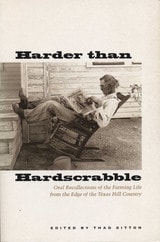
Harder than Hardscrabble
Oral Recollections of the Farming Life from the Edge of the Texas Hill CountryEdited by Thad Sitton
University of Texas Press, 2004
Winner, San Antonio Conservation Society Citation, 2005
Runner-up, Carr P. Collins Award, Best Book of Nonfiction, Texas Institute of Letters, 2005
Until the U.S. Army claimed 300-plus square miles of hardscrabble land to build Fort Hood in 1942, small communities like Antelope, Pidcoke, Stampede, and Okay scratched out a living by growing cotton and ranching goats on the less fertile edges of the Texas Hill Country. While a few farmers took jobs with construction crews at Fort Hood to remain in the area, almost the entire population—and with it, an entire segment of rural culture—disappeared into the rest of the state.
In Harder than Hardscrabble, oral historian Thad Sitton collects the colorful and frequently touching stories of the pre-Fort Hood residents to give a firsthand view of Texas farming life before World War II. Accessible to the general reader and historian alike, the stories recount in vivid detail the hardships and satisfactions of daily life in the Texas countryside. They describe agricultural practices and livestock handling as well as life beyond work: traveling peddlers, visits to towns, country schools, medical practices, and fox hunting. The anecdotes capture a fast-disappearing rural society—a world very different from today's urban Texas.

Harlem Between Heaven And Hell
Monique M. Taylor
University of Minnesota Press, 2002
A hard-hitting look at race, class, and black gentrification in this emblematic community.
Harlem brings to mind a kaleidoscope of images-the jazz clubs and cultural ferment of the 1920s and 1930s, the urban decay of the 1960s and 1970s, and the revitalization of the past twenty years, with artists, writers, professionals, and even an ex-president moving to a community often seen as the capital of black America. Integral to the ongoing transformation of Harlem has been the return of the African-American middle class to what had become an overwhelmingly poor area. In this lively book, Monique M. Taylor explores the stresses created by this influx, the surprising ways class differences manifest themselves and are managed, and what we can learn from examining a community in which race and class are so closely intertwined.
Harlem between Heaven and Hell is told through a look at history, literature, redevelopment strategies, community activism, and extensive interviews with black professionals-married and single, with children and without, long-term residents and recent arrivals. In their voices we hear of the cultural legacy, political commitments, economic considerations, and desire for community that drew them to Harlem. They tell us of the complexities of gentrification and their own role in it: the trepidation and distrust that often greeted their arrival, the challenges of renovating Harlem’s historic brownstones in the face of entrenched neighborhood decay, learning and shaping the social mores of the area. Two key questions underlie these accounts: What does it mean when blacks move in alongside blacks of a different social class? How can a neighborhood successfully balance racial and class diversity in the face of rapid change? Taylor places this intraracial class conflict within the context of America’s changing race relations, showing how the feelings and issues that have arisen-to oppose, embrace, or participate in gentrification-reveal unsettled questions surrounding race, racism, class, and culture in a changing urban landscape. Through her incisive description of the everyday ways race and class are experienced, she has created a vivid exploration of black middle-class identity in the post-civil rights era.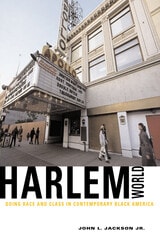
Harlemworld
Doing Race and Class in Contemporary Black AmericaJohn L. Jackson Jr.
University of Chicago Press, 2001
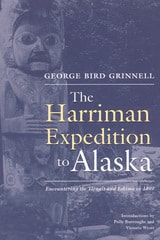
Harriman Expedition to Alaska
Encountering the Tlingit and Eskimo in 1899George Grinnell
University of Alaska Press, 2007
A keen observer of his surroundings, Grinnell provides a unique perspective on northern life in the late nineteenth century. He documented hunting techniques and material culture of the Eskimo of Siberia, as well as the totem poles and architecture of the Tlingit of Southeast. As a pioneer conservationist, Grinnell was one of the first to express concern over the effects of trade and industry on Alaska's peoples and natural resources.
Illustrated with photos and drawings by Harriman Expedition members, including Edward S. Curtis, this volume makes the work of a passionate observer available to a new generation of readers.

Hashknife Cowboy
Recollections of Mack HughesStella Hughes; Illustrated by Joe Beeler
University of Arizona Press, 1984
Stella Hughes, author of the best-selling Chuck Wagon Cookin' and a cowhand in her own right, has compiled from her husband's reminiscences an authentic look both at Arizona history and at cowboying as it really was. Illustrated by Joe Beeler, founding member of the Cowboy Artists of America.
Haudenosaunee Women Lacrosse Players
Making Meaning through RematriationSharity L. Bassett
Michigan State University Press, 2024
Hawaii’s Past in a World of Pacific Islands
James M. Bayman
University Press of Colorado, 2013

Heart of Palms
My Peace Corps Years in TranquillaMeredith W. Cornett
University of Alabama Press, 2014
A memoir of service, culture and transformation in a rural Panamanian village by a young American woman trained as a community forester for the Peace Corp.
In the storied fifty-year history of the US Peace Corps, Heart of Palms is the first Peace Corps memoir set in Panama, the slender isthmus that connects two continents and two oceans. In her memoir, Meredith Cornett transports readers to the remote village of Tranquilla, where dugout canoes are the mainstay of daily transportation, life and nature are permeated by witchcraft, and a restful night’s sleep may be disturbed by a raiding phalanx of army ants.
Cornett is sent to help counter the rapid deforestation that is destroying the ecosystem and livelihoods of the Panama Canal watershed region. Her first chapters chronicle her arrival and struggles not only with the social issues of language, loneliness, and insecurity, but also with the tragicomic basics of mastering open-fire cookery and intrusions by insects and poisonous snakes. As she grows to understand the region and its people, her keen eye discerns the overwhelming scope of her task. Unable to plant trees faster than they are lost, she writes with moving clarity about her sense of powerlessness.
Combating deforestation leads Cornett into an equally fierce battle against her own feelings of fear and isolation. Her journey to Panama becomes a parallel journey into herself. In this way, Heart of Palms is much more than a record of her Peace Corps service; it is also a moving environmental coming-of-age story and nuanced meditation on one village’s relationship to nature. When she returns home two years later, Cornett brings with her both skills and experience and a remarkable, newfound sense of confidence and mission.
Writing with rueful, self-deprecating humor, Cornett lets us ride along with her on a wave of naïve optimism, a wave that breaks not only on fear and intimidation, but also on tedium and isolation. Heart of Palms offers a bracing alternative to the romantic idealism common to Peace Corps memoirs and will be valued as a welcome addition to writing about the Peace Corps and environmental service.
Helvetia
The History of a Swiss Village in the Mountains of West VirginiaDavid H. Sutton
West Virginia University Press, 2010
Helvetia: A Swiss Village in the Hills of West Virginia explores the unique founding and development of a community nestled within the wilderness of Appalachia. Established in 1869, this tiny Swiss settlement embodies the American immigrant experience, reflecting the steadfast desire of settlers to preserve cultural traditions and values while adapting to new and extraordinary surroundings. From ramp suppers to carnivals, traditional architecture, folk music, and cheese making, this book documents a living community by exploring the ethnic customs, farming practices, community organization, and language maintenance of Helvetia residents. Drawing upon a diverse body of resources such as Swiss and American archival documents and local oral accounts, this chronicledepicts the everyday social and economic life of this village during the past two centuries. Helvetia celebrates a small community where residents and visitors alike continue to practice a Swiss American culture that binds an international history to a local heritage.
Her Cup for Sweet Cacao
Food in Ancient Maya SocietyEdited by Traci Ardren
University of Texas Press, 2020
For the ancient Maya, food was both sustenance and a tool for building a complex society. This collection, the first to focus exclusively on the social uses of food in Classic Maya culture, deploys a variety of theoretical approaches to examine the meaning of food beyond diet—ritual offerings and restrictions, medicinal preparations, and the role of nostalgia around food, among other topics. For instance, how did Maya feasts build community while also reinforcing social hierarchy? What psychoactive substances were the elite Maya drinking in their caves, and why? Which dogs were good for eating, and which breeds became companions? Why did even some non-elite Maya enjoy cacao, but rarely meat? Why was meat more available for urban Maya than for those closer to hunting grounds on the fringes of cities? How did the molcajete become a vital tool and symbol in Maya gastronomy?
These chapters, written by some of the leading scholars in the field, showcase a variety of approaches and present new evidence from faunal remains, hieroglyphic texts, chemical analyses, and art. Thoughtful and revealing, Her Cup for Sweet Cacao unlocks a more comprehensive understanding of how food was instrumental to the development of ancient Maya culture.

Her Kind of Want
Jennifer S. Davis
University of Iowa Press, 2002
Set mainly in the small towns of Alabama, the stories in Her Kind of Want ache with the relentless longing of the poor, struggling, usually discarded southern women who tell us their lives—lives that seem to revolve around men whose only presence is their absence.
Bebe, Luna, Melly, Little Hula, Dena. These are just a few of the women we meet in Jennifer Davis's award-winning collection. Women who married too fast, had children too young, and drink too much. Yet beneath their unpolished exteriors, these women are flesh and blood, and their wants and needs are as severe and deep as any.
Davis's characters relate their stories in voices as complex and raw as their southern environment. Each tale may sound slightly familiar—an unwanted pregnancy, a fast car flying down a country road—but Davis moves beyond the familiar stories of the rural South to expose the gaps that connect these women, creating startlingly real and vibrant characters.
Although often bleak and sometimes disturbing, Her Kind of Want is a celebration of southern people, their perseverance, their spirit, and their determination to make the ugly beautiful.

Here Beneath Low-Flying Planes
Merrill Feitell
University of Iowa Press, 2004
The stories in Merrill Feitell’s award-winning collection, Here Beneath Low-Flying Planes, examine the fleeting and unexpected moments of human connection, reminding us of the indelible impact we have on one another no matter how insignificant or anonymous we might feel under our huge, collective sky.
Feitell’s characters deal with shifting dynamics in relationships—whether they be best friends, lovers, family, or even strangers—that consistently leave them torn between two places or commitments. In the title story, Janie has undergone a painful childbirth experience and her group of friends must pioneer new dynamics while she wonders how to bring her old self back. In “Bike New York!” amid thirty thousand cyclists, a man on the brink of marriage meets a young girl who, in a tiny Brooklyn bakery, affirms both who he has been and who he is going to be. On this short detour from normal life he comes to understand “the funny thing about finding your way in the world. There was a place laid out for you . . . and even as you stepped into it, happy for the chance to rest, you wondered how you ever ended up there.”
Funny, big-hearted, and deft, Here Beneath Low-Flying Planes navigates the reader through the life that happens when you’re planning other things. It is a collection of experiences, roads not taken, and the intense and unforeseen sparks of connection we hope for.
Here and There in Mexico
The Travel Writings of Mary Ashley TownsendMary Ashley Townsend, edited by Ralph Lee Woodward Jr.
University of Alabama Press, 2001
Mary Ashley Townsend was a novelist, newspaper columnist, and poet laureate of New Orleans who made several trips to Mexico with her daughter Cora during the last two decades of the 19th century. She collected her impressions of many aspects of life in that country—flora, fauna, architecture, people at work and play, fashion, society, food—and wrote about them during a time when few women engaged in solo travel, much less the pursuit of travel writing. Her collected work was still in progress when she died in a train accident in 1901, and was never published.
Here on Lake Hallie
In Praise of Barflies, Fix-It Guys, and Other Folks in Our HometownPatti See
Wisconsin Historical Society Press, 2022
Growing up in the 1970s and 1980s as the youngest of eight children, Patti never imagined she’d stay in Chippewa Falls as an adult. Now, living on rural Lake Hallie just five miles from her childhood home, she has a new appreciation for all that comes with country living, from ice fishing and eagle sightings to pontoon rides and tavern dice. These brief essays—many of which were originally published in the Sawdust Stories column of the Eau Claire Leader-Telegram—establish that, above all else, it’s friends, family, and other folks in our hometown who provide us with a sense of belonging.
Heritage in the Body
Sensory Ecologies of Health Practice in Times of ChangeKristina Baines
University of Arizona Press, 2024
Employing an embodied ecological heritage (EEH) framework, Baines explores the links between health and heritage as a fluid series of ecological practices. Health and wellness are holistically defined and approached from a phenomenological perspective. Baines focuses on how sensory experiences change the body through practice and provides insights into community-driven alternatives as a means to maintain and support happy, healthy lives.
Heterosexual Africa?
The History of an Idea from the Age of Exploration to the Age of AIDSMarc Epprecht
Ohio University Press, 2008
Heterosexual Africa? The History of an Idea from the Age of Exploration to the Age of AIDS builds from Marc Epprecht’s previous book, Hungochani (which focuses explicitly on same-sex desire in southern Africa), to explore the historical processes by which a singular, heterosexual identity for Africa was constructed—by anthropologists, ethnopsychologists, colonial officials, African elites, and most recently, health care workers seeking to address the HIV/AIDS pandemic. This is an eloquently written, accessible book, based on a rich and diverse range of sources, that will find enthusiastic audiences in classrooms and in the general public.
Epprecht argues that Africans, just like people all over the world, have always had a range of sexualities and sexual identities. Over the course of the last two centuries, however, African societies south of the Sahara have come to be viewed as singularly heterosexual. Epprecht carefully traces the many routes by which this singularity, this heteronormativity, became a dominant culture. In telling a fascinating story that will surely generate lively debate, Epprecht makes his project speak to a range of literatures—queer theory, the new imperial history, African social history, queer and women’s studies, and biomedical literature on the HIV/AIDS pandemic. He does this with a light enough hand that his story is not bogged down by endless references to particular debates.
Heterosexual Africa? aims to understand an enduring stereotype about Africa and Africans. It asks how Africa came to be defined as a “homosexual-free zone” during the colonial era, and how this idea not only survived the transition to independence but flourished under conditions of globalization and early panicky responses to HIV/AIDS.

Hillside Fields
A History of Sports in West VirginiaBob Barnett
West Virginia University Press, 2013
Hillside Fields provides a broad view of the development of sports in West Virginia, from one of the first golf clubs in America at Oakhurst Links to the Greenbrier Classic; from the first girls basketball championship in 1919 to post Title IX; from racially segregated sports to integrated teams; and from the days when West Virginia Wesleyan and Davis & Elkins beat the big boys in football to the championship teams at WVU, Marshall, West Virginia State and West Liberty.
Hillside Fields explains how major national trends and events, as well as West Virginia’s economic, political, and demographic conditions, influenced the development of sports in the state. The story of the growth of sports in West Virginia is also a story of the tribulations, hopes, values and triumphs of a proud people.
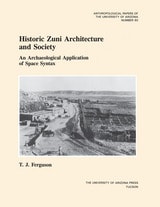
Historic Zuni Architecture and Society
An Archaeological Application of Space SyntaxT. J. Ferguson
University of Arizona Press, 1996
Historic Zuni Architecture and Society utilizes an interdisciplinary approach, analyzing archaeological data using method, theory, and techniques from the fields of architecture, planning, and ethnology. Archaeologists will find in the book an innovative application of space syntax to archaeological problems, and cultural anthropologists and others interested in the history of the Zuni Indians will value its observations about changes that are currently taking place in Zuni social organization.
Historical Archaeologies of the Caribbean
Contextualizing Sites through Colonialism, Capitalism, and Globalismedited by Todd M. Ahlman and Gerald F. Schroedl
University of Alabama Press, 2019
Historical Archaeologies of the Caribbean: Contextualizing Sites through Colonialism, Capitalism, and Globalism addresses issues in Caribbean history and historical archaeology such as freedom, frontiers, urbanism, postemancipation life, trade, plantation life, and new heritage. This collection moves beyond plantation archaeology by expanding the knowledge of the diverse Caribbean experiences from the late seventeenth through the mid-nineteenth centuries.
The essays in this volume are grounded in strong research programs and data analysis that incorporate humanistic narratives in their discussions of Amerindian, freedmen, plantation, institutional, military, and urban sites. Sites include a sample of the many different types found across the Caribbean from a variety of colonial contexts that are seldom reported in archaeological research, yet constitute components essential to understanding the full range and depth of Caribbean history.
Contributors examine urban contexts in Nevis and St. John and explore the economic connections between Europeans and enslaved Africans in urban and plantation settings in St. Eustatius. The volume contains a pioneering study of frontier exchange with Amerindians in Dominica and a synthesis of ceramic exchange networks among enslaved Africans in the Leeward Islands. Chapters on military forts in Nevis and St. Kitts call attention to this often-neglected aspect of the Caribbean colonial landscape. Contributors also directly address culture heritage issues relating to community participation and interpretation. On St. Kitts, the legacy of forced confinement of lepers ties into debates of current public health policy. Plantation site studies from Antigua and Martinique are especially relevant because they detail comparisons of French and British patterns of African enslavement and provide insights into how each addressed the social and economic changes that occurred with emancipation.
Contributors
Todd M. Ahlman / Douglas V. Armstrong / Samantha Rebovich Bardoe / Paul Farnsworth / Jeffrey R. Ferguson / R. Grant Gilmore III / Diana González-Tennant / Edward González-Tennant / Barbara J. Heath / Carter L. Hudgins Kenneth G. Kelly / Eric Klingelhofer / Roger H. Leech / Stephan Lenik / Gerald F. Schroedl / Diane Wallman / Christian Williamson
Historical Metaphors and Mythical Realities
Structure in the Early History of the Sandwich Islands KingdomMarshall D. Sahlins
University of Michigan Press, 1981
Hawaiian culture as it met foreign traders and settlers is the context for Sahlins's structuralist methodology of historical interpretation

Hmong America
Reconstructing Community in DiasporaChia Youyee Vang
University of Illinois Press, 2010
Vang depicts Hmong experiences in Asia and examines aspects of community building in America to reveal how new Hmong identities have been formed and how they have challenged popular assumptions about race and ethnicity in multicultural America. Combining participant observation and archival research with personal experience, Vang constructs a nuanced and complex portrait of the more than 130,000 Hmong people who came to the United States as political refugees beginning in the mid-1970s. Her critique of previous representations of the Hmong community provides the sociological underpinnings for a bold reassessment of Hmong history in the greater context of globalization. This new understanding redefines concepts of Hmong homogeneity and characterizes ordinary Hmong migrants not as passive victims but as dynamic actors who have exercised much power over their political and social destinies.
Hoecakes, Hambone, and All That Jazz
African American Traditions in MissouriRose M. Nolen
University of Missouri Press, 2003
Nolen writes, “Instead of the bond of common ancestors and a common language, which families had shared in Africa, the enslaved in the United States were bound together by skin color, hair texture, and condition of bondage. Out of this experience a strong sense of community was born.” Nolen traces the cultural traditions shaped by African Americans in Missouri from the early colonial period through the Civil War and Reconstruction and shows how those traditions were reshaped through the struggles of the civil rights movement and integration. Nolen demonstrates how the strong sense of community built on these traditions has sustained African Americans throughout their history.
Hoedowns, Reels, and Frolics
Roots and Branches of Southern Appalachian DancePhil Jamison
University of Illinois Press, 2015
These distinctive folk dances, Jamison argues, are not the unaltered jigs and reels brought by early British settlers, but hybrids that developed over time by adopting and incorporating elements from other popular forms. He traces the forms from their European, African American, and Native American roots to the modern day. On the way he explores the powerful influence of black culture, showing how practices such as calling dances as well as specific kinds of steps combined with white European forms to create distinctly "American" dances.
From cakewalks to clogging, and from the Shoo-fly Swing to the Virginia Reel, Hoedowns, Reels, and Frolics reinterprets an essential aspect of Appalachian culture.
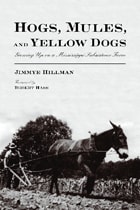
Hogs, Mules, and Yellow Dogs
Growing Up on a Mississippi Subsistence FarmJimmye Hillman; Foreword by Robert Hass
University of Arizona Press, 2012
"It's in the nature of things that whole worlds disappear," writes the poet Robert Hass in the foreword to Jimmye Hillman's insightful memoir. "Their vanishings, more often than not, go unrecorded or pass into myth, just as they slip from the memory of the living."
To ensure that the world of Jimmye Hillman's childhood in Greene County, Mississippi during the Great Depression doesn't slip away, he has gathered together accounts of his family and the other people of Old Washington village. There are humorous stories of hog hunting and heart-wrenching tales of poverty set against a rural backdrop shaded by the local social, religious, and political climate of the time. Jimmye and his family were subsistence farmers out of bare-bones necessity, decades before discussions about sustainability made such practices laudable.
More than just childhood memories and a family saga, though, this book serves as a snapshot of the natural, historical, and linguistic details of the time and place. It is a remarkable record of Southern life. Observations loaded with detail uncover broader themes of work, family loyalty, and the politics of changing times.
Hillman, now eighty-eight, went on to a distinguished career as an economist specializing in agriculture. He realizes the importance of his story as an example of the cultural history of the Deep South but allows readers to discover the significance on their own by witnessing the lives of a colorful cast of characters. Hogs, Mules, and Yellow Dogs is unique, a blend of humor and reflection, wisdom and sympathy—but it's also a hard-nosed look at the realities of living on a dirt farm in a vanished world.

Home Material
Ohio's Nineteenth-Century Regional Women's FictionSandra Parker
University of Wisconsin Press, 1998

Home Movies and Other Necessary Fictions
Michelle Citron
University of Minnesota Press, 1998
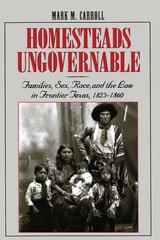
Homesteads Ungovernable
Families, Sex, Race, and the Law in Frontier Texas, 1823-1860By Mark M. Carroll
University of Texas Press, 2001
When he settled in Mexican Texas in 1832 and began courting Anna Raguet, Sam Houston had been separated from his Tennessee wife Eliza Allen for three years, while having already married and divorced his Cherokee wife Tiana and at least two other Indian "wives" during the interval. Houston's political enemies derided these marital irregularities, but in fact Houston's legal and extralegal marriages hardly set him apart from many other Texas men at a time when illicit and unstable unions were common in the yet-to-be-formed Lone Star State.
In this book, Mark Carroll draws on legal and social history to trace the evolution of sexual, family, and racial-caste relations in the most turbulent polity on the southern frontier during the antebellum period (1823-1860). He finds that the marriages of settlers in Texas were typically born of economic necessity and that, with few white women available, Anglo men frequently partnered with Native American, Tejano, and black women. While identifying a multicultural array of gender roles that combined with law and frontier disorder to destabilize the marriages of homesteaders, he also reveals how harsh living conditions, land policies, and property rules prompted settling spouses to cooperate for survival and mutual economic gain. Of equal importance, he reveals how evolving Texas law reinforced the substantial autonomy of Anglo women and provided them material rewards, even as it ensured that cross-racial sexual relationships and their reproductive consequences comported with slavery and a regime that dispossessed and subordinated free blacks, Native Americans, and Tejanos.

Honor
Frank Henderson Stewart
University of Chicago Press, 1994
In the first sustained comparative analysis of this elusive notion, Frank Stewart writes that none of these ideas is correct. Drawing on information about Western ideas of honor from sources as diverse as medieval Arthurian romances, Spanish dramas of the sixteenth and seventeenth centuries, and the writings of German jurists of the nineteenth and twentieth centuries, and comparing the European ideas with the ideas of a non-Western society—the Bedouin—Stewart argues that honor must be understood as a right, basically a right to respect. He shows that by understanding honor this way, we can resolve some of the paradoxes that have long troubled scholars, and can make sense of certain institutions (for instance the medieval European pledge of honor) that have not hitherto been properly understood.
Offering a powerful new way to understand this complex notion, Honor has important implications not only for the social sciences but also for the whole history of European sensibility.

Honor and Profit
Athenian Trade Policy and the Economy and Society of Greece, 415-307 B.C.E.Darel Tai Engen
University of Michigan Press, 2010
Honor and Profit offers a welcome corrective to the outmoded Finleyite view of the ancient economy. This important volume collects and analyzes economic evidence including government decrees for all known occasions on which Athens granted honors and privileges for services relating to trade.
The analysis proceeds within the intellectual framework of substantive economic theory, in which formal market behavior and institutions are considered to be but a subset of a larger group of economic behaviors and institutions devoted to the production, distribution, and exchange of goods.
Honor and Profit merges theory with empirical historical evidence to illustrate the complexity and dynamism of the ancient Greek economy. The author's conclusions have broad implications for our understanding not only of Athens and environs but also of the social and political history of Greece and the ancient Mediterranean world.
Darel Tai Engen is Associate Professor of History at California State University, San Marcos.
Also of interest
An Introduction to Greek Epigraphy of the Hellenistic and Roman Periods from Alexander the Great down to the Reign of Constantine (323 B.C.---A.D. 337)
By B. H. McLean
The Athenian Empire Restored: Epigraphic and Historical Studies
By Harold B. Mattingly
The Athenian Experiment: Building an Imagined Political Community in Ancient Attica, 508---490 B.C.
By Greg Anderson
Hop on Pop
The Politics and Pleasures of Popular CultureHenry Jenkins, Tara McPherson and Jane Shattuc, eds.
Duke University Press, 2003
The essays cover a wide and colorful array of subjects including pro wrestling, the computer games Myst and Doom, soap operas, baseball card collecting, the Tour de France, karaoke, lesbian desire in the Wizard of Oz, Internet fandom for the series Babylon 5, and the stress-management industry. Broader themes examined include the origins of popular culture, the aesthetics and politics of performance, and the social and cultural processes by which objects and practices are deemed tasteful or tasteless. The commitment that binds the contributors is to an emergent perspective in cultural studies, one that engages with popular culture as the culture that "sticks to the skin," that becomes so much a part of us that it becomes increasingly difficult to examine it from a distance. By refusing to deny or rationalize their own often contradictory identifications with popular culture, the contributors ensure that the volume as a whole reflects the immediacy and vibrancy of its objects of study.
Hop on Pop will appeal to those engaged in the study of popular culture, American studies, cultural studies, cinema and visual studies, as well as to the general educated reader.
Contributors. John Bloom, Gerry Bloustein, Aniko Bodroghkozy, Diane Brooks, Peter Chvany, Elana Crane, Alexander Doty, Rob Drew, Stephen Duncombe, Nick Evans, Eric Freedman, Joy Fuqua, Tony Grajeda, Katherine Green, John Hartley, Heather Hendershot, Henry Jenkins, Eithne Johnson, Louis Kaplan, Maria Koundoura, Sharon Mazer, Anna McCarthy, Tara McPherson, Angela Ndalianis, Edward O’Neill, Catherine Palmer, Roberta Pearson, Elayne Rapping, Eric Schaefer, Jane Shattuc, Greg Smith, Ellen Strain, Matthew Tinkhom, William Uricchio, Amy Villarego, Robyn Warhol, Charles Weigl, Alan Wexelblat, Pamela Robertson Wojcik, Nabeel Zuberi
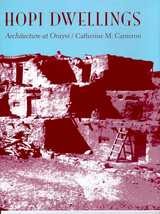
Hopi Dwellings
Architectural Change at OrayviCatherine M. Cameron
University of Arizona Press, 1999
Her study is unique in its use of historic photographs to document and understand abandonment processes and apply that knowledge to prehistoric sites. Photos taken by tourists, missionaries, and early anthropologists during the late nineteenth century portray original structures, while later photos show how Orayvi buildings changed over a period of almost eighty years. Census data relating to house size and household configuration shed additional light on social change in the pueblo.
Examining change at Orayvi afforded an opportunity to study the architectural effects of an event that must have happened many times in the past--the partial abandonment of a pueblo--by tracing the effects of sudden population decline on puebloan architecture. Cameron's work provides clues to how and why villages were abandoned and re-established repeatedly in the prehistoric Southwest as it offers a unique window on the relationship between Pueblo houses and the living people who occupied them.

Hot, Hot Chicken
A Nashville StoryRachel Louise Martin
Vanderbilt University Press, 2021
But for almost seventy years, hot chicken was made and sold primarily in Nashville’s Black neighborhoods—and the story of hot chicken says something powerful about race relations in Nashville, especially as the city tries to figure out what it will be in the future.
Hot, Hot Chicken recounts the history of Nashville’s Black communities through the story of its hot chicken scene from the Civil War, when Nashville became a segregated city, through the tornado that ripped through North Nashville in March 2020.

Hotel Malabar
Brendan Galvin
University of Iowa Press, 1998

House Fires
Nancy Reisman
University of Iowa Press, 1999
House Stories
The Meanings of Home in a New England TownBeth Luey
University of Massachusetts Press, 2017
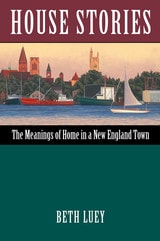
Historic houses adorned with plaques populate New England like nowhere else in the country. These plaques note the construction year and original owner of the house, but they tell nothing about the rich lives of the people who lived there. In House Stories, Beth Luey takes readers on a virtual walking tour of several historic houses in Fairhaven, Massachusetts, a small New England coastal town, inviting us in to learn each house's secrets.
Through letters and diaries, church and business records, newspaper accounts, legal documents, and the recollections of neighbors who knew them, Luey introduces the diverse cast of historical characters who lived in these houses at various times from 1800 to the 2000s, including a Japanese castaway and his rescuer, a self-made millionaire, a seagoing adventurer, a religious pioneer, and an entrepreneurial immigrant. All of the houses are still standing and all but a lighthouse are still called home. In House Stories, Luey asks readers to join her as she considers the multiple meanings of “home” for these people and their families.
House of Houses
Pat Mora
University of Arizona Press, 1997
Household Archaeology at the Bridge River Site (EeRl4), British Columbia
Spatial Distributions of Features, Lithic Artifacts, and Faunal Remains on Fifteen Anthropogenic Floors from Housepit 54Anna Marie Prentiss, Ethan Ryan, Ashley Hampton, Kathryn Bobolinski, Pei-Lin Yu, Matthew Schmader, and Alysha Edwards
University of Utah Press, 2022
The authors take a methodological approach that integrates the study of household spatial organization with consideration of archaeological formation processes. Repeating the same set of analyses for each floor, they examine stability from standpoints of occupation and abandonment cycles, structure and organization of activity areas, and variation in positioning of wealth-related items. This volume is an outstanding example of research undertaken through a collaborative partnership between scholars from the University of Montana and the community of the St’át’imc Nation.
How Celia Changed Her Mind and Selected Stories
Rose Terry CookeAmmons, Elizabeth
Rutgers University Press, 1986
Cooke's stories are rich literarily and historically; her command of dialect, ear for dialogue, dramatic sense, and ability to draw interesting, memorable characters all distinguish her work. This reissue of some of her best work represents an important contribution to the canon of American literature.
How Strange It Seems
The Cultural Life of Jews in Small-Town New EnglandMichael Hoberman
University of Massachusetts Press, 2008
Jews have lived in small-town New England since the colonial era, but during the last hundred years they have been especially active contributors to the region's cultural life. Part oral history, part ethnography, and part literary portrait, How Strange It Seems tells the story of this often overlooked group, tracing its patterns of settlement, economic activity, civic involvement, and religious life since the late 1800s.
Based on more than fifty interviews with men and women of all ages from Maine, New Hampshire, Vermont, Massachusetts, and Connecticut, it seeks to understand what is distinctive—and not so distinctive—about contemporary Jewish communities outside the larger urban centers of the Northeast. Michael Hoberman weaves the personal stories of these individuals and families into a collective narrative that offers as much folklore as history and is equal parts Jewish and Yankee. He introduces us to Hiram Adelman, a Russian immigrant peddler and potato farmer who settled in northernmost Maine because its climate was comparable to his native Siberia, and to Shmuel Simenowitz, an urban transplant who produces kosher maple syrup in southern Vermont. We also meet Suzie Laskin, who moved to the White Mountains region of New Hampshire in the 1900s and soon established a local havurah, and Bob August of Whately, Massachusetts, who once ran what may have been the world's only Christmas tree farm owned by a Jewish family.
Each section of the book explores how small-town New England Jews have both departed from and mimicked the broader patterns of Jewish American experience, while also illustrating how they have acclimated themselves to local practices without relinquishing a strong sense of Jewish identity. Accompanying the text are photographs by Janice Sorensen that include portraits of many of the interviewees and lively glimpses of the region's present-day Jewish revival.
How They Lived
The Everyday Lives of Hungarian Jews, 1867–1940András Koerner
Central European University Press, 2015