Results by title
1214 books match the query 'Subjects & Themes' and 36 start with h

Habitat Threshold
Craig Santos Perez
Omnidawn, 2019
Through experimental forms, free verse, prose, haiku, sonnets, satire, and a method he calls “recycling,” Perez has created a diverse collection filled with passion. Habitat Threshold invites us to reflect on the damage done to our world and to look forward, with urgency and imagination, to the possibility of a better future.
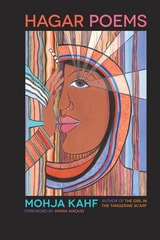
Hagar Poems
Mohja Kahf
University of Arkansas Press, 2016
“Mohja Kahf ’s Hagar Poems is brilliantly original in its conception, thrillingly artful in its execution. Its range is immense, its spiritual depth is profound, it negotiates its shifts between archaic and the contemporary with utmost skill. There’s lyricism, there’s satire, there’s comedy, there’s theology of a high order in this book.”
—Alicia Ostriker, author of For the Love of God: The Bible as an Open Book
“Hagar/ Hajar the immigrant/exile/outcast/refugee mother of a people is given multiple voices and significance in Mohja Kahf’s new book of dramatic monologues, which also reinvents Pharaoh’s daughter, Zuleika, Aïsha, and Mary in poems that are at once lively and learned, agnostic and devout. The sequence on an American mosque, and the poet’s ambivalent love for what it represents, is unique in American poetry.”
—Marilyn Hacker, author of A Stranger’s Mirror
“‘Where have all the goddesses gone,’ writes Mohja Kahf, ‘I tracked down Isis / incognito on Cyprus. /She told me Ishtar / lived under the radar / in southern Iraq. . . .’ In Hagar Poems, Mohja Kahf’s hallmark qualities—irreverence, imagination, wit, poignancy—are all exuberantly in evidence. A wonderful read.”
—Leila Ahmed, author of A Quiet Revolution: The Veil’s Resurgence, from the Middle East to America
“This brilliant collection captures all the ‘patient threading of relationship’ between Hagar and Sarah as between women, and then between women and men, between human and God. . . . At every turn of the page [Kahf] refuses complacency and circumstance but opts instead for exposing the tenuousness of threads that tie and bind and then come loose before our eyes.”
—From the foreword by Amina Wadud
The central matter of this daring new collection is the story of Hagar, Abraham, and Sarah—the ancestral feuding family of Judaism, Christianity, and Islam.
These poems delve into the Hajar story in Islam. They explore other figures from the Near Eastern heritage, such as Mary and Moses, and touch on figures from early Islam, such as Fatima and Aisha. Throughout, there is artful reconfiguring. Readers will find sequels and prequels to the traditional narratives, along with modernized figures claimed for contemporary conflicts.
Hagar Poems is a compelling shakeup of not only Hagar’s story but also of current roles of all kinds of women in all kinds of relationships.
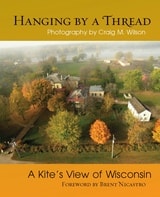
Hanging by a Thread
A Kite’s View of WisconsinCraig M. Wilson
University of Wisconsin Press, 2011
This full-color book of photographs records Wisconsin from an unusual viewpoint: a camera suspended from a kite and controlled by photographer Craig M. Wilson from the ground. Taken from fifty to a few hundred feet in the air, Wilson’s photos capture natural and man-made views that wouldn’t otherwise be possible. The result is a vibrant collection that captures Wisconsin in all its shifting beauty in landscapes and cityscapes, festivals, Door County’s lighthouses, Milwaukee’s neighborhoods, and the crowd at a Badger football game. Captions are provided in English, Spanish, German, and Mandarin Chinese.
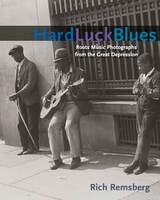
Hard Luck Blues
Roots Music Photographs from the Great DepressionRich Remsberg
University of Illinois Press, 2010
Showcasing American music and music making during the Great Depression, Hard Luck Blues presents more than two hundred photographs created by the New Deal's Farm Security Administration photography program. With an appreciation for the amateur and the local, FSA photographers depicted a range of musicians sharing the regular music of everyday life, from informal songs in migrant work camps, farmers' homes, barn dances, and on street corners to organized performances at church revivals, dance halls, and community festivals. Captured across the nation from the northeast to the southwest, the images document the last generation of musicians who learned to play without the influence of recorded sound, as well as some of the pioneers of Chicago's R & B scene and the first years of amplified instruments. The best visual representation of American roots music performance during the Depression era, Hard Luck Blues features photographs by Jack Delano, Dorothea Lange, Russell Lee, Arthur Rothstein, Ben Shahn, Marion Post Wolcott, and others.
Photographer and image researcher Rich Remsberg breathes life into the images by providing contextual details about the persons and events captured, in some cases drawing on interviews with the photographers' subjects. Also included are a foreword by author Nicholas Dawidoff and an afterword by music historian Henry Sapoznik.
Published in association with the Library of Congress.

Harker's Barns
Visions of an American IconMichael Harker
University of Iowa Press, 2003
Michael Harker drove past old barns on gravel roads and blacktop highways for years. He generally dismissed them as obsolete outbuildings until November 1993, when he felt compelled to photograph a windmill in Clutier, Iowa. This single photograph launched him on a seven-and-a-half-year mission to document Iowa's barns and all they represent. The result is Harker's Barns: Visions of an American Icon.
Each of the seventy-five black-and-white images featured in Harker's Barns beautifully and heartbreakingly captures the glory and ultimate demise of one of rural America's most enduring icons. From square to round, wood to brick, Dutch to Swedish, occupied or abandoned, the barns documented in this stunning collection are a testament to a passing way of life that was once the lifeblood of Iowa and the Midwest.
Complementing Harker's photographs are vignettes by poet and writer Jim Heynen. Both whimsical and endearing, each vignette treats barns as organic and intelligent entities, reflecting the living history that can be found inside each rural structure.
Iowa's barns are disappearing and with them a way of life; Harker's Barns brilliantly documents their heritage for future generations. As Jim Heynen says, “A good photograph can maintain an old barn through blizzards and hail storms and tornadoes. It is the best support beam and wood preservative an old barn can have.”
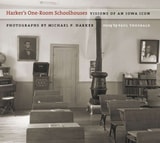
Harker's One-Room Schoolhouses
Visions of an Iowa IconPaul Theobald
University of Iowa Press, 2008
Michael Harker’s goal is to record Iowa’s historically significant architecture before it disappears forever. From Coon Center School no. 5 in Albert City to Pleasant Valley School in Kalona, North River School in Winterset to Douglas Center School in Sioux Rapids, and Iowa’s first school to Grant Wood’s first school, he has achieved this goal on a grand scale in Harker’s One-Room Schoolhouses.
Educational historian Paul Theobald tells the story of the rise and fall of Iowa’s one-room schools, whose numbers fell from close to 15,000 in 1918 to only 1,100 in 1960, all of which had ceased to function as schools by 1980. Moving from the state-wide story to the personal, he introduces us to George Coleman, son of a local farmer and school board director, who kept a sparse diary between December 1869 and June 1870. Young George’s words reveal the intimate way in which one-room schools interacted with the local community, including the local economic scene. Theobald ends by suggesting that these one-room relics of the past may again prove useful.
Harm
Hillary Gravendyk
Omnidawn, 2012
Hatch
PoemsJenny Irish
Northwestern University Press, 2024
The prose poems in Jenny Irish’s newest collection, Hatch, trace the consciousness of an artificial womb that must confront the role she has played in the continuation of the dying of the human species. This apocalyptic vision engages with the most pressing concerns of this contemporary sociopolitical moment: reproductive rights, climate crises, and mass extinction; gender and racial bias in healthcare and technology; disinformation, conspiracy theories, and pseudoscience; and the possibilities and dangers of artificial intelligence. More intimately, Hatch considers questions about how motherhood and its cultural expectations shape female identity. Working with avant strategies, Irish crafts a speculative feminist narrative, excavating and reexamining the aspects of the American experience that should have served as a call to action but have not. Part elegy and part prophecy, Hatch warns of a possible future while speaking to the present moment.
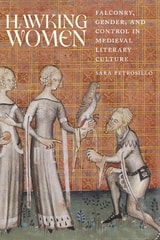
Hawking Women
Falconry, Gender, and Control in Medieval Literary CultureSara Petrosillo
The Ohio State University Press, 2023
Head Off & Split
PoemsNikky Finney
Northwestern University Press, 2011
Winner, 2011 National Book Award for Poetry
Winner, 2012 GCLS Award for Poetry
Winner, 2012 SIBA Book Award for Poetry
Nominee, 2012 NAACP Image Award for Outstanding Literary Work in Poetry
The poems in Nikky Finney's breathtaking new collection Head Off & Split sustain a sensitive and intense dialogue with emblematic figures and events in African American life: from civil rights matriarch Rosa Parks to former secretary of state Condoleezza Rice, from a brazen girl strung out on lightning to a terrified woman abandoned on a rooftop during Hurricane Katrina. Finney's poetic voice is defined by an intimacy that holds a soft yet exacting eye on the erotic, on uncanny political and family events, like her mother's wedding waltz with South Carolina senator Strom Thurmond, and then again on the heartbreaking hilarity of an American president's final State of the Union address.
Artful and intense, Finney's poems ask us to be mindful of what we fraction, fragment, cut off, dice, dishonor, or throw away, powerfully evoking both the lawless and the sublime.
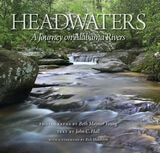
Headwaters
A Journey on Alabama RiversJohn C. Hall and Beth Maynor Young
University of Alabama Press, 2009
A breathtaking portrait of Alabama rivers.
From their primal seepages in the Appalachian highlands or along the broad Chunnenuggee Hills, Alabama’s rivers carve through the rocky uplands and down the Fall Line rapids, then ease across the coastal plain to their eventual confluence with the Gulf of Mexico.
Beth Maynor Young’s 155 full-color photographs constitute art through a lens; the colors, the light, and the angles all converge for a tender praise of her subject. Her stunning visuals are supported by tantalizing captions and introductory text from John C. Hall, a master field trip leader. Together, they tell a proud story of the native beauty and complexity of these Alabama watercourses that shepherd fully 20% of the nation’s fresh water to sea.
The intimate close-up of verdant mosses or pebbled beaches pulls one into their space just as surely as does a sweeping scene of a watershed valley or a sparkling sunset over water. We all become eager listeners and observers on this guided “paddle to the Gulf,” drinking in the peace, delight, and beauty offered by the experience. At the end, we know we won’t be the same as before beginning the journey.
In addition to being a celebration of their richness, Headwaters serves as a call to greater stewardship of these riverine resources. Conservation sidebars describe the current efforts in this direction and encourage further study and protection. This book tells us, in glorious color and instructive word, why we’ll always treasure these wonderful rivers.
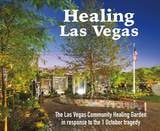
Healing Las Vegas
The Las Vegas Community Healing Garden in response to the 1 October tragedyMcAleer
University of Nevada Press, 2019
The story of the garden unfolds through photographs and the words of survivors, first responders, family members, medical professionals, counselors, and members of the community. In only a matter of days, volunteers and local businesses transformed a vacant downtown lot into a serene urban oasis. Families and friends of those lost in the tragedy soon adopted each of the fifty-eight trees planted in honor of their loved ones, and visitors left behind colorful mementos, including painted rocks, photographs, and ornaments, as well as words of encouragement, love, loss, and strength.
In the aftermath of 1 October, an often misunderstood city revealed its soul under the most heartbreaking of circumstances. The inspirational voices and stories from a community touched by tragedy provide comfort and encouragement. And the organic response to the unthinkable is a testament to how one community came together at its darkest hour, chose hope over despair, unity over hate.
Heartwall
Richard Jackson
University of Massachusetts Press, 2000
Taking its title from a poem by Paul Celan that is both elegiac and hopeful, but also playing off the notion of the “hart” walls erected to corral deer for a medieval hunt that was more a slaughter, and evoking the very physiology of the heart itself, this collection of poems explores the possibilities for love and feeling in a world besieged by tragedies in Bosnia, Kosovo, Rwanda, and elsewhere. At times lyrical, at times satirical, and written in a surrealistic style that ranges from the formal to the aphoristic, Heartwall explores the complex and sometimes confounding relationship between the personal and the political, between our individual perceptions and the larger vision they suggest. These are poems that ask forgiveness, offer praise, and carry enough irony never to seek redemption. They are, at heart, love poems. According to the late William Matthews, Jackson's poems tell us “what it means to belong in history. . . . The wonderful amplitude . . . testifies that we can live with such chaos and not lie about it or ignore it: indeed the poems are a demonstration of how we might do such a thing.”
Heidegger's Political Thinking
James F. Ward
University of Massachusetts Press, 1995
In recent years there has been much controversy concerning Martin Heidegger’s politics, prompted by new research on the nature and extent of his engagement with National Socialism. Examining the political ideas embedded in Heidegger’s larger philosophical oeuvre, James F. Ward moves beyond the narrow preoccupation with Heidegger’s overtly pro-Nazi utterances and activities to show how the central theme of Heidegger’s philosophy—the question of Being—is itself inherently political.
Ward builds his case on close readings of texts drawn from nearly all of the writings published during Heidegger’s lifetime as well as from lectures, course transcripts, and other materials that appeared posthumously. With subtlety and insight, he uncovers the political content of Heidegger’s thinking on such topics as the temporality of Being, the role of science in the crisis of the West, and the presumed special status and destiny of the German people. In an epilogue, Ward reflects on the implications of Heidegger’s political thinking for postmodern political theory.
Held by Form
Feminism, Poetics, Critical PracticeAnna Moser
University of Chicago Press, 2026
How contemporary poetry illuminates the workings—and struggles—of commitment in feminism.
In this lucid and vigorous defense of poetics for feminism, Anna Moser situates the practice of contemporary poetry in an exploratory dialogue with the work of philosophical, critical, and historical thinkers—placing Denise Riley in conversation with Judith Butler, Lyn Hejinian with Hannah Arendt, m. nourbeSe philip with Saidiya Hartman, and Susan Howe with Emily Dickinson.
Moser’s central theme is these poets’ questioning, agonistic commitment to feminism. What, the book asks, does it mean to be committed? How does such a commitment materialize? What are its consequences? What does it mean not to take for granted an affiliation like “feminist” (or even “woman”), but rather to involve one’s art in probing its historical formations, present conditions, and future trajectories? Moser explores both the risks and possibilities of making art in this equivocal condition. She reveals that the poetry of certain contemporary writers not only unfolds within this space of agonistic commitment, but that, in doing so, it offers an important contribution to feminist thinking. Moser’s book also shows that while form is a constraint that limits these poets’ freedom, it also holds them in a more sustaining sense, allowing something belatedly and imperfectly to be said.
In dialogue with feminist political theory, philosophy, historiography, and aesthetics, Held by Form reveals poetics as a unique mode of critical practice: one that models relations of care and collectivity, refigures inherited forms in ways that contest their hierarchies of value, and responds with generosity and openness to the complexities of living in gender.
Here
Sydney Lea
Four Way Books, 2019
Hero Me Not
The Containment of the Most Powerful Black, Female SuperheroChesya Burke
Rutgers University Press, 2023
First introduced in the pages of X-Men, Storm is probably the most recognized Black female superhero. She is also one of the most powerful characters in the Marvel Universe, with abilities that allow her to control the weather itself. Yet that power is almost always deployed in the service of White characters, and Storm is rarely treated as an authority figure.
Hero Me Not offers an in-depth look at this fascinating yet often frustrating character through all her manifestations in comics, animation, and films. Chesya Burke examines the coding of Storm as racially “exotic,” an African woman who nonetheless has bright white hair and blue eyes and was portrayed onscreen by biracial actresses Halle Berry and Alexandra Shipp. She shows how Storm, created by White writers and artists, was an amalgam of various Black stereotypes, from the Mammy and the Jezebel to the Magical Negro, resulting in a new stereotype she terms the Negro Spiritual Woman.
With chapters focusing on the history, transmedia representation, and racial politics of Storm, Burke offers a very personal account of what it means to be a Black female comics fan searching popular culture for positive images of powerful women who look like you.
Hidden Hands
Working-Class Women and Victorian Social-Problem FictionPatricia E. Johnson
Ohio University Press, 2001
Tracing the Victorian crisis over the representation of working-class women to the 1842 Parliamentary bluebook on mines, with its controversial images of women at work, Hidden Hands argues that the female industrial worker became even more dangerous to represent than the prostitute or the male radical because she exposed crucial contradictions between the class and gender ideologies of the period and its economic realities.
Drawing on the recent work of feminist historians, Patricia Johnson lays the groundwork for a reinterpretation of Victorian social-problem fiction that highlights its treatment of issues that particularly affected working-class women: sexual harassment; the interconnections between domestic ideology and domestic violence; their relationships to male-dominated working-class movements such as Luddism, Chartism, and unionism; and their troubled connection to middle-class feminism.
Uncovering a series of images in Victorian fiction ranging from hot-tempered servants and sexually harassed factory girls to working-class homemakers pictured as beaten dogs, Hidden Hands demonstrates that representations of working-class women, however marginalized or incoherent, reveal the very contradictions they are constructed to hide and that the dynamics of these representations have broad implications both for other groups, such as middle-class women, and for the emergence of working-class women as writers themselves.

Hidden Ocean Forests
An Undersea Journey to Uncover a Fascinating World of KelpRoss Frylinck and Faine Loubser
University of Chicago Press, 2027
Stunning underwater photography of the world’s great marine kelp forests and the wildlife they shelter.
Kelp forests, which thrive in cold, nutrient-rich waters, are found along the coasts of every continent except Antarctica. These underwater realms are stunningly beautiful and host entire ecosystems, providing food, shelter, and breeding grounds for an abundance of marine life.
With transcendent photography and compelling accounts from freedivers and storytellers Ross Frylinck and Faine Loubser, this book offers a captivating glimpse into these ocean forests. Dive beneath the midnight sun in the Arctic Circle and watch the northern lights dance over the waters of Shetland, Scotland. In Aotearoa New Zealand, swim with playful sea lions off Rakiura Stewart Island. In South Africa’s Cape Peninsula, cross paths with dusky dolphins, whales, and sharks. Meet an austral sea wolf in the icy Strait of Magellan and learn from kelp harvesters on remote islands in Japan.
Hidden Ocean Forests documents kelp forests around the world, showcasing their rich biodiversity and long-lasting impacts on human culture. These remarkable images and enchanting essays reveal the hidden beauty, significance, and fragility of these submerged wonderlands.
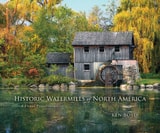
Historic Watermills of North America
A Visual PreservationKen Boyd
University of Alabama Press, 2021
112 full-color artistic photographs of watermills still standing on the North American landscape
The scenic beauty of the watermill is undeniable. The iconic waterwheel has inspired romantics for generations with their warmth and charm. Watermills were once ubiquitous landmarks along brooks, creeks, and rivers across North America. Today, only a scattering of the old watermills grace the countryside, but through these mills, and the turning of their wheels and the whirling of their stones, a small but spectacular part of history lives on.
Through stunningly beautiful images, Historic Watermills of North America: A Visual Preservation presents 112 watermills still standing on the North American landscape. With idealized full-color photographs, Ken Boyd nostalgically hearkens back to a time after European settlement when these structures were the very heart of the communities whose livelihoods they made possible. These mills turned the power of flowing water into mechanical energy to grind corn and wheat into meal and flour, saw timber, loom wool and cotton cloth, and more for the benefit of their operators and communities.
At one time vital to their surrounding regions, most of these surviving mills are in rural areas that have been passed over by modern development. Their designs are as individual as their makers, and their settings are as varied as the landscape. Some have been converted into homes or museums or are part of local tourist attractions. Others have been abandoned but give witness to the significance of their heydays, and others are still in use, doing the same work they have done for generations.
Boyd’s beautifully rendered photographs preserve these extant structures and represent a variety of watermills across the United States and Canada. Each mill photograph is accompanied by a description providing the name of the mill, its location, date of construction, and brief comments highlighting its most noteworthy features. Additional photographs and commentary in the afterword explore the inner workings of watermills.

History and Modern Media
A Personal JourneyJohn Mraz
Vanderbilt University Press, 2021
The book interweaves an autobiographical narrative with concrete research. Mraz describes the resistance he encountered in US academia to this new way of showing and describing the past in films and photographs, as well as some illuminating experiences as a visiting professor at several US universities. More importantly, he reflects on what it has meant to move to Mexico and become a Mexican. Mexico is home to a thriving school of photohistorians perhaps unequaled in the world. Some were trained in art history, and a few continue to pursue that discipline. However, the great majority work from the discipline known as "photohistory" which focuses on vernacular photographs made outside of artistic intentions.
A central premise of the book is that knowing the cultures of the past and of the other is crucial in societies dominated by short-term and parochial thinking, and that today's hyper-audiovisuality requires historians to use modern media to offer their knowledge as alternatives to the "perpetual present" in which we live.
History, Memory, and the Law
Austin Sarat and Thomas R. Kearns, Editors
University of Michigan Press, 2002
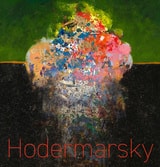
Hodermarsky
Daniel Hodermarsky
The Artist Book Foundation, 2024
Daniel Hodermarsky's work embraces both the representational and the abstract, reflecting the intricate spaces of both his psyche and shared human experience.
Daniel Hodermarsky was the son of Slovak immigrants who emigrated from Hačava to settle and work in the coal fields of Pennsylvania and later in the auto-manufacturing industries of Ohio. He served in World War II on the Western front and was awarded two presidential citations, two Croix de Guerre, and one combat star. He returned home with severe and persistent post-traumatic stress disorder that left an indelible mark on his life and art.
Throughout his career, Hodermarsky’s work embraced both the representational and the abstract. His early works experimented with new media (such as Dayglo paint) and new styles such as Op Art and performance. In the 1970s and beyond, he engaged landscape—rural, urban, and imaginary—wherein he explored the interplay of terrain (land or water, horizon, and sky). The human figure—Slovak farmers, wounded or dismembered soldiers, and mythical and historical figures—were among his favorite subjects. He was fascinated by how age, human nature, and personality combine to create the physical form. His eclectic themes mirror his own unique complexities and experiences. Later in his career, he focused on abstract works that reflect the intricate spaces of both his psyche and shared human experience.
A deeply spiritual man with a strong religious faith, Hodermarsky’s abstract paintings ask the existential questions that have challenged humankind across millennia. By showing us his own experience of these great mysteries, his art underscores life’s abiding beauty. Over his long career of interpreting the world in which he lived, Hodermarsky invites us to inhabit a realm filled with joy, reverence, and passion.

Hollywood Notebook
EssaysWendy C. Ortiz
Northwestern University Press, 2025
A daylight traipse through early-aughts Los Angeles, Hollywood Notebook encapsulates the powerful feelings and hopeful futures of twentysomething Wendy C. Ortiz. In this boundary-defying sister memoir to Bruja, Ortiz navigates internal maps as she traverses external palm-treed streets, moving through her youthful twenties and into the pensiveness of her thirties. Peering at what lies ahead while dipping her toes into the past, Ortiz shows us that there is no place like Hollywood to unearth the joys of success and the blows of mistakes—both realized and denied. An innovative and bold examination of the daytime roaming mind, Hollywood Notebook is a cartography of love, loss, and transformation in the face of a brilliant psyche in a vibrant city.
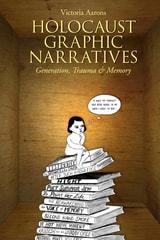
Holocaust Graphic Narratives
Generation, Trauma, and MemoryVictoria Aarons
Rutgers University Press, 2020
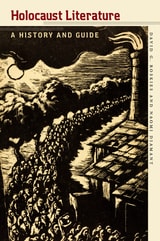
Holocaust Literature
A History and GuideDavid G. Roskies and Naomi Diamant
Brandeis University Press, 2013
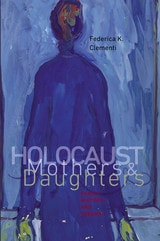
Holocaust Mothers and Daughters
Family, History, and TraumaFederica K. Clementi
Brandeis University Press, 2013
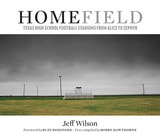
Home Field
Texas High School Football Stadiums from Alice to ZephyrPhotographs by Jeff Wilson
University of Texas Press, 2010
"The promise of an empty football field is an irresistible force for those who understand and revere the game," Jeff Wilson observes. Drawn by the sense of possibility and nostalgia inherent in every stadium, Wilson traveled the state of Texas to photograph high school stadiums for a photo essay that appeared in Texas Monthly in August 2005. The magazine's readers responded with an outpouring of enthusiasm, and Wilson's photo essay was nominated for a prestigious National Magazine Award.
In Home Field, Wilson creates a unique photo portrait of nearly eighty Texas high school football stadiums, ranging from the bright lights, artificial turf, and seating for thousands at Southlake Carroll to the lone set of bleachers under the wide open sky in Veribest. Shot from the fifty-yard line facing the home stands, these photographs invite us to view each stadium from the same vantage point and experience it as an evocative place that holds a community's collective memories. Accompanying the photographs are reminiscences about the fields from players, coaches, team physicians, athletic directors, sportswriters and announcers, school superintendents, principals and teachers, band directors, maintenance workers, booster club parents, students, and fans. Their stories—whether funny, nostalgic, or poignant—reveal just how important high school football is to Texans and how it creates an unforgettable sense of community and camaraderie.
Sure to bring back memories as soon as you open the book, Home Field captures what football is supposed to be—"simple and pure, like a perfect spiral arcing gracefully across the sky."
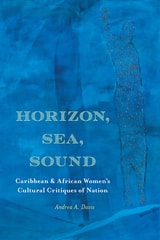
Horizon, Sea, Sound
Caribbean and African Women's Cultural Critiques of NationAndrea A. Davis
Northwestern University Press, 2022
In Horizon, Sea, Sound: Caribbean and African Women’s Cultural Critiques of Nation, Andrea Davis imagines new reciprocal relationships beyond the competitive forms of belonging suggested by the nation-state. The book employs the tropes of horizon, sea, and sound as a critique of nation-state discourses and formations, including multicultural citizenship, racial capitalism, settler colonialism, and the hierarchical nuclear family.
Drawing on Tina Campt’s discussion of Black feminist futurity, Davis offers the concept future now, which is both central to Black freedom and a joint social justice project that rejects existing structures of white supremacy. Calling for new affiliations of community among Black, Indigenous, and other racialized women, and offering new reflections on the relationship between the Caribbean and Canada, she articulates a diaspora poetics that privileges our shared humanity. In advancing these claims, Davis turns to the expressive cultures (novels, poetry, theater, and music) of Caribbean and African women artists in Canada, including work by Dionne Brand, M. NourbeSe Philip, Esi Edugyan, Ramabai Espinet, Nalo Hopkinson, Amai Kuda, and Djanet Sears. Davis considers the ways in which the diasporic characters these artists create redraw the boundaries of their horizons, invoke the fluid histories of the Caribbean Sea to overcome the brutalization of plantation histories, use sound to enter and reenter archives, and shapeshift to survive in the face of conquest. The book will interest readers of literary and cultural studies, critical race theories, and Black diasporic studies.
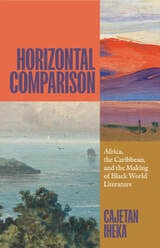
Horizontal Comparison
Africa, the Caribbean, and the Making of Black World LiteratureCajetan Iheka
University of Chicago Press, 2026
By analyzing African and Caribbean texts on their own terms, Horizontal Comparison articulates new forms of transoceanic solidarity.
The fields of comparative literature and Black Atlantic studies have an Africa problem: despite sustained attempts to decenter Western paradigms, they still privilege the United States and Europe as the primary loci of reference. So argues Cajetan Iheka in Horizontal Comparison, which aims to redirect both fields toward a non-hierarchical, South-South orientation focusing on the links between Africa and the Caribbean.
By analyzing the literary work and real-life trajectories of writers such as Peter Abrahams, Chimamanda Adichie, Maryse Condé, Buchi Emecheta, Jamaica Kincaid, Claude McKay, Dinaw Mengestu, Ferdinand Oyono, Taiye Selasi, and Sam Selvon, Iheka draws our attention to the ways in which African and Caribbean texts inform and mutually constitute each other, bypassing the usual comparisons to Western literary canons. The book challenges not only Western cultural hegemony in the study of global Black writing but also the very methodologies of comparative literary studies, offering fresh insights into reading, trauma, character, and the “worlding” of literature.
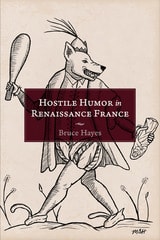
Hostile Humor in Renaissance France
Bruce Hayes
University of Delaware Press, 2020
This book is also freely available online as an open access digital edition here: https://bibliopen.org/9781644531792. The open access edition is funded by the National Endowment for the Humanities.
In sixteenth-century France, the level of jokes, irony, and ridicule found in pamphlets and plays became aggressively hostile. In Hostile Humor in Renaissance France, Bruce Hayes investigates this period leading up to the French Wars of Religion, when a deliberately harmful and destructive form of satire appeared.
This study examines both pamphlets and plays to show how this new form of humor emerged that attacked religious practices and people in ways that forever changed the nature of satire and religious debate in France. Hayes explores this phenomenon in the context of the Catholic and Protestant conflict to reveal new insights about the society that both exploited and vilified this kind of satire.
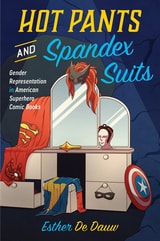
Hot Pants and Spandex Suits
Gender Representation in American Superhero Comic BooksEsther De Dauw
Rutgers University Press, 2021
Hot Pants and Spandex Suits offers a far-reaching look at how masculinity and femininity have been represented in American superhero comics, from the Golden and Silver Ages to the Modern Age. Scholar Esther De Dauw contrasts the bulletproof and musclebound phallic bodies of classic male heroes like Superman, Captain America, and Iron Man with the figures of female counterparts like Wonder Woman and Supergirl, who are drawn as superhumanly flexible and plastic. It also examines the genre’s ambivalent treatment of LGBTQ representation, from the presentation of gay male heroes Wiccan and Hulkling as a model minority couple to the troubling association of Batwoman’s lesbianism with monstrosity. Finally, it explores the intersection between gender and race through case studies of heroes like Luke Cage, Storm, and Ms. Marvel.
Hot Pants and Spandex Suits is a fascinating and thought-provoking consideration of what superhero comics teach us about identity, embodiment, and sexuality.
Hotel
Carl Adamshick
Four Way Books, 2021
Adamshick’s poems are characteristically accessible and navigable. From the political to the erotic and everywhere in between, these poems take us on a sometimes sober, sometimes raunchy ride.
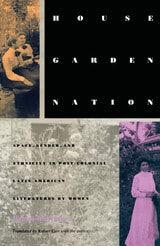
House/Garden/Nation
Space, Gender, and Ethnicity in Post-Colonial Latin American Literatures by WomenIleana Yamileth Rodriguez
Duke University Press, 1994
In House/Garden/Nation the narratives of five Centro-Caribbean writers illustrate these times of transition: Dulce María Loynáz, from colonial rule to independence in Cuba; Jean Rhys, from colony to commonwealth in Dominica; Simone Schwarz-Bart, from slave to free labor in Guadeloupe; Gioconda Belli, from oligarchic capitalism to social democratic socialism in Nicaragua; and Teresa de la Parra, from independence to modernity in Venezuela. Focusing on the nation as garden, hacienda, or plantation, Rodríguez shows us these writers debating the predicament of women under nation formation from within the confines of marriage and home.
In reading these post-colonial literatures by women facing the crisis of transition, this study highlights urgent questions of destitution, migration, exile, and inexperience, but also networks of value allotted to women: beauty, clothing, love. As a counterpoint on issues of legality, policy, and marriage, Rodriguez includes a chapter on male writers: José Eustacio Rivera, Omar Cabezas, and Romulo Gallegos. Her work presents a sobering picture of women at a crossroads, continually circumscribed by history and culture, writing their way.
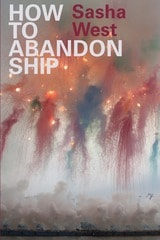
How to Abandon Ship
Sasha West
Four Way Books, 2024
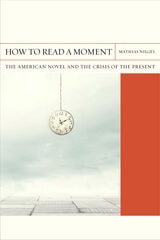
How to Read a Moment
The American Novel and the Crisis of the PresentMathias Nilges
Northwestern University Press, 2021
“Time is a thing that grows scarcer every day,” observes one of Don DeLillo’s characters. “The future is gone,” The Baffler argues. “Where’s my hoverboard!?” a meme demands. Contemporary capitalism, a system that insists that everything happen at once, creates problems for social thought and narrative alike. After all, how does one tell the time of instantaneity? In this moment of on-demand service and instant trading, it has become difficult to imagine the future.
The novel emerged as the art form of a rapidly changing modern world, a way of telling time in its progress. Nilges argues that this historical mission is renewed today through works that understand contemporaneity as a form of time shaping that props up our material world and cultural imagination. But the contemporary American novel does not simply associate our present with a crisis of futurity. Through analyses of works by authors such as DeLillo, Jennifer Egan, Charles Yu, and Colson Whitehead, Nilges illustrates that the novel presents ways to make sense of the temporality that controls our purportedly fully contemporary world. In so doing, the novel recovers a sense of possibility and hope, forwarding a dazzling argument for its own importance today.