Results by title
1185 books match the query 'Travel' and 36 start with h
Hanoi Journal, 1967
Carol McEldowney
University of Massachusetts Press, 2007
McEldowney first gained the respect of her fellow activists as a student organizer at the University of Michigan. High regard for her intelligence, skill, and hard work with SDS's Economic Recovery Action Program during the years following her graduation in 1964 earned her an invitation to attend an international conference in Czechoslovakia and an offer to continue on to North Vietnam. Though her journal displays only traces of the feminist consciousness that would mark her later political activism, she recorded her observations of North Vietnam clearly aware that she was an outsider—a woman not subject to the military draft, not married to a soldier, and without the heartache of a brother or even a close friend serving in the war.
McEldowney searched for glimpses of everyday life that would help her to better relate to women in Hanoi and the hardships they faced during wartime. As she traveled in North Vietnam, she sought a deeper understanding of the events of her time. Her journal provides readers with a unique lens through which to study those events and gain a new perspective on the Vietnam War era.
Harriman Expedition to Alaska
Encountering the Tlingit and Eskimo in 1899George Grinnell
University of Alaska Press, 2007
A keen observer of his surroundings, Grinnell provides a unique perspective on northern life in the late nineteenth century. He documented hunting techniques and material culture of the Eskimo of Siberia, as well as the totem poles and architecture of the Tlingit of Southeast. As a pioneer conservationist, Grinnell was one of the first to express concern over the effects of trade and industry on Alaska's peoples and natural resources.
Illustrated with photos and drawings by Harriman Expedition members, including Edward S. Curtis, this volume makes the work of a passionate observer available to a new generation of readers.
Havana and Other Missing Fathers
Mia Leonin
University of Arizona Press, 2009
Shortly after her sixteenth birthday, Leonin learned from her mother that her father, a Cuban exile, was very much alive and living in Florida. Her attempts to contact him, however, were thwarted until four years later, when she left home in search of her roots.
She meets her father, but trying to discover the truth behind him proves to be a more daunting task. Her journey takes her to Miami, Colombia, and Cuba, and her search for cultural identity leads her to create memories, friendships, and romances. She finds moments of connection and redemption, ending up in Havana not as a cultural tourist but as an illegitimate daughter of Cuba looking for validation. What she discovers is an island bereft of fathers and brimming with paternalism. As she becomes entangled with two different men, she descends further into the Havana of poverty, humiliation, and despair, as well as the ever-inventive city that is as passionate as it is contradictory.
Insightful, imaginative, and often poetic, Havana and Other Missing Fathers is Mia Leonin’s recollection of this journey and her longing to learn more about her origins. In the end, she must learn to accept the answers she discovers as well as the questions that remain.
Headwaters
A Journey on Alabama RiversJohn C. Hall and Beth Maynor Young
University of Alabama Press, 2009
A breathtaking portrait of Alabama rivers.
From their primal seepages in the Appalachian highlands or along the broad Chunnenuggee Hills, Alabama’s rivers carve through the rocky uplands and down the Fall Line rapids, then ease across the coastal plain to their eventual confluence with the Gulf of Mexico.
Beth Maynor Young’s 155 full-color photographs constitute art through a lens; the colors, the light, and the angles all converge for a tender praise of her subject. Her stunning visuals are supported by tantalizing captions and introductory text from John C. Hall, a master field trip leader. Together, they tell a proud story of the native beauty and complexity of these Alabama watercourses that shepherd fully 20% of the nation’s fresh water to sea.
The intimate close-up of verdant mosses or pebbled beaches pulls one into their space just as surely as does a sweeping scene of a watershed valley or a sparkling sunset over water. We all become eager listeners and observers on this guided “paddle to the Gulf,” drinking in the peace, delight, and beauty offered by the experience. At the end, we know we won’t be the same as before beginning the journey.
In addition to being a celebration of their richness, Headwaters serves as a call to greater stewardship of these riverine resources. Conservation sidebars describe the current efforts in this direction and encourage further study and protection. This book tells us, in glorious color and instructive word, why we’ll always treasure these wonderful rivers.
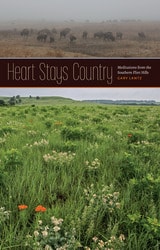
Heart Stays Country
Meditations from the Southern Flint HillsGary Lantz
University of Iowa Press, 2017
As proud grasslanders know, the prairie is biologically fulfilling, unique, and increasingly rare: biologists from the National Park Service and the Nature Conservancy agree that a healthy prairie remains one of the most ecologically diverse and dynamic ecosystems on this planet—as well as one of the rarest left on earth. This landscape that once inspired rapturous exclamations from travelers headed west on horseback now mostly exists in fragments exiled from each other by cropland, cities, and interstate highways.
Historically, tallgrass prairie stretched from Canada to Texas, from central Kansas to Indiana. Now the last major expanse of tallgrass occurs in the Flint Hills, a verdant landscape extending in a north-south strip across eastern Kansas and into northern Oklahoma’s Osage County. In these essays, Gary Lantz brings the beautiful diversity of the prairie home to all of us.
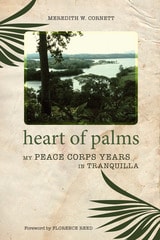
Heart of Palms
My Peace Corps Years in TranquillaMeredith W. Cornett
University of Alabama Press, 2014
A memoir of service, culture and transformation in a rural Panamanian village by a young American woman trained as a community forester for the Peace Corp.
In the storied fifty-year history of the US Peace Corps, Heart of Palms is the first Peace Corps memoir set in Panama, the slender isthmus that connects two continents and two oceans. In her memoir, Meredith Cornett transports readers to the remote village of Tranquilla, where dugout canoes are the mainstay of daily transportation, life and nature are permeated by witchcraft, and a restful night’s sleep may be disturbed by a raiding phalanx of army ants.
Cornett is sent to help counter the rapid deforestation that is destroying the ecosystem and livelihoods of the Panama Canal watershed region. Her first chapters chronicle her arrival and struggles not only with the social issues of language, loneliness, and insecurity, but also with the tragicomic basics of mastering open-fire cookery and intrusions by insects and poisonous snakes. As she grows to understand the region and its people, her keen eye discerns the overwhelming scope of her task. Unable to plant trees faster than they are lost, she writes with moving clarity about her sense of powerlessness.
Combating deforestation leads Cornett into an equally fierce battle against her own feelings of fear and isolation. Her journey to Panama becomes a parallel journey into herself. In this way, Heart of Palms is much more than a record of her Peace Corps service; it is also a moving environmental coming-of-age story and nuanced meditation on one village’s relationship to nature. When she returns home two years later, Cornett brings with her both skills and experience and a remarkable, newfound sense of confidence and mission.
Writing with rueful, self-deprecating humor, Cornett lets us ride along with her on a wave of naïve optimism, a wave that breaks not only on fear and intimidation, but also on tedium and isolation. Heart of Palms offers a bracing alternative to the romantic idealism common to Peace Corps memoirs and will be valued as a welcome addition to writing about the Peace Corps and environmental service.
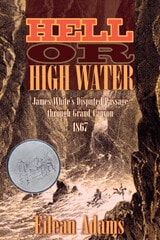
Hell Or High Water
James White's Disputed Passage through Grand Canyon, 1867Eilean Adams
Utah State University Press, 2001
Although John Wesley Powell and party are usually given credit for the first river descent through the Grand Canyon, the ghost of James White has haunted those claims. White was a Colorado prospector, who, almost two years before Powell's journey, washed up on a makeshift raft at Callville, Nevada. His claim to have entered the Colorado above the San Juan River with another man (soon drowned) as they fled from Indians was widely disseminated and believed for a time, but Powell and his successors on the river publically discounted it. Colorado River runners and historians have since debated whether White's passage through Grand Canyon even could have happened.
Hell or High Water is the first full account of White's story and how it became distorted and he disparaged over time. It is also a fascinating detective story, recounting how White's granddaughter, Eilean Adams, over decades and with the assistance of a couple of notable Colorado River historians who believed he could have done what he claimed, gradually uncovered the record of James White's adventure and put together a plausible narrative of how and why he ended up floating helplessly down a turbulent river, entrenched in massive cliffs, with nothing but a driftwood raft to carry him through.
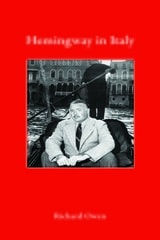
Hemingway in Italy
Richard Owen
Haus Publishing, 2017
In evocative prose, complemented by a rich selection of historical images, Richard Owen takes us on a tour through Hemingway’s Italy. He describes how Hemingway first visited the country of the Latins during World War I, an experience that set the scene for A Farewell to Arms. Then after World War II, it was in Italy that he found inspiration for Across the River and into the Trees. Again and again, the Italian landscape—from the Venetian lagoon to the Dolomites and beyond—deeply affected one of the greatest writers of the twentieth century. Hemingway in Italy demonstrates that Italy stands alongside Spain as a key influence on Hemingway’s work—and why the Italians themselves hold Hemingway and his writing close to their hearts.
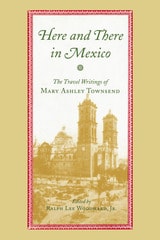
Here and There in Mexico
The Travel Writings of Mary Ashley TownsendMary Ashley Townsend, edited by Ralph Lee Woodward Jr.
University of Alabama Press, 2001
Mary Ashley Townsend was a novelist, newspaper columnist, and poet laureate of New Orleans who made several trips to Mexico with her daughter Cora during the last two decades of the 19th century. She collected her impressions of many aspects of life in that country—flora, fauna, architecture, people at work and play, fashion, society, food—and wrote about them during a time when few women engaged in solo travel, much less the pursuit of travel writing. Her collected work was still in progress when she died in a train accident in 1901, and was never published.
Here is Where I Walk
Episodes From a Life in the ForestLeslie Carol Roberts
University of Nevada Press, 2019
In layered stories of her life and travels, Leslie turns her daily walks into revelations of deeper meaning. From Maryland to Iowa to Tasmania, we follow a fierce and keenly observant walker through places of exquisite beauty and complexity. Her daily walks inspire Leslie to accept the invitation of the beckoning trees where she finds herself colliding with the urban coyote, the peculiar banana slug, and the manzanita. She also notes both ridiculous and poignant aspects of human ecosystems in pursuit of what it means to live a life of creativity and creation from scientist-activists battling to save environments to the tragic realities of ordinary life.
In this finely crafted eco-memoir, each place provides Leslie with exactly the scaffolding needed to survive, with nature serving as the tonic. Here is Where I Walk provides a vivid answer to how we can find our place, not only in nature but within ourselves and the world we walk.
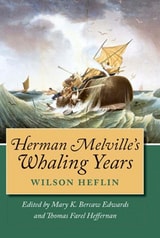
Herman Melville's Whaling Years
Wilson Heflin
Vanderbilt University Press, 2004
During his time in the Pacific, Melville served on three whaling ships, as well as on a U.S. Navy man-of-war. As a deserter from one whaleship, he spent four weeks among the cannibals of Nukahiva in the Marquesas, seeing those islands in a relatively untouched state before they were irrevocably changed by French annexation in 1842. Rebelling against duty on another ship, he was held as a prisoner in a native calaboose in Tahiti. He prowled South American ports while on liberty, hunted giant tortoises in the Galapagos Islands, and explored the islands of Eimeo (Moorea) and Maui. He also saw the Society and Sandwich (Hawaiian) Islands when the Western missionary presence was at its height.
Heflin combed the logbooks of any ship at sea at the time of Melville's voyages and examined nineteenth-century newspaper items, especially the marine intelligence columns, for mention of Melville's vessels. He also studied British consular records pertaining to the mutiny aboard the Australian whaler Lucy Ann, an insurrection in which Melville participated and which inspired his second novel, Omoo.
Distilling the life's work of a leading Melville expert into book form for the first time, this scrupulously edited volume is the most in-depth account ever published of Melville's years on whaleships and how those singular experiences influenced his writing.
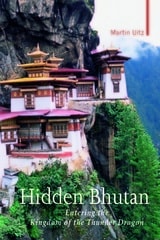
Hidden Bhutan
Entering the Kingdom of the Thunder DragonMartin Uitz
Haus Publishing, 2006
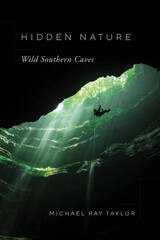
Hidden Nature
Wild Southern CavesMichael Ray Taylor
Vanderbilt University Press, 2020
More than ten thousand known caves lie beneath the state of Tennessee according to the Tennessee Cave Survey, a nonprofit organization that catalogs and maps them. Thousands more riddle surrounding states. In Hidden Nature, Michael Ray Taylor tells the story of this vast underground wilderness. In addition to describing the sheer physical majesty of the region’s wild caverns and the concurrent joys and dangers of exploring them, he examines their rich natural history and scientific import, their relationship to clean water and a healthy surface environment, and their uncertain future.
As a longtime caver and the author of three popular books related to caving—Cave Passages, Dark Life, and Caves—Taylor enjoys (for a journalist) unusual access to this secretive world. He is personally acquainted with many of the region’s most accomplished cave explorers and scientists, and they in turn are familiar with his popular writing on caves in books; in magazines such as Audubon, Outside, and Sports Illustrated; and on websites such as those of the Discovery Channel and the PBS science series Nova.
Hidden Nature is structured as a comprehensive work of well-researched fact that reads like a personal narrative of the author’s long attraction to these caves and the people who dare enter their hidden chambers.
Hidden Nature
Wild Southern CavesMichael Ray Taylor
Vanderbilt University Press, 2020
More than ten thousand known caves lie beneath the state of Tennessee according to the Tennessee Cave Survey, a nonprofit organization that catalogs and maps them. Thousands more riddle surrounding states. In Hidden Nature, Michael Ray Taylor tells the story of this vast underground wilderness. In addition to describing the sheer physical majesty of the region’s wild caverns and the concurrent joys and dangers of exploring them, he examines their rich natural history and scientific import, their relationship to clean water and a healthy surface environment, and their uncertain future.
As a longtime caver and the author of three popular books related to caving—Cave Passages, Dark Life, and Caves—Taylor enjoys (for a journalist) unusual access to this secretive world. He is personally acquainted with many of the region’s most accomplished cave explorers and scientists, and they in turn are familiar with his popular writing on caves in books; in magazines such as Audubon, Outside, and Sports Illustrated; and on websites such as those of the Discovery Channel and the PBS science series Nova.
Hidden Nature is structured as a comprehensive work of well-researched fact that reads like a personal narrative of the author’s long attraction to these caves and the people who dare enter their hidden chambers.
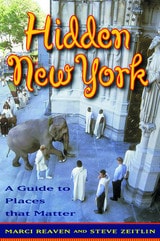
Hidden New York
A Guide to Places That MatterReaven, Marci
Rutgers University Press, 2006
Many of them matter because of the opportunities they provide for socializing, such as the Empire Roller Disco in Brooklyn that attracts a community of skaters and the Cube sculpture on Astor Place, which is a meeting spot for homeless youth. Others matter because they are focal points for communities and the spaces are intertwined with how people share in each others' lives. Still others have been lost, like the house under the roller coaster in Coney Island, made famous by Woody Allen in Annie Hall.
This book is not just about Manhattan, but covers all five boroughs in New York City. It is an invitation to visit, revisit, learn, and enjoy all that you didn't know the city has to offer. It will show you what's there, what used to be there, and why it will be there for years to come. The chapters, illustrated with appealing black-and-white photos, include first-person remembrances and commentaries from New Yorkers themselves. Each entry functions as a small travel essay, evoking how certain destinations are experienced. As a guide to the New York City that is less traveled, this unique book shows that some of the best places to visit are ones that you never even thought existed.
The 32 Places That Matter
Hua Mei Bird Garden
Russian and Turkish Tenth Street Baths
Bohemian Hall and Beer Garden
The Magic Table at the Edison Hotel
The General Society of Mechanics and Tradesman
Webster Hall
The Cube
Stickball Boulevard and the Stadiums of the Street
Thomas Jefferson Park Pool
Empire Roller Skating Center
Chess Havens
Coney Island
The Lemon Ice King of Corona
Coney Island Bialys and Bagels
Sahadi's Specialty and Middle Eastern Foods
Arthur Avenue Market
Union Square Greenmarket
The Village Vanguard
Casa Amadeo Record Shop
Richmond Barthé's Frieze at Kingsborough Houses
Quirky Features of the Landscape
Art in the Subways
Governors Island
Casita Rincón Criollo, Magnolia Tree Earth Center, Liz Christy Bowery-Houston Community Garden
The Flower District
Fishing around New York
Kehila Kedosha Janina Synagogue and Museum
Masjid Al-Taqwa
Ganesha Hindu Temple
Our Lady of Mount Carmel Grotto
The Memorials of the Battery
Strawberry Fields
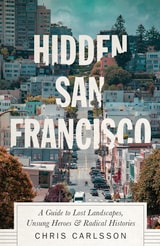
Hidden San Francisco
A Guide to Lost Landscapes, Unsung Heroes and Radical HistoriesChris Carlsson
Pluto Press, 2020
Hidden San Francisco is a guidebook like no other. It’s a radical, alternative guidebook and history of San Francisco, complete with maps detailing walking and bike routes around the city.
San Francisco is an iconic and symbolic city. But only when you look beyond the picture-postcards of the Golden Gate Bridge and the quaint cable cars do you realize that the city's most interesting stories are not the Summer of Love, the Beats or even the latest gold rush in Silicon Valley.
Carlsson delves into the Bay Area's long prehistory, examining the region's geography and the lives of its inhabitants before the 1849 Gold Rush changed everything, setting in motion the clash between capital and labor that shaped the modern city. Structured around the four major themes of ecology, labor, transit and dissent, Chris Carlsson’s book peels back the layers of San Francisco's history to reveal a storied past: behind old walls and gleaming glass facades lurk former industries, secret music and poetry venues, forgotten terrorist bombings, and much more.
From the perspective of the students and secretaries, hippies and beatniks, longshoremen and waitresses, Hidden San Francisco uncovers dozens of overlooked, forgotten and buried histories that pulse through the streets and hills even today, inviting the reader to see themselves in the middle of the ongoing, everyday process of making history together.
High Uinta Trails
John Veranth
University of Utah Press, 1998
High Uinta Wilderness—three emotion-charged words that describe a very precious place. The highest mountains, the unique alpine ecosystem, and the largest designated Wilderness in Utah are all found here.
This is a complete rewriting of the original High Uinta Trails, first published in 1974. Access road and land management information has been expanded, new areas and routes have been added, and trail conditions have been completely updated.
The descriptions of the trails, lakes, ridges, and summits are an indispensable resource for selecting a destination and planning a trip but there are still plenty of undocumented places in the Uintas to explore.
High in Utah
Michael Weibel
University of Utah Press, 1999
High in Utah is quite consciously a book for peak baggers, complete with a checklist and elevations. Summits range from Kings Peak, Utah’s highest at 13,528’ to the unnamed peak in Rich County, a mere 9,255’. In addition to the county high points, this book also has four “classic” climbs: Mt. Olympus in Salt Lake County; Mt. Timpanogos above Provo; Notch Peak in the House Range west of Delta; and Wellsville Cone, Cache Valley’s western landmark.
Since finding a place to start can often be the most frustrating part of a hike, emphasis is placed on directions to each trailhead. There is a road map for each hike, as well as a trail map showing contours. The routes in this guide are not always the easiest or most practical, but they may be the most appealing and are often the most commonly used (lessening human impact on other potential routes). Difficulty levels range from 'extreme'—long, steep routes that may require some route finding—to 'too easy'—reachable by car. Two sets of hiking times are provided to accommodate variations in hiking speed, and there are also sections on flora and fauna, mountain weather, low-impact hiking and camping, equipment, and altitude sickness.
"Alaska is our biggest, buggiest, boggiest state. Texas remains our largest unfrozen state. But mountainous Utah, if ironed out flat, would take up more space on a map than either."
—Edward Abbey, 1927–1989
Highpoints of the United States
A Guide to the Fifty State SummitsDon Holmes
University of Utah Press, 2000
The highpoints of the fifty states range from Alaska’s 20,320 foot high Mount McKinley to 345 feet at Lakewood Park in Florida. Some highpoints, such as Mount Mitchell in North Carolina and New Hampshire’s Mount Washington can be reached by automobile on a sightseeing drive. Others such as Colorado’s Mount Elbert or Mount Marcy in New York are accessible as wilderness day hikes. Still others, such as Mount Rainier in Washington or Gannett Peak in Wyoming, are strenuous and risky mountaineering challenges that should be attempted only by experienced climbers. Whatever your level of skill and interest, Highpoints of the United States offers a diverse range of experiences.
Arranged alphabetically by state, each listing has a map, photographs, and information on trailhead, main and alternative routes, elevation gain, and conditions. Historical and natural history notes are also included, as are suggestions for specific guidebooks to a region or climb. Appendices include a list of highpoints by region, by elevation, and a personal log for the unashamed "peak-bagger."
Whether you’re an armchair hiker or a seasoned climber, interested only in your state’s highest point or all fifty, this book will be an invaluable companion and reference.
Highway 12
Christian Probasco
Utah State University Press, 2005
Highway 12 is undoubtedly one of not only America's but the world's most scenic highways. From its intersection on the west with Highway 89 south of Panguitch, Utah, it runs up through Red Canyon onto the Paunsagunt Plateau and across Bryce Canyon National Park. It then drops into the Paria River Valley, passes through several tiny villages, crosses some extraordinary (for anywhere but this region) badlands, and descends the Escalante River into Potato Valley. While a driver may justifiably feel she has seen some scenery by that point, the highway is just getting started, for in the next stretch, it crosses a labyrinth of multicolored sandstone humps and corridors, climaxed by a narrow hogback with steep slickrock drops to each side, all within Grand Staircase-Escalante National Monument. Reaching the oasis of Boulder within this desert of rock, the road then climbs across the flank of the Aquarius Plateau, providing spectacular vistas and terminating at the gateway to Capitol Reef National Park. Along the way side roads and trails access the vast wilderness of the Paria and Escalante Rivers and the high plateaus they drain. Congress acknowledged the unequaled splendor of Highway 12 by designating it one of a handful of All-American Roads.
To travel with Christian Probasco this road and its spurs, which lead deep into some of the wildest, most broken-up and stunning landscapes anywhere, can put a unique twist on an already singular experience. He knows the region as well as anyone and brings an original, edgy, youthful view to it. His opinions and his language may challenge you. His approaches to and perspectives on the land may sometimes surprise you. His understanding of the area's history and its people will likely teach you a thing or two.
Hiking Circuits in Rocky Mountain National Park
Jack P. Hailman
University Press of Colorado, 2003
Hiking The Escalante
Rudi Lambrechts
University of Utah Press, 1999
An invaluable resource to anyone traversing the Escalante, this comprehensive guide details 43 hikes.
Publisher's Note: Realizing there are virtually no marked trails in the Escalante country (mostly canyons that wander and have many intersections, challenging anyone to write explicit description), this book includes directions to the trailhead, how to follow a particular route with choices of side canyons along the way, and occasional alternate endings. Some of the hikes may be appropriate for beginners. Some only the most experienced should attempt.
Hiking the Road to Ruins
Daytrips and Camping Adventures to Iron Mines, Old Military Sites, and Things Abandoned in the New York City Area...and BeyondSteinberg, David A
Rutgers University Press, 2015
Hills and the Sea
Hilaire Belloc
Northwestern University Press, 1996
Belloc captures the essence of each place he visits--whether on the gloomy English fens, or the sunny Provence and Languedoc regions of France, or navigating the North Sea in a leaky boat. Praised for his blend of wit and philosophy, Belloc also weaves together fantasy and fact, producing portraits that take on mythic proportions.
Hinterland
America's New Landscape of Class and ConflictPhil A. Neel
Reaktion Books, 2018
Urgent and unsparing, this book opens our eyes to America’s new heart of darkness. Driven by an ever-expanding socioeconomic crisis, America’s class structure is recomposing itself in new geographies of race, poverty, and production. The center has fallen. Riots ricochet from city to city led by no one in particular. Anarchists smash financial centers as a resurgent far right builds power in the countryside. Drawing on his direct experience of recent popular unrest, from the Occupy movement to the wave of riots and blockades that began in Ferguson, Missouri, Phil A. Neel provides a close-up view of this landscape in all its grim but captivating detail. Inaugurating the new Field Notes series, published in association with the Brooklyn Rail, Neel’s book tells the intimate story of a life lived within America’s hinterland.
Historical Metaphors and Mythical Realities
Structure in the Early History of the Sandwich Islands KingdomMarshall D. Sahlins
University of Michigan Press, 1981
Hawaiian culture as it met foreign traders and settlers is the context for Sahlins's structuralist methodology of historical interpretation
History Is Embarrassing
Karen Chase
CavanKerry Press, 2024
Filled with profound reflections and snapshots from the past, Karen Chase’s History is Embarrassing weaves together threads from one single life—a girl suffering from polio, a poet, a Jewish woman, a writer, and a painter. Like Chase, the characters who populate these essays are outsiders—undercover cops, a gay couple in 1500s India, bear poachers, psychiatric patients, and even a president—each a meaningful part of history. Divided into three parts—histories, pleasures, and horrors—History is Embarrassing is an assortment of thought-provoking essays that are sure to resonate with many readers.
Holiday in Mexico
Critical Reflections on Tourism and Tourist EncountersDina Berger and Andrew Grant Wood, eds.
Duke University Press, 2009
Essays feature research on prototourist American soldiers of the mid-nineteenth century, archaeologists who excavated Teotihuacán, business owners who marketed Carnival in Veracruz during the 1920s, American tourists in Mexico City who promoted goodwill during the Second World War, American retirees who settled San Miguel de Allende, restaurateurs who created an “authentic” cuisine of Central Mexico, indigenous market vendors of Oaxaca who shaped the local tourist identity, Mayan service workers who migrated to work in Cancun hotels, and local officials who vied to develop the next “it” spot in Tijuana and Cabo San Lucas. Including insightful studies on food, labor, art, diplomacy, business, and politics, this collection illuminates the many processes and individuals that constitute the tourism industry. Holiday in Mexico shows tourism to be a complicated set of interactions and outcomes that reveal much about the nature of economic, social, cultural, and environmental change in Greater Mexico over the past two centuries.
Contributors. Dina Berger, Andrea Boardman, Christina Bueno, M. Bianet Castellanos, Mary K. Coffey, Lisa Pinley Covert, Barbara Kastelein, Jeffrey Pilcher, Andrew Sackett, Alex Saragoza, Eric M. Schantz, Andrew Grant Wood
Hollywood on Location
An Industry HistoryGleich, Joshua
Rutgers University Press, 2019
Home Waters
A Year of Recompenses on the Provo RiverGeorge B Handley
University of Utah Press, 2010
People who flyfish know that a favorite river bend, a secluded spot in moving waters, can feel like home—a place you know intimately and intuitively. In prose that reads like the flowing current of a river, scholar and essayist George Handley blends nature writing, local history, theology, environmental history, and personal memoir in his new book Home Waters: A Year of Recompenses on the Provo River.
Handley’s meditations on the local Provo River watershed present the argument that a sense of place requires more than a strong sense of history and belonging, it requires awareness and commitment. Handley traces a history of settlement along the Provo that has profoundly transformed the landscape and yet neglected its Native American and environmental legacies. As a descendent of one of the first pioneers to irrigate the area, and as a witness to the loss of orchards, open space, and an eroded environmental ethic, Handley weaves his own personal and family history into the landscape to argue for sustainable belonging. In avoiding the exclusionist and environmentally harmful attitudes that come with the territorial claims to a homeland, the flyfishing term, “home waters,” is offered as an alternative, a kind of belonging that is informed by deference to others, to the mysteries of deep time, and to a fragile dependence on water. While it has sometimes been mistakenly assumed that the Mormon faith is inimical to good environmental stewardship, Handley explores the faith’s openness to science, its recognition of the holiness of the creation, and its call for an ethical engagement with nature. A metaphysical approach to the physical world is offered as an antidote to the suicidal impulses of modern society and our persistent ambivalence about the facts of our biology and earthly condition. Home Waters contributes a perspective from within the Mormon religious experience to the tradition of such Western writers as Wallace Stegner, Terry Tempest Williams, Steven Trimble, and Amy Irvine.
Winner of the Mormon Letters Award for Memoir.
Home and Harem
Nation, Gender, Empire and the Cultures of TravelInderpal Grewal
Duke University Press, 1996
In her look at England, Grewal draws on nineteenth-century aesthetics, landscape art, and debates about women’s suffrage and working-class education to show how all social classes, not only the privileged, were educated and influenced by imperialist travel narratives. By examining diverse forms of Indian travel to the West and its colonies and focusing on forms of modernity offered by colonial notions of travel, she explores how Indian men and women adopted and appropriated aspects of European travel discourse, particularly the set of oppositions between self and other, East and West, home and abroad.
Rather than being simply comparative, Home and Harem is a transnational cultural study of the interaction of ideas between two cultures. Addressing theoretical and methodological developments across a wide range of fields, this highly interdisciplinary work will interest scholars in the fields of postcolonial and cultural studies, feminist studies, English literature, South Asian studies, and comparative literature.
Hong Kong
Migrant Lives, Landscapes, and JourneysCaroline Knowles and Douglas Harper
University of Chicago Press, 2009
In 1997 the United Kingdom returned control of Hong Kong to China, ending the city’s status as one of the last remnants of the British Empire and initiating a new phase for it as both a modern city and a hub for global migrations. Hong Kong is a tour of the city’s postcolonial urban landscape, innovatively told through fieldwork and photography.
Caroline Knowles and Douglas Harper’s point of entry into Hong Kong is the unusual position of the British expatriates who chose to remain in the city after the transition. Now a relatively insignificant presence, British migrants in Hong Kong have become intimately connected with another small minority group there: immigrants from Southeast Asia. The lives, journeys, and stories of these two groups bring to life a place where the past continues to resonate for all its residents, even as the city hurtles forward into a future marked by transience and transition. By skillfully blending ethnographic and visual approaches, Hong Kong offers a fascinating guide to a city that is at once unique in its recent history and exemplary of our globalized present.
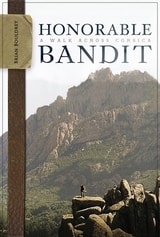
Honorable Bandit
A Walk across CorsicaBrian Bouldrey
University of Wisconsin Press, 2007
Brian Bouldrey traveled to the island of Corsica, with its wine-dark Mediterranean waters, powdered-sugar beach sand, sumptuous cuisine, and fine wine. And then he walked away from all of them.
Bouldrey strapped on a backpack and walked across Napoleon's native land with the same spirit many choose to dance or drink: to celebrate, to mourn, to think, to avoid thinking, to recall, to ignore, to escape, and to arrive.
This wonderfully textured account of a two-week ramble along a famous Corsican hiking trail with his German friend Petra (she was good at the downhills while he was better at the uphills) offers readers a journal that is a launching point for reflection: thoughts on cultural differences, friendship, physical challenge, personal challenge, and getting very, very lost. Part travelogue, part memoir, and part lampoon, this book offers readers an impressionistic view of a little talked about yet stunningly beautiful landscape.

Housekeeping by Design
Hotels and LaborDavid Brody
University of Chicago Press, 2016
With Housekeeping by Design, David Brody introduces us to those people—the housekeepers whose labor keeps the rooms clean and the guests happy. Through unprecedented access to staff at several hotels, Brody shows us just how much work goes on behind the scenes—and how much management goes out of its way to make sure that labor stays hidden. We see the incredible amount of hard physical work that is involved in cleaning and preparing a room, how spaces, furniture, and other objects are designed to facilitate a smooth flow of hidden labor, and, crucially, how that design could be improved for workers and management alike if front-line staff were involved in the design process. After reading this fascinating exposé of the ways hotels work—or don’t for housekeepers—one thing is certain: checking in will never be the same again.
Human Nature
A Walking History of the Himalayan LandscapeThomas Bell
Haus Publishing, 2025
Combining travelogue, folklore, literature, art, and anthropology, this work explores the human and natural geography of the Himalayas and offers a nuanced portrait of life over the centuries in one of the world’s most enigmatic regions.
In Human Nature, Thomas Bell embarks on four walks through the Himalayas, each in a different season, to explore the interplay between the land and the people who call it home. Bell’s decades in Nepal give him an unusual perspective that bridges the gap between insider and outsider. The stories he recounts touch on themes from religion to ecology and political economy, and span from prehistory to the present day. He also deftly examines the impact of British imperialism and the growing external pressures on the environment. Accompanied by Bell’s striking photographs and maps, Human Nature is a magnificently written account that spans big ideas and real lives. Erudite, intimate, and evocative, this is essential reading for anyone seeking to understand the relationship between communities and their environments.
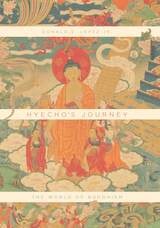
Hyecho's Journey
The World of BuddhismDonald S. Lopez Jr.
University of Chicago Press, 2017
With Hyecho’s Journey, eminent scholar of Buddhism Donald S. Lopez Jr. re-creates Hyecho’s trek. Using the surviving fragments of Hyecho’s travel memoir, along with numerous other textual and visual sources, Lopez imagines the thriving Buddhist world the monk explored. Along the way, Lopez introduces key elements of Buddhism, including its basic doctrines, monastic institutions, works of art, and the many stories that have inspired Buddhist pilgrimage. Through the eyes of one remarkable Korean monk, we discover a vibrant tradition flourishing across a vast stretch of Asia. Hyecho’s Journey is simultaneously a rediscovery of a forgotten pilgrim, an accessible primer on Buddhist history and doctrine, and a gripping, beautifully illustrated account of travel in a world long lost.