Results by title
28164 books match the query 'History' and 906 start with h

History of a Tragedy
THE EXPULSION OF THE JEWS FROM SPAINJoseph Perez
University of Illinois Press, 2006
Few events in the history of Spain have provoked as much controversy as the expulsion of the Jews in 1492. Conflicts within the Catholic Church, suspicions within the newly unified Spain, and the claims of Spanish merchants combined to make the Spain of Ferdinand and Isabella intolerant and inquisitorial. Yet the roots of Spanish anti-Semitism went deeper. In this concise survey of the expulsion of the Sephardic Jews, Joseph Pérez studies the evolution of the Jewish community in Spain from the time of the Visigoths to the reign of the Catholic kings. He explores the Jewish community’s role in creating and sustaining the vibrant cultural, political, and economic world of medieval Spain, and how growing religious intolerance, a pervasive resentment of the “others,” and a string of escalating encroachments culminated in expulsion.
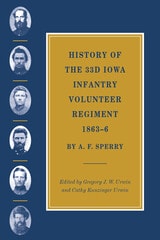
History of the 33d Iowa Infantry Volunteer Regiment, 1863–6
A.F. Sperry
University of Arkansas Press, 2002

History of the Alps, 1500 - 1900
Environment, Development, and SocietyJon Mathieu, translated by Matthew Vester
West Virginia University Press, 2009
In the 1700s, Jean-Jacques Rousseau celebrated the Alps as the quintessence of the triumph of nature over the “horrors” of civilization. Now available in English, History of the Alps, 1500-1900: Environment, Development, and Society provides a precise history of one of the greatest mountain range systems in the world. Jon Mathieu’s work disproves a number of commonly held notions about the Alps, positioning them as neither an inversion of lowland society nor a world apart with respect to Europe. Mathieu’s broad historical portrait addresses both the economic and sociopolitical—exploring the relationship between population levels, development, and the Alpine environment, as well as the complex links between agrarian structure, society, and the development of modern civilization. More detailed analysis examines the relationship between various agrarian structures and shifting political configurations, several aspects of family history between the late Middle Ages and the turn of the twentieth century, and exploration of the Savoy, Grisons, and Carinthia regions.

History of the American Negro
West Virginia EditionA. B. Caldwell
West Virginia University Press, 2012

History of the American Newspaper Publishers Association
Edwin Emery, Editor
University of Minnesota Press, 1950
History of the American Newspaper Publishers Association was first published in 1950. Minnesota Archive Editions uses digital technology to make long-unavailable books once again accessible, and are published unaltered from the original University of Minnesota Press editions.
The dramatic story of the association that for sixty-three years has held a position of major importance in the development of our free press. For the first time the full story of the activities of this influential daily newspaper trade association is told by a scholar who was given access to the association's files of publications.
The story of the ANPA is primarily one of the advancement of the business interests of daily newspapers and of resulting conflicts and adjustments with labor unions, communications competitors, advertisers, newsprint makers, and the government. The author analyzes these areas of activity and integrates the history of the ANPA with the economic, political, and social developments that have transformed America and its daily newspapers since 1887.
Of major interest and importance is the discussion of the labor relations policy of the daily newspapers who are ANPA members.
Other major topics include the association's opposition to federal legislation which the ANPA asserted imperiled the freedom of the press; the association's battles to eliminate tariff charges on newsprint and to maintain favorable postal rates; competition with radio, magazines, and other communications media; business problems of daily newspapers in the field of advertising; and mechanical developments which have revolutionized the printing industry.
History of the Bishops of Salona and Split
Thomas Spalatensis
Central European University Press, 2006
History of the Byzantine Empire, 324–1453, Volume I
Alexander A. Vasiliev
University of Wisconsin Press, 1958
History of the Byzantine Empire, 324–1453, Volume II
Alexander A. Vasiliev
University of Wisconsin Press, 1958

History of the Byzantine State
Ostrogorsky, George
Rutgers University Press, 1986
With clarity and logic, George Ostrogorsky succinctly traces the intricate thousand-year course of the Byzantine Empire. While his emphasis is on political development, he gives extensive consideration to social, esthetic, economic, and ecclesiastical factors as well. He also illuminates the Empire’s links with classical antiquity, as well as its effect on contemporaneous and subsequent European and Near Eastern history. The author captures the full sweep, the grandeur, and the tragic course of Byzantium’s rise and fall, backed by the scholarship and authority of a lifetime devoted to its study.
Long recognized as the basic history of the Byzantine Empire, this masterful work incorporates the results of the vast expansion in Byzantine research in recent years. This edition has been completely retranslated by Professor Joan Hussey from the third German edition. The text and annotation have been expanded by over seventy pages, with more than double the number of illustrations, and additional reference tables and lists.

History of the Central Brooks Range
Gaunt Beauty, Tenuous LifeWilliam E. Brown
University of Alaska Press, 2007

History of the Chemical Laboratory of the University of Michigan, 1856-1916
Edward D. Campbell
University of Michigan Press, 1916
History of the Church
Phillip R. Rufinus of Aquileia
Catholic University of America Press, 2017

History of the Death Penalty in Colorado
Michael Radelet
University Press of Colorado, 2017
In The History of the Death Penalty in Colorado, noted death penalty scholar Michael Radelet chronicles the details of each capital punishment trial and execution that has taken place in Colorado since 1859. The book describes the debates and struggles that Coloradans have had over the use of the death penalty, placing the cases of the 103 men whose sentences were carried out and 100 more who were never executed into the context of a gradual worldwide trend away from this form of punishment.
For more than 150 years, Coloradans have been deeply divided about the death penalty, with regular questions about whether it should be expanded, restricted, or eliminated. It has twice been abolished, but both times state lawmakers reinstated the contentious punitive measure. Prison administrators have contributed to this debate, with some refusing to participate in executions and some lending their voices to abolition efforts. Colorado has also had a rich history of experimenting with execution methods, first hanging prisoners in public and then, starting in 1890, using the "twitch-up gallows" for four decades. In 1933, Colorado began using a gas chamber and eventually moved to lethal injection in the 1990s.
Based on meticulous archival research in official state archives, library records, and multimedia sources, The History of the Death Penalty in Colorado, will inform the conversation on both sides of the issue anywhere the future of the death penalty is under debate.
History of the Hour
Clocks and Modern Temporal OrdersGerhard Dohrn-van Rossum
University of Chicago Press, 1996
"In tracing the evolution of time consciousness with scholarship and skill . . . Dohrn-van Rossum evokes the many ways that the small moments of life have come to be reckoned with the passage of time."—Dava Sobel, Civilization
"Dohrn-van Rossum paints a highly nuanced picture of time's conquest of modern life."—Steven Lagerfeld, Wilson Quarterly
"This book is definitive in showing the clock's pervasive influence over European society."—Virginia Quarterly Review
"[A] delightful, excellently translated history."—Choice
"Dohrn-van Rossum has produced a persuasive and brilliantly documented new understanding of how modern time-consciousness arose."—Owen Gingerich, Nature
History of the Inca Empire
An Account of the Indians' Customs and Their Origin, Together with a Treatise on Inca Legends, History, and Social InstitutionsBy Bernabe Cobo
University of Texas Press, 1979
The Historia del Nuevo Mundo, set down by Father Bernabe Cobo during the first half of the seventeenth century, represents a singulary valuable source on Inca culture. Working directly frorn the original document, Roland Hamilton has translated that part of Cobo's massive manuscripts that focuses on the history of the kingdom of Peru. The volume includes a general account of the aspect, character, and dress of the Indians as well as a superb treatise on the Incas—their legends, history, and social institutions.

History of the Kingdom of Naples
Benedetto Croce
University of Chicago Press, 1970
Prolific twentieth-century Italian intellectual gives an account of his native southern Italy.
In The History of the Kingdom of Naples, Benedetto Croce returns to his beloved city of Naples, combining empathy with historical detachment as he provides an account of the region. He offers an eloquent explanation of longstanding contrasts within southern Italy, which boasts both a rich cultural life and a pervasive lethargy, and he addresses controversy and scrutiny directed at southern Italy since World War II. Through a careful study of the Kingdom of Naples, Croce reveals how philosophy and history both play a part in shaping an expanded sense of Italy, and he calls for an embrace of Italy’s ever-evolving progress in contemporary politics.
Among historical philosophers Croce ranks as the outstanding representative of the twentieth-century idealist school. German influences played the greatest part in his education, along with the philosophical tradition of his beloved city of Naples. A private scholar throughout his life as well as a leading statesman just before and immediately after the Fascist regime, he remained confident in his chosen role as the thinker who would “deprovincialize” Italian intellectual life and bring it into the mainstream of European thought. His work serves as a significant contribution to Italian formal history and thought, and this volume is considered to be one of the finest examples of his historiography.

History of the Lincoln County War
Maurice G. Fulton
University of Arizona Press, 1968

History of the Malay Kingdom of Patani
Mis Sea#68Ibrahim Syukri
Ohio University Press, 1985
The SKMP represents a valuable contribution to the limited literature available on the Malay population of present-day southern Thailand. While the account of Patani’s history is based on a distinctively Malay interpretation of the record, the SKMP is more important as a political statement of the strong sense of ethnic identity shared by Patani’s Malay population. The SKMP will be of particular interest to those seeking to understand the persistence of conflict in southern Thailand.
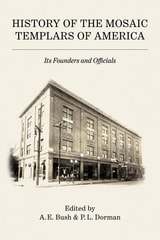
History of the Mosaic Templars of America
Its Founders and OfficialsA.E. Bush
University of Arkansas Press, 2008
Originally published in 1924 and long out of print, this book tells the story of the Mosaic Templars of America (MTA), a famous Black fraternal organization that was founded by John E. Bush and Chester W. Keatts (both former slaves) in Little Rock, Arkansas, in the late-nineteenth century. The organization originally provided illness, death, and burial insurance during an era of segregation when few basic services were available to Black people, and grew to include an insurance company, a building and loan association, a publishing company, a business college, a nursing school, and a hospital.
By 1905 it had a number of lodges across the state of Arkansas with thousands of members. In 1913 a handsome new headquarters building opened and Booker T. Washington delivered the dedication speech. In the 1920s they claimed chapters in twenty-six states and six foreign countries, making it one of the largest Black organizations in the world.
However, in the 1930s the MTA began to feel the effects of the Great Depression and eventually ceased operations except for a single chapter in Barbados. Tragically, the original Little Rock headquarters building burned down in 2005.
This replica edition of History of the Mosaic Templars of America, with a new introduction by John William Graves, was published to coincide with the grand opening in 2008 of a completely rebuilt structure that houses the new Mosaic Templars Cultural Center.
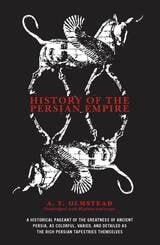
History of the Persian Empire
A. T. Olmstead
University of Chicago Press, 1948
"The fullest and most reliable presentation of the history of the Persian Empire in existence."—M. Rostovtzeff
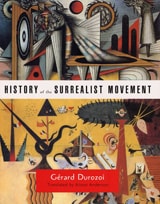
History of the Surrealist Movement
Gérard Durozoi
University of Chicago Press, 2002
From Dada to the Automatists, and from Max Ernst to André Breton, Gérard Durozoi here provides the most comprehensive history of the Surrealist movement. Tracing the movement from its origins in the 1920s to its decline in the 1950s and 1960s, Durozoi tells the history of Surrealism through its activities, publications, and reviews, demonstrating its close ties to some of the most explosive political, as well as creative, debates of the twentieth century.
Drawing on a staggering amount of documentary and visual evidence—including 1,000 photos—Durozoi illuminates all the intellectual and artistic facets of the movement, from literature and philosophy to painting, photography, and film, thus making History of the Surrealist Movement its definitive encyclopedia.

History of the Triumphs of Our Holy Faith amongst the Most Barbarous and Fierce Peoples of the New World
Andrés Pérez de Ribas; Translated by Daniel T. Reff, Maureen Ahern, and Richard K. Danford; Annotated and with a Critical Introduction by Daniel T. Reff
University of Arizona Press, 1999
Pérez de Ribas was the first permanent missionary to the Ahome, Zuaque, and Yaqui Indians. After fifteen years on the mission frontier he was recalled to Mexico City, where he held various posts, including Jesuit Provincial. Addressed to novitiates ignorant of the challenges they would face in the field, his Historia was a virtual textbook on missionary work in the New World. Also written to encourage ongoing support of the Jesuit missions, it reflected the author's deep grasp of what rhetorically soothed and moved Church and Crown officials.
Perhaps of greatest interest to the modern reader are Pérez de Ribas's often detailed comments on indigenous beliefs and practices. These firsthand observations provide a rich resource of ethnographic and historical data concerning everything from native subsistence, settlement patterns, and myths to the dynamics of Jesuit-Indian relations. The many cases of conversion that Pérez de Ribas describes are especially rich in ethnographic data, clarifying the values and beliefs from which the Indians were "rescued."
History of the Triumphs is a primary document of great importance, made more valuable here by an exceptionally fluid translation and painstaking annotations. It will be a standard reference for all engaged in research on New Spain and a captivating read for anyone interested in this chapter of American history.

History of the University of Alabama
Volume One, 1818-1902James Benson Sellers
University of Alabama Press, 1953
The definitive and authorized history of the University of Alabama's birth and first century
Step into the rich heritage of one of America’s most storied institutions with the History of the University of Alabama, Volume One 1818 – 1902 by James Sellers. This definitive volume captures the legends, triumphs, and traditions that shaped the Capstone’s first century. From its earliest days on the frontier to its rise as a modern research university, Sellers weaves a narrative that celebrates the people, places, and pivotal moments that define the University of Alabama’s proud legacy.
Among the most dramatic chapters is the interruption of campus life during the closing days of the Civil War, when Union troops burned the university to the ground—a devastating blow that tested resilience and sparked a remarkable rebirth. Through vivid storytelling and meticulous research, Sellers honors the people and milestones that built the Crimson legacy.
Beautifully written and meticulously researched, this book is perfect as a gift for alumni, fans, and collectors. Whether displayed on a coffee table or shared with a fellow member of the Crimson Tide family, this book is more than history. It’s a tribute to the spirit of Alabama. Own the legend. Share the legacy. Celebrate the spirit of the Capstone for generations to come.
History on the Run
Secrecy, Fugitivity, and Hmong Refugee EpistemologiesMa Vang
Duke University Press, 2021
History without Chronology
Stefan Tanaka
Lever Press, 2019

History's Babel
Scholarship, Professionalization, and the Historical Enterprise in the United States, 1880 - 1940Robert B. Townsend
University of Chicago Press, 2012
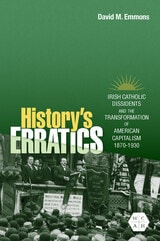
History's Erratics
Irish Catholic Dissidents and the Transformation of American Capitalism, 1870-1930David M. Emmons
University of Illinois Press, 2024
As Ice Age glaciers left behind erratics, so the external forces of history tumbled the Irish into America. Existing both out of time and out of space, a diverse range of these Roman-Catholic immigrants saw their new country in a much different way than did the Protestants who settled and claimed it. These erratics chose backward looking tradition and independence over assimilation and embraced a quintessentially Irish form of subversiveness that arose from their culture, faith, and working-class outlook. David M. Emmons draws on decades of research and thought to plumb the mismatch of values between Protestant Americans hostile to Roman Catholicism and the Catholic Irish strangers among them. Joining ethnicity and faith to social class, Emmons explores the unique form of dissidence that arose when Catholic Irish workers and their sympathizers rejected the beliefs and symbols of American capitalism.
A vibrant and original tour de force, History’s Erratics explores the ancestral roots of Irish nonconformity and defiance in America.
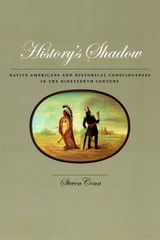
History's Shadow
Native Americans and Historical Consciousness in the Nineteenth CenturySteven Conn
University of Chicago Press, 2004
History's Shadow traces the struggle of Americans trying to understand the people who originally occupied the continent claimed as their own. Steven Conn considers how the question of the Indian compelled Americans to abandon older explanatory frameworks for sovereignty like the Bible and classical literature and instead develop new ones. Through their engagement with Native American language and culture, American intellectuals helped shape and define the emerging fields of archaeology, ethnology, linguistics, and art. But more important, the questions posed by the presence of the Indian in the United States forced Americans to confront the meaning of history itself, both that of Native Americans and their own: how it should be studied, what drove its processes, and where it might ultimately lead. The encounter with Native Americans, Conn argues, helped give rise to a distinctly American historical consciousness.
A work of enormous scope and intellect, History's Shadow will speak to anyone interested in Native Americans and their profound influence on our cultural imagination.

History, Historians, and Autobiography
Jeremy D. Popkin
University of Chicago Press, 2005
Drawing on the theoretical work of contemporary critics of autobiography and the philosophy of Paul Ricoeur, Popkin reads the autobiographical classics of Edward Gibbon and Henry Adams and the memoirs of contemporary historians such as Emmanuel Le Roy Ladurie, Peter Gay, Jill Ker Conway, and many others, he reveals the contributions historians' life stories make to our understanding of the human experience. Historians' autobiographies, he shows, reveal how scholars arrive at their vocations, the difficulties of writing about modern professional life, and the ways in which personal stories can add to our understanding of historical events such as war, political movements, and the traumas of the Holocaust.
An engrossing overview of the way historians view themselves and their profession, this work will be of interest to readers concerned with the ways in which we understand the past, as well as anyone interested in the art of life-writing.

History, Literature and the Writing of the Canadian Prairies
Alison Calder
University of Manitoba Press, 2005
History, Medicine, and the Traditions of Renaissance Learning
Nancy G. Siraisi
University of Michigan Press, 2007
A path-breaking work at last available in paper, History, Medicine, and the Traditions of Renaissance Learning is Nancy G. Siraisi’s examination of the intersections of medically trained authors and history from 1450 to 1650. Rather than studying medicine and history as separate traditions, Siraisi calls attention to their mutual interaction in the rapidly changing world of Renaissance erudition. With remarkably detailed scholarship, Siraisi investigates doctors’ efforts to explore the legacies handed down to them from ancient medical and anatomical writings.

History, Memory, and the Law
Austin Sarat and Thomas R. Kearns, Editors
University of Michigan Press, 2002

History, Memory, and the Literary Left
Modern American Poetry, 1935-1968John Lowney
University of Iowa Press, 2006
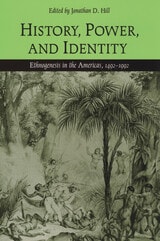
History, Power, and Identity
Ethnogenesis in the Americas, 1492-1992Jonathan D. Hill
University of Iowa Press, 1996
For the past five centuries, indigenous and African American communities throughout the Americas have sought to maintain and recreate enduring identities under conditions of radical change and discontinuity. The essays in this groundbreaking volume document this cultural activity—this ethnogenesis—within and against the broader contexts of domination; the authors simultaneously encompass the entanglements of local communities in the webs of national and global power relations as well as people's unique abilities to gain control over their history and identity.
By defining ethnogenesis as the synthesis of people's cultural and political struggles, History, Power, and Identity breaks out of the implicit contrast between isolated local cultures and dynamic global history. From the northeastern plains of North America to Amazonia, colonial and independent states in the Americas interacted with vast multilingual and multicultural networks, resulting in the historical emergence of new ethnic identities and the disappearance of many earlier ones. The importance of African, indigenous American, and European religions, myths, and symbols, as historical cornerstones in the building of new ethnic identities, emerges as one of the central themes of this convincing collection.

History, Rhetoric, and Proof
Carlo Ginzburg
Brandeis University Press, 1999

History, Tragedy, Theory
Dialogues on Athenian DramaEdited and with an introduction by Barbara Goff
University of Texas Press, 1995
Greek tragedy has held sway over the imagination of audiences for well over two millennia. This collection of essays on Athenian drama, the proceedings of a conference held at the University of Texas at Austin in 1992, demonstrates that Greek tragedy still retains its power to provoke debate and to engage the interest of specialists and non-classicists alike.
The book includes essays by seven of the foremost scholars of Greek drama—Helene Foley, Michelle Gellrich, Peter W. Rose, David Rosenbloom, Richard Seaford, Bernd Seidensticker, and Froma I. Zeitlin. These writers explore the work of all three great tragedians, Aeschylus, Sophocles, and Euripides, and approach them from a variety of perspectives on history and theory, including poststructuralism and Marxism. They investigate the possibilities for coordinating theoretically informed readings of tragedy with a renewed attention to the pressure of material history within those texts. The collection thus represents a response within classics to "New Historicism" and the debates it has generated within related literary disciplines.
History, the Human, and the World Between
R. Radhakrishnan
Duke University Press, 2008
Radhakrishnan develops his rationale of the “between” through three linked essays where he locates the terms “world,” “history,” “human,” and “subject” between phenomenology and poststructuralism, and in the process sets forth a nuanced reading of the politics of a gendered postcolonial humanism. Critically juxtaposing the works of thinkers such as Friedrich Nietzsche, Adrienne Rich, Frantz Fanon, Edward Said, Michel Foucault, Maurice Merleau-Ponty, Martin Heidegger, David Harvey, and Ranajit Guha, Radhakrishnan examines the relationship between systems of thought and their worldly situations. History, the Human, and the World Between is a powerful argument for a theoretical perspective that combines the existential urgency of phenomenology with the discursive rigor of poststructuralist practices.

Histrionics
Three PlaysThomas Bernhard
University of Chicago Press, 1990
Hitler and His Generals
The Hidden Crisis, January-June 1938Harold C. Deutsch
University of Minnesota Press, 1974
Hitler and His Generals was first published in 1974. Minnesota Archive Editions uses digital technology to make long-unavailable books once again accessible, and are published unaltered from the original University of Minnesota Press editions.
The author, who told the story of second of four conspiratorial rounds in his earlier book The Conspiracy against Hitler in the Twilight War,describes here the situations and events leading up to the first round of conspiracy. The present volume deals with the virtual coup d'etat by which Hitler sought to establish ascendancy over the Wehrmacht early in 1938.
The account focuses on sensational events centering about Hitler's successful efforts to oust Field Marshal Werner von Blomberg, the War Minister, and Colonel General Baron von Fritsch, the Army commander in chief, in order to consolidate control of the military in his own hands. Using as an excuse Blomberg's marriage to a woman with a discreditable past, he forced Blomberg's resignation. He accomplished Fritsch's resignation through charges of homosexuality which were trumped up by Himmler, Heydrich, and Goering. He then appointed Colonel General Walther von Brauchitsch, who was under personal obligation to him, as commander in chief. Through these moves, as Dr. Deutsch shows, Hitler closed the door to all means other than conspiracy for the active Opposition movement to express itself against his aggressive policies. The story of the first round of conspiracy will be the subject of another book by Professor Deutsch, to be published later.
Hitler and the Germans
Eric Voegelin, Edited, Translated, & Intro by Detlev Clemens & Brendan Purcell
University of Missouri Press, 2003

Hitler in History
Eberhard Jäckel
Brandeis University Press, 2000
Hitler's Geographies
The Spatialities of the Third ReichEdited by Paolo Giaccaria and Claudio Minca
University of Chicago Press, 2016
With Hitler’s Geographies, editors Paolo Giaccaria and Claudio Minca examine the variety of ways in which spatial theory evolved and was translated into real-world action under the Third Reich. They have gathered an outstanding collection by leading scholars, presenting key concepts and figures as well exploring the undeniable link between biopolitical power and spatial expansion and exclusion.

Hitler's Heroines
Stardom & Womanhood In Nazi CinemaAntje Ascheid
Temple University Press, 2003

Hitler's Library
Ambrus Miskolczy
Central European University Press, 2003
Hitler's Tyranny
A History in Ten ChaptersRalf Georg Reuth
Haus Publishing, 2022
Hitler’s tyranny is still difficult to understand today. In this book, Ralf Georg Reuth examines ten aspects of this catastrophe. Among other things, he asks: Was anti-Semitism more pronounced in Germany than elsewhere? Was Versailles really responsible for Hitler’s rise and why did the Germans follow a racial fanatic like him? How did his war differ from all others before it? The disturbing answers provide an overall picture that shows Hitler was not the consequence of the depths of German history, but the result of chance, deception, and seduction.
This thought-provoking new study takes aim at several of the norms of Hitler scholarship from the past forty years. Reuth interrogates and challenges a range of orthodox views on such topics as how mainstream politicians facilitated Hitler’s rise to power, the Führer’s infamous pact with Stalin, and the complicity of ordinary Germans in his genocidal tyranny. Eschewing a conventional chronological approach in favor of a forensic analysis of Hitler’s mainsprings of action both as chancellor and military commander, Reuth portrays Hitler as the apotheosis of what he argues is a specifically German strain of militarism and imperialism, shifting the focus firmly back to the mindset and modus operandi of Hitler himself. The portrait that emerges is one of a murderous fantasist and political opportunist driven by an all-embracing ideology of racial superiority. Reuth’s account courts controversy on a number of points and offers a fascinating counterpoint to much recent scholarship.

Hitting A Straight Lick with a Crooked Stick
Race and Gender in the Work of Zora Neale HurstonSusan E Meisenhelder
University of Alabama Press, 2001

Hitting the Brakes
Engineering Design and the Production of KnowledgeAnn Johnson
Duke University Press, 2009
The development of antilock braking systems (ABS) provides an ideal case study for examining the process of engineering design because it presented an array of common difficulties faced by engineers in research and development. ABS did not develop predictably. Research and development took place in both the public and private sectors and involved individuals working in different disciplines, languages, institutions, and corporations. Johnson traces ABS development from its first patents in the 1930s to the successful 1978 market introduction of integrated ABS by Daimler and Bosch. She examines how a knowledge community first formed around understanding the phenomenon of skidding, before it turned its attention to building instruments to measure, model, and prevent cars’ wheels from locking up. While corporations’ accounts of ABS development often present a simple linear story, Hitting the Brakes describes the full social and cognitive complexity and context of engineering design.
Hittite Diplomatic Texts
Gary M. Beckman
SBL Press, 1999
Hittite Local Cults
Michele Cammarosano
SBL Press, 2018
An innovative translation and analysis of Hittite local festivals and of their economic and social dimensions for students and scholars
This English translation of the Hittite cult inventories provides a vivid portrait of the religion, economy, and administration of Bronze Age provincial towns and villages of the Hittite Empire. These texts report the state of local shrines and festivals and document the interplay between the central power and provincial communities on religious affairs. Brief introductions to each text make the volume accessible to students and scholars alike.
Features:
- Critical editions of Hittite cult inventories, some of which are edited for the first time, with substantial improvements in readings and interpretations
- The first systematic study of the linguistic aspects of Hittite administrative jargon
- An up-to-date study of Hittite cult images and iconography of the gods
Michele Cammarosano currently leads a Deutsche Forschungsgemeinschaft-funded project on Hittite cultic administration at Julius-Maximilians-Universität Würzburg. His research interests focus on cuneiform palaeography and Hittite religion.

Hives of Sickness
Public Health and Epidemics in New York CityRosner, David
Rutgers University Press, 1995
An 1865 report on public health in New York painted a grim picture of "high brick blocks and closely-packed houses . . . literally hives of sickness" propagating epidemics of cholera, smallpox, typhoid, typhus, and yellow fever, which swept through the whole city. In this stimulating collection of essays, nine historians of American medicine explore New York's responses to its public health crises from colonial times to the present. The essays illustrate the relationship between the disease environment of New York and changes in housing, population, social conditions, and the success of medical science, linking such factors to New York's experiences with smallpox, polio, and AIDS.
The volume is essential reading for anyone interested in American public health and the social history of New York.
The contributors are Ronald Bayer, Elizabeth Blackmar, Gretchen A. Condran, Elizabeth Fee, Daniel M. Fox, Evelynn M. Hammonds, Alan M. Kraut, Judith Walzer Leavitt, and Naomi Rogers. David Rosner is a professor of history at Baruch College and The Graduate School of the City University of New York. Robert R. Macdonald is the director of the Museum of the City of New York.
A publication of the Museum of the City of New York
Choice Reviews 1995 November
This is one of a series of books focusing on the impact of disease intended to enhance the understanding of both past and present regarding reactions to periodic epidemics. Robert B. Macdonald, director of the Museum of the City of New York, which supports this series, states: "The individual and collective responses to widespread sickness are mirrors to the cultural, religious, economic, political, and social histories of cities and nations." Rosner selected eight renowned and respected individuals to describe the reactions and responses to smallpox, polio, and AIDS epidemics in New York City since 1860, and the efforts of officials and professionals to deal with the impact of disease. Essayists present disease broadly from economic, social, political, and health perspectives. Causes of epidemics include the expected and usual: thousands of immigrants pouring into the city, inadequate water and food supplies, lack of sewage disposal, unemployment leading to poverty. An unexpected cause was the avarice of real estate investors, inexorably driving up housing costs.
Highly recommended for all students of history, public health, health policy, and sociology. Upper-division undergraduate through professional. Copyright 1999 American Library Association