Results by title
3745 books match the query 'Europe' and 89 start with h
History of the Alps, 1500 - 1900
Environment, Development, and SocietyJon Mathieu, translated by Matthew Vester
West Virginia University Press, 2009
In the 1700s, Jean-Jacques Rousseau celebrated the Alps as the quintessence of the triumph of nature over the “horrors” of civilization. Now available in English, History of the Alps, 1500-1900: Environment, Development, and Society provides a precise history of one of the greatest mountain range systems in the world. Jon Mathieu’s work disproves a number of commonly held notions about the Alps, positioning them as neither an inversion of lowland society nor a world apart with respect to Europe. Mathieu’s broad historical portrait addresses both the economic and sociopolitical—exploring the relationship between population levels, development, and the Alpine environment, as well as the complex links between agrarian structure, society, and the development of modern civilization. More detailed analysis examines the relationship between various agrarian structures and shifting political configurations, several aspects of family history between the late Middle Ages and the turn of the twentieth century, and exploration of the Savoy, Grisons, and Carinthia regions.
History of the Bishops of Salona and Split
Thomas Spalatensis
Central European University Press, 2006
History of the Byzantine Empire, 324–1453, Volume I
Alexander A. Vasiliev
University of Wisconsin Press, 1958
History of the Byzantine Empire, 324–1453, Volume II
Alexander A. Vasiliev
University of Wisconsin Press, 1958
History of the Hour
Clocks and Modern Temporal OrdersGerhard Dohrn-van Rossum
University of Chicago Press, 1996
"In tracing the evolution of time consciousness with scholarship and skill . . . Dohrn-van Rossum evokes the many ways that the small moments of life have come to be reckoned with the passage of time."—Dava Sobel, Civilization
"Dohrn-van Rossum paints a highly nuanced picture of time's conquest of modern life."—Steven Lagerfeld, Wilson Quarterly
"This book is definitive in showing the clock's pervasive influence over European society."—Virginia Quarterly Review
"[A] delightful, excellently translated history."—Choice
"Dohrn-van Rossum has produced a persuasive and brilliantly documented new understanding of how modern time-consciousness arose."—Owen Gingerich, Nature

History of the Kingdom of Naples
Benedetto Croce
University of Chicago Press, 1970
Prolific twentieth-century Italian intellectual gives an account of his native southern Italy.
In The History of the Kingdom of Naples, Benedetto Croce returns to his beloved city of Naples, combining empathy with historical detachment as he provides an account of the region. He offers an eloquent explanation of longstanding contrasts within southern Italy, which boasts both a rich cultural life and a pervasive lethargy, and he addresses controversy and scrutiny directed at southern Italy since World War II. Through a careful study of the Kingdom of Naples, Croce reveals how philosophy and history both play a part in shaping an expanded sense of Italy, and he calls for an embrace of Italy’s ever-evolving progress in contemporary politics.
Among historical philosophers Croce ranks as the outstanding representative of the twentieth-century idealist school. German influences played the greatest part in his education, along with the philosophical tradition of his beloved city of Naples. A private scholar throughout his life as well as a leading statesman just before and immediately after the Fascist regime, he remained confident in his chosen role as the thinker who would “deprovincialize” Italian intellectual life and bring it into the mainstream of European thought. His work serves as a significant contribution to Italian formal history and thought, and this volume is considered to be one of the finest examples of his historiography.
History, Medicine, and the Traditions of Renaissance Learning
Nancy G. Siraisi
University of Michigan Press, 2007
A path-breaking work at last available in paper, History, Medicine, and the Traditions of Renaissance Learning is Nancy G. Siraisi’s examination of the intersections of medically trained authors and history from 1450 to 1650. Rather than studying medicine and history as separate traditions, Siraisi calls attention to their mutual interaction in the rapidly changing world of Renaissance erudition. With remarkably detailed scholarship, Siraisi investigates doctors’ efforts to explore the legacies handed down to them from ancient medical and anatomical writings.
Hitler and the Germans
Eric Voegelin, Edited, Translated, & Intro by Detlev Clemens & Brendan Purcell
University of Missouri Press, 2003
Hitler in History
Eberhard Jäckel
Brandeis University Press, 2000
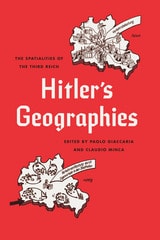
Hitler's Geographies
The Spatialities of the Third ReichEdited by Paolo Giaccaria and Claudio Minca
University of Chicago Press, 2016
With Hitler’s Geographies, editors Paolo Giaccaria and Claudio Minca examine the variety of ways in which spatial theory evolved and was translated into real-world action under the Third Reich. They have gathered an outstanding collection by leading scholars, presenting key concepts and figures as well exploring the undeniable link between biopolitical power and spatial expansion and exclusion.

Hitler's Library
Ambrus Miskolczy
Central European University Press, 2003
Hitler's Tyranny
A History in Ten ChaptersRalf Georg Reuth
Haus Publishing, 2022
Hitler’s tyranny is still difficult to understand today. In this book, Ralf Georg Reuth examines ten aspects of this catastrophe. Among other things, he asks: Was anti-Semitism more pronounced in Germany than elsewhere? Was Versailles really responsible for Hitler’s rise and why did the Germans follow a racial fanatic like him? How did his war differ from all others before it? The disturbing answers provide an overall picture that shows Hitler was not the consequence of the depths of German history, but the result of chance, deception, and seduction.
This thought-provoking new study takes aim at several of the norms of Hitler scholarship from the past forty years. Reuth interrogates and challenges a range of orthodox views on such topics as how mainstream politicians facilitated Hitler’s rise to power, the Führer’s infamous pact with Stalin, and the complicity of ordinary Germans in his genocidal tyranny. Eschewing a conventional chronological approach in favor of a forensic analysis of Hitler’s mainsprings of action both as chancellor and military commander, Reuth portrays Hitler as the apotheosis of what he argues is a specifically German strain of militarism and imperialism, shifting the focus firmly back to the mindset and modus operandi of Hitler himself. The portrait that emerges is one of a murderous fantasist and political opportunist driven by an all-embracing ideology of racial superiority. Reuth’s account courts controversy on a number of points and offers a fascinating counterpoint to much recent scholarship.
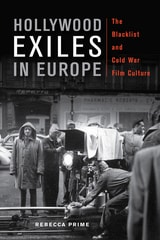
Hollywood Exiles in Europe
The Blacklist and Cold War Film CulturePrime, Rebecca
Rutgers University Press, 2014
Rebecca Prime documents the untold story of the American directors, screenwriters, and actors who exiled themselves to Europe as a result of the Hollywood blacklist. During the 1950s and 1960s, these Hollywood émigrés directed, wrote, or starred in almost one hundred European productions, their contributions ranging from crime film masterpieces like Du rififi chez les hommes (1955, Jules Dassin, director) to international blockbusters like The Bridge on the RiverKwai (1957, Carl Foreman and Michael Wilson, screenwriters) and acclaimed art films like The Servant (1963, Joseph Losey, director).
At once a lively portrait of a lesser-known American “lost generation” and an examination of an important transitional moment in European cinema, the book offers a compelling argument for the significance of the blacklisted émigrés to our understanding of postwar American and European cinema and Cold War relations. Prime provides detailed accounts of the production and reception of their European films that clarify the ambivalence with which Hollywood was regarded within postwar European culture. Drawing upon extensive archival research, including previously classified material, Hollywood Exiles in Europe suggests the need to rethink our understanding of the Hollywood blacklist as a purely domestic phenomenon. By shedding new light on European cinema’s changing relationship with Hollywood, the book illuminates the postwar shift from national to transnational cinema.
Holocaust Mothers and Daughters
Family, History, and TraumaFederica K. Clementi
Brandeis University Press, 2013
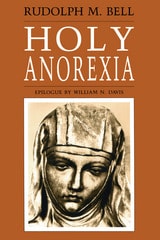
Holy Anorexia
Rudolph M. Bell
University of Chicago Press, 1985
"Everyone interested in anorexia nervosa . . . should skim this book or study it. It will make you realize how dependent upon culture the definition of disease is. I will never look at an anorexic patient in the same way again."—Howard Spiro, M.D., Gastroenterology
"[This] book is a first-class social history and is well-documented both in its historical and scientific portions."—Vern L. Bullough, American Historical Review
"A significant contribution to revisionist history, which re-examines events in light of feminist thought. . . . Bell is particularly skillful in describing behavior within its time and culture, which would be bizarre by today's norms, without reducing it to the pathological."—Mary Lassance Parthun, Toronto Globe and Mail
"Bell is both enlightened and convincing. His book is impressively researched, easy to read, and utterly fascinating."—Sheila MacLeod, New Statesman
Homecoming
Holocaust Survivors and Greece, 1941–1946Katerina Králová
Brandeis University Press, 2025
Homecoming records the experiences of Greek Jews who returned to their native country after World War II, when many went into hiding, fought in combat, became refugees, or were deported, some to Nazi death camps. Though they wanted more than anything to survive and come home, those who returned to postwar Greece faced isolation, anguish, deprivation, and hostility in the midst of a civil war. Their stories, which rarely feature in discussions of the Holocaust, raise important questions about its aftermath across Europe. Based on exhaustive archival research and new interviews with Holocaust survivors across several continents, Kateřina Králová’s new book adds to our understanding of the genocide and its impact.

Honorable Bandit
A Walk across CorsicaBrian Bouldrey
University of Wisconsin Press, 2007
Brian Bouldrey traveled to the island of Corsica, with its wine-dark Mediterranean waters, powdered-sugar beach sand, sumptuous cuisine, and fine wine. And then he walked away from all of them.
Bouldrey strapped on a backpack and walked across Napoleon's native land with the same spirit many choose to dance or drink: to celebrate, to mourn, to think, to avoid thinking, to recall, to ignore, to escape, and to arrive.
This wonderfully textured account of a two-week ramble along a famous Corsican hiking trail with his German friend Petra (she was good at the downhills while he was better at the uphills) offers readers a journal that is a launching point for reflection: thoughts on cultural differences, friendship, physical challenge, personal challenge, and getting very, very lost. Part travelogue, part memoir, and part lampoon, this book offers readers an impressionistic view of a little talked about yet stunningly beautiful landscape.
Hot Books in the Cold War
The CIA-Funded Secret Western Book Distribution Program Behind the Iron CurtainAlfred A. Reisch
Central European University Press, 2013
Housing Design and Society in Amsterdam
Reconfiguring Urban Order and Identity, 1900-1920Nancy Stieber
University of Chicago Press, 1998
Historians.
During the early 1900s, Amsterdam developed an international reputation as an urban mecca when invigorating reforms gave rise to new residential neighborhoods encircling the city's dispirited nineteenth-century districts. This new housing, built primarily with government subsidy, not only was affordable but also met rigorous standards of urban planning and architectural design. Nancy Stieber explores the social and political developments that fostered this innovation in public housing.
Drawing on government records, professional journals, and polemical writings, Stieber examines how government supported large-scale housing projects, how architects like Berlage redefined their role as architects in service to society, and how the housing occupants were affected by public debates about working-class life, the cultural value of housing, and the role of art in society.
Stieber emphasizes the tensions involved in making architectural design a social practice while she demonstrates the success of this collective enterprise in bringing about effective social policy and aesthetic progress.
How America Met the Jews
Hasia R. Diner
SBL Press, 2017
Explore how American conditions and Jewish circumstances collided in the nineteenth and early twentieth centuries
In this new book award-winning author Hasia R. Diner explores the issues behind why European Jews overwhelmingly chose to move to the United States between the 1820s and 1920s. Unlike books that tend to romanticize American freedom as the force behind this period of migration or that tend to focus on Jewish contributions to America or that concentrate on how Jewish traditions of literacy and self-help made it possible for them to succeed, Diner instead focuses on aspects of American life and history that made it the preferred destination for 90 percent of European Jews.
Features:
- Examination of the realities of race, immigration, color, money, economic development, politics, and religion in America
- Exploration of an America agenda that sought out white immigrants to help stoke economic development and that valued religion as a force for morality
How Green Were the Nazis?
Nature, Environment, and Nation in the Third ReichFranz-Josef Brüggemeier
Ohio University Press, 2005
How Soon Is Now?
Medieval Texts, Amateur Readers, and the Queerness of TimeCarolyn Dinshaw
Duke University Press, 2012
Whether discussing Victorian men of letters who parodied the Book of John Mandeville, a fictionalized fourteenth-century travel narrative, or Hope Emily Allen, modern coeditor of the early-fifteenth-century Book of Margery Kempe, Dinshaw argues that these and other medievalists outside the academy inhabit different temporalities than modern professionals operating according to the clock. How Soon Is Now? clears space for amateurs, hobbyists, and dabblers who approach medieval worlds from positions of affect and attachment, from desires to build other kinds of worlds. Unruly, untimely, they urge us toward a disorderly and asynchronous collective.
How World Politics Is Made
France and the Reunification of GermanyTilo Schabert
University of Missouri Press, 2009

How the West Came to Rule
The Geopolitical Origins of CapitalismAlex Anievas and Kerem Nisancioglu
Pluto Press, 2015
***Winner, British International Studies Association International Political Economy Working Group Book Prize 2016***
Mainstream historical accounts of the development of capitalism describe a profess which is fundamentally European—a system that was born in the mills and factories of English and under the guillotines of the French Revolution. This groundbreaking book tells a very difference story.
How the West Came to Rule offers a unique interdisciplinary and international historical account of the origins of capitalism. It argues that, contrary to dominant wisdom, capitalism’s origins should not be understood as a development confined to the geographically and culturally sealed borders of Europe, but the outcome of a wider array of global processes in which non-European societies played a decisive role.
Here is a provocative, incisive explanation of how capitalism emerged in England and Europe through a dialectical intersocietal and geopolitical process. The authors’ aim to undermine a Eurocentric bias that has been prominent in the debate about capitalisms rise to supremacy, and their case is remarkably convincing. They provide a fundamental rethinking. Anievas and Nisancioglu contend that often cited assumptions are neither theoretically nor empirically tenable and deny the agency of non-Western societies to the emergence of capitalism. Topics covered include:
*The Problem of Eurocentrism
*The Problem of Historical Specificity
*The Brenner Thesis: Explanation and Critique
*The Geopolitical in the Making of Capitalism
*The Political Marxist Conception of Capitalism
*Rethinking the Origins of Capitalism
*And much more!
Through an outline of the uneven histories of Mongolian expansion, New World discoveries, Ottoman-Habsburg rivalry, the development of the colonies, and bourgeois revolutions, Alex Anievas and Kerem Nisancioglu offer an account of capitalism’s origins that convincingly argues against the prevailing Eurocentric narratives. It will change minds and open the eyes of historians, economists, and political thinkers.
How the Workers Became Muslims
Immigration, Culture, and Hegemonic Transformation in EuropeFerruh Yilmaz
University of Michigan Press, 2016
Yilmaz’s primary case study is Danish immigration discourse, but his argument contextualizes his study in terms of questions of current concern across Europe, where right-wing groups that were long on the fringes of “legitimate” politics have managed to make significant gains with populations traditionally aligned with the Left. Specifically, Yilmaz argues that sociopolitical space has been transformed in the last three decades such that group classification has been destabilized to emphasize cultural rather than economic attributes.
According to this point-of-view, traditional European social and political splits are jettisoned for new “cultural” alliances pulling the political spectrum to the right, against the “corrosive” presence of Muslim immigrants, whose own social and political variety is flattened into an illusion of alien sameness.
How to Be French
Nationality in the Making since 1789Patrick Weil
Duke University Press, 2008
Throughout How to Be French, Weil compares French laws to those of other countries, including the United States, Great Britain, and Germany, showing how France both borrowed from and influenced other nations’ legislation. Examining moments when a racist approach to nationality policy held sway, Weil brings to light the Vichy regime’s denaturalization of thousands of citizens, primarily Jews and anti-fascist exiles, and late-twentieth-century efforts to deny North African immigrants and their children access to French nationality. He also reveals stark gender inequities in nationality policy, including the fact that until 1927 French women lost their citizenship by marrying foreign men. More than the first complete, systematic study of the evolution of French nationality policy, How to be French is a major contribution to the broader study of nationality.
How to Do It
Guides to Good Living for Renaissance ItaliansRudolph M. Bell
University of Chicago Press, 1999
"Lively and curious reading, particularly in its cascade of anecdote, offered in a breezy, cozy, journalistic style." —Lauro Martines, Times Literary Supplement
"[Bell's] fascinating book is a window on a lost world far nearer to our own than we might imagine. . . . How pleasant to read his delightful, informative and often hilarious book." —Kate Saunders, The Independent
"An extraordinary work which blends the learned with the frankly bizarre." —The Economist
"Professor Bell has a sly sense of humor and an enviably strong stomach. . . . He wants to know how people actually behaved, not how the Church or philosophers or earnest humanists thought they should behave. I loved this book." —Christopher Stace, Daily Telegraph
How to Live like a Lord Without Really Trying
Shepherd Mead
Bodleian Library Publishing, 2012
In 1958, ad man and soon-to-be best-selling author Shepherd Mead moved to England with his family to pursue his career. Six years later, his observations on the oddities of British culture were enough to compile a satirical guidebook for fellow Americans planning to visit from across the pond. The blunders that could befall them were many. For instance, explains Mead, “Pants are always underpants and what you wear out in the open are trousers. Mistakes in this area can lead to nasty misunderstandings.”
Human Rights and Oppressed Peoples
Collected Essays and SpeechesGeorg Brandes
University of Wisconsin Press, 2020
Human Rights and Oppressed Peoples includes thirty-five essays and published speeches from the early twenty-first century on subjects as diverse as the Boxer Rebellion, displaced peoples from World War I, Finland's Jewish population, and imperialism. This collection will interest interdisciplinary scholars of human rights as well as those who study Scandinavian intellectual and literary history.
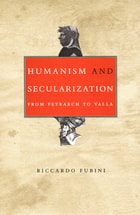
Humanism and Secularization
From Petrarch to VallaRiccardo Fubini
Duke University Press, 2003
Humanism and Secularization offers a nuanced account of humanists contesting medieval ideas about authority not in order to reject Christianity or even orthodoxy, but to claim for themselves the right to define what it meant to be a Christian. Fubini analyzes key texts by major humanists—isuch as Petrarch, Poggio, and Valla—from the first century of the movement. As he subtly works out these authors’ views on religion and the Church from both biographical and textual information, Fubini reveals in detail the new historical consciousness that animated the humanists in their reading of classical and patristic texts. His book as a whole shows convincingly just how radical the humanism of the first half of the fifteenth century was and how sharply it challenged well-entrenched ideas and institutions. Appearing here in English for the first time, his work provides a model set of readings of humanist texts and a critical perspective on Italian humanism that will alter and enrich discussion and understanding of the nature of the humanist movement.
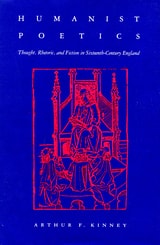
Humanist Poetics
Thought, Rhetoric, and Fiction in Sixteenth-Century EnglandArthur F. Kinney
University of Massachusetts Press, 1986
By tracing classical resources and the intertextuality of major English works from More's Utopia to Lodge's Rosalynde and Nashe's Unfortunate Traveller, Kinney not only locates basic Elizabethan habits of mind but also shows where the roots of the English novel may ultimately lie.
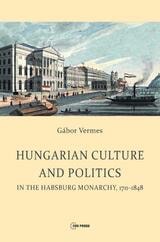
Hungarian Culture and Politics in the Habsburg Monarchy 1711-1848
Gábor Vermes
Central European University Press, 2014
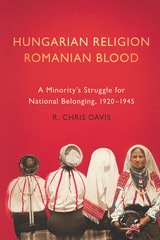
Hungarian Religion, Romanian Blood
A Minority's Struggle for National Belonging, 1920–1945R. Chris Davis
University of Wisconsin Press, 2019
Davis's highly illuminating example is the case of the little-known Moldavian Csangos, a Hungarian- and Romanian-speaking community of Roman Catholics in eastern Romania. During World War II, some in the Romanian government wanted to expel them. The Hungarian government saw them as Hungarians and wanted to settle them on lands confiscated from other groups. Resisting deportation, the clergy of the Csangos enlisted Romania's leading racial anthropologist, collected blood samples, and rewrote a millennium of history to claim Romanian origins and national belonging—thus escaping the discrimination and violence that devastated so many of Europe's Jews, Roma, Slavs, and other minorities. In telling their story, Davis offers fresh insight to debates about ethnic allegiances, the roles of science and religion in shaping identity, and minority politics past and present.

Hungarians and Europe in the Early Middle Ages
An Introduction to Early Hungarian HistoryAndrás Róna-Tas
Central European University Press, 1999

Hungary and the Habsburgs, 1765-1800
An Experiment in Enlightened AbsolutismÉva H. Balázs
Central European University Press, 1997
Hungary in the Cold War, 1945-1956
Between the United States and the Soviet UnionLászló Borhi
Central European University Press, 2004

Husserl and the Idea of Europe
Timo Miettinen
Northwestern University Press, 2020
Husserl and the Idea of Europe argues that Edmund Husserl’s late reflections on Europe should not be read either as departures from his early transcendental phenomenology or as simple exercises of cultural criticism but rather as systematic phenomenological reflections on generativity and historicity. Timo Miettinen shows that Husserl’s deliberations on Europe contain his most compelling and radical interpretation of the intersubjective, communal, and historical dimensions of phenomenology.
Husserl and his generation worked in the aftermath of World War I, as Europe struggled to redefine itself, and he penned his late writings as the clouds of World War II gathered. Decades later, the fall of the Soviet Union again altered the continent’s identity and its political and economic divisions. Miettinen writes as a European involved in the question of Europe, and many of the recent authors and critics he addresses in this work—such as Michel Foucault, Jacques Derrida, and Giorgio Agamben—likewise deeply engaged with this new problem of European identity. The book illuminates the multifaceted problem of the idea of European rationality, and it defends novel conceptions of universalism and teleology as necessary components of radical philosophical reflection.
Huxley's Church and Maxwell's Demon
From Theistic Science to Naturalistic ScienceMatthew Stanley
University of Chicago Press, 2014
Matthew Stanley explores the overlap and shift between theistic and naturalistic science through a parallel study of two major scientific figures: James Clerk Maxwell, a devout Christian physicist, and Thomas Henry Huxley, the iconoclast biologist who coined the word agnostic. Both were deeply engaged in the methodological, institutional, and political issues that were crucial to the theistic-naturalistic transformation. What Stanley’s analysis of these figures reveals is that the scientific naturalists executed a number of strategies over a generation to gain control of the institutions of scientific education and to reimagine the history of their discipline. Rather than a sudden revolution, the similarity between theistic and naturalistic science allowed for a relatively smooth transition in practice from the old guard to the new.
Hybrid Renaissance
Culture, Language, ArchitecturePeter Burke
Central European University Press, 2016
Hybrid Renaissance introduces the idea that the Renaissance in Italy, elsewhere in Europe, and in the world beyond Europe is an example of cultural hybridization.
The two key concepts used in this book are “hybridization” and “Renaissance”. Roughly speaking, hybridity refers to something new that emerges from the combination of diverse older elements. (The term “hybridization” is preferable to “hybridity” because it refers to a process rather than to a state, and also because it encourages the writer and the readers alike to think in terms of degree: where there is more or less, rather than presence versus absence.)
The book begins with a discussion of the concept of cultural hybridization and a cluster of other concepts related to it. Then comes a geography of cultural hybridization focusing on three locales: courts, major cities (whether ports or capitals) and frontiers. The following seven chapters describe the hybridity of the Renaissance in different fields: architecture, painting and sculpture, languages, literature, music, philosophy and law and finally religion. The essay concludes with a brief account of attempts to resist hybridization or to purify cultures or domains from what was already hybridized.