Results by title
3064 books match the query 'Social conditions' and 87 start with h
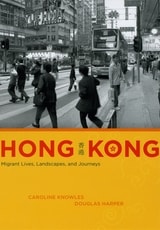
Hong Kong
Migrant Lives, Landscapes, and JourneysCaroline Knowles and Douglas Harper
University of Chicago Press, 2009
In 1997 the United Kingdom returned control of Hong Kong to China, ending the city’s status as one of the last remnants of the British Empire and initiating a new phase for it as both a modern city and a hub for global migrations. Hong Kong is a tour of the city’s postcolonial urban landscape, innovatively told through fieldwork and photography.
Caroline Knowles and Douglas Harper’s point of entry into Hong Kong is the unusual position of the British expatriates who chose to remain in the city after the transition. Now a relatively insignificant presence, British migrants in Hong Kong have become intimately connected with another small minority group there: immigrants from Southeast Asia. The lives, journeys, and stories of these two groups bring to life a place where the past continues to resonate for all its residents, even as the city hurtles forward into a future marked by transience and transition. By skillfully blending ethnographic and visual approaches, Hong Kong offers a fascinating guide to a city that is at once unique in its recent history and exemplary of our globalized present.
Honor and the American Dream
Culture and Identity in a Chicano CommunityHorowitz, Ruth
Rutgers University Press, 1983
Honor and the Political Economy of Marriage
Violence against Women in the Kurdistan Region of IraqJoanne Payton
Rutgers University Press, 2020
Honor and the Political Economy of Marriage provides a description of ‘honor’-based violence that focuses upon the structure of the family rather than the perpetrator’s culture. The author, Joanne Payton, argues that within societies primarily organized by familial and marital connections, women’s ‘honor’ is a form of symbolic capital within a ‘political economy’ in which marriage organizes intergroup connections.
Drawing on statistical analysis of original data contextualized with historical and anthropological readings, Payton explores forms of marriage and their relationship to ‘honor’, sketching changing norms around the familial control of women from agrarian/pastoral roots to the contemporary era.
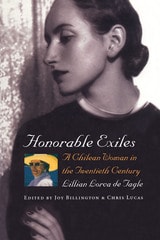
Honorable Exiles
A Chilean Woman in the Twentieth CenturyBy Lillian Lorca de Tagle
University of Texas Press, 2000
Lillian Lorca de Tagle is living proof of women's progress in the twentieth century. Born into a privileged, yet circumscribed world in 1914 as the daughter of a wealthy Chilean diplomat, she became a translator and journalist at a time when few women of her class held jobs. Ordered into exile in the United States by her disapproving mother, she became a successful reporter, translator, and editor, while raising two daughters as a single working mother.
In this beautifully written memoir, de Tagle looks back over a fascinating, cosmopolitan life. She describes how her upbringing in various European capitals prepared her for a life of continual change. She remembers the restrictions that upper class Chilean society placed on women and how these ultimately propelled her to a career in the United States that included an editorship at Américas magazine and work for the State Department, as well as a series of posts with the USIA/Voice of America.
Woven throughout her memoir are vivid glimpses of family, friends, husbands, and lovers, including the artist Roberto Matta. This spicy blend of personalities, work, and culture tells a quintessential coming-of-age story of a thoroughly modern woman.
Hoodlums
Black Villains and Social Bandits in American LifeWilliam L. Van Deburg
University of Chicago Press, 2004
Ranging from black slaveholders and frontier outlaws to serial killers and gangsta rappers, Hoodlums examines the pivotal role of black villains in American society and popular culture. Here, William L. Van Deburg offers the most extensive treatment to date of the black badman and the challenges that this figure has posed for race relations in America. He first explores the evolution of this problematic racial stereotype in the literature of the early Republic—documents in which the enslavement of African Americans was justified through exegetical claims. Van Deburg then probes antebellum slave laws, minstrel shows, and the works of proslavery polemicists to consider how whites conceptualized blacks as members of an inferior and dangerous race. Turning to key works by blacks themselves, from the writings of Frederick Douglass and W. E. B. Du Bois to classic blaxploitation films like Black Caesar and The Mack, Van Deburg demonstrates how African Americans have combated such negative stereotypes and reconceptualized the idea of the badman through stories of social bandits—controversial individuals vilified by whites for their proclivity toward evil, but revered in the black community as necessarily insurgent and revolutionary.
Ultimately, Van Deburg brings his story up-to-date with discussions of prison and hip-hop culture, urban rioting, gang warfare, and black-on-black crime. What results is a work of remarkable virtuosity—a nuanced history that calls for both whites and blacks to rethink received wisdom on the nature and prevalence of black villainy.
Hooligans in Khrushchev's Russia
Defining, Policing, and Producing Deviance during the ThawBrian LaPierre
University of Wisconsin Press, 2012
Hooligans in Khrushchev's Russia offers the first comprehensive study of how Soviet police, prosecutors, judges, and ordinary citizens during the Khrushchev era (1953–64) understood, fought against, or embraced this catch-all category of criminality. Using a wide range of newly opened archival sources, it portrays the Khrushchev period—usually considered as a time of liberalizing reform and reduced repression—as an era of renewed harassment against a wide range of state-defined undesirables and as a time when policing and persecution were expanded to encompass the mundane aspects of everyday life. In an atmosphere of Cold War competition, foreign cultural penetration, and transatlantic anxiety over "rebels without a cause," hooliganism emerged as a vital tool that post-Stalinist elites used to civilize their uncultured working class, confirm their embattled cultural ideals, and create the right-thinking and right-acting socialist society of their dreams.
Hope Is Cut
Youth, Unemployment, and the Future in Urban EthiopiaDaniel Mains
Temple University Press, 2013
How do ambitious young men grapple with an unemployment rate in urban Ethiopia hovering around fifty percent? Urban, educated, and unemployed young men have been the primary force behind the recent unrest and revolutions in North Africa and the Middle East. Daniel Mains' detailed and moving ethnographic study, Hope is Cut, examines young men's struggles to retain hope for the future in the midst of economic uncertainty and cultural globalization.
Through a close ethnographic examination of young men's day-to-day lives Hope is Cut explores the construction of optimism through activities like formal schooling, the consumption of international films, and the use of khat, a mild stimulant.
Mains also provides a consideration of social theories concerning space, time, and capitalism. Young men here experience unemployment as a problem of time—they often congregate on street corners, joking that the only change in their lives is the sun rising and setting. Mains addresses these factors and the importance of reciprocity and international migration as a means of overcoming the barriers to attaining aspirations.
Hope for Justice and Power
Broad-based Community Organizing in the Texas Industrial Areas FoundationKathleen Staudt
University of North Texas Press, 2020
Hope is the Thing
Wisconsinites on Perseverance in a PandemicB. J. Hollars
Wisconsin Historical Society Press, 2021
As the one hundred essays and poems gathered here demonstrate, hope comes in many forms: a dad dance, a birth plan, an unblemished banana, a visit from a neighborhood dog, the revival of an old tradition, empathy. The contributors are racially, geographically, and culturally diverse, representing a rough cross section of Wisconsin voices, from truck driver to poet laureate, from middle school student to octogenarian, from small business owner to seasoned writer. The result is a book-length exploration of the depth and range of hope experienced in times of crisis, as well as an important record of what Wisconsinites were facing and feeling through these historic times.
Hostels, Sexuality, and the Apartheid Legacy
Malevolent GeographiesGlen S. Elder
Ohio University Press, 2003
In the last decade, the South African state has been transformed dramatically, but the stubborn, menacing geography of apartheid still stands in the way of that country’s visions of change. Environmentally degraded old homelands still scar the rural geography of South Africa.
Formerly segregated, now gated, neighborhoods still inhibit free movement. Hostels, Sexuality, and the Apartheid Legacy is a study of another such space, the converted “male” migrant worker hostel.
Professor Glen Elder identifies hostels as sites of public and domestic violence, literal destruction and rebuilding, and as an important node in the spread of HIV/AIDS.
Hostels have also become home to increasing numbers of “invisible” female residents. Finding that one way to understand hostel space is through women’s experiences, Professor Elder turned to thirty black migrant women living in an East Rand hostel to map the everyday geographies of South Africa’s time of change.
By following the lives of these women, Elder identifies spatialized forms of marginalization, impoverishment, infection, and disempowerment. But, as he points out, the women’s survival strategies may provide signposts to the way out of apartheid’s malevolent geography.
Hostels, Sexuality, and the Apartheid Legacy argues that the gendered geography of the migrant labor system developed in South Africa was premised upon sexual assumptions about men, women, and their bodies, and that feminist and queer analyses of space can inform public policy decisions.
Houston and the Permanence of Segregation
An Afropessimist Approach to Urban HistoryDavid Ponton
University of Texas Press, 2024
2025 Most Significant Scholarly Book, Texas Institute of Letters
A history of racism and segregation in twentieth-century Houston and beyond.
Through the 1950s and beyond, the Supreme Court issued decisions that appeared to provide immediate civil rights protections to racial minorities as it relegated Jim Crow to the past. For black Houstonians who had been hoping and actively fighting for what they called a “raceless democracy,” these postwar decades were often seen as decades of promise. In Houston and the Permanence of Segregation, David Ponton argues that these were instead “decades of capture”: times in which people were captured and constrained by gender and race, by faith in the law, by antiblack violence, and even by the narrative structures of conventional histories. Bringing the insights of Black studies and Afropessimism to the field of urban history, Ponton explores how gender roles constrained thought in black freedom movements, how the “rule of law” compelled black Houstonians to view injustice as a sign of progress, and how antiblack terror undermined Houston’s narrative of itself as a “heavenly” place.
Today, Houston is one of the most racially diverse cities in the United States, and at the same time it remains one of the most starkly segregated. Ponton’s study demonstrates how and why segregation has become a permanent feature in our cities and offers powerful tools for imagining the world otherwise.
How America Became Capitalist
Imperial Expansion and the Conquest of the WestJames Parisot
Pluto Press, 2019
Not so fast, says James Parisot. In How America Became Capitalist, he tells the little-known story of how our economic system came to be, and of the alternatives that were sidelined along the way. Capitalist elements were apparent from the first colonies of white settlers, but they were far from dominant, and they weren’t the driving factor in the advancement of colonies deeper into the continent. Even slavery, which was at the heart of both American capitalism and imperialism throughout much of the nation’s growth, was less a monolithic force than a series of complicated encounters that took different forms. Individual difference slowed the homogenization of capitalism as well, as transgender people, gays and lesbians, and people in interracial relationships all brought complexity to the market’s idea of the typical household.
At a moment when the long-term viability of capitalism is coming increasingly into question, How America Became Capitalist reminds us that the path to its dominance was never so smooth, nor so complete, as its champions would have us believe.

How Corrupt Is Britain?
Edited by David Whyte
Pluto Press, 2015
David Whyte brings together a wide range of leading commentators and campaigners, offering a series of troubling answers. Unflinchingly facing the corruption in British public life, they show that it is no longer tenable to assume that corruption is something that happens elsewhere; corrupt practices are revealed across a wide range of venerated institutions, from local government to big business. These powerful, punchy essays aim to shine a light on the corruption fundamentally embedded in UK politics, police, and finance.
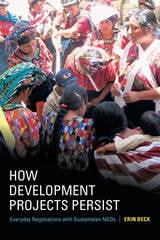
How Development Projects Persist
Everyday Negotiations with Guatemalan NGOsErin Beck
Duke University Press, 2017
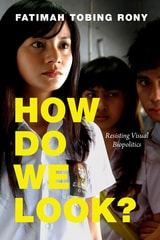
How Do We Look?
Resisting Visual BiopoliticsFatimah Tobing Rony
Duke University Press, 2022

How Informal Institutions Matter
Evidence from Turkish Social and Political SpheresZeki Sarigil
University of Michigan Press, 2023
In How Informal Institutions Matter, Zeki Sarigil examines the role of informal institutions in sociopolitical life and addresses the following questions: Why and how do informal institutions emerge? To ask this differently, why do agents still create or resort to informal institutions despite the presence of formal institutional rules and regulations? How do informal institutions matter? What roles do they play in sociopolitical life? How can we classify informal institutions? What novel types of informal institutions can we identify and explain? How do informal institutions interact with formal institutions? How do they shape formal institutional rules, mechanisms, and outcomes? Finally, how do existing informal institutions change? What factors might trigger informal institutional change? In order to answer these questions, Sarigil examines several empirical cases of informal institution as derived from various issue areas in the Turkish sociopolitical context (i.e., civil law, conflict resolution, minority rights, and local governance) and from multiple levels (i.e., national and local).
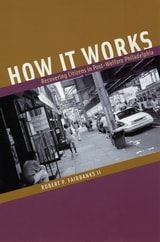
How It Works
Recovering Citizens in Post-Welfare PhiladelphiaRobert P. Fairbanks II
University of Chicago Press, 2009
Of the some sixty thousand vacant properties in Philadelphia, half of them are abandoned row houses. Taken as a whole, these derelict homes symbolize the city’s plight in the wake of industrial decline. But a closer look reveals a remarkable new phenomenon—street-level entrepreneurs repurposing hundreds of these empty houses as facilities for recovering addicts and alcoholics. How It Works is a compelling study of this recovery house movement and its place in the new urban order wrought by welfare reform.
To find out what life is like in these recovery houses, Robert P. Fairbanks II goes inside one particular home in the Kensington neighborhood. Operating without a license and unregulated by any government office, the recovery house provides food, shelter, company, and a bracing self-help philosophy to addicts in an area saturated with drugs and devastated by poverty. From this starkly vivid close-up, Fairbanks widens his lens to reveal the intricate relationships the recovery houses have forged with public welfare, the formal drug treatment sector, criminal justice institutions, and the local government.
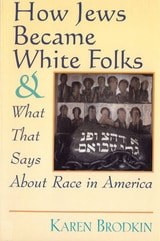
How Jews Became White Folks and What That Says About Race in America
Brodkin, Karen
Rutgers University Press, 1998
The history of Jews in the United States is one of racial change that provides useful insights on race in America. Prevailing classifications have sometimes assigned Jews to the white race and at other times have created an off-white racial designation for them. Those changes in racial assignment have shaped the ways American Jews of different eras have constructed their ethnoracial identities. Brodkin illustrates these changes through an analysis of her own family's multi-generational experience. She shows how Jews experience a kind of double vision that comes from racial middleness: on the one hand, marginality with regard to whiteness; on the other, whiteness and belonging with regard to blackness.
Class and gender are key elements of race-making in American history. Brodkin suggests that this country's racial assignment of individuals and groupsconstitutes an institutionalized system of occupational and residential segregation, is a key element in misguided public policy, and serves as a pernicious foundational principle in the construction of nationhood. Alternatives available to non-white and alien "others" have been either to whiten or to be consigned to an inferior underclass unworthy of full citizenship. The American ethnoracial map-who is assigned to each of these poles-is continually changing, although the binary of black and white is not. As a result, the structure within which Americans form their ethnoracial, gender, and class identities is distressingly stable. Brodkin questions the means by which Americans construct their political identities and what is required to weaken the hold of this governing myth.
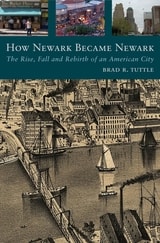
How Newark Became Newark
The Rise, Fall, and Rebirth of an American CityBrad R. Tuttle
Rutgers University Press, 2009
How Newark Became Newark is a fresh, unflinching popular history that spans the city's epic transformation from a tiny Puritan village into a manufacturing powerhouse, on to its desperate struggles in the twentieth century and beyond. After World War II, unrest mounted as the minority community was increasingly marginalized, leading to the wrenching civic disturbances of the 1960s. Though much of the city was crippled for years, How Newark Became Newark is also a story of survival and hope. Today, a real estate revival and growing population are signs that Newark is once again in ascendance.
How Racism Takes Place
George Lipsitz
Temple University Press, 2011
White identity in the United States is place bound, asserts George Lipsitz in How Racism Takes Place. An influential scholar in American and racial studies, Lipsitz contends that racism persists because a network of practices skew opportunities and life chances along racial lines. That is, these practices assign people of different races to different spaces and therefore allow grossly unequal access to education, employment, transportation, and shelter.
Revealing how seemingly race-neutral urban sites contain hidden racial assumptions and imperatives, Lipsitz examines the ways in which urban space and social experience are racialized and emphasizes that aggrieved communities do not passively acquiesce to racism. He recognizes the people and communities that have reimagined segregated spaces in expressive culture as places for congregation.
How Racism Takes Place not only exposes the degree to which this white spatial imagining structures our society but also celebrates the black artists and activists who struggle to create a just and decent society.
How Schools Meet Students' Needs
Inequality, School Reform, and Caring LaborKatie Kerstetter
Rutgers University Press, 2023
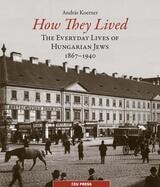
How They Lived
The Everyday Lives of Hungarian Jews, 1867–1940András Koerner
Central European University Press, 2015
How Things Fall Apart
What Happened to the Cuban RevolutionElizabeth Dore
Duke University Press, 2023
How We Came to Be
An Intellectual Genealogy of Chicano ScholarsEdited by Teresa Córdova, Aída Hurtado, Francisco J. Hernández, Avelardo Valdez; Foreword by Juan González
University of Arizona Press, 2026
This work chronicles the lives and legacies of Chicana and Chicano scholars whose formative experiences in the Chicano Movement shaped the development of Chicano studies and transformed higher education. Originating from the Reuniónes de Colegas—gatherings of veteran scholars reflecting on their shared histories—the volume features sixteen essays organized into five thematic sections that explore the intersections of activism, scholarship, and institutional change.
The contributors document how grassroots organizing evolved into academic inquiry, leading to the creation of departments, student support systems, and policy reforms that advanced equity and representation in universities. Essays address how community-engaged research influenced urban planning, health advocacy, and cultural production, while also highlighting Indigenous and transnational epistemologies that redefined theoretical frameworks in Chicano studies. The volume concludes with reflections on academic leadership and the breaking of barriers by Chicana scholars in higher education administration.
Together, these essays offer a powerful intellectual history and a testament to a generation’s enduring commitment to social justice. How We Came to Be is both a scholarly archive and a call to action, preserving the legacy of those who built Chicano studies and inspiring future generations to continue the work of transformation within and beyond the academy.
Contributors
José Calderón
Gilberto Cárdenas
Teresa Carrillo
Teresa Córdova
Estevan Flores
Yvette G. Flores
Felipe Gonzales
Deena J. González
Francisco J. Hernández
Inés Hernández-Ávila
Francisco Hernández Vázquez
Aída Hurtado
Larry Trujillo
Avelardo Valdez
Carlos G. Vélez-Ibáñez
James Diego Vigil
How to Lose the Hounds
Maroon Geographies and a World beyond PolicingCeleste Winston
Duke University Press, 2023
Hull-House Maps and Papers
A Presentation of Nationalities and Wages in a Congested District of Chicago, Together with Comments and Essays on Problems Growing Out of the Social ConditionsBy the Residents of Hull-House
University of Illinois Press, 2007
Inspired by their Progressive Era faith in social science solutions to society’s problems, the residents of Hull-House collaborated on this work of sociology based on their experiences as residents of Chicago’s Near West Side. The contributors to this book believed that an enlightened citizenry could be mobilized for reform, and that by publishing maps with explicit information about the wages and conditions of the working poor in Chicago’s Nineteenth Ward they would educate the public and inspire reforms.
In addition to Jane Addams’s own prefatory note and paper on the role of social settlements in the labor movement, contributors provided detailed, real-world analyses of the Chicago Jewish ghetto, garment workers and the sweatshops, child labor, immigrant neighborhoods in the vicinity of Hull-House, and local charities. This edition also contains eight color reproductions of the original Hull-House neighborhood maps. The year 2006 marks the one hundred and eleventh anniversary of the publication of Hull-House Maps and Papers, and the volume remains a dramatic statement about the residents’ shared values as well as a major influence on subsequent social surveys.
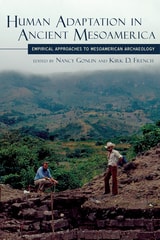
Human Adaptation in Ancient Mesoamerica
Empirical Approaches to Mesoamerican ArchaeologyNancy Gonlin
University Press of Colorado, 2016
This volume explores the dynamics of human adaptation to social, political, ideological, economic, and environmental factors in Mesoamerica and includes a wide array of topics, such as the hydrological engineering behind Teotihuacan’s layout, the complexities of agriculture and sustainability in the Maya lowlands, and the nuanced history of abandonment among different lineages and households in Maya centers.
The authors aptly demonstrate how culture is the mechanism that allows people to adapt to a changing world, and they address how ecological factors, particularly land and water, intersect with nonmaterial and material manifestations of cultural complexity. Contributors further illustrate the continuing utility of the cultural ecological perspective in framing research on adaptations of ancient civilizations.
This book celebrates the work of Dr. David Webster, an influential Penn State archaeologist and anthropologist of the Maya region, and highlights human adaptation in Mesoamerica through the scientific lenses of anthropological archaeology and cultural ecology.
Contributors include Elliot M. Abrams, Christopher J. Duffy, Susan Toby Evans, Kirk D. French, AnnCorinne Freter, Nancy Gonlin, George R. Milner, Zachary Nelson, Deborah L. Nichols, David M. Reed, Don S. Rice, Prudence M. Rice, Rebecca Storey, Kirk Damon Straight, David Webster, Stephen L. Whittington, Randolph J. Widmer, John D. Wingard, and W. Scott Zeleznik.
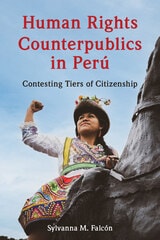
Human Rights Counterpublics in Perú
Sylvanna M. Falcón
University of Illinois Press, 2024
Engaging and intimate, Human Rights Counterpublics in Perú illuminates the power of human rights and memory work.
Human Targets
Schools, Police, and the Criminalization of Latino YouthVictor M. Rios
University of Chicago Press, 2017
In Human Targets, Rios takes us to the streets of California, where we encounter young men who find themselves in much the same situation as fifteen-year-old Victor. We follow young gang members into schools, homes, community organizations, and detention facilities, watch them interact with police, grow up to become fathers, get jobs, get rap sheets—and in some cases get killed. What is it that sets apart young people like Rios who succeed and survive from the ones who don’t? Rios makes a powerful case that the traditional good kid/bad kid, street kid/decent kid dichotomy is much too simplistic, arguing instead that authorities and institutions help create these identities—and that they can play an instrumental role in providing young people with the resources for shifting between roles. In Rios’s account, to be a poor Latino youth is to be a human target—victimized and considered an enemy by others, viewed as a threat to law enforcement and schools, and burdened by stigma, disrepute, and punishment. That has to change.
This is not another sensationalistic account of gang bangers. Instead, the book is a powerful look at how authority figures succeed—and fail—at seeing the multi-faceted identities of at-risk youths, youths who succeed—and fail—at demonstrating to the system that they are ready to change their lives. In our post-Ferguson era, Human Targets is essential reading.
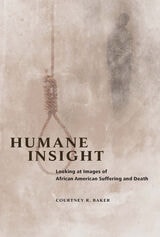
Humane Insight
Looking at Images of African American Suffering and DeathCourtney Baker
University of Illinois Press, 2017
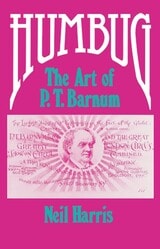
Humbug
The Art of P. T. BarnumNeil Harris
University of Chicago Press, 1981
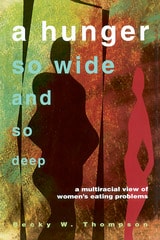
Hunger So Wide And So Deep
A Multiracial View of Women’s Eating ProblemsBecky Thompson
University of Minnesota Press, 1996
A new feminist classic--now in paper!
Based on in-depth life history interviews with African-American, Latina, and white women-both lesbian and heterosexual-this book chronicles the effects of racism, sexism, acculturation, and sexual abuse on women’s bodies and eating patterns.
“A wonderful book: gripping, creative and profoundly humane. In lucid prose Thompson offers an original explanation for women’s eating problems. She argues that many women turn to food-bingeing, dieting, purging, or starving- as a sensible means of coping with physical and psychic ‘atrocities’ deriving from ‘racism, sexism, homophobia, classism, the stress of acculturation, and emotional, physical, and sexual abuse.’” Women’s Review of Books“Surprising and alarming. . . . Thompson urges a second look at our national obsession with weight and proffers theories and practices that could save the lives of women of all colors and sexual orientations.” Lambda Book Report“Thompson breaks new ground and offers hope for the multitudes of women who have swallowed their pain.” Evelyn C. White, Editor, The Black Women's Health Book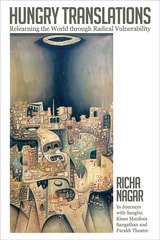
Hungry Translations
Relearning the World through Radical VulnerabilityRicha Nagar
University of Illinois Press, 2019
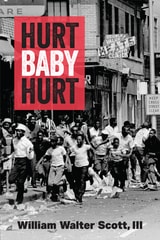
Hurt, Baby, Hurt
William Walter Scott, III
University of Michigan Press, 2025
This memoir recounts Scott’s life from his birth up through the Rebellion. It tells the story of how the Rebellion started and provides an on-the-ground account of the Rebellion and its immediate aftermath, including the police detainment of the people involved. Now with a new foreword by Austin McCoy that considers the lasting impact of the rebellion, Hurt, Baby, Hurt offers valuable insight into an important part of Detroit history.
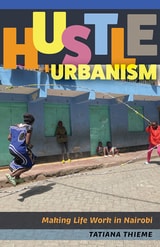
Hustle Urbanism
Making Life Work in NairobiTatiana Thieme
University of Minnesota Press, 2025
Exploring hustle as a social, cultural, and economic phenomenon in contemporary Nairobi
In Nairobi’s underserved neighborhoods, “hustle” has emerged as both a vital survival strategy and a way of life for youth. Exploring the multiple meanings and manifestations of the hustle economy across different scenarios of provisioning, distribution, exchange, learning, and mobilizing, Hustle Urbanism draws on more than a decade of ethnographic engagement to center the logics, perspectives, and inventive strategies of a group of youth who constantly navigate job scarcity, inadequate basic services, and climate-induced harms.
Tatiana Thieme shows how young people develop tools of resistance against the legacies of colonial violence and uneven urban development while carving out spaces of opportunity for themselves and their peers. The stories she includes bring thick ethnographic detail and longitudinal perspective to the lives and livelihoods of youth whose diverse skill sets and knowledges span from circular economies and eco-activism to hip hop and local leadership. Filling a significant gap in both existing scholarship and popular discussion, Hustle Urbanism offers critical theorization of precarious urban environments and the affirmative modes of making life work in the city against the odds.
While Thieme cautions against fetishizing hustle as a form of social and economic uplift, she calls for a greater recognition of the ingenuity and skill involved in hustle urbanism, arguing that studying hustle narratives and practices opens up timely empirical and theoretical questions about overlapping urban struggles and possibilities that coexist in the everyday city.
Retail e-book files for this title are screen-reader friendly with images accompanied by short alt text and/or extended descriptions.
Hustling Is Not Stealing
Stories of an African Bar GirlJohn M. Chernoff
University of Chicago Press, 2003
In Hustling Is Not Stealing and its follow-up, Exchange Is Not Robbery, a chronicle of exploitation is transformed by verbal art into an ebullient comedy. In Hustling Is Not Stealing, Hawa is a playful warrior struggling against circumstances in Ghana and Togo. In Exchange Is Not Robbery, Hawa returns to her native Burkina Faso, where she achieves greater control over her life but faces new difficulties. As a woman making sacrifices to live independently, Hawa sees her own situation become more complex as she confronts an atmosphere in Burkina Faso that is in some ways more challenging than the one she left behind, and the moral ambiguities of her life begin to intensify.
Combining elements of folklore and memoir, Hawa’s stories portray the diverse social landscape of West Africa. Individually the anecdotes can be funny, shocking, or poignant; assembled together they offer a sweeping critical and satirical vision.
Hydraulic City
Water and the Infrastructures of Citizenship in MumbaiNikhil Anand
Duke University Press, 2017