Results by title
3576 books match the query 'American' and 120 start with h
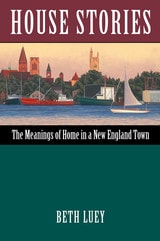
House Stories
The Meanings of Home in a New England TownBeth Luey
University of Massachusetts Press, 2017
Historic houses adorned with plaques populate New England like nowhere else in the country. These plaques note the construction year and original owner of the house, but they tell nothing about the rich lives of the people who lived there. In House Stories, Beth Luey takes readers on a virtual walking tour of several historic houses in Fairhaven, Massachusetts, a small New England coastal town, inviting us in to learn each house's secrets.
Through letters and diaries, church and business records, newspaper accounts, legal documents, and the recollections of neighbors who knew them, Luey introduces the diverse cast of historical characters who lived in these houses at various times from 1800 to the 2000s, including a Japanese castaway and his rescuer, a self-made millionaire, a seagoing adventurer, a religious pioneer, and an entrepreneurial immigrant. All of the houses are still standing and all but a lighthouse are still called home. In House Stories, Luey asks readers to join her as she considers the multiple meanings of “home” for these people and their families.
House of Incest
Anaïs Nin
Ohio University Press, 1958
With an introduction by Allison Pease, this new edition of House of Incest is a lyrical journey into the subconscious mind of one of the most celebrated feminist writers of the twentieth-century.
Originally published in 1936, House of Incest is Anaïs Nin’s first work of fiction. Based on Nin’s dreams, the novel is a surrealistic look within the narrator’s subconscious as she attempts to distance herself from a series of all-consuming and often taboo desires she cannot bear to let go. The incest Nin depicts is a metaphor—a selfish love wherein a woman can appreciate only qualities in a lover that are similar to her own. Through a descriptive exploration of romances and attractions between women, between a sister and her beloved brother, and with a Christ-like man, Nin’s narrator discovers what she thinks is truth: that a woman’s most perfect love is of herself. At first, this self-love seems ideal because it is attainable without fear and risk of heartbreak. But in time, the narrator’s chosen isolation and self-possessed anguish give way to a visceral nightmare from which she is unable to wake.
House of McQueen
Valerie Wallace
Four Way Books, 2018
House of Sparrows
New and Selected PoemsBetsy Sholl
University of Wisconsin Press, 2019
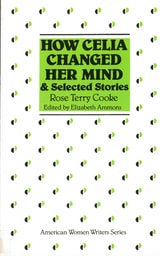
How Celia Changed Her Mind and Selected Stories
Rose Terry CookeAmmons, Elizabeth
Rutgers University Press, 1986
Cooke's stories are rich literarily and historically; her command of dialect, ear for dialogue, dramatic sense, and ability to draw interesting, memorable characters all distinguish her work. This reissue of some of her best work represents an important contribution to the canon of American literature.
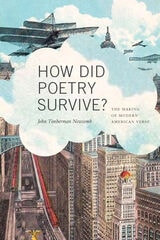
How Did Poetry Survive?
The Making of Modern American VerseJohn Timberman Newcomb
University of Illinois Press, 2013
This book traces the emergence of modern American poetry at the turn of the nineteenth century. With a particular focus on four "little magazines"--Poetry, The Masses, Others, and The Seven Arts--John Timberman Newcomb shows how each advanced ambitious agendas combining urban subjects, stylistic experimentation, and progressive social ideals. While subsequent literary history has favored the poets whose work made them distinct--individuals singled out usually on the basis of a novel technique--Newcomb provides a denser, richer view of the history that hundreds of poets made.
How Poems Think
Reginald Gibbons
University of Chicago Press, 2015
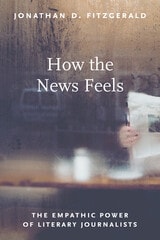
How the News Feels
The Empathic Power of Literary JournalistsJonathan D. Fitzgerald
University of Massachusetts Press, 2023
Literary journalism’s origins can be traced to the nineteenth century, when it developed alongside the era’s sentimental literature. Combining fact-based reporting with the sentimentality of popular fiction, literary journalism encouraged readers to empathize with subjects by presenting more nuanced and engaging stories than typical news coverage. While women writers were central to the formation and ongoing significance of the genre, literary journalism scholarship has largely ignored their contributions.
How the News Feels re-centers the work of a range of writers who were active from the nineteenth century until today, including Catharine Williams, Margaret Fuller, Nellie Bly, Winifred Black, Zora Neale Hurston, Joan Didion, Adrian Nicole LeBlanc, and Alexis Okeowo. Offering intimate access to their subjects’ thoughts, motivations, and yearnings, these journalists encouraged readers to empathize with society’s outcasts, from asylum inmates and murder suspects to “fallen women” and the working poor. As this carefully researched study shows, these writers succeeded in defining and developing the genre of literary journalism, with stories that inspire action, engender empathy, and narrow the gap between writer, subject, and audience.
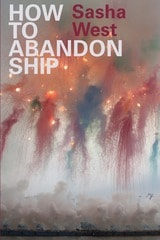
How to Abandon Ship
Sasha West
Four Way Books, 2024
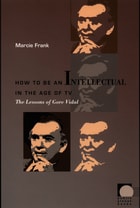
How to Be an Intellectual in the Age of TV
The Lessons of Gore VidalMarcie Frank
Duke University Press, 2005
Frank highlights the connections between Vidal’s attitudes toward TV, sex, and American politics as they have informed his literary and political writings and screen appearances. She deftly situates his public persona in relation to those of Andy Warhol, Jacqueline Susann, Mary McCarthy, Susan Sontag, and others. By describing Vidal’s shrewd maneuvering between different media, Frank suggests that his career offers a model to aspiring public intellectuals and a refutation to those who argue that electronic media have eviscerated public discourse.
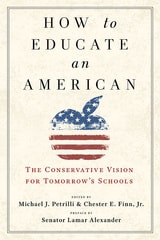
How to Educate an American
The Conservative Vision for Tomorrow's SchoolsMichael J. Petrilli
Templeton Press, 2020
Today, these gains are in retreat, ceding ground to progressive nostrums that do little to boost the skills and knowledge of young people. Far from being discouraged, however, conservatives should seize the moment to refresh their vision of quality K–12 education for today’s America. These essays by 20 leading conservative thinkers do just that.
Students, according to this vision, should complete high school with a thorough understanding of the country’s history, including gratitude for its sacrifices, respect for its achievements, and awareness of its shortcomings. They should also learn to be trustworthy stewards of a democratic republic, capable of exercising virtue and civic responsibility.
Beyond helping to form their character, schools ought to ready their pupils for careers that are productive, rewarding, and dignified. Excellent technical-training opportunities will await those not headed to a traditional college. Regardless of the paths and schools that they select, all students must come to understand that they can succeed in America if they are industrious, creative, and responsible.
Anchored in tradition yet looking towards tomorrow, How to Educate an American should be read by anyone concerned with teaching future generations to preserve the country’s heritage, embody its universal ethic, and pursue its founding ideals.
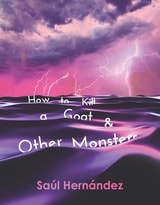
How to Kill a Goat and Other Monsters
Saúl Hernández
University of Wisconsin Press, 2024
These pages are infused with comfort, with desire, with heartache. Never absent is love, family. Hernández—hyperaware of American society’s dismissal or hatred of people who look like him—writes with a refreshing confidence, a sure knowledge of who he is and where he comes from. Transcending any particular experience, this volume will continue to resonate with multiple readings.
How to Live/What to Do
H.D.'s Cultural PoeticsAdalaide Morris
University of Illinois Press, 2002
Ever since the publication of her first H.D. essay in 1985 (included here in an expanded version), Morris has eschewed prevailing literary trends in favor of new approaches that both challenge and overpass dominant critical constructs. As she argues in this volume, the writing and, crucially, the reading of poetry is a process in which meaning is produced by the interplay of words on a page and in the ear of the reader. This quality of being not heard but overheard, composed within the body, is crucial to an appreciation of H.D.
Morris shows H.D. to be a playful linguistic innovator whose writings bear on debates in science, technology, and cinema as well as on poetry. Foremost, however, H.D. was a profound reshaper of the boundaries and possibilities of poetry, a generative form that, as this book shows, can indeed serve the cultural work of survival and resistance against the violence of modern culture.
How to Read a Moment
The American Novel and the Crisis of the PresentMathias Nilges
Northwestern University Press, 2021
“Time is a thing that grows scarcer every day,” observes one of Don DeLillo’s characters. “The future is gone,” The Baffler argues. “Where’s my hoverboard!?” a meme demands. Contemporary capitalism, a system that insists that everything happen at once, creates problems for social thought and narrative alike. After all, how does one tell the time of instantaneity? In this moment of on-demand service and instant trading, it has become difficult to imagine the future.
The novel emerged as the art form of a rapidly changing modern world, a way of telling time in its progress. Nilges argues that this historical mission is renewed today through works that understand contemporaneity as a form of time shaping that props up our material world and cultural imagination. But the contemporary American novel does not simply associate our present with a crisis of futurity. Through analyses of works by authors such as DeLillo, Jennifer Egan, Charles Yu, and Colson Whitehead, Nilges illustrates that the novel presents ways to make sense of the temporality that controls our purportedly fully contemporary world. In so doing, the novel recovers a sense of possibility and hope, forwarding a dazzling argument for its own importance today.
How to Revise a True War Story
Tim O'Brien's Process of Textual ProductionJohn K. Young
University of Iowa Press, 2017
How to Revise a True War Story is the first book-length study of O’Brien’s archival papers at the University of Texas’s Harry Ransom Center. Drawing on extensive study of drafts and other prepublication materials, as well as the multiple published versions of O’Brien’s works, John K. Young tells the untold stories behind the production of such key texts as Going After Cacciato, The Things They Carried, and In the Lake of the Woods. By reading not just the texts that have been published, but also the versions they could have been, Young demonstrates the important choices O’Brien and his editors have made about how to represent the traumas of the war in Viet Nam. The result is a series of texts that refuse to settle into a finished or stable form, just as the stories they present insist on being told and retold in new and changing ways. In their lack of textual stability, these variants across different versions enact for O’Brien’s readers the kinds of narrative volatility that is key to the American literature emerging from the war in Viet Nam. Perhaps in this case, you can tell a true war story if you just keep on revising it.
Huckleberry Finn as Idol and Target
The Functions of Criticism in Our TimeJonathan Arac
University of Wisconsin Press, 1997
If racially offensive epithets are banned on CNN air time and in the pages of USA Today, Jonathan Arac asks, shouldn’t a fair hearing be given to those who protest their use in an eighth-grade classroom? Placing Mark Twain’s comic masterpiece, Huckleberry Finn, in the context of long-standing American debates about race and culture, Jonathan Arac has written a work of scholarship in the service of citizenship.
Huckleberry Finn, Arac points out, is America’s most beloved book, assigned in schools more than any other work because it is considered both the “quintessential American novel” and “an important weapon against racism.” But when some parents, students, and teachers have condemned the book’s repeated use of the word “nigger,” their protests have been vehemently and often snidely countered by cultural authorities, whether in the universities or in the New York Times and the Washington Post. The paradoxical result, Arac contends, is to reinforce racist structures in our society and to make a sacred text of an important book that deserves thoughtful reading and criticism. Arac does not want to ban Huckleberry Finn, but to provide a context for fairer, fuller, and better-informed debates.
Arac shows how, as the Cold War began and the Civil Rights movement took hold, the American critics Lionel Trilling, Henry Nash Smith, and Leo Marx transformed the public image of Twain’s novel from a popular “boy’s book” to a central document of American culture. Huck’s feelings of brotherhood with the slave Jim, it was implied, represented all that was right and good in American culture and democracy. Drawing on writings by novelists, literary scholars, journalists, and historians, Arac revisits the era of the novel’s setting in the 1840s, the period in the 1880s when Twain wrote and published the book, and the post–World War II era, to refute many deeply entrenched assumptions about Huckleberry Finn and its place in cultural history, both nationally and globally. Encompassing discussion of Harriet Beecher Stowe, Frederick Douglass, Ralph Ellison, Archie Bunker, James Baldwin, Shelley Fisher Fishkin, and Mark Fuhrman, Arac’s book is trenchant, lucid, and timely.
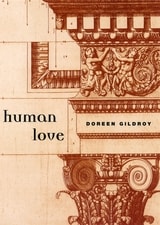
Human Love
Doreen Gildroy
University of Chicago Press, 2005
This is my kitchen.
I looked around.
You think I would have noticed before
that it was safe.
(I started to feel.)
What I wanted first
was color.
I intended terra cotta,
but the paint turned
twice as vibrant:
true orange.
(And then I became used to
boldness.)
Doreen Gildroy's second book of poems is a marvel of lyric exactitude. On the surface a book about a man and a woman trying to conceive a child, Human Love is more deeply an attempt to focus on the process of human creativity in general and, ultimately, the desire to remake the world and self so that both will be more hospitable to new life.
Here, the physical processes of modern fertility treatments become a means through which the self experiences the world with grace and love; the wished-for child also begets a new relationship between man and woman. Though dark at times, Human Love never surrenders hope, and Gildroy never lets the muted music of her verse succumb to despair. A meditation on the body as a source of joy, anxiety, and regeneration, this collection extends the capacity of the lyric to articulate human feeling while considering the complications of love, both human and divine, and the distinctions between them.
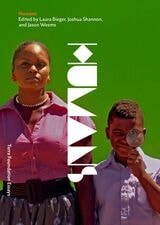
Humans
Edited by Laura Bieger, Joshua Shannon, and Jason Weems
Terra Foundation for American Art, 2021
Humans are organisms, but “the human being” is a term referring to a complicated, self-contradictory, and historically evolving set of concepts and practices. Humans explores competing versions, constructs, and ideas of the human being that have figured prominently in the arts of the United States. These essays consider a range of artworks from the colonial period to the present, examining how they have reflected, shaped, and modeled ideas of the human in American culture and politics. The book addresses to what extent artworks have conferred more humanity on some human beings than others, how art has shaped ideas about the relationships between humans and other beings and things, and in what ways different artistic constructions of the human being evolved, clashed, and intermingled over the course of American history. Humans both tells the history of a concept foundational to US civilization and proposes new means for its urgently needed rethinking.
Hurricane Lamp
Turner Cassity
University of Chicago Press, 1985
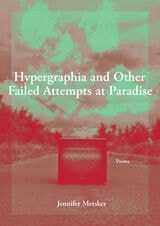
Hypergraphia and Other Failed Attempts at Paradise
Jennifer Metsker
New Issues Poetry and Prose, 2021
This collection of poetry explores the disruptive state of psychosis, with all its insights and follies, and the challenges of living life after a departure from the self. These poems reach for an understanding of the ecstasy and tragedy of madness through both lyric and prose forms that mimic the sublime state of mania through their engagement with language. Ordinary life becomes strange in these poems, which are playful and humorous at times and dark at others, as they seek resolution to the question of what happens when the mind overthrows the body.