Results by title
5448 books match the query 'History and criticism' and 153 start with h
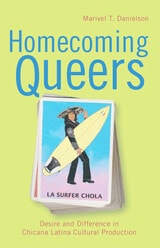
Homecoming Queers
Desire and Difference in Chicana Latina Cultural ProductionDanielson, Marivel T
Rutgers University Press, 2009
Spanning multiple genres and forms, and including scholarly theory alongside performances, films, narratives, and testimonials, Homecoming Queers leads readers along a crucial path toward understanding and overcoming the silences that previously existed across these fields.
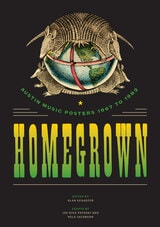
Homegrown
Austin Music Posters 1967 to 1982Edited by Alan Schaefer with essays by Joe Nick Patoski and Nels Jacobson
University of Texas Press, 2015
Before Austin became the “live music capital of the world” and attracted tens of thousands of music fans, it had a vibrant local music scene that spanned late sixties psychedelic and avant-garde rock to early eighties punk. Venues such as the Vulcan Gas Company and the Armadillo World Headquarters hosted both innovative local musicians and big-name touring acts. Poster artists not only advertised the performances—they visually defined the music and culture of Austin during this pivotal period. Their posters promoted an alternative lifestyle that permeated the city and reflected Austin’s transformation from a sleepy university town into a veritable oasis of underground artistic and cultural activity in the state of Texas.
This book presents a definitive survey of music poster art produced in Austin between 1967 and 1982. It vividly illustrates four distinct generations of posters—psychedelic art of the Vulcan Gas Company, early works from the Armadillo World Headquarters, an emerging variety of styles from the mid-1970s, and the radical visual aesthetic of punk—produced by such renowned artists as Gilbert Shelton, Jim Franklin, Kerry Awn, Micael Priest, Guy Juke, Ken Featherston, NOXX, and Danny Garrett. Setting the posters in context, Texas music and pop-culture authority Joe Nick Patoski details the history of music posters in Austin, and artist and poster art scholar Nels Jacobson explores the lives and techniques of the artists.
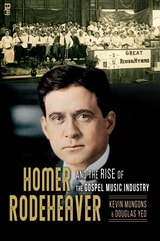
Homer Rodeheaver and the Rise of the Gospel Music Industry
Kevin Mungons and Douglas Yeo
University of Illinois Press, 2021
Homer Rodeheaver merged evangelical hymns and African American spirituals with popular music to create a potent gospel style. Kevin Mungons and Douglas Yeo examine his enormous influence on gospel music against the backdrop of Christian music history and Rodeheaver's impact as a cultural and business figure. Rodeheaver rose to fame as the trombone-playing song leader for evangelist Billy Sunday. As revivalism declined after World War I, Rodeheaver leveraged his place in America's newborn celebrity culture to start the first gospel record label and launch a nationwide radio program. His groundbreaking combination of hymnal publishing and recording technology helped define the early Christian music industry. In his later years, he influenced figures like Billy Graham and witnessed the music's split into southern gospel and black gospel.
Clear-eyed and revealing, Homer Rodeheaver and the Rise of the Gospel Music Industry is an overdue consideration of a pioneering figure in American music.
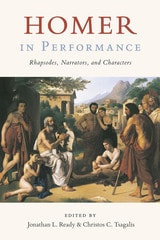
Homer in Performance
Rhapsodes, Narrators, and CharactersEdited by Jonathan L. Ready and Christos C. Tsagalis
University of Texas Press, 2018
Before they were written down, the poems attributed to Homer were performed orally, usually by rhapsodes (singers/reciters) who might have traveled from city to city or enjoyed a position in a wealthy household. Even after the Iliad and the Odyssey were committed to writing, rhapsodes performed the poems at festivals, often competing against each other. As they recited the epics, the rhapsodes spoke as both the narrator and the characters. These different acts—performing the poem and narrating and speaking in character within it—are seldom studied in tandem. Homer in Performance breaks new ground by bringing together all of the speakers involved in the performance of Homeric poetry: rhapsodes, narrators, and characters.
The first part of the book presents a detailed history of the rhapsodic performance of Homeric epic from the Archaic to the Roman Imperial periods and explores how performers might have shaped the poems. The second part investigates the Homeric narrators and characters as speakers and illuminates their interactions. The contributors include scholars versed in epigraphy, the history of art, linguistics, and performance studies, as well as those capable of working with sources from the ancient Near East and from modern Russia. This interdisciplinary approach makes the volume useful to a spectrum of readers, from undergraduates to veteran professors, in disciplines ranging from classical studies to folklore.
Homer
The Very IdeaJames I. Porter
University of Chicago Press, 2021
Homer, the great poet of the Iliad and the Odyssey, is revered as a cultural icon of antiquity and a figure of lasting influence. But his identity is shrouded in questions about who he was, when he lived, and whether he was an actual person, a myth, or merely a shared idea. Rather than attempting to solve the mystery of this character, James I. Porter explores the sources of Homer’s mystique and their impact since the first recorded mentions of Homer in ancient Greece.
Homer: The Very Idea considers Homer not as a man, but as a cultural invention nearly as distinctive and important as the poems attributed to him, following the cultural history of an idea and of the obsession that is reborn every time Homer is imagined. Offering novel readings of texts and objects, the book follows the very idea of Homer from his earliest mentions to his most recent imaginings in literature, criticism, philosophy, visual art, and classical archaeology.
Homeric Questions
By Gregory Nagy
University of Texas Press, 1996
A Choice Outstanding Academic Book
The "Homeric Question" has vexed Classicists for generations. Was the author of the Iliad and the Odyssey a single individual who created the poems at a particular moment in history? Or does the name "Homer" hide the shaping influence of the epic tradition during a long period of oral composition and transmission?
In this innovative investigation, Gregory Nagy applies the insights of comparative linguistics and anthropology to offer a new historical model for understanding how, when, where, and why the Iliad and the Odyssey were ultimately preserved as written texts that could be handed down over two millennia. His model draws on the comparative evidence provided by living oral epic traditions, in which each performance of a song often involves a recomposition of the narrative.
This evidence suggests that the written texts emerged from an evolutionary process in which composition, performance, and diffusion interacted to create the epics we know as the Iliad and the Odyssey. Sure to challenge orthodox views and provoke lively debate, Nagy's book will be essential reading for all students of oral traditions.
Homeric Responses
By Gregory Nagy
University of Texas Press, 2003
The Homeric Iliad and Odyssey are among the world's foremost epics. Yet, millennia after their composition, basic questions remain about them. Who was Homer—a real or an ideal poet? When were the poems composed—at a single point in time, or over centuries of composition and performance? And how were the poems committed to writing? These uncertainties have been known as The Homeric Question, and many scholars, including Gregory Nagy, have sought to solve it.
In Homeric Responses, Nagy presents a series of essays that further elaborate his theories regarding the oral composition and evolution of the Homeric epics. Building on his previous work in Homeric Questions and Poetry as Performance: Homer and Beyond and responding to some of his critics, he examines such issues as the importance of performance and the interaction between audience and poet in shaping the poetry; the role of the rhapsode (the performer of the poems) in the composition and transmission of the poetry; the "irreversible mistakes" and cross-references in the Iliad and Odyssey as evidences of artistic creativity; and the Iliadic description of the shield of Achilles as a pointer to the world outside the poem, the polis of the audience.
Homosexual Desire in Shakespeare's England
A Cultural PoeticsBruce R. Smith
University of Chicago Press, 1994
"The best single analysis of the homoerotic element in Renaissance English literature."—Keith Thomas, New York Review of Books
"Smith's lucid and subtle book offer[s] a poetics of homosexual desire. . . . Its scholarship, impressively broad and deftly deployed, aims to further a serious social purpose: the redemptive location of homosexual desire in history and the recuperation for our own time, through an understanding of its discursive embodiments, of that desire's changing imperatives and parameters."—Terence Hawkes, Times Literary Supplement
"The great strength of Bruce Smith's book is that it does not sidestep the complex challenge of engaging in the sexual politics of the present while attending to the resistant discourses and practices of Renaissance England. Homosexual Desire in Shakespeare's England demonstrates how a commitment to the present opens up our understanding of the past."—Peter Stallybrass, Shakespeare Quarterly
"A major contribution to the understanding of homosexuality in Renaissance England and by far the best and most comprehensive account yet offered of the homoeroticism that suffuses Renaissance literature."—Claude J. Summers, Journal of Homosexuality
Homosexual Tradition in American Poetry
Robert K. Martin
University of Iowa Press, 1998
Homosexuality in Cold War America
Resistance and the Crisis of MasculinityRobert J. Corber
Duke University Press, 1997
By exploring the representation of gay men in film noir, Corber suggests that even as this Hollywood genre reinforced homophobic stereotypes, it legitimized the gay male "gaze." He emphasizes how film noir’s introduction of homosexual characters countered the national "project" to render gay men invisible, and marked a deep subversion of the Cold War mentality. Corber then considers the work of gay male writers Tennessee Williams, Gore Vidal, and James Baldwin, demonstrating how these authors declined to represent homosexuality as a discrete subculture and instead promoted a model of political solidarity rooted in the shared experience of oppression. Homosexuality in Cold War America reveals that the ideological critique of the dominant culture made by gay male authors of the 1950s laid the foundation for the gay liberation movement of the following decade.

Hong Kong Connections
Transnational Imagination in Action CinemaMeaghan Morris, Siu-Leung Li, and Stephen Chan Ching-kiu, eds.
Duke University Press, 2005
Hong Kong Connections brings leading film scholars together to explore the circulation of Hong Kong cinema in Japan, Korea, India, Australia, France, and the United States, as well as its links with Taiwan, Singapore, and the Chinese mainland. In the process, this collection examines diverse cultural contexts for action cinema’s popularity and the problems involved in the transnational study of globally popular forms, suggesting that in order to grasp the history of Hong Kong action cinema’s influence we need to bring out the differences as well as the links that constitute popularity.
Contributors. Nicole Brenez, Stephen Chan Ching-kiu, Dai Jinhua, David Desser, Laleen Jayamanne, Kim Soyoung, Siu Leung Li, Adrian Martin, S. V. Srinivas, Stephen Teo, Valentina Vitali, Paul Willemen, Rob Wilson, Wong Kin-yuen, Kinnia Yau Shuk-ting, Yung Sai-shing
Hoodlum Movies
Seriality and the Outlaw Biker Film Cycle, 1966-1972Stanfield, Peter
Rutgers University Press, 2018
Hope And Dread In Montana Literature
Ken Egan
University of Nevada Press, 2003
This literary survey from a third-generation Montanan includes a thoughtful discussion on the now infamous events of the mid- to late-nineties. The rich literary tradition of Montana, contends author Ken Egan Jr., reflects a catastrophic vision of the West that shows the "horrors of domination" and "the foolish and destructive habits of the imperial heart." Since the 1860s, Montana’s writers have depicted struggles for survival in the state’s dramatic landscape, and for decency in a region characterized by the headlong exploitation of both natural and human resources.
Hope Isn't Stupid
Utopian Affects in Contemporary American LiteratureSean Austin Grattan
University of Iowa Press, 2017
Novelists William S. Burroughs, Dennis Cooper, John Darnielle, Toni Morrison, Thomas Pynchon, and Colson Whitehead are deeply invested in the creation of utopian possibilities. A return to reading the utopian wager in literature from the postmodern to the contemporary period reinvigorates critical forms that imagine reading as an act of communication, friendship, solace, and succor. These forms also model richer modes of belonging than the diluted and impoverished ones on display in the neoliberal present. Simultaneously, by linking utopian studies and affect studies, Grattan’s work resists the tendency for affect studies to codify around the negative, instead reorienting the field around the messy, rich, vibrant, and ambivalent affective possibilities of the world. Hope Isn’t Stupid insists on the centrality of utopia not only in American literature, but in American life as well.
Horace between Freedom and Slavery
The First Book of <i>Epistles</i>Stephanie McCarter
University of Wisconsin Press, 2015
She argues that, although Horace commences the Epistles with an uncompromising insistence on freedom, he ultimately adopts a middle course. She shows how Horace explores in the poems the application of moderate freedom first to philosophy, then to friendship, poetry, and place. Rather than rejecting philosophical masters, Horace draws freely on them without swearing permanent allegiance to any—a model for compromise that allows him to enjoy poetic
renown and friendships with the city's elite while maintaining a private sphere of freedom. This moderation and adaptability, McCarter contends, become the chief ethical lessons that Horace learns for himself and teaches to others. She reads Horace's reconfiguration of freedom as a political response to the transformations of the new imperial age.
Horizon, Sea, Sound
Caribbean and African Women's Cultural Critiques of NationAndrea A. Davis
Northwestern University Press, 2022
In Horizon, Sea, Sound: Caribbean and African Women’s Cultural Critiques of Nation, Andrea Davis imagines new reciprocal relationships beyond the competitive forms of belonging suggested by the nation-state. The book employs the tropes of horizon, sea, and sound as a critique of nation-state discourses and formations, including multicultural citizenship, racial capitalism, settler colonialism, and the hierarchical nuclear family.
Drawing on Tina Campt’s discussion of Black feminist futurity, Davis offers the concept future now, which is both central to Black freedom and a joint social justice project that rejects existing structures of white supremacy. Calling for new affiliations of community among Black, Indigenous, and other racialized women, and offering new reflections on the relationship between the Caribbean and Canada, she articulates a diaspora poetics that privileges our shared humanity. In advancing these claims, Davis turns to the expressive cultures (novels, poetry, theater, and music) of Caribbean and African women artists in Canada, including work by Dionne Brand, M. NourbeSe Philip, Esi Edugyan, Ramabai Espinet, Nalo Hopkinson, Amai Kuda, and Djanet Sears. Davis considers the ways in which the diasporic characters these artists create redraw the boundaries of their horizons, invoke the fluid histories of the Caribbean Sea to overcome the brutalization of plantation histories, use sound to enter and reenter archives, and shapeshift to survive in the face of conquest. The book will interest readers of literary and cultural studies, critical race theories, and Black diasporic studies.
Horizons of Enchantment
Essays in the American ImaginaryLene M. Johannessen
Dartmouth College Press, 2011
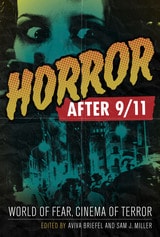
Horror after 9/11
World of Fear, Cinema of TerrorEdited by Aviva Briefel and Sam J. Miller
University of Texas Press, 2011
Horror films have exploded in popularity since the tragic events of September 11, 2001, many of them breaking box-office records and generating broad public discourse. These films have attracted A-list talent and earned award nods, while at the same time becoming darker, more disturbing, and increasingly apocalyptic. Why has horror suddenly become more popular, and what does this say about us? What do specific horror films and trends convey about American society in the wake of events so horrific that many pundits initially predicted the death of the genre? How could American audiences, after tasting real horror, want to consume images of violence on screen?
Horror after 9/11 represents the first major exploration of the horror genre through the lens of 9/11 and the subsequent transformation of American and global society. Films discussed include the Twilight saga; the Saw series; Hostel; Cloverfield; 28 Days Later; remakes of The Texas Chainsaw Massacre, Dawn of the Dead, and The Hills Have Eyes; and many more. The contributors analyze recent trends in the horror genre, including the rise of 'torture porn,' the big-budget remakes of classic horror films, the reinvention of traditional monsters such as vampires and zombies, and a new awareness of visual technologies as sites of horror in themselves. The essays examine the allegorical role that the horror film has held in the last ten years, and the ways that it has been translating and reinterpreting the discourses and images of terror into its own cinematic language.
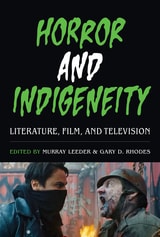
Horror and Indigeneity
Literature, Film, and TelevisionEdited by Murray Leeder and Gary D. Rhodes
University of Texas Press, 2026
A collection of essays about Indigeneity and horror in cinema, literature, and beyond.
How did Indigeneity come to be horrifying? Think of the “Indian burial ground” trope, a staple of 1970s horror cinema, not to mention decades of Western films and fictions that made “savage Indians” the face of fear in popular culture. Can horror do something else in the hands of Indigenous people? Creators such as Eden Robinson and Jeff Barnaby have self-consciously turned to horror to tell new kinds of stories, stories that question who is a monster and what constitutes the monstrous.
Horror and Indigeneity explores representations of Indigenous people in settler horror texts and in the growing corpus of horror by Indigenous writers and filmmakers. Widely spanning time periods and media, the contributors to this edited volume address themes such as cannibalism, eco-horror, historical trauma, and contemporary antiracism as they relate to classical horror cinema and recent works such as The Dead Can’t Dance, Lovecraft Country, and Stephen Graham Jones’s The Only Good Indians. Also featuring interviews with Jones and director T. J. Cuthand, Horror and Indigeneity rethinks the terror of the Other in potent and provocactive terms.
Horror to the Extreme
Changing Boundaries in Asian CinemaEdited by Jinhee Choi and Mitsuyo Wada-Marciano
Hong Kong University Press, 2009
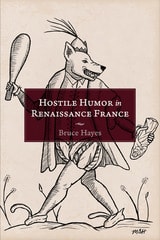
Hostile Humor in Renaissance France
Bruce Hayes
University of Delaware Press, 2020
This book is also freely available online as an open access digital edition here: https://bibliopen.org/9781644531792. The open access edition is funded by the National Endowment for the Humanities.
In sixteenth-century France, the level of jokes, irony, and ridicule found in pamphlets and plays became aggressively hostile. In Hostile Humor in Renaissance France, Bruce Hayes investigates this period leading up to the French Wars of Religion, when a deliberately harmful and destructive form of satire appeared.
This study examines both pamphlets and plays to show how this new form of humor emerged that attacked religious practices and people in ways that forever changed the nature of satire and religious debate in France. Hayes explores this phenomenon in the context of the Catholic and Protestant conflict to reveal new insights about the society that both exploited and vilified this kind of satire.
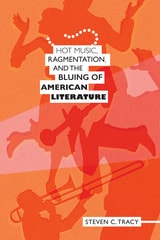
Hot Music, Ragmentation, and the Bluing of American Literature
Steven C. Tracy
University of Alabama Press, 2015
Exploring the deep and enduring relationship between music and literature, Hot Music, Ragmentation, and the Bluing of American Literature examines the diverse ways in which African American “hot” music influenced American culture—particularly literature—in early twentieth century America. Steven C. Tracy provides a history of the fusion of African and European elements that formed African American “hot” music, and considers how terms like ragtime, jazz, and blues developed their own particular meanings for American music and society. He draws from the fields of literature, literary criticism, cultural anthropology, American studies, and folklore to demonstrate how blues as a musical and poetic form has been a critical influence on American literature.
Hot Music, Ragmentation, and the Bluing of American Literature begins by highlighting instances in which American writers, including Herman Melville, Stephen Crane, and Gertrude Stein, use African American culture and music in their work, and then characterizes the social context of the Jazz Age, discussing how African American music reflected the wild abandon of the time. Tracy focuses on how a variety of schools of early twentieth century writers, from modernists to members of the Harlem Renaissance to dramatists and more, used their connections with “hot” music to give their own work meaning.
Tracy’s extensive and detailed understanding of how African American “hot” music operates has produced a fresh and original perspective on its influence on mainstream American literature and culture. An experienced blues musician himself, Tracy draws on his performance background to offer an added dimension to his analysis. Where another blues scholar might only analyze blues language, Tracy shows how the language is actually performed.
Hot Music, Ragmentation, and the Bluing of American Literature is the first book to offer such a refreshingly broad interdisciplinary vision of the influence of African American “hot” music on American literature. It is an essential addition to the library of serious scholars of American and African American literature and culture and blues aficionados alike.
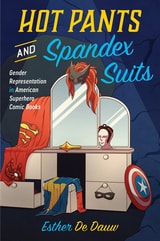
Hot Pants and Spandex Suits
Gender Representation in American Superhero Comic BooksEsther De Dauw
Rutgers University Press, 2021
Hot Pants and Spandex Suits offers a far-reaching look at how masculinity and femininity have been represented in American superhero comics, from the Golden and Silver Ages to the Modern Age. Scholar Esther De Dauw contrasts the bulletproof and musclebound phallic bodies of classic male heroes like Superman, Captain America, and Iron Man with the figures of female counterparts like Wonder Woman and Supergirl, who are drawn as superhumanly flexible and plastic. It also examines the genre’s ambivalent treatment of LGBTQ representation, from the presentation of gay male heroes Wiccan and Hulkling as a model minority couple to the troubling association of Batwoman’s lesbianism with monstrosity. Finally, it explores the intersection between gender and race through case studies of heroes like Luke Cage, Storm, and Ms. Marvel.
Hot Pants and Spandex Suits is a fascinating and thought-provoking consideration of what superhero comics teach us about identity, embodiment, and sexuality.
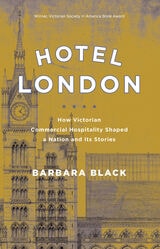
Hotel London
How Victorian Commercial Hospitality Shaped a Nation and Its StoriesBarbara Black
The Ohio State University Press, 2019
Incorporating the works of Oscar Wilde, Henry James, Wilkie Collins, Arnold Bennett, Florence Marryat, and Marie Belloc Lowndes, as well as contemporary depictions of the hotels in Mad Men,American Horror Story, and The Grand Budapest Hotel, Black examines how the hotel supported a corporate identity that would ultimately assist in the rise of modern capitalist structures and the middle class. In this way, Hotel London exposes the aggravations of class stratifications through the operations of status inside hotel life, giving a unique perspective on Victorian London that could only come from the stories of a hotel.

Hound Dog
A Song by Big Mama Thornton and Interpreted by Elvis Presley and OthersEric Weisbard
Duke University Press, 2023
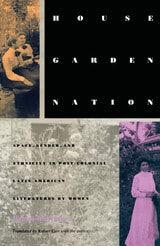
House/Garden/Nation
Space, Gender, and Ethnicity in Post-Colonial Latin American Literatures by WomenIleana Yamileth Rodriguez
Duke University Press, 1994
In House/Garden/Nation the narratives of five Centro-Caribbean writers illustrate these times of transition: Dulce María Loynáz, from colonial rule to independence in Cuba; Jean Rhys, from colony to commonwealth in Dominica; Simone Schwarz-Bart, from slave to free labor in Guadeloupe; Gioconda Belli, from oligarchic capitalism to social democratic socialism in Nicaragua; and Teresa de la Parra, from independence to modernity in Venezuela. Focusing on the nation as garden, hacienda, or plantation, Rodríguez shows us these writers debating the predicament of women under nation formation from within the confines of marriage and home.
In reading these post-colonial literatures by women facing the crisis of transition, this study highlights urgent questions of destitution, migration, exile, and inexperience, but also networks of value allotted to women: beauty, clothing, love. As a counterpoint on issues of legality, policy, and marriage, Rodriguez includes a chapter on male writers: José Eustacio Rivera, Omar Cabezas, and Romulo Gallegos. Her work presents a sobering picture of women at a crossroads, continually circumscribed by history and culture, writing their way.
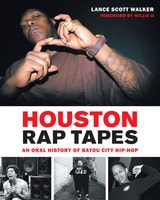
Houston Rap Tapes
An Oral History of Bayou City Hip-HopBy Lance Scott Walker, Foreword by Willie D
University of Texas Press, 2018
The neighborhoods of Fifth Ward, Fourth Ward, Third Ward, and the Southside of Houston, Texas, gave birth to Houston rap, a vibrant music scene that has produced globally recognized artists such as Geto Boys, DJ Screw, Pimp C and Bun B of UGK, Fat Pat, Big Moe, Z-Ro, Lil’ Troy, and Paul Wall. Lance Scott Walker and photographer Peter Beste spent a decade documenting Houston’s scene, interviewing and photographing the people—rappers, DJs, producers, promoters, record label owners—and places that give rap music from the Bayou City its distinctive character. Their collaboration produced the books Houston Rap and Houston Rap Tapes.
This second edition of Houston Rap Tapes amplifies the city’s hip-hop history through new interviews with Scarface, Slim Thug, Lez Moné, B L A C K I E, Lil’ Keke, and Sire Jukebox of the original Ghetto Boys. Walker groups the interviews into sections that track the different eras and movements in Houston rap, with new photographs and album art that reveal the evolution of the scene from the 1970s to today’s hip-hop generation. The interviews range from the specifics of making music to the passions, regrets, memories, and hopes that give it life. While offering a view from some of Houston’s most marginalized areas, these intimate conversations lay out universal struggles and feelings. As Willie D of Geto Boys writes in the foreword, “Houston Rap Tapes flows more like a bunch of fellows who haven’t seen each other for ages, hanging out on the block reminiscing, rather than a calculated literary guide to Houston’s history.”
How Comics Travel
Publication, Translation, Radical LiteraciesKatherine Kelp-Stebbins
The Ohio State University Press, 2022
Honorable Mention, 2023 CSS Charles Hatfield Book Prize
In How Comics Travel: Publication, Translation, Radical Literacies, Katherine Kelp-Stebbins challenges the clichéd understanding of comics as a “universal” language, circulating without regard for cultures or borders. Instead, she develops a new methodology of reading for difference. Kelp-Stebbins’s anticolonial, feminist, and antiracist analytical framework engages with comics as sites of struggle over representation in a diverse world. Through comparative case studies of Metro, Tintin, Persepolis, and more, she explores the ways in which graphic narratives locate and dislocate readers in every phase of a transnational comic’s life cycle according to distinct visual, linguistic, and print cultures. How Comics Travel disengages from the constrictive pressures of nationalism and imperialism, both in comics studies and world literature studies more broadly, to offer a new vision of how comics depict and enact the world as a transcultural space.
How Did Poetry Survive?
The Making of Modern American VerseJohn Timberman Newcomb
University of Illinois Press, 2013
This book traces the emergence of modern American poetry at the turn of the nineteenth century. With a particular focus on four "little magazines"--Poetry, The Masses, Others, and The Seven Arts--John Timberman Newcomb shows how each advanced ambitious agendas combining urban subjects, stylistic experimentation, and progressive social ideals. While subsequent literary history has favored the poets whose work made them distinct--individuals singled out usually on the basis of a novel technique--Newcomb provides a denser, richer view of the history that hundreds of poets made.
How Do I Know Thee?
Theatrical and Narrative Cognition in Seventeenth-Century FranceRichard E. Goodkin
Northwestern University Press, 2015
The classical period in France presents a particularly lively battleground for the transition between oral-visual culture, on the one hand, and print culture on the other. The former depended on learning from sources of knowledge directly, in their presence, in a manner analogous to theatrical experience. The latter became characterized by the distance and abstraction of reading. How Do I Know Thee? explores the ways in which literature, philosophy, and psychology approach social cognition, or how we come to know others. Richard E. Goodkin describes a central opposition between what he calls “theatrical cognition” and “narrative cognition,” drawing both on scholarship on literary genre and mode, and also on the work of a number of philosophers and psychologists, in particular Descartes’s theory of cognition, Freudian psychoanalysis, mid‑twentieth‑century behaviorism, and the field of cognitive science. The result is a study that will be of interest not only to students of the classical period but also to those in the corresponding disciplines.
How Long Have You Been With Us?
Essays on PoetryKhaled Mattawa
University of Michigan Press, 2016
A volume in the Poets on Poetry series, which collects critical works by contemporary poets, gathering together the articles, interviews, and book reviews by which they have articulated the poetics of a new generation.
“Like the myriad companions and comrades that he summons from their exile, Khaled Mattawa is himself a ‘poet-stranger.’ In the essays, ‘written in a poet’s prose,’ collected in How Long Have You Been With Us, Mattawa evokes a powerful amalgam of the personal intimacy of the solitary and the political challenge of solidarity.”
—Barbara Harlow, University of Texas at Austin
“If you’ve read about exile, you’ve read about Brodsky and Milosz—just as, if you’ve read about translation, you’ve read about Walter Benjamin and George Steiner. While Khaled Mattawa has mastered these masters, his essays about world literature serve as a tour of the rest of the world. He introduces you to the writers you haven’t heard of but should from contemporary Libya and colonial South Asia to Latin America and China. When Mattawa invokes Saadi Youssef or Rabinidrath Tagore, Mohja Kahf or Toru Dutt, the effect is to deprovincialize American literature.”
—Ken Chen, The Asian American Writers’ Workshop
Khaled Mattawa, an American poet of Libyan origin, explores various dynamic developments shaping American poetry as it is being practiced today. Arising from an incredibly diverse range personal backgrounds, lyric traditions, and even languages, American poetry is transforming into a truly international form. Mattawa, who also translates Arabic poetry into American English and American poetry into Arabic, explores the poetics and politics of cross-cultural exchange and literary translation that fostered such transformation. The essays in this collection also shed light on Mattawa’s development as a poet and provide numerous portraits of the poets who helped shaped his poetry.
How Myth Became History
Texas Exceptionalism in the BorderlandsJohn E. Dean
University of Arizona Press, 2016
How Myth Became History explores the formation of national, ethnic, racial, and class identities in the Texas borderlands. Examining Mexican, Mexican American, and Anglo Texan narratives as competing representations of the period spanning the Texas Declaration of Independence to the Mexican Revolution, John E. Dean traces the creation and development of border subjects and histories. Dean uses history, historical fiction, postcolonial theory, and U.S.-Mexico border theory to disrupt “official” Euro-American histories.
Dean argues that the Texas-Mexico borderlands complicate national, ethnic, and racial differences. He makes this clear in his discussion of the Mexican Revolution, when many Mexican Americans who saw themselves as Mexicans fought for competing revolutionary factions in Mexico, while others who saw themselves as U.S. Americans tried to distance themselves from Mexico altogether.
Analyzing literary representations of the border, How Myth Became History emphasizes the heterogeneity of border communities and foregrounds narratives that have often been occluded, such as Mexican-Indio histories. The border, according to Dean, still represents a contested geographical entity that destabilizes ethnic and racial groups. Border dynamics provide critical insight into the vexed status of the contemporary Texas-Mexico divide and point to broader implications for national and transnational identity.
How Not to Make a Human
Pets, Feral Children, Worms, Sky Burial, OystersKarl Steel
University of Minnesota Press, 2019
From pet keeping to sky burials, a posthuman and ecocritical interrogation of and challenge to human particularity in medieval texts
Mainstream medieval thought, like much of mainstream modern thought, habitually argued that because humans alone had language, reason, and immortal souls, all other life was simply theirs for the taking. But outside this scholarly consensus teemed a host of other ways to imagine the shared worlds of humans and nonhumans. How Not to Make a Human engages with these nonsystematic practices and thought to challenge both human particularity and the notion that agency, free will, and rationality are the defining characteristics of being human.
Recuperating the Middle Ages as a lost opportunity for decentering humanity, Karl Steel provides a posthuman and ecocritical interrogation of a wide range of medieval texts. Exploring such diverse topics as medieval pet keeping, stories of feral and isolated children, the ecological implications of funeral practices, and the “bare life” of oysters from a variety of disanthropic perspectives, Steel furnishes contemporary posthumanists with overlooked cultural models to challenge human and other supremacies at their roots.
By collecting beliefs and practices outside the mainstream of medieval thought, How Not to Make a Human connects contemporary concerns with ecology, animal life, and rethinkings of what it means to be human to uncanny materials that emphasize matters of death, violence, edibility, and vulnerability.
How Russia Learned to Write
Literature and the Imperial Table of RanksIrina Reyfman
University of Wisconsin Press, 2021
Irina Reyfman illuminates the surprisingly diverse effects of the Table of Ranks on writers, their work, and literary culture in Russia. From Sumarokov and Derzhavin in the eighteenth century through Pushkin, Gogol, Dostoevsky, and poets serving in the military in the nineteenth, state service affected the self-images of writers and the themes of their creative output. Reyfman also notes its effects on Russia’s atypical course in the professionalization and social status of literary work.
How Soon Is Now?
Medieval Texts, Amateur Readers, and the Queerness of TimeCarolyn Dinshaw
Duke University Press, 2012
Whether discussing Victorian men of letters who parodied the Book of John Mandeville, a fictionalized fourteenth-century travel narrative, or Hope Emily Allen, modern coeditor of the early-fifteenth-century Book of Margery Kempe, Dinshaw argues that these and other medievalists outside the academy inhabit different temporalities than modern professionals operating according to the clock. How Soon Is Now? clears space for amateurs, hobbyists, and dabblers who approach medieval worlds from positions of affect and attachment, from desires to build other kinds of worlds. Unruly, untimely, they urge us toward a disorderly and asynchronous collective.
How Women Must Write
Inventing the Russian Woman PoetOlga Peters Hasty
Northwestern University Press, 2019
In How Women Must Write, Olga Peters Hasty takes us from an emphatically male Romantic age to a modernist period preoccupied with women’s creativity but also with its containment. In late nineteenth and early twentieth-century Russia, the woman poet was invented: by women poets themselves, by readers who projected gender biases into their poems, and by male poets who wrote posing as women. Examining Karolina Pavlova and Evdokiia Rostopchina, who inspired those writing after them, as well as two women invented by men, Cherubina de Gabriak and Briusov’s Nelli, and challenges to male authority by Marina Tsvetaeva and Anna Akhmatova, this book shows women as purposeful actors realizing themselves creatively and advancing the woman poet’s cause. It will appeal to the general reader and to specialists in Russian literature, women’s studies, and cultural history.
How a City Sings from November to November
Lorca on MusicFederico García Lorca
Swan Isle Press, 2026
“Yo ante todo, soy músico,” Federico García Lorca once remarked: “Before all else, I am a musician.” Whether seated at the piano, collecting folksongs on his travels through Spain, or composing music for his plays, few poets have lived music so deeply. For Lorca, songs were “living creatures.” How a City Sings from November to November: Lorca on Music brings together for the first time in English the poet’s writing on music and musicians. In these pages, through lectures, letters, and interviews, Lorca celebrates the musical seasons of Granada, “a city enclosed by mountains and made for music”; the sources of cante jondo (flamenco deep song); the haunting melodies of Spanish cradle songs; and the dance of La Argentina. He describes learning the guitar, staging Spanish ballads in Buenos Aires, and listening to spirituals in New York. In bed with a fever, he compares it to a “delicate tempo rubato of Chopin.” Based on recent archival research, edited and newly translated by noted Lorca scholar Christopher Maurer, this collection offers an intricate and enjoyable counterpoint to Lorca’s poetry and theater.
How the News Feels
The Empathic Power of Literary JournalistsJonathan D. Fitzgerald
University of Massachusetts Press, 2023
Literary journalism’s origins can be traced to the nineteenth century, when it developed alongside the era’s sentimental literature. Combining fact-based reporting with the sentimentality of popular fiction, literary journalism encouraged readers to empathize with subjects by presenting more nuanced and engaging stories than typical news coverage. While women writers were central to the formation and ongoing significance of the genre, literary journalism scholarship has largely ignored their contributions.
How the News Feels re-centers the work of a range of writers who were active from the nineteenth century until today, including Catharine Williams, Margaret Fuller, Nellie Bly, Winifred Black, Zora Neale Hurston, Joan Didion, Adrian Nicole LeBlanc, and Alexis Okeowo. Offering intimate access to their subjects’ thoughts, motivations, and yearnings, these journalists encouraged readers to empathize with society’s outcasts, from asylum inmates and murder suspects to “fallen women” and the working poor. As this carefully researched study shows, these writers succeeded in defining and developing the genre of literary journalism, with stories that inspire action, engender empathy, and narrow the gap between writer, subject, and audience.
How to Draw a Circle
On Reading and WritingDan Beachy-Quick
University of Michigan Press, 2024
How to Make It as a Woman
Collective Biographical History from Victoria to the PresentAlison Booth
University of Chicago Press, 2004
Beginning in the fifteenth century with Christine de Pizan, Alison Booth traces the long tradition of this genre, investigating the varied types and stories most often grouped together in illustrated books designed for entertainment and instruction. She claims that these group biographies have been instrumental in constructing modern subjectivities as well as relations among classes, races, and nations.
From Joan of Arc to Virginia Woolf, Booth examines a host of models of womanhood—both bad and good. Incorporating a bibliography that includes more than 900 all-female collections published in English between 1830 and 1940, Booth uses collective biographies to decode the varied advice on how to make it as a woman.
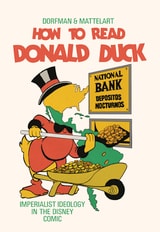
How to Read Donald Duck
Imperialist Ideology in the Disney ComicAriel Dorfman
Pluto Press, 2020
First published in 1971, How to Read Donald Duck shocked readers by revealing how capitalist ideology operates in our most beloved cartoons. Having survived bonfires, impounding and being dumped into the ocean by the Chilean army, this controversial book is once again back on our shelves.
Written and published during the blossoming of Salvador Allende's revolutionary socialism in Chile, the book examines how Disney products reflect capitalist ideology, and are active agents working in this ideology’s favor. Focusing on the hapless mice and ducks of Disney, curiously parentless, marginalized and always short of cash, Ariel Dorfman and Armand Mattelart expose how these characters established hegemonic ideas about capital, race, gender and the relationship between developed countries and the Third World.
A devastating indictment of a media giant, a document of twentieth-century political upheaval, and a reminder of the dark undercurrent of pop culture, How to Read Donald Duck is once again available, together with a new introduction by Ariel Dorfman in which he writes.
"It is that joy in liberation, that alegria, that spirit of resistance, that I wish to share with America, as the book that Pinochet’s soldiers could not liquidate or Disney’s lawyers stop from entering the United States finally finds its way to its new home, deep into the land that invented Donald Duck and Donald Trump. Is the same country that gave me such a warm welcome as a child, and perhaps may now equally greet with open arms this critique of oppression and it certainty that we don’t have to leave the world as it was when we first encountered it."

How to Read Donald Duck
Imperialist Ideology in the Disney ComicPluto Press, 2019
How to Read a Moment
The American Novel and the Crisis of the PresentMathias Nilges
Northwestern University Press, 2021
“Time is a thing that grows scarcer every day,” observes one of Don DeLillo’s characters. “The future is gone,” The Baffler argues. “Where’s my hoverboard!?” a meme demands. Contemporary capitalism, a system that insists that everything happen at once, creates problems for social thought and narrative alike. After all, how does one tell the time of instantaneity? In this moment of on-demand service and instant trading, it has become difficult to imagine the future.
The novel emerged as the art form of a rapidly changing modern world, a way of telling time in its progress. Nilges argues that this historical mission is renewed today through works that understand contemporaneity as a form of time shaping that props up our material world and cultural imagination. But the contemporary American novel does not simply associate our present with a crisis of futurity. Through analyses of works by authors such as DeLillo, Jennifer Egan, Charles Yu, and Colson Whitehead, Nilges illustrates that the novel presents ways to make sense of the temporality that controls our purportedly fully contemporary world. In so doing, the novel recovers a sense of possibility and hope, forwarding a dazzling argument for its own importance today.
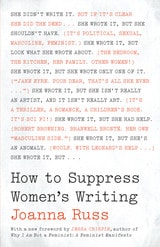
How to Suppress Women's Writing
By Joanna Russ; foreword by Jessa Crispin
University of Texas Press, 2018
Are women able to achieve anything they set their minds to? In How to Suppress Women’s Writing, award-winning novelist and scholar Joanna Russ lays bare the subtle—and not so subtle—strategies that society uses to ignore, condemn, or belittle women who produce literature. As relevant today as when it was first published in 1983, this book has motivated generations of readers with its powerful feminist critique.
“What is it going to take to break apart these rigidities? Russ’s book is a formidable attempt. It is angry without being self-righteous, it is thorough without being exhausting, and it is serious without being devoid of a sense of humor. But it was published over thirty years ago, in 1983, and there’s not an enormous difference between the world she describes and the world we inhabit.”
—Jessa Crispin, from the foreword
“A book of the most profound and original clarity. Like all clear-sighted people who look and see what has been much mystified and much lied about, Russ is quite excitingly subversive. The study of literature should never be the same again.”
—Marge Piercy
“Joanna Russ is a brilliant writer, a writer of real moral passion and high wit.”
—Adrienne Rich

Hugo von Hofmannsthal and His Time
The European Imagination, 1860-1920Hermann Broch
University of Chicago Press, 1984
Through an analysis of the changing thought and career of the Austrian poet, librettist, and essaist Hugo von Hofmannsthal (1874-1929), Broch attempts to define and analyze the major intellectual issues of the European fin de siècle, a period that he characterizes according to the Nietzschean concepts of the breakdown of rationality and the loss of a central value system. The result is a major examination of European thought as well as a comparative study of political systems and artistic styles.
Human
Babylonian Reflections on LaborSophus Helle
University of Chicago Press, 2026
The Babylonian poem Atra-hasis is a forgotten masterpiece of political thought. Written in Akkadian in what is now southern Iraq during the early second millennium BCE, Atra-hasis gives us a glimpse of how ancient poets understood the society growing around them. This radical history of the world told from the perspective of the mother goddess conveys the complexity and contradictions that lie at the heart of the human experience. Atra-hasis tells how humanity was created as part of a bargain to resolve the world’s first labor strike, in which the lower gods rebelled against the excessive work imposed on them by the higher gods. It depicts humans as workers endowed with defiant intelligence. They multiply and become too loud, so the gods decide to quiet them with a cataclysmic flood.
Looking to Atra-hasis, Sophus Helle reveals an ancient story with reflections on power and history that invite comparison to topics of contemporary relevance, including labor, inequality, climate change, artificial intelligence, threats to democracy, disability, care work, sexual consent, and more. Helle considers Atra-hasis as a foundational document of “pasthumanism,” a term he uses to describe the study of how cultural conceptions of humanity have changed across centuries. He argues that ancient and non-Western texts remind us that cultural assumptions we now take for granted are neither natural nor necessary.
Humanism and Classical Crisis
Anxiety, Intertexts, and the Miltonic MemoryJacob Blevins
The Ohio State University Press, 2014
Blevins grounds his approach in the theories of Jacques Lacan, whose work challenges the very notions of what identity is and, as a result, exposes the complexities of identity formation. Areas and authors covered include imitations and translations of classical works of the sixteenth and seventeenth centuries in England and France by Andrew Marvell, Edmund Spencer, Pierre Ronsard, Joachim Du Bellay, Ben Jonson, Sir Thomas Wyatt, and John Milton.
This book not only provides a new perspective on early modern poetic imitation, but also offers a foundational methodology for examining the classical presence within the modern self.
Humanism and Secularization
From Petrarch to VallaRiccardo Fubini
Duke University Press, 2003
Humanism and Secularization offers a nuanced account of humanists contesting medieval ideas about authority not in order to reject Christianity or even orthodoxy, but to claim for themselves the right to define what it meant to be a Christian. Fubini analyzes key texts by major humanists—isuch as Petrarch, Poggio, and Valla—from the first century of the movement. As he subtly works out these authors’ views on religion and the Church from both biographical and textual information, Fubini reveals in detail the new historical consciousness that animated the humanists in their reading of classical and patristic texts. His book as a whole shows convincingly just how radical the humanism of the first half of the fifteenth century was and how sharply it challenged well-entrenched ideas and institutions. Appearing here in English for the first time, his work provides a model set of readings of humanist texts and a critical perspective on Italian humanism that will alter and enrich discussion and understanding of the nature of the humanist movement.

Humor and Comedy in Puppetry
Celebration in Popular CultureUniversity of Wisconsin Press, 1987
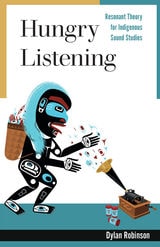
Hungry Listening
Resonant Theory for Indigenous Sound StudiesDylan Robinson
University of Minnesota Press, 2020
WInner of the Best First Book from the Native American and Indigenous Studies Association
Winner of the Labriola Center American Indian National Book Award
Winner of the Ann Saddlemyer Award from the Canadian Association for Theatre Research
Reimagining how we understand and write about the Indigenous listening experience
Hungry Listening is the first book to consider listening from both Indigenous and settler colonial perspectives. A critical response to what has been called the “whiteness of sound studies,” Dylan Robinson evaluates how decolonial practices of listening emerge from increasing awareness of our listening positionality. This, he argues, involves identifying habits of settler colonial perception and contending with settler colonialism’s “tin ear” that renders silent the epistemic foundations of Indigenous song as history, law, and medicine.
With case studies on Indigenous participation in classical music, musicals, and popular music, Hungry Listening examines structures of inclusion that reinforce Western musical values. Alongside this inquiry on the unmarked terms of inclusion in performing arts organizations and compositional practice, Hungry Listening offers examples of “doing sovereignty” in Indigenous performance art, museum exhibition, and gatherings that support an Indigenous listening resurgence.
Throughout the book, Robinson shows how decolonial and resurgent forms of listening might be affirmed by writing otherwise about musical experience. Through event scores, dialogic improvisation, and forms of poetic response and refusal, he demands a reorientation toward the act of reading as a way of listening. Indigenous relationships to the life of song are here sustained in writing that finds resonance in the intersubjective experience between listener, sound, and space.