Results by title
22279 books match the query 'Social Science' and 635 start with h
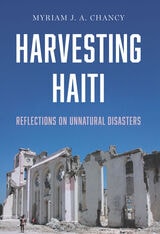
Harvesting Haiti
Reflections on Unnatural DisastersMyriam J.A. Chancy
University of Texas Press, 2023
2024 Isis Duarte Book Prize, Haiti/ Dominican Republic Section, Latin American Studies Association
2024 Longlist, OCM Bocas Prize for Caribbean Literature, Bocas Lit Fest
This collection ponders the personal and political implications for Haitians at home and abroad resulting from the devastating 2010 earthquake.
The 7.0 magnitude earthquake that struck Haiti in January 2010 was a debilitating event that followed decades of political, social, and financial issues. Leaving over 250,000 people dead, 300,000 injured, and 1.5 million people homeless, the earthquake has had lasting repercussions on a struggling nation. As the post-earthquake political situation unfolded, Myriam Chancy worked to illuminate on-the-ground concerns, from the vulnerable position of Haitian women to the failures of international aid. Originally presented at invited campus talks, published as columns for a newspaper in Trinidad and Tobago, and circulated in other ways, her essays and creative responses preserve the reactions and urgencies of the years following the disaster.
In Harvesting Haiti, Chancy examines the structures that have resulted in Haiti's post-earthquake conditions and reflects at key points after the earthquake on its effects on vulnerable communities. Her essays make clear the importance of sustaining and supporting the dignity of Haitian lives and of creating a better, contextualized understanding of the issues that mark Haitians’ historical and present realities, from gender parity to the vexed relationship between Haiti and the Dominican Republic.
Harvesting the Clouds
Ecologies of Fog Capture in Coastal PeruChakad Ojani
University of Arizona Press, 2027
Vision limited, sounds muffled. Tiny water droplets reflect light back to its source and make it difficult to locate the origin of sounds: this is fog. In Chakad Ojani’s ethnography, this atmospheric phenomenon plays a pivotal role.
Drawing on long-term ethnographic research on engagements with fog in Lima and coastal Peru, Harvesting the Clouds examines how local NGO workers and fog oasis conservationists sought to utilize coastal fog as a water source. NGO workers installed fog catchers in informal or recently formalized neighborhoods where state infrastructure was absent, while conservationists harnessed ground-touching clouds in order to prevent informal urbanization. As they set out to capture ground-touching clouds to pursue their distinct goals, these collectives became entrapped by activities, demands, and expectations that they had not foreseen. The book frames these relationships as ecologies of capture: emergent webs of relationships held together by conflicting aims and expectations, the possibilities and limitations of fog capture, and the material qualities of fog itself.
Harvesting the Clouds argues that capture is always only partially successful, but by virtue of this partiality, it becomes productive of social relations—an understanding that the author extends to anthropological inquiry itself as an exercise in the productive impossibility of ethnographic entrapment.

Has It Come to This?
The Promises and Perils of Geoengineering on the BrinkJ.P. Sapinski
Rutgers University Press, 2021

Hasidic Pilgrimages and Local Identity
Stories from Four Eastern European TownsAlla Marchenko
Central European University Press, 2027
Drawing on ethnographic fieldwork, media analysis, and memory studies, the author examines how pilgrims, local residents, and institutions engage with the Jewish past in ways that are often parallel, contested, or only partially connected. Rather than forming a shared framework, these encounters produce multiple, coexisting interpretations of place and history.
By tracing patterns of cooperation, tension, and selective inclusion, this book reveals how collective memory is continuously negotiated in post-socialist contexts, offering new insights into pilgrimage, heritage, and the politics of memory in a changing Europe.

Haskalah
The Romantic Movement in JudaismLitvak, Olga
Rutgers University Press, 2012
Commonly translated as the “Jewish Enlightenment,” the Haskalah propelled Jews into modern life. Olga Litvak argues that the idea of a Jewish modernity, championed by adherents of this movement, did not originate in Western Europe’s age of reason. Litvak contends that the Haskalah spearheaded a Jewish religious revival, better understood against the background of Eastern European Romanticism.
Based on imaginative and historically grounded readings of primary sources, Litvak presents a compelling case for rethinking the relationship between the Haskalah and the experience of political and social emancipation. Most importantly, she challenges the prevailing view that the Haskalah provided the philosophical mainspring for Jewish liberalism.
In Litvak’s ambitious interpretation, nineteenth-century Eastern European intellectuals emerge as the authors of a Jewish Romantic revolution. Fueled by contradictory longings both for community and for personal freedom, the poets and scholars associated with the Haskalah questioned the moral costs of civic equality and the achievement of middle-class status. In the nineteenth century, their conservative approach to culture as the cure for the spiritual ills of the modern individual provided a powerful argument for the development of Jewish nationalism. Today, their ideas are equally resonant in contemporary debates about the ramifications of secularization for the future of Judaism.
Hate Crime
The Global Politics of PolarizationEdited by Robert J. Kelly and Jess Maghan
Southern Illinois University Press, 1998
These twelve previously unpublished essays explore the international phenomenon of hate crime, examining the socio-psychological dynamics of these crimes and the settings in which they occur, the relationships between offenders and their victims, the emotional states of the participants, and the legal and law enforcement responses to these crimes.
The essays address religious, racial, ethnic, and sexual crimes in the United States, Latin America, Africa, Europe, and the Middle East. The essayists provide historical reviews of the problems and the ways local authorities understand and cope with the dilemmas as well as prognoses about the persistence of hate crime and the measures that can be taken to control and contain it.
Hating Jazz
A History of Its Disparagement, Mockery, and Other Forms of AbuseAndrew S. Berish
University of Chicago Press, 2025
A rock guitarist plays four notes in front of one thousand people, while a jazz guitarist plays one thousand notes in front of four people. You might laugh or groan at this jazz joke, but what is it about jazz that makes people want to disparage it in the first place?
Andrew S. Berish’s Hating Jazz listens to the voices who have denounced, disparaged, and mocked the music. By focusing on the rejection of the music, Berish says, we see more holistically jazz’s complicated place in American cultural life. Jazz is a display of Black creativity and genius, an art form that is deeply embedded in African American life. Though the explicit racial tenor of jazz jokes has become muted over time, making fun of jazz, either in a lighthearted or aggressive way, is also an engagement with the place of Blackness in America. An individual’s taste in music may seem personal, but Berish’s analysis of jazz hatred demonstrates that musical preferences and trends are a social phenomenon. Criticism of jazz has become inextricable from the ways we understand race in America, past and present. In addition to this form of criticism, Berish also considers jazz hate as a form of taste discrimination and as a conflict over genre boundaries within different jazz cultures.
Both enlightening and original, Hating Jazz shows that our response to music can be a social act, unique to our historical moment and cultural context—we react to music in certain ways because of who we are, where we are, and when we are.

Hats
A Very UNnatural HistoryMalcolm Smith
Michigan State University Press, 2020
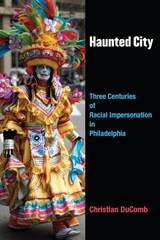
Haunted City
Three Centuries of Racial Impersonation in PhiladelphiaChristian DuComb
University of Michigan Press, 2017
Mummers have long worn blackface makeup during winter holiday celebrations in Europe and North America; in Philadelphia, mummers’ blackface persisted from the colonial period well into the twentieth century. The first annual Mummers Parade, a publicly sanctioned procession from the working-class neighborhoods of South Philadelphia to the city center, occurred in 1901. Despite a ban on blackface in the Mummers Parade after civil rights protests in 1963–64, other forms of racial and ethnic impersonation in the parade have continued to flourish unchecked. Haunted City combines detailed historical research with the author’s own experiences performing in the Mummers Parade to create a lively and richly illustrated narrative. Through its interdisciplinary approach, Haunted City addresses not only theater history and performance studies but also folklore, American studies, critical race theory, and art history. It also offers a fresh take on the historiography of the antebellum minstrel show.
Haunted Heartland
Michael Norman
University of Wisconsin Press, 2017
For decades, journalist Michael Norman has been tracking down spine-tingling tales that seem to arise from authentic incidents in Illinois, Indiana, Iowa, Kansas, Michigan, Minnesota, Missouri, Nebraska, Ohio, and Wisconsin. In Haunted Heartland he offers more than eighty entertaining, eerie stories. Are they true in the world that we know, or only in a dark vale of twilight?
Haunted Homes
Dahlia Schweitzer
Rutgers University Press, 2021
Watch a video of the author discussing the topic Haunted Homes (https://youtu.be/_irTEfvtZfQ).

Haunted Life
Visual Culture and Black ModernityMarriott, David
Rutgers University Press, 2007
Drawing on a range of comparative readings by writers, theorists, and filmmakers, including John Edgar Wideman, Frantz Fanon, Richard Wright, Issac Julien, Alain Locke, and Sidney Poitier, Haunted Life is a bold and original exploration of the legacies of black visual culture and the political, deeply sexualized violence that lies buried beneath it.

Haunted Media
Electronic Presence from Telegraphy to TelevisionJeffrey Sconce
Duke University Press, 2000
Sconce focuses on five important cultural moments in the history of telecommunication from the mid-nineteenth century to the present: the advent of telegraphy; the arrival of wireless communication; radio’s transformation into network broadcasting; the introduction of television; and contemporary debates over computers, cyberspace, and virtual reality. In the process of examining the trajectory of these technological innovations, he discusses topics such as the rise of spiritualism as a utopian response to the electronic powers presented by telegraphy and how radio, in the twentieth century, came to be regarded as a way of connecting to a more atomized vision of the afterlife. Sconce also considers how an early preoccupation with extraterrestrial radio communications tranformed during the network era into more unsettling fantasies of mediated annihilation, culminating with Orson Welles’s legendary broadcast of War of the Worlds. Likewise, in his exploration of the early years of television, Sconce describes how programs such as The Twilight Zone and The Outer Limits continued to feed the fantastical and increasingly paranoid public imagination of electronic media. Finally, Sconce discusses the rise of postmodern media criticism as yet another occult fiction of electronic presence, a mythology that continues to dominate contemporary debates over television, cyberspace, virtual reality, and the Internet.
As an engaging cultural history of telecommunications, Haunted Media will interest a wide range of readers including students and scholars of media, history, American studies, cultural studies, and literary and social theory.
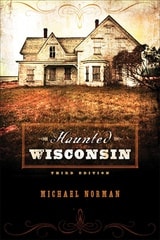
Haunted Wisconsin
Michael Norman
University of Wisconsin Press, 2011
Grab a cozy blanket, light a few flickering candles, and enjoy the unnerving tales of Haunted Wisconsin. Gathered from personal interviews with credible eyewitnesses, on-site explorations, historical archives, newspaper reports, and other sources, these scores of reports date from Wisconsin’s early settlement days to recent inexplicable events.
You’ll read about Wisconsin’s most famous haunted house, Summerwind; three Milwaukee men who encountered the beautiful ghost of National Avenue; a phantom basketball player; a spectral horse that signaled death in the pioneer era of the Wisconsin Dells; a poltergeist in St. Croix County who attracted a crowd of more than three hundred spectators; the Ridgeway Ghost who haunts the driftless valleys of southwestern Wisconsin; a swinging railroad lantern held by unseen hands; the Ghost Island of the Chippewa Flowage; and many others. Are ghosts real? That’s for you to decide!
Now available in a Third Edition with updates and several new accounts, Haunted Wisconsin remains a favorite collection of unexplained midwestern tales, enjoyed by readers of all ages.

Haunted by Hitler
Liberals, the Left, and the Fight against Fascism in the United StatesChristopher Vials
University of Massachusetts Press, 2014
Although fascism is typically associated with Europe, the threat of fascism in the United States haunted the imaginations of activists, writers, and artists, spurring them to create a rich, elaborate body of cultural and political work. Traversing the Popular Front of the 1930s, the struggle against McCarthyism in the 1950s, the Black Power movement of the 1960s, and the AIDS activism of the 1980s, Haunted by Hitler highlights the value of “antifascist” cultural politics, showing how it helped to frame the national discourse.
Christopher Vials examines the ways in which anxieties about fascism in the United States have been expressed in the public sphere, through American television shows, Off-Broadway theater, party newspapers, bestselling works of history, journalism, popular sociology, political theory, and other media. He argues that twentieth-century liberals and leftists were more deeply unsettled by the problem of fascism than those at the center or the right and that they tirelessly and often successfully worked to counter America's fascist equivalents.
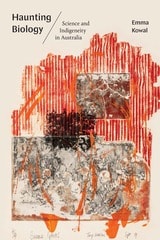
Haunting Biology
Science and Indigeneity in AustraliaEmma Kowal
Duke University Press, 2023
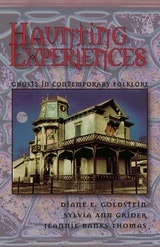
Haunting Experiences
Ghosts in Contemporary FolkloreDiane E. Goldstein, Sylvia Ann Grider, and Jeannie Banks Thomas
Utah State University Press, 2007
In Haunting Experiences, three well-known folklorists broaden the discussion of ghost lore by examining it from a variety of angles in various modern contexts. Diane E. Goldstein, Sylvia Ann Grider, and Jeannie Banks Thomas take ghosts seriously, as they draw on contemporary scholarship that emphasizes both the basis of belief in experience (rather than fantasy) and the usefulness of ghost stories. They look closely at the narrative role of such lore in matters such as socialization and gender, and unravel the complex mix of mass media, commodification, and popular culture that today puts old spirits into new contexts.
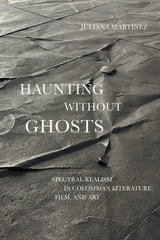
Haunting Without Ghosts
Spectral Realism in Colombian Literature, Film, and ArtBy Juliana Martínez
University of Texas Press, 2020
Winner, William M. LeoGrande Prize, Center for Latin American and Latino Studies at American University, 2022
For half a century, cultural production in Colombia has labored under the weight of magical realism—above all, the works of Gabriel García Márquez—where ghosts told stories about the country’s violent past and warned against a similarly gruesome future.
Decades later, the story of violence in Colombia is no less horrific, but the critical resources of magical realism are depleted. In their wake comes "spectral realism." Juliana Martínez argues that recent Colombian novelists, filmmakers, and artists—from Evelio Rosero and William Vega to Beatriz González and Erika Diettes—share a formal and thematic concern with the spectral but shift the focus from what the ghost is toward what the specter does. These works do not speak of ghosts. Instead, they use the specter to destabilize reality by challenging the authority of human vision and historical chronology.
By introducing the spectral into their work, these artists decommodify well-worn modes of representing violence and create a critical space from which to seek justice for the dead and disappeared. A Colombia-based study, Haunting without Ghosts brings powerful insight to the politics and ethics of spectral aesthetics, relevant for a variety of sociohistorical contexts.
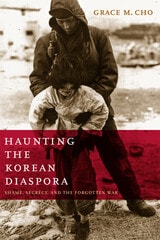
Haunting the Korean Diaspora
Shame, Secrecy, and the Forgotten WarGrace M. Cho
University of Minnesota Press, 2008
Grace M. Cho exposes how Koreans in the United States have been profoundly affected by the forgotten war and uncovers the silences and secrets that still surround it, arguing that trauma memories have been passed unconsciously through a process psychoanalysts call “transgenerational haunting.” Tracing how such secrets have turned into “ghosts,” Cho investigates the mythic figure of the yanggongju, literally the “Western princess,” who provides sexual favors to American military personnel. She reveals how this figure haunts both the intimate realm of memory and public discourse, in which narratives of U.S. benevolence abroad and assimilation of immigrants at home go unchallenged. Memories of U.S. violence, Cho writes, threaten to undo these narratives—and so they have been rendered unspeakable.
At once political and deeply personal, Cho’s wide-ranging and innovative analysis of U.S. neocolonialism and militarism under contemporary globalization brings forth a new way of understanding—and remembering—the impact of the Korean War.
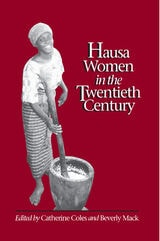
Hausa Women in the Twentieth Century
Edited by Catherine M. Coles and Beverly Mack
University of Wisconsin Press, 1991
Hausa Women in the Twentieth Century refutes the notion that Hausa women are pawns in a patriarchal Muslim society. The contributors, all of whom have done field research in Hausaland, explore the ways Hausa women have balanced the demands of Islamic expectations and Western choices as their society moved from a precolonial system through British colonial administration to inclusion in the modern Nigerian nation. This volume examines the roles of a wide variety of women, from wives and workers to political activists and mythical figures, and it emphasizes that women have been educators and spiritual leaders in Hausa society since precolonial times. From royalty to slaves and concubines, in traditional Hausa cities and in newer towns, from the urban poor to the newly educated elite, the "invisible women" whose lives are documented here demonstrate that standard accounts of Hausa society must be revised.
Scholars of Hausa and neighboring West African societies will find in this collection a wealth of new material and a model of how research on women can be integrated with general accounts of Hausa social, religious, political, and economic life. For students and scholars looking at gender and women's roles cross-culturally, this volume provides an invaluable African perspective.

Havana beyond the Ruins
Cultural Mappings after 1989Anke Birkenmaier and Esther Whitfield, eds.
Duke University Press, 2011
Contributors
Emma Álvarez-Tabío Albo
Eric Felipe-Barkin
Anke Birkenmaier
Velia Cecilia Bobes
Mario Coyula-Cowley
Elisabeth Enenbach
Sujatha Fernandes
Jill Hamberg
Patricio del Real
Cecelia Lawless
Jacqueline Loss
Orlando Luis Pardo Lazo
Antonio José Ponte
Nicolás Quintana
Jose Quiroga
Laura Redruello
Rafael Rojas
Joseph L. Scarpaci
Esther Whitfield
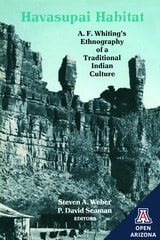
Havasupai Habitat
A. F. Whiting's Ethnography of a Traditional Indian CultureA. F. Whiting; Edited by Steven A. Weber and P. David Seaman
University of Arizona Press, 1985
Published in 1985, Havasupai Habitat offers a rich ethnography on lifeways of the Havasupai people.
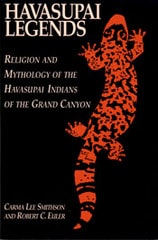
Havasupai Legends
Religion and Mythology of the Havasupai Indians of the Grand CanyonRobert C Euler
University of Utah Press, 1994
Written in consultation with some of the last Havasupai shamans, this book details their religious beliefs, customs, and healing practices. A second section presents legends of the Havasupai origin, the first people, and tales of Coyote, Gila Monster, Bear, and others.
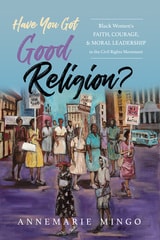
Have You Got Good Religion?
Black Women's Faith, Courage, and Moral Leadership in the Civil Rights MovementAnneMarie Mingo
University of Illinois Press, 2024
A depiction of moral imagination that resonates today, Have You Got Good Religion? reveals how Black Churchwomen’s understanding of God became action and transformed a nation.

Having Epilepsy
The Experience and Control of IllnessJoseph W. Schneider and Peter Conrad
Temple University Press, 1985
Having People, Having Heart
Charity, Sustainable Development, and Problems of Dependence in Central UgandaChina Scherz
University of Chicago Press, 2014
Through detailed studies of two different orphan support organizations in Uganda, Scherz shows how many Ugandans view material forms of Catholic charity as deeply intertwined with their own ethics of care and exchange. With a detailed examination of this overlooked relationship in hand, she reassesses the generally assumed paradox of material aid as both promising independence and preventing it. The result is a sophisticated demonstration of the powerful role that anthropological concepts of exchange, value, personhood, and religion play in the politics of international aid and development.
Hawai'i Is My Haven
Race and Indigeneity in the Black PacificNitasha Tamar Sharma
Duke University Press, 2021
Hawaiian Blood
Colonialism and the Politics of Sovereignty and IndigeneityJ. Kauanui Kahaulani
Duke University Press, 2008
Kauanui provides an impassioned assessment of how the arbitrary correlation of ancestry and race imposed by the U.S. government on the indigenous people of Hawai‘i has had far-reaching legal and cultural effects. With the HHCA, the federal government explicitly limited the number of Hawaiians included in land provisions, and it recast Hawaiians’ land claims in terms of colonial welfare rather than collective entitlement. Moreover, the exclusionary logic of blood quantum has profoundly affected cultural definitions of indigeneity by undermining more inclusive Kanaka Maoli notions of kinship and belonging. Kauanui also addresses the ongoing significance of the 50-percent rule: Its criteria underlie recent court decisions that have subverted the Hawaiian sovereignty movement and brought to the fore charged questions about who counts as Hawaiian.
Hawaii’s Past in a World of Pacific Islands
James M. Bayman
University Press of Colorado, 2013
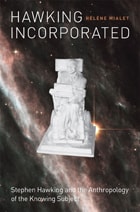
Hawking Incorporated
Stephen Hawking and the Anthropology of the Knowing SubjectHélène Mialet
University of Chicago Press, 2012
These days, the idea of the cyborg is less the stuff of science fiction and more a reality, as we are all, in one way or another, constantly connected, extended, wired, and dispersed in and through technology. One wonders where the individual, the person, the human, and the body are—or, alternatively, where they stop. These are the kinds of questions Hélène Mialet explores in this fascinating volume, as she focuses on a man who is permanently attached to assemblages of machines, devices, and collectivities of people: Stephen Hawking.
Drawing on an extensive and in-depth series of interviews with Hawking, his assistants and colleagues, physicists, engineers, writers, journalists, archivists, and artists, Mialet reconstructs the human, material, and machine-based networks that enable Hawking to live and work. She reveals how Hawking—who is often portrayed as the most singular, individual, rational, and bodiless of all—is in fact not only incorporated, materialized, and distributed in a complex nexus of machines and human beings like everyone else, but even more so. Each chapter focuses on a description of the functioning and coordination of different elements or media that create his presence, agency, identity, and competencies. Attentive to Hawking’s daily activities, including his lecturing and scientific writing, Mialet’s ethnographic analysis powerfully reassesses the notion of scientific genius and its associations with human singularity. This book will fascinate anyone interested in Stephen Hawking or an extraordinary life in science.
Hawthorne and Women
Engendering and Expanding the Hawthorne TraditionJohn L. Idol
University of Massachusetts Press, 1999
This collection of original essays presents a more complex and positive view of Hawthorne's attitudes toward women, demonstrating his recognition of the crucial role that women played--as critics, reviewers, readers, and authors--in building a national readership that made his writing career so successful.
The book begins with an examination of the influence exerted by the women in Hawthorne's immediate family. It goes on to explore his links to a broad range of women writers, as well as his attitudes toward the female characters he created. Among the authors discussed are Margaret Fuller, Harriet Beecher Stowe, Louisa May Alcott, Emily Dickinson, Sarah Orne Jewett, Willa Cather, Charlotte Perkins Gilman, George Eliot, Virginia Woolf, Flannery O'Connor, and Toni Morrison.
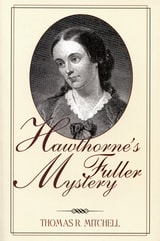
Hawthorne's Fuller Mystery
Thomas R. Mitchell
University of Massachusetts Press, 2009
Drawing on recently published letters and journals, Thomas R. Mitchell describes how Julian Hawthorne's misrepresentation of his father's relationship with Fuller destroyed her literary reputation, promoted Hawthorne as a defender of conservative values, and continues to obscure the depth of Hawthorne's personal and intellectual involvement with her. Mitchell concludes that far from being repulsed by Fuller and her assertiveness--as many scholars have claimed--Hawthorne experienced with her perhaps the most intimate relationship that he ever had with a woman, his wife alone excepted.
Blending biography, cultural history, and literary and psychological analysis, Hawthorne's Fuller Mystery raises provocative questions about the origins and intent of Hawthorne's greatest works and offers compelling new readings of "Rapaccini's Daughter," The Scarlet Letter, The Blithedale Romance, and The Marble Faun.

He Knew She Was Right
The Independent Woman in the Novels of Anthony TrollopeJane Nardin
Southern Illinois University Press, 1989
Trollope’s mother, wife, and a friend he loved platonically most of his life provided him three very different views of the Victorian woman. And, according to Jane Nardin, they were responsible for the dramatic shift in his treatment of women in his novels.
This is the first book in Sandra Gilbert’s Ad Feminam series to examine a male author. Nardin initially analyzes the novels Trollope wrote from 1855 to 1861, in which male concerns are central to the plot and women are angelic heroines, submissive and self-sacrificing. Even the titles of his novels written during this period are totally male oriented. The Three Clerks, Doctor Thorne, and The Bertrams all refer to men. Shortly after meeting Kate Field, Trollope wrote Orley Farm, which refers to the estate an angry woman steals from her husband and which marks a change in the attitudes toward women evident in his novels.
His next four books, The Small House at Allington, Rachel Ray, Can You Forgive Her?, and Miss Mackenzie, prove that women’s concerns had become central in his writing. Nardin examines specific novels written from 1861 to 1865 in which Trollope, with increasing vigor, subverts the conventional notions of gender that his earlier novels had endorsed.
Nardin argues that his novels written after 1865 and often recognized as feminist are not really departures but merely refinements of attitudes Trollope exhibited in earlier works.
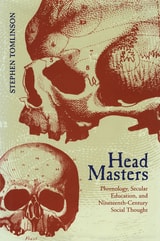
Head Masters
Phrenology, Secular Education, and Nineteenth-Century Social ThoughtStephen Tomlinson
University of Alabama Press, 2005
Head Masters challenges the assumption that phrenology—the study of the conformation of the skull as it relates to mental faculties and character—played only a minor and somewhat anecdotal role in the development of education. Stephen Tomlinson asserts instead that phrenology was a scientifically respectable theory of human nature, perhaps the first solid physiological psychology. He shows that the first phrenologists were among the most prominent scientists and intellectuals of their day, and that the concept was eagerly embraced by leading members of the New England medical community.
Following its progression from European theorists Franz-Joseph Gall, Johan Gasper Spurzheim, and George Combe to Americans Horace Mann and Samuel Gridley Howe, Tomlinson traces the origins of phrenological theory and examines how its basic principles of human classification, inheritance, and development provided a foundation for the progressive practices advocated by middle-class reformers such as Combe and Mann. He also elucidates the ways in which class, race, and gender stereotypes permeated 19th century thought and how popular views of nature, mind, and society supported a secular curriculum favoring the use of disciplinary practices based on physiology.
This study ultimately offers a reconsideration of the ideas and theories that motivated education reformers such as Mann and Howe, and a reassessment of Combe, who, though hardly known by contemporary scholars, emerges as one of the most important and influential educators of the 19th century.
Head-to-Head and Heart-to-Heart
Contemporary Discourse on Deaf Mental HealthCathy J. Chovaz
Gallaudet University Press, 2026

Healing Ableism
Stories About Disability and Religious LifeDarla Schumm
Rutgers University Press, 2026
Healing Dramas
Divination and Magic in Modern Puerto RicoBy Raquel Romberg
University of Texas Press, 2009
In this intimate ethnography, Raquel Romberg seeks to illuminate the performative significance of healing rituals and magic works, their embodied nature, and their effectiveness in transforming the states of participants by focusing on the visible, albeit mostly obscure, ways in which healing and magic rituals proceed. The questions posed by Romberg emerge directly from the particular pragmatics of Puerto Rican brujería (witch-healing), shaped by the eclecticism of its rituals, the heterogeneous character of its participants, and the heterodoxy of its moral economy.
What, if any, is the role of belief in magic and healing rituals? How do past discourses on possession enter into the performative experience of ritual in the here and now? Where does belief stop, and where do memories of the flesh begin? While these are questions that philosophers and anthropologists of religion ponder, they acquire a different meaning when asked from an ethnographic perspective.
Written in an evocative, empathetic style, with theoretical ruminations about performance, the senses, and imagination woven into stories that highlight the drama and humanity of consultations, this book is an important contribution to the cross-cultural understanding of our capacity to experience the transcendental in corporeal ways.
Healing Like Our Ancestors
The Nahua Tiçitl, Gender, and Settler Colonialism in Central Mexico, 1535–1660Edward Anthony Polanco
University of Arizona Press, 2024
Early colonial Spanish settlers defined, assessed, and admonished Nahua titiçih (healing specialists) and tiçiyotl (healing knowledge) in the process of building a society in Mexico that mirrored Iberia. Nevertheless, Nahua survivance (intergenerational knowledge transfer) has allowed communities to heal like their ancestors through changes and adaptations. Edward Anthony Polanco draws from diverse colonial primary sources, largely in Spanish and Nahuatl (the Nahua ancestral language), to explore how Spanish settlers framed titiçih, their knowledge, and their practices within a Western complex. Polanco argues for the usage of Indigenous terms when discussing Indigenous concepts and arms the reader with the Nahuatl words to discuss central Mexican Nahua healing. In particular, this book emphasizes the importance of women as titiçih and highlights their work as creators and keepers of knowledge. These vital Nahua perspectives of healing—and how they differed from the settler narrative—will guide community members as well as scholars and students of the history of science, Latin America, and Indigenous studies.
Healing Logics
Culture and Medicine in Modern Health Belief SystemsErika Brady
Utah State University Press, 2001

Healing Our Divided Society
Investing in America Fifty Years after the Kerner ReportFred Harris and Alan Curtis
Temple University Press, 2018
In 1968, the Kerner Commission concluded that America was heading toward “two societies, one black, one white—separate and unequal.” Today, America’s communities are experiencing increasing racial tensions and inequality, working-class resentment over the unfulfilled American Dream, white supremacy violence, toxic inaction in Washington, and the decline of the nation’s example around the world.
In Healing Our Divided Society, Fred Harris, the last surviving member of the Kerner Commission, along with Eisenhower Foundation CEO Alan Curtis, re-examine fifty years later the work still necessary towards the goals set forth in The Kerner Report. This timely volume unites the interests of minorities and white working- and middle-class Americans to propose a strategy to reduce poverty, inequality, and racial injustice. Reflecting on America’s urban climate today, this new report sets forth evidence-based policies concerning employment, education, housing, neighborhood development, and criminal justice based on what has been proven to work—and not work.
Contributors include: Oscar Perry Abello, Elijah Anderson, Anil N.F. Aranha, Jared Bernstein, Henry G. Cisneros, Elliott Currie, Linda Darling-Hammond, Martha F. Davis, E. J. Dionne, Jr., Marian Wright Edelman, Delbert S. Elliott, Carol Emig, Jeff Faux, Ron Grzywinski, Michael P. Jeffries, Lamar K. Johnson, Celinda Lake, Marilyn Melkonian, Gary Orfield, Diane Ravitch, Laurie Robinson, Herbert C. Smitherman, Jr., Joseph Stiglitz, Dorothy Stoneman, Kevin Washburn, Valerie Wilson, Gary Younge, Julian E. Zelizer, and the editors
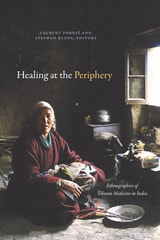
Healing at the Periphery
Ethnographies of Tibetan Medicine in IndiaLaurent Pordié and Stephan Kloos, editors
Duke University Press, 2022
Contributors. Florian Besch, Calum Blaikie, Sienna R. Craig, Barbara Gerke, Isabelle Guérin, Kim Gutschow, Pascale Hancart Petitet, Stephan Kloos, Fernanda Pirie, Laurent Pordié
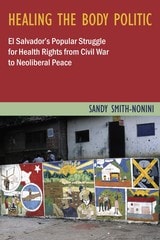
Healing the Body Politic
El Salvador's Popular Struggle for Health Rights from Civil War to Neoliberal PeaceSmith-Nonini, Sandy
Rutgers University Press, 2010
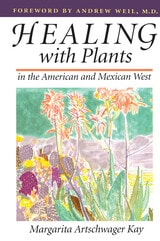
Healing with Plants in the American and Mexican West
Margarita Artschwager Kay
University of Arizona Press, 1996
Acacia (Cassie, Acacia)
Achillea (Yarrow)
Agastache (Giant Hyssop)
Agave (Century Plant)
Allium (Garlic, Onion)
Aloe (Aloe)
Ambrosia (Ragweed)
Anemopsis (Yerba Mansa)
Arctostaphylos (Bearberry, Uva Ursi)
Argemone (Prickly Poppy)
Aristolochia (Bithwort, Snakeroot)
Arracacia (Arracacha)
Artemisia (Wormwood, Mugwort, Western Mugwort, Sagebrush)
Asclepias (Milkweed)
Baccharis (Desert Broom, Seep Willow)
Bocconia (Tree Celandine)
Buddleia (Butterfly Bush)
Bursera (Elephant Tree)
Caesalpinia (Mexican Bird-of-Paradise)
Cannabis (Marijuana)
Capsicum (Chili)
Carnegiea (Saguaro)
Casimiroa (Zapote)
Cassia (Senna)
Cereus (Cactus)
Chenopodium (Goosefoot, Wormseed)
Citrus (Lemon, Lime, Orange)
Datura (Jimson Weed)
Ephedra (Mormon Tea)
Equisetum (Horsetail)
Eryngium (Eryngo, Button Snakeroot)
Eucalyptus (Eucalyptus)
Euphorbia (Spurge)
Eysenhardtia (Kidneywood)
Gnaphalium (Everlasting, Cudweed)
Guaiacum (Lignum Vitae)
Guazuma (Guazuma)
Gutierrezia (Turpentine Bush)
Haematoxylon (Logwood)
Haplopappus (Jimmyweed)
Heterotheca (Telegraph Plant, Falso Arnica)
Hintonia (Copalqu¡n)
Ibervillea (Coyote Melon)
Jacquinia (Jacquinia)
Jatropha (Limberbush)
Juniperus (Juniper)
Karwinskia (Coffeeberry)
Kohleria (Tree Gloxinia)
Krameria (Ratany)
Lantana (Lantana)
Larrea (Creosote Bush, Greasewood)
Ligusticum (Lovage)
Lippia (Oregano)
Lysiloma (Featherbush)
Malva (Mallow)
Mammillaria (Pincushion Cactus)
Mascagnia (Mascagnia)
Matricaria (Chamomile)
Mentha (Mint)
Nicotiana (Tobacco)
Ocimum (Basil)
Opuntia (Cholla, Prickly Pear)
Perezia (Perezia)
Persea (Avocado)
Phaseolus (Bean)
Phoradendron, Stru

Health Care and Gender
Charlotte Muller
Russell Sage Foundation, 1990
Health Colonialism
Urban Wastelands and Hospital FrontiersShiloh Krupar
University of Minnesota Press, 2023
The role of American hospital expansions in health disparities and medical apartheid
Health Colonialism considers how U.S. urban development policies contribute to the uneven and unjust distribution of health care in this country. Here, Shiloh Krupar investigates the racially inequitable effects of elite U.S. hospitals on their surrounding neighborhoods and their role in consolidating frontiers of land primed for redevelopment.
Naming this frontier “medical brownfields,” Krupar shows how hospitals leverage their domestic real estate empires to underwrite international prospecting for patients and overseas services and specialty clinics. Her pointed analysis reveals that decolonizing health care efforts must scrutinize the land practices of nonprofit medical institutions and the liberal foundations of medical apartheid perpetuated by globalizing American health care.

Health Equity in Brazil
Intersections of Gender, Race, and PolicyKia Lilly Caldwell
University of Illinois Press, 2017
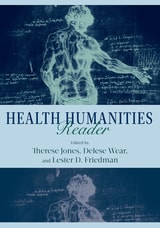
Health Humanities Reader
Jones, Therese
Rutgers University Press, 2014
In Health Humanities Reader, editors Therese Jones, Delese Wear, and Lester D. Friedman have assembled fifty-four leading scholars, educators, artists, and clinicians to survey the rich body of work that has already emerged from the field—and to imagine fresh approaches to the health humanities in these original essays. The collection’s contributors reflect the extraordinary diversity of the field, including scholars from the disciplines of disability studies, history, literature, nursing, religion, narrative medicine, philosophy, bioethics, medicine, and the social sciences.
With warmth and humor, critical acumen and ethical insight, Health Humanities Reader truly humanizes the field of medicine. Its accessible language and broad scope offers something for everyone from the experienced medical professional to a reader interested in health and illness.
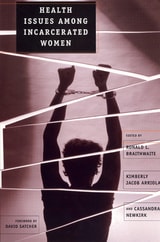
Health Issues Among Incarcerated Women
Edited by Ronald L. Braithwaite, Kimberly Jacob Arriola, and Cassandra Newkirk
Rutgers University Press, 2006
The female inmate population in the United States has exploded in the past two decades, increasing nearly six-fold. The U.S. correctional system, however, has not expanded its health care to provide for this growing population of women. This comprehensive reader addresses the physical and mental needs of women inmates and suggests that they cannot be properly treated unless their lifestyles before, during, and after incarceration are considered.
This book abounds with statistics that outline the unique needs of the female inmate population. For instance, a significant proportion of female inmates suffer physical and sexual violence before serving time. Incarcerated teenagers are more likely than others from their age group to have engaged in behaviors that increased their risk for contracting sexually transmitted diseases like HIV. Because African American women are more likely than their counterparts to encounter prison time, their needs warrant specific attention.
Bringing together twenty original essays, this volume will be invaluable for lobbyists and policy makers as well as for graduate students and faculty in the fields of criminal justice and public health.
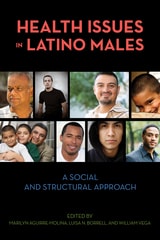
Health Issues in Latino Males
A Social and Structural ApproachAguirre-Molina, Marilyn
Rutgers University Press, 2010
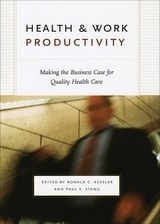
Health and Work Productivity
Making the Business Case for Quality Health CareEdited by Ronald C. Kessler and Paul E. Stang
University of Chicago Press, 2006
Health and Work Productivity presents state-of-the-art health and productivity research that suggests interventions aimed at prevention, early detection, and best-practice treatment of workers along with an informed allocation strategy can produce significant cost-benefits for employers. Contributors cover all the major aspects of this new area of research: approaches to studying the effects of health on productivity, ways for employers to estimate the costs of productivity loss, concrete suggestions for future research developments in the area, and the implications of this research for public policy.