Results by title
22279 books match the query 'Social Science' and 635 start with h

Here is Where I Walk
Episodes From a Life in the ForestLeslie Carol Roberts
University of Nevada Press, 2019
In layered stories of her life and travels, Leslie turns her daily walks into revelations of deeper meaning. From Maryland to Iowa to Tasmania, we follow a fierce and keenly observant walker through places of exquisite beauty and complexity. Her daily walks inspire Leslie to accept the invitation of the beckoning trees where she finds herself colliding with the urban coyote, the peculiar banana slug, and the manzanita. She also notes both ridiculous and poignant aspects of human ecosystems in pursuit of what it means to live a life of creativity and creation from scientist-activists battling to save environments to the tragic realities of ordinary life.
In this finely crafted eco-memoir, each place provides Leslie with exactly the scaffolding needed to survive, with nature serving as the tonic. Here is Where I Walk provides a vivid answer to how we can find our place, not only in nature but within ourselves and the world we walk.

Here to Stay, Here to Fight
A Race Today AnthologyPaul Field
Pluto Press, 2019

Here to Stay, Here to Fight
A Race Today AnthologyPaul Field
Pluto Press, 2019
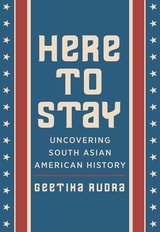
Here to Stay
Uncovering South Asian American HistoryGeetika Rudra
Rutgers University Press, 2022
In Here to Stay, Geetika Rudra, a second-generation Indian immigrant and American history buff, takes readers on a journey across the country to unearth the little-known histories of earlier generations of South Asian Americans. She visits storied sites such as Oregon’s “Hindoo Alley,” home to many lumber workers at the turn of the century, and Angel Island, California’s immigration hub. She also introduces readers to such inspiring figures as Bhagat Singh Thind, an immigrant who had enlisted in the U.S. Army to serve his adopted country in World War I, but who was later denied citizenship and took his case all the way to the U.S. Supreme Court. In turns both serious and joyful, this book vividly reveals how South Asians have always been a vital part of the American tapestry.
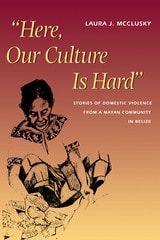
Here, Our Culture Is Hard
Stories of Domestic Violence from a Mayan Community in BelizeBy Laura McClusky
University of Texas Press, 2001
Marriage among the Maya of Central America is a model of complementarity between a man and a woman. This union demands mutual respect and mutual service. Yet some husbands beat their wives.
In this pioneering book, Laura McClusky examines the lives of several Mopan Maya women in Belize. Using engaging ethnographic narratives and a highly accessible analysis of the lives that have unfolded before her, McClusky explores Mayan women's strategies for enduring, escaping, and avoiding abuse. Factors such as gender, age inequalities, marriage patterns, family structure, educational opportunities, and economic development all play a role in either preventing or contributing to domestic violence in the village. McClusky argues that using narrative ethnography, instead of cold statistics or dehumanized theoretical models, helps to keep the focus on people, "rehumanizing" our understanding of violence. This highly accessible book brings to the social sciences new ways of thinking about, representing, and studying abuse, marriage, death, gender roles, and violence.
Heresy in the University
The Black Athena Controversy and the Responsibilities of American IntellectualsJacques Berlinerblau
Rutgers University Press, 1999
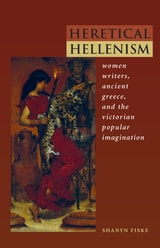
Heretical Hellenism
Women Writers, Ancient Greece, and the Victorian Popular ImaginationShanyn Fiske
Ohio University Press, 2008
The prevailing assumption regarding the Victorians’ relationship to ancient Greece is that Greek knowledge constituted an exclusive discourse within elite male domains. Heretical Hellenism: Women Writers, Ancient Greece, and the Victorian Popular Imagination challenges that theory and argues that while the information women received from popular sources was fragmentary and often fostered intellectual insecurities, it was precisely the ineffability of the Greek world refracted through popular sources and reconceived through new fields of study that appealed to women writers’ imaginations.
Examining underconsidered sources such as theater history and popular journals, Shanyn Fiske uncovers the many ways that women acquired knowledge of Greek literature, history, and philosophy without formal classical training. Through discussions of women writers such as Charlotte Brontë, George Eliot, and Jane Harrison, Heretical Hellenism demonstrates that women established the foundations of a heretical challenge to traditional humanist assumptions about the uniformity of classical knowledge and about women’s place in literary history.
Heretical Hellenism provides a historical rationale for a more expansive definition of classical knowledge and offers an interdisciplinary method for understanding the place of classics both in the nineteenth century and in our own time.
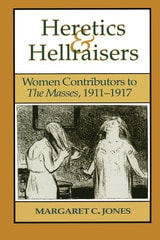
Heretics and Hellraisers
Women Contributors to The Masses, 1911-1917By Margaret C. Jones
University of Texas Press, 1993
The Masses was the most dynamic and influential left-wing magazine of the early twentieth century, a touchstone for understanding radical thought and social movements in the United States during that era. As a magazine that supported feminist issues, it played a crucial role in shaping public discourse about women's concerns. Women editors, fiction writers, poets, and activists like Mary Heaton Vorse, Louise Bryant, Adriana Spadoni, Elsie Clews Parsons, Inez Haynes Gillmore, and Helen Hull contributed as significantly to the magazine as better-known male figures.
In this major revisionist work, Margaret C. Jones calls for reexamination of the relevance of Masses feminism to that of the 1990s. She explores women contributors' perspectives on crucial issues: patriarchy, birth control, the labor movement, woman suffrage, pacifism, and ethnicity. The book includes numerous examples of the writings and visual art of Masses women and a series of biographical/bibliographical sketches designed to aid other researchers.
Heritage Conservation and Social Engagement
Edited by Rentata F. Peters, Iris L. F. den Boer, Jessica S. Johnson, and Susanna Pancaldo
University College London, 2020
Heritage Dynamics
Understanding and Adapting to Change in Diverse Heritage ContextsKalliopi Fouseki
University College London, 2022
As a sociocultural concept, heritage flows through cycles of emergence, change, disappearance, and revival. These lifecycles are influenced by heritage environments such as museums, landscapes, cities, and intangible networks of cultural circulation. In Heritage Dynamics, Kalliopi Fouseki develops a new theoretical and methodological framework that will enable heritage scholars and practitioners to unpack the ways and conditions under which heritage changes. Under the contexts of urban cities, residential buildings, museum collections, and subjects of intangible heritage especially concerning flamenco, this work re-orients the consideration of heritage as an object, process, or discourse, towards a more systemic thinking that captures the complexity of this historical-cultural force.
Heritage Futures
Comparative Approaches to Natural and Cultural Heritage PracticesRodney Harrison, Caitlin Desilvey, Cornelius Holtorf, Sharon MacDonald, Nadia Bartolini, Esther Breithoff, Harald Fredheim, Antony Lyons, Sarah May, Jennie Morgan, and Sefryn Penrose
University College London, 2020
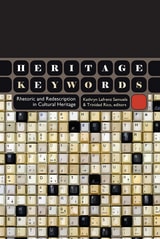
Heritage Keywords
Rhetoric and Redescription in Cultural HeritageKathryn Lafrenz Samuels
University Press of Colorado, 2015
Situated at the intersection of scholarship and practice, Heritage Keywords positions cultural heritage as a transformative tool for social change. This volume unlocks the persuasive power of cultural heritage—as it shapes experiences of change and crafts present and future possibilities from historic conditions—by offering new ways forward for cultivating positive change and social justice in contemporary social debates and struggles. It draws inspiration from deliberative democratic practice, with its focus on rhetoric and redescription, to complement participatory turns in recent heritage work.
Through attention to the rhetorical edge of cultural heritage, contributors to this volume offer innovative reworkings of critical heritage categories. Each of the fifteen chapters examines a key term from the field of heritage practice—authenticity, civil society, cultural diversity, cultural property, democratization, difficult heritage, discourse, equity, intangible heritage, memory, natural heritage, place, risk, rights, and sustainability—to showcase the creative potential of cultural heritage as it becomes mobilized within a wide array of social, political, economic, and moral contexts.
This highly readable collection will be of interest to students, scholars, and professionals in heritage studies, cultural resource management, public archaeology, historic preservation, and related cultural policy fields.
Contributors include Jeffrey Adams, Sigrid Van der Auwera, Melissa F. Baird, Alexander Bauer, Malcolm A. Cooper, Anna Karlström, Paul J. Lane, Alicia Ebbitt McGill, Gabriel Moshenska, Regis Pecos, Robert Preucel, Trinidad Rico, Cecelia Rodéhn, Joshua Samuels, Kathryn Lafrenz Samuels, and Klaus Zehbe.
Heritage and Hate
Old South Rhetoric at Southern UniversitiesStephen M. Monroe
University of Alabama Press, 2021
How southern universities continue to wrestle with the words and symbols that embody and perpetuate Old South traditions
The US South is a rhetorical landscape that pulsates with division, a place where words and symbols rooted in a deeply problematic past litter the ground and contaminate the soil. Stephen M. Monroe’s provocative study focuses on predominantly white southern universities where Old South rhetoric still reverberates, where rebel flags cast a shadow over attempts at racial harmony, school cheers to reinforce racial barriers, and student yearbooks to create and protect an oppressive culture of exclusion. Across the region, in college towns like Oxford, Mississippi; Athens, Georgia; and Tuscaloosa, Alabama—communities remain locked in a difficult, recursive, and inherently rhetorical struggle that wrestles with this troubling legacy.
Words, images, and symbols are not merely passive artifacts of southern history, Monroe argues, but formative agents that influence human behavior and shape historical events. Drawing on research from many disciplines, including rhetoric, southern studies, history, sociology, and African American studies, Monroe develops the concept of confederate rhetoric: the collection of Old South words and symbols that have been and remain central to the identity conflicts of the South. He charts examples of such rhetoric at work in southern universities from Reconstruction to the present day.
Tracing the long life and legacy of Old South words and symbols at southern universities, this book provides close and nuanced analysis of the rhetorical conflicts that have resulted at places like the University of Mississippi and the University of Missouri. Some conflicts erupted during the civil rights movement, when the first African American students sought admission to all-white southern universities and colleges, and others are brewing now, as African Americans (and their progressive white peers) begin to cement genuine agency and voice in these communities. Tensions have been, and remain, high.
Ultimately, Monroe offers hope and optimism, contending that if words and symbols can be used to damage and divide, then words and symbols can also be used to heal and unify. Racist rhetoric can be replaced by antiracist rhetoric. The old South can become new. While resisting naïve or facile arguments, Heritage and Hate ultimately finds the promise of progress within the tremendous power of language.
Heritage and Nationalism
Understanding Populism through Big DataChiara Bonacchi
University College London, 2021
How was the Roman Empire invoked in Brexit Britain and in the United States during Donald Trump’s presidency, and to what purpose? And why is it critical to answer these kinds of questions? Heritage and Nationalism explores how people’s perceptions and experiences of the ancient past shape political identities in the digital age. It examines the multiple ways in which politicians, parties, and private citizens mobilize aspects of the Iron Age, Roman, and Medieval past of Britain and Europe to include or exclude others based on culture, religion, class, race, and ethnicity.
The book uses quantitative and qualitative methods to investigate how premodern periods are leveraged to support or oppose populist-nationalist arguments as part of social media discussions concerning Brexit, the Italian Election of 2018, and the US-Mexican border debate in the United States. Analyzing millions of tweets and Facebook posts, comments, and replies, this book is the first to use big data to answer questions about public engagement with the past and identity politics. The findings and conclusions revise and reframe the meaning of populist nationalism today and help to build a shared basis for the democratic engagement of citizens in public life in the future. The book offers a fascinating and unmissable read for anyone interested in how the past and its contemporary legacy, or heritage, influence our political thinking and feeling in a time of hyper-connectivity.
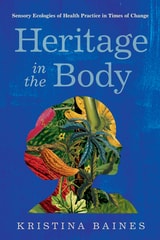
Heritage in the Body
Sensory Ecologies of Health Practice in Times of ChangeKristina Baines
University of Arizona Press, 2024
Employing an embodied ecological heritage (EEH) framework, Baines explores the links between health and heritage as a fluid series of ecological practices. Health and wellness are holistically defined and approached from a phenomenological perspective. Baines focuses on how sensory experiences change the body through practice and provides insights into community-driven alternatives as a means to maintain and support happy, healthy lives.

Heritage or Heresy
Archaeology and Culture on the Maya RivieraCameron Jean Walker
University of Alabama Press, 2008
How can we effectively interpret and present one culture to another without stereotypes or over-simplifications? What is the best way to present an authoritative version of a national heritage without also endangering ancient sites or being insensitive to the local customs, beliefs, and religious practices of the indigenous peoples?
This volume addresses the ongoing thrust in archaeology to take the next step after preserving the past: interpreting that past for the future. That future audience includes both local citizens and tourists who may have little background in archaeology, anthropology, or the history of the culture featured. Walker presents the key components of the anthropological study of tourism as a global phenomenon, with particular emphasis on the more prominent arguments for how and why tourism is a universal and meaningful human activity. The highly controversial topic of authenticity is examined, with special attention given to how "authentic" has been defined and how it relates to the ways in which archaeological sites, artifacts, and cultural traditions are presented--or not presented--to the visiting public. The ephemeral promise of “authenticity” drives the heritage tourism industry, which is a key consideration for the long term economy of the Maya Riviera and elsewhere. Through analysis of seven archaeological sites on the Yucatan peninsula that are open to heritage touring, Walker reveals the planned growth of the Maya Riviera since the early 1970s and examines the impact of international tourism on both ancient structures and the contemporary Maya people and culture.
Herlands
Exploring the Women's Land Movement in the United StatesKeridwen N. Luis
University of Minnesota Press, 2018
How women-only communities provide spaces for new forms of culture, sociality, gender, and sexuality
Women’s lands are intentional, collective communities composed entirely of women. Rooted in 1970s feminist politics, they continue to thrive in a range of ways, from urban households to isolated rural communes, providing spaces where ideas about gender, sexuality, and sociality are challenged in both deliberate and accidental ways. Herlands, a compelling ethnography of women’s land networks in the United States, highlights the ongoing relevance of these communities as vibrant cultural enclaves that also have an impact on broader ideas about gender, women’s bodies, lesbian identity, and right ways of living.
As a participant-observer, Keridwen N. Luis brings unique insights to the lives and stories of the women living in these communities. While documenting the experiences of specific spaces in Massachusetts, Tennessee, New Mexico, and Ohio, Herlands also explores the history of women’s lands and breaks new ground exploring culture theory, gender theory, and how lesbian identity is conceived and constructed in North America. Luis also discusses how issues of race and class are addressed, the ways in which nudity and public hygiene challenge dominant constructions of the healthy or aging body, and the pervasive influence of hegemonic thinking on debates about transgender women. Luis finds that although changing dominant thinking can be difficult and incremental, women’s lands provide exciting possibilities for revolutionary transformation in society.
Herlands
Inside Societies Where Women Make the RulesMegha Mohan
Michigan State University Press, 2027
In this vital and groundbreaking book, Megha Mohan introduces readers to a range of fascinating, women-led societies. Inspired by her great-grandmother’s matrilineal community in South India, Mohan explores communities around the globe—from controversial feminist online troll networks in South Korea to older women co-housing in Paris and North London to the Rain Queens of South Africa. The result is a vivid, global portrait of women’s communities.
Through extensive research and exclusive first-hand reporting, Mohan goes in search of the roots of women-led societies, revealing a vibrant global history brought together for the first time. She also takes us into modern spaces where women live on their own terms, showing us how we can rethink society for new ways of living, working, and collaborating.
For anyone interested in our collective histories, cultures, economics, and governance, Herlands shows the power and possibility of new ways of living—and leading—for us all. It’s an important landmark exploration for our times that not only explores fascinating ways of living but also addresses broader questions about new ways to think and govern and why it matters.

Herman Schmalenbach on Society and Experience
Herman Schmalenbach
University of Chicago Press, 1977
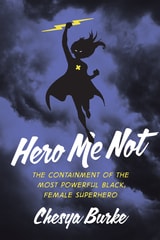
Hero Me Not
The Containment of the Most Powerful Black, Female SuperheroChesya Burke
Rutgers University Press, 2023
First introduced in the pages of X-Men, Storm is probably the most recognized Black female superhero. She is also one of the most powerful characters in the Marvel Universe, with abilities that allow her to control the weather itself. Yet that power is almost always deployed in the service of White characters, and Storm is rarely treated as an authority figure.
Hero Me Not offers an in-depth look at this fascinating yet often frustrating character through all her manifestations in comics, animation, and films. Chesya Burke examines the coding of Storm as racially “exotic,” an African woman who nonetheless has bright white hair and blue eyes and was portrayed onscreen by biracial actresses Halle Berry and Alexandra Shipp. She shows how Storm, created by White writers and artists, was an amalgam of various Black stereotypes, from the Mammy and the Jezebel to the Magical Negro, resulting in a new stereotype she terms the Negro Spiritual Woman.
With chapters focusing on the history, transmedia representation, and racial politics of Storm, Burke offers a very personal account of what it means to be a Black female comics fan searching popular culture for positive images of powerful women who look like you.
Heroes and Hero Cults in Latin America
Edited by Samuel Brunk and Ben Fallaw
University of Texas Press, 2006
Latin American history traditionally has been defined by larger-than-life heroes such as Símon Bolívar, Emiliano Zapata, and Evita Perón. Recent scholarship, however, tends to emphasize social and cultural factors rather than great leaders. In this new collection, Samuel Brunk and Ben Fallaw bring heroes back to the center of the debate, arguing that heroes not only shape history, they also "tell us a great deal about the places from which they come."
The original essays in this collection examine ten modern Latin American heroes whose charisma derived from the quality of their relationships with admirers, rather than their innate personal qualities. The rise of mass media, for instance, helped pave the way for populists such as radio actress-turned-hero Evita Perón. On the other hand, heroes who become president often watch their images crumble, as policies replace personality in the eyes of citizens. In the end, the editors argue, there is no formula for Latin American heroes, who both forge, and are forged by, unique national events. The conclusion points toward Mexico, where the peasant revolutions that elevated Miguel Hidalgo and, later, Emiliano Zapata are so revered that today's would-be heroes, such as the EZLN's Subcomandante Marcos, must link themselves to peasant mythology even when their personal roots are far from native ground. The enduring (or, in some cases, fading) influence of those discussed in this volume validates the central placement of heroes in Latin American history.

Heroes and Humanities
Detective Fiction and CultureRay B. Browne
University of Wisconsin Press, 1986
The present study of American, Australian, and Canadian detective fiction concerns literature which speaks in the ways of heroes and humanities about the human condition. All authors studied here, to one degree or another, demonstrate their concern with human society, some more strongly than others, but all with their eyes on the human situation and human existence. At times these studies lean toward the tragic in their outlook and development. In all instances they center on the humanistic.
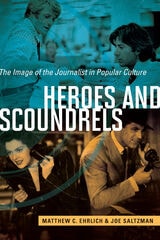
Heroes and Scoundrels
The Image of the Journalist in Popular CultureMatthew C. Ehrlich and Joe Saltzman
University of Illinois Press, 2015
Drawing on portrayals of journalists in television, film, radio, novels, comics, plays, and other media, Matthew C. Ehrlich and Joe Saltzman survey how popular media has depicted the profession across time. Their creative use of media artifacts provides thought-provoking forays into such fundamental issues as how pop culture mythologizes and demythologizes key events in journalism history and how it confronts issues of race, gender, and sexual orientation on the job.
From Network to The Wire, from Lois Lane to Mikael Blomkvist, Heroes and Scoundrels reveals how portrayals of journalism's relationship to history, professionalism, power, image, and war influence our thinking and the very practice of democracy.
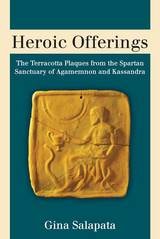
Heroic Offerings
The Terracotta Plaques from the Spartan Sanctuary of Agamemnon and KassandraGina Salapata
University of Michigan Press, 2015
This volume focuses on a large group of decorated terracotta plaques, from the sixth to fourth centuries BCE. These molded plaques were discovered with other offerings in a sanctuary deposit excavated near Sparta more than fifty years ago, but they have remained unpublished until now. They number over 1,500 complete and fragmentary pieces. In technique, style, and iconography they form a homogeneous group unlike any other from mainland Greece. The large number of plaques and variety of types reveal a stable and vigorous coroplastic tradition in Lakonia during the late Archaic and Classical period.
Heroic Offerings will be of interest to students and scholars of Greek history, art, and archaeology, to those interested in ancient religious practice in the Mediterranean, and to all inspired by Athens’ chief political rival, Sparta.
This volume received financial support from the Archaeological Institute of America.
Heroines of Popular Culture
Edited by Ray B. Browne
University of Wisconsin Press, 1987
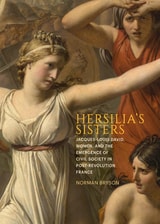
Hersilia's Sisters
Jacques-Louis David, Women, and the Emergence of Civil Society in Post-Revolution FranceNorman Bryson
J. Paul Getty Trust, The, 0
In 1799, when the French artist Jacques-Louis David (1748–1825) exhibited his Intervention of the Sabines, a history painting featuring the ancient heroine Hersilia, he added portraits of two contemporary women on either side of her—Henriette de Verninac, daughter of Charles-François Delacroix, minister of foreign affairs, and Juliette Récamier, a well-known and admired socialite. Drawing on many disciplines, Norman Bryson explains how such a combination of paintings could reveal the underlying nature of the Directoire, the period between the vicious and near-dictatorial Reign of Terror (1793–94) and the coup in 1799 that brought Napoleon to power.
Hersilia’s Sisters illuminates ways that cultural life and civil society were rebuilt during these years through an extraordinary efflorescence of women pioneers in every cultural domain—literature, the stage, opera, moral philosophy, political theory, painting, popular journalism, and fashion. Through a close examination of David’s work between The Intervention of the Sabines (begun in 1796) and Bonaparte Crossing the Alps (begun in 1800), Bryson explores how the flowering of women’s culture under the Directoire became a decisive influence on David’s art. With more than 150 illustrations, this book provides new and brilliant insight into this period that will captivate readers.
Heterarchy, Political Economy, and the Ancient Maya
The Three Rivers Region of the East-Central Yucatán PeninsulaEdited by Vernon L. Scarborough, Fred Valdez Jr., and Nicholas Dunning
University of Arizona Press, 2003

Heterosyncrasies
Female Sexuality When Normal Wasn’tKarma Lochrie
University of Minnesota Press, 2005
Hezbollah
The Political Economy of Lebanon's Party of GodJoseph Daher
Pluto Press, 2016
By discarding more common approaches to the party that focus on religious discourse or military questions, Daher is freed up to analyze what the party actually is: an organization that is operating within a specific political and socio-economic context, one that simultaneously offers it a rich ground of support and limits its range of action. Daher clearly and carefully positions Hezbollah within that context, focusing on its historic ties with its main sponsor, Iran, its media and cultural wings, its relationship with Western economic policies, and the impact of the Shi’a population on the sectarian politics of Lebanon. Offering additional attention to the party’s positions on worker’s rights and women’s issues, this fresh take on Hezbollah will be incredibly useful for understanding the world’s most tumultuous region.

Hidden Arguments
Political Ideology and Disease Prevention PolicySylvia Noble Tesh
Rutgers University Press, 1988
Along the way she makes these principal points: She criticizes as politically conservative the idea that diseases result from a multifactorial web of causes. Placing responsibility for disease prevention on "society" is ideological, she argues. In connection with the air traffic controllers she questions whether it is in a union's best interests to claim that workers' jobs are stressful. She shows why there are no entirely neutral answers to questions about the toxicity of environmental pollutants. In a final chapter, Tesh urges scientists to incorporate egalitarian values into their search for the truth, rather than pretending science can be divorced from that political ideology.

Hidden Empire of Finance
How Wall Street Profits from Our Cities and Fuels Global InequalityMichael Goldman
Duke University Press, 2026
Hidden Hands
Working-Class Women and Victorian Social-Problem FictionPatricia E. Johnson
Ohio University Press, 2001
Tracing the Victorian crisis over the representation of working-class women to the 1842 Parliamentary bluebook on mines, with its controversial images of women at work, Hidden Hands argues that the female industrial worker became even more dangerous to represent than the prostitute or the male radical because she exposed crucial contradictions between the class and gender ideologies of the period and its economic realities.
Drawing on the recent work of feminist historians, Patricia Johnson lays the groundwork for a reinterpretation of Victorian social-problem fiction that highlights its treatment of issues that particularly affected working-class women: sexual harassment; the interconnections between domestic ideology and domestic violence; their relationships to male-dominated working-class movements such as Luddism, Chartism, and unionism; and their troubled connection to middle-class feminism.
Uncovering a series of images in Victorian fiction ranging from hot-tempered servants and sexually harassed factory girls to working-class homemakers pictured as beaten dogs, Hidden Hands demonstrates that representations of working-class women, however marginalized or incoherent, reveal the very contradictions they are constructed to hide and that the dynamics of these representations have broad implications both for other groups, such as middle-class women, and for the emergence of working-class women as writers themselves.
Hidden Histories of Gender and the State in Latin America
Elizabeth Dore and Maxine Molyneux, eds.
Duke University Press, 2000
Along these lines, the book begins with two theoretical chapters by the editors, Elizabeth Dore and Maxine Molyneux. Dore opens by arguing against the prevailing view that the nineteenth century was marked by a gradual emancipation of women, while Molyneux considers how various Latin American state forms—liberal, corporatist, socialist, neoliberal—have more recently sought to incorporate women into their projects of social reform and modernization. These essays are followed by twelve case studies that examine how states have contributed to the normalization of male and female roles and relations. Covering an impressive breadth not only of historical time but also of geographical scope, this volume moves from Brazil to Costa Rica, from Mexico to Chile, traversing many countries in between. Contributors explore such topics as civic ritual in Bolivia, rape in war-torn Colombia, and the legal construction of patriarchy in Argentina. They examine the public regulation of domestic life, feminist lobby groups, class compromise, female slaves, and women in rural households—distinct, salient aspects of the state-gender relationship in specific countries at specific historical junctures.
By providing a richly descriptive and theoretically grounded account of the interaction between state and gender politics in Latin America, this volume contributes to an important conversation between feminists interested in the state and political scientists interested in gender. It will be valuable to such disciplines as history, sociology, international comparative studies, and Latin American studies.
Contributors. María Eugenia Chaves, Elizabeth Dore, Rebecca Earle, Jo Fisher, Laura Gotkowitz, Donna J. Guy, Fiona Macaulay, Maxine Molyneux, Eugenia Rodriguez, Karin Alejandra Rosemblatt, Ann Varley, Mary Kay Vaughan

Hidden Histories of Unauthorized Migrations from Europe to the United States
Edited by Danielle Battisti and S. Deborah Kang
University of Illinois Press, 2025
Often depicted as the nation’s iconic legal immigrant, unauthorized European migrants are often overlooked by scholars, policymakers, and the media. This volume tells the stories of European migrants who adopted irregular migration strategies to enter and remain in the United States throughout the twentieth century. Contributors explore facets of this history with essays on migration patterns from Russia, Italy, Ireland, the Ottoman Empire, and Poland. They also offer important arguments about the treatment of unauthorized European migrants by states and societies on both sides of the Atlantic and how the reception of undocumented immigrants has been and continues to be impacted by the dynamics of racial, class, and gender constructions in the United States and abroad. As the contributors show, the reception accorded unauthorized European migrants frequently obscured and even normalized their irregular migration strategies, easing their access to American citizenship.
Revealing and insightful, Hidden Histories of Unauthorized Migrations from Europe to the United States sheds new light our intertwined notions of race, legality, and immigration.
Contributors: Danielle Battisti, Ashley Johnson Bavery, Mary Patrice Erdmans, Polina Ermoshkina, Torsten Feys, Carly Goodman, S. Deborah Kang, E. Kyle Romero, Randa Tawil, and Joanna Wojdon
Hidden Histories
Faith and Black Lesbian LeadershipMonique Moultrie
Duke University Press, 2023
Hidden Hitchcock
D. A. Miller
University of Chicago Press, 2016
Focusing on three films—Strangers on a Train, Rope, and The Wrong Man—Miller shows how Hitchcock anticipates, even demands a “Too-Close Viewer.” Dwelling within us all and vigilant even when everything appears to be in good order, this Too-Close Viewer attempts to see more than the director points out, to expand the space of the film and the duration of the viewing experience. And, thanks to Hidden Hitchcock, that obsessive attention is rewarded. In Hitchcock’s visual puns, his so-called continuity errors, and his hidden appearances (not to be confused with his cameos), Miller finds wellsprings of enigma.
Hidden Hitchcock is a revelatory work that not only shows how little we know this best known of filmmakers, but also how near such too-close viewing comes to cinephilic madness.
Hidden Inequities in Labor-Based Contract Grading
Ellen C. Carillo
Utah State University Press, 2021
Current Arguments in Composition Series
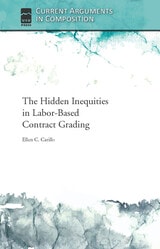
The Hidden Inequities in Labor-Based Contract Grading intervenes in the increasingly popular practice of labor-based grading by expanding the scope of this assessment practice to include students who are disabled and multiply marginalized. Through the lens of disability studies, the book critiques the assumption that labor is a neutral measure by which to assess students and explores how labor-based grading contracts put certain groups of students at a disadvantage. Ellen C. Carillo offers engagement-based grading contracts as an alternative that would provide a more equitable assessment model for students of color, those with disabilities, and students who are multiply marginalized.
This short book explores the history of labor-based grading contracts, reviews the scholarship on this assessment tool, highlights the ways in which it normalizes labor as an unbiased tool, and demonstrates how to extend the conversation in new and generative ways both in research and in classrooms. Carillo encourages instructors to reflect on their assessment practices by demonstrating how even assessment methods that are designed through a social-justice lens may unintentionally privilege some students over others.
Hidden Thunder
Rock Art of the Upper MidwestGeri Schrab
Wisconsin Historical Society Press, 2016
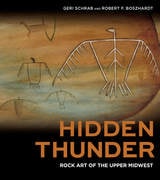
In Hidden Thunder, renowned watercolor artist Geri Schrab and archaeologist Robert "Ernie" Boszhardt give readers an up-close-and-personal look at rock art. With an eye toward preservation, Schrab and Boszhardt take you with them as they research, document, and interpret at the ancient petroglyphs and pictographs made my Native Americans in past millennia. In addition to publicly accessible sites such as Wisconsin’s Roche-a-Cri State Park and Minnesota’s Jeffers Petroglyphs, Hidden Thunder covers the artistic treasures found at several remote and inaccessible rock art sites—revealing the ancient stories through words, full-color photographs, and artistic renditions.
Offering the duo perspectives of scientist and artist, Boszhardt shares the facts that archaeologists have been able to establish about these important artifacts of our early history, while Schrab offers the artist's experience, describing her emotional and creative response upon encountering and painting these sites. Viewpoints by members of the Menominee, Ho-Chunk, Ojibwe, and other Native nations offer additional insight on the historic and cultural significance of these sites. Together these myriad voices reveal layers of meaning and cultural context that emphasize why these fragile resources—often marred by human graffiti and mishandling or damage from the elements—need to be preserved.

Hidden Victims
The Effects of the Death Penalty on Families of the AccusedSharp, Susan F
Rutgers University Press, 2005
"Everyone concerned with the effects of capital punishment must have this book."—Margaret Vandiver, professor, department of criminology and criminal justice, University of Memphis
Murderers, particularly those sentenced to death, are considered by most to be unusually heinous, often sub-human, and entirely different from the rest of us. In Hidden Victims, sociologist Susan F. Sharp challenges this culturally ingrained perspective by reminding us that those individuals facing a death sentence, in addition to being murderers, are brothers or sisters, mothers or fathers, daughters or sons, relatives or friends. Through a series of vivid and in-depth interviews with families of the accused, she demonstrates how the exceptionally severe way in which we view those on death row trickles down to those with whom they are closely connected. Sharp shows how family members and friends—in effect, the indirect victims of the initial crime—experience a profoundly complicated and socially isolating grief process.
Departing from a humanist perspective from which most accounts of victims are told, Sharp makes her case from a sociological standpoint that draws out the parallel experiences and coping mechanisms of these individuals. Chapters focus on responses to sentencing, the particular structure of grieving faced by this population, execution, aftermath, wrongful conviction, family formation after conviction, and the complex situation of individuals related to both the killer and the victim.
Powerful, poignant, and intelligently written, Hidden Victims challenges all of us—regardless of which side of the death penalty you are on—to understand the economic, social, and psychological repercussions that shape the lives of the often forgotten families of death row inmates.
Hidden Worlds
Revisiting the Mennonite Migrants of the 1870sRoyden Loewen
University of Manitoba Press, 2001

Hidden in Plain Sight
An Archaeology of Magic and the CinemaWilliamson, Colin
Rutgers University Press, 2015
To answer these questions, Colin Williamson situates film within a long tradition of magical practices that combine art and science, involve deception and discovery, and evoke two forms of wonder—both awe at the illusion displayed and curiosity about how it was performed. He thus considers how, even as they mystify audiences, cinematic illusions also inspire them to learn more about the technologies and techniques behind moving images. Tracing the overlaps between the worlds of magic and filmmaking, Hidden in Plain Sight examines how professional illusionists and their tricks have been represented onscreen, while also considering stage magicians who have stepped behind the camera, from Georges Méliès to Ricky Jay.
Williamson offers an insightful, wide-ranging investigation of how the cinema has functioned as a “device of wonder” for more than a century, while also exploring how several key filmmakers, from Orson Welles to Christopher Nolan and Martin Scorsese, employ the rhetoric of magic. Examining pre-cinematic visual culture, animation, nonfiction film, and the digital trickery of today’s CGI spectacles, Hidden in Plain Sight provides an eye-opening look at the powerful ways that magic has shaped our modes of perception and our experiences of the cinema.
Hidden in the Heartland
The New Wave of Immigrants and the Challenge to AmericaNancy Brown Diggs
Michigan State University Press, 2011
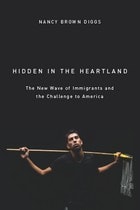
As other teens returned home from school, thirteen-year-old José Silva headed for work at a restaurant, where he would remain until 2:00 a.m. Francisca Herrera, a tomato picker, was exposed to pesticides while she was pregnant and gave birth to a baby without arms or legs. Silva and Herrera immigrated illegally to the United States, and their experiences are far from unique. In this comprehensive, balanced overview of the immigration crisis, Nancy Brown Diggs examines the abusive, unethical conditions under which many immigrants work, and explores how what was once a border problem now extends throughout the country. Drawing from a wide spectrum of sources, Hidden in the Heartland demonstrates how the current situation is untenable for both illegal immigrants and American citizens. A vivid portrait of the immigration crisis, the book makes a passionate case for confronting this major human rights issue—a threat to the very unity of the country.
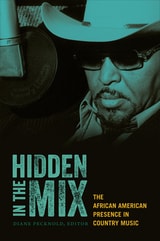
Hidden in the Mix
The African American Presence in Country MusicDiane Pecknold, ed.
Duke University Press, 2013
The contributors to Hidden in the Mix examine how country music became "white," how that fictive racialization has been maintained, and how African American artists and fans have used country music to elaborate their own identities. They investigate topics as diverse as the role of race in shaping old-time record catalogues, the transracial West of the hick-hopper Cowboy Troy, and the place of U.S. country music in postcolonial debates about race and resistance. Revealing how music mediates both the ideology and the lived experience of race, Hidden in the Mix challenges the status of country music as "the white man’s blues."
Contributors. Michael Awkward, Erika Brady, Barbara Ching, Adam Gussow, Patrick Huber, Charles Hughes, Jeffrey A. Keith, Kip Lornell, Diane Pecknold, David Sanjek, Tony Thomas, Jerry Wever
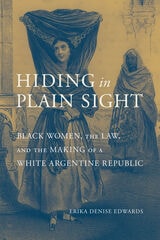
Hiding in Plain Sight
Black Women, the Law, and the Making of a White Argentine RepublicErika Denise Edwards
University of Alabama Press, 2020
WINNER OF THE ASSOCIATION OF BLACK WOMEN HISTORIANS 2020 LETITIA WOODS-BROWN AWARD FOR THE BEST BOOK IN AFRICAN AMERICAN WOMEN'S HISTORY
WINNER OF THE WESTERN ASSOCIATION OF WOMEN HISTORIAN'S BARBARA “PENNY” KANNER AWARD
2021 FINALIST FOR THE HARRIET TUBMAN BOOK PRIZE
2020 FINALIST BERSHIRE CONFERENCE OF WOMEN HISTORIANS BOOK PRIZE
Uncovering the Afro-Argentine women behind the myth of a white nation.
Argentina promotes itself as a country of European immigrants. This makes it an exception to other Latin American countries, which embrace a more mixed—African, Indian, European—heritage. Hiding in Plain Sight: Black Women, the Law, and the Making of a White Argentine Republic traces the origins of what some white Argentines mischaracterize as a “black disappearance” by delving into the intimate lives of black women and explaining how they contributed to the making of a “white” Argentina. Erika Denise Edwards has produced the first comprehensive study in English of the history of African descendants outside of Buenos Aires in the late colonial and early republican periods, with a focus on how these women sought whiteness to better their lives and that of their children.
Edwards argues that attempts by black women to escape the stigma of blackness by recategorizing themselves and their descendants as white began as early as the late eighteenth century, challenging scholars who assert that the black population drastically declined at the end of the nineteenth century because of the whitening or modernization process. She further contends that in Córdoba, Argentina, women of African descent (such as wives, mothers, daughters, and concubines) were instrumental in shaping their own racial reclassifications and destinies.
This volume makes use of a wealth of sources to relate these women’s choices. The sources consulted include city censuses and notarial and probate records that deal with free and enslaved African descendants; criminal, ecclesiastical, and civil court cases; marriages and baptisms records and newsletters. These varied sources provide information about the day-to-day activities of cordobés society and how women of African descent lived, formed relationships, thrived, and partook in the transformation of racial identities in Argentina.
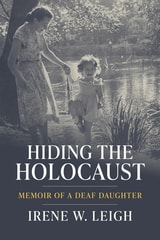
Hiding the Holocaust
Memoir of a Deaf DaughterIrene W. Leigh
Gallaudet University Press, 2026
Hierarchies of Care
Girls, Motherhood, and Inequality in PeruKrista E. Van Vleet
University of Illinois Press, 2019

Hierarchy, Commerce, and Fraud in Bourbon Spanish America
A Postal Inspector's ExposeRuth Hill
Vanderbilt University Press, 2021
Hierarchy, History, and Human Nature
The Social Origins of Historical ConsciousnessDonald E. Brown
University of Arizona Press, 1988
"This is an intriguing and stimulating study of historical differences in the indigenous historiography of parts of Asia, the Middle East, and Europe."—American Anthropologist.
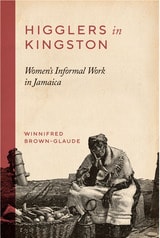
Higglers in Kingston
Women's Informal Work in JamaicaWinnifred Brown-Glaude
Vanderbilt University Press, 2011
In Higglers in Kingston, Winnifred Brown-Glaude puts the reader on the ground in frenetic urban Kingston, the capital and largest city in Jamaica. She explores the lives of informal market laborers, called "higglers," across the city as they navigate a corrupt and inaccessible "official" Jamaican economy. But rather than focus merely on the present-day situation, she contextualizes how Jamaica arrived at this point, delving deep into the island's history as a former colony, a home to slaves and masters alike, and an eventual nation of competing and conflicted racial sectors.
Higglers in Kingston weaves together contemporary ethnography, economic history, and sociology of race to address a broad audience of readers on a crucial economic and cultural center.
Higglers in Kingston
Women's Informal Work in JamaicaWinnifred Brown-Glaude
Vanderbilt University Press, 2011
In Higglers in Kingston, Winnifred Brown-Glaude puts the reader on the ground in frenetic urban Kingston, the capital and largest city in Jamaica. She explores the lives of informal market laborers, called "higglers," across the city as they navigate a corrupt and inaccessible "official" Jamaican economy. But rather than focus merely on the present-day situation, she contextualizes how Jamaica arrived at this point, delving deep into the island's history as a former colony, a home to slaves and masters alike, and an eventual nation of competing and conflicted racial sectors.
Higglers in Kingston weaves together contemporary ethnography, economic history, and sociology of race to address a broad audience of readers on a crucial economic and cultural center.