Results by title
22279 books match the query 'Social Science' and 635 start with h

High Art Down Home
An Economic Ethnography of a Local Art MarketStuart Plattner
University of Chicago Press, 1996
To answer this question, Stuart Plattner eschews the spotlights and media-hype of glitzy New York galleries, and focuses instead upon the more localized, and much more typical, world of the St. Louis art scene. What emerges is the most comprehensive description ever published of a contemporary regional avant-garde center, where noble aesthetic ambitions compete with the exigencies of economic survival. Plattner's skillful use of in-depth interviews enables the market's key participants to speak for themselves, giving voice to the many frustrations and rewards, motivations and constraints that influence their interactions with their work, the market, and each other.
"Plattner analyzes the social and economic factors that govern art markets outside the long shadow cast by chic New York galleries. An insightful and fascinating work."—Library Journal
"Explains much about the conundrums and paradoxes of the art world as a whole."—Eddie Silva, Riverfront Times
High Contrast
Race and Gender in Contemporary Hollywood FilmsSharon Willis
Duke University Press, 1997
Capturing the political complexity of these films, Willis argues that race, gender, and sexuality, as they are figured in the fantasy of popular film, do not function separately, but rather inform and determine each other’s meaning. She demonstrates how collective anxieties regarding social difference are mapped onto big budget movies like the Die Hard and Lethal Weapon series, Basic Instinct, Fatal Attraction, Thelma and Louise, Terminator 2, and others. Analyzing the artistic styles of directors Lynch, Tarantino, and Lee, in such films as Wild at Heart, Pulp Fiction, and Do the Right Thing, she investigates how these interactions of difference are linked to the production of specific authorial styles, and how race functions for each of these directors, particularly in relation to gender identity, erotics, and fantasy.

High Desert, Higher Costs
Bend and the Housing Crisis in the American WestJonathan Bach
Oregon State University Press, 2025
Nestled against the Cascade Mountains, former lumber town Bend, Oregon, entices residents who long to live in a wonderland of sagebrush and forests. But like so many other communities across the West, Bend has too few homes for everyone clambering for access. In High Desert, Higher Costs, Jonathan Bach takes a closer look at the housing crisis in this mid-sized city that is both the population center for rural Central Oregon and a major recreation area. Bach uses Bend as a lens into the growing housing crisis in the region, where residents and tourists alike prize access to outdoor recreation, and housing issues have been brewing for decades.
Like other cities in Montana, Idaho, and Colorado, Bend serves as a gateway to popular natural areas while also experiencing a limited amount of new housing, increasing populations, amenity migrants in the age of remote work, depressed or stagnating wages, and a widening gulf between homeowners and renters. High Desert, Higher Costs introduces us to regular people—from the former political candidate evicted during COVID-19 to the nonprofit worker hoping to build apartments for the houseless—who struggle to call Bend home. Bach explores the causes of these issues and the political, legal, economic, and cultural factors influencing them, and also offers potential solutions for current and future residents to build their lives now, and in the years to come, in Bend and throughout the American West.

High Stakes
Florida Seminole Gaming and SovereigntyJessica R. Cattelino
Duke University Press, 2008
Cattelino presents a vivid ethnographic account of the history and consequences of Seminole gaming. Drawing on research conducted with tribal permission, she describes casino operations, chronicles the everyday life and history of the Seminole Tribe, and shares the insights of individual Seminoles. At the same time, she unravels the complex connections among cultural difference, economic power, and political rights. Through analyses of Seminole housing, museum and language programs, legal disputes, and everyday activities, she shows how Seminoles use gaming revenue to enact their sovereignty. They do so in part, she argues, through relations of interdependency with others. High Stakes compels rethinking of the conditions of indigeneity, the power of money, and the meaning of sovereignty.
High Tech and High Heels in the Global Economy
Women, Work, and Pink-Collar Identities in the CaribbeanCarla Freeman
Duke University Press, 2000
Freeman examines the expansion of the global assembly line into the realm of computer-based work, and focuses specifically on the incorporation of young Barbadian women into these high-tech informatics jobs. As such, Caribbean women are seen as integral not simply to the workings of globalization but as helping to shape its very form. Through the enactment of “professionalism” in both appearances and labor practices, and by insisting that motherhood and work go hand in hand, they re-define the companies’ profile of “ideal” workers and create their own “pink-collar” identities. Through new modes of dress and imagemaking, the informatics workers seek to distinguish themselves from factory workers, and to achieve these new modes of consumption, they engage in a wide array of extra income earning activities. Freeman argues that for the new Barbadian pink-collar workers, the globalization of production cannot be viewed apart from the globalization of consumption. In doing so, she shows the connections between formal and informal economies, and challenges long-standing oppositions between first world consumers and third world producers, as well as white-collar and blue-collar labor.
Written in a style that allows the voices of the pink-collar workers to demonstrate the simultaneous burdens and pleasures of their work, High Tech and High Heels in the Global Economy will appeal to scholars and students in a wide range of disciplines, including anthropology, cultural studies, sociology, women’s studies, political economy, and Caribbean studies, as well as labor and postcolonial studies.

High-Profile Crimes
When Legal Cases Become Social CausesLynn S. Chancer
University of Chicago Press, 2005
An astute and incisive chronicle of some of the most polarizing cases of the 1980s and 1990s, High-Profile Crimes shows that their landmark status results from the overlapping interaction of diverse participants. The merging of legal cases and social causes, Chancer argues, has wrought ambivalent effects on both social movements and the law. On the one hand, high-profile crimes offer important opportunities for emotional expression and raise awareness of social issues. But on the other hand, social problems cannot be resolved through the either/or determinations that are the goals of the legal system, creating frustration for those who look to the outcome of these cases for social progress. Guilt or innocence through the lens of the media leads to either defeat or victory for a social cause-a confounding situation that made the O. J. Simpson case, for example, unable to resolve the issues of domestic violence and police racism that it had come to symbolize.
Based on nearly two hundred interviews, Chancer's discussions of the infamous Central Park jogger and Bensonhurst cases-as well as the rape trials of William Kennedy Smith and Mike Tyson, the assault cases of Rodney King and Reginald Denny, and, finally, the O. J. Simpson murder trial-provide a convincing, multidimensional and innovative analysis of the most charged public dramas of the last two decades.
High-Risk Feminism in Colombia
Women's Mobilization in Violent ContextsJulia Margaret Zulver
Rutgers University Press, 2022
High-Skilled Migration to the United States and Its Economic Consequences
Edited by Gordon H. Hanson, William R. Kerr, and Sarah Turner
University of Chicago Press, 2018

Higher Ground
From Utopianism to Realism in American Feminist Thought and TheorySally L. Kitch
University of Chicago Press, 2000
Drawing on the history of utopian thought, as well as on her own research on utopian communities, Kitch defines utopian thinking, explores the pitfalls of pursuing social change based on utopian ideas, and argues for a "higher ground" —a contrasting approach she calls realism. Replacing utopianism with realism helps to eliminate self-defeating notions in feminist theory, such as false generalization, idealization, and unnecessary dichotomies. Realistic thought, however, allows feminist theory to respond to changing circumstances, acknowledge sameness as well as difference, value the past and the present, and respect ideological give-and-take.
An important critique of feminist thought, Kitch concludes with a clear, exciting vision for a feminist future without utopia.

Hijab
Three Modern Iranian Seminarian PerspectivesLloyd Ridgeon
Gingko, 2021
Ḥijāb addresses the differences of opinion among seminarians on the hijab in the Islamic Republic of Iran, focusing on three representative thinkers: Murtaza Mutahhari who held veiling to be compulsory, Ahmad Qabil who argued for the desirability of the hijab, and Muhsin Kadivar who considers it neither necessary nor desirable. In the first chapter, the views of these three scholars are contextualized within the framework known as ‘new religious thinking’ among the seminarians. Comprehending the hermeneutics of this new religious thinking is key to appreciating how and why the younger generation of scholars have offered divergent judgements about the hijab. Following the first chapter, the book is divided into three parallel sections, each devoted to one of the three seminarians. These present a chronological approach, and each scholar’s position on the hijab is assessed with reference to historical specificity and their own general jurisprudential perspective. Extensive examples of the writings of the three scholars on the hijab are also provided.
Hijos del Pueblo
Gender, Family, and Community in Rural Mexico, 1730-1850By Deborah E. Kanter
University of Texas Press, 2008
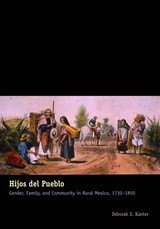
The everyday lives of indigenous and Spanish families in the countryside, a previously under-explored segment of Mexican cultural history, are now illuminated through the vivid narratives presented in Hijos del Pueblo ("offspring of the village"). Drawing on neglected civil and criminal judicial records from the Toluca region, Deborah Kanter revives the voices of native women and men, their Spanish neighbors, muleteers, and hacienda peons to showcase their struggles in an era of crisis and uncertainty (1730-1850).
Engaging and meaningful biographies of indigenous villagers, female and male, illustrate that no scholar can understand the history of Mexican communities without taking gender seriously. In legal interactions native plaintiffs and Spanish jurists confronted essential questions of identity and hegemony. At once an insightful consideration of individual experiences and sweeping paternalistic power constructs, Hijos del Pueblo contributes important new findings to the realm of gender studies and the evolution of Latin America.

Hikikomori
Adolescence without EndSaito Tamaki
University of Minnesota Press, 2013
This is the first English translation of a controversial Japanese best seller that made the public aware of the social problem of hikikomori, or “withdrawal”—a phenomenon estimated by the author to involve as many as one million Japanese adolescents and young adults who have withdrawn from society, retreating to their rooms for months or years and severing almost all ties to the outside world. Saitō Tamaki’s work of popular psychology provoked a national debate about the causes and extent of the condition.
Since Hikikomori was published in Japan in 1998, the problem of social withdrawal has increasingly been recognized as an international one, and this translation promises to bring much-needed attention to the issue in the English-speaking world. According to the New York Times, “As a hikikomori ages, the odds that he’ll re-enter the world decline. Indeed, some experts predict that most hikikomori who are withdrawn for a year or more may never fully recover. That means that even if they emerge from their rooms, they either won’t get a full-time job or won’t be involved in a long-term relationship. And some will never leave home. In many cases, their parents are now approaching retirement, and once they die, the fate of the shut-ins—whose social and work skills, if they ever existed, will have atrophied—is an open question.”
Drawing on his own clinical experience with hikikomori patients, Saitō creates a working definition of social withdrawal and explains its development. He argues that hikikomori sufferers manifest a specific, interconnected series of symptoms that do not fit neatly with any single, easily identifiable mental condition, such as depression.
Rejecting the tendency to moralize or pathologize, Saitō sensitively describes how families and caregivers can support individuals in withdrawal and help them take steps toward recovery. At the same time, his perspective sparked contention over the contributions of cultural characteristics—including family structure, the education system, and gender relations—to the problem of social withdrawal in Japan and abroad.

Hill Farms
Surviving Modern Times in Early Twentieth-Century VermontDona Brown
University of Massachusetts Press, 2025
There is a stubborn myth that has persisted for almost two centuries: the narrative of the abandoned farm in the rural American northeast. In Hill Farms, historian Dona Brown confronts this myth of rural decline with a focus on Jamaica, Vermont, a small town in the hills west of Brattleboro. Through this town’s history, she reveals a more complex economic and environmental narrative, a story of the continued use of traditional farm methods despite the growing power of modernization and demands for increased efficiencies.
Brown examines the records of a 1930 study by the University of Vermont’s now infamous Eugenics Survey, part of a flood of problematic investigations of Vermont rural life at the time, wherein eugenicists interviewed residents in every Jamaica household about crops, incomes, and housing conditions. These researchers from various disciplines saw in Jamaica and towns like it poverty and ignorance rather than a commitment to farming as a modest but sustainable way of life. Extensive handwritten notes from the Eugenics Survey provide a remarkable glimpse into the daily lives and practices of these upland farmers, revealing the value in maintaining older, less intensive farming practices and shedding new light on the social and environmental history of the time. As debates around farming and rural life intensified during the Great Depression, advocates beyond Vermont rose to the defense of traditional farms. Though industrialized agriculture ultimately prevailed, the old farming strategies cultivated by these upcountry residents continue to attract adherents in the face of new challenges to traditional farming in our own times.

Hillary Clinton in the News
Gender and Authenticity in American PoliticsShawn J. Parry-Giles
University of Illinois Press, 2014
The charge of inauthenticity has trailed Hillary Clinton from the moment she entered the national spotlight and stood in front of television cameras. Hillary Clinton in the News: Gender and Authenticity in American Politics shows how the U.S. news media created their own news frames of Clinton's political authenticity and image-making, from her participation in Bill Clinton's 1992 presidential campaign through her own 2008 presidential bid.
Using theories of nationalism, feminism, and authenticity, Parry-Giles tracks the evolving ways the major networks and cable news programs framed Clinton's image as she assumed roles ranging from surrogate campaigner, legislative advocate, and financial investor to international emissary, scorned wife, and political candidate. This study magnifies how the coverage that preceded Clinton's entry into electoral politics was grounded in her earliest presence in the national spotlight, and in long-standing nationalistic beliefs about the boundaries of authentic womanhood and first lady comportment. Once Clinton dared to cross those gender boundaries and vie for office in her own right, the news exuded a rhetoric of sexual violence. These portrayals served as a warning to other women who dared to enter the political arena and violate the protocols of authentic womanhood.
Hillbilly Hellraisers
Federal Power and Populist Defiance in the OzarksJ Perkins
University of Illinois Press, 2017
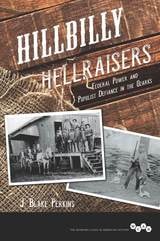
J. Blake Perkins searches for the roots of rural defiance in the Ozarks--and discovers how it changed over time. Eschewing generalities, Perkins focuses on the experiences and attitudes of rural people themselves as they interacted with government from the late nineteenth century through the twentieth century.He uncovers the reasons local disputes and uneven access to government power fostered markedly different reactions by hill people as time went by. Resistance in the earlier period sprang from upland small farmers' conflicts with capitalist elites who held the local levers of federal power. But as industry and agribusiness displaced family farms after World War II, a conservative cohort of town business elites, local political officials, and midwestern immigrants arose from the region's new low-wage, union-averse economy. As Perkins argues, this modern antigovernment conservatism bore little resemblance to the backcountry populism of an earlier age but had much in common with the movement elsewhere.

Hillbilly Maidens, Okies, and Cowgirls
Women's Country Music, 1930-1960Stephanie Vander Wel
University of Illinois Press, 2020
From the 1930s to the 1960s, the booming popularity of country music threw a spotlight on a new generation of innovative women artists. These individuals blazed trails as singers, musicians, and performers even as the industry hemmed in their potential popularity with labels like woman hillbilly, singing cowgirl, and honky-tonk angel.
Stephanie Vander Wel looks at the careers of artists like Patsy Montana, Rose Maddox, and Kitty Wells against the backdrop of country music's golden age. Analyzing recordings and appearances on radio, film, and television, she connects performances to real and imagined places and examines how the music sparked new ways for women listeners to imagine the open range, the honky-tonk, and the home. The music also captured the tensions felt by women facing geographic disruption and economic uncertainty. While classic songs and heartfelt performances might ease anxieties, the subject matter underlined women's ambivalent relationships to industrialism, middle-class security, and established notions of femininity.
Himalayan Dialogue
Tibetan Lamas & Gurung Shamans In NepalStan Royal Mumford
University of Wisconsin Press, 1989
Here for the first time is a thorough anthropological study of Tibetan lamaism combining textual analysis with richly contextualized ethnographic data. The rites studied are of the Nyingma Tibetan Buddhist tradition. In contrast to the textual analyses that have viewed the culture as a finished entity, here we see an unbounded ritual process with unfinished interpretations.
Mumford’s focus is on the “dialogue” taking place between the lamaist and the shamanic regimes, as a historic development occurring between different cultural layers. The study powerfully demonstrates that interrelationships between subsystems within a given cultural matrix over time are critical to an understanding of religion as a cultural process.
Hindi Structures
Intermediate Level, with Drills, Exercises, and KeyPeter Edwin Hook
University of Michigan Press, 1979
Hinterland Households
Rural Agrarian Household Diversity in Northwest HondurasJohn G. Douglass
University Press of Colorado, 2002

Hinterlands and Regional Dynamics in the Ancient Southwest
Alan P. Sullivan
University of Arizona Press, 2007
Hinterlands to Cities
The Archaeology of Northwest Mexico and Its VecinosMatthew C. Pailes
University Press of Colorado, 2022

Hip Hop Desis
South Asian Americans, Blackness, and a Global Race ConsciousnessNitasha Tamar Sharma
Duke University Press, 2010

Hip Hop Underground
The Integrity and Ethics of Racial IdentificationAnthony Kwame Harrison
Temple University Press, 2009
Hip Hop Underground is a vivid ethnography of the author's observations and experiences in the multiracial world of the San Francisco underground hip hop scene. While Anthony Kwame Harrison interviewed area hip hop artists for this entertaining and informative book, he also performed as the emcee "Mad Squirrel." His immersion in the subculture provides him with unique insights into this dynamic and racially diverse but close-knit community.
Hip Hop Underground examines the changing nature of race among young Americans, and examines the issues of ethnic and racial identification, interaction, and understanding. Critiquing the notion that the Bay Area underground music scene is genuinely "colorblind," Harrison focuses on the issue of race to show how various ethnic groups engage hip hop in remarkably divergent ways—as a means to both claim subcultural legitimacy and establish their racial authenticity.

Hip-Hop Archives
The Politics and Poetics of Knowledge ProductionMark V. Campbell and Murray Forman
Intellect Books, 2025
Despite the vast popularity and cultural influence of hip-hop, efforts to archive its history are still in fairly early stages. This book focuses on the cultural and political aspects of those undertakings. It addresses practical aspects, including methods of collection, curation, preservation, and digitization, and critically analyzes institutional power, community engagement, urban economics, public access, and the ideological implications of hip-hop culture’s enduring tensions with dominant social values. A wide swath of hip-hop culture is covered by the contributors, including dance, graffiti, clothing, and battle rap.

Hip-Hop in Africa
Prophets of the City and Dustyfoot PhilosophersMsia Kibona Clark
Ohio University Press, 2018
Throughout Africa, artists use hip-hop both to describe their lives and to create shared spaces for uncensored social commentary, feminist challenges to patriarchy, and resistance against state institutions, while at the same time engaging with the global hip-hop community. In Hip-Hop in Africa, Msia Kibona Clark examines some of Africa’s biggest hip-hop scenes and shows how hip-hop helps us understand specifically African narratives of social, political, and economic realities.
Clark looks at the use of hip-hop in protest, both as a means of articulating social problems and as a tool for mobilizing listeners around those problems. She also details the spread of hip-hop culture in Africa following its emergence in the United States, assessing the impact of urbanization and demographics on the spread of hip-hop culture.
Hip-Hop in Africa is a tribute to a genre and its artists as well as a timely examination that pushes the study of music and diaspora in critical new directions. Accessibly written by one of the foremost experts on African hip-hop, this book will easily find its place in the classroom.
Hipbillies
Deep Revolution in the Arkansas OzarksJared M. Phillips
University of Arkansas Press, 2019

Hipster Economy
Taste and Authenticity in Late Modern CapitalismAlessandro Gerosa
University College London, 2024
The Hipster Economy gives hipsterism the serious analysis it deserves, through which he reveals the importance of hipster aesthetics, based on authenticity, for today’s consumption-based economy.
Since being authentic has become an aspiration and an imperative, the notion of authenticity shapes the consumption habits of individuals in the most diverse contexts such as food and drinks, clothing, music, tourism, and the digital sphere. It even transforms urban areas and their local economies. In this book, Alessandro Gerosa analyzes this complex set of related phenomena to argue that the quest for authenticity has been a driver of Western societies from the emersion of capitalism and industrial society to today.
The Hipster Economy provides a historically and sociologically grounded explanation of the value of authenticity in the contemporary economy and society, through which it shows why and how authenticity has become a fundamental value orienting consumers' taste in late modern capitalism. In clear and convincing writing, Gerosa proposes a novel conceptualization of the aesthetic regime of consumption and an analysis of how the hipster economy impacts the urban space.
Hispanic Immigrant Literature
El Sueño del RetornoBy Nicolás Kanellos
University of Texas Press, 2011
Immigration has been one of the basic realities of life for Latino communities in the United States since the nineteenth century. It is one of the most important themes in Hispanic literature, and it has given rise to a specific type of literature while also defining what it means to be Hispanic in the United States. Immigrant literature uses predominantly the language of the homeland; it serves a population united by that language, irrespective of national origin; and it solidifies and furthers national identity. The literature of immigration reflects the reasons for emigrating, records—both orally and in writing—the trials and tribulations of immigration, and facilitates adjustment to the new society while maintaining links with the old society.
Based on an archive assembled over the past two decades by author Nicolás Kanellos's Recovering the U. S. Hispanic Literary Heritage project, this comprehensive study is one of the first to define this body of work. Written and recorded by people from Mexico, Cuba, Puerto Rico, the Caribbean, and Central and South America, the texts presented here reflect the dualities that have characterized the Hispanic immigrant experience in the United States since the mid-nineteenth century, set always against a longing for homeland.

Hispanic Methodists, Presbyterians, and Baptists in Texas
By Paul Barton
University of Texas Press, 2006
The question of how one can be both Hispanic and Protestant has perplexed Mexican Americans in Texas ever since Anglo-American Protestants began converting their Mexican Catholic neighbors early in the nineteenth century. Mexican-American Protestants have faced the double challenge of being a religious minority within the larger Mexican-American community and a cultural minority within their Protestant denominations. As they have negotiated and sought to reconcile these two worlds over nearly two centuries, los Protestantes have melded Anglo-American Protestantism with Mexican-American culture to create a truly indigenous, authentic, and empowering faith tradition in the Mexican-American community.
This book presents the first comparative history of Hispanic Methodists, Presbyterians, and Baptists in Texas. Covering a broad sweep from the 1830s to the 1990s, Paul Barton examines how Mexican-American Protestant identities have formed and evolved as los Protestantes interacted with their two very different communities in the barrio and in the Protestant church. He looks at historical trends and events that affected Mexican-American Protestant identity at different periods and discusses why and how shifts in los Protestantes' sense of identity occurred. His research highlights the fact that while Protestantism has traditionally served to assimilate Mexican Americans into the dominant U.S. society, it has also been transformed into a vehicle for expressing and transmitting Hispanic culture and heritage by its Mexican-American adherents.
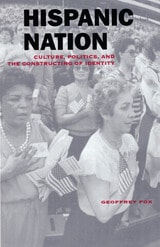
Hispanic Nation
Culture, Politics, and the Constructing of IdentityGeoffrey Fox
University of Arizona Press, 1997
Hispanic Population of the United States
Frank D. Bean
Russell Sage Foundation, 1987
Hispaniola
Caribbean Chiefdoms in the Age of ColumbusSamuel M. Wilson
University of Alabama Press, 1990
In 1492 the island of Hispaniola was inhabited by the Taino, an Indian group whose ancestors had moved into the Caribbean archipelago from lowland South America more than 1,500 years before. They were organized politically into large cacicazgos, or chiefdoms, comprising 70 or more villages under the authority of a paramount cacique, or chief. From the first voyage on, Columbus made Hispaniola his primary base for operations in the New World. Over the subsequent decades, disease, warfare, famine, and enslavement brought about the destruction of the Taino chiefdoms and almost completely annihilated the aboriginal population of the island.
This book examines the early years of the contact period in the Caribbean and in narrative form reconstructs the social and political organization of the Taino. Wilson describes in detail the interactions between the Taino and the Spaniards, with special attention paid to the structure and functioning of the Taino chiefdoms. By providing additional information from archaeology and recent ethnography, he builds a rich context within which to understand the Taino and their responses to the Europeans.
The Taino are especially important in a New World context because they represent a society undergoing rapid sociopolitical change and becoming more complex through time. The early contact period on Hispaniola gives us a rich ethnohistorical glimpse of the political processes of a complex New World society before and during its destruction brought about by the arrival of the Europeans.

Historic Capital
Preservation, Race, and Real Estate in Washington, D.C.Cameron Logan
University of Minnesota Press, 2017
Washington, D.C. has long been known as a frustrating and sometimes confusing city for its residents to call home. The monumental core of federal office buildings, museums, and the National Mall dominates the city’s surrounding neighborhoods and urban fabric. For much of the postwar era, Washingtonians battled to make the city their own, fighting the federal government over the basic question of home rule, the right of the city’s residents to govern their local affairs.
In Historic Capital, urban historian Cameron Logan examines how the historic preservation movement played an integral role in Washingtonians’ claiming the city as their own. Going back to the earliest days of the local historic preservation movement in the 1920s, Logan shows how Washington, D.C.’s historic buildings and neighborhoods have been a site of contestation between local interests and the expansion of the federal government’s footprint. He carefully analyzes the long history of fights over the right to name and define historic districts in Georgetown, Dupont Circle, and Capitol Hill and documents a series of high-profile conflicts surrounding the fate of Lafayette Square, Rhodes Tavern, and Capitol Park, SW before discussing D.C. today.
Diving deep into the racial fault lines of D.C., Historic Capital also explores how the historic preservation movement affected poor and African American residents in Anacostia and the U Street and Shaw neighborhoods and changed the social and cultural fabric of the nation’s capital. Broadening his inquiry to the United States as a whole, Logan ultimately makes the provocative and compelling case that historic preservation has had as great an impact on the physical fabric of U.S. cities as any other private or public sector initiative in the twentieth century.
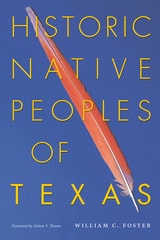
Historic Native Peoples of Texas
By William C. Foster
University of Texas Press, 2008
Several hundred tribes of Native Americans were living within or hunting and trading across the present-day borders of Texas when Cabeza de Vaca and his shipwrecked companions washed up on a Gulf Coast beach in 1528. Over the next two centuries, as Spanish and French expeditions explored the state, they recorded detailed information about the locations and lifeways of Texas's Native peoples. Using recent translations of these expedition diaries and journals, along with discoveries from ongoing archaeological investigations, William C. Foster here assembles the most complete account ever published of Texas's Native peoples during the early historic period (AD 1528 to 1722).
Foster describes the historic Native peoples of Texas by geographic regions. His chronological narrative records the interactions of Native groups with European explorers and with Native trading partners across a wide network that extended into Louisiana, the Great Plains, New Mexico, and northern Mexico. Foster provides extensive ethnohistorical information about Texas's Native peoples, as well as data on the various regions' animals, plants, and climate. Accompanying each regional account is an annotated list of named Indian tribes in that region and maps that show tribal territories and European expedition routes.
This authoritative overview of Texas's historic Native peoples reveals that these groups were far more cosmopolitan than previously known. Functioning as the central link in the continent-wide circulation of trade goods and cultural elements such as religion, architecture, and lithic technology, Texas's historic Native peoples played a crucial role in connecting the Native peoples of North America from the Pacific Coast to the Southeast woodlands.

Historic Zuni Architecture and Society
An Archaeological Application of Space SyntaxT. J. Ferguson
University of Arizona Press, 1996
Historic Zuni Architecture and Society utilizes an interdisciplinary approach, analyzing archaeological data using method, theory, and techniques from the fields of architecture, planning, and ethnology. Archaeologists will find in the book an innovative application of space syntax to archaeological problems, and cultural anthropologists and others interested in the history of the Zuni Indians will value its observations about changes that are currently taking place in Zuni social organization.
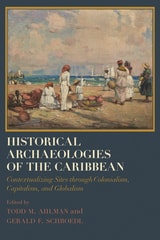
Historical Archaeologies of the Caribbean
Contextualizing Sites through Colonialism, Capitalism, and Globalismedited by Todd M. Ahlman and Gerald F. Schroedl
University of Alabama Press, 2019
Historical Archaeologies of the Caribbean: Contextualizing Sites through Colonialism, Capitalism, and Globalism addresses issues in Caribbean history and historical archaeology such as freedom, frontiers, urbanism, postemancipation life, trade, plantation life, and new heritage. This collection moves beyond plantation archaeology by expanding the knowledge of the diverse Caribbean experiences from the late seventeenth through the mid-nineteenth centuries.
The essays in this volume are grounded in strong research programs and data analysis that incorporate humanistic narratives in their discussions of Amerindian, freedmen, plantation, institutional, military, and urban sites. Sites include a sample of the many different types found across the Caribbean from a variety of colonial contexts that are seldom reported in archaeological research, yet constitute components essential to understanding the full range and depth of Caribbean history.
Contributors examine urban contexts in Nevis and St. John and explore the economic connections between Europeans and enslaved Africans in urban and plantation settings in St. Eustatius. The volume contains a pioneering study of frontier exchange with Amerindians in Dominica and a synthesis of ceramic exchange networks among enslaved Africans in the Leeward Islands. Chapters on military forts in Nevis and St. Kitts call attention to this often-neglected aspect of the Caribbean colonial landscape. Contributors also directly address culture heritage issues relating to community participation and interpretation. On St. Kitts, the legacy of forced confinement of lepers ties into debates of current public health policy. Plantation site studies from Antigua and Martinique are especially relevant because they detail comparisons of French and British patterns of African enslavement and provide insights into how each addressed the social and economic changes that occurred with emancipation.
Contributors
Todd M. Ahlman / Douglas V. Armstrong / Samantha Rebovich Bardoe / Paul Farnsworth / Jeffrey R. Ferguson / R. Grant Gilmore III / Diana González-Tennant / Edward González-Tennant / Barbara J. Heath / Carter L. Hudgins Kenneth G. Kelly / Eric Klingelhofer / Roger H. Leech / Stephan Lenik / Gerald F. Schroedl / Diane Wallman / Christian Williamson
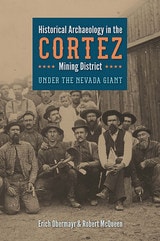
Historical Archaeology in the Cortez Mining District
Under the Nevada GiantErich Obermayr
University of Nevada Press, 2025
Readers interested in the archaeology of the West, mining history, and the history of Nevada will find this book fascinating.

Historical Distance and the Holocaust
Interactions Between Historians and Middle-Class Western Europeans in Memory EducationThomas Van de Putte
Central European University Press, 2026
A detailed interactional analysis and thick ethnographic description demonstrate how the temporal, moral and emotional distancing practices reenforce the lay moralities and political subjectivities of the white middle-class. This comes with (mostly unintended) consequences. Distanced approaches to the Holocaust in non-academic environments reduce empathy for victims and survivors, normalize violence, disconnect the meaning of the Holocaust from contemporary conflict, and re-activate stereotypes about groups who employ more ‘close’ approaches to the Holocaust.

Historical Evidence and Argument
David Henige
University of Wisconsin Press, 2005
Historians know about the past because they examine the evidence. But what exactly is “evidence,” how do historians know what it means—and how can we trust them to get it right? Historian David Henige tackles such questions of historical reliability head-on in his skeptical, unsparing, and acerbically witty Historical Evidence and Argument. “Systematic doubt” is his watchword, and he practices what he preaches through a variety of insightful assessments of historical controversies—for example, over the dating of artifacts and the textual analysis of translated documents. Skepticism, Henige contends, forces us to recognize the limits of our knowledge, but is also a positive force that stimulates new scholarship to counter it.
Historical Metaphors and Mythical Realities
Structure in the Early History of the Sandwich Islands KingdomMarshall D. Sahlins
University of Michigan Press, 1981
Hawaiian culture as it met foreign traders and settlers is the context for Sahlins's structuralist methodology of historical interpretation
Historical Thinking
Sam Wineburg
Temple University Press, 2001
Although most of us think of history -- and learn it -- as a conglomeration of facts, dates, and key figures, for professional historians it is a way of knowing, a method for developing and understanding about the relationships of peoples and events in the past. A cognitive psychologist, Wineburg has been engaged in studying what is intrinsic to historical thinking, how it might be taught, and why most students still adhere to the "one damned thing after another" concept of history.
Whether he is comparing how students and historians interpret documentary evidence or analyzing children's drawings, Wineburg's essays offer "rough maps of how ordinary people think about the past and use it to understand the present." Arguing that we all absorb lessons about history in many settings -- in kitchen table conversations, at the movies, or on the world-wide web, for instance -- these essays acknowledge the role of collective memory in filtering what we learn in school and shaping our historical thinking.
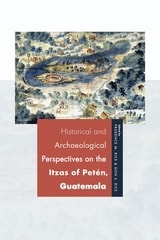
Historical and Archaeological Perspectives on the Itzas of Petén, Guatemala
Prudence M. Rice
University Press of Colorado, 2018
Historical and Archaeological Perspectives on the Itzas of Petén, Guatemala is the first exhaustively detailed and thorough account of the Itzas—a Maya group that dominated much of the western lowland area of tropical forest, swamps, and grasslands in Petén, Guatemala. Examining archaeological and historical evidence, Prudence Rice and Don Rice present a theoretical perspective on the Itzas’ origins and an overview of the social, political, linguistic, and environmental history of the area; explain the Spanish view of the Itzas during the Conquest; and explore the material culture of the Itzas as it has been revealed in recent surveys and excavations.
The long but fragmented history of the Petén Itzas requires investigation across multiple periods and regions. Chapters in this six-part overview interweave varying data pertaining to this group—archaeological, artifactual, indigenous textual, Spanish historical—from multiple languages and academic fields, such as anthropology, archaeology, linguistics, ecology, and history. Part I introduces the lowland Itzas, northern and southern, with an emphasis on those of the central Petén lakes area. Part II discusses general Itza origins and identities in the Epiclassic period, while part III reviews Spanish perceptions and misconceptions of the Petén Itzas in their Contact-period writings. With these temporal anchors, parts IV and V present the archaeology and artifacts of the Petén Itzas, including pottery, architecture, and arrow points, from varied sites and excavations but primarily focusing on the island capital of Tayza/Nojpetén. Part VI summarizes key data and themes of the preceding chapters for a new understanding of the Petén Itzas.
A companion volume to The Kowoj—a similar treatment of the Petén Itzas’ regional neighbors—Historical and Archaeological Perspectives on the Itzas of Petén, Guatemala demonstrates the unique physical, cultural, and social framework that was home to the Petén Itza, along with their backstory in northern Yucatán. Archaeologists, historians, art historians, and geographers who specialize in the Maya and the Postclassic, Contact, and Colonial periods will find this book of particular interest.
Contributors: Mark Brenner, Leslie G. Cecil, Charles Andrew Hofling, Nathan J. Meissner, Timothy W. Pugh, Yuko Shiratori

Historicizing Fat in Anglo-American Culture
Edited by Elena Levy-Navarro
The Ohio State University Press, 2010
Historicizing Fat in Anglo-American Culture, edited by Elena Levy-Navarro, is the first collection of essays to offer a historical consideration of fat bodies in Anglophone culture. The interdisciplinary essays cover periods from the medieval to the contemporary, mapping out a new terrain for historical consideration. These essays question many of the commonplace assumptions that circulate around the category of fat: that fat exists as a natural and transhistorical category; that a premodern period existed which universally celebrated fat and knew no fatphobia; and that the thin, youthful body, as the presumptively beautiful and healthy one, should be the norm by which to judge other bodies.
The essays begin with a consideration of the interrelationship between the rise of weight-watching and the rise of the novel. The essays that follow consider such wide-ranging figures as the fat child’s body as a contested site in post-Blair U.K. and in Lord of the Flies; H. G. Wells; Wilkie Collins’s subversively performative Fosco; Ben Jonson; the voluptuous Lillian Russell; Shakespeare’s Venus and Adonis; the opera diva; and the fat feminist activists of recent San Francisco. In developing their histories in a self-conscious way that addresses the pervasive fatphobia of the present-day Anglophone culture, Historicizing Fat suggests ways in which scholarship and criticism in the humanities can address, resist, and counteract the assumptions of late modern culture.
Historicizing Fear
Ignorance, Vilification, and OtheringTravis D. Boyce
University Press of Colorado, 2019
Contributors ground their work in the theory of Othering—the reductive action of labeling a person as someone who belongs to a subordinate social category defined as the Other—in relation to historical events, demonstrating that fear of the Other is universal, timeless, and interconnected. Chapters address the music of neo-Nazi white power groups, fear perpetuated through the social construct of black masculinity in a racially hegemonic society, the terror and racial cleansing in early twentieth-century Arkansas, the fear of drug-addicted Vietnam War veterans, the creation of fear by the Tang Dynasty, and more.
Timely, provocative, and rigorously researched, Historicizing Fear shows how the Othering of members of different ethnic groups has been used to propagate fear and social tension, justify state violence, and prevent groups or individuals from gaining equality. Broadening the context of how fear of the Other can be used as a propaganda tool, this book will be of interest to scholars and students of history, anthropology, political science, popular culture, critical race issues, social justice, and ethnic studies, as well as the general reader concerned with the fearful framing prevalent in politics.
Contributors:
Quaylan Allen, Melanie Armstrong, Brecht De Smet, Kirsten Dyck, Adam C. Fong, Jeff Johnson, Łukasz Kamieński, Guy Lancaster, Henry Santos Metcalf, Julie M. Powell, Jelle Versieren

Histories and Stories from Chiapas
Border Identities in Southern MexicoBy R. Aída Hernández Castillo
University of Texas Press, 2001
The 1994 Zapatista uprising of Chiapas' Maya peoples against the Mexican government shattered the state myth that indigenous groups have been successfully assimilated into the nation. In this wide-ranging study of identity formation in Chiapas, Aída Hernández delves into the experience of a Maya group, the Mam, to analyze how Chiapas' indigenous peoples have in fact rejected, accepted, or negotiated the official discourse on "being Mexican" and participating in the construction of a Mexican national identity.
Hernández traces the complex relations between the Mam and the national government from 1934 to the Zapatista rebellion. She investigates the many policies and modernization projects through which the state has attempted to impose a Mexican identity on the Mam and shows how this Maya group has resisted or accommodated these efforts. In particular, she explores how changing religious affiliation, women's and ecological movements, economic globalization, state policies, and the Zapatista movement have all given rise to various ways of "being Mam" and considers what these indigenous identities may mean for the future of the Mexican nation. The Spanish version of this book won the 1997 Fray Bernardino de Sahagún national prize for the best social anthropology research in Mexico.

Histories of Global Health in Africa
Melissa Graboyes and Jennifer Tappan
Ohio University Press, 0
Histories of Global Health in Africa offers a concise and compelling introduction to the development and practice of global health on the African continent over the past century. Rather than centering institutions, the book foregrounds the people whose lives and labor have shaped global health—including African communities receiving care and the practitioners and experts who have long driven biomedical work across the region.
Drawing on cutting-edge scholarship, the book traces the colonial roots of global health and examines how these legacies continue to influence contemporary interventions, from vaccination campaigns and disease eradication efforts to epidemic responses. Its accessible thematic chapters explore key topics, including data collection, demography, ethics, and equity.
Designed for classroom use and ideal for nonspecialists, Histories of Global Health in Africa provides a flexible structure and a rich suite of teaching materials, including online multimedia components. It is an essential resource for students and readers seeking to understand how global health has evolved—and why its future depends on confronting its past.

Histories of Race and Racism
The Andes and Mesoamerica from Colonial Times to the PresentLaura Gotkowitz, ed.
Duke University Press, 2012
Contributors
Rossana Barragán
Kathryn Burns
Andrés Calla
Pamela Calla
Rudi Colloredo-Mansfeld
María Elena García
Laura Gotkowitz
Charles R. Hale
Brooke Larson
Claudio Lomnitz
José Antonio Lucero
Florencia E. Mallon
Khantuta Muruchi
Deborah Poole
Seemin Qayum
Arturo Taracena Arriola
Sinclair Thomson
Esteban Ticona Alejo
Histories of Southeastern Archaeology
Edited by Shannon Tushingham, Jane Hill, and Charles H. McNutt
University of Alabama Press, 2002
Histories of Southeastern Archaeology originated as a symposium at the 1999 Southeastern Archaeological Conference (SEAC) organized in honor of the retirement of Charles H. McNutt following 30 years of teaching anthropology. Written for the most part by members of the first post-depression generation of southeastern archaeologists, this volume offers a window not only into the archaeological past of the United States but also into the hopes and despairs of archaeologists who worked to write that unrecorded history or to test scientific theories concerning culture.
The contributors take different approaches, each guided by experience, personality, and location, as well as by the legislation that shaped the practical conduct of archaeology in their area. Despite the state-by-state approach, there are certain common themes, such as the effect (or lack thereof) of changing theory in Americanist archaeology, the explosion of contract archaeology and its relationship to academic archaeology, goals achieved or not achieved, and the common ground of SEAC.
This book tells us how we learned what we now know about the Southeast's unwritten past. Of obvious interest to professionals and students of the field, this volume will also be sought after by historians, political scientists, amateurs, and anyone interested in the South.
Additional reviews:
Histories of the Future
Daniel Rosenberg and Susan Harding, eds.
Duke University Press, 2005
In tightly linked studies, the contributors excavate forgotten and emergent futures of art, religion, technology, economics, and politics. They trace hidden histories of science fiction, futurism, and millennialism and break down barriers between far-flung cultural spheres. From the boardrooms of Silicon Valley to the forests of Java and from the literary salons of Tokyo to the roadside cafés of the Nevada desert, the authors stitch together the disparate images and stories of futures past and present. Histories of the Future is further punctuated by three interludes: a thought-provoking game that invites players to fashion future narratives of their own, a metafiction by renowned novelist Jonathan Lethem, and a remarkable graphic research tool: a timeline of timelines.
Contributors. Sasha Archibald, Susan Harding, Jamer Hunt, Pamela Jackson, Susan Lepselter, Jonathan Lethem, Joseph Masco, Christopher Newfield, Elizabeth Pollman, Vicente Rafael, Daniel Rosenberg, Miryam Sas, Kathleen Stewart, Anna Tsing
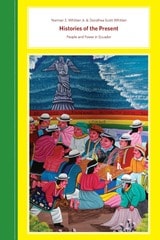
Histories of the Present
People and Power in EcuadorNorman E. Whitten Jr. and Dorothea Scott Whitten
University of Illinois Press, 2011