Results by title
22279 books match the query 'Social Science' and 635 start with h

Homosexual Desire in Revolutionary Russia
The Regulation of Sexual and Gender DissentDan Healey
University of Chicago Press, 2001
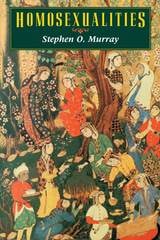
Homosexualities
Stephen O. Murray
University of Chicago Press, 2000
"[An] indispensable resource on same-sex sexual relationships and their social contexts. . . . Essential reading." —Choice
"[P]romises to deliver a lot, and even more extraordinarily succeeds in its lofty aims. . . . [O]riginal and refreshing. . . . [A] sensational book, part of what I see emerging as a new commonsense revolution within academe." —Kevin White, International Gay and Lesbian Review
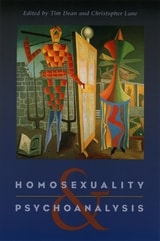
Homosexuality and Psychoanalysis
Edited by Tim Dean and Christopher Lane
University of Chicago Press, 2001
Why has homosexuality always fascinated and vexed psychoanalysis? This groundbreaking collection of original essays reconsiders the troubled relationship between same-sex desire and psychoanalysis, assessing homosexuality's status in psychoanalytic theory and practice, as well as the value of psychoanalytic ideas for queer theory. The contributors, each distinguished clinicians and specialists, reexamine works by Freud, Klein, Reich, Lacan, Laplanche, and their feminist and queer revisionists. Sharing a commitment to conscious and unconscious forms of homosexual desire, they offer new perspectives on pleasure, perversion, fetishism, disgust, psychosis, homophobia, AIDS, otherness, and love. Including two previously untranslated essays by Michel Foucault, Homosexuality and Psychoanalysis will interest cultural theorists, psychoanalysts, and anyone concerned with the fate of sexuality in our time.
Contributors:
Lauren Berlant
Leo Bersani
Daniel L. Buccino
Arnold I. Davidson
Tim Dean
Jonathan Dollimore
Brad Epps
Michel Foucault
Lynda Hart
Jason B. Jones
Christopher Lane
H. N. Lukes
Catherine Millot
Elizabeth A. Povinelli
Ellie Ragland
Paul Robinson
Judith Roof
Joanna Ryan
Ramón E. Soto-Crespo
Suzanne Yang
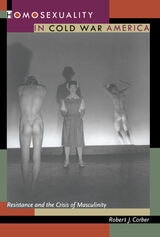
Homosexuality in Cold War America
Resistance and the Crisis of MasculinityRobert J. Corber
Duke University Press, 1997
By exploring the representation of gay men in film noir, Corber suggests that even as this Hollywood genre reinforced homophobic stereotypes, it legitimized the gay male "gaze." He emphasizes how film noir’s introduction of homosexual characters countered the national "project" to render gay men invisible, and marked a deep subversion of the Cold War mentality. Corber then considers the work of gay male writers Tennessee Williams, Gore Vidal, and James Baldwin, demonstrating how these authors declined to represent homosexuality as a discrete subculture and instead promoted a model of political solidarity rooted in the shared experience of oppression. Homosexuality in Cold War America reveals that the ideological critique of the dominant culture made by gay male authors of the 1950s laid the foundation for the gay liberation movement of the following decade.
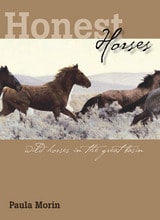
Honest Horses
Wild Horses In The Great BasinPaula Morin
University of Nevada Press, 2006
Horses have been part of the American West since the first Spanish explorers brought their European-bred steeds onto the new continent. Soon thereafter, some of these animals, lost or abandoned by their owners or captured by indigenous peoples, became the foundation of the great herds of mustangs (from the Spanish mesteño, stray) that still roam the West. These feral horses are inextricably intertwined with the culture, economy, and mythology of the West. The current situation of the mustangs as vigorous competitors for the scanty resources of the West’s drought-parched rangelands has put them at the center of passionate controversies about their purpose, place, and future on the open range. Photographer/oral historian Paula Morin has interviewed sixty-two people who know these horses best: ranchers, horse breeders and trainers, Native Americans, veterinarians, wild horse advocates, mustangers, range scientists, cowboy poets, western historians, wildlife experts, animal behaviorists, and agents of the federal Bureau of Land Management. The result is the most comprehensive, impartial examination yet of the history and impact of wild mustangs in the Great Basin. Morin elicits from her interviewees a range of expertise, insight, and candid opinion about the nature of horses, ranching, and the western environment. Honest Horses brings us the voices of authentic westerners, people who live intimately with horses and the land, who share their experiences and love of the mustangs, and who understand how precariously all life exists in Great Basin.
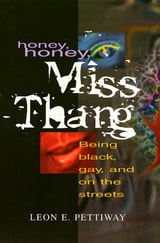
Honey, Honey, Miss Thang
Being Black, Gay, and on the StreetsLeon E. Pettiway
Temple University Press, 1996
Many straight Americans would never embrace homosexuals as neighbors, co-workers, or friends. Still less would they accept as equals those transgendered individuals who work the streets to provide themselves with drug money.
This book seeks to change that perception. It celebrates the lives of Shontae, China, Keisha, Detra, and Monique, five Afro-American gay hustlers who struggle to survive and to maintain a life of dignity and value in the face of their drug use and criminal activity. As individuals they vary in terms of background, the manner in which they entered the transgendered world, and the nature of their initiation into the drug subculture. None of them has escaped the ravages of urban decline, crime, drugs, and poverty that accompany life in an inner city, but by the same token, none of them has capitulated to the stresses with which they live.
It is impossible to read these accounts and not come away emotionally drained. As Monique explains, their lives take place in a world of chances. "You take a chance on living or dying, on being hurt or not being hurt, a chance on finding a friend or finding an enemy." It is from this world that their voices speak so eloquently about their families, hustling, sexuality, sexual abuse, friendship, and intimacy.
By letting these women speak, Leon E. Pettiway evokes questions and encourages discussion and a re-evaluation of those who are labeled as deviant. Pettiway reaches beyond academic convention to offer a view with depth and emotion that mere statistics could never provide. While the poverty and often destructive lifestyle of these women may be gut-wrenching, their experiences reveal joy, pain, and the profound strength of the human spirit with which we can all identify. These lives have much to teach us about ourselves and those we label as "other."
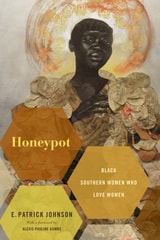
Honeypot
Black Southern Women Who Love WomenE. Patrick Johnson
Duke University Press, 2019
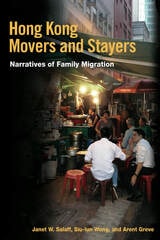
Hong Kong Movers and Stayers
Narratives of Family MigrationJanet W. Salaff, Siu-lun Wong, and Arent Greve
University of Illinois Press, 2010
Half a million Hong Kong residents fled their homeland during the thirteen years before Hong Kong's reversion to China in 1997. Nearly half of those returned within the next several years. Filled with detailed, first-hand stories of nine Hong Kong families over nearly two decades, Hong Kong Movers and Stayers is a multifaceted yet intimate look at the forces behind Hong Kong families' successful, and failed, efforts at migration and settlement.
Defining migration as a process, not a single act of leaving, Hong Kong Movers and Stayers provides an antidote to ethnocentric and simplistic theories by uncovering migration stories as they relate to social structures and social capital. The authors meld survey analysis, personal biography, and sociology and compare multiple families in order to give voice to the interplay of gender, age, and diverse family roles as motivating factors in migration.
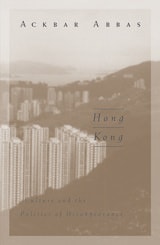
Hong Kong
Culture and the Politics of DisappearanceAckbar Abbas
University of Minnesota Press, 1997
A consideration of what the culture of Hong Kong tells us about the state of the world at the fin-de-siècle.
On June 30, 1997, Hong Kong as we know it will disappear, ceasing its singular and ambiguous existence as a colonial holdover and becoming part of the People’s Republic of China. In an intriguing and provocative exploration of its cinema, architecture, photography, and literature, Ackbar Abbas considers what Hong Kong, with its unique relations to decolonization and disappearance, can teach us about the future of both the colonial city and the global city.
The culture of Hong Kong encompasses Jackie Chan and John Woo, British colonial architecture and postmodern skyscrapers. Ironically, it was not until they were faced with the imposition of Mainland power—with the signing of the Sino-British Joint Agreement in 1984—that the denizens of the colony began the search for a Hong Kong identity. According to Abbas, Hong Kong’s peculiar lack of identity is due to its status as “not so much a place as a space of transit,” whose residents think of themselves as transients and migrants on their way from China to somewhere else. Abbas explores the way Hong Kong’s media saturation changes its people’s experience of space so that it becomes abstract, dominated by signs and images that dispel memory, history, and presence.Hong Kong disappears through simple dualities such as East/West and tradition/modernity. What is missing from a view of Hong Kong as merely a colony is the paradox that Hong Kong has benefited from and made a virtue of its dependent colonial status, turning itself into a global and financial city and outstripping its colonizer in terms of wealth.Combining sophisticated theory and a critical perspective, this rich and thought-provoking work captures the complex situation of the metropolis that is contemporary Hong Kong. Along the way, it challenges, entertains, and makes an important contribution to our thinking about the surprising processes and consequences of colonialism.Copublished with Hong Kong University Press
Hong Kong
Migrant Lives, Landscapes, and JourneysCaroline Knowles and Douglas Harper
University of Chicago Press, 2009
In 1997 the United Kingdom returned control of Hong Kong to China, ending the city’s status as one of the last remnants of the British Empire and initiating a new phase for it as both a modern city and a hub for global migrations. Hong Kong is a tour of the city’s postcolonial urban landscape, innovatively told through fieldwork and photography.
Caroline Knowles and Douglas Harper’s point of entry into Hong Kong is the unusual position of the British expatriates who chose to remain in the city after the transition. Now a relatively insignificant presence, British migrants in Hong Kong have become intimately connected with another small minority group there: immigrants from Southeast Asia. The lives, journeys, and stories of these two groups bring to life a place where the past continues to resonate for all its residents, even as the city hurtles forward into a future marked by transience and transition. By skillfully blending ethnographic and visual approaches, Hong Kong offers a fascinating guide to a city that is at once unique in its recent history and exemplary of our globalized present.

Honor
Frank Henderson Stewart
University of Chicago Press, 1994
In the first sustained comparative analysis of this elusive notion, Frank Stewart writes that none of these ideas is correct. Drawing on information about Western ideas of honor from sources as diverse as medieval Arthurian romances, Spanish dramas of the sixteenth and seventeenth centuries, and the writings of German jurists of the nineteenth and twentieth centuries, and comparing the European ideas with the ideas of a non-Western society—the Bedouin—Stewart argues that honor must be understood as a right, basically a right to respect. He shows that by understanding honor this way, we can resolve some of the paradoxes that have long troubled scholars, and can make sense of certain institutions (for instance the medieval European pledge of honor) that have not hitherto been properly understood.
Offering a powerful new way to understand this complex notion, Honor has important implications not only for the social sciences but also for the whole history of European sensibility.

Honor Bound
Race and Shame in AmericaLeverenz, David
Rutgers University Press, 2012
To make his argument, Leverenz casts an unusually wide net, from ancient and modern cultures of honor to social, political, and military history to American literature and popular culture.
He highlights the convergence of whiteness and honor in the United States from the antebellum period to the present. The Civil War, the civil rights movement, and the election of Barack Obama represent racial progress; the Tea Party movement represents the latest recoil.
From exploring African American narratives to examining a 2009 episode of Hardball—in which two white commentators restore their honor by mocking U.S. Attorney General Eric Holder after he called Americans “cowards” for not talking more about race—Leverenz illustrates how white honor has prompted racial shaming and humiliation. The United States became a nation-state in which light-skinned people declared themselves white. The fear masked by white honor surfaces in such classics of American literature as The Scarlet Letter and Adventures of Huckleberry Finn and in the U.S. wars against the Barbary pirates from 1783 to 1815 and the Iraqi insurgents from 2003 to the present. John McCain’s Faith of My Fathers is used to frame the 2008 presidential campaign as white honor’s last national stand.
Honor Bound concludes by probing the endless attempts in 2009 and 2010 to preserve white honor through racial shaming, from the “birthers” and Tea Party protests to Joe Wilson’s “You lie!” in Congress and the arrest of Henry Louis Gates Jr. at the front door of his own home. Leverenz is optimistic that, in the twenty-first century, racial shaming is itself becoming shameful.
Honor and the American Dream
Culture and Identity in a Chicano CommunityHorowitz, Ruth
Rutgers University Press, 1983
Honor and the Political Economy of Marriage
Violence against Women in the Kurdistan Region of IraqJoanne Payton
Rutgers University Press, 2020
Honor and the Political Economy of Marriage provides a description of ‘honor’-based violence that focuses upon the structure of the family rather than the perpetrator’s culture. The author, Joanne Payton, argues that within societies primarily organized by familial and marital connections, women’s ‘honor’ is a form of symbolic capital within a ‘political economy’ in which marriage organizes intergroup connections.
Drawing on statistical analysis of original data contextualized with historical and anthropological readings, Payton explores forms of marriage and their relationship to ‘honor’, sketching changing norms around the familial control of women from agrarian/pastoral roots to the contemporary era.

Honorable Bandit
A Walk across CorsicaBrian Bouldrey
University of Wisconsin Press, 2007
Brian Bouldrey traveled to the island of Corsica, with its wine-dark Mediterranean waters, powdered-sugar beach sand, sumptuous cuisine, and fine wine. And then he walked away from all of them.
Bouldrey strapped on a backpack and walked across Napoleon's native land with the same spirit many choose to dance or drink: to celebrate, to mourn, to think, to avoid thinking, to recall, to ignore, to escape, and to arrive.
This wonderfully textured account of a two-week ramble along a famous Corsican hiking trail with his German friend Petra (she was good at the downhills while he was better at the uphills) offers readers a journal that is a launching point for reflection: thoughts on cultural differences, friendship, physical challenge, personal challenge, and getting very, very lost. Part travelogue, part memoir, and part lampoon, this book offers readers an impressionistic view of a little talked about yet stunningly beautiful landscape.

HoodWitch
Faylita Hicks
Acre Books, 2019
In this collection about resilience, Hicks speaks about giving her child up for adoption, mourning the death of her fiancé, and embracing the nonbinary femme body—persevering in the face of medical malpractice, domestic abuse, and police violence. The poems find people transformed, “remade out of smoke & iron” into cyborgs and wolves, machines and witches—beings capable of seeking justice in a world that refuses them the option.
Exploring the intersections of Christianity, modern mysticism, and Afrofuturism in a sometimes urban, sometimes natural setting, Hicks finds a place where “everyone everywhere is hands in the air,” where “you know they gonna push & pull it together. / Just like they learned to.” It is a place of natural magick—where someone like Hicks can have more than one name: where they can be both dead and alive, both a mortal and a god.
Hooded Americanism
The History of the Ku Klux KlanDavid M. Chalmers
Duke University Press, 1987

Hoodlum Movies
Seriality and the Outlaw Biker Film Cycle, 1966-1972Stanfield, Peter
Rutgers University Press, 2018
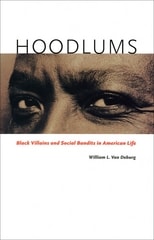
Hoodlums
Black Villains and Social Bandits in American LifeWilliam L. Van Deburg
University of Chicago Press, 2004
Ranging from black slaveholders and frontier outlaws to serial killers and gangsta rappers, Hoodlums examines the pivotal role of black villains in American society and popular culture. Here, William L. Van Deburg offers the most extensive treatment to date of the black badman and the challenges that this figure has posed for race relations in America. He first explores the evolution of this problematic racial stereotype in the literature of the early Republic—documents in which the enslavement of African Americans was justified through exegetical claims. Van Deburg then probes antebellum slave laws, minstrel shows, and the works of proslavery polemicists to consider how whites conceptualized blacks as members of an inferior and dangerous race. Turning to key works by blacks themselves, from the writings of Frederick Douglass and W. E. B. Du Bois to classic blaxploitation films like Black Caesar and The Mack, Van Deburg demonstrates how African Americans have combated such negative stereotypes and reconceptualized the idea of the badman through stories of social bandits—controversial individuals vilified by whites for their proclivity toward evil, but revered in the black community as necessarily insurgent and revolutionary.
Ultimately, Van Deburg brings his story up-to-date with discussions of prison and hip-hop culture, urban rioting, gang warfare, and black-on-black crime. What results is a work of remarkable virtuosity—a nuanced history that calls for both whites and blacks to rethink received wisdom on the nature and prevalence of black villainy.
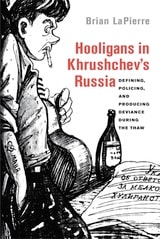
Hooligans in Khrushchev's Russia
Defining, Policing, and Producing Deviance during the ThawBrian LaPierre
University of Wisconsin Press, 2012
Hooligans in Khrushchev's Russia offers the first comprehensive study of how Soviet police, prosecutors, judges, and ordinary citizens during the Khrushchev era (1953–64) understood, fought against, or embraced this catch-all category of criminality. Using a wide range of newly opened archival sources, it portrays the Khrushchev period—usually considered as a time of liberalizing reform and reduced repression—as an era of renewed harassment against a wide range of state-defined undesirables and as a time when policing and persecution were expanded to encompass the mundane aspects of everyday life. In an atmosphere of Cold War competition, foreign cultural penetration, and transatlantic anxiety over "rebels without a cause," hooliganism emerged as a vital tool that post-Stalinist elites used to civilize their uncultured working class, confirm their embattled cultural ideals, and create the right-thinking and right-acting socialist society of their dreams.
Hoosiers and the American Story
James H. Madison and Lee Ann Sandweiss
Indiana Historical Society Press, 2014
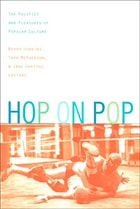
Hop on Pop
The Politics and Pleasures of Popular CultureHenry Jenkins, Tara McPherson and Jane Shattuc, eds.
Duke University Press, 2003
The essays cover a wide and colorful array of subjects including pro wrestling, the computer games Myst and Doom, soap operas, baseball card collecting, the Tour de France, karaoke, lesbian desire in the Wizard of Oz, Internet fandom for the series Babylon 5, and the stress-management industry. Broader themes examined include the origins of popular culture, the aesthetics and politics of performance, and the social and cultural processes by which objects and practices are deemed tasteful or tasteless. The commitment that binds the contributors is to an emergent perspective in cultural studies, one that engages with popular culture as the culture that "sticks to the skin," that becomes so much a part of us that it becomes increasingly difficult to examine it from a distance. By refusing to deny or rationalize their own often contradictory identifications with popular culture, the contributors ensure that the volume as a whole reflects the immediacy and vibrancy of its objects of study.
Hop on Pop will appeal to those engaged in the study of popular culture, American studies, cultural studies, cinema and visual studies, as well as to the general educated reader.
Contributors. John Bloom, Gerry Bloustein, Aniko Bodroghkozy, Diane Brooks, Peter Chvany, Elana Crane, Alexander Doty, Rob Drew, Stephen Duncombe, Nick Evans, Eric Freedman, Joy Fuqua, Tony Grajeda, Katherine Green, John Hartley, Heather Hendershot, Henry Jenkins, Eithne Johnson, Louis Kaplan, Maria Koundoura, Sharon Mazer, Anna McCarthy, Tara McPherson, Angela Ndalianis, Edward O’Neill, Catherine Palmer, Roberta Pearson, Elayne Rapping, Eric Schaefer, Jane Shattuc, Greg Smith, Ellen Strain, Matthew Tinkhom, William Uricchio, Amy Villarego, Robyn Warhol, Charles Weigl, Alan Wexelblat, Pamela Robertson Wojcik, Nabeel Zuberi

Hope Draped in Black
Race, Melancholy, and the Agony of ProgressJoseph R. Winters
Duke University Press, 2016
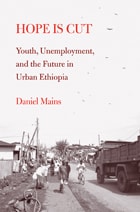
Hope Is Cut
Youth, Unemployment, and the Future in Urban EthiopiaDaniel Mains
Temple University Press, 2013
How do ambitious young men grapple with an unemployment rate in urban Ethiopia hovering around fifty percent? Urban, educated, and unemployed young men have been the primary force behind the recent unrest and revolutions in North Africa and the Middle East. Daniel Mains' detailed and moving ethnographic study, Hope is Cut, examines young men's struggles to retain hope for the future in the midst of economic uncertainty and cultural globalization.
Through a close ethnographic examination of young men's day-to-day lives Hope is Cut explores the construction of optimism through activities like formal schooling, the consumption of international films, and the use of khat, a mild stimulant.
Mains also provides a consideration of social theories concerning space, time, and capitalism. Young men here experience unemployment as a problem of time—they often congregate on street corners, joking that the only change in their lives is the sun rising and setting. Mains addresses these factors and the importance of reciprocity and international migration as a means of overcoming the barriers to attaining aspirations.
Hope Leslie
Or, Early Times in the MassachusettsSedgwick, Catherine M
Rutgers University Press, 1987
Hope Leslie (1827), set in the seventeenth-century New England, is a novel that forced readers to confront the consequences of the Puritans’ subjugation and displacement of the indigenous Indian population at a time when contemporaries were demanding still more land from the Cherokees, the Chickasaws, and the Choctaws.
"This handsome reprint ... makes available after many decades the New Englander's tale of seventeeth-century Puritans, and their relations with the indigenous Indian population." -- Nineteeth-Century Literature
" A splendidly conceived edition of Sedwick's historical romance. Highly recommended." --Choice
"Develop(s) the connections between patriarchal authority within the Puritan state and its policy of dispossessing and exterminating Indians. The different heritage it envisions explicitly link white women and Indians and elaborates a communal concept of liberty at odds with the individualistic concept which predominated in American culture." -- Legacy

Hope and Independence
Blacks' Response to Electoral and Party PoliticsPatricia Gurin
Russell Sage Foundation, 1989

Hope in the Heartlands
Rebuilding Economies to Save DemocracyJohn Austin
Michigan State University Press, 2027
Why did the American heartland, once the engine of the world’s most dynamic economy, become the seedbed of its angriest politics? For more than twenty years, John Austin has pursued that question in Flint, Detroit, Milwaukee, and Pittsburgh—and now in Europe’s industrial regions, where many communities face the same reckoning. In Hope in the Heartlands he traces his journey from a minister’s son raised in West Virginia coal country to the man who made Flint and the industrial Midwest his adopted home. He shows how he came to see economic abandonment as the root of democratic decay—and what he and a network of like-minded leaders did about it. From coining the “Blue Economy” to championing “ally-shoring”—rebuilding supply chains across allied democracies—Austin offers a field-tested agenda for renewing left-behind regions. The stakes, he argues, could not be higher.
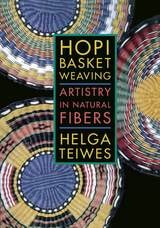
Hopi Basket Weaving
Artistry in Natural FibersHelga Teiwes
University of Arizona Press, 1996
Rising dramatically from the desert floor, Arizona's windswept mesas have been home to the Hopis for hundreds of years. A people known for protecting their privacy, these Native Americans also have a long and less known tradition of weaving baskets and plaques. Generations of Hopi weavers have passed down knowledge of techniques and materials from the plant world around them, from mother to daughter, granddaughter, or niece.
This book is filled with photographs and detailed descriptions of their beautiful baskets—the one art, above all others, that creates the strongest social bonds in Hopi life. In these pages, weavers open their lives to the outside world as a means of sharing an art form especially demanding of time and talent. The reader learns how plant materials are gathered in canyons and creek bottoms, close to home and far away. The long, painstaking process of preparation and dying is followed step by step. Then, using techniques of coiled, plaited, or wicker basketry, the weaving begins.
Underlying the stories of baskets and their weavers is a rare glimpse of what is called "the Hopi Way," a life philosophy that has strengthened and sustained the Hopi people through centuries of change. Many other glimpses of the Hopi world are also shared by author and photographer Helga Teiwes, who was warmly invited into the homes of her collaborators. Their permission and the permission of the Cultural Preservation Office of the Hopi Tribe gave her access to people and information seldom available to outsiders.
Teiwes was also granted access to some of the ceremonial observances where baskets are preeminent. Woven in brilliant reds, greens, and yellows as well as black and white, Hopi weavings, then, not only are an arresting art form but also are highly symbolic of what is most important in Hopi life. In the women's basket dance, for example, woven plaques commemorate and honor the Earth and the perpetuation of life. Other plaques play a role in the complicated web of Hopi social obligation and reciprocity.
Living in a landscape of almost surreal form and color, Hopi weavers are carrying on one of the oldest arts traditions in the world. Their stories in Hopi Basket Weaving will appeal to collectors, artists and craftspeople, and anyone with an interest in Native American studies, especially Native American arts. For the traveler or general reader, the book is an invitation to enter a little-known world and to learn more about an art form steeped in meaning and stunning in its beauty.
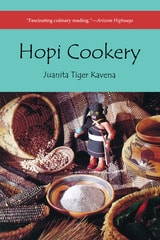
Hopi Cookery
Juanita Tiger Kavena
University of Arizona Press, 1980
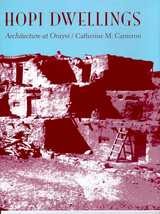
Hopi Dwellings
Architectural Change at OrayviCatherine M. Cameron
University of Arizona Press, 1999
Her study is unique in its use of historic photographs to document and understand abandonment processes and apply that knowledge to prehistoric sites. Photos taken by tourists, missionaries, and early anthropologists during the late nineteenth century portray original structures, while later photos show how Orayvi buildings changed over a period of almost eighty years. Census data relating to house size and household configuration shed additional light on social change in the pueblo.
Examining change at Orayvi afforded an opportunity to study the architectural effects of an event that must have happened many times in the past--the partial abandonment of a pueblo--by tracing the effects of sudden population decline on puebloan architecture. Cameron's work provides clues to how and why villages were abandoned and re-established repeatedly in the prehistoric Southwest as it offers a unique window on the relationship between Pueblo houses and the living people who occupied them.
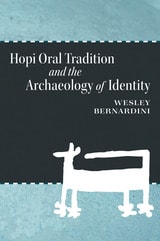
Hopi Oral Tradition and the Archaeology of Identity
Wesley Bernardini
University of Arizona Press, 2005
Wesley Bernardini now draws on an unconventional source, Hopi traditional knowledge, to show how hypotheses that are developed from oral tradition can stimulate new and productive ways to think about the archaeological record. Focusing on insights that oral tradition has to offer about general processes of prehistoric migration and identity formation, he describes how each Hopi clan acquired its particular identity from the experiences it accumulated on its unique migration pathway. This pattern of “serial migration” by small social groups often saw the formation of villages by clans that briefly came together and then moved off again independently, producing considerable social diversity both within and among villages.
Using Anderson Mesa and Homol’ovi as case studies, Bernardini presents architectural and demographic data suggesting that the fourteenth century occupation of these regions was characterized by population flux and diversity consistent with the serial migration model. He offers an analysis of rock art motifs—focusing on those used as clan symbols—to evaluate the diversity of group identities, then presents a compositional analysis of Jeddito Yellow Ware pottery to evaluate the diversity of these groups’ eventual migration destinations.
Evidence supporting serial migration greatly complicates existing notions of links between ancient and modern social groups, with important implications for the implementation of the Native American Graves Protection and Repatriation Act. Bernardini’s work clearly demonstrates that studies of cultural affiliation must take into account the fluid nature of population movements and identity in the prehistoric landscape. It takes a decisive step toward better understanding the major demographic change that occurred on the Colorado Plateau from 1275 to 1400 and presents a strategy for improving the reconstruction of cultural identity in the past.
Hopis and the Counterculture
Traditionalism, Appropriation, and the Birth of a Social FieldBrian D. Haley
University of Arizona Press, 2024
Exploring the new social field that developed to spread these ideas, Hopis and the Counterculture meticulously traces the trajectories of figures such as Ammon Hennacy, Craig Carpenter, Frank Waters, and the Firesign Theatre, among others. Drawing on insights into the interplay between primitivism, radicalism, stereotyping, and identity, Haley expands on concepts from scholars such as Roy Harvey Pearce’s notion of “isolated radicals” and Jonathan Friedman’s observations regarding the ascendancy of primitivism amid global crises. Haley scrutinizes the roles played by non-Hopi actors and the timing behind the widespread popularization of Hopi religious practices.
Horace between Freedom and Slavery
The First Book of <i>Epistles</i>Stephanie McCarter
University of Wisconsin Press, 2015
She argues that, although Horace commences the Epistles with an uncompromising insistence on freedom, he ultimately adopts a middle course. She shows how Horace explores in the poems the application of moderate freedom first to philosophy, then to friendship, poetry, and place. Rather than rejecting philosophical masters, Horace draws freely on them without swearing permanent allegiance to any—a model for compromise that allows him to enjoy poetic
renown and friendships with the city's elite while maintaining a private sphere of freedom. This moderation and adaptability, McCarter contends, become the chief ethical lessons that Horace learns for himself and teaches to others. She reads Horace's reconfiguration of freedom as a political response to the transformations of the new imperial age.
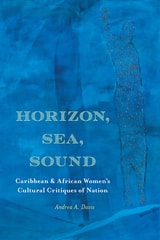
Horizon, Sea, Sound
Caribbean and African Women's Cultural Critiques of NationAndrea A. Davis
Northwestern University Press, 2022
In Horizon, Sea, Sound: Caribbean and African Women’s Cultural Critiques of Nation, Andrea Davis imagines new reciprocal relationships beyond the competitive forms of belonging suggested by the nation-state. The book employs the tropes of horizon, sea, and sound as a critique of nation-state discourses and formations, including multicultural citizenship, racial capitalism, settler colonialism, and the hierarchical nuclear family.
Drawing on Tina Campt’s discussion of Black feminist futurity, Davis offers the concept future now, which is both central to Black freedom and a joint social justice project that rejects existing structures of white supremacy. Calling for new affiliations of community among Black, Indigenous, and other racialized women, and offering new reflections on the relationship between the Caribbean and Canada, she articulates a diaspora poetics that privileges our shared humanity. In advancing these claims, Davis turns to the expressive cultures (novels, poetry, theater, and music) of Caribbean and African women artists in Canada, including work by Dionne Brand, M. NourbeSe Philip, Esi Edugyan, Ramabai Espinet, Nalo Hopkinson, Amai Kuda, and Djanet Sears. Davis considers the ways in which the diasporic characters these artists create redraw the boundaries of their horizons, invoke the fluid histories of the Caribbean Sea to overcome the brutalization of plantation histories, use sound to enter and reenter archives, and shapeshift to survive in the face of conquest. The book will interest readers of literary and cultural studies, critical race theories, and Black diasporic studies.
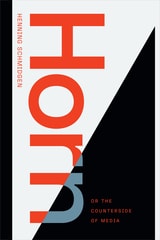
Horn, or The Counterside of Media
Henning Schmidgen
Duke University Press, 2022
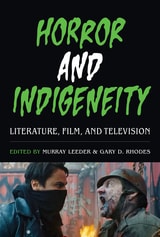
Horror and Indigeneity
Literature, Film, and TelevisionEdited by Murray Leeder and Gary D. Rhodes
University of Texas Press, 2026
A collection of essays about Indigeneity and horror in cinema, literature, and beyond.
How did Indigeneity come to be horrifying? Think of the “Indian burial ground” trope, a staple of 1970s horror cinema, not to mention decades of Western films and fictions that made “savage Indians” the face of fear in popular culture. Can horror do something else in the hands of Indigenous people? Creators such as Eden Robinson and Jeff Barnaby have self-consciously turned to horror to tell new kinds of stories, stories that question who is a monster and what constitutes the monstrous.
Horror and Indigeneity explores representations of Indigenous people in settler horror texts and in the growing corpus of horror by Indigenous writers and filmmakers. Widely spanning time periods and media, the contributors to this edited volume address themes such as cannibalism, eco-horror, historical trauma, and contemporary antiracism as they relate to classical horror cinema and recent works such as The Dead Can’t Dance, Lovecraft Country, and Stephen Graham Jones’s The Only Good Indians. Also featuring interviews with Jones and director T. J. Cuthand, Horror and Indigeneity rethinks the terror of the Other in potent and provocactive terms.

Horror in Architecture
The Reanimated EditionJoshua Comaroff
University of Minnesota Press, 2024
A new edition of this extensive visual analysis of horror tropes and their architectural analogues
Horror in Architecture presents an unflinching look at how horror genre tropes manifest in the built environment. Spanning the realms of art, design, literature, and film, this newly revised and expanded edition compiles examples from all areas of popular culture to form a visual anthology of the architectural uncanny.
Rooted in the Romantic and Gothic treatment of horror as a serious aesthetic category, Horror in Architecture establishes incisive links between contemporary horror media and its parallel traits found in various architectural designs. Through chapters dedicated to distorted and monstrous buildings, abandoned spaces, extremes of scale, and other structural peculiarities, and featuring new essays on insurgent natures, blobs, and architectural puppets, this volume brings together diverse architectural anomalies and shows how their unsettling effects deepen our fascination with the unreal.
Intended for both horror fans and students of visual culture, Horror in Architecture turns a unique lens on the relationship between the human body and the artificial landscapes it inhabits. Extensively illustrated with photographs, film stills, and diagrams, this book retrieves horror from the cultural fringes and demonstrates how its attributes permeate the modern condition and the material world.
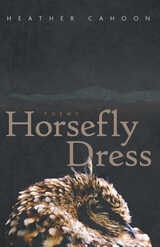
Horsefly Dress
PoemsHeather Cahoon
University of Arizona Press, 2020
Horsefly Dress is a meditation on the experience and beauty of suffering, questioning its triggers and ultimate purpose through the lens of historical and contemporary interactions and complications of Séliš, Qĺispé, and Christian beliefs. Heather Cahoon’s collection explores dark truths about the world through first-person experiences, as well as the experiences of her family and larger tribal community. As a member of the Confederated Salish and Kootenai Tribes, Cahoon crafts poems that recount traditional stories and confront Coyote’s transformation of the world, including his decision to leave certain evils present, such as cruelty, greed, hunger, and death.
By weaving together stories of Cahoon’s family and tribal community with those of Coyote and his family, especially Coyote’s daughter, Horsefly Dress, the interactions and shared experiences show the continued relevance of traditional Séliš and Qĺispé culture to contemporary life. Rich in the imagery of autumnal foliage, migrating birds, and frozen landscapes, Horsefly Dress calls forth the sensory experience of grief and transformation. As the stories and poems reveal, the transformative powers associated with the human experience of loss belong to the past, present, and future, as do the traditional Salish-Pend d’Oreille stories that create the backbone of this intricate collection.
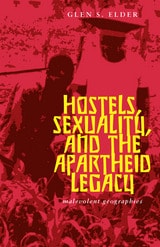
Hostels, Sexuality, and the Apartheid Legacy
Malevolent GeographiesGlen S. Elder
Ohio University Press, 2003
In the last decade, the South African state has been transformed dramatically, but the stubborn, menacing geography of apartheid still stands in the way of that country’s visions of change. Environmentally degraded old homelands still scar the rural geography of South Africa.
Formerly segregated, now gated, neighborhoods still inhibit free movement. Hostels, Sexuality, and the Apartheid Legacy is a study of another such space, the converted “male” migrant worker hostel.
Professor Glen Elder identifies hostels as sites of public and domestic violence, literal destruction and rebuilding, and as an important node in the spread of HIV/AIDS.
Hostels have also become home to increasing numbers of “invisible” female residents. Finding that one way to understand hostel space is through women’s experiences, Professor Elder turned to thirty black migrant women living in an East Rand hostel to map the everyday geographies of South Africa’s time of change.
By following the lives of these women, Elder identifies spatialized forms of marginalization, impoverishment, infection, and disempowerment. But, as he points out, the women’s survival strategies may provide signposts to the way out of apartheid’s malevolent geography.
Hostels, Sexuality, and the Apartheid Legacy argues that the gendered geography of the migrant labor system developed in South Africa was premised upon sexual assumptions about men, women, and their bodies, and that feminist and queer analyses of space can inform public policy decisions.
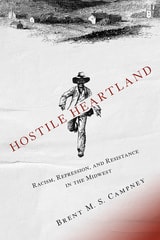
Hostile Heartland
Racism, Repression, and Resistance in the MidwestBrent M. S. Campney
University of Illinois Press, 2019

Hosts, Hospitals and Hospitalities
Narratives of (in)hospitality in literature, culture and the artsEdited by Susana Araújo, Catarina Nunes de Almeida, and Santiago Pérez Isasi
University College London, 2026
This book analyzes narratives of hospitality (and inhospitality) through recent crises like climate change and mass displacement.
Current historical and political issues, such as the refugee crisis and climate emergency, are deeply intertwined with notions, images, and narratives of (in)hospitality. Departing from seminal works, such as those by Kant and Derrida, on this topic, the chapters in this volume examine how new postcolonial, gender, environmental, and medical perspectives reshape current approaches to hospitality in literature, culture, and the arts.
Through a comparison of case studies in multiple national settings, Hosts, Hospitals and Hospitalities shows how the concept of hospitality shapes the way in which we relate with “the Other” in diverse—and ever-evolving—cultural, political, social, and environmental contexts. By examining the issue of hospitality from a post-pandemic standpoint, which revised the roles of our private and public spaces in the aftermath of COVID-19, by dwelling on novel issues of climate emergency, and by focusing on current developments in terms of migration and displacement, this book adds new light and significant theoretical and methodological perspectives to previous debates about hospitality.

Hot Coal, Cold Steel
Russian and Ukrainian Workers from the End of the Soviet Union to the Post-Communist TransformationsStephen Crowley
University of Michigan Press, 1997
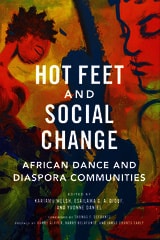
Hot Feet and Social Change
African Dance and Diaspora CommunitiesEdited by Kariamu Welsh, Esailama Diouf, and Yvonne Daniel
University of Illinois Press, 2019
Contributors: Ausettua Amor Amenkum, Abby Carlozzo, Steven Cornelius, Yvonne Daniel, Charles “Chuck” Davis, Esailama G. A. Diouf, Indira Etwaroo, Habib Iddrisu, Julie B. Johnson, C. Kemal Nance, Halifu Osumare, Amaniyea Payne, William Serrano-Franklin, and Kariamu Welsh
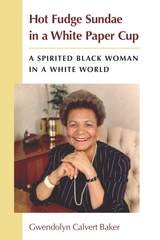
Hot Fudge Sundae in a White Paper Cup
A Spirited Black Woman in a White WorldGwendolyn Calvert Baker
University of Michigan Press, 2014

Hot Music, Ragmentation, and the Bluing of American Literature
Steven C. Tracy
University of Alabama Press, 2015
Exploring the deep and enduring relationship between music and literature, Hot Music, Ragmentation, and the Bluing of American Literature examines the diverse ways in which African American “hot” music influenced American culture—particularly literature—in early twentieth century America. Steven C. Tracy provides a history of the fusion of African and European elements that formed African American “hot” music, and considers how terms like ragtime, jazz, and blues developed their own particular meanings for American music and society. He draws from the fields of literature, literary criticism, cultural anthropology, American studies, and folklore to demonstrate how blues as a musical and poetic form has been a critical influence on American literature.
Hot Music, Ragmentation, and the Bluing of American Literature begins by highlighting instances in which American writers, including Herman Melville, Stephen Crane, and Gertrude Stein, use African American culture and music in their work, and then characterizes the social context of the Jazz Age, discussing how African American music reflected the wild abandon of the time. Tracy focuses on how a variety of schools of early twentieth century writers, from modernists to members of the Harlem Renaissance to dramatists and more, used their connections with “hot” music to give their own work meaning.
Tracy’s extensive and detailed understanding of how African American “hot” music operates has produced a fresh and original perspective on its influence on mainstream American literature and culture. An experienced blues musician himself, Tracy draws on his performance background to offer an added dimension to his analysis. Where another blues scholar might only analyze blues language, Tracy shows how the language is actually performed.
Hot Music, Ragmentation, and the Bluing of American Literature is the first book to offer such a refreshingly broad interdisciplinary vision of the influence of African American “hot” music on American literature. It is an essential addition to the library of serious scholars of American and African American literature and culture and blues aficionados alike.

Hot Pants and Spandex Suits
Gender Representation in American Superhero Comic BooksEsther De Dauw
Rutgers University Press, 2021
Hot Pants and Spandex Suits offers a far-reaching look at how masculinity and femininity have been represented in American superhero comics, from the Golden and Silver Ages to the Modern Age. Scholar Esther De Dauw contrasts the bulletproof and musclebound phallic bodies of classic male heroes like Superman, Captain America, and Iron Man with the figures of female counterparts like Wonder Woman and Supergirl, who are drawn as superhumanly flexible and plastic. It also examines the genre’s ambivalent treatment of LGBTQ representation, from the presentation of gay male heroes Wiccan and Hulkling as a model minority couple to the troubling association of Batwoman’s lesbianism with monstrosity. Finally, it explores the intersection between gender and race through case studies of heroes like Luke Cage, Storm, and Ms. Marvel.
Hot Pants and Spandex Suits is a fascinating and thought-provoking consideration of what superhero comics teach us about identity, embodiment, and sexuality.

Hot Towns
The Future of the Fastest Growing Communities in AmericaWolf, Peter
Rutgers University Press, 1999
Hot Towns is about the vast, current national relocation of one million Americans a year. Successful, accomplished, and well-financed people of all ages are moving to communities they view as choice—places distinguished by fine climate, physical beauty, abundant natural recreation resources, and minimal social problems and low crime. Towns in this elite roster include Santa Fe, Aspen, Boulder, Bozeman, Chapel Hill, East Hampton, and many others.
These American boom towns, Peter Wolf writes, have grown in jobs and population at two to three times the national average. But warning signs of deterioration are already evident: overbuilding, failing natural resources, rising taxes, and traffic congestion are all taking a toll on these communities. Rapid migration can enhance or swamp America’s fastest growing and most desirable communities
Wolf examines the choices that people in these areas can make to both effectively accommodate growth and yet ensure their economic futures. A wise town undergoing growth will realize that what must be preserved is not the growth in-and-for itself, but the qualities which attract people in the first place. Wolf demonstrates how it is possible—even during a town’s rapid expansion—to enhance the quality of residents’ lives, to incorporate aesthetics and design into town evolution, to protect what is precious in nature, and to preserve the best that has already been built.
Wolf concludes with a practical checklist for the residents of hot towns, allowing them to evaluate how their communities are coping with growth.
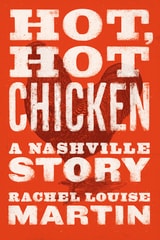
Hot, Hot Chicken
A Nashville StoryRachel Louise Martin
Vanderbilt University Press, 2021
But for almost seventy years, hot chicken was made and sold primarily in Nashville’s Black neighborhoods—and the story of hot chicken says something powerful about race relations in Nashville, especially as the city tries to figure out what it will be in the future.
Hot, Hot Chicken recounts the history of Nashville’s Black communities through the story of its hot chicken scene from the Civil War, when Nashville became a segregated city, through the tornado that ripped through North Nashville in March 2020.
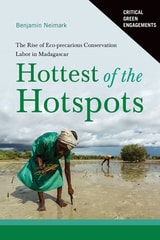
Hottest of the Hotspots
The Rise of Eco-precarious Conservation Labor in MadagascarBenjamin Neimark
University of Arizona Press, 2023
This book details the rollout of market conservation programs, including the finding of drugs from nature—or “bioprospecting”—biodiversity offsetting, and the selling of blue carbon credits from mangroves. It documents the tensions that exist at the local level, as many of these programs incorporate populations highly dependent on the same biodiversity now turned into global commodities for purposes of saving it. Proponents of market conservation mobilize groups of ecologically precarious workers, or the local “eco-precariat,” who do the hidden work of collecting and counting species, monitoring and enforcing the vital biodiversity used in everything from drug discovery to carbon sequestration and large mining company offsets.
Providing a voice for those community workers many times left out of environmental policy discussions, this volume proposes critiques that aim to build better conservation interventions with perspectives of the local eco-precariat.