Results by title
805 books match the query '18th century' and 33 start with i

INTERROGATING ORIENTALISM
Contextual Approaches and Pedagogical PracticesEdited by Diane Long Hoeveler and Jeffrey Cass
The Ohio State University Press, 2006
Identity, Ritual, and Power in Colonial Puebla
Frances L. Ramos
University of Arizona Press, 2012
With Ramos as a guide, we are not only dazzled by the trappings of power—the silk canopies, brocaded robes, and exploding fireworks—but are also witnesses to the public spectacles through which municipal councilmen consolidated local and imperial rule. By sponsoring a wide variety of carefully choreographed rituals, the municipal council made locals into audience, participants, and judges of the city’s tumultuous political life. Public rituals encouraged residents to identify with the Roman Catholic Church, their respective corporations, the Spanish Empire, and their city, but also provided arenas where individuals and groups could vie for power.
As Ramos portrays the royal oath ceremonies, funerary rites, feast-day celebrations, viceregal entrance ceremonies, and Holy Week processions, we have to wonder who paid for these elaborate rituals—and why. Ramos discovers and decodes the intense debates over expenditures for public rituals and finds them to be a central part of ongoing efforts of councilmen to negotiate political relationships. Even with the Spanish Crown’s increasing disapproval of costly public ritual and a worsening economy, Puebla’s councilmen consistently defied all attempts to diminish their importance.
Ramos innovatively employs a wealth of source materials, including council minutes, judicial cases, official correspondence, and printed sermons, to illustrate how public rituals became pivotal in the shaping of Puebla’s complex political culture.
Imagining Identity in New Spain
Race, Lineage, and the Colonial Body in Portraiture and Casta PaintingsBy Magali M. Carrera
University of Texas Press, 2003
Using an interdisciplinary approach that also considers legal, literary, and religious documents of the period, Magali Carrera focuses on eighteenth-century portraiture and casta paintings to understand how the people and spaces of New Spain were conceptualized and visualized.
Winner, Book Award, Association of Latin American Art, 2004
Reacting to the rising numbers of mixed-blood (Spanish-Indian-Black African) people in its New Spain colony, the eighteenth-century Bourbon government of Spain attempted to categorize and control its colonial subjects through increasing social regulation of their bodies and the spaces they inhabited. The discourse of calidad (status) and raza (lineage) on which the regulations were based also found expression in the visual culture of New Spain, particularly in the unique genre of casta paintings, which purported to portray discrete categories of mixed-blood plebeians.
Using an interdisciplinary approach that also considers legal, literary, and religious documents of the period, Magali Carrera focuses on eighteenth-century portraiture and casta paintings to understand how the people and spaces of New Spain were conceptualized and visualized. She explains how these visual practices emphasized a seeming realism that constructed colonial bodies—elite and non-elite—as knowable and visible. At the same time, however, she argues that the chaotic specificity of the lives and lived conditions in eighteenth-century New Spain belied the illusion of social orderliness and totality narrated in its visual art. Ultimately, she concludes, the inherent ambiguity of the colonial body and its spaces brought chaos to all dreams of order.
Imagining Monsters
Miscreations of the Self in Eighteenth-Century EnglandDennis Todd
University of Chicago Press, 1995
Mary Toft's outrageous claim was accepted because of a common belief that the imagination of a pregnant woman could deform her fetus, creating a monster within her. Drawing on largely unexamined material from medicine, embryology, philosophy, and popular "monster" exhibitions, Todd shows that such ideas about monstrous births expressed a fear central to scientific, literary, and philosophical thinking: that the imagination could transgress the barrier between mind and body.
In his analysis of the Toft case, Todd exposes deep anxieties about the threat this transgressive imagination posed to the idea of the self as stable, coherent, and autonomous. Major works of Pope and Swift reveal that they, too, were concerned with these issues, and Imagining Monsters provides detailed discussions of Gulliver's Travels and The Dunciad illustrating how these writers used images of monstrosity to explore the problematic nature of human identity. It also includes a provocative analysis of Pope's later work that takes into account his physical deformity and his need to defend himself in a society that linked a deformed body with a deformed character.

Imagining the Penitentiary
Fiction and the Architecture of Mind in Eighteenth-Century EnglandJohn Bender
University of Chicago Press, 1987
Imoinda’s Shade
Marriage and the African Woman in Eighteenth-Century British Literature, 1759–1808Lyndon J. Dominique
The Ohio State University Press, 2012
As the eighteenth century is entirely bereft of narratives written by African women, one might assume that these women had little to no impact on British literature and the national psyche of the period. Yet these kinds of assumptions are belied by the influence of one prominent African woman featured in the period’s literary texts.
Imperfect Creatures
Vermin, Literature, and the Sciences of Life, 1600-1740Lucinda Cole
University of Michigan Press, 2016
As Cole illustrates, human health and demographic problems—notably those of feeding populations periodically stricken by hunger, disease, and famine—were tied to larger questions about food supplies, property laws, national identity, and the theological imperatives that underwrote humankind’s claim to dominion over the animal kingdom. In this context, Cole’s study indicates, so-called “vermin” occupied liminal spaces between subject and object, nature and animal, animal and the devil, the devil and disease—even reason and madness. This verminous discourse formed a foundational category used to carve out humankind’s relationship to an unpredictable, irrational natural world, but it evolved into a form for thinking about not merely animals but anything that threatened the health of the body politic—humans, animals, and even thoughts.
Imperial City
Rome under NapoleonSusan Vandiver Nicassio
University of Chicago Press, 2009
In 1798, the armies of the French Revolution tried to transform Rome from the capital of the Papal States to a Jacobin Republic. For the next two decades, Rome was the subject of power struggles between the forces of the Empire and the Papacy, while Romans endured the unsuccessful efforts of Napoleon’s best and brightest to pull the ancient city into the modern world. Against this historical backdrop, Nicassio weaves together an absorbing social, cultural, and political history of Rome and its people. Based on primary sources and incorporating two centuries of Italian, French, and international research, her work reveals what life was like for Romans in the age of Napoleon.
“A remarkable book that wonderfully vivifies an understudied era in the history of Rome. . . . This book will engage anyone interested in early modern cities, the relationship between religion and daily life, and the history of the city of Rome.”—Journal of Modern History
“An engaging account of Tosca’s Rome. . . . Nicassio provides a fluent introduction to her subject.”—History Today
“Meticulously researched, drawing on a host of original manuscripts, memoirs, personal letters, and secondary sources, enabling [Nicassio] to bring her story to life.”—History
Impolite Periodicals
Reading for Rudeness in the Eighteenth CenturyEmrys D. Jones
Bucknell University Press, 2026
With an afterword by Manushag N. Powell.
Published by Bucknell University Press. Distributed worldwide by Rutgers University Press.
Improbable Patriot
The Secret History of Monsieur de Beaumarchais, the French Playwright Who Saved the American RevolutionHarlow Giles Unger
University Press of New England, 2011
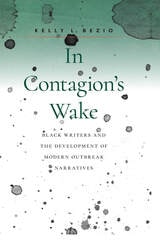
In Contagion's Wake
Black Writers and the Development of Modern Outbreak NarrativesKelly L. Bezio
University of Massachusetts Press, 2026
An examination of early American literature that highlights how racial divides exacerbated—and were exacerbated by—the spread of infection
In April of 1721, the HMS Seahorse arrived in Boston from the West Indies, causing a smallpox epidemic that would plague the city for the next year. Of its 12,000 inhabitants, nearly fifty percent were infected, and 900 people died. Like the coronavirus pandemic that began in 2020, the outbreak also brought to the surface deep divides in the social fabric of colonial New England and laid the groundwork for racialized political inequities that we continue to grapple with today.
In Contagion’s Wake examines a range of American outbreak narratives, both historical and fictional, written between the early 1700s and the early 1900s—from the rise of inoculation through the advent of germ theory. Author Kelly L. Bezio argues that during this period, literature about communicable disease was dominated by white authors, such as Cotton Mather and Edgar Allen Poe, who tended to privilege white suffering and survival while obscuring Black suffering and vulnerability. Black authors, however, such as Olaudah Equiano and Frances E.W. Harper, developed variations on plot structures, metaphors, and imagery that drew upon contagion to represent racial injustice and further the cause of Black liberation.
The diverse texts Bezio analyzes vary extensively in genre and geographical location, and in the illnesses that feature in their pages. Significant disorders from the era, including yellow fever, smallpox, consumption, and cholera, make frequent appearances, as do less culturally dominant diseases such as St. Anthony’s Fire. In Contagion’s Wake contends that representations of communicable disease should not be understood only as within their own historical moment; rather, they function more like a DNA code for our present time.
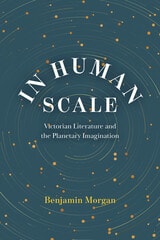
In Human Scale
Victorian Literature and the Planetary ImaginationBenjamin Morgan
University of Chicago Press, 2027
An innovative account of how literature has helped bridge the gap between ordinary human experience and the vast scale of the natural world.
Is it possible to connect our lived experience of time to the vast eons of the planet’s history? This question has perplexed writers and scientists for more than two hundred years, from Darwin’s account of natural selection through contemporary writing about climate change. Benjamin Morgan’s insightful study shows how literature of the nineteenth century helped readers leap from their everyday sense of time and space to the vast, inhuman scales of the natural world.
Exploring writings that range from Arctic voyage narratives to Thomas Hardy’s novels, utopian fiction of the 1880s, H. G. Wells’s The Time Machine, and beyond, Morgan situates scalar incommensurability in its deeper intellectual and cultural contexts. Victorians struggled to grasp senses of proportion not only through time scales but also through scales of aesthetic magnitude, of relative value, of social totality, and of the planet’s future. Morgan argues that a scale is not just a timeline; it is a way of finding order and proportion through many kinds of comparative measurement. His literary history of scale illuminates both the challenge of imagining the vastness of planetary time and the history of creating a human sense of proportion.
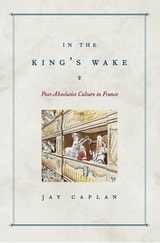
In the King's Wake
Post-Absolutist Culture in FranceJay Caplan
University of Chicago Press, 1999
While absolutist culture had focused on value directly represented in people (e.g., those of noble blood) and things (e.g., coins made of precious metals), post-absolutist culture instead explored the capacity of signs to stand for something real (e.g., John Law's banknotes or Marivaux's plays in which actions rather than birth signify nobility). Between the image of the Sun King and visions of the godlike Romantic self, Caplan discovers a post-absolutist France wracked by surprisingly modern conflicts over the true sources of value and legitimacy.
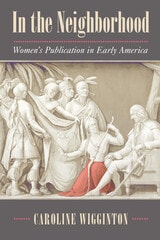
In the Neighborhood
Women's Publication in Early AmericaCaroline Wigginton
University of Massachusetts Press, 2016
Winner of the 2018 Early American Literature Book Prize
In this compelling and original book, Caroline Wigginton reshapes our understanding of early American literary history. Overturning long-standing connections between the male-dominated print culture of pamphlets, broadsides, and newspapers and the transformative ideas that instigated the American Revolution, Wigginton explores how women's “relational publications”—circulated texts, objects, and performances—transformed their public and intimate worlds. She argues that Native, black, and white women's interpersonal "publications" revolutionized the dynamics of power and connection in public and private spaces, whether those spaces were Quaker meeting houses, Creek talwas, trading posts, burial grounds, or the women's own "neighborhoods."
Informed by deep and rich archival research, Wigginton's case studies explore specific instances of “relational publication.” The book begins with a pairing of examples—the statement a grieving Lenape mother made through a wampum belt and the political affiliations created when a salon hostess shared her poetry. Subsequent chapters trace a history of women's publication practice, including a Creek woman's diplomatic and legal procession-spectacles in the colonial Southeast, a black mother's expression of protest in Newport, Rhode Island, and the resulting evangelical revival, Phillis Wheatley's elegies that refigured neighborhoods of enslaved and free Bostonians, and a Quaker woman's pious and political commonplace book in Revolutionary Philadelphia.

In the Shadows of Romance
Romantic Tragic Drama in Germany, England, and FranceJeffrey N. Cox
Ohio University Press, 2011

Incidental Architect
William Thornton and the Cultural Life of Early Washington, D.C., 1794–1828Gordon S. Brown
Ohio University Press, 2009
While the majority of scholarship on early Washington focuses on its political and physical development, in Incidental ArchitectGordon S. Brown describes the intellectual and social scene of the 1790s and early 1800s through the lives of a prominent couple whose cultural aspirations served as both model and mirror for the city’s own.
When William and Anna Maria Thornton arrived in Washington, D.C., in 1794, the new nation’s capital was little more than a raw village. The Edinburgh–educated Thornton and his accomplished wife brought with them the values of the Scottish Enlightenment, an enthusiasm for the arts, and a polished urbanity that was lacking in the little city emerging from the swamps along the Potomac. Thornton’s talents were manifold: He is perhaps best known as the original architect of the Capitol building, but he also served as a city commissioner and as director of the Patent Office, where his own experimentation in steam navigation embroiled him in a long-running dispute with inventor Robert Fulton.
In spite of their general preoccupation with politics and real estate development, Washington’s citizens gradually created a network of cultural institutions—theaters, libraries and booksellers, music venues, churches, schools, and even colleges and intellectual associations—that began to satisfy their aspirations.
Incidental Architect is a fascinating account of how the city’s cultural and social institutions were shaped by its earliest citizens.
Indian Life on the Northwest Coast of North America as seen by the Early Explorers and Fur Traders during the Last Decades of the Eighteenth Century
Erna Gunther
University of Chicago Press, 1972
Drawing on a wide range of evidence, this volume is a carefully researched investigation into the ethnohistory of the Pacific Northwest during the period of European exploration of the region. The book supplements the archeological evidence from the area with a detailed investigation of the journals, diaries, and sketchbooks of Russian, Spanish, and English explorers and traders who reached the region, as well as artifacts that those explorers and traders obtained on their expeditions and that are now held in museums worldwide. In doing so, Gunther's research extends anthropological study of the region a century earlier, and sheds light on the understudied tribal cultures of the Haida and the Tlingit. The volume contains splendid reproductions of contemporary drawings, and appendices mapping the museum locations of artifacts and describing the processes of native technology.
Indigenous Miracles
Nahua Authority in Colonial MexicoEdward W. Osowski
University of Arizona Press, 2010
Indigenous Miracles is about how the Nahua elite of central Mexico secured political legitimacy through the administration of public rituals centered on miraculous images of Christ the King. Osowski argues that these images were adopted as community symbols and furthermore allowed Nahua leaders to “represent their own kingship,” protecting their claims to legitimacy. This legitimacy allowed them to act collectively to prevent the loss of many aspects of their culture. Osowski demonstrates how a shared religion admitted the possibility of indigenous agency and new ethnic identities.
Consulting both Nahuatl and Spanish sources, Osowski strives to fill a gap in the history of the Nahuas from 1760 to 1810, a momentous time when previously sanctioned religious practices were condemned by the viceroys and archbishops of the Bourbon royal dynasty. His approach synthesizes ethnohistory and institutional history to create a fascinating account of how and why the Nahuas protected the practices and symbols they had appropriated under Hapsburg rule. Ultimately, Osowski’s account contributes to our understanding of the ways in which indigenous agency was negotiated in colonial Mexico.
Inequality in Early America
Carla Gardina Pestana
Dartmouth College Press, 2015
Inglorious Artists
Art World Satire and the Emergence of a Capitalist Art Market in Paris, 1750-1850Kathryn Desplanque
University of Delaware Press, 2025
This book is also freely available online as an open access digital edition.
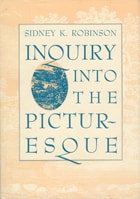
Inquiry into the Picturesque
Sidney K. Robinson
University of Chicago Press, 1991
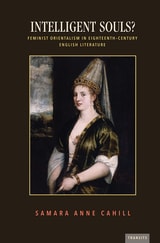
Intelligent Souls?
Feminist Orientalism in Eighteenth-Century English LiteratureSamara Anne Cahill
Bucknell University Press, 2019
Published by Bucknell University Press. Distributed worldwide by Rutgers University Press.
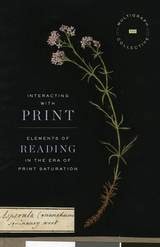
Interacting with Print
Elements of Reading in the Era of Print SaturationThe Multigraph Collective
University of Chicago Press, 2018
Each entry builds on its term in order to resituate print and book history within a broader media ecology throughout the eighteenth and nineteenth centuries. The central theme is interactivity, in three senses: people interacting with print; print interacting with the non-print media that it has long been thought, erroneously, to have displaced; and people interacting with each other through print. The resulting book will introduce new energy to the field of print studies and lead to considerable new avenues of investigation.
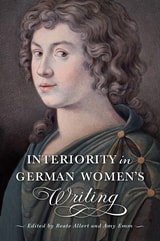
Interiority in German Women's Writing
Beate Allert
University of Delaware Press, 2026
Interiority in German Women’s Writing for the first time systematically gathers and engages with contributions of German women authors to the discourse on interiority (Innerlichkeit) from 1750 to 1850. This volume shifts the recent focus on abstract theoretical and medical discourses on inwardness to the origins of interiority in literature and philosophy as written and experienced by women from the Age of Sensibility (Empfindsamkeit) to the Romantic era. At the same time, it makes a claim for and explores the ramifications of understanding interiority as a feminine discourse. Contributors investigate the works of women authors who searched to find rescue from their cultural and personal entrapment via creative spaces and various modes of interiority in theatrical performances, poetic writings, letters, biographical narratives, prose, and fairy tales. From the case studies and literary analyses in the volume, interiority emerges as a spectrum of approaches to defining, resisting, and transforming the innermost self.
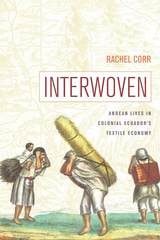
Interwoven
Andean Lives in Colonial Ecuador’s Textile EconomyRachel Corr
University of Arizona Press, 2018
Interwoven is the untold story of indigenous people’s historical experience in colonial Ecuador’s textile economy. It focuses on the lives of Native Andean families in Pelileo, a town dominated by one of Quito’s largest and longest-lasting textile mills. Quito’s textile industry developed as a secondary market to supply cloth to mining centers in the Andes; thus, the experience of indigenous people in Pelileo is linked to the history of mining in Bolivia and Peru.
Although much has been written about colonial Quito’s textile economy, Rachel Corr provides a unique perspective by putting indigenous voices at the center of that history. Telling the stories of Andean families of Pelileo, she traces their varied responses to historical pressures over three hundred years; the responses range from everyday acts to the historical transformation of culture through ethnogenesis. These stories of ordinary Andean men and women provide insight into the lived experience of the people who formed the backbone of Quito’s textile industry.
Intricate Relations
Sexual and Economic Desire in American Fiction, 1789-1814Karen A. Weyler
University of Iowa Press, 2005
Intricate Relations charts the development of the novel in and beyond the early republic in relation to these two thematic and intricately connected centers: sexuality and economics. By reading fiction written by Americans between 1789 and 1814 alongside medical theory, political and economic tracts, and pedagogical literature of all kinds, Karen Weyler recreates and illuminates the larger, sometimes opaque, cultural context in which novels were written, published, and read.
In 1799, the novelist Charles Brockden Brown used the evocative phrase “intricate relations” to describe the complex imbrication of sexual and economic relations in the early republic. Exploring these relationships, he argued, is the chief job of the “moral historian,” a label that most novelists of the era embraced. In a republic anxious about burgeoning individualism in the 1790s and the first two decades of the nineteenth century, the novel foregrounded sexual and economic desires and explored ways to regulate the manner in which they were expressed and gratified.
In Intricate Relations, Weyler argues that understanding how these issues underlie the novel as a genre is fundamental to understanding both the novels themselves and their role in American literary culture. Situating fiction amid other popular genres illuminates how novelists such as Charles Brockden Brown, Hannah Foster, Samuel Relf, Susanna Rowson, Rebecca Rush, and Sally Wood synthesized and iterated many of the concerns expressed in other forms of public discourse, a strategy that helped legitimate their chosen genre and make it a viable venue for discussion in the decades following the revolution.
Weyler’s passionate and persuasive study offers new insights into the civic role of fiction in the early republic and will be of great interest to literary theorists and scholars in women’s and American studies.

Inventing Chemistry
Herman Boerhaave and the Reform of the Chemical ArtsJohn C. Powers
University of Chicago Press, 2012
Invisible Hands
Self-Organization and the Eighteenth CenturyJonathan Sheehan and Dror Wahrman
University of Chicago Press, 2015
Why is the world orderly, and how does this order come to be? Human beings inhabit a multitude of apparently ordered systems—natural, social, political, economic, cognitive, and others—whose origins and purposes are often obscure. In the eighteenth century, older certainties about such orders, rooted in either divine providence or the mechanical operations of nature, began to fall away. In their place arose a new appreciation for the complexity of things, a new recognition of the world’s disorder and randomness, new doubts about simple relations of cause and effect—but with them also a new ability to imagine the world’s orders, whether natural or manmade, as self-organizing. If large systems are left to their own devices, eighteenth-century Europeans increasingly came to believe, order will emerge on its own without any need for external design or direction.
In Invisible Hands, Jonathan Sheehan and Dror Wahrman trace the many appearances of the language of self-organization in the eighteenth-century West. Across an array of domains, including religion, society, philosophy, science, politics, economy, and law, they show how and why this way of thinking came into the public view, then grew in prominence and arrived at the threshold of the nineteenth century in versatile, multifarious, and often surprising forms. Offering a new synthesis of intellectual and cultural developments, Invisible Hands is a landmark contribution to the history of the Enlightenment and eighteenth-century culture.
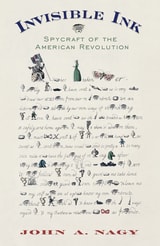
Invisible Ink
Spycraft of the American RevolutionJohn A. Nagy
Westholme Publishing, 2010
The Critical Role of Espionage During the War of Independence and the Techniques Spies Used
During the American Revolution, espionage was critical to the successes and failures of both Continental and British efforts, and those employed in cloakand- dagger operations always risked death. While the most notorious episode of spying during the war—the Benedict Arnold affair—was a failure, most intelligence operations succeeded. Spycraft was no more wholly embraced than by the American commander-in-chief, George Washington. Washington relied on a vast spy network and personally designed sophisticated battle plan deceptions and counterintelligence efforts, some surprisingly modern in form. In Invisible Ink: Spycraft of the American Revolution, award-winning author John A. Nagy briefly traces the history of spy techniques from ancient China through Elizabethan England before embarking on the various techniques used by spies on both sides of the war to exchange secret information. These methods included dictionary codes, diplomatic ciphers, dead drops, hidden compartments (such as a hollowed-out bullet or a woman’s garter), and even musical notation, as well as efforts of counterintelligence, including “Black Chambers,” where postal correspondence was read by cryptologists. Throughout, the author provides examples of the various codes and ciphers employed, many of which have not been previously described. In addition, the author analyzes some of the key spy rings operating during the war, most notably the Culper ring that provided information to Washington from inside British-controlled New York City. Based on nearly two decades of primary research, including the author’s discovery of previously unrecognized spies and methods, Invisible Ink is a major contribution to the history of conflict and technology.
Involuntary Confessions of the Flesh in Early Modern France
Nora Martin Peterson
University of Delaware Press, 2017
Involuntary Confessions of the Flesh in Early Modern France was inspired by the observation that small slips of the flesh (involuntary confessions of the flesh) are omnipresent in early modern texts of many kinds. These slips (which bear similarities to what we would today call the Freudian slip) disrupt and destabilize readings of body, self, and text—three categories whose mutual boundaries this book seeks to soften—but also, in their very messiness, participate in defining them. Involuntary Confessions capitalizes on the uncertainty of such volatile moments, arguing that it is instability itself that provides the tools to navigate and understand the complexity of the early modern world. Rather than locate the body within any one discourse (Foucauldian, psychoanalytic), this book argues that slips of the flesh create a liminal space not exactly outside of discourse, but not necessarily subject to it, either. Involuntary confessions of the flesh reveal the perpetual and urgent challenge of early modern thinkers to textually confront and define the often tenuous relationship between the body and the self. By eluding and frustrating attempts to contain it, the early modern body reveals that truth is as much about surfaces as it is about interior depth, and that the self is fruitfully perpetuated by the conflict that proceeds from seemingly irreconcilable narratives.
Interdisciplinary in its scope, Involuntary Confessions of the Flesh in Early Modern France pairs major French literary works of the sixteenth and seventeenth centuries (by Marguerite de Navarre, Montaigne, Madame de Lafayette) with cultural documents (confession manuals, legal documents about the application of torture, and courtly handbooks). It is the first study of its kind to bring these discourses into thematic (rather than linear or chronological) dialog. In so doing, it emphasizes the shared struggle of many different early modern conversations to come to terms with the body’s volatility.
Published by University of Delaware Press. Distributed worldwide by Rutgers University Press.
Irish Peasants
Violence and Political Unrest, 1780–1914Samuel Clark
University of Wisconsin Press, 1983
"The strength of this volume cannot be conveyed by an itemisation of its contents; for what it provides is an incisive commentary on the newly-recognised landmarks of Irish agrarian history in the modern period. . . . The importance, even indispensability, of this achievement is compounded by exemplary editing."—Roy Foster, London Times Literary Supplement
"As a whole, the volume demonstrates the wealth, complexity, and sophistication of Irish rural studies. The book is essential reading for anyone involved in modern Irish history. It will also serve as an excellent introduction to this rich field for scholars of other peasant communities and all interested in problems of economic and political developments."—American Historical Review
"A milestone in the evolution of Irish social history. There is a remarkable consistency of style and standard in the essays. . . . This is truly history from the grassroots."—Timothy P. O'Neill, Studia Hibernica
Islanded
Britain, Sri Lanka, and the Bounds of an Indian Ocean ColonySujit Sivasundaram
University of Chicago Press, 2013
How did the modern nation of Sri Lanka come to be? In search of an answer to this question, Islanded returns us to the late eighteenth and early nineteenth centuries and to the advance of the British on the kingdom of Kandy. This advance saw the fall of the last foothold of kingly rule, centered in the highlands of the island. The British undertook a process of “islanding” and “partitioning,” which cast the island, its nature and geography, its religious and ethnic character, and its historical traditions and maritime culture as separate from British domains in mainland India and elsewhere.
Kings had seen themselves as rightful rulers of the whole territory of the island. Now, this right was violently extended by British colonists through the application of a model of crown rule and modern bureaucracy that tied ethnicity to language and religion, employing essentialized but not fully realized patterns that would continue to trouble the modern nation. Picking up a range of unusual themes, from migration, orientalism, and ethnography to botany, medicine, and education, Islanded is a groundbreaking text in Sri Lankan history writing, shaping discussions of the imperial transition in South Asia.
Italian and Spanish Art 1600-1750
Sources and DocumentsRobert Enggass
Northwestern University Press, 1993