Results by title
1677 books match the query 'Archaeology' and 49 start with i

Ice Age Peoples of North America
Robonson Bonnichsen
Oregon State University Press, 1999

Iceman
Uncovering the Life and Times of a Prehistoric Man Found in an Alpine GlacierBrenda Fowler
University of Chicago Press, 2001
Identity, Feasting, and the Archaeology of the Greater Southwest
Barbara J. Mills
University Press of Colorado, 2004
Unlike many previous studies, the authors of this volume place emphasis on how differences within and between societies came about rather than why dissimilar structures arose, elevating the place of both agency and history in understanding the past. Identity, Feasting, and the Archaeology of the Greater Southwest will be of interest to all doing archaeological research in the Southwestern United States and those conducting research on social identity, cultural affiliation, and commensal politics. Contributors include Karen R. Adams, Jeffrey J. Clark, Patricia L. Crown, T. J. Ferguson, Catherine S. Fowler, Robert J. Hard, Jane H. Hill, Jane H. Kelley, Frances Levine, Micah Loma'omvaya, K. Tsianina Lomawaima, A. C. MacWilliams, Paul E. Minnis, Scott G. Ortman, David Phillips Jr., James M. Potter, John R. Roney, Lynne Sebastian, Katherine A. Spielmann, Joe D. Stewart, Scott Van Keuren, Laurie D. Webster, Michael E. Whalen, and W. H. Wills
Ideologies in Archaeology
Edited by Reinhard Bernbeck and Randall McGuire
University of Arizona Press, 2011
Contributors to this volume focus on elements of life in past societies that “went without saying” and that concealed different forms of power as obvious and unquestionable. From the use of burial rites as political theater in Iron Age Germany to the intersection of economics and elite power in Mississippian mound building, the contributors uncover complex manipulations of power that have often gone unrecognized. They show that Occam’s razor—the tendency to favor simpler explanations—is sometimes just an excuse to avoid dealing with the historical world in its full complexity.
Jean-Paul Demoule’s concluding chapter echoes this sentiment and moreover brings a continental European perspective to the preceding case studies. In addition to situating this volume in a wider history of archaeological currents, Demoule identifies the institutional and cultural factors that may account for the current direction in North American archaeology. He also offers a defense of archaeology in an era of scientific relativism, which leads him to reflect on the responsibilities of archaeologists.
Includes contributions by: Susan M. Alt, Bettina Arnold, Uzi Baram, Reinhard Bernbeck, Matthew David Cochran, Jean-Paul Demoule, Kurt A. Jordan, Susan Kus, Vicente Lull, Christopher N. Matthews, Randall H. McGuire, Rafael Micó, Cristina Rihuete Herrada, Paul Mullins, Sue Novinger, Susan Pollock, Victor Raharijaona, Roberto Risch, Kathleen Sterling, Ruth M. Van Dyke, and LouAnn Wurst
Images from the Underworld
Naj Tunich and the Tradition of Maya Cave PaintingBy Andrea J. Stone
University of Texas Press, 1995
In 1979, a Kekchi Maya Indian accidentally discovered the entrance to Naj Tunich, a deep cave in the Maya Mountains of El Peten, Guatemala. One of the world's few deep caves that contain rock art, Naj Tunich features figural images and hieroglyphic inscriptions that have helped to revolutionize our understanding of ancient Maya art and ritual.
In this book, Andrea Stone takes a comprehensive look at Maya cave painting from Preconquest times to the Colonial period. After surveying Mesoamerican cave and rock painting sites and discussing all twenty-five known painted caves in the Maya area, she focuses extensively on Naj Tunich. Her text analyzes the images and inscriptions, while photographs and line drawings provide a complete visual catalog of the cave art, some of which has been subsequently destroyed by vandals.
This important new body of images and texts enlarges our understanding of the Maya view of sacred landscape and the role of caves in ritual. It will be important reading for all students of the Maya, as well as for others interested in cave art and in human relationships with the natural environment.

Imperial Imaginings
The Dean C. Worcester Photographic Collection of the PhilippinesCarla M Sinopoli
University of Michigan Press, 2021
Imperial Peripheries in the Neo-Assyrian Period
Craig W. Tyson
University Press of Colorado, 2018
An international team of archaeologists and historians draws upon both new and existing evidence from excavations, surveys, texts, and material culture to highlight the strategies that the Neo-Assyrian Empire applied to manage its diverse and widespread empire as well as the mixed reception of those strategies by subjects close to and far from the center. Case studies from around the ancient Near East illustrate a remarkable variety of responses to Assyrian aggression, economic policies, and cultural influences. As a whole, the volume demonstrates both the destructive and constructive roles of empire, including unintended effects of imperialism on socioeconomic and cultural change.
Imperial Peripheries in the Neo-Assyrian Period aligns with the recent movement in imperial studies to replace global, top-down materialist models with theories of contingency, local agency, and bottom-up processes. Such approaches bring to the foreground the reality that the development and lifecycles of empires in general, and the Neo-Assyrian Empire in particular, cannot be completely explained by the activities of the core. The book will be welcomed by archaeologists of the Ancient Near East, Assyriologists, and scholars concerned with empires and imperial power in history.
Contributors: Stephanie H. Brown, Anna Cannavò, Megan Cifarelli, Erin Darby, Bleda S. Düring, Avraham Faust, Guido Guarducci, Bradley J. Parker
Imperial Transformations in Sixteenth-Century Yucay, Peru
Transcribed and edited by R. Alan Covey and Donato Amado González
University of Michigan Press, 2008
Imports and Immigrants
Near Eastern Contacts with Iron Age CreteGail L. Hoffman
University of Michigan Press, 1998
Drawing together all the evidence and arguments for Near Eastern immigrants in Crete, Hoffman demonstrates there are basic problems with the accepted interpretations. Evidence of continued technical expertise casts doubt on the necessity of reintroduction, while careful scrutiny of the evidence supporting immigrant craftsmen reveals many inadequacies in the currently accepted analyses.
Imports and Immigrants identifies the need for reassessing all dimensions of the question of artistic relationships between ancient Greece and other regions of the Aegean basin and suggests new avenues of inquiry in this important debate. The volume also reassesses arguments made for the presence of Near Eastern immigrants in Crete. This book includes a catalogue indispensable for future work on these issues and illustrations of most of the known imports to Crete.
Gail L. Hoffman is Associate Professor of Greek Art and Archaeology, Department of Classics, Yale University.

In Oceania
Visions, Artifacts, HistoriesNicholas Thomas
Duke University Press, 1997
In Oceania documents and analyzes the "rhetorical artifacts" of explorers, missionaries, fiction and travel writers, and the people of the Pacific themselves to illustrate how Oceanic identities have been represented over time. Not content with conventional methods of anthropology or history, Thomas draws on postcolonial theory and literary analysis in extraordinarily wide-ranging analyses of texts, visual images, and historical processes. He demonstrates how cultures of the Pacific Islands have dealt with colonialist ventures, modernity, and the debate about the recuperation of histories and traditions. The picture Thomas paints of Oceania, however, is not one of a group of societies stripped of meaning, but one that shows how the interactions between indigenous cultures and European influences have created entirely new identities.
In the Aftermath of Migration
Renegotiating Ancient Identity in Southeastern ArizonaAnna A. Neuzil
University of Arizona Press, 2008
This research explores the social changes that took place in the Safford and Aravaipa valleys during the thirteenth through the fifteenth centuries A.D. as a result of an influx of migrants from the Kayenta and Tusayan regions of northeastern Arizona. Focusing on domestic architecture and ceramics, the author evaluates how migration affects the expression of identity of both migrant and indigenous populations in the Safford and Aravaipa valleys and provides a model for research in other areas where migration played an important role.
Archaeologists interested in the Greater Southwest will find a wealth of information on these little-known valleys that provides contextualization for this important and intriguing time period, and those interested in migration in the ancient past will find a useful case study that goes beyond identifying incidents of migration to understanding its long-lasting implications for both migrants and the local people they impacted.
In the Eastern Fluted Point Tradition
Joseph A. M. Gingerich
University of Utah Press, 2013
Eastern North America has one of the largest inventories of Paleoindian sites anywhere in the Americas. Despite this rich record of early human settlement during the late Pleistocene, there are few widely published reports or summaries of Paleoindian research in the region. The contributors to this volume present more than four decades of Early Paleoindian research in eastern North America, including previously unpublished site reports and updates on recent research. Their work helps create a more cohesive picture of the early human occupation of North America.
This data-rich volume provides specific information on artifacts and basic site descriptions which will allow for more thorough comparisons of eastern fluted point sites. Divided into four sections—chronology and environment, reinvestigations of classic sites, new sites and perspectives, and synthesis and conclusions—the volume will encourage further consideration of the sites included and their role in shaping our understanding of huntergatherer lifeways during the late Pleistocene. In the Eastern Fluted Point Tradition is a must read for scholars of Paleoindian archaeology and those generally interested in the prehistory of North America.
In the Eastern Fluted Point Tradition
Volume IIEdited by Joseph A. M. Gingerich
University of Utah Press, 2017
In the Maw of the Earth Monster
Mesoamerican Ritual Cave UseEdited by James E. Brady and Keith M. Prufer
University of Texas Press, 2005
As portals to the supernatural realm that creates and animates the universe, caves have always been held sacred by the peoples of Mesoamerica. From ancient times to the present, Mesoamericans have made pilgrimages to caves for ceremonies ranging from rituals of passage to petitions for rain and a plentiful harvest. So important were caves to the pre-Hispanic peoples that they are mentioned in Maya hieroglyphic writing and portrayed in the Central Mexican and Oaxacan pictorial codices. Many ancient settlements were located in proximity to caves.
This volume gathers papers from twenty prominent Mesoamerican archaeologists, linguists, and ethnographers to present a state-of-the-art survey of ritual cave use in Mesoamerica from Pre-Columbian times to the present. Organized geographically, the book examines cave use in Central Mexico, Oaxaca, and the Maya region. Some reports present detailed site studies, while others offer new theoretical understandings of cave rituals. As a whole, the collection validates cave study as the cutting edge of scientific investigation of indigenous ritual and belief. It confirms that the indigenous religious system of Mesoamerica was and still is much more terrestrially focused that has been generally appreciated.
In the Realms of Gold
Pioneering in African HistoryRoland Oliver
University of Wisconsin Press, 1997
In the Realms of Gold is Oliver’s account of his life and work. He writes in a deft and lively style about the circumstances of his early life that shaped his education and outlook: his childhood on a river houseboat in Kashmir, the influential teachers and friends met at Stowe and Cambridge, and his service in World War II as a cryptographer in British intelligence, where he met his first wife, Caroline Linehan. His interest in church history while at Cambridge led him to study the historical effects of Christian missionaries in Africa, and thus his career began.
The core of the book is Oliver’s account of his research travels throughout tropical Africa from the 1940s to the 1980s; his efforts to train and foster African graduate students to teach in African universities; his role in establishing conferences and journals to bring together the work of historians and archaeologists from Europe and Africa; his encounters with political and religious leaders, scholars, soldiers, and storytellers; and the political and economic upheavals of the continent that he witnessed.
In the Shadow of the Steamboat
A Natural and Cultural History of North Warner Valley, OregonGeoffrey M. Smith
University of Utah Press, 2022
Smith and colleagues present their work in a way that allows readers to understand not only how people adapted to local change but also how North Warner Valley fits into the complex mosaic of precontact history in the American West. This research is the most comprehensive work conducted in the northern Great Basin in more than two decades. Its multidisciplinary nature should interest students of natural and cultural history, archaeology, and Indigenous lifeways.
Inconstant Companions
Archaeology and North American Indian Oral TraditionsRonald J. Mason
University of Alabama Press, 2008
Inconstant Landscape
The Maya Kingdom of El Zotz, GuatemalaThomas G. Garrison
University Press of Colorado, 2020
In this volume, contributors address the challenges faced by smaller polities on the peripheries of powerful kingdoms and ask how subordination was experienced and independent policy asserted. Leading experts provide cutting-edge analysis in varied topics and detailed discussion of the development of this major site and the region more broadly. The first half of the volume contains a historical narrative of the cultural sequence of El Zotz, tracing the changes in occupation and landscape use across time; the second half provides deep technical analyses of material evidence, including soils, ceramics, stone tools, and bone.
The ever-changing, inconstant landscapes of peripheral kingdoms like El Zotz reveal much about their more dominant—and better known—neighbors. An Inconstant Landscape offers a comprehensive, multidisciplinary view of this important but under-studied site, an essential context for the study of the Classic Maya in Guatemala, and a premier reference on the subject of peripheral kingdoms at the height of Maya civilization.
Contributors: Timothy Beach, Nicholas Carter, Ewa Czapiewska-Halliday, Alyce de Carteret, William Delgado, Colin Doyle, James Doyle, Laura Gámez, Jose Luis Garrido López, Yeny Myshell Gutiérrez Castillo, Zachary Hruby, Melanie Kingsley, Sheryl Luzzadder-Beach, Cassandra Mesick Braun, Sarah Newman, Rony Piedrasanta, Edwin Román, and Andrew K. Scherer
Indian Mounds of Wisconsin
Robert A. Birmingham and Amy L. Rosebrough
University of Wisconsin Press, 2017
Citing evidence from past excavations, ethnography, the traditions of present-day Native Americans in the Midwest, ground-penetrating radar and LIDAR imaging, and recent findings of other archaeologists, Robert A. Birmingham and Amy L. Rosebrough argue that effigy mound groups are cosmological maps that model belief systems and relations with the spirit world. The authors advocate for their preservation and emphasize that Native peoples consider the mounds sacred places.
This edition also includes an expanded list of public parks and preserves where mounds can be respectfully viewed, such as the Kingsley Bend mounds near Wisconsin Dells, an outstanding effigy group maintained by the Ho-Chunk Nation, and the Man Mound Park near Baraboo, the only extant human-shaped effigy mound in the world.
Indian New England Before the Mayflower
Howard S. Russell
University Press of New England, 1983
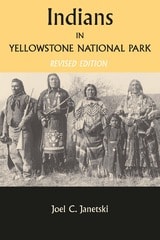
Indians In Yellowstone National Park
Joel Janetski
University of Utah Press, 1987
The vast, pine-covered plateau now known as Yellowstone National Park has been lived in, traveled through, and exploited by humans for thousands of years. It is still possible to see the remnants of old camps and deep-rutted trails over which ancient peoples crossed the Park to reach the bison-rich plains.
When did humans first visit the area we now call Yellowstone?
Who lived there when the first Europeans entered the region?
What happened to the last of the early inhabitants?
How did the Nez Perce, fleeing across the northen of the newly established Park in 1877, escape U.S. troops?
How did Indians perceive the Park's geysers and hot springs?
These and other questions are answered in this popular history of the Park written by a professional archaeologist who is also a seasonal resident of West Yellowstone. Joel Janetski reconstructs past human events from archaeological evidence and historical sources to provide an engrossing story of the people who knew the area hundreds, even thousands, of years ago and who left their traces amidst the grandeur that is today's Yellowstone National Park.
Indians and Archaeology of Missouri, Revised Edition
Carl H. Chapman & Eleanor F. Chapman
University of Missouri Press, 1983
This expanded edition of Indians and Archaeology of Missouri gives an excellent introduction to the cultural development of Missouri’s Indians during the past twelve thousand years. Providing a new chapter on the Hunter Foragers of the Dalton period and substantial revision of other chapters to incorporate recent discoveries, the Chapmans present knowledge based upon decades of experience with archaeological excavations in an understandable and fascinating form.
The first edition of Indians and Archaeology of Missouri has been recognized in Missouri and nationally as one of the best books of its kind. The Missouri Historical Review called it “simply indispensable.” The Plains Anthropologist added similar praise: “Clearly written and exceptionally well illustrated…it is the answer to the amateur’s prayers.” Archaeology described it as “a boon to Missouri’s many amateur archaeologists, a useful source of information for professionals and interesting reading for the layman.”
Indigenizing Japan
Ainu Past, Present, and FutureJoe E. Watkins
University of Arizona Press, 2025
Relaying the deep history of the islands of Japan, Watkins tells the archaeological story from the earliest arrivals some 40,000 years ago to 16,000 years ago when local cultures began utilizing pottery and stone tools. About 2,300 years ago, another group of people immigrated from the Korean peninsula into the Japanese archipelago, bringing wet rice agriculture with them. They intermarried with the people who were there, forming the basis of the contemporary Japanese majority culture. As the Japanese state developed on the central Islands of Honshu, Ryukyu, and Shikoku, the people of Hokkaido continued developing along a different trajectory with minimal interaction with the mainland until colonization in the mid-nineteenth century, when the people known as the Ainu came under Japanese governmental policy.
Watkins’s insightful analysis highlights the Ainu’s enduring spirit and their resurgence as part of the global Indigenous movement. Key events such as the 1997 Nibutani Dam case and the 2007 recognition of the Ainu as Japan’s Indigenous people are explored in depth, showcasing the Ainu’s ongoing fight for cultural preservation and self-determination. By situating the Ainu’s experiences within broader global colonial histories, Indigenizing Japan underscores the shared struggles and resilience of Indigenous communities worldwide.
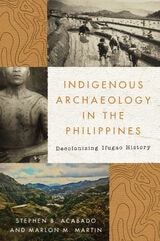
Indigenous Archaeology in the Philippines
Decolonizing Ifugao HistoryStephen B. Acabado and Marlon M. Martin
University of Arizona Press, 2022
Indigenous Archaeology in the Philippines highlights how collaborative archaeology and knowledge co-production among the Ifugao, an Indigenous group in the Philippines, contested (and continue to contest) enduring colonial tropes. Stephen B. Acabado and Marlon M. Martin explain how the Ifugao made decisions that benefited them, including formulating strategies by which they took part in the colonial enterprise, exploiting the colonial economic opportunities to strengthen their sociopolitical organization, and co-opting the new economic system. The archaeological record shows that the Ifugao successfully resisted the Spanish conquest and later accommodated American empire building.
This book illustrates how descendant communities can take control of their history and heritage through active collaboration with archaeologists. Drawing on the Philippine Cordilleran experiences, the authors demonstrate how changing historical narratives help empower peoples who are traditionally ignored in national histories.
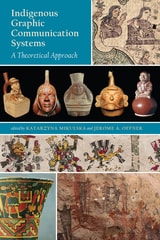
Indigenous Graphic Communication Systems
A Theoretical ApproachKatarzyna Mikulksa
University Press of Colorado, 2025
By examining case studies from across the Americas, the authors pursue an enhanced understanding of Native American graphic communication systems and how the study of graphic expression can provide insight into ancient cultures and societies, expressed in indigenous words. Focusing on examples from Central Mexico and the Andes, the authors explore the overlap among writing, graphic expression, and orality in indigenous societies, inviting reevaluation of the Western notion that writing exists only to record language (the spoken chain of speech) as well as accepted beliefs of Western alphabetized societies about the accuracy, durability, and unambiguous nature of their own alphabetized texts. The volume also addresses the rapidly growing field of semasiography and relocates it more productively as one of several underlying operating principles in graphic communication systems.
Indigenous Graphic Communication Systems reports new results and insights into the meaning of the rich and varied content of indigenous American graphic expression and culture as well as into the societies and cultures that produce them. It will be of great interest to Mesoamericanists, students, and scholars of anthropology, archaeology, art history, ancient writing systems, and comparative world history.
The research for and publication of this book have been supported in part by the National Science Centre of Poland (decision no. NCN-KR-0011/122/13) and the Houston Museum of Natural Science.
Contributors:
Angélica Baena Ramírez, Christiane Clados, Danièle Dehouve, Stanisław Iwaniszewski, Michel R. Oudijk, Katarzyna Szoblik, Loïc Vauzelle, Gordon Whittaker, Janusz Z. Wołoszyn, David Charles Wright-Carr
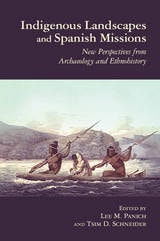
Indigenous Landscapes and Spanish Missions
New Perspectives from Archaeology and EthnohistoryEdited by Lee M. Panich and Tsim D. Schneider
University of Arizona Press, 2014
Offering thoughtful arguments and innovative perspectives, the editors organized the book around three interrelated themes. The first section explores power, politics, and belief, recognizing that Spanish missions were established within indigenous landscapes with preexisting tensions, alliances, and belief systems. The second part, addressing missions from the perspective of indigenous inhabitants, focuses on their social, economic, and historical connections to the surrounding landscapes. The final section considers the varied connections between mission communities and the world beyond the mission walls, including examinations of how mission neophytes, missionaries, and colonial elites vied for land and natural resources.
Indigenous Landscapes and Spanish Missions offers a holistic view on the consequences of missionization and the active negotiation of missions by indigenous peoples, revealing cross-cutting perspectives into the complex and contested histories of the Spanish borderlands. This volume challenges readers to examine deeply the ways in which native peoples negotiated colonialism not just inside the missions themselves but also within broader indigenous landscapes. This book will be of interest to archaeologists, historians, tribal scholars, and anyone interested in indigenous encounters with colonial institutions.

Indonesian Buddhist Bronzes in the Making of Maritime Asia
Mathilde Mechling
National University of Singapore Press, 2027
Studies bronze icons of Hindu and Buddhist deities to better understand the flow of ideas across the sea routes of Maritime Asia in the first millennium.
While the great temples of Southeast Asia have inspired research in the past, the careful study of their smaller and more portable counterparts—bronze icons of Hindu and Buddhist deities—gives us a more dynamic understanding of the movement of beliefs and practices across Asia. These sacred images—found across Java, Sumatra, Kalimantan, and Sulawesi—rank alongside monumental temple complexes like Borobudur as among the most significant artistic and religious achievements of the region. Yet they have too often been treated as mere antiquities, prized for their beauty but stripped of their deeper historical meaning.
Mechling recovers what these bronzes can actually tell us. By tracing their distribution patterns alongside their artistic style, iconography, fabrication techniques, and metal compositions, she reconstructs the shared cults, ritual practices, and technological relationships that linked communities across the western Indonesian archipelago and beyond from the sixth to the tenth century. The picture that emerges overturns a long-held scholarly paradigm—inherited from the colonial era—of passive Southeast Asian reception of Indian cultural influence. In its place, Indonesian Buddhist Bronzes in the Making of Maritime Asia reveals a world of multi-directional exchange among active, cosmopolitan participants whose networks of creativity and devotion shaped one of history's most dynamic cultural crossroads.
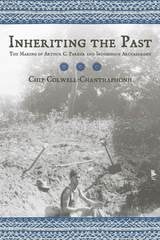
Inheriting the Past
The Making of Arthur C. Parker and Indigenous ArchaeologyChip Colwell-Chanthaphonh
University of Arizona Press, 2009
In Inheriting the Past, Chip Colwell-Chanthaphonh examines Parker’s winding career path and asks why it has taken generations for Native peoples to follow in his footsteps. Closely tracing Parker’s life through extensive archival research, Colwell-Chanthaphonh explores how Parker crafted a professional identity and negotiated dilemmas arising from questions of privilege, ownership, authorship, and public participation. How Parker, as well as the discipline more broadly, chose to address the conflict between Native American rights and the pursuit of scientific discovery ultimately helped form archaeology’s moral community.
Parker’s rise in archaeology just as the field was taking shape demonstrates that Native Americans could have found a place in the scholarly pursuit of the past years ago and altered its trajectory. Instead, it has taken more than a century to articulate the promise of an Indigenous archaeology—an archaeological practice carried out by, for, and with Native peoples. As the current generation of researchers explores new possibilities of inclusiveness, Parker’s struggles and successes serve as a singular reference point to reflect on archaeology’s history and its future.
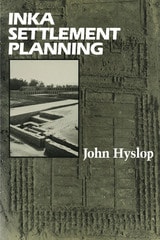
Inka Settlement Planning
By John Hyslop
University of Texas Press, 1990
Before the Spanish conquest in the sixteenth century A.D., the Inka Empire stretched along the Pacific side of South America, all the way from Ecuador to northwest Argentina. Though today many Inka researchers focus on the imperial capital of Cuzco, Peru, and surrounding areas, ruins of Inka settlements abound throughout the vast territory of the former empire and offer many clues about how the empire was organized, managed, and defended. These outlying settlements, as well as those in the Cuzco area, form the basis for John Hyslop's detailed study Inka Settlement Planning.
Using extensive aerial photography and detailed site maps, Hyslop studies the design of several dozen settlements spread throughout the empire. In addition to describing their architecture and physical infrastructure, he gives special emphasis to the symbolic aspects of each site's design. Hyslop speculates that the settlement plans incorporate much iconography expressive of Inka ideas about the state, the cosmos, and relationships to non-Inka peoples—iconography perhaps only partially related to the activities that took place within the sites. And he argues that Inka planning concepts applied not only to buildings but also to natural features (stone outcrops, water sources, and horizons) and specialized landscaping (terracing).
Of interest to a wide readership in archaeology, architecture, urbanization, empire building, and Andean travel, Inka Settlement Planning charts one of Native America's greatest achievements.

Insect Media
An Archaeology of Animals and TechnologyJussi Parikka
University of Minnesota Press, 2010
Through close engagement with the pioneering work of insect ethologists, including Jakob von Uexküll and Karl von Frisch, posthumanist philosophers, media theorists, and contemporary filmmakers and artists, Parikka develops an insect theory of media, one that conceptualizes modern media as more than the products of individual human actors, social interests, or technological determinants. They are, rather, profoundly nonhuman phenomena that both draw on and mimic the alien lifeworlds of insects.
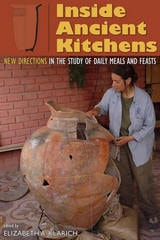
Inside Ancient Kitchens
New Directions in the Study of Daily Meals and FeastsElizabeth A. Klarich
University Press of Colorado, 2010
Integrative Approaches in Ceramic Petrography
Edited by Mary Ownby, Isabelle Druc, and Maria Masucci
University of Utah Press, 2016
Ceramic petrography, a microscopic examination of the mineral content and structure within ceramic thin sections, reveals the origin and movement of pottery and sheds light on the technology of the artifact. Practiced by archaeologists since the 1930s, ceramic petrography was less commonly practiced until recently. Integrative Approaches in Ceramic Petrography highlights new results from this field and incorporates it prominently within current archaeological work.
Thirteen papers cover a broad spectrum of regional and temporal contexts with case studies that provide practical examples combining petrography with scientific, ethnographic, and experimental methods. The varied uses of ceramic petrography and the insights it has generated, illustrate the significance of this method for understanding past societies and the volume’s conclusion provides an astute overview of the field.
Interaction and Connectivity in the Greater Southwest
Karen Harry
University Press of Colorado, 2018
The book observes social interactions’ role in the diffusion of ideas and material culture; the way different social units, especially households, interacted within and between communities; and the importance of interaction and interconnectivity in understanding the archaeology of the Southwest’s northern periphery. Chapters demonstrate a movement away from strictly economic-driven models of social connectivity and interaction and illustrate that members of social groups lived in dynamic situations that did not always have clear-cut and unwavering boundaries. Social connectivity and interaction were often fluid, changing over time.
Interaction and Connectivity in the Greater Southwest is an impressive collection of established and up-and-coming Southwestern archaeologists collaborating to strengthen the theoretical underpinnings of the discipline. It will be of interest to professional and academic archaeologists, as well as researchers with interests in diffusion, identity, cultural transmission, borders, large-scale interaction, or social organization.
Contributors:
Richard V. N. Ahlstrom, James R. Allison, Jean H. Ballagh, Catherine M. Cameron, Richard Ciolek-Torello, John G. Douglass, Suzanne L. Eckert, Hayward H. Franklin, Patricia A. Gilman, Dennis A. Gilpin, William M. Graves, Kelley A. Hays-Gilpin, Lindsay D. Johansson, Eric Eugene Klucas, Phillip O. Leckman, Myles R. Miller, Barbara J. Mills, Matthew A. Peeples, David A. Phillips Jr., Katie Richards, Heidi Roberts, Thomas R. Rocek, Tammy Stone, Richard K. Talbot, Marc Thompson, David T. Unruh, John A. Ware, Kristina C. Wyckoff
Intermediate Elites in Pre-Columbian States and Empires
Edited by Christina M. Elson and R. Alan Covey
University of Arizona Press, 2006
This is the first volume to consider how individuals subordinate to imperial rulers helped to shape specific forms of state and imperial organization. Taking a broader scope than previous studies, it is one of the few works to systematically address these issues in both Mesoamerica and the Central Andes. It considers how these individuals influenced the long-term development of the largest civilizations of the ancient Americas, opening a new window on the role of intermediate elites in the rise and fall of ancient states and empires worldwide.
The authors demonstrate how such evidence as settlement patterns, architecture, decorative items, and burial patterns reflect the roles of intermediate elites in their respective societies, arguing that they were influential actors whose interests were highly significant in shaping the specific forms of state and imperial organization. Their emphasis on provincial elites particularly shifts examination of early states away from royal capitals and imperial courts, explaining how local elites and royal bureaucrats had significant impact on the development and organization of premodern states.
Together, these papers demonstrate that intricate networks of intermediate elites bound these ancient societies together—and that competition between individuals and groups contributed to their decline and eventual collapse. By addressing current theoretical concerns with agency, resistance to state domination, and the co-option of local leadership by imperial administrators, it offers valuable new insight into the utility of studying intermediate elites.
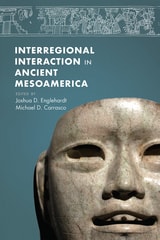
Interregional Interaction in Ancient Mesoamerica
Joshua Englehardt
University Press of Colorado, 2019
Archaeologists have long recognized the crucial role of interregional interaction in the development and cultural dynamics of ancient societies, particularly in terms of the evolution of sociocultural complexity and economic systems. Recent research has further expanded the archaeological, art historical, ethnographic, and epigraphic records in Mesoamerica, permitting a critical reassessment of the complex relationship between interaction and cultural dynamics. This volume builds on and amplifies earlier research to examine sociocultural phenomena—including movement, migration, symbolic exchange, and material interaction—in their role as catalysts for variability in cultural systems.
Interregional cultural exchange in pre-Columbian Mesoamerica played a key role in the creation of systems of shared ideologies, the production of regional or “international” artistic and architectural styles, shifting sociopolitical patterns, and changes in cultural practices and meanings. Interregional Interaction in Ancient Mesoamerica highlights, engages with, and provokes questions pertinent to understanding the complex relationship between interaction, sociocultural processes, and cultural innovation and change in the ancient societies and cultural histories of Mesoamerica and will be of interest to archaeologists, linguists, and art historians.
Contributors: Philip J. Arnold III, Lourdes Budar, José Luis Punzo Diaz, Gary Feinman, David Freidel, Elizabeth Jiménez Garcia, Guy David Hepp, Kerry M. Hull, Timothy J. Knab, Charles L. F. Knight, Blanca E. Maldonado, Joyce Marcus, Jesper Nielsen, John M. D. Pohl, Iván Rivera, D. Bryan Schaeffer, Niklas Schulze
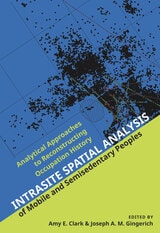
Intrasite Spatial Analysis of Mobile and Semisedentary Peoples
Analytical Approaches to Reconstructing Occupation HistoryEdited by Amy E. Clark and Joseph A. M. Gingerich
University of Utah Press, 2022
This volume includes studies that span archaeological and ethnographic contexts, from highly mobile Paleoindian foragers to semi-sedentary preagriculturalists of the Epipaleolithic and modern pastoralists in Mongolia. The authors hold that commonalities in human behavior lead to similar patterns in the organization and maintenance of space by people. They present a series of ideas and approaches to make it easier to recognize universals in human behaviors, which allow archaeologists to better compare intrasite spatial patterns. The book creates a baseline for new intrasite spatial analyses in the twenty-first century.

Inventing Africa
History, Archaeology and IdeasRobin Derricourt
Pluto Press, 2011
Inventing Africa is a critical account of narratives which have selectively interpreted and misinterpreted the continent's deep past.
Writers have created alluring images of lost cities, vast prehistoric migrations and golden ages of past civilisations. Debates continue on the African origins of humankind, the contributions of ancient Egypt to the world and Africa's importance to global history.
Images of 'Africa', simplifying a complex and diverse continent, have existed from ancient Mediterranean worlds, slave trading nations and colonial powers to today's political elites, ecotourists and aid-givers. Robin Derricourt draws on his background as publisher and practitioner in archaeology and history to explore the limits and the dangers of simplifications, arguing - as with Said's concept of 'Orientalism' - that ambitious ideas can delude or oppress as well as inform.
Defending Africa against some of the grand narratives that have been imposed upon its peoples, Inventing Africa will spark new debates in the history of Africa and of archaeology.
Invisible Citizens
Captives and Their ConsequencesCatherine M Cameron
University of Utah Press, 2009
The contributors to this volume explore the remarkable range in the conditions and experiences of captives, from abject drudge to quasi kinswoman and from war captive to sexual concubine. Developing methods for identifying captives in the archaeological record are established in light of the silence that surrounded captive-taking and enslavement in many parts of the world.
Invisible Citizens promises to attract attention from a number of fields concerned with the comparative, historical study of social inequality. It challenges scholars to develop robust, empirically grounded insights into the practices of slavery while attending to the forms and saliencies of its memories. .
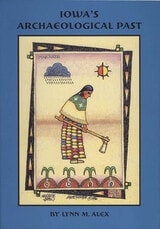
Iowa's Archaeological Past
Lynn M. Alex
University of Iowa Press, 2000
The core of this book—which includes many historic photographs and maps as well as numerous new maps and drawings and a generous selection of color photos—explores in detail what archaeologists have learned from studying the state's material remains and their contexts. Examining the projectile points, potsherds, and patterns that make up the archaeological record, Alex describes the nature of the earliest settlements in Iowa, the development of farming cultures, the role of the environment and environmental change, geomorphology and the burial of sites, interaction among native societies, tribal affiliation of early historic groups, and the arrival and impact of Euro-Americans. In a final chapter, she examines the question of stewardship and the protection of Iowa's many archaeological resources.
Iroquois Culture History in the Niagara Frontier Area of New York State
Marian E. White
University of Michigan Press, 1961
Irrigation and the Cuicatec Ecosystem
A Study of Agriculture and Civilization in North Central OaxacaJoseph W. Hopkins III
University of Michigan Press, 1984
Irrigation's Impact on Society
Edited by Theodore E. Downing and McGuire Gibson
University of Arizona Press, 1974
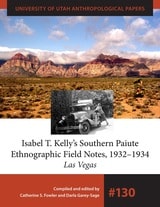
Isabel T. Kelly's Southern Paiute Ethnographic Field Notes, 1932-1934
Compiled and Edited by Catherine S. Fowler and Darla Garey-Sage
University of Utah Press, 2016
University of Utah Anthropological Paper No. 130
This publication presents the first volume (Las Vegas) of the early ethnographic field work of anthropologist Isabel T. Kelly. From 1932 to 1934, Kelly interviewed thirty Southern Paiute people from southeastern California, southern Nevada, and southern Utah about “the old ways.” During this time, she filled thirty-one notebooks, made several maps, took roughly fifty photographs, collected nearly 300 ethnobotanical specimens, purchased and shipped over 400 ethnographic artifacts to museums, and traveled more than 7,000 miles. Her notes comprise the most extensive primary ethnographic documentation of Southern Paiute/Chemehuevi lifeways of the middle to late nineteenth and early twentieth centuries existing today.
Although Kelly intended to publish these notes, she was unable to before her death. Fowler and Garey-Sage have now synthesized the first set of these handwritten field notes and sketches, providing commentary and illustrations to put them in context for the modern reader. Kelly’s data, most of which could not be gathered anew today, are offered here for the use of generations to come.
Island Lives
Historical Archaeologies of the CaribbeanEdited by Paul Farnsworth
University of Alabama Press, 2001
Historical archaeology and the making of Caribbean cultures and nations.
Long before the founding of Jamestown in 1607, there were Spanish forts, bustling towns, sugar plantations, and sea trade flourishing in the Caribbean. While richer nations, particularly the United States, may view the Caribbean today as merely a place for sun and fun, the island colonies were at one time far more important and lucrative to their European empire countries than their North American counterparts. From the 15th to the 19th centuries, as competing colonial powers vied with each other for military and economic advantage in the Western Hemisphere, events in the Caribbean directly influenced the American mainland.
This is one rationale for the close study of historical archaeology in the Caribbean. Another is the growing recognition of how archaeological research can support the defining of national identities for the islands, many of them young independent states struggling to establish themselves economically and politically. By looking at cases in the French West Indies, specifically on Guadeloupe, in the Dutch Antilles and Aruba, in the British Bahamas, on Montserrat and St. Eustatius, on Barbados, and the within the U.S. Virgin Islands, the contributors to Island Lives have produced a broad overview of Caribbean historical archaeology.
Island Lives makes clear that historical archaeology in the Caribbean will continue to grow and diversify due to the interest Caribbean peoples have in recording, preserving, and promoting their culture and heritage; the value it adds to their "heritage tourism"; and the connection it has to African American history and archaeology. In addition, the contributors point to the future by suggesting different trajectories that historical archaeology and its practitioners may take in the Caribbean arena. In so doing, they elucidate the problems and issues faced worldwide by researchers working in colonial and post-colonial societies.
Island of Fogs
Archaeological and Ethnohistorical Investigations of Isla Cedros, Baja CaliforniaMatthew R Des Lauriers
University of Utah Press, 2010
Located off the west coast of the Mexican state of Baja California, Isla Cedros—Island of Fogs—is site to some of the most extensive and remarkable archeological discoveries on the continent. Two sites dated to before 12,000 cal BP have been excavated, as well as portions of two large village sites dated to the last one thousand years. Among the artifacts discovered are the earliest fishhooks found on the continent.
Drawing on ten years of his own historical, ethnographic, and archaeological research, Matthew Des Lauriers uses Isla Cedros to form hypotheses regarding the ecological, economic, and social nature of island societies. Des Lauriers uses a comparative framework in order to examine both the development and evolution of social structures among Pacific coast maritime hunter-gatherers as well as to track patterns of change.
Because it examines the issue of whether human populations can intensively harvest natural resources without causing ecological collapse, Island of Fogs provides a relevant historical counterpart to modern discussions of ecological change and alternative models for sustainable development.
Winner of the Society for American Archaeology Book Award.
Islands On The Plains
Ecological, Social, and Ritual Use of LandscapesEdited by Marcel Kornfeld and Alan J. Osborn
University of Utah Press, 2003
Scattered throughout the Great Plains are many isolated areas of varying size and ecology, quite distinct from the surrounding grasslands. Such spaces can be uplands like the Black Hills, low hills like the Nebraska Sand Hills, or linear areas such as shallow river valleys and deeply incised canyons. While the notion of “islands” is not a new one among ecologists, its application in Plains archaeology is.
The contributors to this volume seek to illustrate the different ways that the spatial, structural, and temporal nature of islands conditioned the behavior and adaptation of past Plains peoples. This as a first step toward a more detailed analysis of habitat variation and its effects on Plains cultural dynamics and evolution. Although the emphasis is on ecology, several chapters also address social and ideological islands in the form of sacred sites and special hunting grounds.
Islands at the Crossroads
Migration, Seafaring, and Interaction in the CaribbeanL. Antonio Curet
University of Alabama Press, 2011
It's About Time
A History of Archaeological Dating in North AmericaStephen E Nash
University of Utah Press, 2008
Iñupiat of the Sii
Historical Ethnography and Arctic ChallengesWanni W. Anderson
University of Alaska Press, 2024
This fascinating book records, preserves, and contributes to the knowledge of the history and cultural lifeways of the Siilaviŋmiut people using contextual and ethnographic writing styles that apply community-based, lived-experience, and sense-of-place approaches. The authors, who have remained in contact with Selawikers since the original research period, center Iñupiaq elders’ and local Iñupiaq historians’ continued commitments to historical knowledge about the past, their ancestors, and their vast repertoire of traditional cultural and environmental knowledge. They portray the particularity of Iñupiaq life as it was lived, sensed, and felt by Selawikers themselves and as experienced by researchers. Quoted observations, conversations, and comments eloquently acknowledge Iñupiaq insiders’ narrative voices.
Providing one of only a few ethnographic reviews of an Alaska Native village, Iñupiat of the Sii will appeal to general readers interested in learning about Iñupiaq lifeways and the experiences of anthropologists in the field. It will also be useful to instructors teaching college-level students how anthropological field research should be conducted, analyzed, and reported.