Results by title
5550 books match the query 'Biography & Autobiography' and 174 start with i
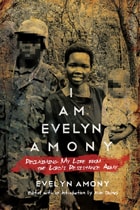
I Am Evelyn Amony
Reclaiming My Life from the Lord's Resistance ArmyEvelyn Amony, Edited with an introduction by Erin Baines
University of Wisconsin Press, 2015
Abducted at the age of eleven, Evelyn Amony spent nearly eleven years inside the Lord’s Resistance Army, becoming a forced wife to Joseph Kony and mother to his children. She takes the reader into the inner circles of LRA commanders and reveals unprecedented personal and domestic details about Joseph Kony. Her account unflinchingly conveys the moral difficulties of choosing survival in a situation fraught with violence, threat, and death.
Amony was freed following her capture by the Ugandan military. Despite the trauma she endured with the LRA, Amony joined a Ugandan peace delegation to the LRA, trying to convince Kony to end the war that had lasted more than two decades. She recounts those experiences, as well as the stigma she and her children faced when she returned home as an adult.
This extraordinary testimony shatters stereotypes of war-affected women, revealing the complex ways that Amony navigated life inside the LRA and her current work as a human rights advocate to make a better life for her children and other women affected by war.
Best books for public & secondary school libraries from university presses, American Library Association
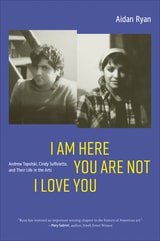
I Am Here You Are Not I Love You
Andrew Topolski, Cindy Suffoletto, and Their Life in the ArtsAidan Ryan
University of Iowa Press, 2025
The book presents a critical reexamination of Andrew Topolski, an overlooked luminary of intermedia and postminimalism. In repositioning Topolski’s legacy and vast body of work, Ryan makes compelling findings about the interplay of talent, luck, and community support in the making or breaking of artistic careers. At the same time, the story shares the significant and never-before-seen body of work by Cindy Suffoletto, a talented and inventive artist little shown and never cataloged during her short life. Ultimately, Ryan argues that the time is right for both to take up a privileged place among the great artists of their generation.
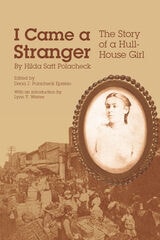
I Came a Stranger
The Story of a Hull-House GirlHilda Satt Polacheck
University of Illinois Press, 1989

I Contain Multitudes
A New Life of Walt WhitmanEric G. Wilson
University of Chicago Press, 2027
Lively and entertaining, this is the first comprehensive biography of Walt Whitman in more than twenty-five years, drawing on significant new discoveries and scholarship.
Walt Whitman is not only one of the most influential and popular poets in American history but also a symbol of American character and independence, as important to our nation’s identity as Abraham Lincoln, Harriet Beecher Stowe, or Louis Armstrong. While his poetry and exuberant style still inspire writers today, our understanding of his life is due for an update. It has been over a quarter of a century since the last full-length biography of Whitman, and in that time several works by Whitman have been rediscovered—including a novel and a men’s health manual—that put Whitman in a new light. In I Contain Multitudes, Eric G. Wilson draws on these discoveries to give us a fresh life of Whitman, one that reveals him to be more playful, flexible, and pragmatic than we had known.
Whitman emerges here as an artist adept in almost every literary genre. Across these varied writings, he fashioned a comedic vision based on the multifariousness of the cosmos. In his life as well, he created a wide range of personae. Like an experienced actor, Whitman had many roles and selves at the ready: the urban dandy, the Broadway bohemian, the humble Civil War nurse. Wilson’s portrait casts well-studied Whitman traits in a new light: his radical egalitarianism, he shows, was suffused with humor—to be a good citizen meant not taking yourself too seriously—and his famous powers of empathy resulted in darkly funny challenges to oppressive hierarchies.
Wilson tells Whitman’s life in dozens of brief, vivid segments, an innovative approach that reflects Whitman’s own existential and literary brio. Presenting the multitudinous Whitman with both stylistic gusto and scholarly rigor, I Contain Multitudes reads as much like a novel as the authoritative biography it is.
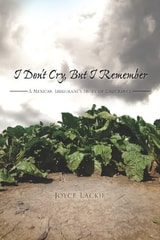
I Don't Cry, But I Remember
A Mexican Immigrant's Story of EnduranceJoyce Lackie
University of Arizona Press, 2012
When Viviana Salguero came to the United States in 1946, she spoke very little English, had never learned to read or write, and had no job skills besides housework or field labor. She worked eighteen-hour days and lived outdoors as often as not. And yet she raised twelve children, shielding them from her abusive husband when she dared, and shared in both the tragedies and accomplishments of her family. Through it all, Viviana never lost her love for Mexico or her gratitude to the United States for what would eventually become a better life. Though her story is unique, Viviana Salguero could be the mother, grandmother, or great-grandmother of immigrants anywhere, struggling with barriers of gender, education, language, and poverty.
In I Don't Cry, But I Remember, Joyce Lackie shares with us an intimate portrait of Viviana's life. Based on hours of recorded conversations, Lackie skillfully translates the interviews into an engaging, revealing narrative that details the migrant experience from a woman's point of view and fills a gap in our history by examining the role of women of color in the American Southwest. The book presents Vivana's life not only as a chronicle of endurance, but as a tale of everyday resistance. What she lacks in social confidence, political strength, and economic stability, she makes up for in dignity, faith, and wisdom.
Like all good oral history, Salguero's accounts and Lackie's analyses contribute to our understanding of the past by exposing the inconsistencies and contradictions in our remembrances. This book will appeal to ethnographers, oral historians, students and scholars of Chicana studies and women's studies, as well as general readers interested in the lives of immigrant women.
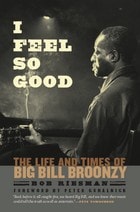
I Feel So Good
The Life and Times of Big Bill BroonzyBob Riesman
University of Chicago Press, 2011
A major figure in American blues and folk music, Big Bill Broonzy (1903–1958) left his Arkansas Delta home after World War I, headed north, and became the leading Chicago bluesman of the 1930s. His success came as he fused traditional rural blues with the electrified sound that was beginning to emerge in Chicago. This, however, was just one step in his remarkable journey: Big Bill was constantly reinventing himself, both in reality and in his retellings of it. Bob Riesman’s groundbreaking biography tells the compelling life story of a lost figure from the annals of music history.
I Feel So Good traces Big Bill’s career from his rise as a nationally prominent blues star, including his historic 1938 appearance at Carnegie Hall, to his influential role in the post-World War II folk revival, when he sang about racial injustice alongside Pete Seeger and Studs Terkel. Riesman’s account brings the reader into the jazz clubs and concert halls of Europe, as Big Bill's overseas tours in the 1950s ignited the British blues-rock explosion of the 1960s. Interviews with Eric Clapton, Pete Townshend, and Ray Davies reveal Broonzy’s profound impact on the British rockers who would follow him and change the course of popular music.
Along the way, Riesman details Big Bill’s complicated and poignant personal saga: he was married three times and became a father at the very end of his life to a child half a world away. He also brings to light Big Bill’s final years, when he first lost his voice, then his life, to cancer, just as his international reputation was reaching its peak. Featuring many rarely seen photos, I Feel So Good will be the definitive account of Big Bill Broonzy’s life and music.
I Have No Regrets
Diaries, 1955-1963Brigitte Reimann
Seagull Books, 2019
With an upbeat tempo and amusing tone, I Have No Regrets contains detailed accounts of the author’s love affairs, daily life, writing, and reflections. Like the heroines in her stories, Reimann was impetuous and outspoken, addressing issues and sensibilities otherwise repressed in the era of the German Democratic Republic. She followed the state’s call for artists to leave their ivory towers and engage with the people, moving to the new town of Hoyerswerda to work part-time at a nearby industrial plant and run writing classes for the workers. Her diaries and letters provide a fascinating parallel to her fictional writing. By turns shocking, passionate, unflinching, and bitter—but above all life-affirming—they offer an unparalleled insight into what life was like during the first decades of the GDR.

I Have Not Loved You With My Whole Heart
Cris Harris
Oregon State University Press, 2021
In a book rich with remembrances of the Pacific Northwest of the 1970s–1990s, Cris Harris pulls the reader through turning points in a household crowded with abuse, addiction, neglect, acceptance, and grief, as well as the healing that comes after reconciliation. In recognizing perpetrators of violence as complex people—as selves we can recognize—Harris wrestles with paradox: the keening dissonance of loving people with hard edges, the humor of horrible situations, and how humor can cover for anger. He shows how violence can mark us and courageously lays bare those marks, owning them as his own precious history, born of a fierce species of love.
I Have Not Loved You With My Whole Heart will speak to readers whose family members came out late in life, and to those who lost loved ones in the AIDS crisis of the late 1980s and 1990s. Those with complicated relationships to faith, survivors of abuse, and anyone who has lived with family crisis will also find healing in these pages.

I Have Not Loved You With My Whole Heart
Cris Harris
Oregon State University Press, 2021
In a book rich with remembrances of the Pacific Northwest of the 1970s–1990s, Cris Harris pulls the reader through turning points in a household crowded with abuse, addiction, neglect, acceptance, and grief, as well as the healing that comes after reconciliation. In recognizing perpetrators of violence as complex people—as selves we can recognize—Harris wrestles with paradox: the keening dissonance of loving people with hard edges, the humor of horrible situations, and how humor can cover for anger. He shows how violence can mark us and courageously lays bare those marks, owning them as his own precious history, born of a fierce species of love.
I Have Not Loved You With My Whole Heart will speak to readers whose family members came out late in life, and to those who lost loved ones in the AIDS crisis of the late 1980s and 1990s. Those with complicated relationships to faith, survivors of abuse, and anyone who has lived with family crisis will also find healing in these pages.
I Hear Voices
A Memoir of Love, Death, and the RadioJean Feraca
University of Wisconsin Press, 2007
Jean Feraca’s road to self-fulfillment has been as quirky and demanding as the characters in her incredible memoir. A veteran of several decades of public radio broadcasting, Feraca is also a writer and a poet. She is a talk show host beloved for her unique mixture of the humanities, poetry, and journalism, and is the creator of the pioneering international cultural affairs radio program Here on Earth: Radio without Borders.
In this searing memoir, Feraca traces her own emergence. She pulls back the curtain on her private life, revealing unforgettable portraits of the characters in her brawling Italian-American family: Jenny, the grandmother, the devil woman who threw Casey Stengel down an excavation pit; Dolly, the mother, a cross between Long John Silver and the Wife of Bath, who in battling mental illness becomes the scourge of a Lutheran nursing home; and Stephen, the brilliant but troubled older brother, an anthropologist adopted by a Sioux tribe. In a new chapter that reinforces and ties together the book’s exploration of the multiple forms of love, Jean introduces us to Roger, a Wildman and her husband’s best friend with whom she, too, develops an extraordinary intimacy. A selection of fifteen of Feraca’s poems add counterpoint to her engaging prose.

I Hid It under the Sheets
Growing Up with RadioGerald Eskenazi
University of Missouri Press, 2005
Imagine that there was a time in America when a child sat next to a radio and simply listened. But didn’t just listen, was enthralled and knew that this time was his alone, that he was part of the vortex of drama unfolding inside the radio’s innards. . . . I never saw a punch thrown, or a glass shatter, or a blood-smeared shirt as I listened to the radio. Nor did I know Barbara Stanwyck’s hairstyle as she overacted in Sorry, Wrong Number on the Lux Radio Theatre. And I had no idea how corpulent Happy Felton was as he dropped ten silver dollars that jangled into a Sheffield’s Milk bottle on Guess Who. (Yes, ten bucks was what you won on that show.) Instead, I imagined it all.
I Hid It under the Sheets captures a bygone era—the late 1930s, 1940s, and early 1950s—through the reminiscences of award-winning New York Times reporter Gerald Eskenazi. This first-person recollection shows radio’s broad impact on his generation and explains how and why it became such a major factor in shaping America and Americans.
I Just Let Life Rain Down on Me
Selected Letters and ReflectionsRahel Levin Varnhagen
Seagull Books, 2024
At times poetic but not a poem, prosaic but not an essay, a letter is often pure writing for writing’s sake. Such is the case for Rahel Varnhagen von Ense, née Levin, the illustrious German-Jewish Berlin literary salon hostess from the early nineteenth century. She penned over ten thousand letters to more than three hundred recipients, including princes, philosophers, poets, family members, and the family cook. Written with a wink at posterity, collected and first published after her passing by her husband, Karl August Varnhagen von Ense, these letters constitute a singular contribution to German literature.
Varied in subject—from family affairs to linguistic, literary, and pressing social concerns—the poignant lyricism of her letters is all the more remarkable when we take into account that High German was not her first language; she grew up speaking, reading, and writing primarily Yiddish. Her shaky social status as a woman and a member of a precarious minority, combined with an astounding lucidity and a rare capacity to put her thoughts into words, made her a force to be reckoned with in her lifetime and thereafter as one of Germany’s preeminent women of letters. As we see in I Just Let Life Rain Down on Me, her voice is as fresh and original as that of any of the recognized poets and thinkers of her day. As Rahel herself put it: “[O]ur language is our lived life; I invented mine for my own purposes, I was less able than many others to make use of preconceived turns of phrase, which is why mine are often clumsy, and in all respects faulty, but always true.”
Compiled and translated by Peter Wortsman, this rewarding volume affords English-speaking readers the first privileged peek at the mindset of one of Europe’s first and foremost women of letters.
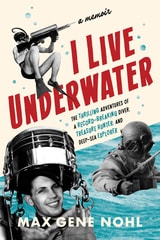
I Live Underwater
The Thrilling Adventures of a Record-Breaking Diver, Treasure Hunter, and Deep-Sea ExplorerMax Nohl
Wisconsin Historical Society Press, 2025
I Live Underwater is the highly anticipated posthumous memoir of Max Nohl, a larger-than-life thrill seeker and treasure hunter who revolutionized deep-sea diving. Recounting harrowing experiences with tangled air-hoses, hungry sharks, untested scientific theories, and painful cases of the bends, Nohl’s vivid narrative shows how his unquenchable thirst for adventure propelled him to transcend fear and become one of the field’s great innovators—shattering the diving record in 1937 as the first person to dive deeper than 400 feet.
Beginning with the disquieting childhood experiences that inspired his obsession with the underwater world, Nohl goes on to discuss his innovative work on the first self-contained diving suit as a student at MIT and his risky experiments in breathing helium to achieve deeper dives. In addition to making vital contributions to the commercial diving industry, Nohl was a pioneer in underwater filming, developing equipment and techniques that were employed in many Hollywood film and television productions.
After Nohl’s sudden death in 1960 in a car accident, his nearly complete memoir sat in the Milwaukee Public Library Archives—unpublished, until now. Accompanying this page-turning text is a dynamic assortment of images, including Nohl’s original pen-and-ink sketches and historic photos of Nohl and his collaborators. A foreword by Wisconsin Historical Society maritime archaeologist Tamara Thomsen provides insights into Nohl’s many important contributions to the diving world and to Wisconsin history and culture.
Includes stories of dives in Lake Michigan (near Milwaukee), the North Atlantic (near Marblehead and Martha’s Vineyard), Walden Pond, the Gulf Coast (near Morgan City, Louisiana, and Panama City, Apalachicola, Wakulla Springs, and Tarpon Springs in Florida), and the Caribbean (near Haiti and the Dominican Republic).
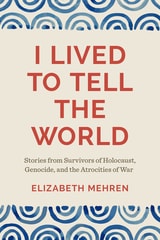
I Lived to Tell the World
Stories from Survivors of Holocaust, Genocide, and the Atrocities of WarElizabeth Mehren
Oregon State University Press, 2024
The 2025 Oregon Center for the Book Adult Readers' Selection
The 2025 NYC BIG BOOK AWARD Distinguished Favorite in the category of Cultural and Social Issues
Foreword INDIES 2024 Book of the Year Award Finalist - Multiculturalism & Regional
As Americans increasingly question how each of us fits into our nation's cultural tapestry, I Lived to Tell the World presents thirteen inspiring profiles of refugees who have settled in Oregon. They come from Rwanda, Myanmar, Bosnia, Syria, and more-different stories, different conflicts, but similar paths through loss and violence to a new, not always easy, life in the United States. The in-depth profiles are drawn from hours of interviews and oral histories; journalist Elizabeth Mehren worked collaboratively with the survivors to honor the complexity of their experiences and to ensure that the stories are told with, and not just about, them. Mehren also weaves in historical, cultural, and political context alongside these personal stories of resilience.
In the face of global cruelty and hatred, the courage and fortitude of these individuals illuminate the darkness. Their stories inspire readers to reflect on their own experiences and to view newcomers to America with renewed respect. As more states adopt Holocaust and genocide education curricula and as issues around refugees, immigration, and racial justice gain attention, I Lived to Tell the World highlights the purposeful lives led by these Oregonians despite their painful pasts. Their experiences not only humanize the atrocities often seen in headlines, but also convey a universal message of hope.
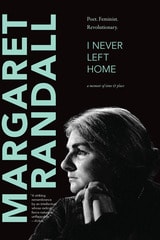
I Never Left Home
Poet, Feminist, RevolutionaryMargaret Randall
Duke University Press, 2020
From living among New York's abstract expressionists in the mid-1950s as a young woman to working in the Nicaraguan Ministry of Culture to instill revolutionary values in the media during the Sandinista movement, the story of Randall's life reads like a Hollywood production. Along the way, she edited a bilingual literary journal in Mexico City, befriended Cuban revolutionaries, raised a family, came out as a lesbian, taught college, and wrote over 150 books. Throughout it all, Randall never wavered from her devotion to social justice.
When she returned to the United States in 1984 after living in Latin America for twenty-three years, the U.S. Immigration and Naturalization Service ordered her to be deported for her “subversive writing.” Over the next five years, and with the support of writers, entertainers, and ordinary people across the country, Randall fought to regain her citizenship, which she won in court in 1989.
As much as I Never Left Home is Randall's story, it is also the story of the communities of artists, writers, and radicals she belonged to. Randall brings to life scores of creative and courageous people on the front lines of creating a more just world. She also weaves political and social analyses and poetry into the narrative of her life. Moving, captivating, and astonishing, I Never Left Home is a remarkable story of a remarkable woman.

I Never Made Love with James Baldwin
A MemoirStanley Cohen
Seagull Books, 2026
One man's life unfolds into a memoir of the defining cultural figures of the mid-twentieth century and beyond.
I Never Made Love with James Baldwin is a dazzling memoir told through a succession of attorney Stanley Cohen's vivid encounters with some of the most compelling figures of the twentieth century and beyond. Moving between America, Europe, and Asia, Cohen recounts moments shared with artists, writers, jurists, and financiers, including Alexander Calder, Joseph Heller, Robert Caro, Ruth Bader Ginsburg, Yehuda Hanani, and members of the Rothschild family. These figures appear not as distant icons but as sharp, human presences—brilliant, eccentric, generous, and flawed. Cohen’s life unfolds like a performance, shaped less by planning than by intensity: conversations, friendships, arguments, and coincidences that flare briefly and leave lasting marks. With wit, candor, and an eye for the telling detail, he captures a vast social and creative network spanning the mid-twentieth century to the present. The result is an intimate, unconventional portrait of an exceptional life and of the people who lit its path.

I Rest My Case
Mark Verstandig
Northwestern University Press, 2002
His personal story interweaves the vast forces of politics and history with intimate details of the shtetl--from the pre-war intricacies of Galician society and the textures of a traditional Jewish education, to the agonizing contradictions of Polish-Jewish relations and the complexities of post-war Jewish politics.
His account of the displaced persons camps where 'transit Jews' awaited their chance to emigrate is a signifigant contribution to a little-known aspect of post-war history.
With his gift for observation and his acute powers of analysis, Mark Verstandig has achieved the rare feat of telling the story of his people through his own history. Part autobiography, part Holocaust literature, part sociological analysis, I Rest my Case is a fine achievement.
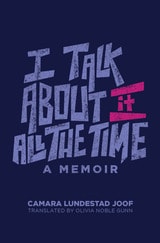
I Talk about It All the Time
Camara Lundestad Joof
University of Wisconsin Press, 2024
“I regularly decide to quit talking to white people about racism,” writes Joof. Such discussions often feel unproductive, the occasional spark of hope coming at enormous personal cost. But not talking about it is impossible, a betrayal of self. The book is a self-examination as well as societal indictment. It is an open challenge to readers, to hear her as she talks about it, all the time.
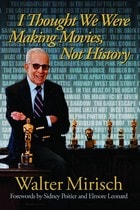
I Thought We Were Making Movies, Not History
Walter Mirisch
University of Wisconsin Press, 2008
This is a moving, star-filled account of one of Hollywood’s true golden ages as told by a man in the middle of it all. Walter Mirisch’s company has produced some of the most entertaining and enduring classics in film history, including West Side Story, Some Like It Hot, In the Heat of the Night, and The Magnificent Seven. His work has led to 87 Academy Award nominations and 28 Oscars. Richly illustrated with rare photographs from his personal collection, I Thought We Were Making Movies, Not History reveals Mirisch’s own experience of Hollywood and tells the stories of the stars—emerging and established—who appeared in his films, including Natalie Wood, John Wayne, Peter Sellers, Sidney Poitier, Steve McQueen, Marilyn Monroe, and many others.
With hard-won insight and gentle humor, Mirisch recounts how he witnessed the end of the studio system, the development of independent production, and the rise and fall of some of Hollywood’s most gifted (and notorious) cultural icons. A producer with a passion for creative excellence, he offers insights into his innovative filmmaking process, revealing a rare ingenuity for placating the demands of auteur directors, weak-kneed studio executives, and troubled screen sirens.
From his early start as a movie theater usher to the presentation of such masterpieces as The Apartment, Fiddler on the Roof, and The Great Escape, Mirisch tells the inspiring life story of his climb to the highest echelon of the American film industry. This book assures Mirisch’s legacy—as Elmore Leonard puts it—as “one of the good guys.”
Best Books for Special Interests, selected by the American Association of School Librarians, and Best Books for General Audiences, selected by the Public Library Association
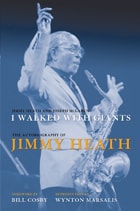
I Walked With Giants
The Autobiography of Jimmy HeathJimmy Heath and Joseph McLaren, foreword by Bill Cosby, introduction by Wynton Marsalis
Temple University Press, 2010
In this extraordinary autobiography, the legendary Heath creates a “dialogue” with musicians and family members. As in jazz, where improvisation by one performer prompts another to riff on the same theme, I Walked with Giants juxtaposes Heath’s account of his life and career with recollections from jazz giants about life on the road and making music on the world’s stages. His memories of playing with his equally legendary brothers Percy and Albert (aka “Tootie”) dovetail with their recollections.
Heath reminisces about a South Philadelphia home filled with music and a close-knit family that hosted musicians performing in the city’s then thriving jazz scene. Milt Jackson recalls, “I went to their house for dinner…Jimmy’s father put Charlie Parker records on and told everybody that we had to be quiet till dinner because he had Bird on…. When I [went] to Philly, I’d always go to their house.” Today Heath performs, composes, and works as a music educator and arranger. By turns funny, poignant, and extremely candid, Heath’s story captures the rhythms of a life in jazz.
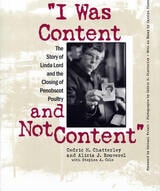
I Was Content and Not Content
The Story of Linda Lord and the Closing of Penobscot PoultryCedric N. Chatterley and Alicia J. Rouverol with Stephen A. Cole. Foreword by Michael Frisch. Photographs by Cedric N. Chatterly. With an Essay by Carolyn Chute
Southern Illinois University Press, 1999
Most studies of deindustrialization in the United States emphasize the economic impact of industrial decline; few consider the social, human costs. "I Was Content and Not Content": The Story of Linda Lord and the Closing of Penobscot Poultry is a firsthand account of a plant closure, heavily illustrated through photographs and told through edited oral history interviews. It tells the story of Linda Lord, a veteran of Penobscot Poultry Company in Belfast, Maine, and her experience when the plant—Maine’s last poultry-processing plant— closed its doors in 1988, costing over four hundred people their jobs and bringing an end to a once productive and nationally competitive agribusiness.
Linda Lord’s story could be that of any number of Americans—blue- and white-collar—effected by the rampant and widespread downsizing over the past several decades. She began working at Penobscot straight out of high school and remained with the company for over twenty years. Lord worked in all aspects of poultry processing, primarily in the "blood tunnel," where she finished off the birds that had been missed by the automatic neck-cutting device—a job held by few women. Single and self-supporting, Lord was thirty-nine years old when the plant closed. In part because she was the primary caretaker for her elderly parents, Lord did not want to leave Maine for a better job but did want to stay in the area that had been her home since birth.
The book is comprised of distinct sections representing different perspectives on Lord’s story and the plant’s demise. Cedric N. Chatterley’s gritty black-and-white photographs, reproduced here as duotones, document the final days at the poultry plant and chronicle Lord’s job search, as well as her daily life and community events. Lord’s oral history interviews, interspersed with the photographs, reveal her experiences working in poultry processing and her perspectives on the plant’s closing. Carolyn Chute’s essay reflects on her own struggles as a worker in Maine, and, more generally, on the way workers are perceived in America. Alicia J. Rouverol’s historical essay explores the rise and fall of Maine’s poultry industry and the reasons for its demise. Stephen A. Cole’s epilogue brings the story full circle when he tells of his most recent visit with Linda Lord. Michael Frisch (Portraits in Steel, A Shared Authority) contributes a foreword.
Lord’s story and the story of Penobscot’s closing brings into question the relationship of business to community, reminding us that businesses and communities are in fact integrally linked—or, perhaps more accurately, should be. Her narrative makes plain that plant closings have particular ramifications for women workers, but her experience also points to the way in which all individuals cope with change, hardship, and uncertain times to create possibilities where few exist. Perhaps most important, her story reveals some of the challenges and complexities that most human beings share.
I Was Married to a Horse, and Other Tales of an Accidental Anthropologist
John Borneman
HAU, 2026
How does the youngest of eight children, raised on a family farm in northern Wisconsin by parents with only half a grammar school education, become an Ivy League professor and a witness to some of the most transformative events of the late twentieth and early twenty-first centuries? In this remarkable memoir, John Borneman tells the story of his life as an “accidental anthropologist” with searing honesty, humor, and emotional depth.
Tracing a path from his upbringing as a queer farm boy to a career in anthropology, Borneman’s memoir reflects on social mobility, the decline of the American family farm, and shifting understandings of queerness and masculinity. Meanwhile, as a fourth-generation German American, his journey carried him to divided Berlin, where he captures the moods of East and West, and back again during the arrival of Syrian refugees—culminating in a long-standing friendship and a poignant reunion with a refugee he had first met years earlier.
Through these encounters, Borneman shows how empathy and attention can reveal the hidden textures of history, identity, and belonging. Rich in insight and humanity, this is a story of personal discovery, intercultural encounter, and the search for meaning in a rapidly changing world—one that speaks to scholars and general readers alike.
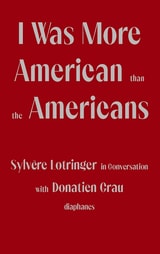
I Was More American than the Americans
Sylvère Lotringer in Conversation with Donatien GrauSylvère Lotringer and Donatien Grau
Diaphanes, 2021
In the mid-1970s, Sylvère Lotringer created Semiotext(e), a philosophical group that became a magazine and then a publishing house. Since its creation, Semio-text(e) has been a place of stimulating dialogue between artists and philosophers, and for the past fifty years, much of American artistic and intellectual life has depended on it. The model of the journal and the publishing house revolves around the notion of the collective, and Lotringer has rarely shared his personal journey: his existence as a hidden child during World War II; the liberating and then traumatic experience of the collective in the kibbutz; his Parisian activism in the 1960s; his time of wandering, that took him, by way of Istanbul, to the United States; and then, of course, his American years, the way he mingled his nightlife with the formal experimentation he invented with Semiotext(e) and with his classes. Since the early 2010s, Donatien Grau has developed the habit of visiting Lotringer during his trips to Los Angeles; some of their dialogs were published or held in public. This book is an entry into Lotringer's life, his friendships, his choices, and his admiration for some of the leading thinkers of our times. The conversations between Lotringer and Grau show bursts of life, traces of a journey, through texts and existence itself, with an unusual intensity.

I Wonder U
How Prince Went beyond Race and BackAdilifu Nama
Rutgers University Press, 2020
In 1993, Prince infamously changed his name to a unique, unpronounceable symbol. Yet this was only one of a long string of self-reinventions orchestrated by Prince as he refused to be typecast by the music industry’s limiting definitions of masculinity and femininity, of straightness and queerness, of authenticity and artifice, or of black music and white music.
Revealing how he continually subverted cultural expectations, I Wonder U examines the entirety of Prince’s diverse career as a singer, multi-instrumentalist, songwriter, producer, record label mogul, movie star, and director. It shows how, by blending elements of R&B, rock, and new wave into an extremely videogenic package, Prince was able to overcome the color barrier that kept black artists off of MTV. Yet even at his greatest crossover success, he still worked hard to retain his credibility among black music fans. In this way, Adilifu Nama suggests, Prince was able to assert a distinctly black political sensibility while still being perceived as a unique musical genius whose appeal transcended racial boundaries.
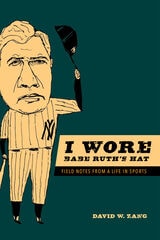
I Wore Babe Ruth's Hat
Field Notes from a Life in SportsDavid Zang
University of Illinois Press, 2015
Whether pondering his long-unbuilt replica of Connie Mack Stadium or his eye-opening turn as the Baltimore Ravens' mascot, Zang offers tales at turns poignant and hilarious as he engages with the passions that shaped his life. Yet his meditations also probe the tragedy of a modern athletic culture that substitutes hyped spectatorship for participation. As he laments, American society's increasing scorn for taking part in play robs adults of the life-affirming virtues of games that challenge us to accomplish the impossible for the most transcendent of reasons: to see if it can be done.
From teammates named Lop to tracing Joe Paterno's long shadow over Happy Valley, I Wore Babe Ruth's Hat reports from the everyman's Elysium where games and life intersect.

I Would Meet You Anywhere
A MemoirSusan Kiyo Ito
The Ohio State University Press, 2023
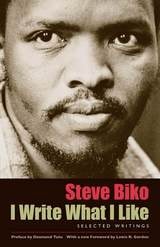
I Write What I Like
Selected WritingsSteve Biko
University of Chicago Press, 2002
I Write What I Like contains a selection of Biko's writings from 1969, when he became the president of the South African Students' Organization, to 1972, when he was prohibited from publishing. The collection also includes a preface by Archbishop Desmond Tutu; an introduction by Malusi and Thoko Mpumlwana, who were both involved with Biko in the Black Consciousness movement; a memoir of Biko by Father Aelred Stubbs, his longtime pastor and friend; and a new foreword by Professor Lewis Gordon.
Biko's writings will inspire and educate anyone concerned with issues of racism, postcolonialism, and black nationalism.

I'll Fly Away
A World War II Pilot's Lifetime of Adventures From Biplanes to Jumbo JetsWilliam Hallstead and Jack Race
University of Scranton Press, 2006
From his adventures flying for the Allies in World War II to his work as head pilot trainer for Ariana Afghan Airlines, Race has logged more than six decades in the air. I’ll Fly Away tracks his travels around the globe, encompassing his post-war job as crop duster and bush pilot, his thirty-four years as a commercial airline pilot for Pan American World Airways, his consultancy to King Hussein for Royal Jordanian Airlines, and the eight years in which he served as lead pilot for Orbis, an eye hospital on wings that served thirty-one countries. In 1989 Race notably retraced Charles Lindbergh’s 1927 20,000-mile goodwill tour, flying his Spirit of Orbis biplane to all forty-eight of the continental U.S. states.
A remarkable and wholly readable biography of an American original, I’ll Fly Away will be essential for the bookshelf of every aviation enthusiast.
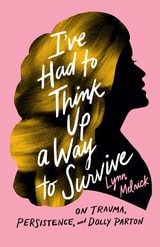
I've Had to Think Up a Way to Survive
On Trauma, Persistence, and Dolly PartonLynn Melnick
University of Texas Press, 2022
A moving and essential exploration of what it takes to find your voice as a woman, a survivor, an artist, and an icon.
The first time Lynn Melnick listened to a Dolly Parton song in full, she was 14 years old, in the triage room of a Los Angeles hospital, waiting to be admitted to a drug rehab program. Already in her young life as a Jewish teen in the 1980s, she had been the victim of rape, abuse, and trauma, and her path to healing would be long. But in Parton’s words and music, she recognized a fellow survivor.
In this powerful, incisive work of social and self-exploration, Melnick blends personal essay with cultural criticism to explore Parton’s dual identities as feminist icon and objectified sex symbol, identities that reflect the author’s own fraught history with rape culture and the arduous work of reclaiming her voice. Each chapter engages with the artistry and impact of one of Parton’s songs, as Melnick reckons with violence, misogyny, creativity, parenting, friendship, sex, love, and the consolations and cruelties of religion. Bold and inventive, I’ve Had to Think Up a Way to Survive gives us an accessible and memorable framework for understanding our times and a revelatory account of survival, persistence, and self-discovery.
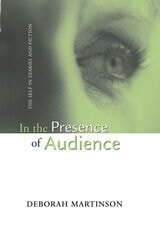
IN THE PRESENCE OF AUDIENCE
THE SELF IN DIARIES AND FICTIONDeborah Martinson
The Ohio State University Press, 2003
As a diary writer imagines shadow readers rifling diary pages, she tweaks images of the self, creating multiple readings of herself, fixed and unfixed. When the readers and potential readers are husbands and publishers, the writer maneuvers carefully in a world of men who are quick to judge and to take offense. She fills the pages with reflections, anecdotes, codes, stories, biographies, and fictions. The diary acts as a site for the writer’s tension, rebellion, and remaking of herself.
In this book Martinson examines the diaries of Virginia Woolf, Katherine Mansfield, Violet Hunt, and Doris Lessing’s fictional character Anna Wulf, and shows that these diaries (and others like them) are not entirely private writings as has been previously assumed. Rather, their authors wrote them knowing they would be read. In these four cases, the audience is the author’s male lover or husband, and Martinson reveals how knowledge of this audience affects the language and content in each diary. Ultimately, she argues, this audience enforces a certain “male censorship” which changes the shape of the revelations, the shape of the writer herself, making it impossible for the female author to be honest in writing about her true self.
Even sophisticated readers often assume that diaries are primarily private. This study interrogates the myth of authenticity and self-revelation in diaries written under the gaze of particular peekers.
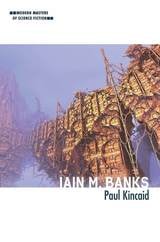
Iain M. Banks
Paul Kincaid
University of Illinois Press, 2017
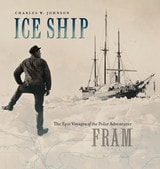
Ice Ship
The Epic Voyages of the Polar Adventurer FramCharles W. Johnson
University Press of New England, 2014
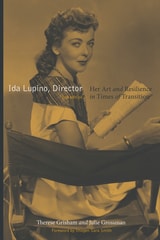
Ida Lupino, Director, 2nd edition
Her Art and Resilience in Times of TransitionTherese Grisham
Rutgers University Press, 2026
The updated edition of Ida Lupino, Director: Her Art and Resilience in Times of Transition, an in-depth exploration of Lupino’s film and television directing work, provides close readings of the films and TV episodes Lupino directed and accounts for the history of Lupino’s reception, continuing into the mid-2020s, in media and film scholarship. The book gives readers a fuller understanding of Lupino’s major contribution to the history of American cinema and media. The revisions update this book, the first on Lupino’s directing, to address recent scholarship on Lupino’s work and reinforce her abiding relevance for cinephiles and film scholars. It incorporates scholarly and popular culture references to Lupino in the last seven years. Updates include a foreword by writer and film critic Imogen Sara Smith, whose work in film scholarship and the public arena has drawn attention to Lupino and the importance of gender to film noir. Authors Therese Grisham and Julie Grossman have added a complete list of the TV episodes Lupino directed in the 1950s and '60s, as well as an updated epilogue.
This new edition addresses how our views of Lupino’s innovative cinema and her prodigious contributions to classic television have been taken up by others, proving that Lupino, whose reputation has waxed and waned since the middle of the twentieth century, is here to stay as a major figure in the history of American media.
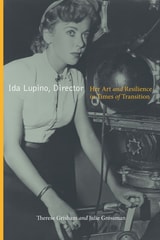
Ida Lupino, Director
Her Art and Resilience in Times of TransitionGrisham, Therese
Rutgers University Press, 2017
The first in-depth study devoted to Lupino’s directorial work, this book makes a strong case for her as a trailblazing feminist auteur, a filmmaker with a clear signature style and an abiding interest in depicting the plights of postwar American women. Ida Lupino, Director not only examines her work as a cinematic auteur, but also offers a serious consideration of her diverse and long-ranging career, getting her start in Hollywood as an actress in her teens and twenties, directing her first films in her early thirties, and later working as an acclaimed director of television westerns, sitcoms, and suspense dramas. It also demonstrates how Lupino fused generic elements of film noir and the social problem film to create a distinctive directorial style that was both highly expressionistic and grittily realistic. Ida Lupino, Director thus shines a long-awaited spotlight on one of our greatest filmmakers.
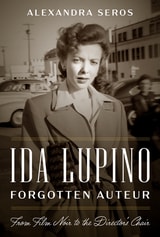
Ida Lupino, Forgotten Auteur
From Film Noir to the Director's ChairAlexandra Seros
University of Texas Press, 2024
An archival study of Ida Lupino’s work in film and television directing, writing, producing, and acting from the 1940s to the 1970s.
Though her acting career is well known, Ida Lupino was, until very recently, either unknown or overlooked as an influential director. One of the few female directors in Classical Hollywood, Lupino was the only woman with membership in the Directors Guild of America between 1948 and 1971. Her films were about women without power in society and engaged with highly controversial topics despite Hollywood’s strict production code. Working in a male-dominated field, Lupino was forced to manage her public persona carefully, resisting attempts by the press to paint her solely as a dutiful wife and mother—a continual feminization—just so that she could continue directing.
Filmmaker Alexandra Seros retells the story of Ida Lupino’s career, from actor to director, first in film, then in television, using archival materials from collections housed around the world. The result provides rich insights into three of Lupino’s independently directed films and a number of episodes from her vast television oeuvre. Seros contextualizes this analysis with discussions of gendered labor in the film industry, the rise of consumerism in the United States after World War II, and the expectations put on women in their family lives during the postwar era. Seros’s portrait of Lupino ultimately paints her life and career as an exemplar of collaborative auteurship.
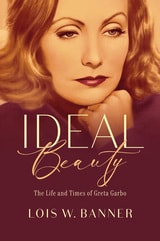
Ideal Beauty
The Life and Times of Greta GarboLois W. Banner
Rutgers University Press, 2023
Ideal Beauty reveals the woman behind the mystique, a woman who overcame an impoverished childhood to become a student at the Swedish Royal Dramatic Academy, an actress in European films, and ultimately a Hollywood star. Chronicling her tough negotiations with Louis B. Mayer at MGM, it shows how Garbo carved out enough power in Hollywood to craft a distinctly new feminist screen presence in films like Queen Christina. Banner draws on over ten years of in-depth archival research in Sweden, Germany, France, and the United States to demonstrate how, away from the camera’s glare, Garbo’s life was even more intriguing. Ideal Beauty takes a fresh look at an icon who helped to define female beauty in the twentieth century and provides answers to much-debated questions about Garbo’s childhood, sexuality, career, illnesses and breakdowns, and spiritual awakening.
Identity Technologies
Constructing the Self OnlineEdited by Anna Poletti and Julie Rak
University of Wisconsin Press, 2013
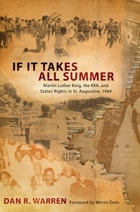
If It Takes All Summer
Martin Luther King, the KKK, and States' Rights in St. Augustine, 1964Dan R. Warren, with foreword by Morris Dees
University of Alabama Press, 2008
An insider’s record of the St. Augustine Civil Rights drama.
This memoir recounts the struggle against segregation in St. Augustine, Florida, in the early and mid-1960s. In the summer of 1964 the nation’s oldest city became the center of the civil rights movement as Martin Luther King Jr., encouraged by President Johnson, a southerner, who made the civil rights bill the center piece of his domestic policy, chose this tourism-driven community as an ideal location to demonstrate the injustice of discrimination and the complicity of southern leaders in its enforcement.
St. Augustine was planning an elaborate celebration of its founding, and expected generous federal and state support. But when the kick-off dinner was announced only whites were invited, and local black leaders protested. The affair alerted the national civil rights leadership to the St. Augustine situation as well as fueling local black resentment.
Ferment in the city grew, convincing King to bring his influence to the leadership of the local struggle. As King and his allies fought for the right to demonstrate, a locally powerful Ku Klux Klan counter-demonstrated. Conflict ensued between civil rights activists, local and from out-of-town, and segregationists, also home-grown and imported. The escalating violence of the Klan led Florida’s Governor to appoint State Attorney Dan Warren as his personal representative in St. Augustine. Warren’s crack down on the Klan and his innovative use of the Grand Jury to appoint a bi-racial committee against the intransigence of the Mayor and other officials, is a fascinating story of moral courage. This is an insider view of a sympathetic middleman in the difficult position of attempting to bring reason and dialog into a volatile situation.

If You Were Only White
The Life of Leroy "Satchel" PaigeDonald Spivey
University of Missouri Press, 2012
Spivey follows Paige from his birth in Alabama in 1906 to his death in Kansas City in 1982, detailing the challenges Paige faced battling the color line in America and recounting his tests and triumphs in baseball. He also opens up Paige’s private life during and after his playing days, introducing readers to the man who extended his social, cultural, and political reach beyond the limitations associated with his humble background and upbringing. This other Paige was a gifted public speaker, a talented musician and singer, an excellent cook, and a passionate outdoorsman, among other things.
Paige’s life intertwined with many of the most important issues of the times in U.S. and African American history, including the continuation of the New Negro Movement and the struggle for civil rights. Spivey incorporates interviews with former teammates conducted over twelve years, as well as exclusive interviews with Paige’s son Robert, daughter Pamela, Ted “Double Duty” Radcliffe, and John “Buck” O’Neil to tell the story of a pioneer who helped transform America through the nation’s favorite pastime.
Maintaining an image somewhere between Joe Louis’s public humility and the flamboyant aggression of Jack Johnson, Paige pushed the boundaries of segregation and bridged the racial divide with stellar pitching packaged with slapstick humor. He entertained as he played to win and saw no contradiction in doing so. Game after game, his performance refuted the lie that black baseball was inferior to white baseball. His was a contribution to civil rights of a different kind—his speeches and demonstrations expressed through his performance on the mound.
Ignacy Paderewski
PolandAnita Prazmowska
Haus Publishing, 2009

Ignition!
An Informal History of Liquid Rocket PropellantsClark, John D
Rutgers University Press, 1972
A classic work in the history of science, and described as “a good book on rocket stuff…that’s a really fun one” by SpaceX founder Elon Musk, readers will want to get their hands on this influential classic, available for the first time in decades.
This newly reissued debut book in the Rutgers University Press Classics imprint is the story of the search for a rocket propellant which could be trusted to take man into space. This search was a hazardous enterprise carried out by rival labs who worked against the known laws of nature, with no guarantee of success or safety.
Acclaimed scientist and sci-fi author John Drury Clark writes with irreverent and eyewitness immediacy about the development of the explosive fuels strong enough to negate the relentless restraints of gravity. The resulting volume is as much a memoir as a work of history, sharing a behind-the-scenes view of an enterprise which eventually took men to the moon, missiles to the planets, and satellites to outer space.
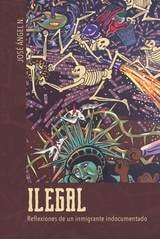
Ilegal
Reflexiones de un inmigrante indocumentadoJosé Ángel N.
University of Illinois Press, 2019
José Ángel N. es escritor y traductor. Sus ensayos se han publicado en revistas culturales en México y Estados Unidos. Verónica Murguía es escritora y traductora y radica en México.

Illegal
Reflections of an Undocumented ImmigrantJose Angel N.
University of Illinois Press, 2014
Arriving in the 1990s with a ninth grade education, N. traveled to Chicago where he found access to ESL and GED classes. He eventually attended college and graduate school and became a professional translator.
Despite having a well-paying job, N. was isolated by a lack of legal documentation. Travel concerns made promotions impossible. The simple act of purchasing his girlfriend a beer at a Cubs baseball game caused embarrassment and shame when N. couldn't produce a valid ID. A frustrating contradiction, N. lived in a luxury high-rise condo but couldn't fully live the American dream. He did, however, find solace in the one gift America gave him–-his education. Ultimately, N.'s is the story of the triumph of education over adversity. In Illegal, he debunks the stereotype that undocumented immigrants are freeloaders without access to education or opportunity for advancement. With bravery and honesty, N. details the constraints, deceptions, and humiliations that characterize alien life "amid the shadows."
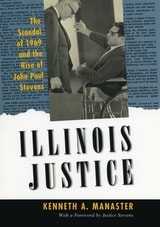
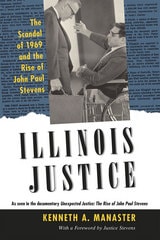
Illinois Justice
The Scandal of 1969 and the Rise of John Paul StevensKenneth A. Manaster
University of Chicago Press, 2001
In 1969, citizen gadfly Sherman Skolnick accused two Illinois Supreme Court justices of accepting valuable bank stock from an influential Chicago lawyer in exchange for deciding an important case in the lawyer’s favor. The resulting feverish media coverage prompted the state supreme court to appoint a special commission to investigate. Within six weeks and on a shoestring budget, the commission mobilized a small volunteer staff to reveal the facts. Stevens, then a relatively unknown Chicago lawyer, served as chief counsel. His work on this investigation would launch him into the public spotlight and onto the bench.
Manaster, who served on the commission, tells the real story of the investigation, detailing the dead ends, tactics, and triumphs. Manaster expertly traces Stevens’s masterful courtroom strategies and vividly portrays the high-profile personalities involved, as well as the subtleties of judicial corruption. A reflective foreword by Justice Stevens himself looks back at the case and how it influenced his career.
Now the subject of the documentary Unexpected Justice: The Rise of John Paul Stevens, Manaster’s book is both a fascinating chapter of political history and a revealing portrait of the early career of a Supreme Court justice.
Illinois Justice
The Scandal of 1969 and the Rise of John Paul StevensKenneth A. Manaster
University of Chicago Press, 2001
In 1969, citizen gadfly Sherman Skolnick accused two Illinois Supreme Court justices of accepting valuable bank stock from an influential Chicago lawyer in exchange for deciding an important case in the lawyer’s favor. The resulting feverish media coverage prompted the state supreme court to appoint a special commission to investigate. Within six weeks and on a shoestring budget, the commission mobilized a small volunteer staff to reveal the facts. Stevens, then a relatively unknown Chicago lawyer, served as chief counsel. His work on this investigation would launch him into the public spotlight and onto the bench.
Manaster, who served on the commission, tells the real story of the investigation, detailing the dead ends, tactics, and triumphs. Manaster expertly traces Stevens’s masterful courtroom strategies and vividly portrays the high-profile personalities involved, as well as the subtleties of judicial corruption. A reflective foreword by Justice Stevens himself looks back at the case and how it influenced his career.
Now the subject of the documentary Unexpected Justice: The Rise of John Paul Stevens, Manaster’s book is both a fascinating chapter of political history and a revealing portrait of the early career of a Supreme Court justice.
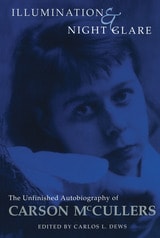
Illumination And Night Glare
The Unfinished Autobiography Of Carson MccullersCarson Mccullers
University of Wisconsin Press, 2001
Looking back over her life from a precocious childhood in Georgia to her painful decline from a series of crippling strokes, McCullers offers poignant and unabashed remembrances of her early writing success, her family attachments, a troubled marriage to a failed writer, and friendships with literary and film luminaries (Gypsy Rose Lee, Richard Wright, Isak Dinesen, John Huston, Marilyn Monroe), and the intense relationships of the important women in her life.

Imagining Mary Tudor, Queen of France
JoAnn DellaNeva
University of Delaware Press, 2027
This book examines early modern texts that portray Mary Tudor’s girlhood and betrothal to a foreign prince, her brief marriage to the aging king of France, and her untimely widowhood, as well as retrospective accounts that depict her life in France, her relationships with her husband and his heir apparent, and her surreptitious romance and clandestine marriage to an English duke. Here, texts from England are put into conversation with a significant body of work that was written in French, Spanish, Italian, and Latin, culminating in an examination of a novel from North America that passed itself off as a genuine sixteenth-century memoir. Author JoAnn DellaNeva also examines a spectrum of extra-literary texts—such as dialogues, popular songs, letters, speeches, portraiture, tapestries, fashion, jewelry, and book illuminations—for the ways they too helped shape Mary’s image. In so doing, she analyzes the intersection of history and literature, demonstrating how porous the borders between these disciplines can be. Through a series of close readings that are informed by an examination of the cultural context behind these texts, Imagining Mary Tudor, Queen of France seeks to explain how Mary’s fictional biography proved to be so slippery, vacillating between portrayals of her as a virtuous, generally powerless woman and as a wily and wicked minx.
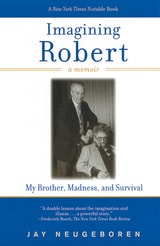
Imagining Robert
My Brother, Madness, and Survival, A MemoirNeugeboren, Jay
Rutgers University Press, 2003
Jay Neugeboren and his brother, Robert, grew up in Brooklyn in the years following World War II. Both brothers—smart, talented, and popular—seemed well on the way to successful lives when, for reasons that remain ultimately mysterious to this day, Robert had a mental breakdown at age nineteen. For the past forty years Jay has been not only his brother’s friend and confidant, but his sole advocate, as Robert continues to suffer from the ravages of the illness that has kept him institutionalized for most of his adult life.
Imagining Robert tells the story of these two brothers and how their love for one another has enabled both to survive, and to thrive in miraculous, surprising ways. It is the most honest book yet on what it is like for the millions of families that must cope, day-by-day and year-by-year over the course of a lifetime, with a condition for which, in most cases, there is no cure. By never giving up hope and by valuing his brother’s uniqueness and humanity, Jay Neugeboren reveals how even the grimmest of lives can be sustained by the power of love.
A film based on Imagining Robert aired on PBS nationally in 2003. With a new afterword that brings readers up to date on Robert’s life, Rutgers University Press is pleased make this highly praised book with its inspiring story available once more to the public.
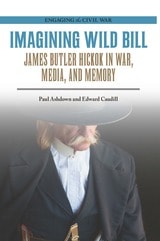
Imagining Wild Bill
James Butler Hickok in War, Media, and MemoryPaul Ashdown and Edward Caudill
Southern Illinois University Press, 2020
When it came to the Wild West, the nineteenth-century press rarely let truth get in the way of a good story. James Butler “Wild Bill” Hickok’s story was no exception. Mythologized and sensationalized, Hickok was turned into the deadliest gunfighter of all, a so-called moral killer, a national phenomenon even while he was alive.
Rather than attempt to tease truth from fiction, coauthors Paul Ashdown and Edward Caudill investigate the ways in which Hickok embodied the culture of glamorized violence Americans embraced after the Civil War and examine the process of how his story emerged, evolved, and turned into a viral multimedia sensation full of the excitement, danger, and romance of the West.
Journalists, the coauthors demonstrate, invented “Wild Bill” Hickok, glorifying him as a civilizer. They inflated his body count and constructed his legend in the midst of an emerging celebrity culture that grew up around penny newspapers. His death by treachery, at a relatively young age, made the story tragic, and dime-store novelists took over where the press left off. Reimagined as entertainment, Hickok’s legend continued to enthrall Americans in literature, on radio, on television, and in the movies, and it still draws tourists to notorious Deadwood, South Dakota.
American culture often embraces myths that later become accepted as popular history. By investigating the allure and power of Hickok’s myth, Ashdown and Caudill explain how American journalism and popular culture have shaped the way Civil War–era figures are remembered and reveal how Americans have embraced violence as entertainment.

Immigrant Voices
New Lives in America, 1773-2000Edited by Thomas Dublin
University of Illinois Press, 2014
A classroom staple, Immigrant Voices: New Lives in America, 1773-2000 has been updated with writings that reflect trends in immigration to the United States through the turn of the twenty-first century. New chapters include a selection of letters from Irish immigrants fleeing the famine of the 1840s, writings from an immigrant who escaped the civil war in Liberia during the 1980s, and letters that crossed the U.S.-Mexico border during the late 1980s and early '90s. With each addition editor Thomas Dublin has kept to his original goals, which was to show the commonalities of the U.S. immigrant experience across lines of gender, nation of origin, race, and even time.