96 books match the query 'Buddhism' and 5 start with i
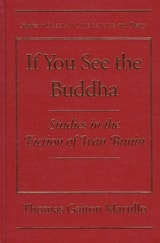
cover of If You See the Buddha: Studies in the Fiction of Ivan Bunin

If You See the Buddha

Studies in the Fiction of Ivan Bunin

Thomas Gaiton Marullo

Northwestern University Press, 1999

In a 1994 American Scholar article, Andrew Wachtel wrote of Ivan Bunin: "[He] is undoubtedly the greatest Russian writer whom no one reads." With the collapse of communism, however, Bunin's works are undergoing a revival in both Russia and the West. As enthusiastic as readers and publishers have been, scholarship has not kept pace with this "rediscovery," in part due to the many contradictions in Bunin's writing, in part because much past criticism has been used to advanced the critic's own view of what they love or hate about "modern" life.

In If You See the Buddha, Thomas Gaiton Marullo begins addressing the lack of scholarship by establishing that Bunin was a thoroughly modern writer whose images and ideas were rooted more in the twentieth century than in the nineteenth. But beyond that point, Marullo states that, of all the systems of belief that Bunin adopted and adapted throughout his career, it was his interest in Buddhism that best elucidates the dynamics of his writing. Key Buddhistic concepts figured prominently in Bunin's work. These ideas enabled him to make sense of his world and serves as the catalyst for an ars poetica that tempered his philosophical and aesthetic restiveness and contributed a sense of timelessness to work from both his prerevolutionary and émigré periods.
[more]
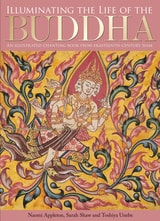
cover of Illuminating the Life of the Buddha: An Illustrated Chanting Book from Eighteenth-Century Siam

Illuminating the Life of the Buddha

An Illustrated Chanting Book from Eighteenth-Century Siam

Naomi Appleton, Sarah Shaw, and Toshiya Unebe

Bodleian Library Publishing, 2013

Illuminating the Life of the Buddha investigates an outstanding eighteenth-century samut khoi, a type of beautifully illustrated, folded book found in Southeast Asia and popular as a repository for the Buddha’s teachings. Written in Pali and produced in Siam, the samut khoi features finely executed paintings on khoi paper portraying key stories from the Buddha’s past lives. These stories, known as the Jatakas, were the principal means by which Buddhist teachings were communicated and were thus a favored theme for samut khoi. However, this samut khoi stands out for its extensive series of paintings from the last life of the Buddha, including his final awakening and teaching, which are distinctive to the region.

Affording readers immense insight into a spectacular eighteenth-century manuscript, and Thai Buddhist manuscripts and temple culture as a whole, this book will be of great interest to art historians and scholars of Buddhism and Southeast Asia.
[more]
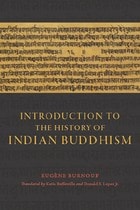
cover of Introduction to the History of Indian Buddhism

Introduction to the History of Indian Buddhism

Eugène Burnouf

University of Chicago Press, 2010

The most influential work on Buddhism to be published in the nineteenth century, Introduction à l’histoire du Buddhisme indien, by the great French scholar of Sanskrit Eugène Burnouf, set the course for the academic study of Buddhism—and Indian Buddhism in particular—for the next hundred years. First published in 1844, the masterwork was read by some of the most important thinkers of the time, including Schopenhauer and Nietzsche in Germany and Emerson and Thoreau in America.

Katia Buffetrille and Donald S. Lopez Jr.’s expert English translation, Introduction to the History of Indian Buddhism, provides a clear view of how the religion was understood in the early decades of the nineteenth century. Burnouf was an impeccable scholar, and his vision, especially of the Buddha, continues to profoundly shape our modern understanding of Buddhism. In reintroducing Burnouf to a new generation of Buddhologists, Buffetrille and Lopez have revived a seminal text in the history of Orientalism.


[more]
cover of Inward: Vipassana Meditation and the Embodiment of the Self

Inward

Vipassana Meditation and the Embodiment of the Self

Michal Pagis

University of Chicago Press, 2019
Western society has never been more interested in interiority. Indeed, it seems more and more people are deliberately looking inward—toward the mind, the body, or both. Michal Pagis’s Inward focuses on one increasingly popular channel for the introverted gaze: vipassana meditation, which has spread from Burma to more than forty countries and counting. Lacing her account with vivid anecdotes and personal stories, Pagis turns our attention not only to the practice of vipassana but to the communities that have sprung up around it. Inward is also a social history of the westward diffusion of Eastern religious practices spurred on by the lingering effects of the British colonial presence in India. At the same time Pagis asks knotty questions about what happens when we continually turn inward, as she investigates the complex relations between physical selves, emotional selves, and our larger social worlds. Her book sheds new light on evergreen topics such as globalization, social psychology, and the place of the human body in the enduring process of self-awareness.
[more]
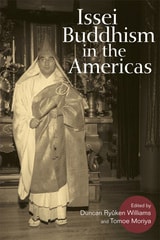
cover of Issei Buddhism in the Americas

Issei Buddhism in the Americas

Edited by Duncan Ryuken Williams and Tomoe Moriya

University of Illinois Press, 2010

Rich in primary sources and featuring contributions from scholars on both sides of the Pacific, Issei Buddhism in the Americas upends boundaries and categories that have tied Buddhism to Asia and illuminates the social and spiritual role that the religion has played in the Americas. While Buddhists in Japan had long described the migration of the religion as traveling from India, across Asia, and ending in Japan, this collection details the movement of Buddhism across the Pacific to the Americas. Leading the way were pioneering, first-generation Issei priests and their followers who established temples, shared Buddhist teachings, and converted non-Buddhists in the late nineteenth and twentieth centuries. The book explores these pioneering efforts in the context of Japanese diasporic communities and immigration history and the early history of Buddhism in the Americas. The result is a dramatic exploration of the history of Asian immigrant religion that encompasses such topics as Japanese language instruction in Hawaiian schools, the Japanese Canadian community in British Columbia, the roles of Buddhist song culture, Tenriyko ministers in America, and Zen Buddhism in Brazil. Contributors are Michihiro Ama, Noriko Asato, Masako Iino, Tomoe Moriya, Lori Pierce, Cristina Rocha, Keiko Wells, Duncan Ryûken Williams, and Akihiro Yamakura.
[more]